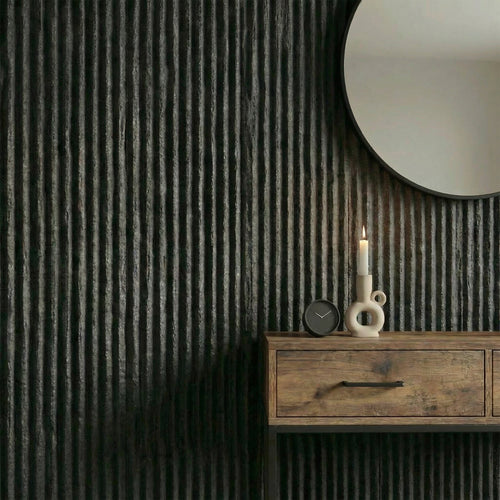
Author: The Panel Hub Design Studio

  • Bedroom Wall Decor Ideas: Transform Your Space into a Personal Retreat

    Bedroom Wall Decor Ideas: Transform Your Space into a Personal Retreat

    The bedroom wall is the most personal design canvas in the home. It’s what you see last at night and first in the morning — and its mood has a measurable effect on how rested and calm the space feels. Whether you’re drawn to warm natural textures, bold patterns, or serene minimal schemes, this guide covers the bedroom wall decor approaches that make the strongest impact.

    Headboard Feature Wall Panels

    The single most impactful bedroom wall upgrade. A panel feature wall behind the bed replaces the standard blank plasterboard with texture, warmth, and visual depth — transforming the bedroom from a place to sleep into a room that feels genuinely designed.

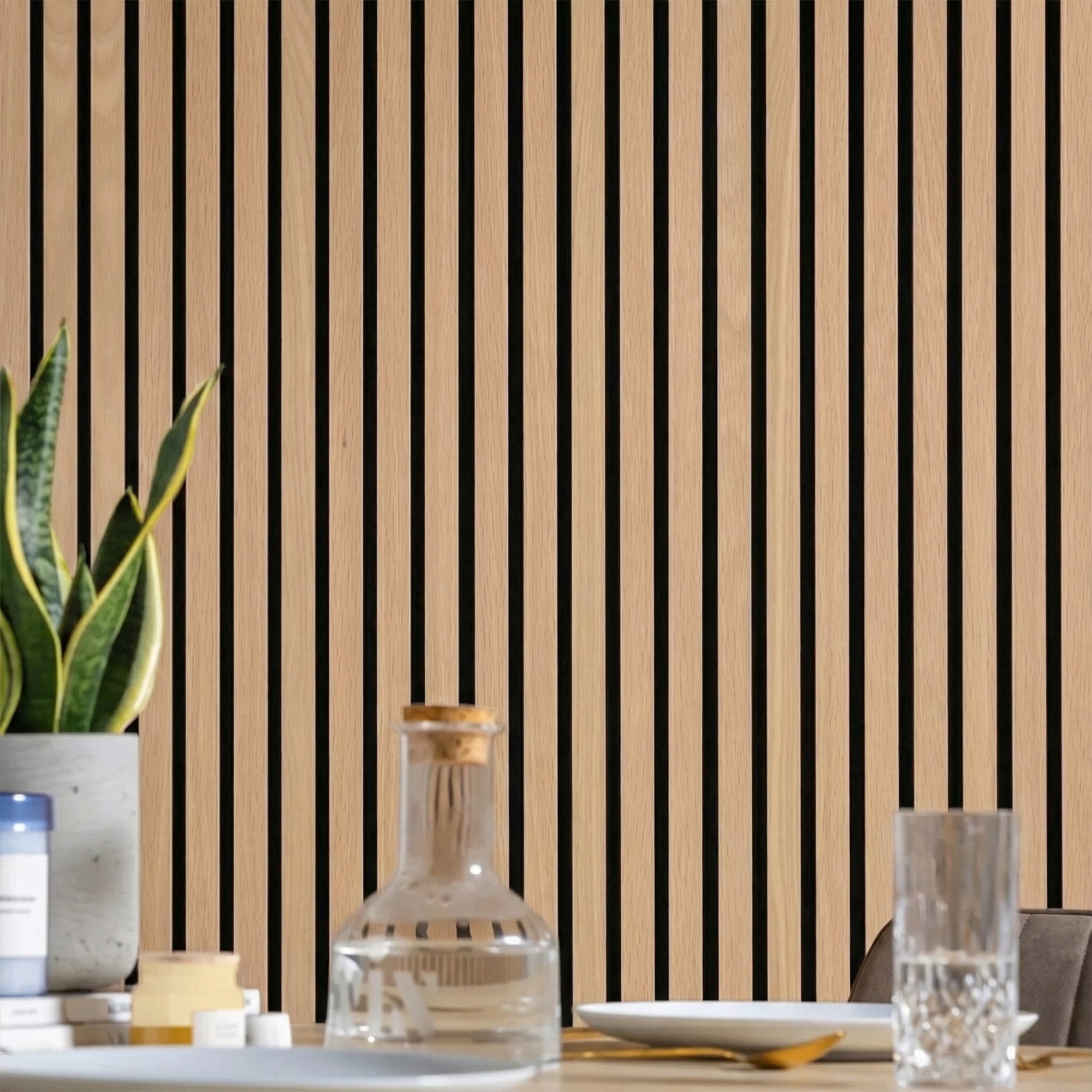
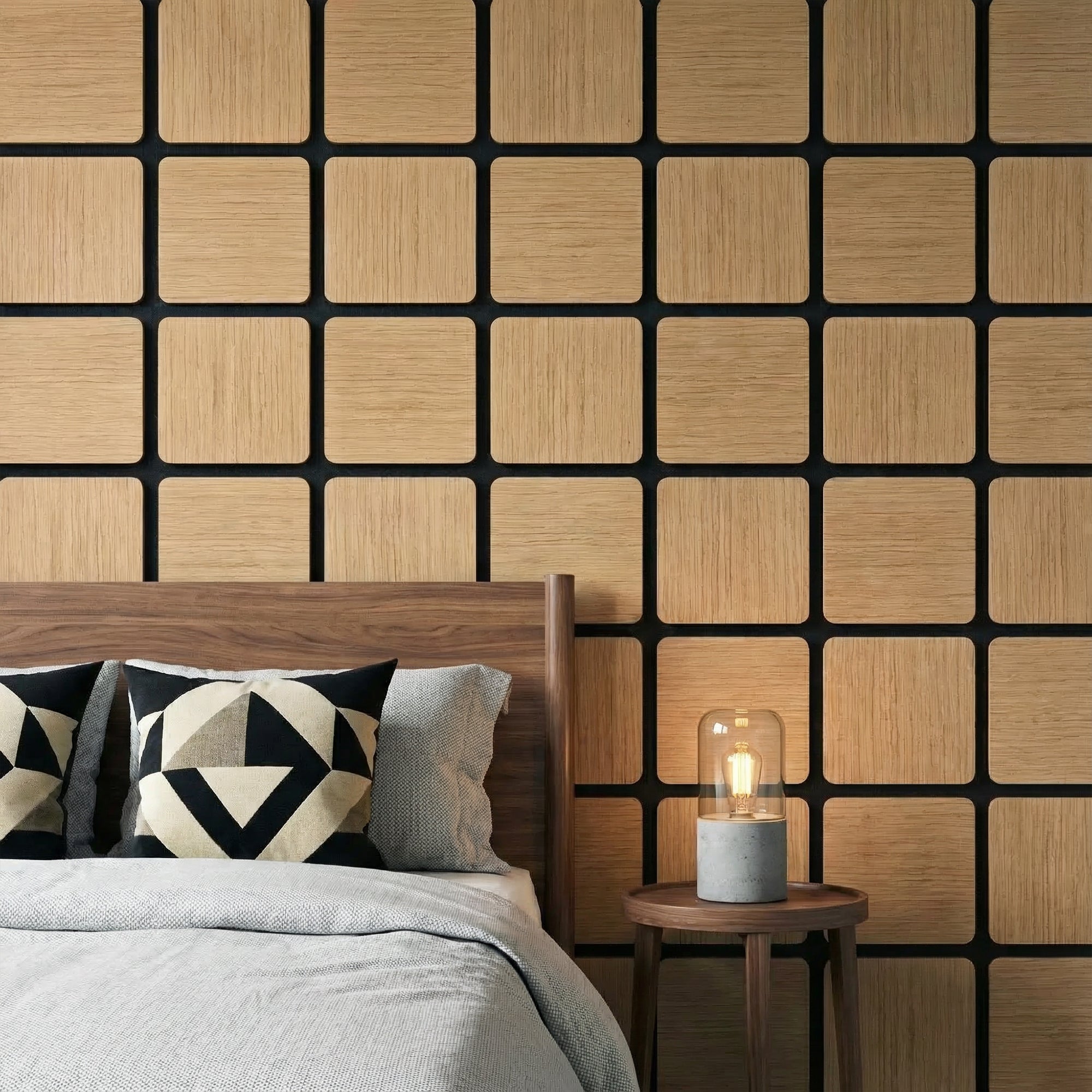
    Wood slat panels are the most popular choice for headboard walls — the vertical or horizontal rhythm of the slats creates a calm, ordered backdrop that doesn’t compete with bedding, cushions, or pendant lighting. Our American Acoustic Slat Wood Wall Panels | SoundPanel™ add a further dimension: the acoustic felt backing measurably reduces echo in the bedroom, creating a quieter, more restful environment.

    SoundPanel™ acoustic slat panels as bedroom headboard wall - The Panel Hub

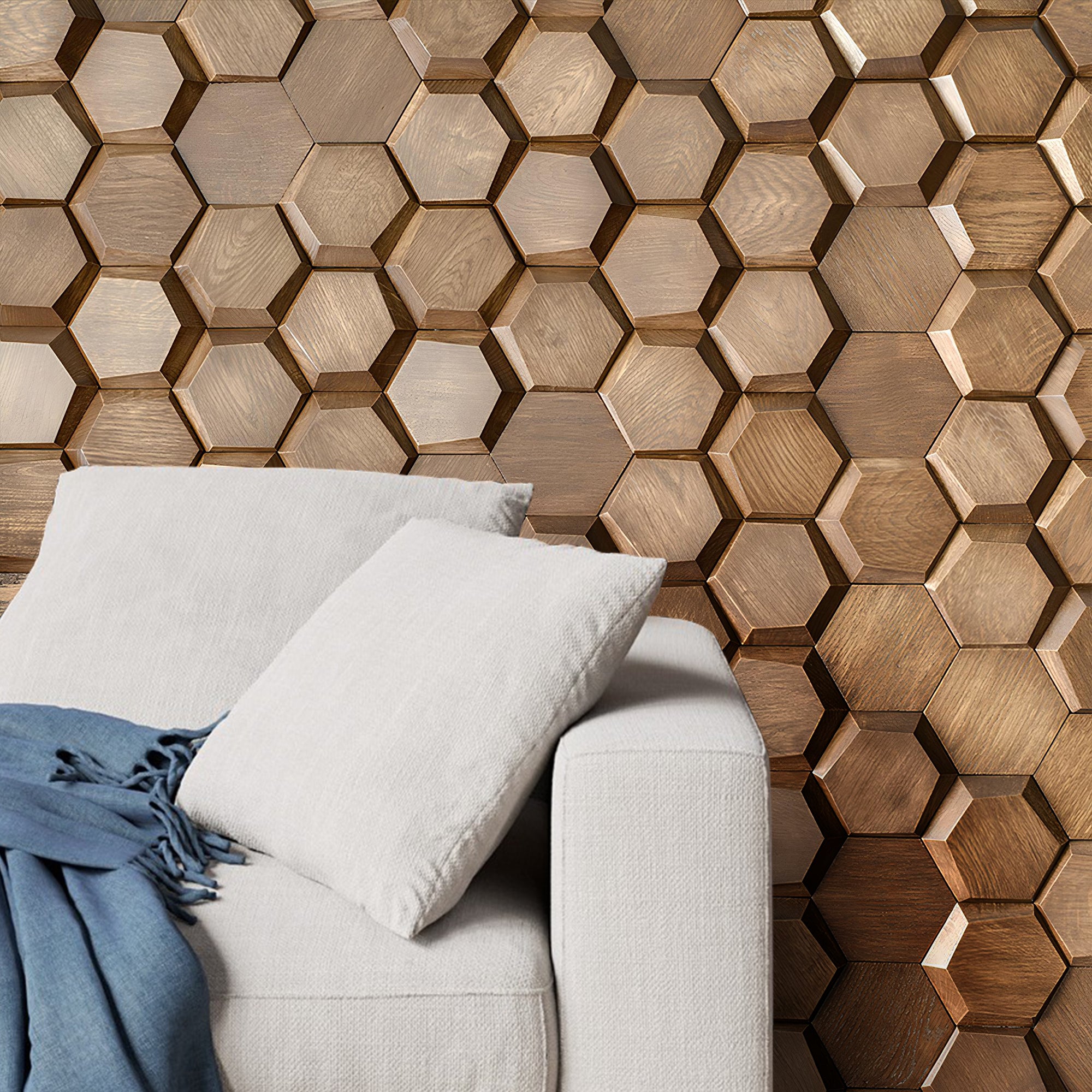
    For solid wood texture, our Honey Mosaic Wood Wall Panels | GroovePanel® create a warm, handcrafted aesthetic — each panel’s natural walnut finish adding depth and character that painted or papered walls cannot replicate.

    Honey Mosaic Wood Wall Panels - GroovePanel® as bedroom feature wall - The Panel Hub

    Read More: Modern Bedroom Wall Panelling Ideas

    A curated gallery wall — a collection of framed artworks, photographs, and prints arranged as a group — adds personal meaning and visual interest to a bedroom wall. For the most cohesive result, frame everything in the same or complementary frame tone, maintain consistent spacing between pieces, and anchor the arrangement around one larger central piece. In bedrooms with wood panel walls, simple black or natural timber frames integrate cleanly with the panel texture.

    Floating Shelves and Bedside Display

    Floating timber shelves at bedside height replace bedside tables and create a continuous shelf that extends either side of the bed — particularly effective in smaller bedrooms where full bedside tables take up too much floor space. Style with bedside lighting, small plants, books, and personal objects. In a panelled bedroom, shelves in the same wood tone as the panels create a seamless built-in appearance.

    Mirrors

    A large mirror on a bedroom wall — either leaning or wall-mounted — is one of the few decor choices that simultaneously makes the room feel larger, lighter, and more dynamic. Position to reflect the room’s best view (a window with natural light, a particularly beautiful corner). In smaller bedrooms, a floor-to-ceiling mirror on one wall doubles the apparent room size.

    Textured Wallpaper or Limewash Paint

    For bedrooms where wall panels aren’t the desired route, textured wallpaper (grasscloth, linen-effect, botanical) or limewash paint on the headboard wall adds visual interest without the permanence of panels. Limewash in warm terracotta or sage green against a white ceiling creates the kind of earthy, spa-like atmosphere that makes a bedroom feel like a genuine retreat.

    Integrated Lighting

    Wall-mounted sconces or pendant lights either side of the bed are functionally and aesthetically superior to bedside lamps — they free up surface space, can be positioned at the exact right reading height, and look deliberately considered. Pair with a dimmer for flexible ambiance. Our LED Light Strip Kit behind a headboard panel wall creates a soft, warm glow that outlines the panel installation and adds a premium hotel-style detail.

    Bedroom Wall Decor by Style

    Japandi / Minimal

    Light wood panels (natural, pale ash), white walls, linen bedding, one considered artwork. Restraint and natural materials are everything.

    Warm Contemporary

    Golden Oak or walnut slat panels on the headboard wall, pendant lighting either side, simple floating shelves. Currently the most popular bedroom aesthetic.

    Maximalist / Eclectic

    Gallery wall with mixed frame sizes, bold wallpaper on a non-headboard wall, richly textured bedding. Honey Mosaic or Crossing Lines panels for a distinctive headboard wall.

    Nature-Inspired

    Natural wood panels, linen and cotton textiles, indoor plants, botanical prints. A cohesive earthy palette from floor to ceiling.

    Frequently Asked Questions

    What is the best wall decor for a small bedroom?

    In small bedrooms, avoid busy gallery walls or dark panel tones that reduce perceived space. One large piece of artwork or a light-toned panel on the headboard wall creates impact without making the room feel smaller. Mirrors are especially effective in small bedrooms — they double apparent floor area and amplify natural light.

    How high should a bedroom headboard panel wall go?

    Full ceiling height creates the most dramatic effect and makes the ceiling feel higher. Two-thirds height (stopping at around 2100mm) creates a more contained, cosy effect — better for very high-ceilinged rooms. Dado height (to around 1100mm) creates a wainscoting effect more suited to period properties.

    Conclusion

    Bedroom wall decor is the most personal design decision in the home. Wood panel feature walls, curated gallery arrangements, integrated lighting, and thoughtfully placed mirrors each offer a distinct design story — the best bedroom wall decor is simply the one that reflects how you want to feel in your most personal space.

  • Boho Wall Decor: Earthy, Textured, and Effortlessly Beautiful

    Boho Wall Decor: Earthy, Textured, and Effortlessly Beautiful

    Bohemian interior design is defined by one principle above all others: nothing should look like it tried too hard. The effortless layering of natural textures, warm tones, handmade objects, and organic materials creates a space that feels collected rather than curated — lived-in rather than staged. Wall decor is where the boho aesthetic is most powerfully expressed, and the right choices make a room feel genuinely characterful rather than trend-chasing.

    Natural Wood Panels — Texture Without Effort

    Natural wood is the foundational material in any boho interior. On walls, it provides the organic warmth and texture that anchors the layered, maximalist styling that defines the aesthetic. Wood slat or mosaic panels replace bare plasterboard with a surface that feels genuinely material — something with grain, variation, and natural imperfection that printed finishes can never replicate.

    For a boho living room or bedroom, our Honey Mosaic Wood Wall Panels | GroovePanel® are an exceptional choice. Crafted from 100% solid wood with a warm natural walnut finish, the mosaic pattern has the handcrafted, irregular quality that suits boho interiors far better than the precise linearity of standard slat panels.

    Honey Mosaic Wood Wall Panels - GroovePanel® - boho wall feature - The Panel Hub

    Our 3D Geometric Pattern Wooden Panels | GroovePanel® add another dimension — the striking mosaic-inspired pattern in 100% real solid wood creates the kind of artisanal, one-of-a-kind wall surface that defines the boho aesthetic.

    3D Geometric Pattern Wooden Panels - GroovePanel® - boho wall decor - The Panel Hub

    Macramé and Woven Wall Hangings

    Perhaps the most recognisable boho wall decor element. Large-scale macramé hangings — hand-knotted in natural cotton or jute — add movement, warmth, and artisanal character to a wall. For maximum impact, choose a single oversized piece rather than multiple smaller hangings. Position centrally at eye height, allowing the piece to fall naturally rather than mounting it rigidly flat to the wall. A wood panel feature wall behind a large macramé piece creates a layered, richly textured composition.

    Boho gallery walls differ from traditional gallery arrangements in their deliberate eclecticism: mix photography, abstract prints, woven textiles, small mirrors, and found objects. Resist the urge to match frames — a mix of rattan, raw timber, and simple black frames is more authentic to the aesthetic than a coordinated set. Keep a consistent warm tonal palette across the pieces and let the composition grow organically over time rather than being fully planned in advance.

    Stone and Earthy Textured Walls

    Raw, earthy wall textures — exposed plaster, limewash, Venetian plaster, or stone-effect panels — provide the perfect backdrop for boho layering. Our Highland Rock Wall Panel | RockSurface® in charcoal or warm stone tones creates the kind of raw, textural surface that grounds boho styling without requiring actual exposed stone or the significant cost of real plaster finishes.

    Plants as Wall Decor

    In boho interiors, plants are not optional accessories — they are essential structural elements of the design. Trailing plants (pothos, string of pearls, heartleaf philodendron) positioned on high shelves and allowed to cascade down the wall create living wall texture. Wall-mounted planters in terracotta or woven rattan add further warmth. The combination of natural wood panels, trailing plants, and woven wall hangings creates the quintessential boho wall composition.

    Mirrors — Rattan, Arch, and Sunburst Frames

    Boho mirrors are characterised by their frame material — rattan, woven seagrass, raw timber, or hammered metal — rather than their glass. Arch-shaped and sunburst-frame mirrors are the two most popular boho forms: the arch softens the angular geometry of the wall; the sunburst adds a warm, radiating focal point. Cluster two or three differently sized rattan mirrors together rather than using a single piece for a more collected, organic arrangement.

    The Boho Wall Decor Palette

    Warm terracotta, rust, ochre, sage green, warm ivory, and natural wood tones are the core boho palette. On walls, these express as:

    • Terracotta or rust limewash paint behind a gallery wall
    • Natural walnut or honey wood panels as the primary surface
    • Warm ivory or cream as the neutral base on surrounding walls
    • Sage green in plants, textiles, and ceramic accessories

    Frequently Asked Questions

    How do I create a boho feature wall?

    Start with a warm, earthy base — either limewash paint in terracotta or warm ivory, or a natural wood panel. Then layer: a large macramé hanging or woven textile, a cluster of rattan mirrors, trailing plants on shelves. The key is that each element should feel like it arrived gradually, not all at once.

    Can I mix boho wall decor with a modern interior?

    Yes — “boho modern” is one of the most popular interior styles currently, combining the clean lines and minimal furniture of contemporary design with the natural textures and warmth of bohemian decor. Wood panel feature walls are the natural intersection point between the two aesthetics.

    What plants are best for boho wall decor?

    Trailing plants work best for wall-adjacent styling: pothos, heartleaf philodendron, string of pearls, devil’s ivy. For wall-mounted planters, low-maintenance options like air plants (tillandsia), succulents, and small ferns are popular choices.

    Conclusion

    Boho wall decor is fundamentally about layering natural textures, earthy warmth, and handmade character — and doing it in a way that feels evolved and personal rather than purchased and arranged. Natural wood panels, macramé, rattan mirrors, and trailing plants are the core ingredients. The best boho walls are the ones that look like they took ten years to develop rather than ten minutes to style.

  • Dining Room Wall Decor Ideas: Set the Scene for Every Meal

    Dining Room Wall Decor Ideas: Set the Scene for Every Meal

    The dining room is one of the few spaces in the home where design directly affects behaviour — the atmosphere of a dining room influences how long people stay at the table, how much they talk, and how the meal feels. Wall decor is the primary tool for creating that atmosphere. This guide covers the dining room wall ideas that create the most compelling spaces.

    Feature Wall Panels — Dining Room Anchor

    A panel feature wall on the main dining wall — the wall most visible from the table — transforms a functional eating space into a room with genuine character. The combination of texture, warmth, and depth that a wood panel wall provides is something that paint and wallpaper alone cannot achieve.

    For dining rooms, walnut-tone slat panels create the most elegant effect — the deep, rich wood provides the kind of warm drama that suits the intimacy of a dining experience. Our American Acoustic Slat Wood Wall Panels | SoundPanel™ also bring a practical benefit: the acoustic felt backing reduces the reverberation that builds in a room full of hard surfaces (flooring, table, glass) and many simultaneous conversations.

    SoundPanel™ acoustic slat panels as dining room feature wall - The Panel Hub

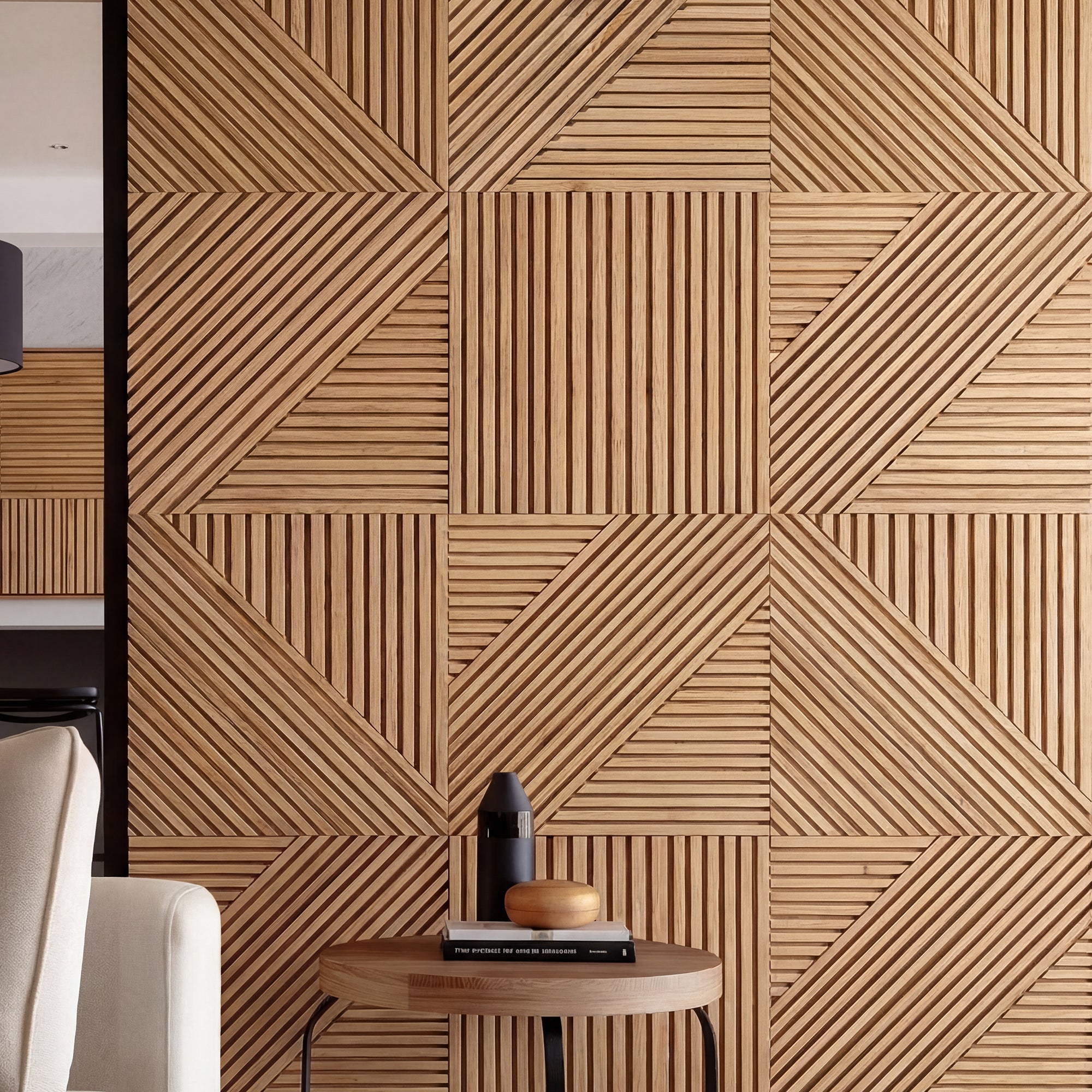
    For a more dramatic, conversation-starting statement, the geometric solid wood of our Crossing Lines Solid Wood Wall Panels | GroovePanel® creates a dining backdrop that feels truly artisanal.

    Crossing Lines Solid Wood Wall Panels - GroovePanel® as dining room backdrop - The Panel Hub

    Large-Format Artwork

    A single oversized artwork on a dining wall — a landscape, botanical, portrait, or abstract — creates a focal point that shapes conversation and sets the room’s mood. The scale matters: in a dining room, a piece that feels too large in isolation often reads correctly on the wall. Aim for a canvas or print that is at least two-thirds the width of the dining table, hung so its centre aligns with eye level at seated height (approximately 1350mm from floor to artwork centre).

    Stone Feature Walls

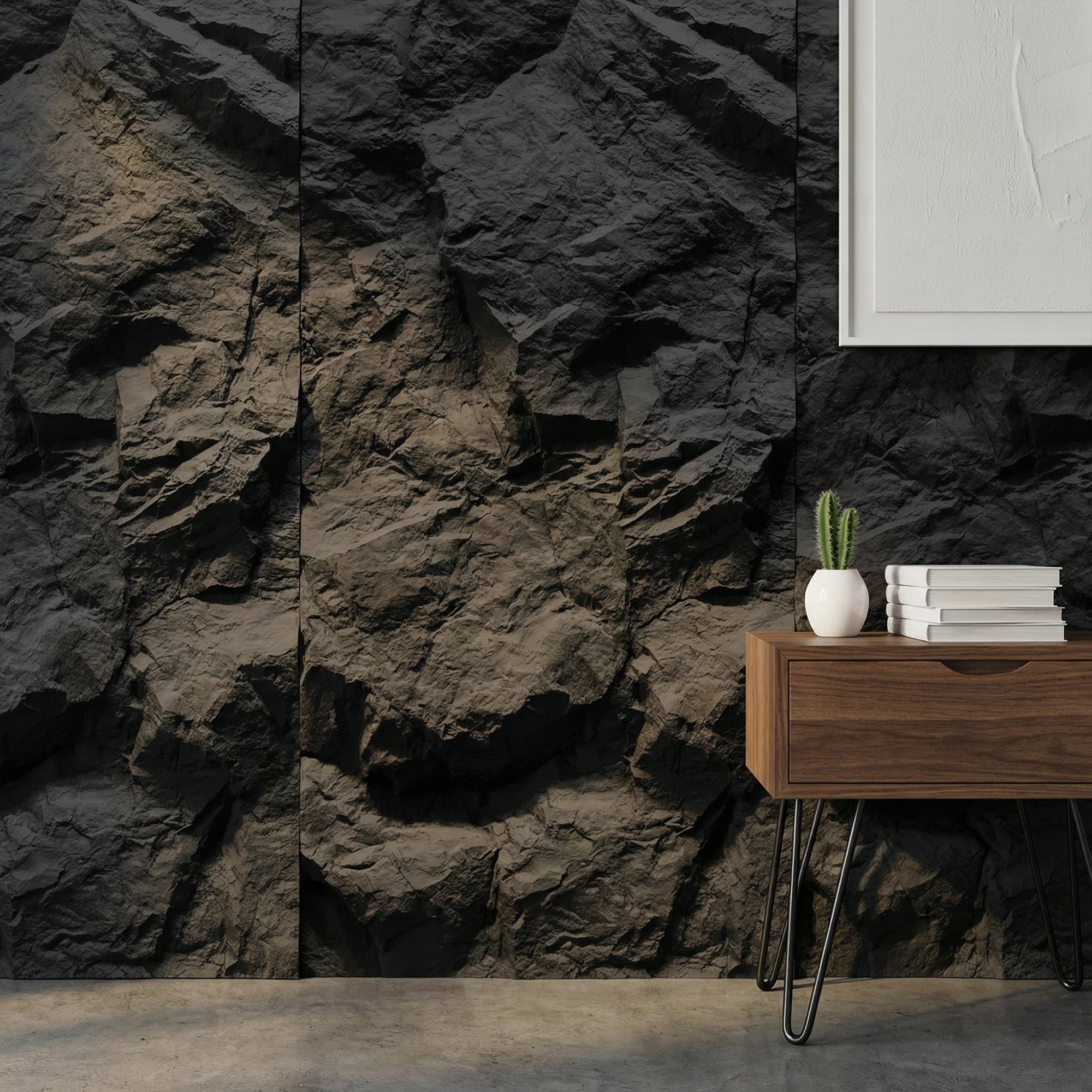
    A stone-effect feature wall in a dining room creates a rich, layered material backdrop — particularly effective in open-plan spaces where the dining zone needs visual definition from the adjacent kitchen or living area. Our Highland Rock Wall Panel | RockSurface® delivers a convincing stone texture at a fraction of the weight and cost of real stone cladding.

    Highland Rock Wall Panel RockSurface® as dining room feature wall - The Panel Hub

    Mirrors — Expanding and Illuminating

    A large dining room mirror — either a traditional framed piece above a sideboard, or a contemporary floor-to-ceiling panel — doubles the apparent size of the room and reflects candlelight and pendant lighting beautifully. In smaller dining rooms, this is one of the most effective space-expanding moves available. Position opposite a window to maximise daylight reflection, or opposite a pendant for an evening dining atmosphere.

    Open Display Shelving

    Open shelving in the dining room — displaying ceramics, glassware, decanters, books, and small artworks — creates an immersive, restaurant-quality display that makes the room feel curated and personal. Timber shelves in a tone that coordinates with a panel feature wall on an adjacent surface create a cohesive, material-led dining room story.

    Statement Lighting as Wall-Adjacent Decor

    The pendant light above the dining table is often the room’s most prominent decorative element — and its relationship to the walls behind it shapes the entire atmosphere. Large pendant clusters (multiple pendants at varying heights), statement drum shades, or dramatic chandelier forms all create a ceiling-level focal point that shapes the room’s character without touching a single wall. Pair with dimmers for full atmospheric control.

    By Dining Room Style

    Modern Formal

    Dark walnut or charcoal slat panels on the main wall, one large-format artwork in a simple frame, statement pendant, no clutter. Restraint and quality materials.

    Warm Casual

    Golden oak panels or limewash paint, open shelving with ceramics and plants, relaxed mixed-frame gallery, warm pendant lighting.

    Industrial Bistro

    Stone-effect feature wall (RockSurface®), exposed-look shelving, Edison bulb pendants, mix of reclaimed timber and metal accessories.

    Farmhouse

    Shiplap or vertical timber panels, open plate display, ceramic collections, warm textiles. Read our farmhouse wall decor guide for more.

    Frequently Asked Questions

    What colour should a dining room feature wall be?

    For panel feature walls in dining rooms, rich warm tones — walnut, dark oak, deep terracotta — create the most intimate, restaurant-like atmosphere. For paint-only walls, deep jewel tones (navy, forest green, burgundy) are popular in formal dining rooms; warm neutrals (terracotta, warm grey) suit casual dining spaces.

    How do I reduce noise in a dining room?

    Acoustic slat wall panels on one or two walls are the most effective architectural solution for reducing dining room reverberation. Combined with a soft rug under the table, upholstered chairs, and curtains, acoustic panels bring reverberation times down to a comfortable level even in rooms with hard floors and high ceilings.

    Conclusion

    The best dining room wall decor creates an atmosphere that makes people want to linger — where the room itself contributes to the pleasure of the meal. Wood panels, large-format artwork, statement mirrors, and considered lighting each play a distinct role. The dining rooms that feel most special are usually the ones where all of these elements work together rather than any single element trying to do everything alone.

  • Farmhouse Wall Decor: Rustic Warmth for the Modern Home

    Farmhouse Wall Decor: Rustic Warmth for the Modern Home

    Farmhouse interior design has proven to be one of the most enduring aesthetic movements in home decor — and for good reason. Its combination of natural materials, worn textures, practical simplicity, and warm homeliness creates spaces that feel genuinely comfortable rather than aspirationally perfect. Wall decor is where the farmhouse character is most strongly expressed, and the right choices create a warmth that no amount of furniture can replicate.

    Natural Wood Panel Walls

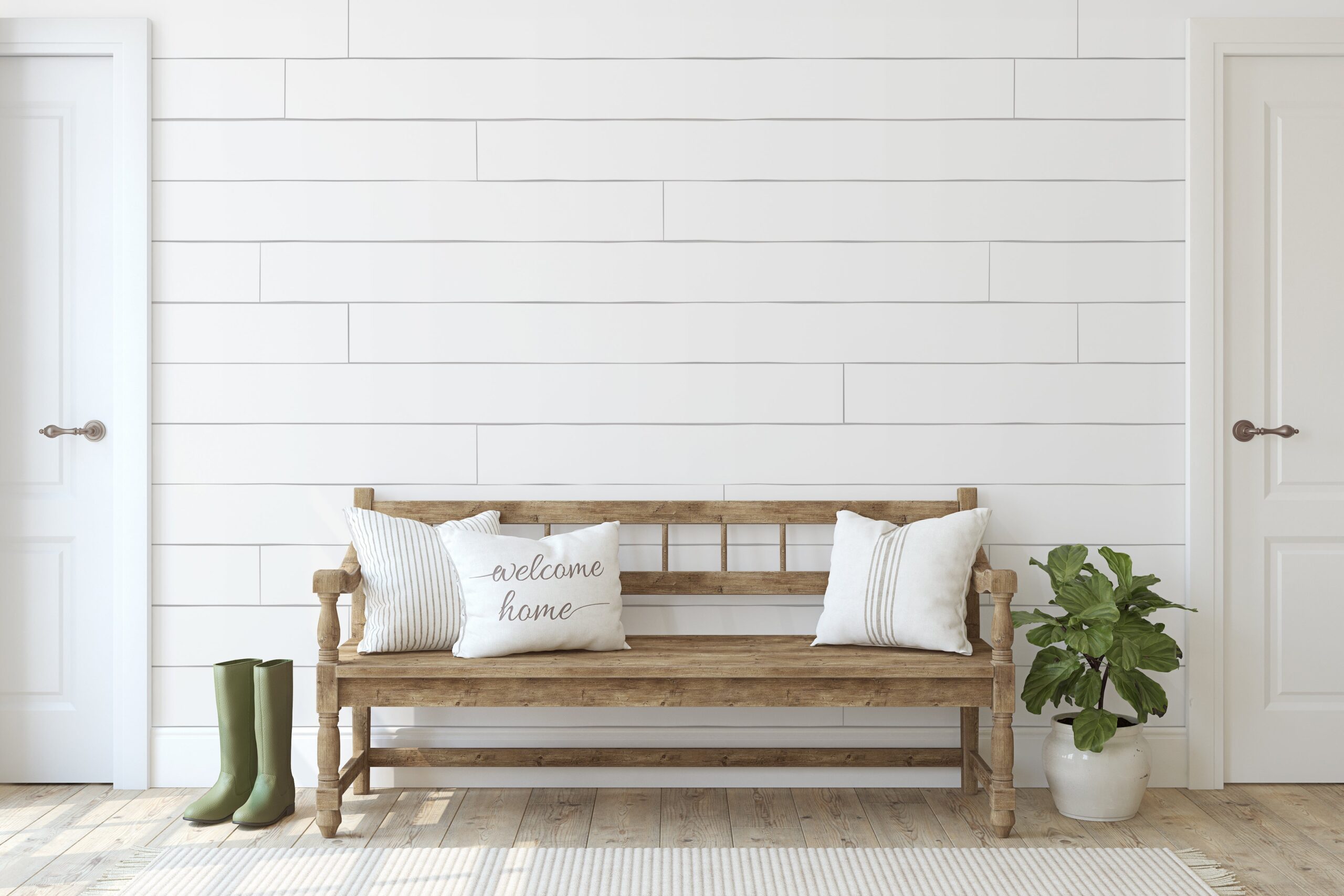
    Raw, natural timber is the soul of farmhouse design. On walls, it expresses as shiplap, vertical board-and-batten, or in contemporary farmhouse interiors — wood slat and mosaic panels that bring organic grain and natural variation to the surface without requiring tongue-and-groove installation.

    Our Crossing Lines Solid Wood Wall Panels | GroovePanel® in natural and walnut finishes bring 100% solid wood texture to a feature wall — the interlocking geometric pattern has the kind of artisanal, crafted quality that speaks directly to the farmhouse aesthetic. For a warmer, more mosaic-like warmth, our Honey Mosaic Wood Wall Panels | GroovePanel® deliver solid walnut with a handcrafted, tile-like arrangement.

    Honey Mosaic Wood Wall Panels - GroovePanel® farmhouse feature wall - The Panel Hub

    Acoustic slat panels in Golden Oak — with their warm, regular rhythm — bring a more refined farmhouse sensibility to spaces that want natural wood texture without the rougher quality of true rustic timber. Our SoundPanel™ is particularly effective on kitchen dining walls and living room feature walls in contemporary farmhouse interiors.

    SoundPanel™ Golden Oak slat panels in farmhouse interior - The Panel Hub

    Stone Feature Walls

    Stone — whether real or effect — is another foundational farmhouse material, particularly for chimney breasts, kitchen feature walls, and fireplace surrounds. Our Highland Rock Wall Panel | RockSurface® delivers a convincing textured stone finish that suits the farmhouse aesthetic especially well in warm, charcoal, and natural stone tones.

    Highland Rock Wall Panel RockSurface® as farmhouse fireplace feature - The Panel Hub

    Vintage and Antique Signage

    Farmhouse walls often feature vintage-style typography — hand-painted wooden signs, metal lettering, or antique advertising prints. These can be ironic, nostalgic, or simply warm in their messaging. Group in clusters or use as a single focal piece. The key to farmhouse signage that reads as authentic rather than kitsch is choosing pieces in aged, worn finishes rather than pristine new condition.

    Open Display Shelving with Ceramics

    In farmhouse kitchens and dining rooms, open wall shelving displaying ceramic plates, stoneware, vintage pitchers, and glass jars is a decorative and functional tradition. Timber shelves with simple iron brackets, styled with mismatched ceramics in warm neutral tones, create the kind of lived-in display that characterises the aesthetic. Position on a wall adjacent to a wood panel feature wall for a layered, warm material story.

    Woven and Textile Wall Art

    Woven baskets, textile wall hangings, and braided fibre pieces add warmth and handmade character to farmhouse walls. Large woven baskets hung as art on a plasterboard wall create texture without paint or panels. Textile wall hangings in natural cotton, linen, or wool bring softness and movement to surfaces that would otherwise be hard and reflective.

    Clocks, Botanical Prints, and Framed Collections

    Oversized farmhouse clocks — in iron or distressed wood frames — are a classic farmhouse wall statement. Large-format botanical illustrations (framed in simple oak or pine) bring the organic world indoors. Framed collections — vintage seed packets, pressed wildflowers, antique maps — tell a story and create visual interest in smaller wall spaces. All work best on walls with warm, natural-toned backgrounds: cream paint, limewash, or natural wood panels.

    The Farmhouse Wall Palette

    • Warm white and cream — the base. Allows wood and stone textures to read clearly without competing background colour.
    • Natural wood tones — honey oak, natural walnut, aged pine. The warmth anchor of the palette.
    • Stone grey and charcoal — for fireplace surrounds, stone feature walls, and iron accessories.
    • Sage green and soft terracotta — accent colours in textiles, ceramics, and occasional painted wall sections.

    Frequently Asked Questions

    What is the difference between farmhouse and rustic decor?

    Rustic decor leans into raw, rough, and unfinished materials — reclaimed timber, exposed stone, natural imperfection. Farmhouse decor takes the same materials but with more intention — cleaner lines, coordinated palette, more controlled layering. Contemporary farmhouse in particular combines rustic warmth with modern simplicity.

    Can I create a farmhouse wall in a modern home?

    Yes — farmhouse wall elements (wood panels, stone effect, woven textiles) work in contemporary homes when balanced with clean-lined furniture and a restrained colour palette. The wood panel feature wall is the easiest single element to introduce farmhouse warmth into a modern interior without a full aesthetic overhaul.

    Conclusion

    Farmhouse wall decor is fundamentally about warmth — natural materials, worn textures, handmade elements, and a palette that feels nourishing rather than aspirational. Wood panels, stone feature walls, open shelving, and woven textiles are the core ingredients. Used together thoughtfully, they create the timeless, lived-in warmth that has made the farmhouse aesthetic one of the most enduring in contemporary interior design.

  • Hallway Wall Paneling Ideas: Transform Your Entryway

    Hallway Wall Paneling Ideas: Transform Your Entryway

    Hallways are the most-used space in any home — every journey between rooms passes through them — yet they’re often the last to receive any design attention. Wall paneling changes that. In a hallway, panels add protection against everyday wear, create visual interest in a space that’s otherwise just a transition, and can dramatically alter the perceived proportions of a narrow corridor.

    Why Paneling Works So Well in Hallways

    Durability Where It Matters Most

    Hallway walls take more physical abuse than any other surface in the home — bags, coat shoulders, furniture being moved. Paint scuffs; plaster dents. A properly sealed panel surface resists everyday contact damage significantly better, and is far easier to wipe clean when marks do appear.

    Proportional Improvement

    The right panel orientation and color can make a narrow hallway feel wider, a low-ceilinged one feel taller, and a short one feel longer. Paneling is one of the few design interventions that actively changes the perceived dimensions of a space without structural work.

    Design Continuity

    As the throughway between all rooms, a hallway that picks up material cues from adjacent spaces creates a sense of whole-home design. Wood panels in a tone that echoes your living room flooring or kitchen cabinetry make the home feel designed as a unified whole rather than room by room.

    Hallway Paneling Styles

    Full-Height Feature Wall

    For a bold entry statement, full-height panels on the wall facing the front door create an immediate arrival moment. This works best with a clear sight line to the feature wall — if you can see it from the door, it frames the home’s interior design instantly.

    SoundPanel™ acoustic slat panels on an entry feature wall also reduce the echo that exists in most hard-surfaced hallways — an acoustic benefit paired with a clear visual one.

    Dado Height Paneling

    The classic hallway approach: panels cover the lower half of the wall (typically 900–1100mm high) with a painted finish above. The dado rail at the top of the panel zone acts as a visual divider and practical protection line. This style suits period properties particularly well and works in narrow hallways where full-height panels on both sides would feel heavy.

    Staircase Feature Wall

    The wall alongside a staircase is one of the most dramatic canvas opportunities in the home. A full run of wood panels following the staircase rake — floor to ceiling from bottom to top of the stairs — transforms what’s typically a blank wall into a continuous design feature.

    Read More: Hallway and Stairs Ideas: Transform Your Home’s First Impression

    End-Wall Focal Point

    In a longer hallway, a single panelled end wall creates a destination — a visual full stop that makes the hallway feel intentional rather than transitional. A dark tone (Walnut or Charcoal) on an end wall with a light-toned hallway creates a dramatic framing effect that draws the eye the full length of the corridor.

    Choosing the Right Panel for Your Hallway

    Narrow Hallways (under 1.2m wide)

    • Lighter panel tones — they reflect more light and make the space feel less enclosed
    • Vertical slat orientation — draws the eye up, creating an impression of height
    • Panels on one side only — panelling both sides of a very narrow hallway can feel oppressive

    Wider Hallways (1.5m+)

    Wider hallways can take darker tones, horizontal orientations, and panels on both sides without feeling cramped. A panelled alcove or recessed niche on each side of a wide hall creates a gallery-like corridor effect that feels genuinely architectural.

    Light Levels

    Most hallways have limited natural light. For dark hallways:

    • Opt for lighter panel tones (Golden Oak, Natural) to maximise perceived brightness
    • Add lighting specifically to illuminate the panels — a recessed downlight or LED strip angled across the panel surface makes a significant difference to both the space’s brightness and the panel’s visual impact

    If your hallway has good natural light — a skylight, glazed front door, or borrowed light — you have more freedom with darker tones. Walnut panels in a well-lit hallway look exceptionally rich.

    Hallway Paneling by Property Type

    Victorian and Edwardian Terrace

    Period properties suit dado-height paneling with a painted finish above. Choose panels with a clean classic profile rather than deeply textured slats. A warm mid-tone (Golden Oak) echoes the original timber joinery common in period properties without feeling anachronistic.

    Modern New Build

    New build hallways typically have white walls, modern doors, and minimal architectural detail. Full-height acoustic slat panels on one wall create instant character where there was none. Walnut or Charcoal tones work well against the clean white palette of modern builds.

    Open-Plan Entryway

    Where the hallway flows into an open-plan living space, a panel installation that spans the dividing wall between the two zones creates a visual threshold — defining the entry area without closing it off. Using the same panel as the adjacent living room creates material continuity between the two spaces.

    Product Recommendations

    American Acoustic Slat Wood Wall Panels | SoundPanel™

    American Acoustic Slat Wood Wall Panels - SoundPanel™ - The Panel Hub

    Our most popular choice for hallway feature walls. The acoustic backing reduces the hollow echo common in hard-surfaced hallways, while the slat profile adds warmth and texture to what is often the most neutral space in the home.

    Crossing Lines Solid Wood Wall Panels | GroovePanel®

    Crossing Lines Solid Wood Wall Panels - GroovePanel® - The Panel Hub

    For hallways where the entry statement matters most. The geometric solid wood pattern creates a striking focal point — particularly effective on the wall facing the front door.

    Highland Rock Wall Panel | RockSurface®

    Highland Rock Wall Panel - RockSurface® - The Panel Hub

    For a bold, contemporary entry experience, the stone-effect RockSurface® panel creates an immediate material statement on the entry wall — and is highly resistant to physical contact, making it practically ideal for hallways.

    Frequently Asked Questions

    Can I panel over existing wallpaper?

    We don’t recommend it. Wallpaper creates an uneven surface that reduces adhesive contact area and can cause panels to peel over time. Remove wallpaper, repair the wall surface, and apply panels to bare plaster for the most reliable result.

    How high should hallway panels be?

    For dado-height paneling, the standard is 900–1100mm from floor level. For full-height panels, run from skirting board to ceiling for the cleanest result. Two-thirds height (stopping short of the ceiling) is also popular in modern interiors and avoids the need for precise ceiling-height cuts.

    Should I panel one side or both sides of the hallway?

    For hallways under 1.2m wide, one side only. For hallways 1.5m and wider, both sides can work well. In between, a feature wall (one panelled side) with contrasting paint or wallpaper on the opposite side is a good middle ground.

    Will panels make a dark hallway darker?

    Only if you choose a dark panel tone without compensating with lighting. A light panel tone (Golden Oak, Natural) in a dark hallway typically makes it feel brighter — the wood grain and slat texture scatter light more effectively than flat plasterboard. Add a downlight or LED strip angled at the panel surface for best results.

    Conclusion

    A panelled hallway is a relatively small investment that makes a disproportionately large impact — both on how the home feels to live in and how it reads to visitors on arrival. The right panel tone, height, and orientation can transform a blank corridor into a considered design feature that sets the tone for the whole home.

  • How to Build a Media Wall: Step-by-Step Guide with Wood Panels

    How to Build a Media Wall: Step-by-Step Guide with Wood Panels

    A media wall transforms an ordinary living room into a cinematic focal point — combining your TV, storage, lighting, and feature wall into one seamless design statement. When finished with wood panels, the result sits somewhere between a luxury hotel lounge and a high-end interior showroom.

    This guide walks you through every step: from planning your layout to mounting your TV and adding the lighting touches that make a media wall truly stand out.

    Read More: 5 Media Wall Ideas and Designs for Inspiration

    What Is a Media Wall?

    A media wall is a purpose-built feature wall designed to house your TV, AV equipment, and often integrated shelving or cabinetry — all unified behind a single decorative surface treatment. Unlike a standard TV mounted on a plain wall, a media wall is a considered design element that becomes the room’s centrepiece.

    Wood panels are the most popular finishing material for media walls — they add warmth, texture, and acoustic benefit while complementing both modern and transitional interior styles.

    Planning Your Media Wall

    Good planning separates a media wall that looks professionally designed from one that feels improvised. Before ordering materials, work through these decisions.

    Wall Dimensions and TV Size

    Measure your wall from floor to ceiling and decide how much of it the media wall will cover. As a general guide:

    • A full-height, floor-to-ceiling installation creates the most dramatic impact but requires careful cable management
    • A two-thirds height configuration works well in rooms with lower ceilings
    • For TV sizing, the ideal viewing distance is approximately 1.5–2.5x the screen diagonal — a 65″ TV suits a room depth of roughly 2.5–4 metres

    Cable Management

    Plan cable routing before any panels go up. Surface-mounted trunking can be hidden behind panels, or cables can be chased into the wall if you have access. Decide upfront where your power points and media connections will sit — retrofitting these after panels are installed is expensive and disruptive.

    Fireplace Integration

    Many media walls incorporate an electric fireplace beneath the TV. If that’s your plan, choose a fireplace with sufficient safety clearance distance, and check that your wall panels carry an appropriate fire-safety rating for proximity to heat sources.

    Choosing the Right Wood Panels for a Media Wall

    Not all wood panels suit a media wall equally well. Here’s how to match panel type to your design goals.

    Acoustic Slat Panels — Best for Reducing Echo

    If your living room suffers from echo or has hard surfaces (stone flooring, glass, high ceilings), acoustic slat panels are the ideal choice. The textured surface and acoustic backing absorb sound reflections, improving audio clarity from your TV and sound system.

    Our American Acoustic Slat Wood Wall Panels | SoundPanel™ are particularly well suited to media walls — the deep slat profile creates a rich shadow-play effect that looks exceptional with backlighting, while the real wood veneers deliver genuine warmth.
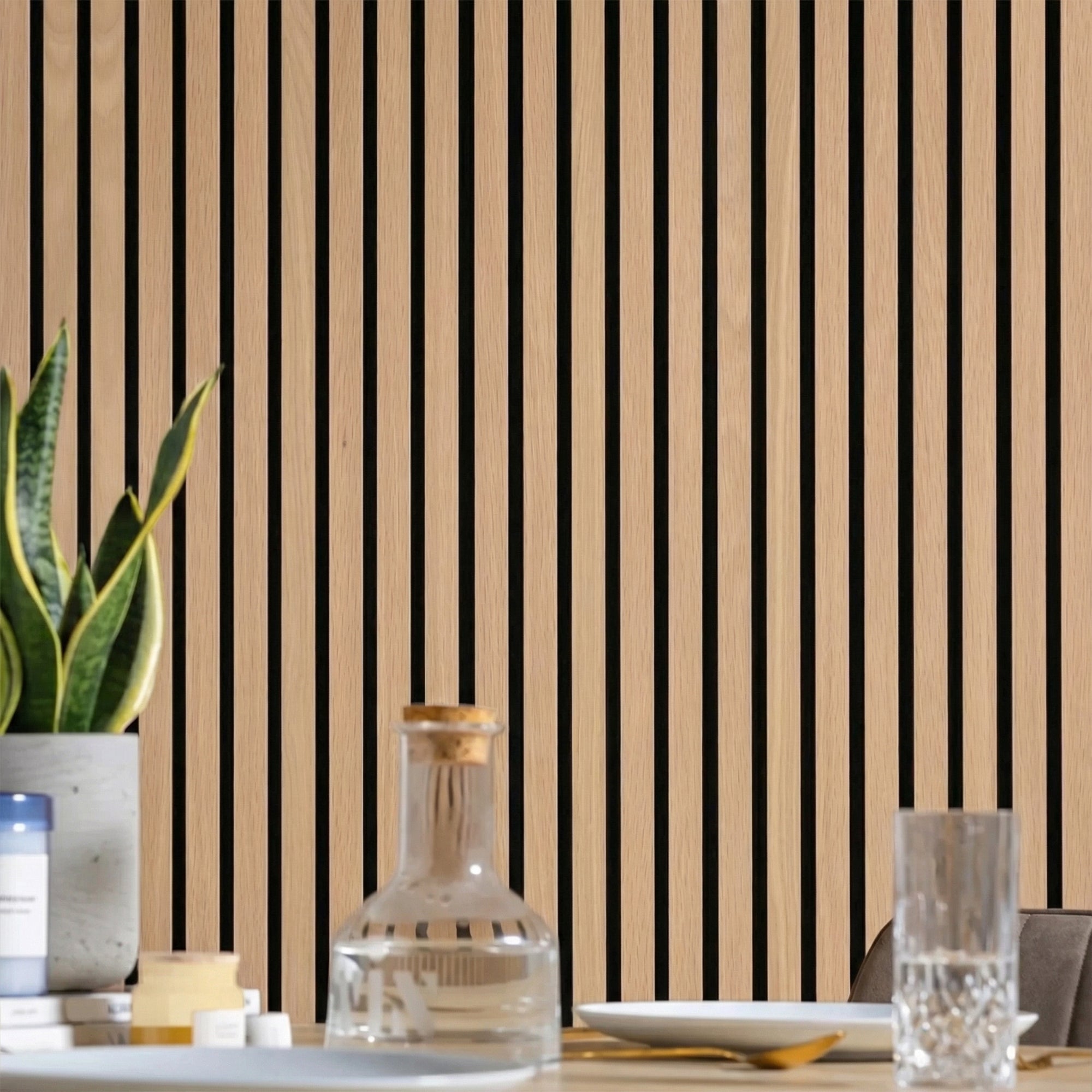
    American Acoustic Slat Wood Wall Panels - SoundPanel™ - The Panel Hub

    Solid Wood Mosaic Panels — Best for Visual Drama

    For a media wall where the design statement is the priority, solid wood mosaic panels deliver extraordinary texture. The interlocking geometric patterns of our Crossing Lines Solid Wood Wall Panels | GroovePanel® create a sophisticated visual rhythm that frames the TV without competing with it.
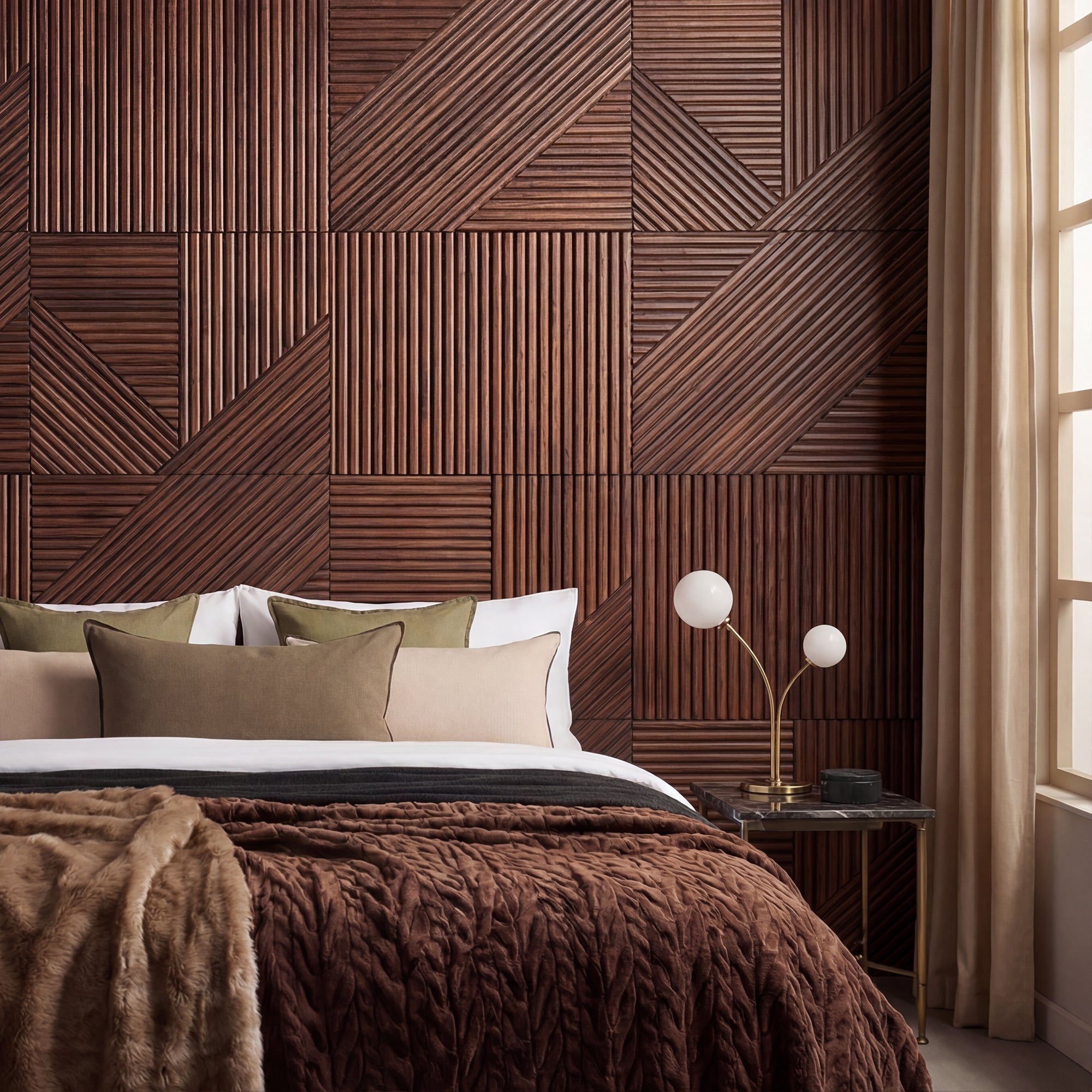
    Crossing Lines Solid Wood Wall Panels - GroovePanel® - The Panel Hub

    Choosing Your Finish

    Consider the rest of the room when selecting a finish:

    • Walnut / Dark tones — dramatic and cinematic; suits modern and industrial interiors with contrasting light furnishings
    • Golden Oak / Light tones — warm, Scandinavian feel; suits neutral interiors and rooms with natural light
    • Mixed tones — combining a dark panel directly behind the TV with lighter panels on surrounding sections adds depth without visual chaos

    Read More: Interior Wood Slat Wall Ideas: Inspiration for Every Room

    Tools and Materials You’ll Need

    • Wood wall panels (measure your wall and order with 10–15% extra for wastage and cuts)
    • High-quality panel adhesive
    • Spirit level
    • Tape measure and pencil
    • Fine-tooth handsaw or circular saw with fine-tooth blade
    • Drill and drill bits
    • Wall plugs and screws (for perimeter fixing on larger installations)
    • Sandpaper (120 and 180 grit, for cut edges)
    • Stud finder
    • LED light strip kit (optional but highly recommended)
    • TV wall mount bracket (low-profile or tilting, depending on viewing angle preference)

    Step-by-Step: How to Build a Media Wall with Wood Panels

    Step 1 — Prepare the Wall Surface

    The wall must be clean, dry, and structurally sound before any panels are applied. Remove existing artwork, shelving, or fixtures. Fill any holes or cracks and allow filler to fully cure. If the wall has a glossy painted surface, lightly sand it to improve adhesion. Wipe down with a dry cloth to remove dust.

    Mark the centre of your wall with a vertical pencil line — this is your reference point for ensuring the panel layout is symmetrical around the TV position.

    Step 2 — Mark Out Your Layout

    Using your centre line as a reference, mark where each panel row will start and end. Use a spirit level to draw horizontal guide lines. Decide whether panels will run full height or to a specific panel-height mark. Mark the TV bracket position and confirm it aligns with a wall stud for safe mounting.

    Dry-lay a few panels on the floor to confirm your pattern direction and starting point before applying any adhesive.

    Step 3 — Install the Panels

    Apply panel adhesive in a serpentine pattern to the back of each panel — enough to create solid contact across the full surface, but not so much that it squeezes out the sides on contact. Press the panel firmly to the wall and hold for 30–60 seconds. Check alignment with your spirit level before the adhesive sets.

    Work from your centre line outwards in both directions, maintaining consistent spacing between panels. For edges and corners, measure and cut panels with a fine-tooth saw, then lightly sand cut edges before installation.

    Tip: Leave the panels in the TV zone unmounted until after the TV bracket is secured to the wall.

    Step 4 — Mount the TV Bracket

    With panels in place everywhere except the TV zone, mark and drill your TV bracket fixing points into the wall studs. Feed your HDMI, power, and other cables through the wall or trunking channel before mounting. Then complete the panel installation around the bracket. The panels should sit flush to, or slightly proud of, the bracket base plate — this creates a clean floating appearance once the TV is hung.

    Step 5 — Add LED Strip Lighting

    Backlighting transforms a media wall. Our LED Light Strip Kit is designed to mount directly behind SoundPanel™ and GroovePanel® installations. Position strips along the top edge of the panel run, down the sides, or behind the TV for a bias-light effect that reduces eye strain during viewing.

    LED strips run horizontally between panel rows also work well — they highlight the slat or pattern depth and create a layered lighting effect that photographs exceptionally well.

    Step 6 — Final Touches

    Hang the TV. Dress any exposed cable runs with matching cable trunking in a tone that complements the panel finish. Add shelving, cabinetry, or decorative elements either side of the TV if desired.

    Stand back and review the panel alignment from a distance — minor adjustments are still possible within the first few hours before the adhesive fully cures. Once satisfied, panels reach full bond strength within 24 hours.

    Media Wall Design Ideas

    Full-Height Slat Panel Wall with Central TV

    A floor-to-ceiling installation of SoundPanel™ acoustic slat panels creates a bold, hotel-grade media wall. The TV mounts on a low-profile bracket, sitting flush within the panel surface. LED backlighting grazes down the slat texture for a warm, diffused glow that accentuates the wood grain.

    Mixed Tone — Dark Centre, Light Perimeter

    Use walnut-tone panels directly behind the TV, transitioning to golden oak on the surrounding panels. The contrast creates a natural frame for the TV without any additional moulding or trim — the tonal shift does all the work.

    Geometric Mosaic Feature Wall

    A media wall built from Honey Mosaic Wood Wall Panels | GroovePanel® creates a genuinely unique installation — the warm, handcrafted aesthetic works especially well in living rooms that lean eclectic or transitional.
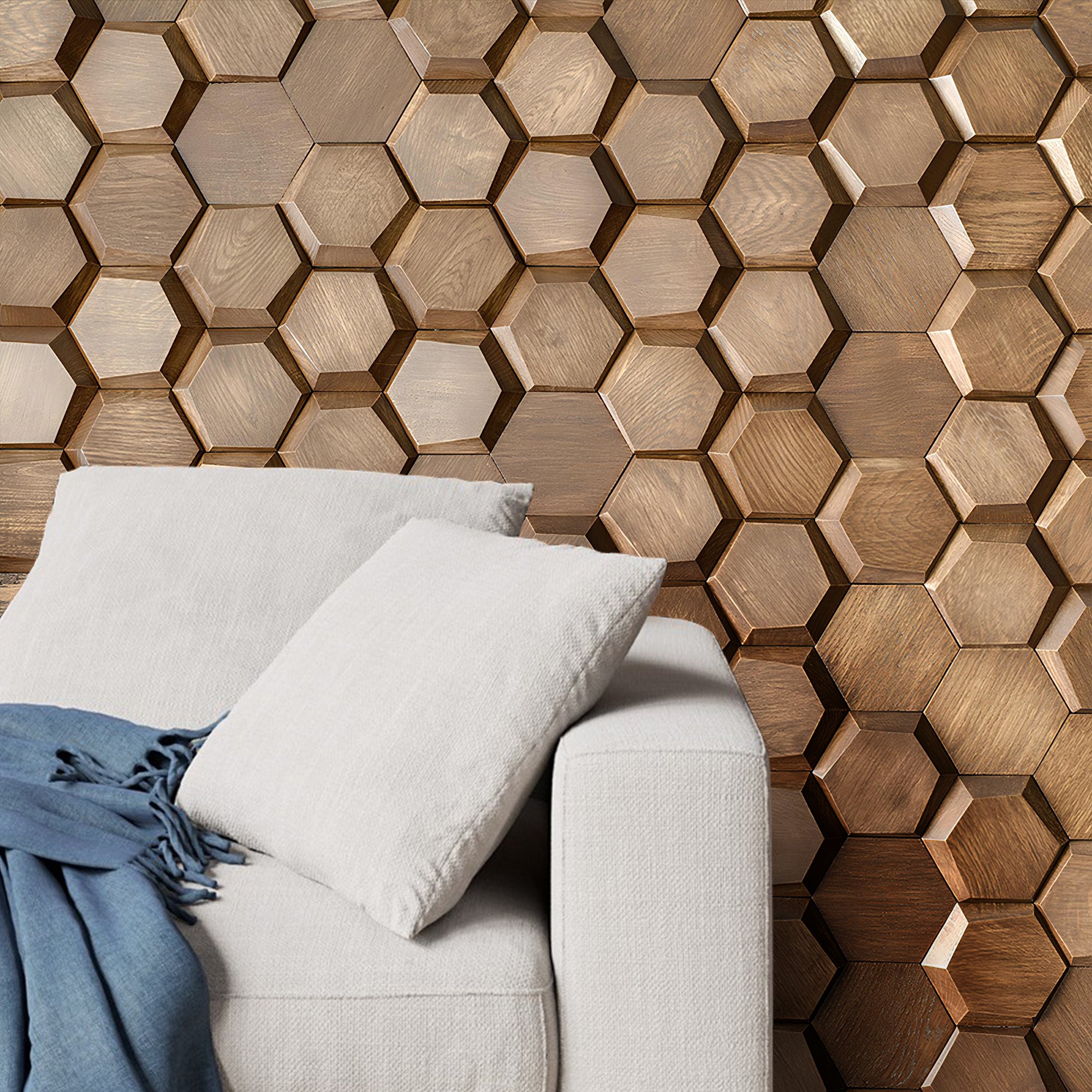
    Honey Mosaic Wood Wall Panels - GroovePanel® - The Panel Hub

    Common Mistakes to Avoid

    • Skipping the stud finder: Always locate and mark wall studs before mounting the TV bracket. A TV falling from the wall is dangerous and expensive.
    • Ignoring cable management until the end: Retrofitting cable channels through installed panels is difficult. Plan routes before the first panel goes up.
    • Applying adhesive to a dusty wall: Dust acts as a release agent. A single wipe-down before installation dramatically improves adhesion.
    • Not checking for level frequently: Check with a spirit level after every third or fourth panel, not just at the end of each row. Errors compound.
    • Ordering exactly the right amount of material: Always add 10–15% for wastage. Running short mid-installation and waiting for a new batch risks visible colour variation between batches.

    Frequently Asked Questions

    Do I need to hire a tradesperson to build a media wall?

    For the panelling itself, no — our panels are designed for DIY installation. However, if you’re adding new power sockets, chasing cables into the wall, or integrating a gas or flued fireplace, you’ll need a qualified electrician or gas engineer for those elements.

    Can I mount a TV on wood wall panels?

    Yes, but the bracket must be fixed into the structural wall behind the panels — not the panels themselves. Panels are decorative and not load-bearing. Use a stud finder to locate wall studs and drill the bracket fixings through the panel surface directly into them.

    How long does it take to build a media wall?

    A typical DIY media wall with wood panels can be completed over a weekend: half a day for preparation and planning, a full day for panel installation, and a few hours for TV mounting and finishing.

    What’s the best wood panel for a media wall?

    SoundPanel™ acoustic slat panels are our top recommendation — the acoustic backing reduces echo from the TV and sound system, while the slat profile creates a premium, tactile finish that looks exceptional with backlighting.

    Do wood panels work with an electric fireplace?

    Yes, provided you maintain the manufacturer’s specified clearance distance between the fireplace and any combustible material. Most electric fireplaces specify a minimum clearance of 100–200mm. Always check the fireplace spec sheet before finalising your panel layout.

    Conclusion

    A well-built media wall is one of the most impactful single upgrades you can make to a living room — and with the right wood panels, it’s entirely achievable as a DIY project over a weekend.

    The keys: plan your layout before touching a panel, manage cables before they become a problem, and choose your panel type to match both the aesthetic and acoustic goals of the space.

    Ready to start? Explore our most popular media wall panels:

    Shop: LED Light Strip Kit — designed to integrate seamlessly with SoundPanel™ and GroovePanel® installations for effortless ambient lighting behind your media wall.
  • How to Choose Wall Panel Colors: A Room-by-Room Guide

    How to Choose Wall Panel Colors: A Room-by-Room Guide

    Choosing the wrong color for your wall panels is an expensive mistake — hard to fix once the panels are installed. The right color can make a room feel larger, warmer, more dramatic, or more serene. The wrong one can make it feel dark, chaotic, or flat.

    This guide walks through the decisions that lead to a confident color choice: how lighting affects panel tone, how to coordinate panels with existing finishes, and which colors tend to work best room by room.

    How Lighting Changes Everything

    Wall panels look different under different light conditions — and the difference is more dramatic than with flat paint, because the three-dimensional texture of slats creates shadow lines that shift as light changes throughout the day.

    • North-facing light (cool, diffused): Warms up dark panels; can make light panels feel cold. Mid-tones like walnut and natural oak tend to read best.
    • South-facing light (warm, bright): Flatters lighter panels — golden oak and pale natural finishes look rich and warm. Very dark panels can feel oppressive under intense direct sunlight.
    • Warm white artificial lighting (2700–3000K): Emphasises warm tones in wood grain. Golden Oak deepens to a rich amber; Walnut reads as deep burnished brown.
    • Cool white artificial lighting (4000K+): Brings out grey undertones. Works well with charcoal; can make warm oak tones appear greenish.

    Always view a sample in your actual room at different times of day before committing to a full order. Wood tones look significantly different on screen versus in person and under different light conditions.

    Coordinating Panels with Existing Finishes

    Flooring

    • Matching tones: Floor and wall panel in the same wood family creates cohesive warmth — popular in Scandinavian and Japandi interiors. Risk: the room can feel monochromatic without contrast elsewhere.
    • Contrasting tones: Dark panels with light floor (or vice versa) creates definition between surfaces. The room feels grounded and the feature wall reads clearly.
    • Matching undertones: A floor with warm golden undertones pairs naturally with warm golden oak panels. A floor with cool grey undertones pairs better with charcoal or cooler-toned wood.

    Furniture

    You don’t need an exact match between panel tone and furniture — in fact, exact matches can look staged. Aim for tonal coordination (same warm or cool family) with a clear difference in shade depth, bridged by an accent — a cushion, rug, or artwork that picks up both the panel and furniture finish.

    Wall Paint

    • White or very light painted walls make dark panels more dramatic — high contrast, modern feel
    • Mid-tone complementary walls (sage green, warm grey, terracotta) create a richer, layered look alongside warm wood panels
    • Matching dark walls to dark panels creates an enveloping, moody aesthetic — popular in media rooms and bedrooms, but requires confident lighting to avoid feeling oppressive

    Golden Oak — The Most Versatile

    American Acoustic Slat Wood Wall Panels - Oak - View 1

    Golden Oak’s warm mid-amber tone sits comfortably with almost any interior palette. It works equally well in bright, airy spaces and warmer, more intimate rooms. It’s forgiving of mismatched furniture tones and photographs beautifully under both natural and artificial light. The most popular starting point for first-time panel installations.

    Best for: Living rooms, bedrooms, Scandinavian and transitional interiors.

    Walnut — Premium and Dramatic

    American Acoustic Slat White Felt Wood Wall Panels - Walnut - View 8

    Walnut’s deep rich brown creates striking contrast against light walls and pale furniture. In a well-lit room, walnut panels feel luxurious and enveloping — the natural grain variation adds depth without losing warmth. Under cool or bright light, the grain becomes more visible and detailed.

    Best for: Media walls, home offices, dining rooms, contemporary and high-end interiors.

    Charcoal / Dark Grey — Cinematic and Architectural

    grey-acoustic-slat-wall-panel-room-The Panel Hub

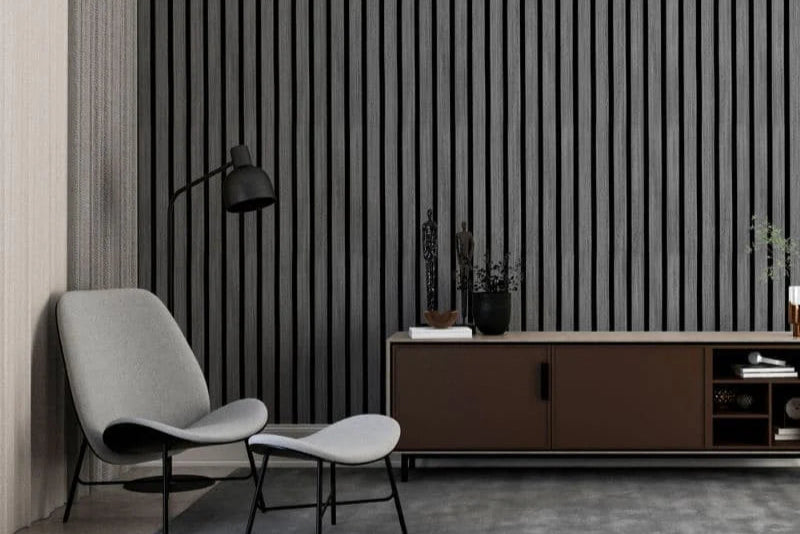
    Charcoal panels deliver an almost architectural feel — they recede from the room and create a dark, dramatic backdrop. Unlike black, charcoal retains wood grain texture and warmth. Combined with warm lighting, charcoal slat panels create one of the most cinematic wall effects achievable with a decorative panel.

    Best for: Media rooms, feature walls in neutral interiors, spaces that want drama without strong warmth.

    Natural / Light — Minimal and Japandi

    For interiors leaning pale, minimal, and Japandi-inspired, natural or light ash finishes deliver delicate wood texture that adds warmth without weight. Particularly effective in small rooms where darker finishes might feel heavy.

    Best for: Small rooms, bedrooms, Japandi and Scandinavian interiors, spaces with limited natural light.

    Room-by-Room Color Guide

    Living Room

    Golden Oak and Walnut are the most popular choices — Oak for warmer, more relaxed living rooms; Walnut for more modern, styled spaces. For a media wall with a TV, Walnut or Charcoal create the best visual contrast with the screen. Read our TV wall paneling guide for more specific advice.

    Bedroom

    Warm tones (Golden Oak, natural) create the most relaxing sleep environment for headboard feature walls. Dark tones (Walnut, Charcoal) work beautifully in bedrooms if the room is large enough and well-lit — avoid dark panels in bedrooms with minimal natural light.

    Home Office

    Medium to dark tones work well. Walnut panels on the wall behind a desk create a professional, premium backdrop for video calls. Avoid very light panels immediately behind a screen — the contrast can cause eye fatigue over long sessions.

    Hallway

    Narrow hallways benefit from lighter tones and vertical panel orientations, both of which create an impression of height and width. If the hallway has good lighting, a single dark feature wall at the far end creates a dramatic arrival moment. Read our full hallway paneling guide for more specific ideas.

    Dining Room

    Rich warm tones suit dining rooms well. For formal dining, darker panels create an intimate, restaurant-like atmosphere. For casual dining, lighter oak tones keep the space feeling open and sociable.

    Mixing Panel Colors

    Mixing tones intentionally is increasingly popular. The most common approach: a darker tone on the main feature wall (behind the TV or the sofa) transitioning to a lighter tone on adjacent walls. Keep the same panel profile and texture consistent — using the same slat format in different tones gives cohesion while adding depth.

    Frequently Asked Questions

    How do I know if a panel color will work in my room?

    Order a sample. It’s the single most reliable step — seeing the real panel in your room under your lighting next to your existing finishes eliminates virtually all color-choice risk. Photos and screen representations of wood tones vary significantly between monitors.

    Should my wall panels match my flooring?

    They don’t need to match — and in many cases it’s better if they don’t. Aim for tonal coordination (same warm or cool family) rather than exact matching. A mid-tone walnut panel with a lighter oak floor, or a golden oak panel with a darker walnut floor, creates natural contrast that gives the room depth.

    Are darker panels harder to keep clean?

    Darker panels can show dust more readily than lighter ones. Regular dusting with a dry or lightly damp cloth is all that’s needed — the factory-sealed finish on our panels resists dust buildup and cleans easily without specialist products.

    Can I mix different panel colors in the same room?

    Yes — and this is increasingly popular. Keep the same panel profile consistent and vary only the tone. This gives the room depth and intention rather than a chaotic multi-material feel.

    Conclusion

    The right wall panel color comes down to three filters: your room’s light, your existing material palette, and the mood you want to create. When in doubt — order a sample, view it in your room at different times of day, and trust what you see in the real space over anything on screen.

  • Kitchen Wall Decor Ideas: From Bare Walls to Beautiful Spaces

    Kitchen Wall Decor Ideas: From Bare Walls to Beautiful Spaces

    The kitchen is one of the most-used rooms in the home, yet often one of the most under-decorated. Between cabinetry, countertops, and appliances, available wall space is limited — which makes what you do with it all the more important. This guide covers the best kitchen wall decor options for every style and budget.

    Feature Wall Panels

    The highest-impact kitchen wall upgrade, particularly on walls away from the cooking zone. Wood slat panels on a kitchen dining wall, behind a breakfast bar, or on a lounge-adjacent kitchen wall create warmth and texture that balances the hard, reflective surfaces of kitchen fit-out — stainless steel, tile, glass.

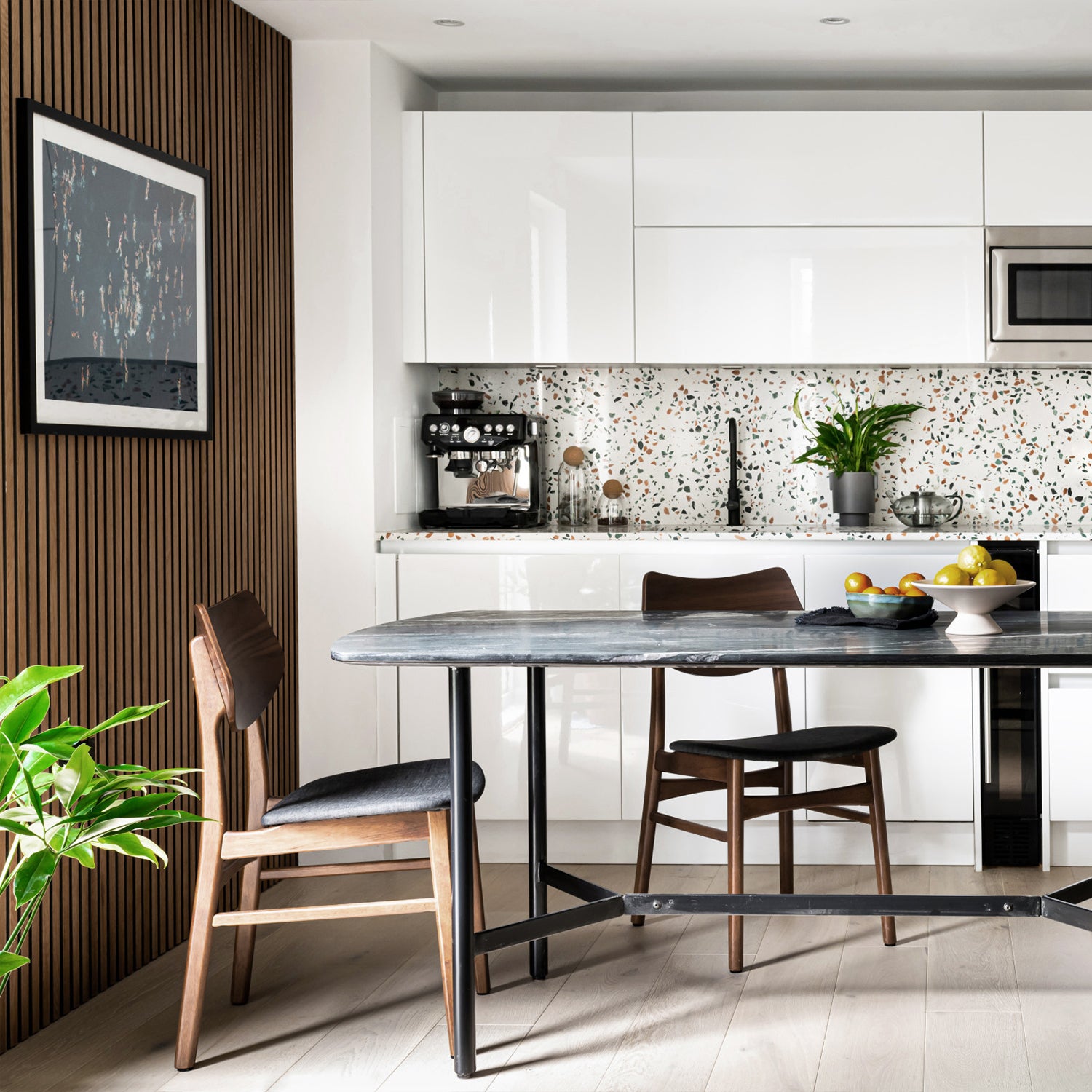
    Our SoundPanel™ acoustic slat panels in Golden Oak work exceptionally well in kitchen spaces — the warm natural wood tone softens the visual weight of cabinetry and adds a material warmth that kitchens often lack.

    SoundPanel™ wood slat panels in kitchen - The Panel Hub

    Note: Keep wood panels away from direct heat sources (hobs, ovens) and splashback zones. They’re ideal for dining walls, seating nooks, and kitchen-adjacent living areas. For waterproof splashback options, our kitchen wall paneling guide covers the right panel types for wet zones.

    Stone-Effect Feature Walls

    For kitchens where a natural stone or brick aesthetic is desired, stone-effect panels deliver the look without the weight, cost, or installation complexity of real stone. Our Highland Rock Wall Panel | RockSurface® is fully waterproof and creates a striking textural backdrop behind a kitchen island or on a dining feature wall.

    Highland Rock Wall Panel - RockSurface® in kitchen setting - The Panel Hub

    Open Shelving

    Open timber shelving serves both function and aesthetics — storage, display, and visual warmth simultaneously. Float shelves in a wood tone that coordinates with cabinetry or countertops, styled with a mix of everyday items (plates, glasses, jars) and decorative pieces (plants, ceramics, small artworks). Paired with a wood panel on the adjacent wall, open shelving creates a coherent, warm material story across the kitchen.

    Artwork and Large-Format Prints

    Kitchen artwork has evolved well beyond the retro fruit print. A single oversized botanical illustration, abstract composition, or dramatic food photography print in a cohesive palette makes a strong visual statement. Frame in a finish that coordinates with fixtures and hardware — brushed brass, matte black, or brushed steel depending on the kitchen’s metal palette.

    Plants and Vertical Greenery

    A vertical herb garden or trailing plant display brings life and function to kitchen walls. Simple timber planter shelves near a window — accessible for daily watering and benefit from good light — are both practical and visually warm. A single large statement plant (a fiddle-leaf fig, olive tree, or trailing pothos) in a corner adjacent to a panel feature wall creates a styled, organic counterpoint to the panels’ geometric precision.

    By Kitchen Style

    Modern Minimal

    One or two large-format pieces rather than a gallery arrangement. Materials: stone, concrete, natural wood. Restraint is the principle.

    Warm Contemporary

    Wood panels on one wall, open shelving on another, a statement plant. Warm tones throughout — golden oak, terracotta, aged brass. Currently the most popular kitchen aesthetic.

    Industrial

    Stone-effect panels (RockSurface®), metal shelving, dramatic pendants. Dark tones: charcoal, dark walnut, brushed steel.

    Farmhouse

    Vertical timber panels, open plate racks, ceramic displays. Natural and aged finishes. Read our farmhouse wall decor guide for more specific ideas.

    Frequently Asked Questions

    What wall decor works best in a small kitchen?

    In small kitchens, avoid busy gallery walls or large dark panels — both can make the space feel smaller. A single large piece of artwork, light-toned open shelving, or a light wood panel on one wall works better than multiple competing elements.

    Can I put wood panels in a kitchen?

    Yes — on walls away from direct heat and water. Wood panels on dining walls, seating areas, and kitchen-adjacent walls are an excellent choice. For splashback areas and walls directly behind hobs, specify waterproof panel materials instead.

    Conclusion

    The best kitchen wall decor adds warmth and personality to a space dominated by functional elements. Wood panels, open shelving, and large-format artwork are the three highest-impact options — each individually transformative, and even more effective in combination.

  • Living Room Wall Decor Ideas: Inspirations for Every Style

    Living Room Wall Decor Ideas: Inspirations for Every Style

    The living room is the home’s most social space — and its walls set the tone for everything that happens within it. Whether you want a room that feels warm and intimate, bold and dramatic, or calm and minimal, the wall decor choices you make will define that atmosphere more than almost any other decision.

    Wood Panel Feature Walls

    The highest-impact single upgrade in any living room. A wood panel feature wall — behind the sofa, on the media wall, or across the room’s longest surface — adds warmth, texture, and acoustic improvement simultaneously.

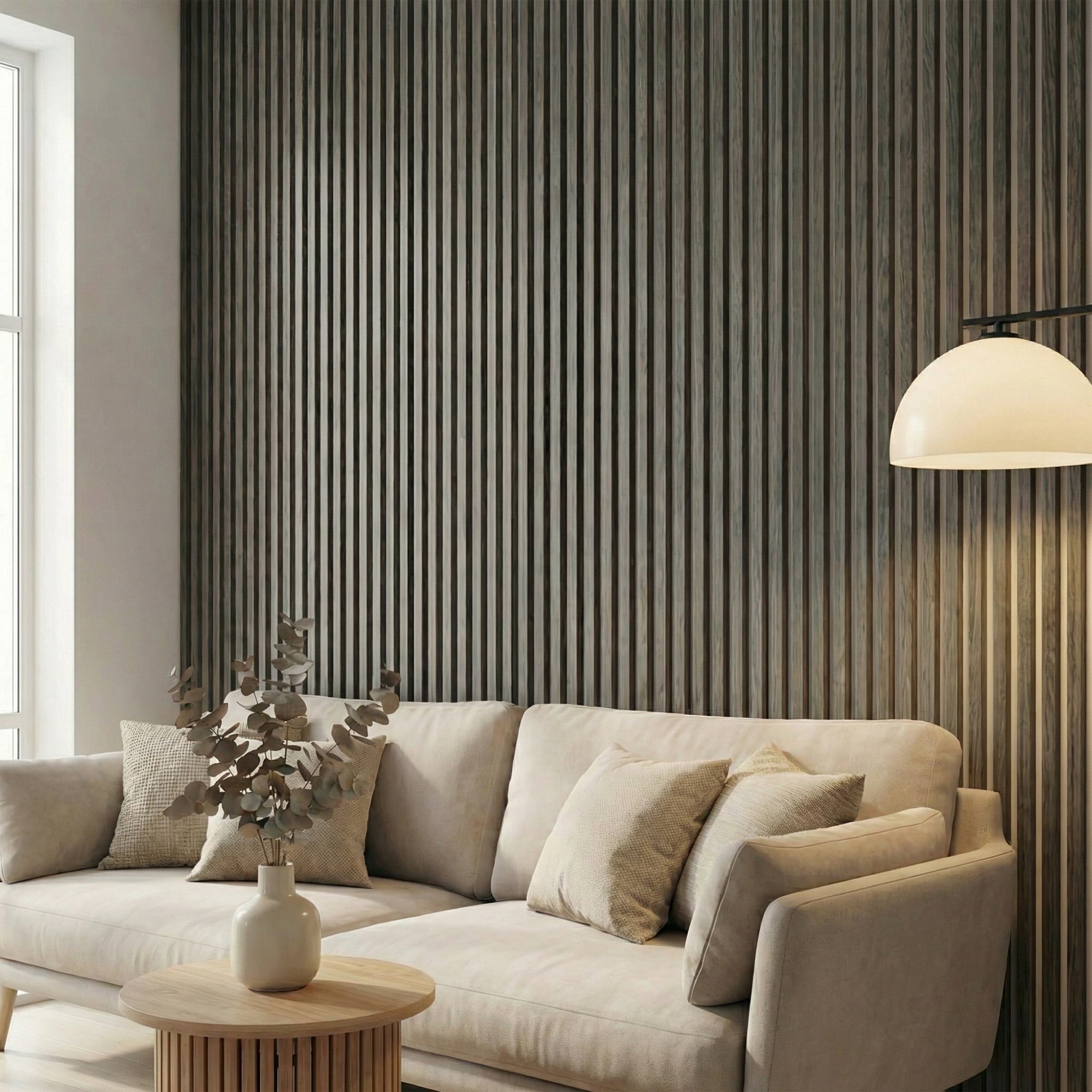
    For living rooms with hard floors, high ceilings, or open-plan layouts that suffer from echo, acoustic slat panels are the standout choice. Our American Acoustic Slat Wood Wall Panels | SoundPanel™ improve both the visual and acoustic quality of the room — the felt backing absorbs mid and high-frequency reflections that make conversation and TV dialogue muddy in reflective spaces.

    SoundPanel™ acoustic slat wall panels in living room - The Panel Hub

    For maximum visual drama, the geometric solid wood of our Crossing Lines Solid Wood Wall Panels | GroovePanel® creates a striking feature that reads as genuinely crafted rather than mass-produced.

    Crossing Lines Solid Wood Wall Panels - GroovePanel® in living room - The Panel Hub

    Read More: TV Wall Paneling Ideas: How to Design a Stunning Feature Wall

    A well-curated gallery wall — a collection of artwork, photography, prints, and objects arranged as a unified composition — adds personality and layered visual interest. The most common mistake is hanging pieces too high and too spread out. Gallery walls work best when pieces are hung close together (50–75mm between frames) and centred at eye level (approximately 1500mm to the centre of the arrangement). Anchor around one larger hero piece and build outward.

    Stone Effect Feature Walls

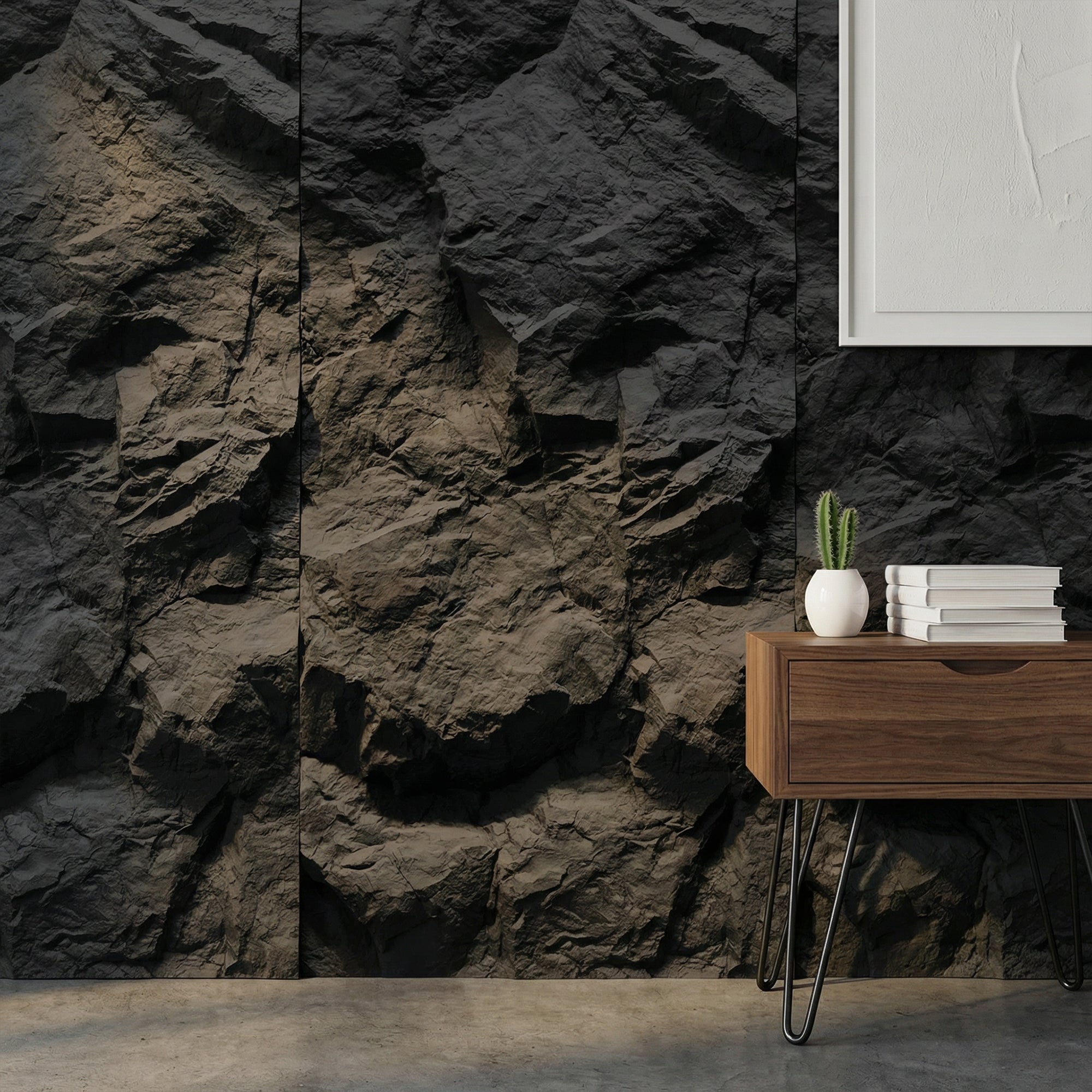
    For living rooms where a natural stone or textured plaster aesthetic is the brief, stone-effect panels deliver the visual richness of real stone without the weight, cost, or structural requirements. Our Highland Rock Wall Panel | RockSurface® creates a dramatic stone-textured feature wall that works especially well in industrial, rustic, and contemporary interiors.

    Highland Rock Wall Panel - RockSurface® as living room feature wall - The Panel Hub

    Large-Format Mirrors

    A large mirror on the living room wall is one of the most effective space-expanding and light-amplifying moves available. Position opposite a window to bounce natural light into the room, or above a fireplace as a traditional focal point. Oversized mirrors (floor-leaning, or wall-mounted to ceiling height) create the impression of an additional room beyond the glass.

    Built-In Shelving and Display

    Built-in shelving either side of a chimney breast or around a TV creates a designed, architecturally integrated feel. For a similar effect without the joinery cost, floating shelves in timber arranged symmetrically on either side of a focal point (fireplace, art piece, TV) create a structured display wall that reads as intentional and curated.

    Statement Lighting as Wall Decor

    Wall sconces, picture lights, and architectural wall-wash lighting serve both functional and decorative purposes. A pair of statement sconces flanking a large artwork elevates the piece and adds warmth to the room independently of ceiling lighting. For panel feature walls, our LED Light Strip Kit mounted at the top of the installation washes warm light down the panel surface — one of the most premium-looking effects achievable in a living room.

    By Living Room Style

    Modern Minimal

    One large-format artwork or a single panel feature wall. White walls, no clutter. The panels or artwork carry all the visual weight.

    Warm Contemporary

    Golden oak or walnut slat panels on the media wall, a gallery arrangement on an adjacent wall, LED strip lighting, indoor plants. Currently the most popular living room aesthetic.

    Industrial

    Stone-effect or raw-textured panels, exposed shelving, dark tones, dramatic pendant lighting.

    Eclectic / Maximalist

    Layered gallery wall, mixed textures (wood + stone + textile), plants, collected objects. Geometric mosaic panels as a statement feature.

    Frequently Asked Questions

    What is the most impactful living room wall upgrade?

    A panel feature wall — whether wood slat, stone effect, or solid wood mosaic — is the single highest-impact change you can make to a living room wall. It adds texture, warmth, and definition that paint, wallpaper, and artwork alone cannot replicate.

    How do I make a small living room wall feel larger?

    A large mirror on the main wall, light-toned panels (golden oak, natural), and vertical panel orientation all make a small living room feel larger. Avoid dark tones and busy gallery arrangements in confined spaces.

    Can I mix wall decor types in one room?

    Yes — mixing a panel feature wall with a gallery arrangement on an adjacent wall creates layered visual interest. The key is keeping the two zones clearly distinct rather than overlapping, and maintaining a consistent tonal palette across both.

    Conclusion

    Living room wall decor at its best creates a room that feels considered, warm, and genuinely personal. Wood panels, gallery walls, stone-effect features, and integrated lighting each offer a different character — the most effective living rooms combine two or three of these approaches, each on a distinct wall, to create a space with depth and variety that reveals itself gradually rather than all at once.

  • Outdoor Wall Decor Ideas: Transform Your Exterior and Garden Spaces

    Outdoor Wall Decor Ideas: Transform Your Exterior and Garden Spaces

    Outdoor walls — fence panels, rendered garden walls, exterior house walls, alfresco entertaining areas — are among the most underutilised design surfaces in any property. The right outdoor wall decor transforms a functional exterior into an extended living space, adding colour, texture, and visual depth to areas that are as important to your home’s character as any interior room.

    Outdoor Wall Panels — Durable, Weatherproof Texture

    For exterior walls, alfresco areas, and covered outdoor entertaining zones, stone-effect wall panels offer a dramatic textural upgrade that withstands the elements. Our RockSurface® range is crafted from polyurethane and fibreglass — fully waterproof, UV-stable, and lightweight enough to install without structural reinforcement.

    The Highland Rock Wall Panel | RockSurface® in dark charcoal creates a striking exterior feature wall — delivering the look of natural stone cladding at a fraction of the weight and installation cost.

    Highland Rock Wall Panel - RockSurface® outdoor feature wall - The Panel Hub

    The Ridge Rock Wall Panel | RockSurface® and Stone Rock Wall Panel | RockSurface® offer alternative stone textures — each delivering a different natural stone profile for exterior BBQ walls, garden feature walls, and pool surrounds.

    Ridge Rock Wall Panel - RockSurface® outdoor stone wall - The Panel Hub

    Read More: WPC Outdoor Wall Panels: A Complete Guide

    Vertical Gardens and Living Walls

    A living wall — a modular planting system mounted to an exterior wall surface — transforms a bare rendered wall into a lush, dynamic feature. Modular pocket systems allow for planting with a mix of foliage types at different heights. For a lower-maintenance alternative, trailing plants (ivy, jasmine, climbing roses) trained on a simple trellis structure create similar lushness at significantly lower ongoing maintenance cost.

    Outdoor Artwork and Wall Sculptures

    Weather-resistant wall art — in corten steel, powder-coated aluminium, ceramic, or treated timber — brings interior gallery sensibility to exterior walls. Large-format corten steel geometric pieces are particularly popular for their material warmth (the rust patina develops beautifully over time) and weather-resistance without any maintenance requirement. Position on a rendered garden wall or fence panel that provides a clean backdrop for the piece.

    Exterior Lighting as Wall Decor

    Exterior wall-mounted lights serve both functional and decorative purposes. Statement exterior sconces either side of a door or above a garage create an architectural focal point and improve property kerb appeal dramatically. For garden entertaining walls, LED strip lighting beneath a coping stone or along the top of a retaining wall creates warm upward-angled illumination that defines the outdoor space at night.

    Painted Murals and Colour-Blocked Walls

    An exterior wall painted in a bold colour — or featuring a hand-painted mural — creates a striking backdrop for outdoor furniture and planting. Popular approaches include a single colour-blocked section of rendered wall (in terracotta, sage green, or charcoal) behind a dining table; a geometric painted pattern on a fence; or a botanical mural on a garden wall that extends the planting palette beyond what the soil allows.

    Trellis, Screens, and Timber Cladding

    Timber or powder-coated metal screens installed on exterior walls serve multiple purposes: privacy from neighbouring properties, visual texture on a blank rendered surface, and a structure for climbing plants. Slatted timber screens in particular echo the interior slat panel aesthetic — creating a visual continuity between indoor and outdoor spaces that makes both feel more considered.

    For exterior timber cladding on house walls, our WPC (Wood-Polymer Composite) outdoor panels offer the visual warmth of timber with significantly better weather and UV resistance than natural wood, requiring no annual oiling or treatment.

    By Outdoor Space Type

    Alfresco Entertaining Area

    Stone-effect wall panels on the BBQ wall, outdoor pendant or string lighting overhead, vertical planting on the adjacent wall. Creates an outdoor room that reads as an extension of the interior rather than a separate afterthought.

    Garden Feature Wall

    A rendered garden wall finished with RockSurface® stone-effect panels, or colour-blocked in a bold paint, creates a destination within the garden — a backdrop for seating, planting, or water features.

    Pool Surrounds

    Waterproof stone-effect panels on the pool wall or fence — in charcoal or warm stone — create a resort-like backdrop that elevates the entire pool environment.

    Front Entrance

    Stone-effect panels either side of the front door, statement exterior lighting, and a single specimen plant in a large planter — the three elements that most dramatically improve exterior first impressions.

    Frequently Asked Questions

    Are RockSurface® panels suitable for outdoor installation?

    Yes — RockSurface® panels are crafted from polyurethane and fibreglass, making them fully waterproof and suitable for outdoor and covered outdoor applications. They are UV-stable and do not require the annual maintenance that natural stone or timber cladding demands.

    What outdoor wall decor requires the least maintenance?

    Stone-effect panels (RockSurface®) and powder-coated metal wall art require the least ongoing maintenance — neither needs painting, oiling, or protective treatment. Both weather well without degradation.

    How do I make a small garden feel larger with wall decor?

    A large mirror on a garden wall (specifically designed for outdoor use) doubles the apparent depth of a small garden. A vertical garden creates height without taking floor space. Light-coloured rendered walls with minimal decor make a small garden feel more open than dark colours or busy patterns.

    Conclusion

    Outdoor wall decor is the design opportunity that most homeowners leave on the table. Stone-effect panels, living walls, exterior artwork, and thoughtful lighting turn functional exterior walls into the visual anchors of a garden or outdoor living space — creating an outdoor environment that feels as considered and welcoming as any room inside the home.