Tag: Comparison Guide

  • Faux Stone Panels vs Wallpaper: Which Is the Better Alternative to Real Stone?

    Faux Stone Panels vs Wallpaper: Which Is the Better Alternative to Real Stone?

    When the goal is replicating the look of stone without using real stone, two options compete for the same customer: faux stone wall panels and stone-effect wallpaper. Both are widely available, both claim to deliver the aesthetic of natural stone, and both cost significantly less than a real stone installation. But they’re not interchangeable — they perform differently in almost every practical category.

    Appearance: Which Looks More Like Real Stone?

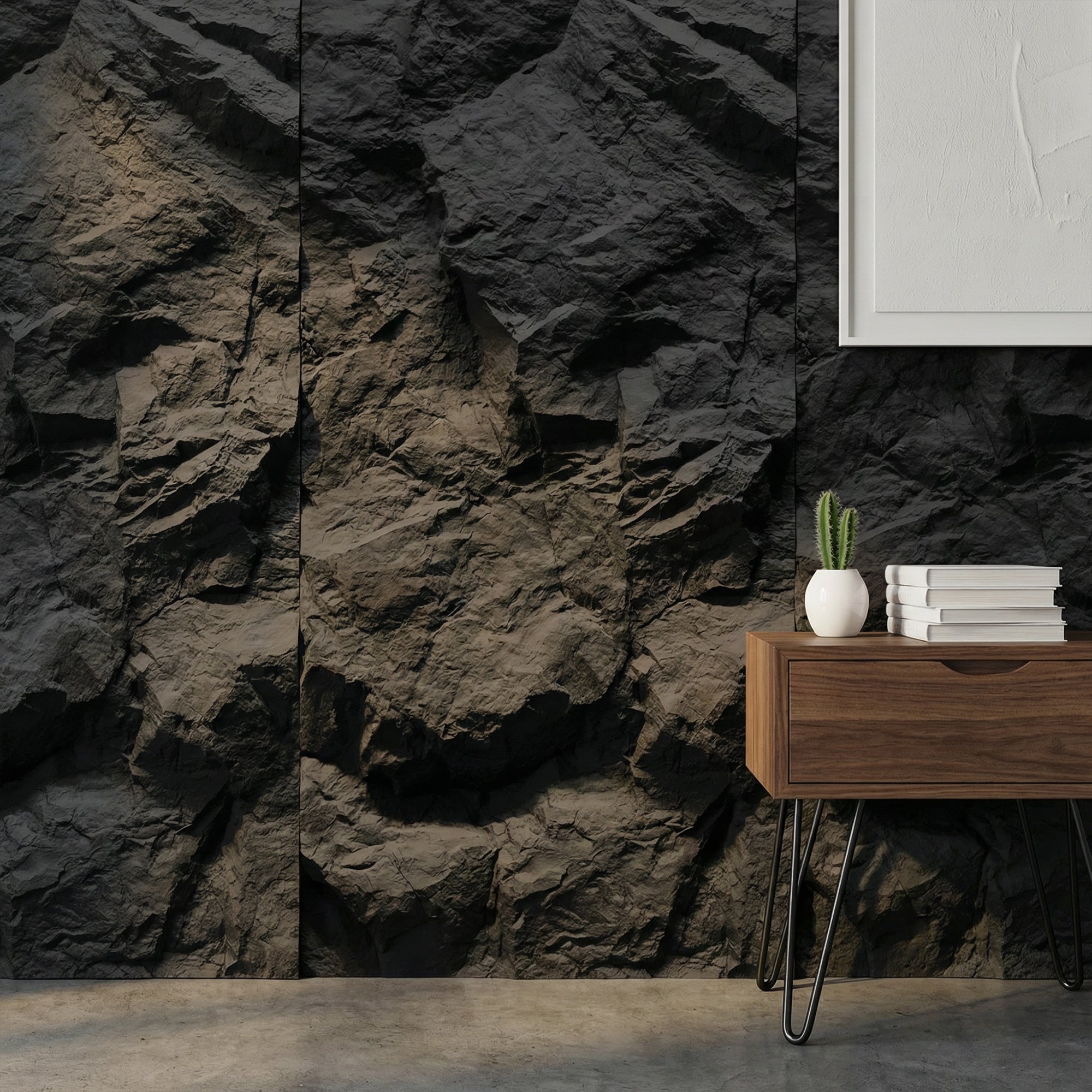
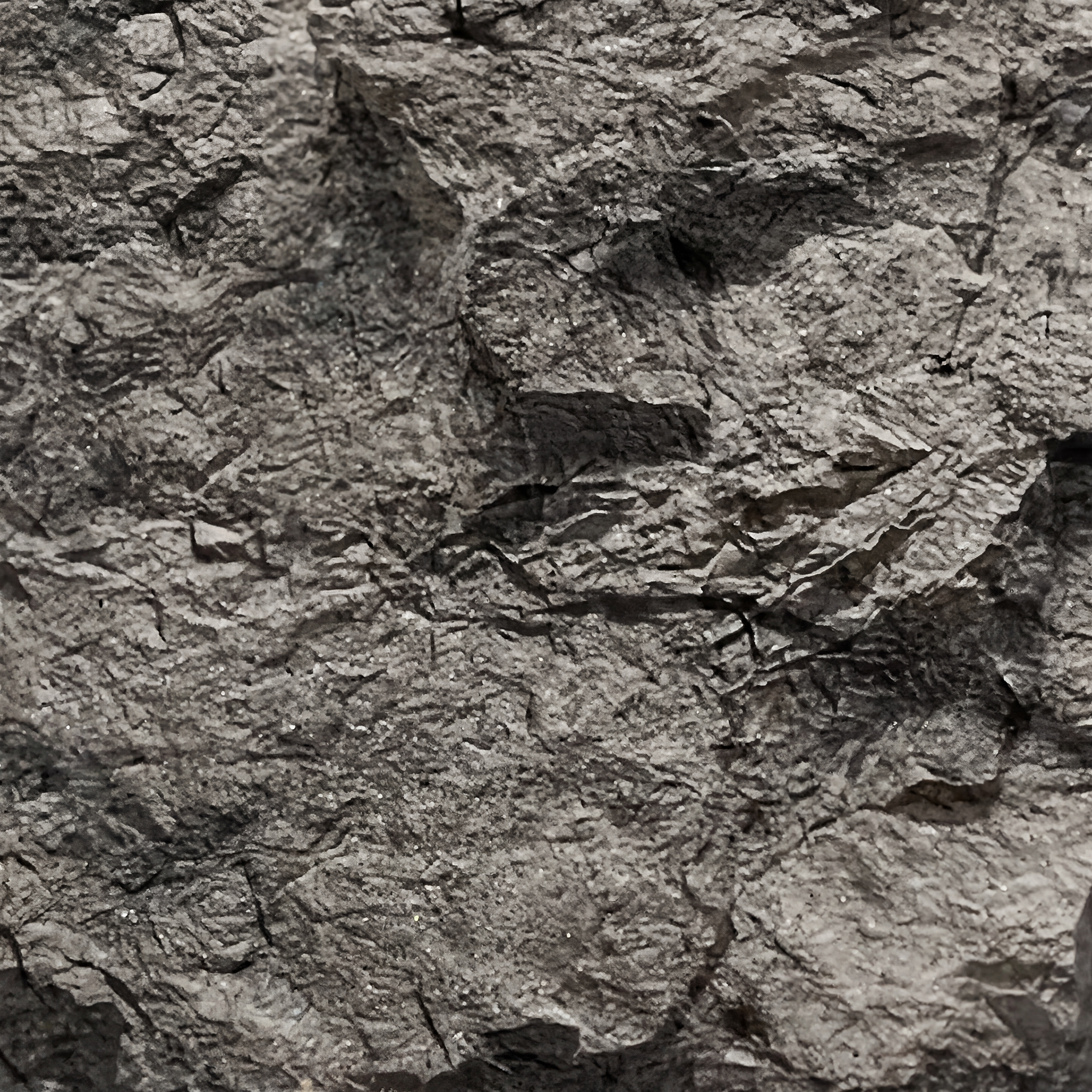
    High-quality faux stone panels, particularly textured 3D relief panels, have a significant realism advantage. The physical depth of the panel surface — raised edges, shadow lines, and irregular planes — creates a dimensional effect that printed wallpaper cannot replicate. At close range, stone wallpaper is clearly flat. At close range, a quality stone effect panel is genuinely convincing.

    Stone wallpaper has improved considerably and high-end options now incorporate embossing for some texture. But the depth of embossing in even the best wallpaper is measured in fractions of a millimetre. The relief in a quality stone panel is measured in centimetres — a fundamentally different visual proposition.

    Durability: Which Lasts Longer?

    Stone effect wall panels have a clear durability advantage. A quality panel is resistant to knocks, moisture, and everyday wear. It won’t peel, bubble, tear, or fade with UV exposure. In high-traffic areas — hallways, kitchens, commercial environments — panels will outlast wallpaper by years.

    Wallpaper is vulnerable to moisture, particularly at seams and edges. It tears, scuffs, and requires replacement if damaged. In rooms with high humidity, stone wallpaper is a short-term solution.

    Installation: Which Is Easier?

    Wallpaper installation is a well-understood skill — straightforward for experienced decorators. Large panels of stone wallpaper are more challenging to hang than standard wallpaper due to size and weight, but the basic technique is unchanged.

    Stone effect panels require substrate preparation — the surface must be flat, dry, and sound — but the installation is clean and permanent. Once fixed, panels don’t require finishing, painting, or sealing. Total time investment for similar areas is comparable.

    Cost: Which Is More Affordable?

    Stone effect wallpaper generally has a lower initial material cost. However, wallpaper needs to be replaced — sometimes within a few years in demanding environments — while panels are a once-and-done investment. Over a ten-year period in a typical residential application, the total cost of ownership often favours panels.

    For commercial environments where walls take heavy use, the durability advantage of panels makes them the more cost-effective choice from the outset.

    Maintenance: Which Is Lower Maintenance?

    Stone effect panels win on maintenance. They can be wiped clean, are resistant to most household cleaning products, and don’t require re-pasting or replacing when marked. Wallpaper marks, tears, and peels — and when a single section is damaged, the entire wall often needs replacement to maintain a consistent appearance.

    The Verdict: When to Choose Each

    • Choose faux stone panels if you want a finish that’s genuinely three-dimensional, durable, and low-maintenance — particularly in high-traffic areas, wet environments, or commercial spaces.
    • Choose stone wallpaper if budget is the primary constraint, the application is in a low-traffic area, or you want flexibility to change the look in a few years without structural commitment.

    Browse The Panel Hub’s full RockSurface® stone effect panel collection and request samples to compare the finish in person before making your decision.
  • Faux Stone vs Real Stone Cladding: Cost, Weight and Installation Compared

    Faux Stone vs Real Stone Cladding: Cost, Weight and Installation Compared

    The case for faux stone cladding has never been stronger. Advances in moulding technology, surface finishing, and composite materials mean that the gap between high-quality faux stone panels and natural stone cladding has narrowed considerably. In most residential and many commercial applications, the practical arguments now favour faux stone decisively. This guide covers how faux stone compares to real stone.

    Weight: The Most Consequential Difference

    Natural stone cladding is heavy. Depending on the stone type, it weighs 50–100kg per square metre. This has significant structural implications:

    • Most standard residential wall construction cannot support natural stone cladding without reinforcement
    • Structural assessment and often a structural engineer’s sign-off is required before installation
    • Installation requires specialist fixings, mechanical anchors, and in many cases a structural ledger at floor level to bear the load

    High-quality faux stone panels weigh 8–15kg per square metre. They can be fixed to standard plasterboard, masonry, or even existing tiled surfaces using adhesive alone — no structural assessment required for most applications.

    Cost: A Clear Advantage for Faux Stone

    The material cost difference between faux stone and real stone varies by stone type, but for comparable quality finishes, faux stone panels typically cost 30–50% of the material cost of real stone. Add the installation cost difference — faux stone requires no structural preparation, specialist fixings, or a stonemason — and the total installed cost of faux stone is typically 20–40% of equivalent natural stone.

    For a typical 10m² feature wall, the saving can be £2,000–£5,000 compared to a real stone installation.

    Installation: Accessible vs Specialist

    Real stone installation is a specialist trade requiring a stonemason, specialist tools, structural preparation, and typically several days of work for a room-scale installation.

    Faux stone panel installation is accessible to any competent DIYer or general contractor. The basic process — prepare the substrate, apply adhesive, fix panels, finish edges — can be completed in a day for most room-scale applications.

    Appearance: How Close Is Close Enough?

    At a distance of more than 1–2 metres, high-quality faux stone panels are visually indistinguishable from real stone to most observers. The colour variation, surface texture, and three-dimensional relief of premium panels replicate the natural variation of real stone convincingly.

    At very close range — an arm’s length — a careful observer can distinguish faux from real. For most interior applications this is irrelevant. Nobody inspects a feature wall at arm’s length.

    Durability and Maintenance

    Real stone has an exceptional lifespan — centuries in well-maintained buildings. However, many natural stones are porous and require regular sealing and careful maintenance to prevent staining and biological growth.

    Quality faux stone panels have a projected lifespan of 15–25 years in interior applications and are significantly less demanding in maintenance — wipeable with standard household cleaners, no specialist sealants required.

    When Real Stone Is Still the Right Choice

    There are applications where real stone remains the best specification: heritage properties where material authenticity is required, exterior applications demanding multi-decade lifespan, and prestige projects where the weight, feel, and genuine provenance of natural stone are part of the brief.

    For most residential and commercial applications, however, the weight, cost, and installation advantages of faux stone panels make them the practical choice. Browse the RockSurface® collection at The Panel Hub and request samples to assess the finish in your own space.

  • MDF Wall Panels vs Solid Wood: Which Is Worth the Investment?

    MDF Wall Panels vs Solid Wood: Which Is Worth the Investment?

    MDF (Medium Density Fibreboard) and solid wood are the two primary substrate options for wood wall panels. Both can deliver excellent results. Both have genuine weaknesses. The choice between them matters — not just for budget, but for durability, appearance, environmental impact, and long-term performance in your specific application.

    What Is MDF and What Is Solid Wood?

    MDF Wall Panels

    MDF is an engineered wood product made from wood fibres, resin, and wax compressed under high pressure and heat. It’s dimensionally stable — it doesn’t expand, contract, or warp the way solid timber does — and has a smooth, consistent surface that takes paint, veneer, and surface finishes well. Most painted or foil-wrapped wall panels use MDF cores.

    Solid Wood Panels

    Solid wood panels use real timber — often oak, pine, walnut, or other hardwoods — as the primary material. The GroovePanel® and SoundPanel™ ranges from The Panel Hub use solid wood construction. Real wood brings visible grain, natural colour variation, and authentic warmth that engineered materials cannot replicate.

    Appearance and Finish

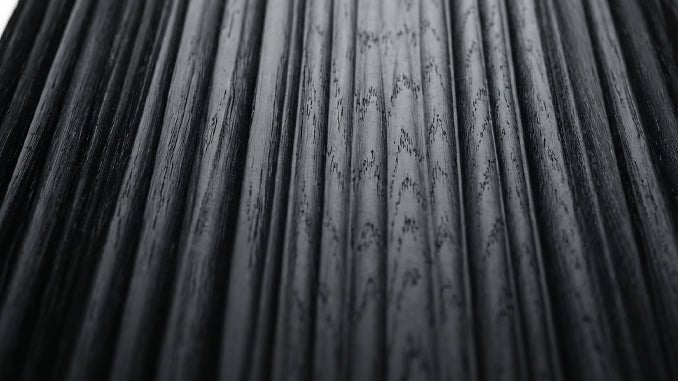
    Solid wood has the advantage for visible grain and natural authenticity. The grain, knots, colour shifts, and texture of real timber create a surface that looks and feels genuinely organic. In slat and fluted profiles, the grain of real wood creates visual depth that printed or foil-wrapped MDF cannot match.

    MDF has the advantage for painted finishes. Its smooth, consistent surface provides a flawless base for paint — no grain telegraphing through the finish. For painted panel applications, MDF is often the better material choice.

    Durability

    Solid wood is more durable in general use. It’s harder to dent, holds fixings well, and can be sanded and refinished if damaged. Solid wood panels, with appropriate maintenance, can last decades.

    MDF is less impact-resistant and has a critical weakness: moisture. MDF swells and disintegrates when exposed to sustained moisture. For bathroom or kitchen applications, only moisture-resistant (MR) MDF cores should be specified, and even then direct water exposure should be avoided.

    Cost

    MDF panels are generally less expensive than solid wood panels of equivalent dimensions. For painted applications where the material character isn’t visible in the final finish, MDF offers good value. For applications where the natural wood surface is part of the design — stained, oiled, or natural finishes — solid wood delivers an appearance that MDF cannot replicate.

    Environmental Considerations

    Solid wood from certified sustainable sources (FSC or PEFC) is renewable and stores carbon. MDF uses wood waste fibres but the resin binders are synthetic and typically non-recyclable. Look for certification claims when evaluating any wood panel product.

    Which Should You Choose?

    • Choose solid wood if natural grain and material character are important, if long-term durability is a priority, or if the application is in a dry environment where solid wood’s properties are best preserved.
    • Choose MDF if you’re painting the panels, if cost is the primary constraint, or if the application is in a dry interior environment where MDF’s moisture weakness is not a factor.

    For solid wood wall panels that deliver genuine material quality, explore the GroovePanel® and SoundPanel™ collections at The Panel Hub.

  • Slat Panels vs Fluted Panels: What’s the Difference and Which Should You Choose?

    Slat Panels vs Fluted Panels: What’s the Difference and Which Should You Choose?

    If you are considering between slat panels vs fluted panels, this guide is for you. “Slat panels” and “fluted panels” are used interchangeably in many product listings, social media posts, and interior design articles. They’re not the same thing — and choosing between them affects the appearance, acoustic performance, and practical behaviour of the finished wall.

    What Are Slat Panels?

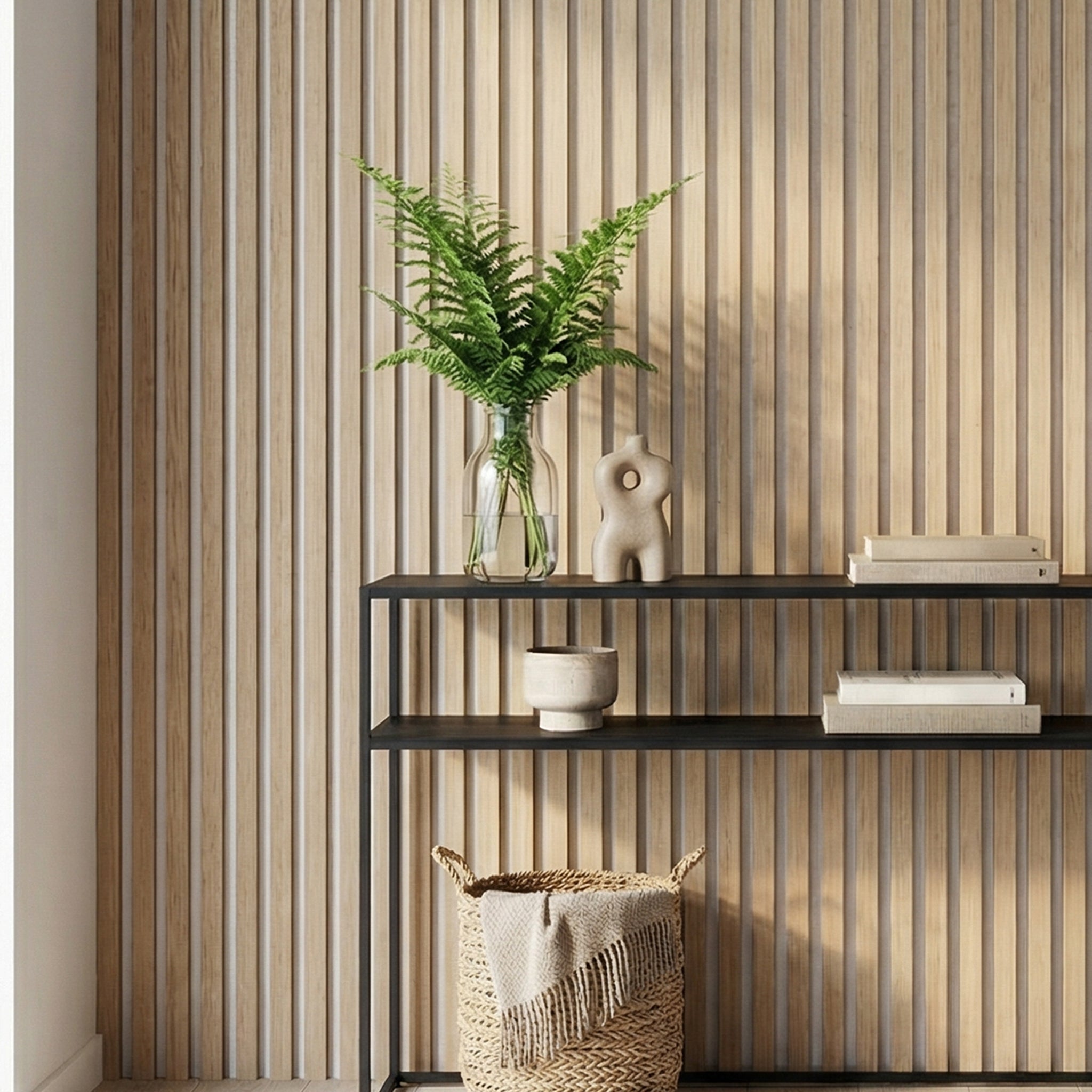
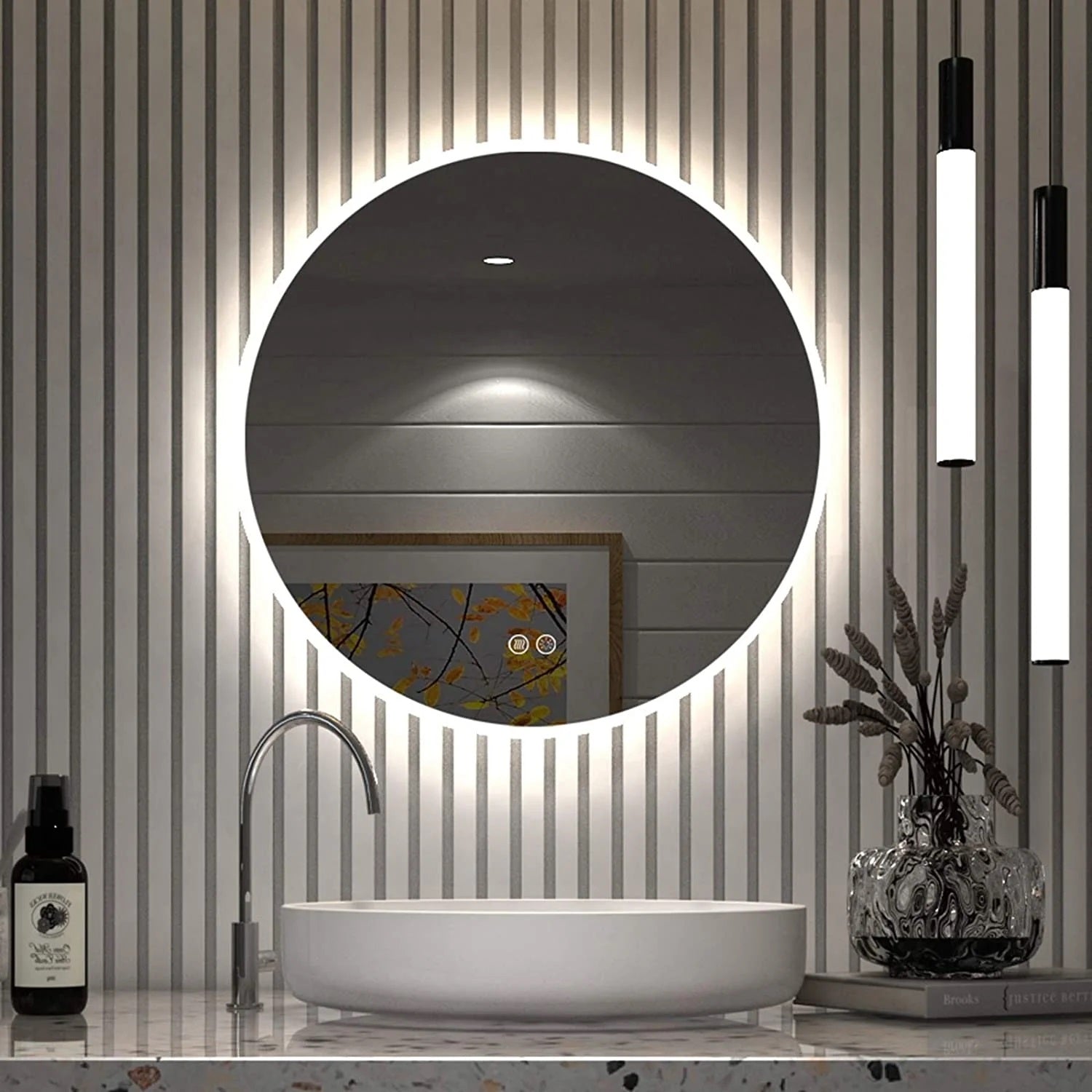
    Slat panels consist of individual timber slats — narrow strips of wood — attached to a backing panel, typically a felt or MDF substrate. The slats stand proud of the backing, creating gaps between them. These gaps are part of the design: they allow sound to pass through to the backing material, which absorbs it.

    The defining characteristic of slat panels is the negative space between the slats. The gaps are visible and intentional — part of both the aesthetic and the acoustic function. The SoundPanel™ acoustic slat collection from The Panel Hub is a good example: timber slats mounted on acoustic felt backing with precisely engineered gaps for both visual rhythm and sound absorption.

    What Are Fluted Panels?

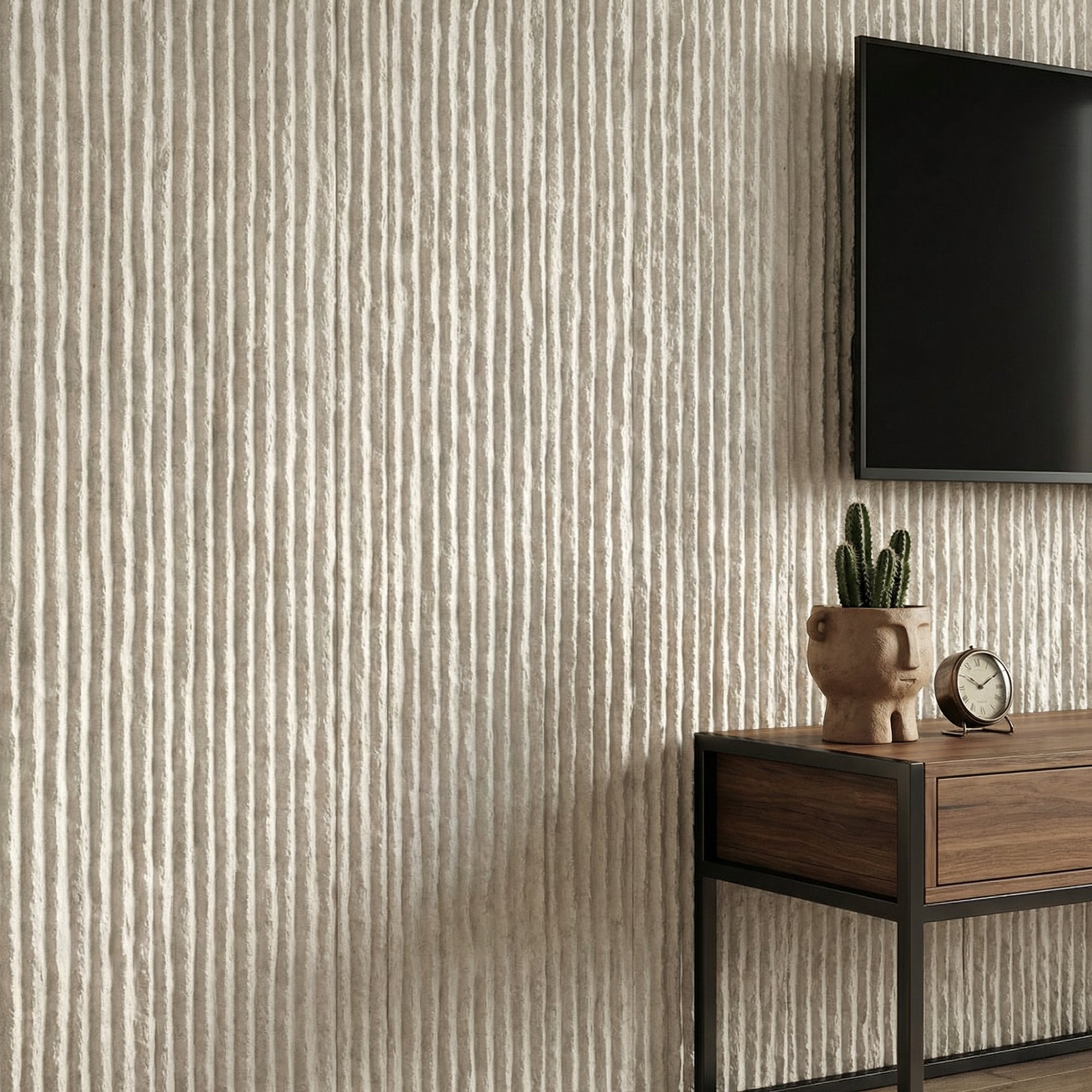
    Fluted panels are solid panels with a routed or moulded profile — raised ridges running along the surface. Unlike slat panels, there are no gaps: the surface is continuous, with the three-dimensional profile creating the visual rhythm of light and shadow.

    The GroovePanel® solid wood collection includes fluted profiles — solid wood panels with routed channels that create a pronounced vertical texture without any gaps between elements.

    Key Differences

    Acoustic Performance

    Slat panels with acoustic backing perform measurably better for sound absorption. The gaps allow sound to reach the absorptive backing material. Fluted panels have no gaps and provide minimal sound absorption — they’re a purely aesthetic product. If acoustic performance is a requirement, specify acoustic slat panels.

    Visual Character

    Slat panels create a rhythm of solid and void — the eye alternates between the slat surface and the darker gap behind it. The effect is graphic and structured. Fluted panels create a rhythm of highlight and shadow across a continuous surface — subtler, more tactile, and more appropriate in spaces where a softer texture is the goal.

    Durability and Maintenance

    Fluted panels are more robust. The continuous surface is more resistant to impact damage, easier to wipe clean, and doesn’t accumulate dust in gaps the way slat panels can. In high-traffic areas or commercial environments, fluted panels are often the more practical choice.

    Which Should You Choose?

    • Choose slat panels if acoustic performance is required, or if you want the graphic negative-space aesthetic of visible gaps between slats.
    • Choose fluted panels if you want texture without gaps, maximum durability, or a subtler three-dimensional effect on a continuous surface.
    • Use both of these wood wall paneling in the same space to create distinct zones — acoustic slat panels where sound control matters, fluted panels where the aesthetic takes precedence.

    Explore both options at The Panel Hub: the SoundPanel™ acoustic slat range and the GroovePanel® fluted solid wood collection.

  • Wall Panels vs Tiles: Which Wins for Kitchens and Bathrooms?

    Wall Panels vs Tiles: Which Wins for Kitchens and Bathrooms?

    Tiles have been the default choice for kitchen and bathroom walls for over a century — and for good reason. They’re waterproof, durable, easy to clean, and available in an almost unlimited range of colours and patterns. But wall panels have made significant inroads in recent years, and in many applications they now offer a compelling alternative with less effort and often a better visual result.

    Appearance: Which Looks Better?

    This is subjective, but some observations hold:

    • Tiles offer enormous design variety — from classic subway tiles to large-format marble looks, the tile market covers every style and budget.
    • Wall panels offer a cleaner, more seamless finish. Without grout lines, the surface reads as continuous — a quality that makes rooms feel larger and finishes look more contemporary.
    • Stone-effect panels like RockSurface® provide three-dimensional texture that large-format flat tiles cannot replicate.
    • Wood slat and fluted panels bring a warmth to kitchens and bathrooms that tiles rarely achieve.

    Waterproofing: Where Tiles Still Win

    Properly installed tiles with fully waterproofed grout are the gold standard for wet environments — shower floors and surfaces in direct contact with water. Most standard wall panels are not suitable for areas of direct water contact.

    However, for kitchen splashbacks, bathroom feature walls behind sanitary ware, and any wall that sees splash rather than continuous water exposure, panels rated for humid environments perform adequately and look superior.

    Installation: Which Is Easier?

    Wall panels have a significant installation advantage. The process is straightforward: prepare the substrate, apply adhesive, fix panels, seal edges. No specialist skills, no grouting, and a much faster timeline — a kitchen splashback wall can be panelled in an afternoon.

    Tile installation requires planning, setting out, cutting tiles, laying in adhesive, grouting, sealing, and cleaning. In a bathroom, this process typically takes 2–3 days for a competent tiler.

    Cost: What’s the True Comparison?

    Tile costs vary enormously — from £5/m² for basic ceramic to £200+/m² for premium marble-look tiles. Installation adds £30–£60/m² for professional tiling.

    Quality wall panels typically cost £30–£80/m² for materials and £15–£30/m² for professional installation — often lower than equivalent quality tiles when installation is factored in.

    Maintenance: The Grout Problem

    Grout is the weakest link in any tiled installation. It stains, cracks, grows mould, and eventually needs re-grouting — a messy, time-consuming process. Wall panels have no grout. A wipe-down with a damp cloth is the extent of routine panel maintenance in most applications.

    The Verdict

    • Choose tiles for wet rooms, shower floors, and any surface in continuous water contact. Also choose tiles if you want large-format patterned or marble finishes.
    • Choose panels for kitchen splashbacks, bathroom feature walls, any application where grout maintenance is a concern, or where you want a textured 3D finish that tiles can’t provide.

    Browse the full range of wood wall panels and stone effect panels at The Panel Hub.

  • Wood Wall Panels vs Stone Wall Panels: Which Is Right for Your Space?

    Wood Wall Panels vs Stone Wall Panels: Which Is Right for Your Space?

    Wood and stone are the two dominant materials in natural feature wall design. Both have been used in interior and exterior architecture for centuries. Both are now available in panel form — engineered, lightweight, and easy to install — which puts them in direct competition for the same wall space in homes, offices, and commercial environments.

    Choosing between wood wall panels and stone effect wall panels depends on the room, the aesthetic you’re creating, and the practical requirements of the installation.

    What Each Material Communicates

    Wood Panels

    Wood panels are warm. The grain, tone, and texture of timber communicate organic warmth, natural authenticity, and domesticity. Even in their most contemporary application — fine slat panels with precise engineering and clean finishes — wood panels read as approachable and tactile. They work in bedrooms, living rooms, and home offices where warmth and comfort are design priorities.

    Stone Panels

    Stone panels are cool. Even in warm stone tones, the material communicates solidity, permanence, and weight. Stone feature walls make a bolder statement than wood and sit more comfortably in rooms where drama or formality is the goal — dining rooms, bar areas, commercial environments, feature fireplaces.

    Practical Differences

    Moisture Resistance

    Stone-effect panels generally have better inherent moisture resistance than wood panels, making them more suitable for bathroom and kitchen applications. Wood panels in humid environments require appropriate surface treatment or moisture-resistant cores.

    Acoustic Performance

    Wood slat and acoustic panels from the SoundPanel™ acoustic wood wall panel range offer measurable sound absorption — a benefit stone panels don’t provide. If acoustic performance is a factor in your specification, wood acoustic panels have a clear advantage.

    Room-by-Room Guide

    • Living room: Both work — wood for warmth, stone for drama and formality
    • Bedroom: Wood panels are generally preferred for the warmth they contribute
    • Bathroom: Stone-effect panels have the moisture resistance advantage
    • Kitchen splashback: Stone-effect panels are the practical choice
    • Fireplace breast: Stone is the classic choice; wood works in contemporary settings with appropriate fire safety considerations
    • Commercial and hospitality: Both are extensively used — choice is driven by the atmosphere the space is designed to create

    Can You Use Both?

    Yes — and the combination is often more interesting than either material alone. A fireplace breast in stone panels with an adjacent media wall in wood slats creates material contrast that defines the living room as a thoughtfully designed space. In commercial environments, alternating stone and wood surfaces across different zones creates a layered, high-end finish.

    Explore Both at The Panel Hub

    The Panel Hub supplies both wood wall panels — including the GroovePanel® and SoundPanel™ collections — and the RockSurface® stone effect range. Request samples from both to compare the materials in your own space before deciding.