Tag: dining room feature wall

  • Dining Room Wall Decor Ideas: Set the Scene for Every Meal

    Dining Room Wall Decor Ideas: Set the Scene for Every Meal

    The dining room is one of the few spaces in the home where design directly affects behaviour — the atmosphere of a dining room influences how long people stay at the table, how much they talk, and how the meal feels. Wall decor is the primary tool for creating that atmosphere. This guide covers the dining room wall ideas that create the most compelling spaces.

    Feature Wall Panels — Dining Room Anchor

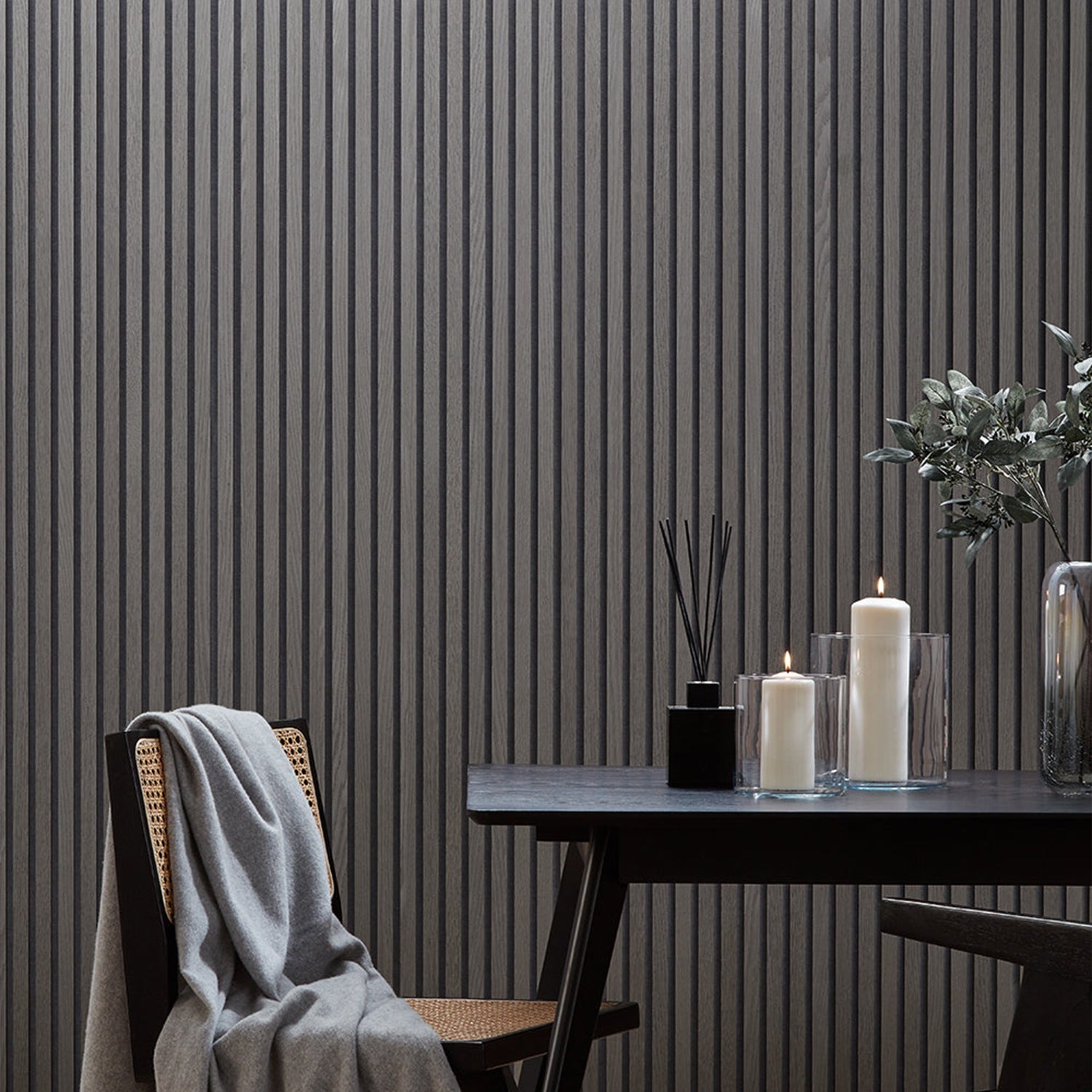
    A panel feature wall on the main dining wall — the wall most visible from the table — transforms a functional eating space into a room with genuine character. The combination of texture, warmth, and depth that a wood panel wall provides is something that paint and wallpaper alone cannot achieve.

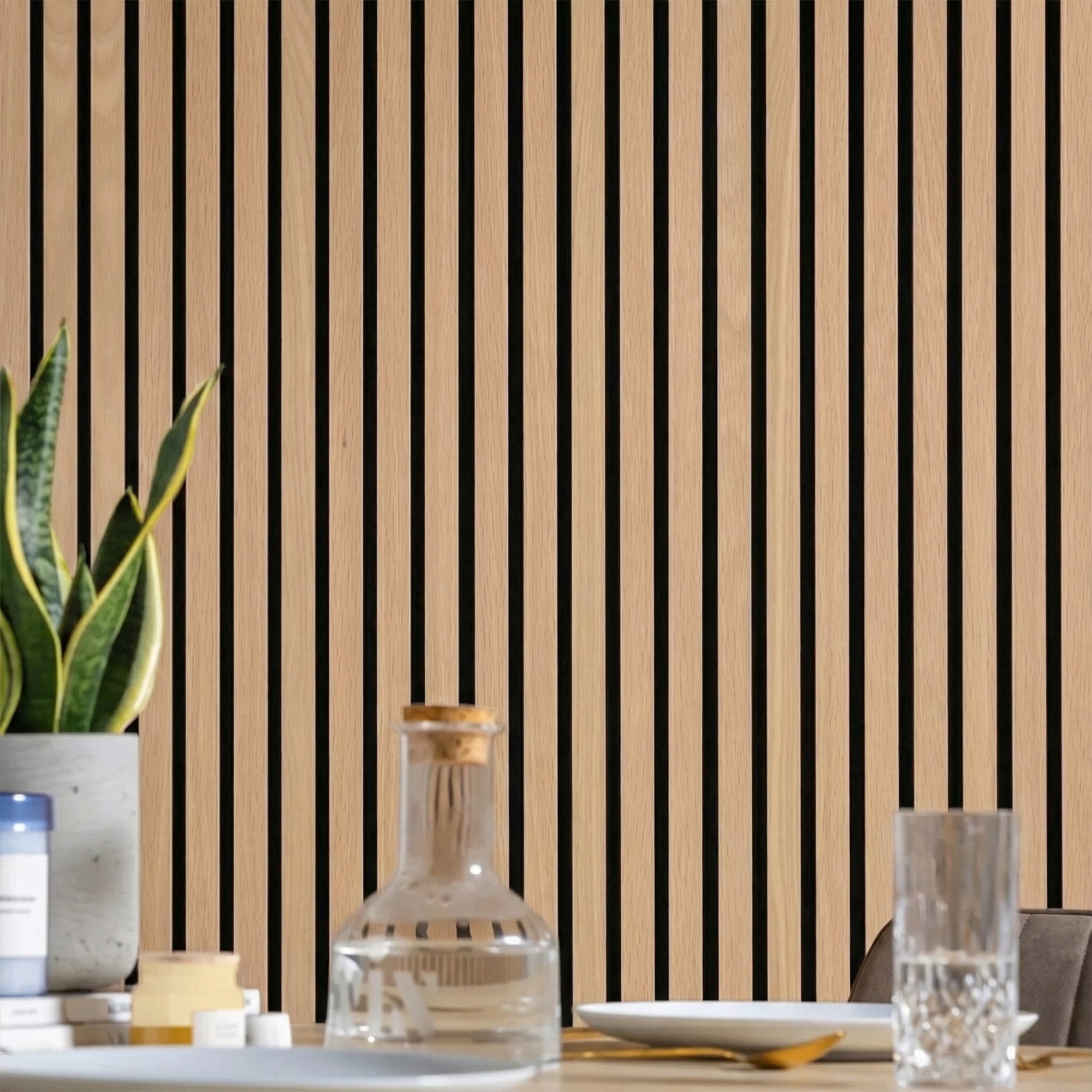
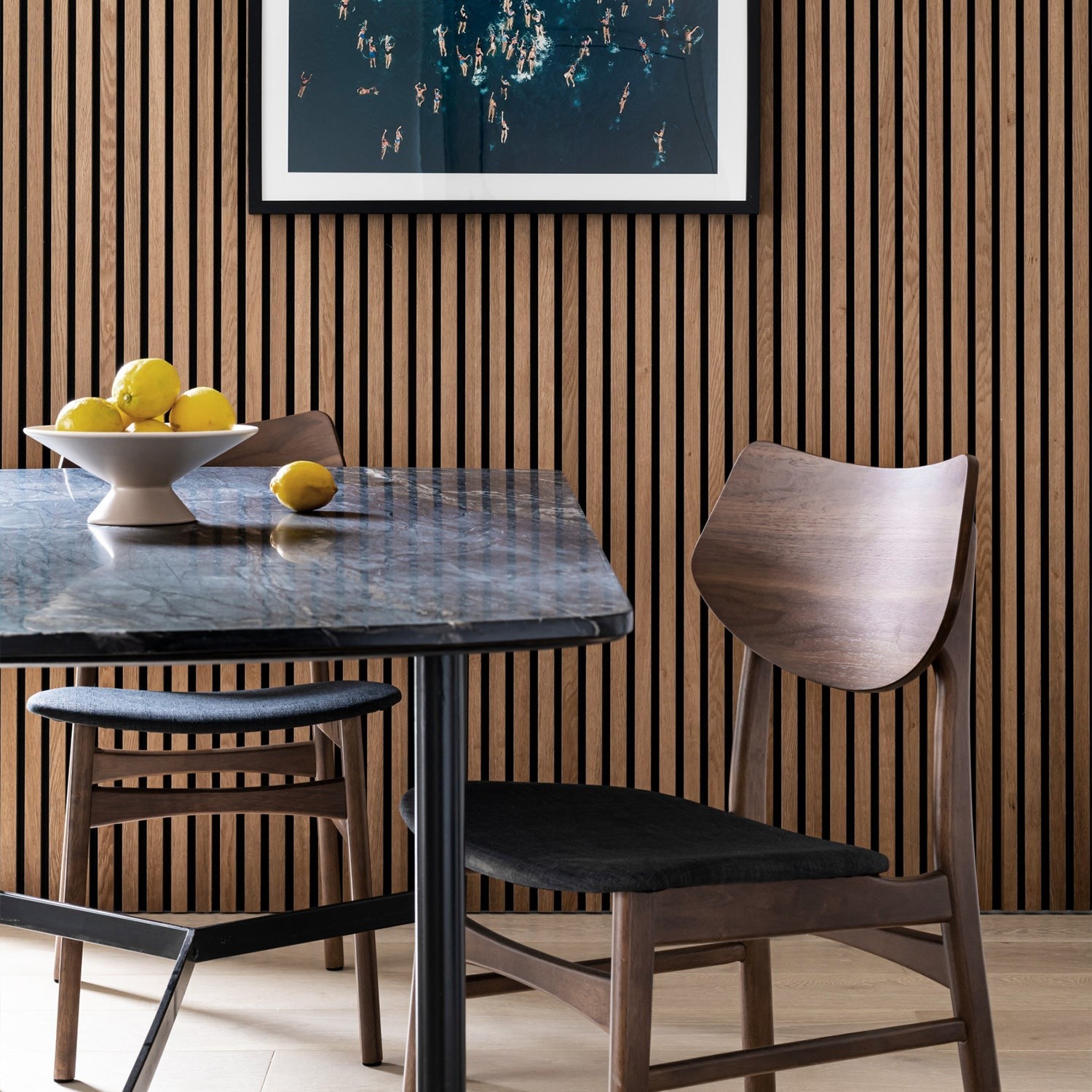
    For dining rooms, walnut-tone slat panels create the most elegant effect — the deep, rich wood provides the kind of warm drama that suits the intimacy of a dining experience. Our American Acoustic Slat Wood Wall Panels | SoundPanel™ also bring a practical benefit: the acoustic felt backing reduces the reverberation that builds in a room full of hard surfaces (flooring, table, glass) and many simultaneous conversations.
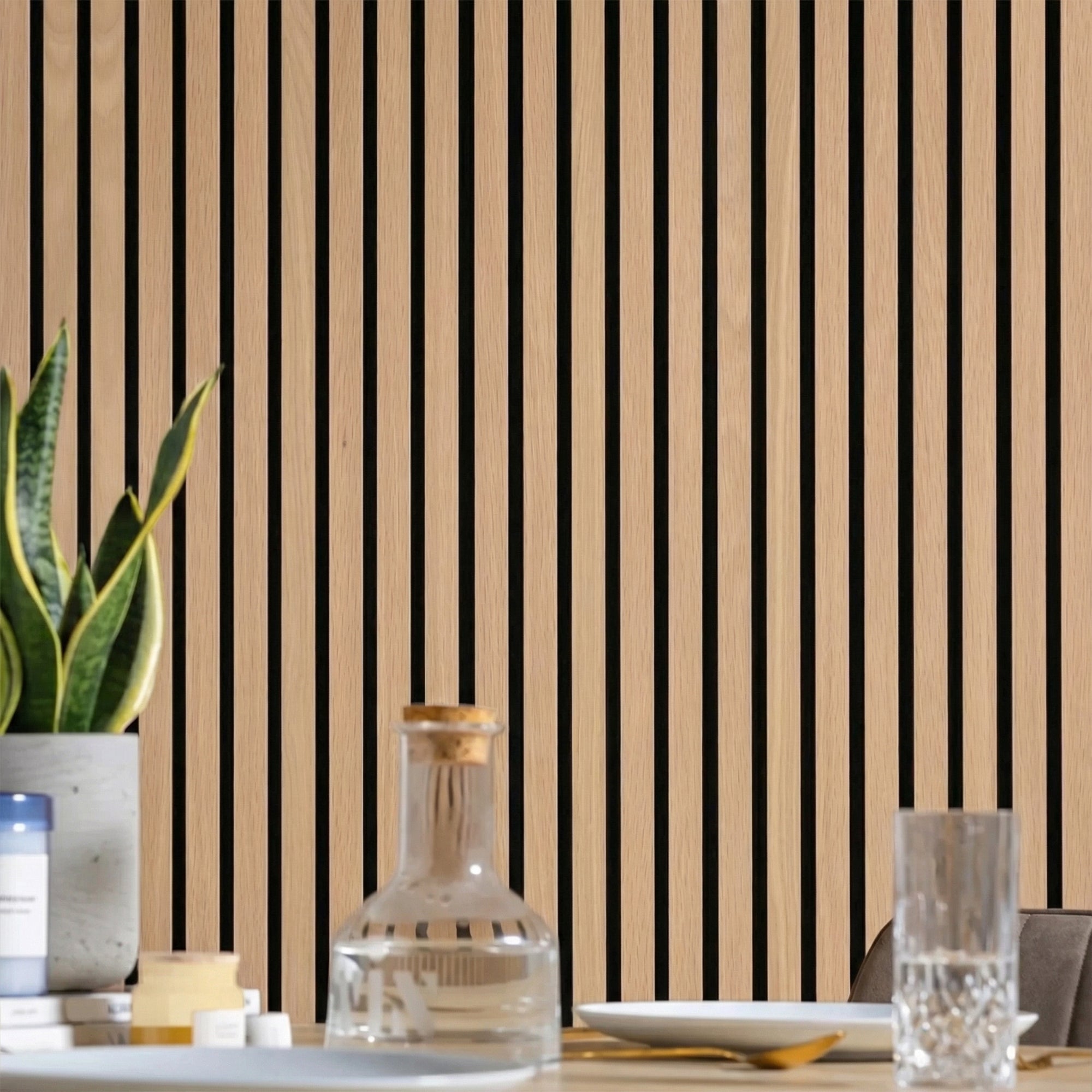
    SoundPanel™ acoustic slat panels as dining room feature wall - The Panel Hub

    For a more dramatic, conversation-starting statement, the geometric solid wood of our Crossing Lines Solid Wood Wall Panels | GroovePanel® creates a dining backdrop that feels truly artisanal.
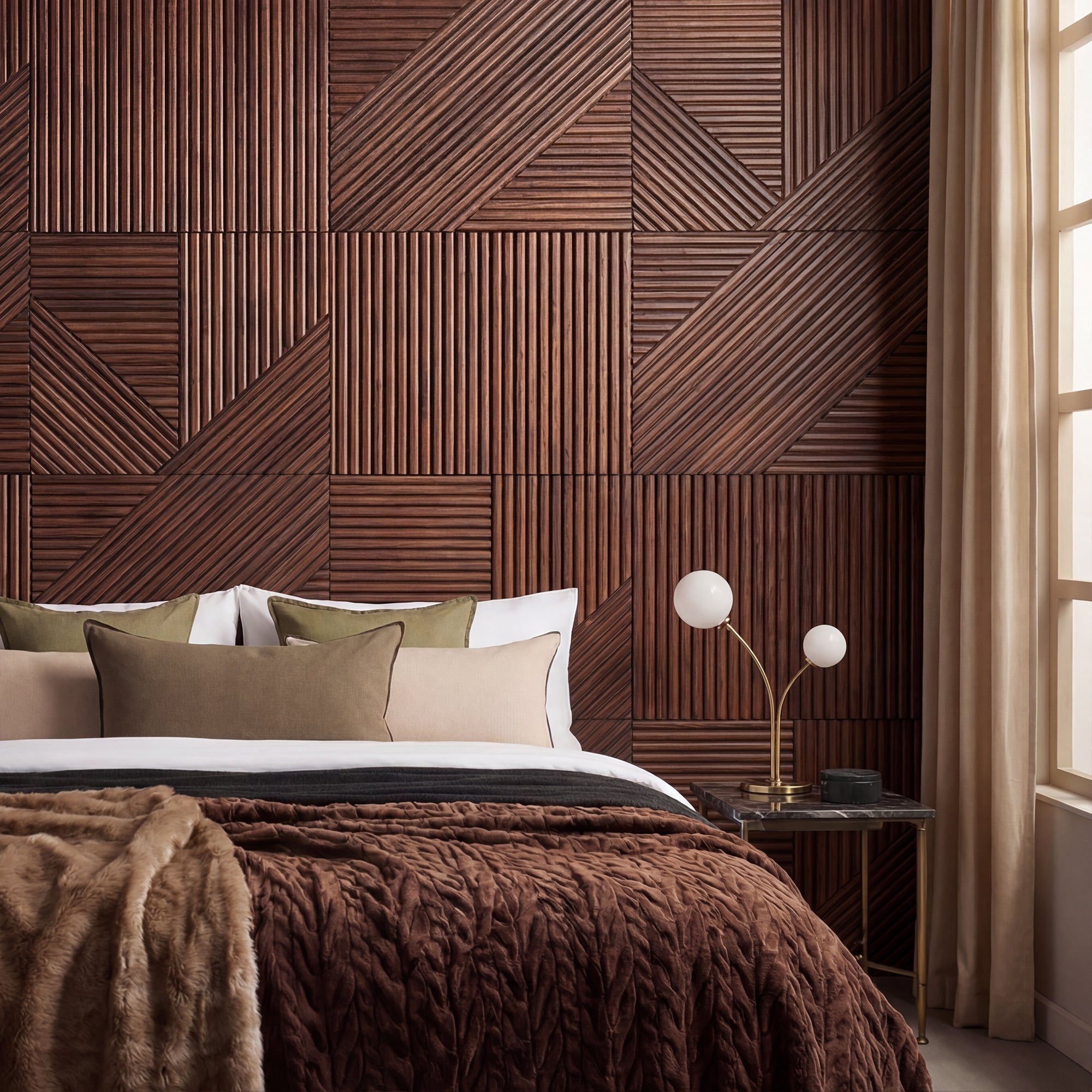
    Crossing Lines Solid Wood Wall Panels - GroovePanel® as dining room backdrop - The Panel Hub

    Large-Format Artwork

    A single oversized artwork on a dining wall — a landscape, botanical, portrait, or abstract — creates a focal point that shapes conversation and sets the room’s mood. The scale matters: in a dining room, a piece that feels too large in isolation often reads correctly on the wall. Aim for a canvas or print that is at least two-thirds the width of the dining table, hung so its centre aligns with eye level at seated height (approximately 1350mm from floor to artwork centre).

    Stone Feature Walls

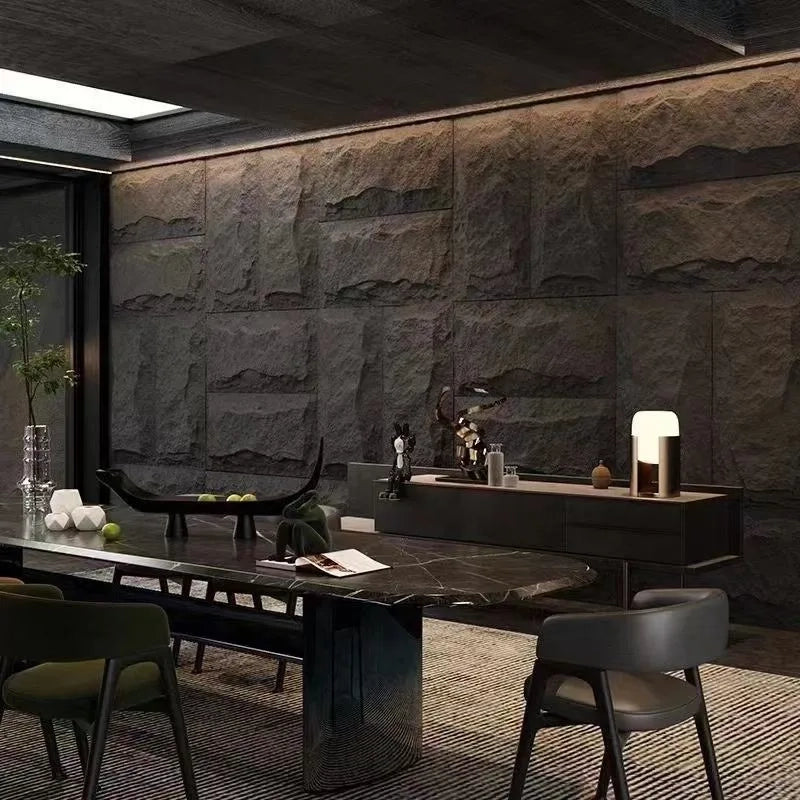
    A stone-effect feature wall in a dining room creates a rich, layered material backdrop — particularly effective in open-plan spaces where the dining zone needs visual definition from the adjacent kitchen or living area. Our Highland Rock Wall Panel | RockSurface® delivers a convincing stone texture at a fraction of the weight and cost of real stone cladding.
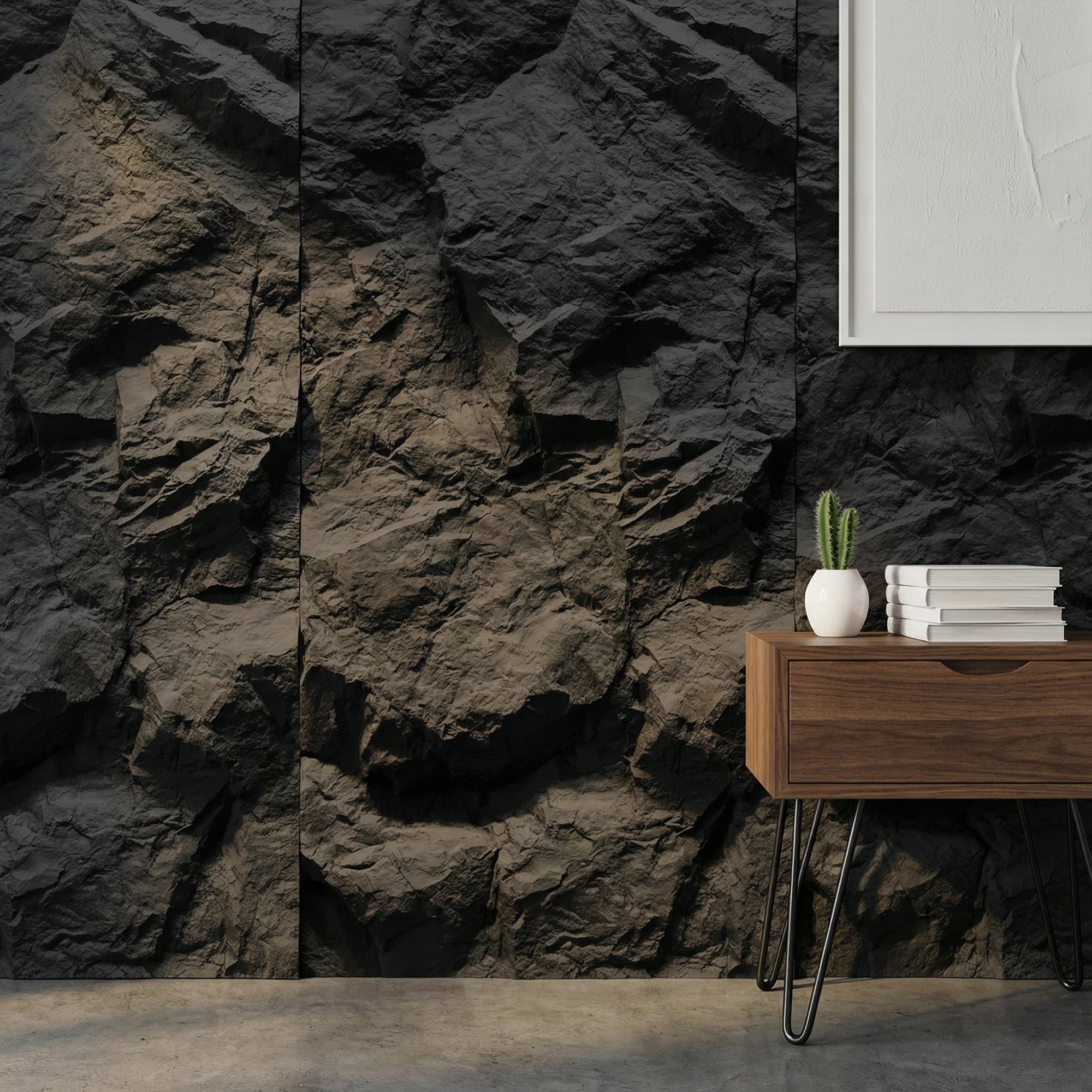
    Highland Rock Wall Panel RockSurface® as dining room feature wall - The Panel Hub

    Mirrors — Expanding and Illuminating

    A large dining room mirror — either a traditional framed piece above a sideboard, or a contemporary floor-to-ceiling panel — doubles the apparent size of the room and reflects candlelight and pendant lighting beautifully. In smaller dining rooms, this is one of the most effective space-expanding moves available. Position opposite a window to maximise daylight reflection, or opposite a pendant for an evening dining atmosphere.

    Open Display Shelving

    Open shelving in the dining room — displaying ceramics, glassware, decanters, books, and small artworks — creates an immersive, restaurant-quality display that makes the room feel curated and personal. Timber shelves in a tone that coordinates with a panel feature wall on an adjacent surface create a cohesive, material-led dining room story.

    Statement Lighting as Wall-Adjacent Decor

    The pendant light above the dining table is often the room’s most prominent decorative element — and its relationship to the walls behind it shapes the entire atmosphere. Large pendant clusters (multiple pendants at varying heights), statement drum shades, or dramatic chandelier forms all create a ceiling-level focal point that shapes the room’s character without touching a single wall. Pair with dimmers for full atmospheric control.

    By Dining Room Style

    Modern Formal

    Dark walnut or charcoal slat panels on the main wall, one large-format artwork in a simple frame, statement pendant, no clutter. Restraint and quality materials.

    Warm Casual

    Golden oak panels or limewash paint, open shelving with ceramics and plants, relaxed mixed-frame gallery, warm pendant lighting.

    Industrial Bistro

    Stone-effect feature wall (RockSurface®), exposed-look shelving, Edison bulb pendants, mix of reclaimed timber and metal accessories.

    Farmhouse

    Shiplap or vertical timber panels, open plate display, ceramic collections, warm textiles. Read our farmhouse wall decor guide for more.

    Frequently Asked Questions

    What colour should a dining room feature wall be?

    For panel feature walls in dining rooms, rich warm tones — walnut, dark oak, deep terracotta — create the most intimate, restaurant-like atmosphere. For paint-only walls, deep jewel tones (navy, forest green, burgundy) are popular in formal dining rooms; warm neutrals (terracotta, warm grey) suit casual dining spaces.

    How do I reduce noise in a dining room?

    Acoustic slat wall panels on one or two walls are the most effective architectural solution for reducing dining room reverberation. Combined with a soft rug under the table, upholstered chairs, and curtains, acoustic panels bring reverberation times down to a comfortable level even in rooms with hard floors and high ceilings.

    Conclusion

    The best dining room wall decor creates an atmosphere that makes people want to linger — where the room itself contributes to the pleasure of the meal. Wood panels, large-format artwork, statement mirrors, and considered lighting each play a distinct role. The dining rooms that feel most special are usually the ones where all of these elements work together rather than any single element trying to do everything alone.
  • Dining Room Wood Panel Wall Ideas: 8 Looks That Make Every Meal Feel Special

    Dining Room Wood Panel Wall Ideas: 8 Looks That Make Every Meal Feel Special

    Why the Dining Room Rewards a Feature Wall

    The dining room has a natural visual logic that makes it one of the most rewarding spaces for a feature wall. You sit facing the same wall — or the same direction — for every meal, which means the wall behind the table or at the head of the room is seen and appreciated more consistently than almost any other surface in the home. A well-chosen panel wall in a dining room becomes the room’s signature, the backdrop for every dinner party, and the context for years of shared meals.

    8 Dining Room Wood Panel Wall Ideas

    1. Floor-to-Ceiling Walnut Slat Panels Behind the Table

    The most impactful dining room panel installation: acoustic wood slat panels in a rich walnut finish running floor to ceiling across the wall the table sits against. The deep chocolate tones of walnut create a sense of warmth and formality appropriate to a dining space. Pair with brass or bronze light fixtures for a cohesive, high-end result. The acoustic felt backing has the practical bonus of reducing the hard echo common in dining rooms with hard floors.

    2. Wainscoting with Bold Paint Above

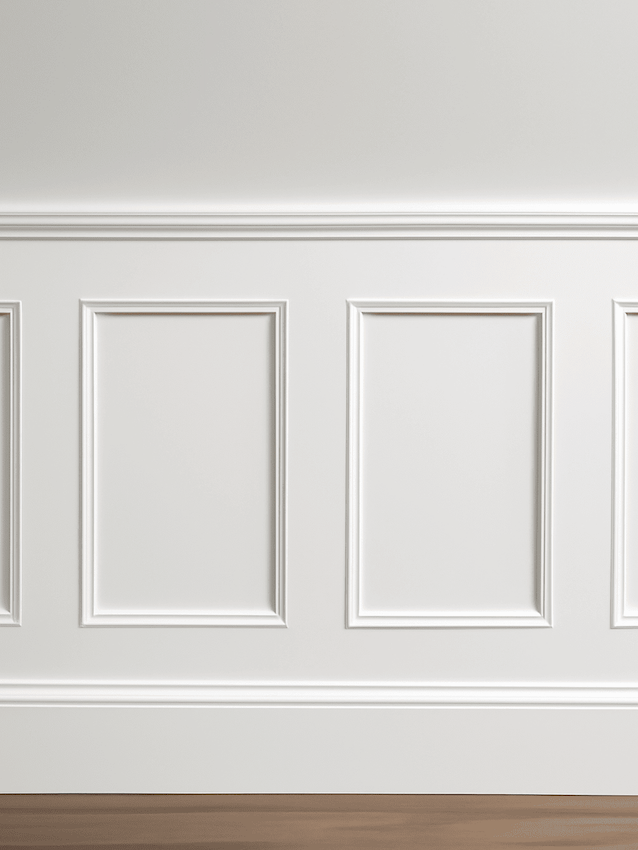
    Traditional wainscoting at chair-rail height (approx. 90cm) with a strong, saturated paint colour above — deep green, navy, or terracotta — is one of the most enduringly elegant dining room treatments. The wainscoting protects the lower wall from chair backs and accidental contact while the upper wall carries the colour statement. See our full wainscoting ideas guide for style variations and material choices.

    3. Fluted Oak Panels as a Head-of-Table Feature

    Treat just the wall at the “head” end of the dining table — the wall your eye goes to from the kitchen or entrance — with fluted oak panels. The vertical groove profile suits the formal character of a dining room while the natural oak tone keeps the space warm rather than heavy. Leave the remaining walls in a complementary neutral.

    4. Dark Painted Panels with Picture Moulding

    America Grey Acoustic Wall Panels | 3-Sided Wood Veneer | SoundPanel®.

    Panel the dining room walls in a dark tone — charcoal, black, deep plum — and add painted picture moulding frames to create a classical, formal effect. Hang large art or a mirror within the moulded frames for a fully finished result. This is one of the most dramatic and cost-effective dining room treatments available.

    5. Herringbone Wood Tile Panel Wall

    Solid wood mosaic tiles arranged in a herringbone pattern create a crafted, bespoke dining room backdrop unlike anything achievable with paint or standard panels. Best in a warm oak or medium walnut that complements rather than competes with the dining table material.

    6. Reeded Panels with Integrated Shelving

    A reeded panel wall with integrated floating shelves — for glassware, ceramics, candles — creates a dining room backdrop that’s both beautiful and functional. The soft, rounded reeded profile suits a dining room’s need for warmth and hospitality better than the sharper fluted alternative.

    7. Limewash + Slat Panel Combination

    Limewash the three secondary walls in an earthy, organic tone and install slat panels on the fourth — the primary feature wall. The combination of textural limewash and the graphic vertical lines of the slat panels creates a dining room that feels designed at every angle, not just from the obvious direction.

    8. Stone Effect Panel at the Dining Room Fireplace

    Stone Rock Wall Panel (set of 6) | RockSurface®-Wall Panelling-The Panel Hub

    If the dining room has a fireplace or chimney breast, clad it in faux stone panels for a dramatic, anchoring focal point that suits formal dining rooms and country house aesthetics equally well.

    Design Principles for Dining Room Panel Walls

    • Warmth matters: Dining rooms are social spaces — cool, clinical materials feel inhospitable. Choose warm wood tones, rich colours, and textural materials over anything sleek or industrial.
    • Scale up: Dining rooms typically have higher ceilings than other rooms. Floor-to-ceiling panel treatments read better than half-height options at standard domestic ceiling heights.
    • Lighting is everything: Panel walls in dining rooms are experienced primarily under artificial evening light. Test your choice under warm tungsten or warm-white LED light, not just daylight.

    For broader feature wall inspiration across room types, our accent wall ideas guide covers 15 different treatments with design guidance. And for the full overview of wood panel materials and construction, the wood panel wall complete guide is the right reference.

    Practical Considerations Before Installing Dining Room Panels

    Dining rooms come with a specific challenge that most other rooms don’t: food vapour, humidity from hot dishes, and the occasional splash. Most real wood panels handle this without issue as long as they’re not installed directly adjacent to a kitchen hob or steam source. For dining rooms open to a kitchen, a sealed or lacquered finish gives the wood better resistance to ambient moisture over time.

    Chair rail height matters more in dining rooms than anywhere else. In most cases, the panel feature wall looks best when it extends from floor to ceiling. If you prefer a half-wall treatment, the standard height is 90–100 cm — roughly the height of a dining chair back. Below this line, choose a harder-wearing panel surface or include a flat skirting that protects the bottom edge from chair contact.

    Consider how lighting interacts with the panels from the dining table’s perspective. Seated diners face the feature wall at close range, meaning texture and grain are viewed at close viewing distance and eye level. Shallow grooves and subtle relief patterns read beautifully here — dramatic 3D panels can feel overwhelming at this scale.

    Dining Room Feature Wall FAQs

    Which wall should be the feature wall in a dining room?
    The wall at the head of the table, or the wall most visible from the main seating side, is the standard choice. If your table is positioned centrally, the wall your guests face when seated is the natural focal point.

    Are wood panels suitable for a dining room?
    Yes. Most wood and wood-effect panels are perfectly suitable for dining rooms. The key consideration is sealing — panels with an oil or lacquer finish resist food vapour better than untreated or raw wood. Engineered panels with a factory-applied finish require almost no maintenance in a dining context.

    How do I style the rest of the room around a panel feature wall?
    Keep the three remaining walls in a complementary neutral — soft white, warm greige, or muted sage all work well with wood tones. Matching the table’s wood species or tone to the panel creates cohesion. Use lighting above the table (pendant or chandelier) to draw the eye toward the feature wall and away from any elements you want to recede.

    Can I add lighting to a dining room panel wall?
    Yes — integrated LED strip lighting between slats or within panel grooves adds dramatic effect in a dining setting, particularly in the evening. Warm white (2700–3000K) works better than cool white in a dining context, as it flatters both food and skin tones.

    Shop Dining Room Wall Panels

    Browse the full wood wall panel collection at The Panel Hub — the SoundPanel™ acoustic slat range in walnut or dark oak is the most popular choice for dining room feature walls. For more dining room and social space panel inspiration, our interior slat wall ideas guide covers 50+ real-room applications. The acoustic panel buyer’s guide explains why acoustic slat panels make a meaningful difference in dining rooms — reducing the hard echo that makes conversation tiring in rooms with hard floors and minimal soft furnishings.