Tag: Kitchen

  • Kitchen Feature Wall Ideas: How to Create a Focal Point That Actually Works

    Kitchen Feature Wall Ideas: How to Create a Focal Point That Actually Works

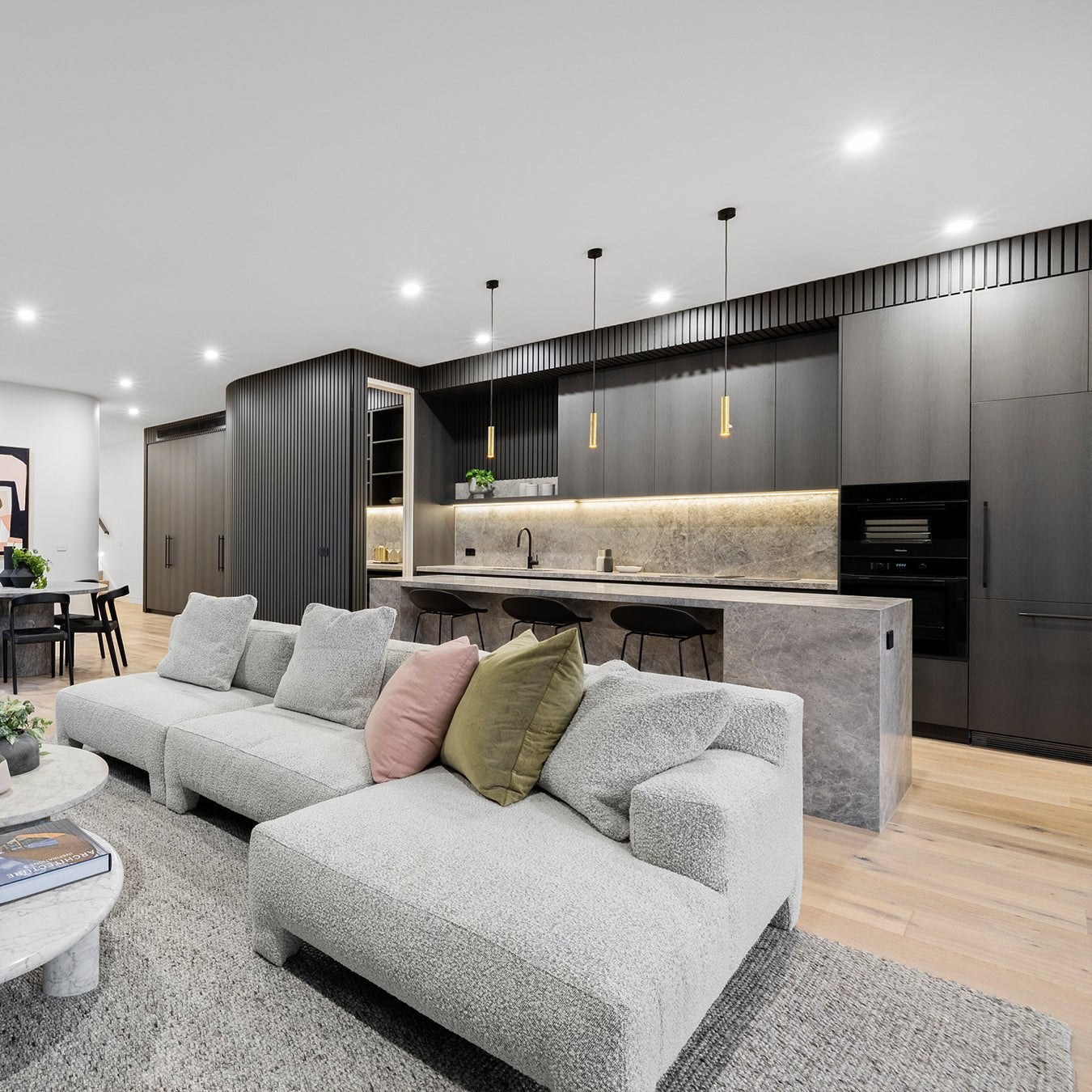
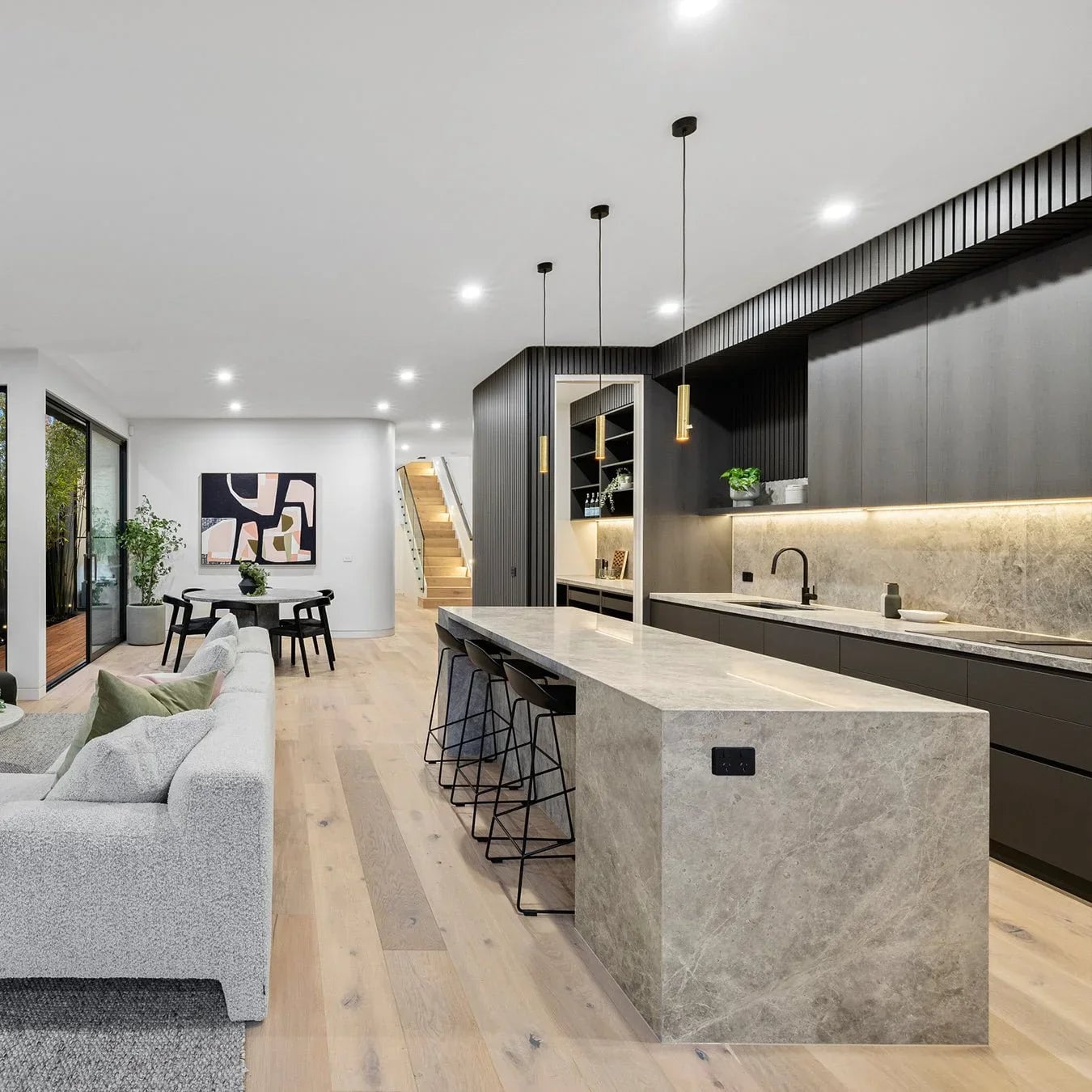
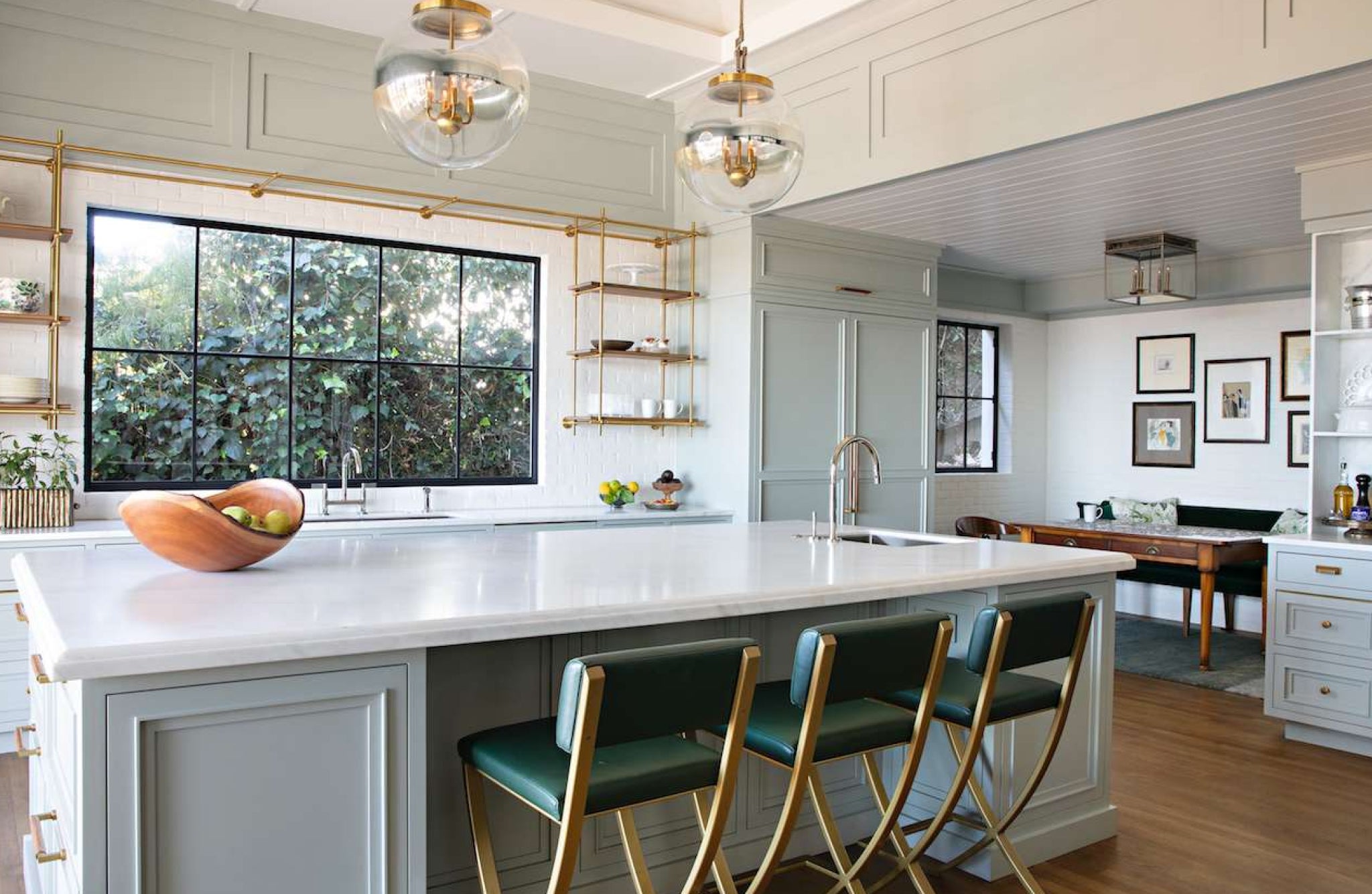
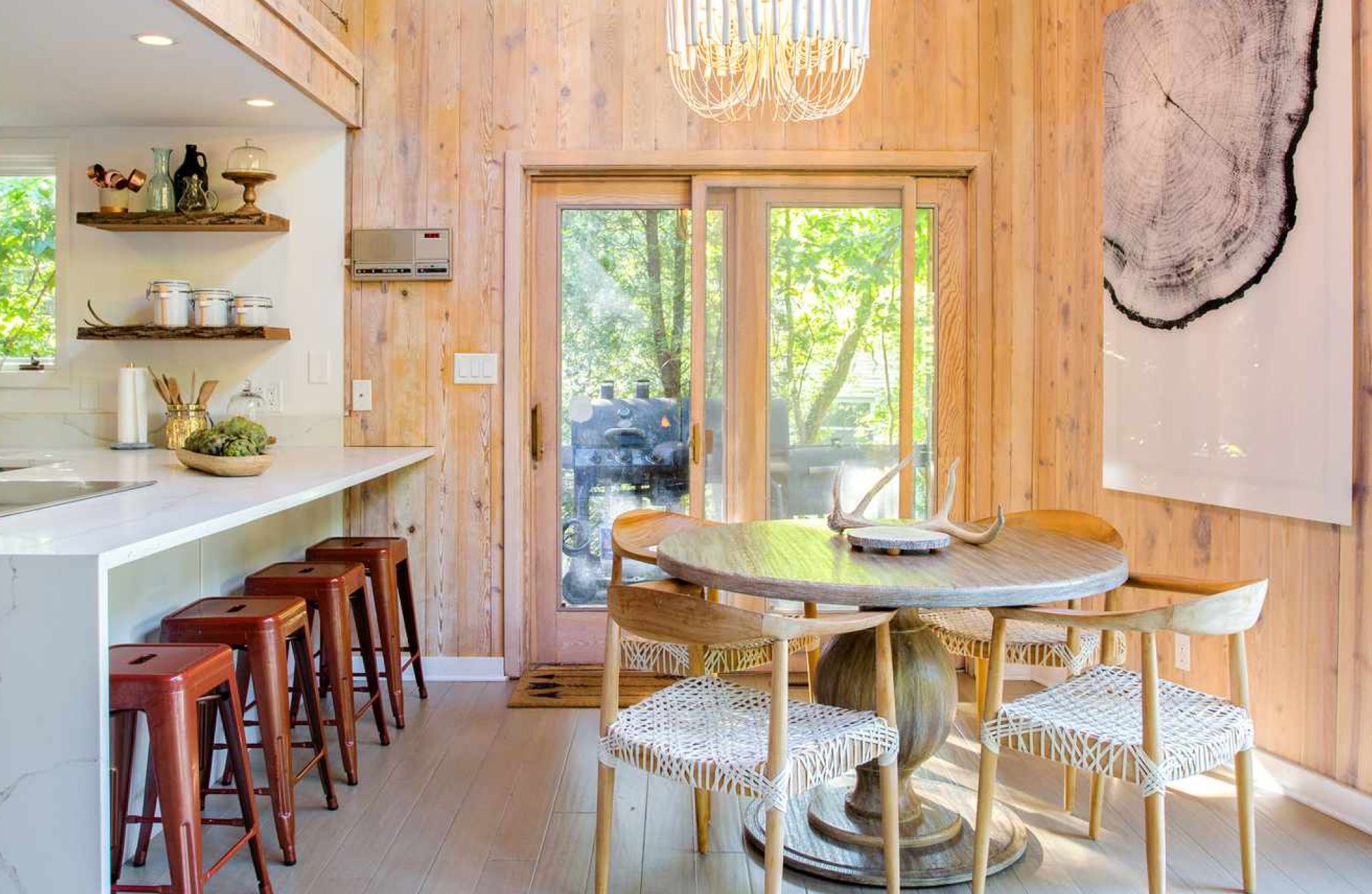
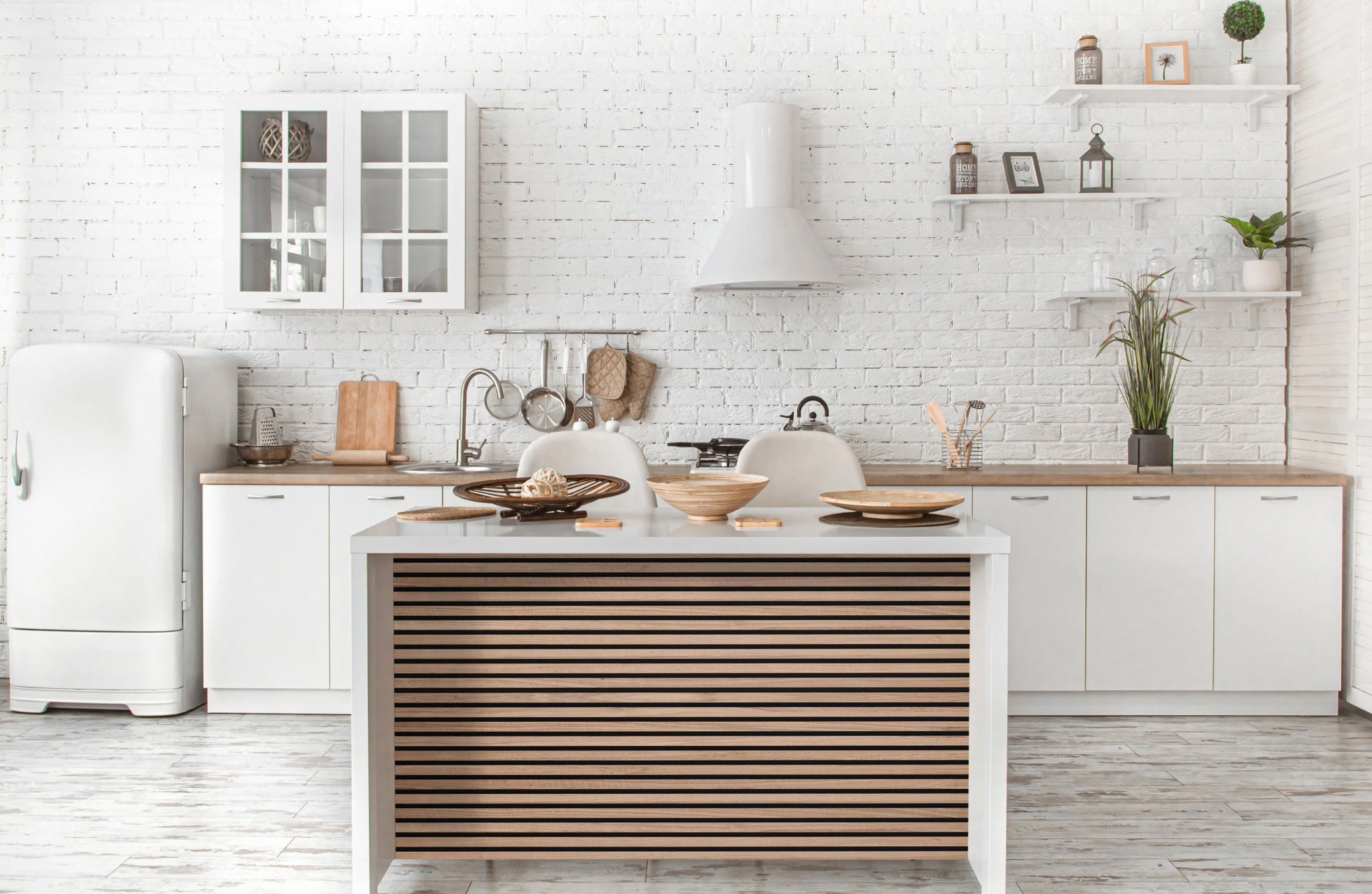
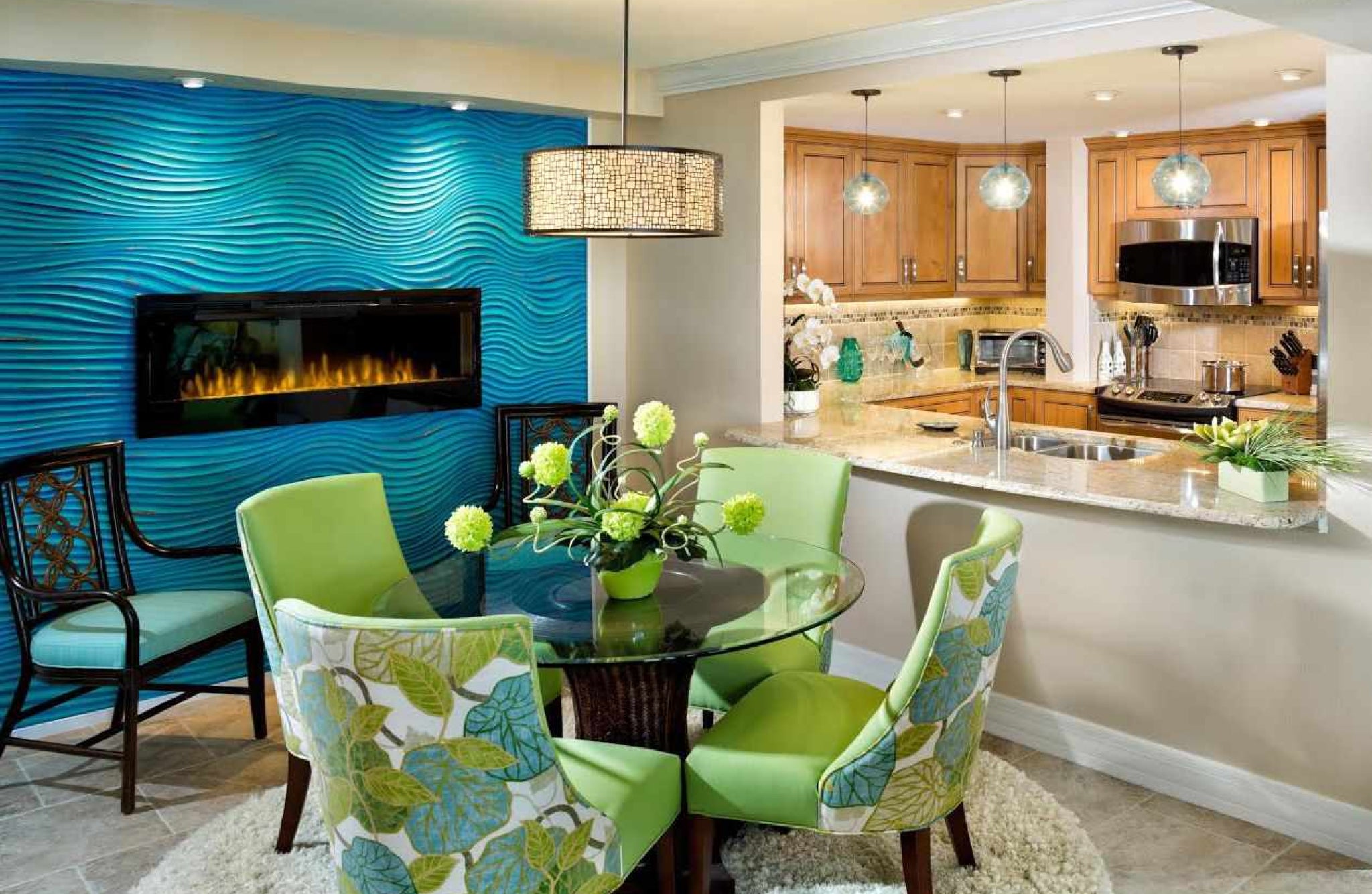
    Kitchens are the most-used room in most homes, but they’re rarely treated as spaces where design can make a real statement. At The Panel Hub, we’ve seen a growing number of homeowners and kitchen designers using wood wall panels to add warmth, texture, and character to kitchens that would otherwise feel cold or purely functional. A well-placed kitchen feature wall is one of the most impactful changes you can make without touching the cabinetry or flooring.

    What Makes a Good Kitchen Feature Wall

    A kitchen feature wall works when it anchors the room visually without competing with everything else. In practice, that usually means one wall — often the one behind open shelving, a dining area, or an island — treated with a material, colour, or texture that draws the eye. The wall becomes a backdrop that makes the rest of the kitchen look more considered.

    Wood paneling is effective here because it adds warmth and depth without requiring a full renovation. It sits behind cabinetry, appliances, and décor rather than clashing with them. The right panel finish reads as intentional, not decorative for its own sake.

    Where to Position a Kitchen Feature Wall

    The wall behind open shelving

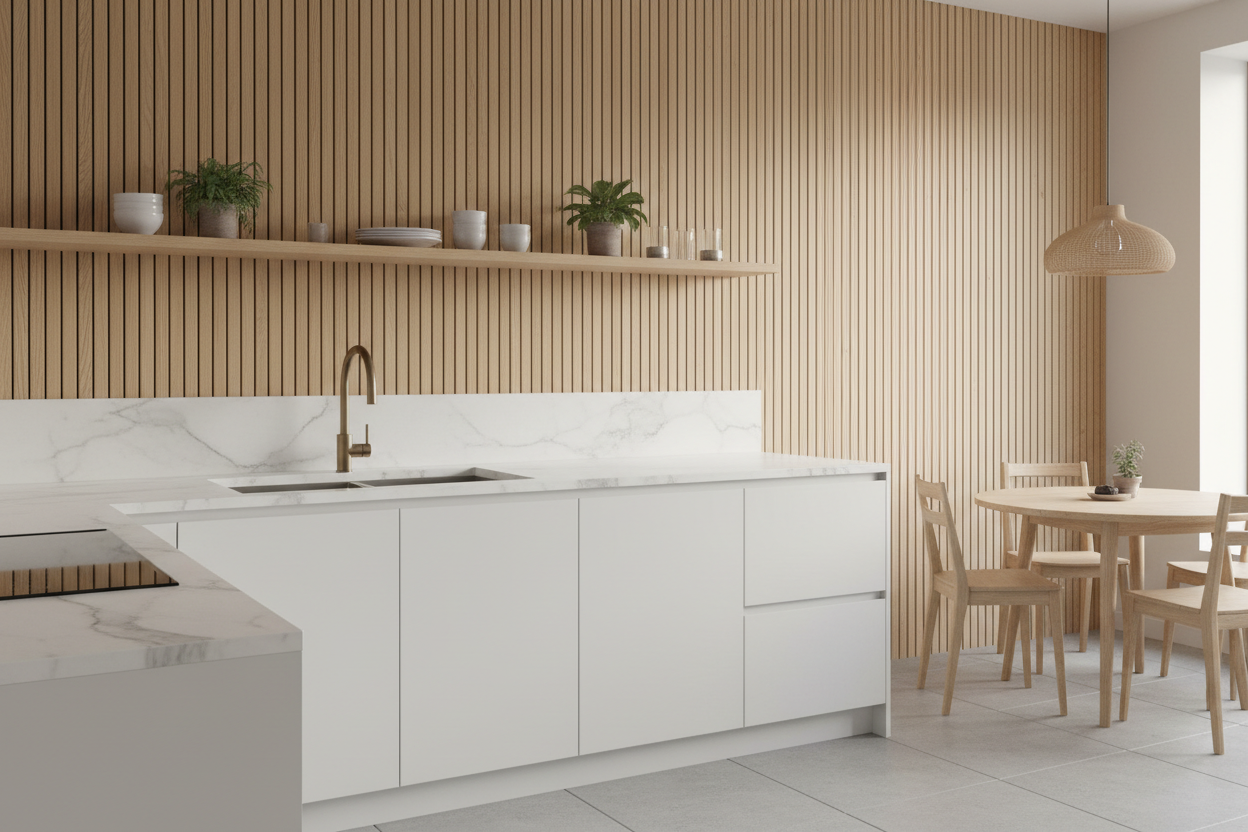
    Open kitchen shelving has become a design staple, but the wall behind it matters as much as the shelves themselves. A paneled wall behind floating shelves gives depth and richness to what would otherwise be empty painted plaster. Oak slat panels work particularly well here — they add visual interest without overpowering the items on display.

    The island-facing wall

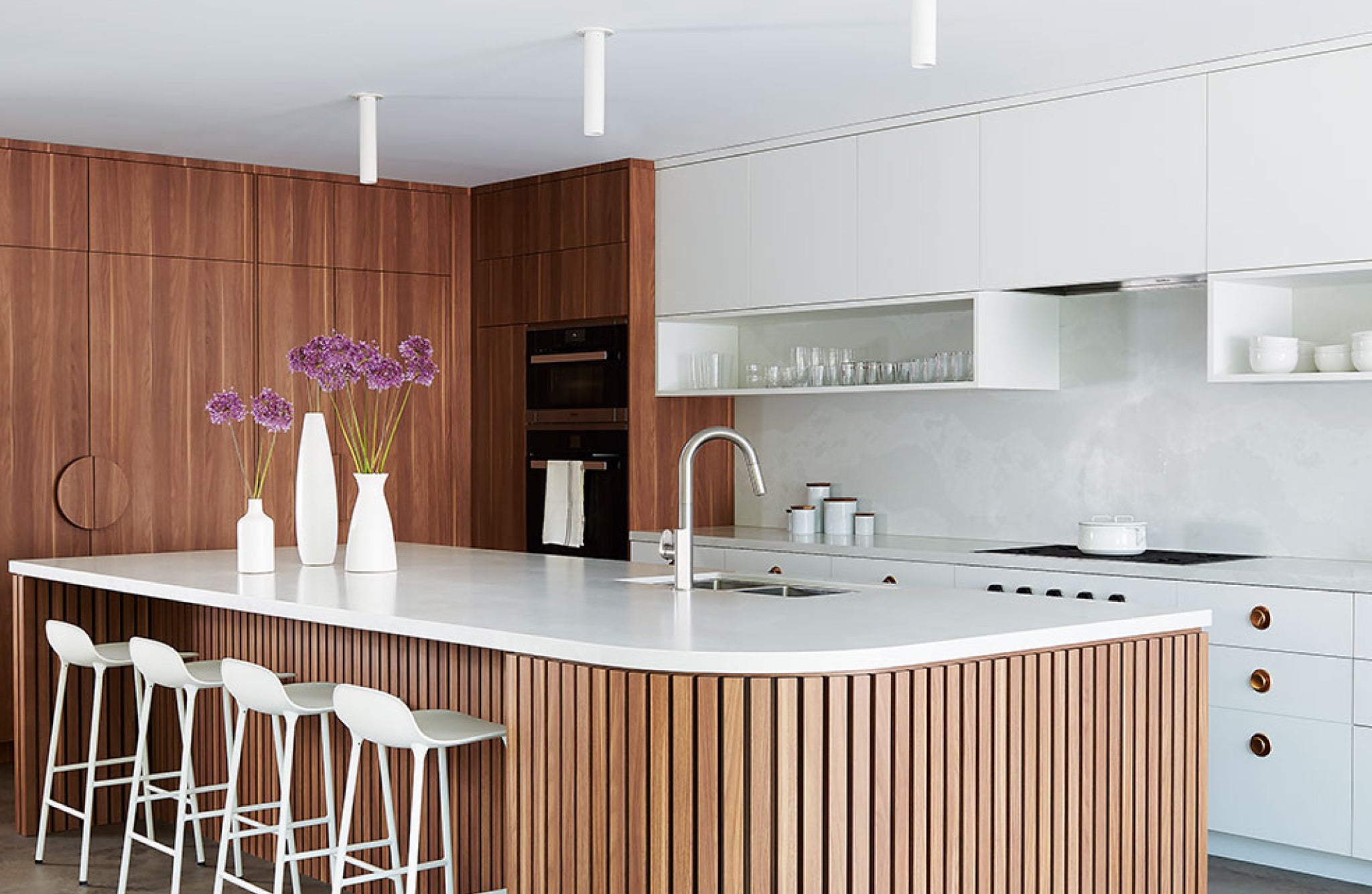
    In kitchens with a central island, the wall you face while cooking is often overlooked. Paneling this wall creates a backdrop that frames the island and makes the whole kitchen feel more designed. This is especially effective in open-plan spaces where the kitchen needs to hold its own visually against a living or dining area.

    The dining area wall in open-plan kitchens

    In open-plan kitchen-diners, the wall at the end of the dining table is a natural feature wall location. Paneling it defines the dining zone without building a wall and creates a visual anchor for the table and chairs. This is one of the most popular uses of wood paneling in contemporary kitchen design.

    Panel Styles That Work in Kitchens

    Slat panels

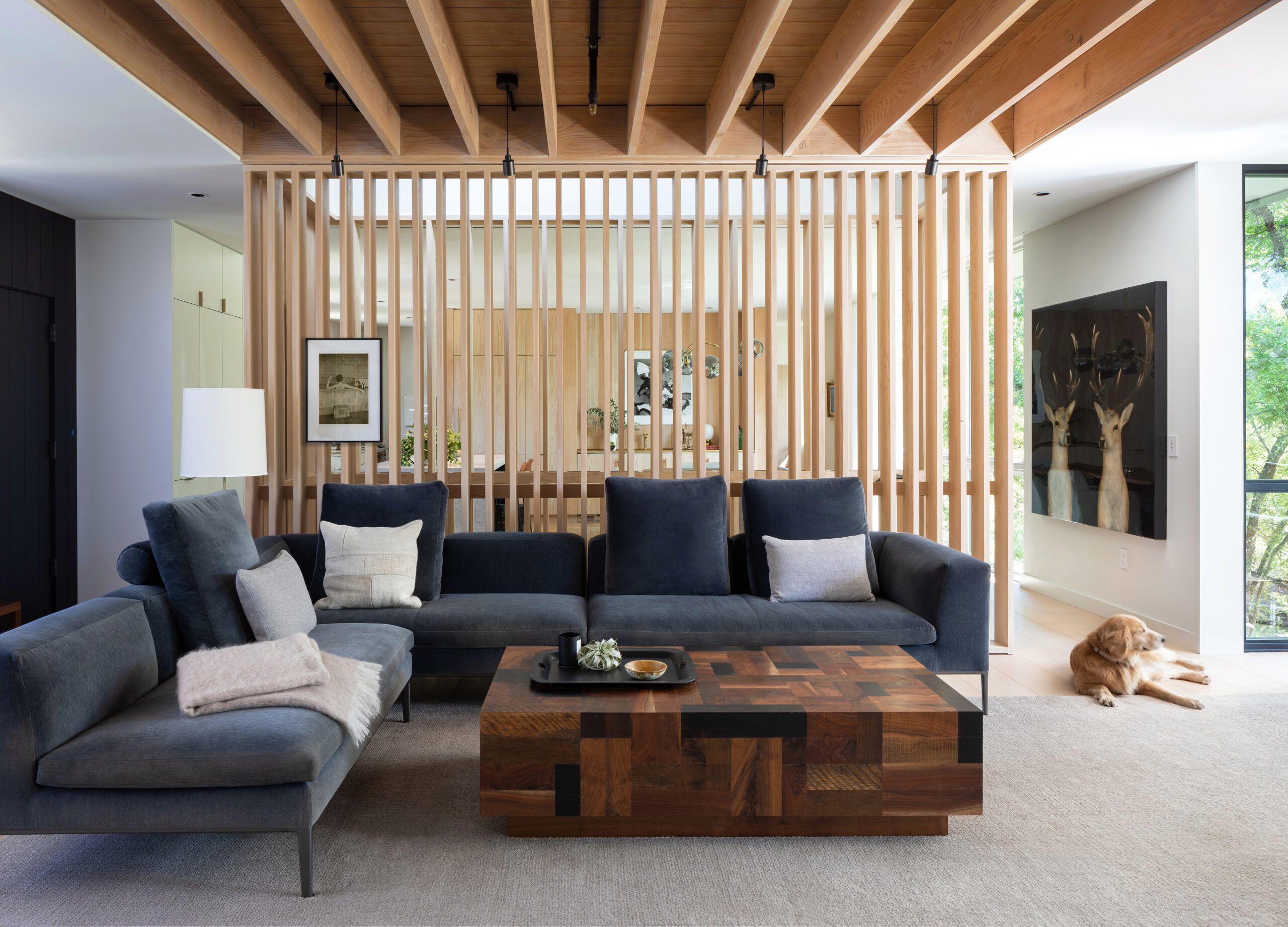
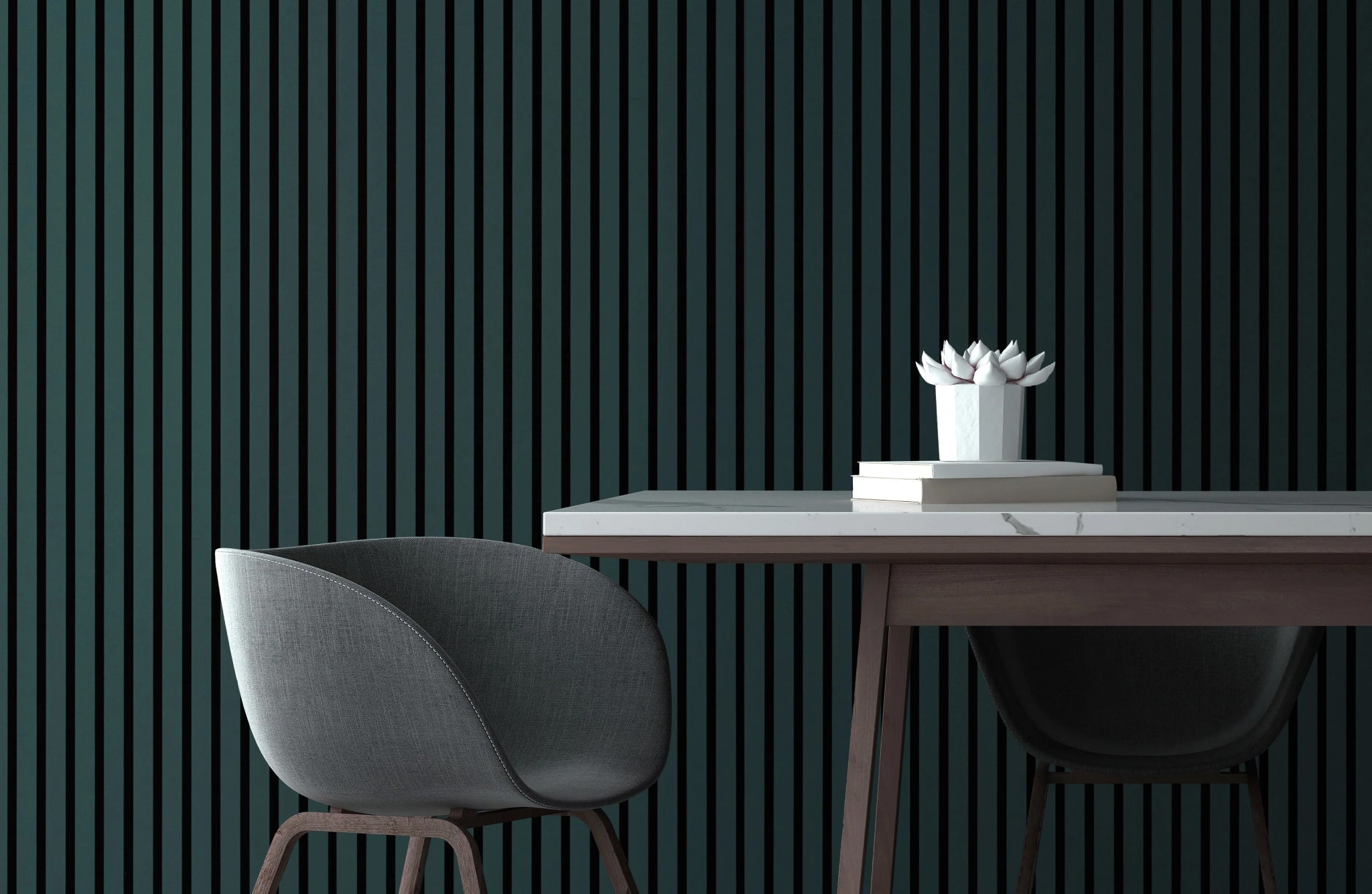
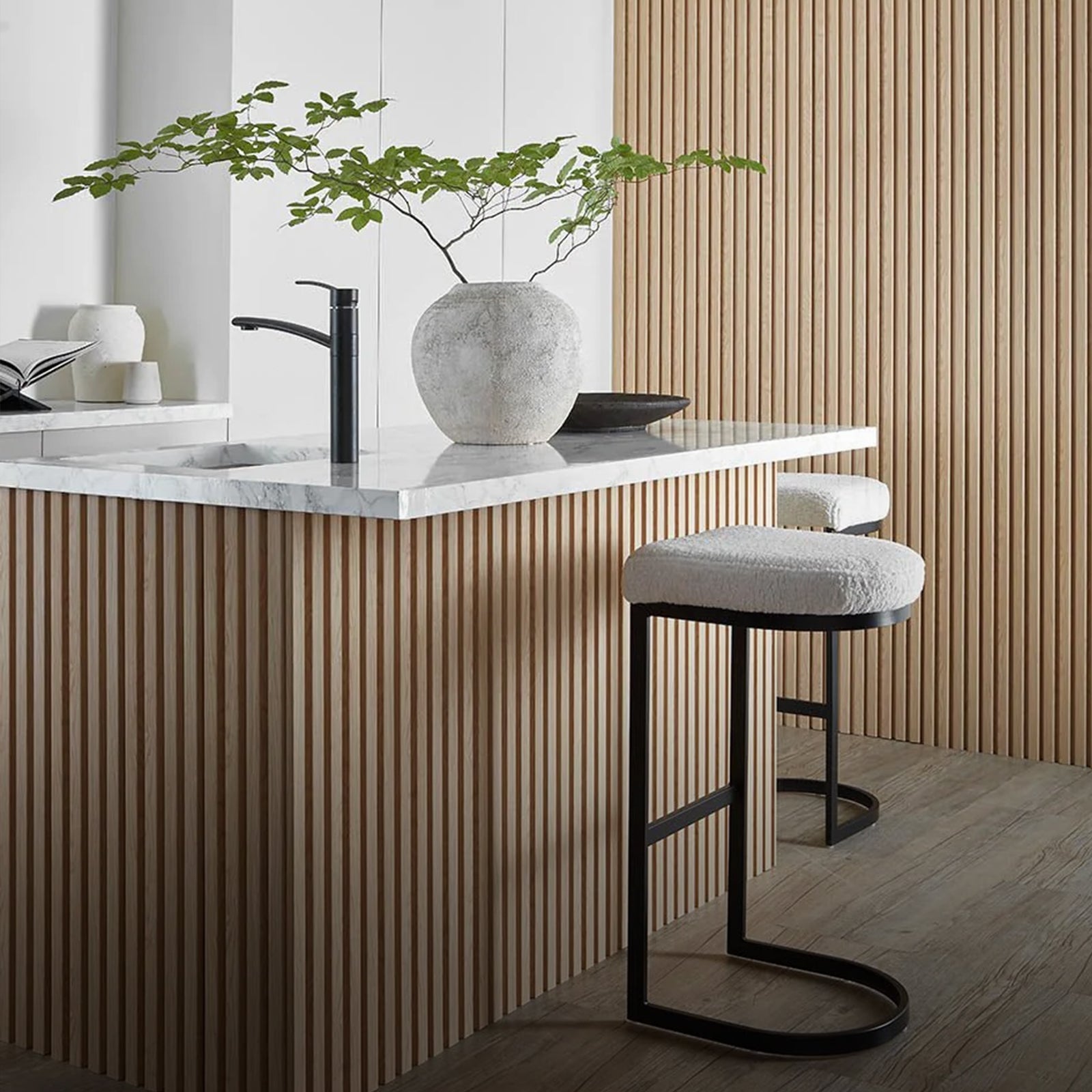
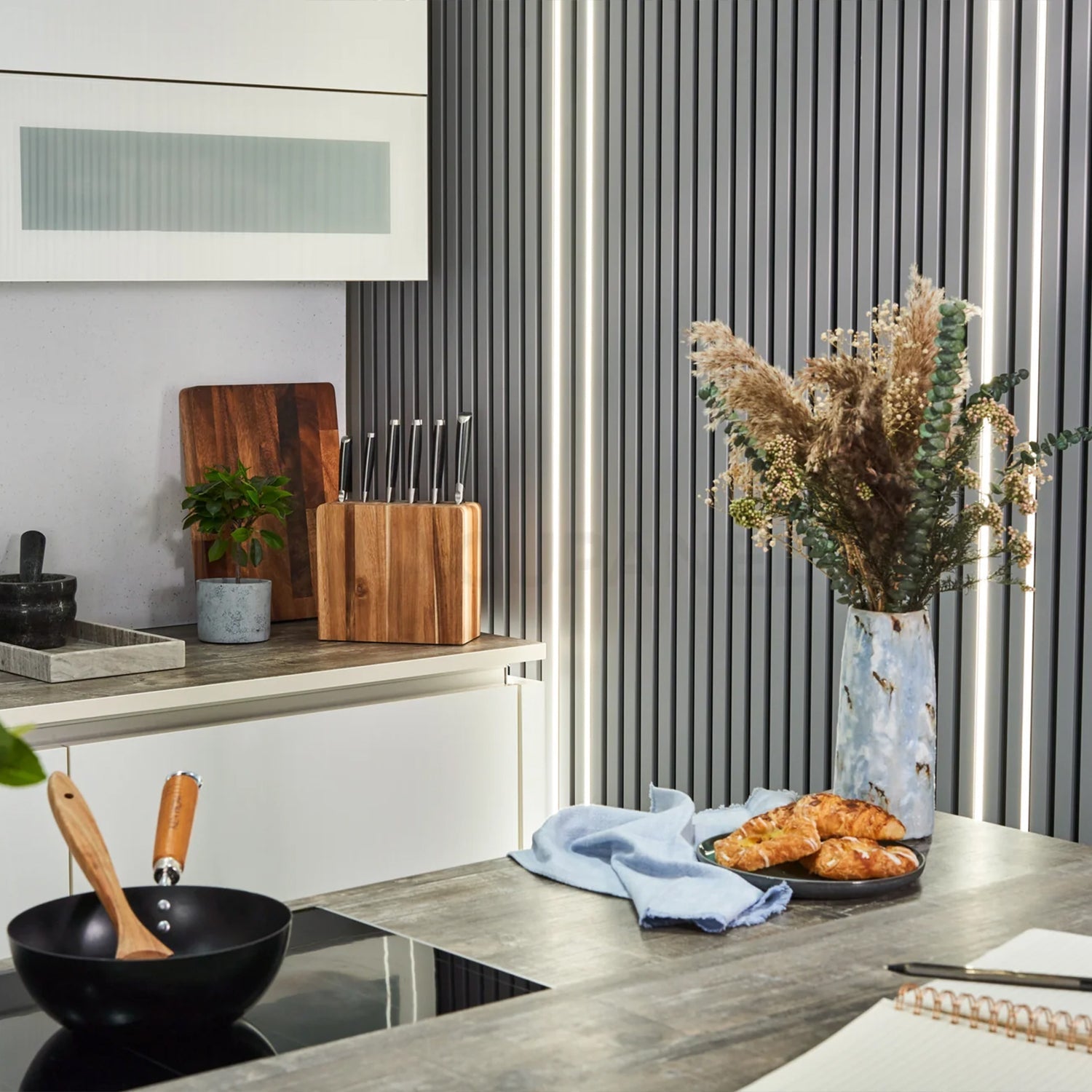
    Vertical slat panels are the most widely used style for kitchen feature walls. The clean linear lines complement both modern handleless kitchens and more traditional shaker-style cabinetry. Our SoundPanel™ acoustic slat panels work especially well in open-plan kitchen-diners where the dining area benefits from sound absorption too.

    Mosaic and grooved panels

    For kitchens with a more textural approach, mosaic-style panels add a different kind of depth. Our GroovePanel® mosaic panels suit kitchens with a more eclectic or warm-minimalist aesthetic and pair well with raw timber, concrete worktops, or dark cabinetry.

    How to Choose the Right Finish

    The finish of your kitchen feature wall panels should relate to something else already in the room — the flooring, worktop, or cabinet handles. If your kitchen has warm-toned timber flooring, an oak panel finish carries that warmth up the wall without feeling repetitive. If the kitchen is largely white or grey, a walnut or darker oak finish creates contrast and warmth without clashing.

    Avoid going so dark that the wall recedes too much, especially in smaller kitchens. Mid-tone oak finishes tend to be the most versatile — they read as warm without being heavy.

    Practical Considerations for Kitchen Panels

    The main practical question with kitchen wall panels is moisture and cleaning. Our kitchen wall panels are not intended for use directly behind hobs or sinks where water or grease splatter is a constant issue. For feature walls away from the cooking zone — behind shelving, in dining areas, or on island-facing walls — they perform well and are easy to maintain with a dry or lightly damp cloth.

    Panels should not be installed in areas subject to heavy steam or direct water contact. For those zones, tile or glass is still the right material. But for the majority of kitchen wall space, panels are a practical and durable choice.

    Kitchen Feature Wall Ideas by Style

    Modern minimal

    In a minimal kitchen with handleless cabinetry and a neutral palette, a pale oak slat panel on the dining wall adds warmth and texture without disrupting the clean lines. Keep the rest of the walls plain and let the panel do the work.

    Warm Scandi

    A Scandi-influenced kitchen — white cabinets, timber accents, simple shapes — benefits from a feature wall that adds the warmth the rest of the room is built around. A natural oak panel behind open shelving completes the look without adding clutter.

    Industrial

    Darker panel finishes — walnut, dark oak, or a panel with strong grain contrast — pair well with industrial kitchen elements: black metal frames, concrete worktops, exposed brickwork. The wood softens the harder materials without losing the industrial edge.

    Where to Start

    The easiest way to start is to identify the single wall in your kitchen that gets the most visual attention — usually the one you face most often or the first one you see when entering the room. Panel that wall first. Once it’s in place, you’ll have a much clearer sense of whether any other walls need treatment or whether that one change is enough.

    Browse our full range of kitchen wall panels or explore the complete wood wall panel collection to find the right finish for your space.
  • Kitchen Splashback Panel Alternatives: Beyond Tiles for Kitchen Walls

    Kitchen Splashback Panel Alternatives: Beyond Tiles for Kitchen Walls

    Tiles have been the default for kitchen walls for decades, but they’re no longer the only option. At The Panel Hub, we’re regularly asked about using wood wall panels in kitchens — and for certain areas of a kitchen, they’re an excellent choice. This guide covers the main alternatives to traditional tile splashbacks and helps you work out where each material performs best.

    Why People Look Beyond Traditional Tiles

    Tiles work well behind hobs and sinks — they’re heat-resistant, waterproof, and easy to wipe clean. But grout is a maintenance issue, tile trends date quickly, and covering an entire kitchen wall in tiles can feel busy or cold. Many homeowners are looking for materials that give a more cohesive, contemporary result, especially in open-plan spaces where the kitchen wall is visible from a living or dining area.

    The Main Alternatives

    Glass panels

    Toughened glass splashbacks are seamless, easy to clean, and available in any colour. They work well behind hobs because they’re fully heat-resistant. The downside is cost — a bespoke glass panel can be expensive — and they can look stark without careful colour matching to the rest of the kitchen.

    Stainless steel

    Stainless steel is a professional kitchen staple that’s moved into domestic kitchens. It’s highly durable, heat-resistant, and hygienic. It suits industrial or contemporary kitchen styles but looks out of place in warmer, more traditional settings. Fingerprints and water marks are a constant maintenance consideration.

    Solid surface and laminate sheets

    Large-format laminate or solid surface sheets (Dekton, Corian, Silestone) are increasingly popular for kitchen walls. They’re seamless, available in a huge range of finishes including stone and wood effects, and easy to clean. Cost varies significantly depending on material.

    Wood wall panels for kitchen feature walls

    Wood panels are not suitable directly behind a hob or above a sink — the moisture, grease, and heat exposure would damage them. But for every other kitchen wall — behind open shelving, in the dining zone of an open-plan kitchen, or on the island-facing wall — they’re a highly effective choice. Our kitchen wall panels add warmth and texture to spaces that tiles or paint alone can’t achieve.

    Where Wood Panels Work in Kitchens

    The question isn’t whether to use wood panels in a kitchen — it’s where. The right locations are: behind open shelving where there’s no cooking activity directly below, the dining area wall in a kitchen-diner, the end wall of an island, or any wall that functions more as a visual backdrop than a cooking surface.

    In these zones, wood panels outperform tiles on warmth, visual interest, and ease of installation. They require no grouting, create a seamless look, and can be installed without professional tiling skills.

    How to Combine Materials in a Kitchen

    The most successful modern kitchen designs often mix materials intentionally. Tile or glass behind the hob and sink, wood panels on the feature wall or dining zone. This approach solves the practical requirements of the wet and heat zones while allowing a much warmer, more interesting finish elsewhere.

    The key is maintaining coherence between the materials — matching tones, keeping finishes in a similar register (all matte, or all with some sheen), and not using more than three distinct materials on the walls.

    Choosing a Panel for Your Kitchen

    For kitchens with white or light grey cabinetry, a natural oak or warm mid-tone panel adds contrast and warmth. For kitchens with dark or navy cabinetry, a lighter panel finish prevents the room from feeling too closed in. For timber-framed Shaker kitchens, a panel finish that echoes the timber tones creates a coherent, layered look.

    Browse our kitchen wall panels or explore the full wood wall panel range to find the right match for your kitchen.

  • Small Kitchen Wall Paneling Ideas: Add Character Without Closing the Space

    Small Kitchen Wall Paneling Ideas: Add Character Without Closing the Space

    Small kitchens present a particular design challenge: you want to add character and warmth, but the wrong choices make the room feel cramped. At The Panel Hub, we work with homeowners who assume wood wall panels are only for larger spaces. They’re not — but in a small kitchen, the decisions around placement, scale, and finish are more important. Get them right and you transform the room. Get them wrong and you lose the space you already have.

    The Challenge of Small Kitchen Walls

    In a small kitchen, walls are interrupted at every turn — by cabinets, appliances, windows, and doors. The sections of exposed wall are limited, which means each one matters more. The goal is to use paneling strategically: on the walls that are most visible, in finishes that add warmth without absorbing light, and in formats that draw the eye outward rather than inward.

    Which Panel Styles Work in Small Kitchens

    Vertical slat panels

    Vertical lines draw the eye upward, making ceilings feel higher and rooms feel taller. In a small kitchen, vertical slat panels on a feature wall create the impression of more height without expanding the actual footprint. Our SoundPanel™ slat panels in particular have a clean, fine profile that suits compact spaces — the narrow slats read as texture rather than bulk.

    Light and pale finishes

    In small spaces, lighter finishes reflect more light and feel less enclosing. Natural oak, pale ash, or light-toned panels are the most appropriate choices for small kitchens. Darker finishes — walnut, espresso — can work on a single accent wall but should be used sparingly and paired with pale cabinetry and good lighting.

    Where to Use Panels in a Small Kitchen

    The best wall to panel in a small kitchen is the one with the most uninterrupted space — often the end wall, a dining zone wall, or the wall behind open shelving. Avoid trying to panel multiple walls: in a small kitchen, consistency is less important than choosing the one wall that makes the most visual impact.

    In a galley kitchen, the short wall at the end of the run is often the best location — it’s in view from the full length of the kitchen and benefits most from a panel that adds depth and character.

    Our kitchen wall panels are available in a range of finishes suitable for compact spaces.

    What to Avoid in Small Kitchens

    Avoid very dark or heavily grained finishes unless the kitchen has good natural light. Avoid horizontal panel formats — they shorten rather than heighten the room. Don’t try to panel every available wall surface, as this creates visual noise that makes the room feel smaller rather than more designed. And avoid mixing two different panel finishes in the same small space — keep it simple.

    Making the Most of Limited Wall Space

    In a small kitchen, the area above cabinetry — between the top of the wall units and the ceiling — is often dead space. A panel running floor to ceiling behind open shelving or in the dining zone makes better use of vertical space and avoids the awkward gap. If full-height installation isn’t practical, treat the panel as a deliberate feature and finish the top edge cleanly with a timber batten or moulding.

    Getting the Balance Right

    Small kitchens often benefit most from a single well-placed panel rather than a comprehensive scheme. Identify the wall you look at most — usually the one facing you at the main point of activity — and start there. The goal is one strong visual element that makes the room feel more designed, not a full transformation that risks overwhelming the space.

    Browse the full wood wall panel collection to find a finish that suits your kitchen’s scale and palette.

  • Wood Panels in the Kitchen: How to Make It Look Intentional, Not Rustic

    Wood Panels in the Kitchen: How to Make It Look Intentional, Not Rustic

    Wood in kitchens divides opinion. Done well, it adds warmth and character that no other material can replicate. Done badly, it makes a kitchen feel dark, dated, or unfinished. At The Panel Hub, we’ve helped countless homeowners use wood wall panels in kitchens in a way that feels contemporary and considered. The key is knowing where to use them, which finish to choose, and what to pair them with.

    Why Wood in a Kitchen Works — When Done Right

    The best kitchen designs have a quality that’s hard to pin down — they feel warm and liveable rather than clinical or showroom-like. Wood is the material most responsible for that quality. It introduces organic texture, absorbs light differently across the day, and creates a visual softness that paint, tile, and stone can’t replicate.

    Contemporary wood panels — slat panels in particular — bring this quality to kitchens without the rustic or country connotations of older wood finishes. Smooth, fine-grain oak slats read as modern and refined. The result is warmth without weight.

    Where to Use Wood Panels in a Kitchen

    Behind open shelving

    The wall behind floating kitchen shelves is one of the best locations for wood paneling. The shelves act as a frame, and the paneled wall becomes a backdrop that makes everything on the shelves look more deliberate. In kitchens with white or painted cabinetry, a natural oak panel behind open shelves introduces exactly the warmth the room needs.

    The island-facing wall

    In kitchens where you stand at an island facing a wall — typically the wall behind a range cooker or the main appliance run — that wall is in constant view. Paneling it creates a backdrop that makes the kitchen feel designed rather than assembled. This works well in both contemporary kitchens and more traditional or Shaker-style spaces.

    The breakfast bar wall

    Where a breakfast bar or peninsula faces a wall, that wall is at eye level for everyone seated there. It’s the perfect location for a panel that adds visual interest without encroaching on the workspace. Vertical slat panels in a warm oak tone work well here — they complement the view without dominating it.

    The dining zone in open-plan kitchens

    Open-plan kitchen-diners are where wood panels most frequently appear — and for good reason. The dining wall needs to feel warm and inviting in a way that’s different from the functional kitchen area. A paneled dining wall defines the zone, adds acoustic benefit, and creates a visual anchor for the table. Our SoundPanel™ acoustic slat panels are particularly effective here, reducing echo while adding the warmth that open-plan spaces often lack.

    Which Panel Style to Choose

    Slat panels are the most popular choice for kitchens — their clean, linear character suits contemporary kitchen aesthetics and pairs well with handleless cabinetry, shaker doors, and everything in between. Our GroovePanel® mosaic panels suit kitchens with a more textured or layered approach and work well alongside natural stone, concrete, or heavily grained timber elements.

    For kitchens where the panel will be seen alongside cabinetry in a similar wood tone, consider contrast rather than match — a slightly darker or lighter panel finish creates depth rather than a confused single-material look.

    Colour and Finish Considerations

    Light oak finishes are the most versatile kitchen panel choice — they’re warm without being heavy and complement the widest range of cabinet colours and kitchen styles. Walnut works well in kitchens with strong contrast (white cabinets, dark worktops) and adds drama to spaces that can handle more visual weight. Avoid very dark finishes in smaller kitchens or rooms with limited natural light.

    Common Mistakes to Avoid

    The most common mistake is paneling the wrong wall — specifically, installing wood panels in areas subject to moisture or grease. Wood panels should not go directly behind a hob or above a sink. The second most common mistake is matching the panel finish too closely to the cabinetry, which creates a flat, undifferentiated look. A slight contrast in tone or texture makes both elements read more clearly.

    Getting Started

    Start with one wall and one finish. The dining wall or open-shelving wall is the lowest-risk starting point. Browse our full range of kitchen wall panels and the complete wood wall panel collection to find the right match for your kitchen.

  • Geometric Wall Panels for Kitchen: How to Add Pattern Without Overpowering the Room

    Geometric Wall Panels for Kitchen: How to Add Pattern Without Overpowering the Room

    The kitchen is one of the hardest rooms to introduce a bold wall treatment. Between the cabinetry, appliances, splashback, and countertops, there are already four or five competing visual elements before you’ve even thought about the walls. Add an undisciplined pattern and the room tips into chaos. Do it thoughtfully, and a geometric wood panel becomes the element that ties everything together.

    Here’s how to use geometric wall panels in a kitchen without overpowering the space.

    Where Geometric Panels Work in a Kitchen

    Not every kitchen wall is a candidate for bold geometric pattern. The most successful applications share a common characteristic: there’s a clear, bounded surface that benefits from a deliberate design decision rather than a default neutral finish.

    End walls and peninsulas

    The end wall of a galley kitchen, or the wall behind a peninsula or island, is often the most visible surface from the rest of the living space. It’s also typically the only wall not broken up by upper cabinets. This makes it the best candidate for a geometric panel feature — it’s big enough to make an impact and contained enough not to overwhelm.

    Below-counter panels

    Geometric wood panels applied to the wall section between the counter and the floor — below lower cabinets — create a contemporary alternative to standard kickboard finishes. A crossing lines or concentric pattern at this level adds a detail that most kitchens completely ignore.

    Breakfast nook or dining area within the kitchen

    If your kitchen opens into a dining area, the wall behind the dining table is often neutral by default. A geometric wood panel behind the dining table differentiates the eating zone from the cooking zone, gives the dining area its own identity, and avoids the visual monotony of matching everything to the kitchen cabinetry.

    Pattern Scale: Getting It Right for a Kitchen

    Kitchens have a lot of small visual elements — hardware, tile joints, cabinet doors. A geometric panel with a very fine repeat (small individual units) can visually merge with all this detail and get lost. A larger-scale pattern — where individual geometric units are clearly legible from across the room — reads more confidently.

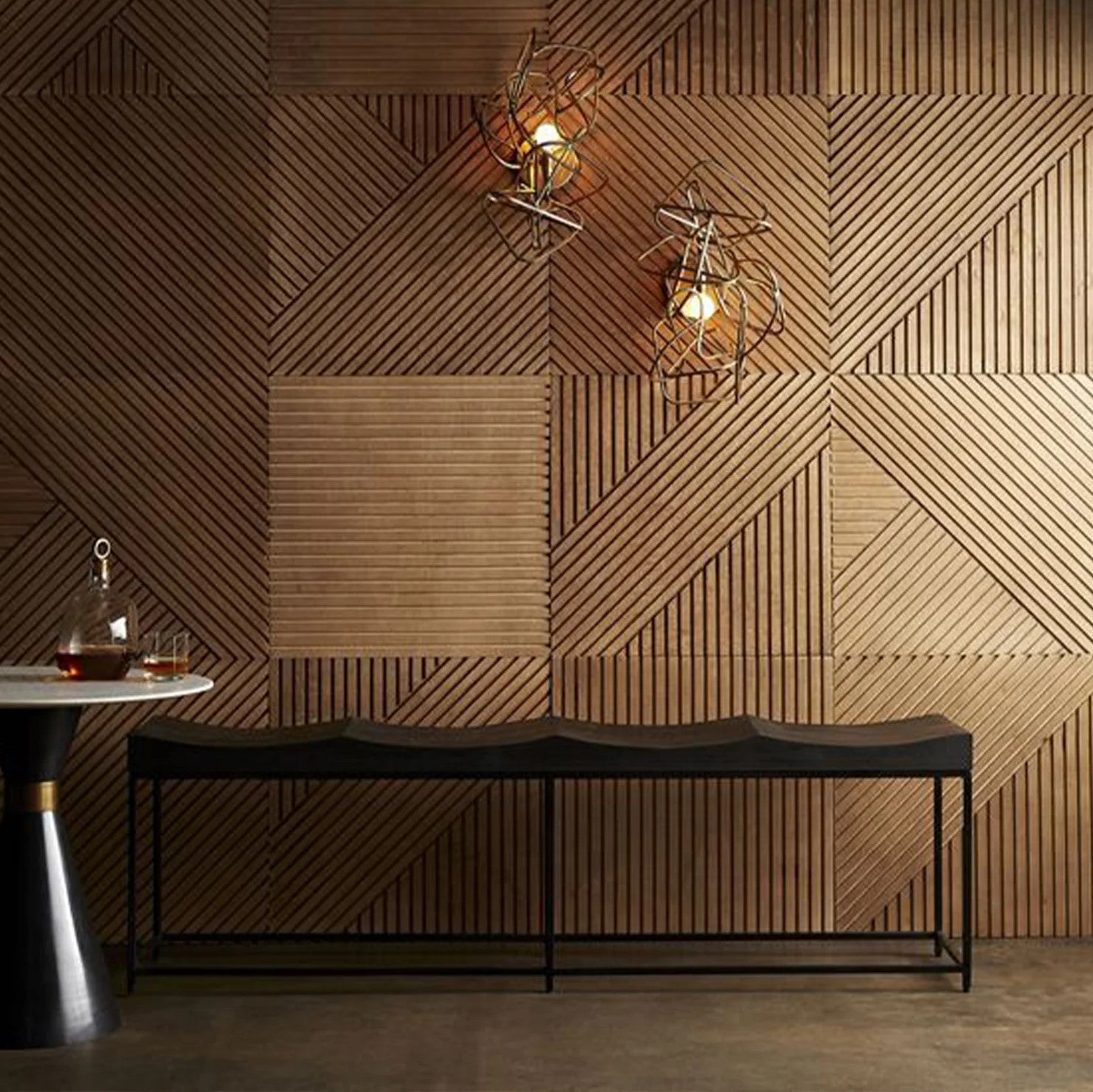
    The 3D Concentric Square Panel works well in kitchens because the pattern is bold enough to read clearly even when viewed through a doorway or from across an open-plan space. The Crossing Lines Panel is a cleaner, more architectural choice that doesn’t compete with cabinet hardware or tile patterns.

    Colour and Finish Considerations

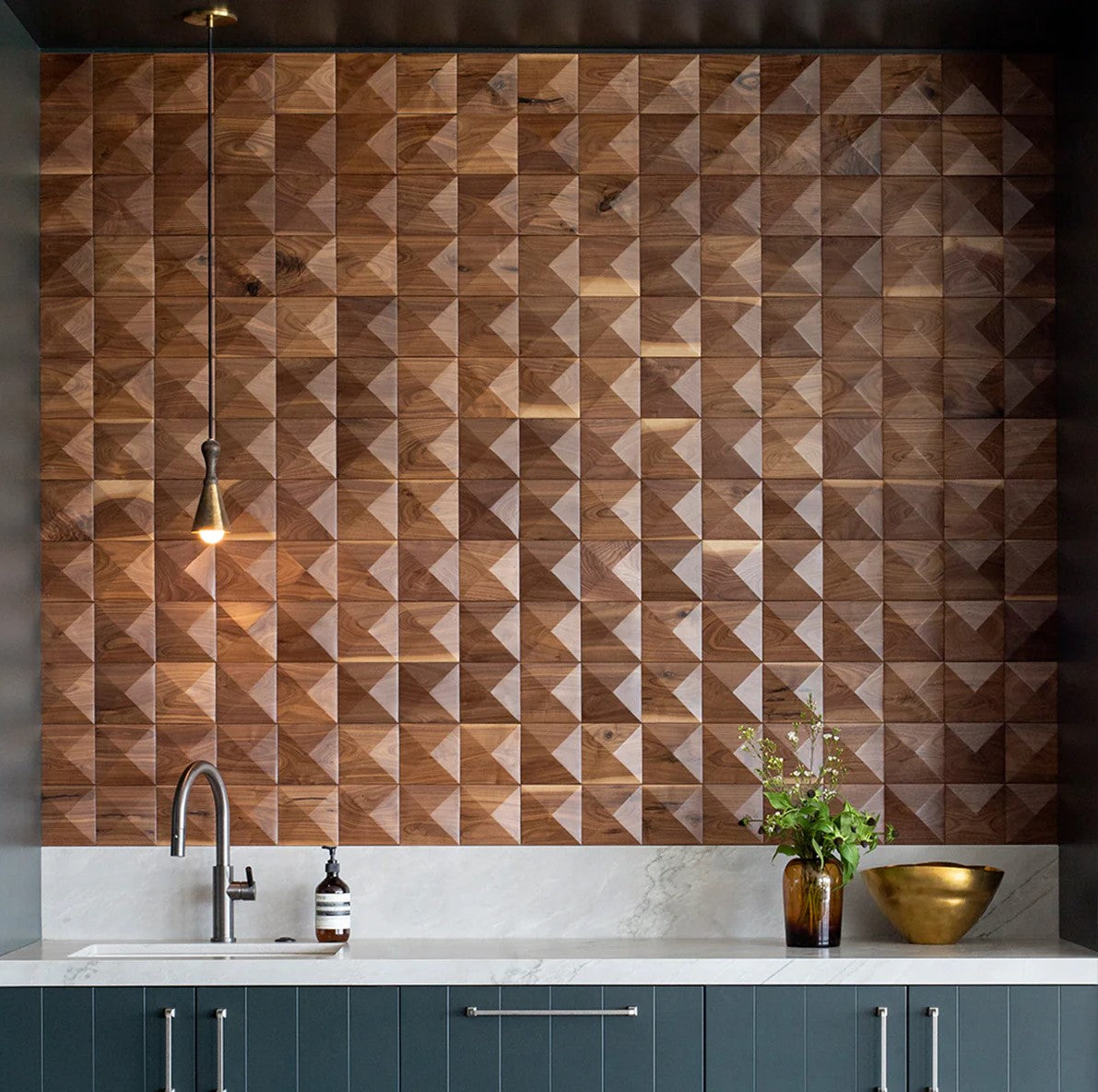
    In kitchens where cabinetry is painted — particularly white, navy, or grey — solid walnut geometric panels add the warmth of natural timber that painted surfaces can’t provide. The contrast between a flat painted cabinet and a textured solid wood panel behind it is exactly the kind of material layering that elevates a kitchen from functional to designed.

    If your kitchen already has a lot of warm wood tones — oak cabinets, timber flooring — choose a geometric panel format with strong visual contrast rather than adding more of the same material. A panel in a darker walnut species, or a geometric pattern with deep shadow lines, will distinguish itself from background timber rather than blending into it.

    Moisture and Splashback Zones

    Solid wood wall panels should not be used as a direct splashback behind a sink or hob — zones where water and grease contact is regular and direct. However, anywhere that’s not in direct splashback range is fine with a basic protective oil or wax finish. Our GroovePanel® panels are supplied with a factory finish that provides everyday moisture resistance for normal kitchen environments.

    For genuinely wet zones, consider pairing geometric wood panels on the end wall or dining area wall with a waterproof surface (tile or a composite splashback) in the direct contact zones. The combination of different materials and textures across a kitchen is a mark of considered design, not inconsistency.

    Kitchen Panel Ideas at a Glance

    • Walnut triangle mosaic on the end wall of a white galley kitchen — the only warm element in an otherwise cool-toned space
    • Crossing lines panels behind a kitchen island as a graphic backdrop visible from the living room
    • Concentric square panels in the dining zone of an open-plan kitchen-diner, framing the table as its own space
    • Honey mosaic panels on the wall above a breakfast bench — small-scale, tactile, and warm

    For kitchen-specific panelling ideas with a different focus, see our guide to kitchen island fluted panel ideas. For the full geometric pattern range, browse the GroovePanel® collection. Order a sample to check timber tone against your cabinet colour before ordering.

  • 3 Creative Wall Panel Ideas: Transform Your Space!

    3 Creative Wall Panel Ideas: Transform Your Space!

    Exploring wall panel ideas is more than just a design choice; it’s a journey into the realm of aesthetic enhancement and practical functionality. In this article, we delve into why considering wall panel ideas is beneficial and how it can revolutionize the look and feel of your living spaces.

    What is The CheapestWall Panel Ideas

    Navigating the world of wall panel ideas can be overwhelming. The primary challenge lies in sifting through an array of options to find the perfect match for your space. From traditional wooden panels to modern 3D designs, the choices are endless. Another hurdle is ensuring that the chosen panels complement the existing décor and meet practical requirements like durability and maintenance.

    Benefits of Using Wall Panel

    Wall panels offer more than just an aesthetic upgrade; they bring a multitude of benefits to your home. Here are some key advantages:

    • Aesthetic Appeal: Wall panels add depth and character to any room, elevating the overall design.
    • Durability and Maintenance: Many wall panels are designed for longevity and are easy to clean and maintain.
    • Versatility: With various materials and designs available, wall panels can fit any interior style, from rustic to contemporary.
    • Insulation and Soundproofing: Certain types of panels offer added insulation and soundproofing, enhancing the comfort of your home.

    Best Wall Panel in Town

    Let’s explore some specific products that embody the essence of innovative wall panel ideas.

    Sherwood Oak Flooring Panel

    wall panel ideas


    • Description: This panel combines the classic charm of oak with modern durability, making it a top choice for wall panel ideas in the United States.
    • Features: Easy installation, high durability, and a timeless oak finish.
    • Material: 100% Solid Wood
    • Size: 19.7 x 19.7 inch / 50 x 50 cm
    • Design: Six distinct shapes available
    • Installation: Simple and quick, ideal for DIY enthusiasts

    Triangle Mosaic Wood Wall Panel

    wall panel ideas


    • Description: A contemporary take on wall panel ideas, this triangle mosaic design adds a dynamic and modern touch to any room.
    • Features: Unique geometric pattern, easy to install, and adds a modern twist to traditional wood panels.
    • Material: 100% Solid Wood
    • Size: 19.7 x 19.7 inch / 50 x 50 cm
    • Design: Six distinct shapes available
    • Installation: Simple and quick, ideal for DIY enthusiasts

    Mosaic Wood Wall Panel


    wall panel ideas
    • Description: Perfect for those seeking creative wall panel ideas, this mosaic wood panel brings an artistic flair to your walls.
    • Features: Intricate mosaic design, easy installation, and a stunning visual impact.
    • Material:100% Solid Wood
    • Size:19.7 x 19.7 inch / 50 x 50 cm
    • Design:Six distinct shapes available
    • Installation:Simple and quick, ideal for DIY enthusiasts

    Read More:How To Install Wall Panelling In Your Home – 5 Simple Steps

    Conclusion

    In conclusion, wall panel ideas offer a world of possibilities for enhancing your home’s interior. Whether you opt for the elegance of the Sherwood Oak, the modernity of the Triangle Mosaic, or the artistic appeal of the Mosaic Wood panel, each choice brings its unique charm. Embracing wall panel ideas is not just about following a trend; it’s about making a statement that reflects your personal style and elevates your living space.

  • 5 Kitchen Wall Paneling Ideas to Spice Up your Space!

    5 Kitchen Wall Paneling Ideas to Spice Up your Space!

    Kitchen wall paneling is more than just a decorative flourish; it’s a canvas for homeowners to imprint their unique style while providing a durable shield against the daily wear and tear that comes with culinary exploits. From splashes of sauce to the steam of a simmering pot, paneling can withstand the rigors of kitchen life, making it a smart and stylish choice for those who see their kitchen as a bustling hub of activity.

    It’s an investment in both the functionality and the aesthetic appeal of the space where families gather, recipes come to life, and we’re gonna let you in on a secret. Let’s talk kitchen wall paneling ideas and switch it up real good.

    Related to: Beware of Style: Accent Wall Panel Ideas and Why You Should Shun Them 

    Why Opt for Kitchen Wall Paneling?

     kitchen wall paneling ideas

    Wall paneling in the kitchen isn’t just about aesthetics; it’s a practical investment. It protects your walls from moisture and stains, making clean-up a breeze. Plus, with a variety of materials and designs available, you can easily find an option that suits your kitchen’s theme and your personal style.

    Paneling Ideas to Elevate Your Kitchen

    Classic Beadboard Charm

    half wall paneling ideas

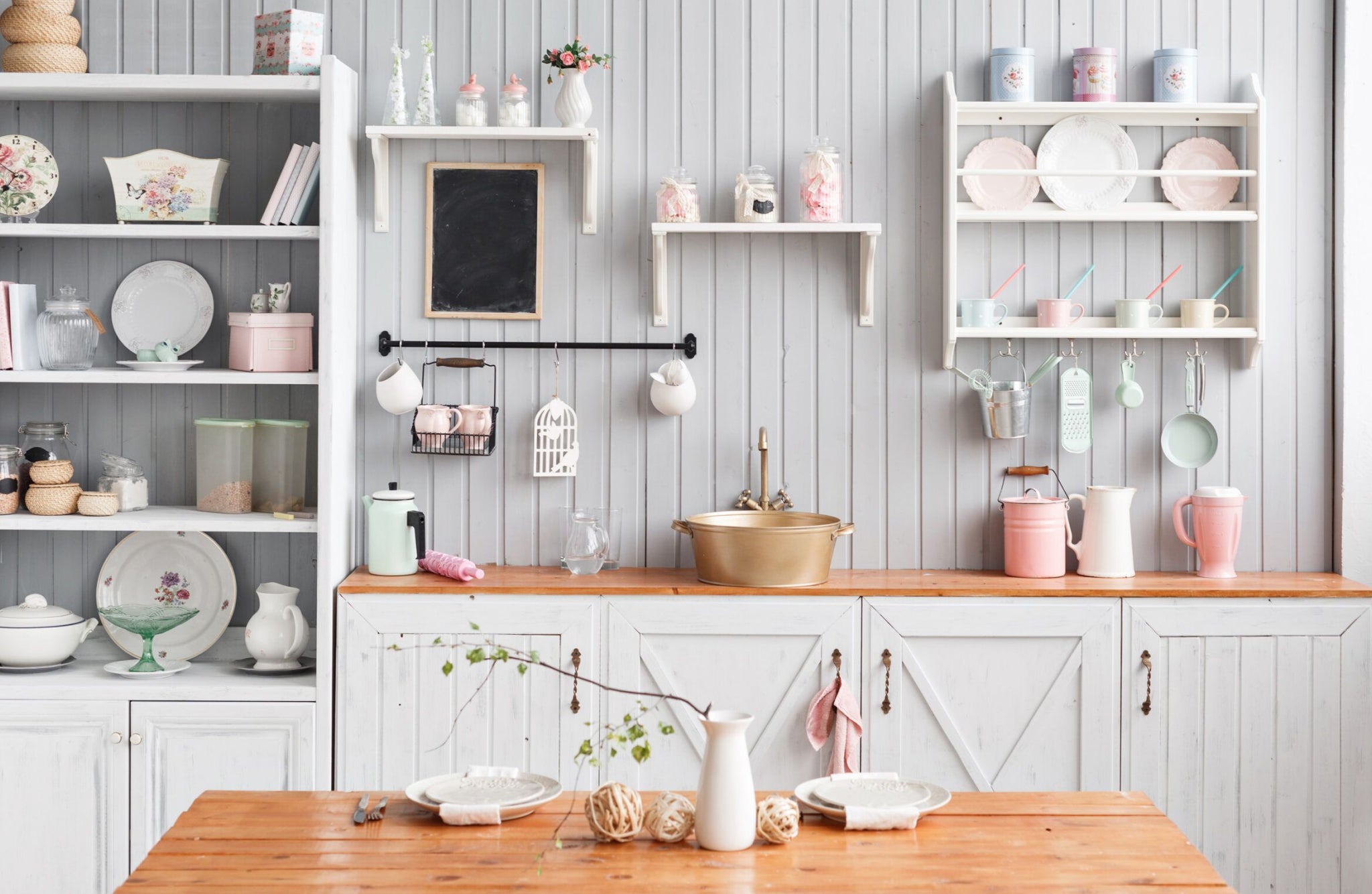
    Beadboard paneling is not only aesthetically versatile but also practical, as it can hide imperfections and is easy to clean. It’s a subtle nod to craftsmanship that can be painted to match any color palette, enhancing the kitchen’s overall charm.

    Rustic Barn Wood Allure

    half wall paneling ideas

    Barn wood paneling is not just about style; it’s also about storytelling, bringing the history and the beauty of reclaimed wood into your home. It pairs wonderfully with both vintage accents and modern conveniences, bridging the gap between old and new.

    The Mosaic Wood Wall Panel from The Panel Hub is a masterpiece of natural beauty, showcasing unique textures and grains that infuse your space with charm and timeless appeal. These panels are not just visually stunning but also versatile, suitable for various settings including moisture-rich environments. They promise ease of maintenance, requiring only a simple dust-off or gentle clean to look their best. Installation is a breeze, ensuring that practicality meets elegance in your kitchen. These panels are a wise investment, blending functionality with exquisite form to enhance your culinary sanctuary.

    Brick Sophistication

    half wall paneling ideas

    Lightweight brick paneling is not only visually appealing but also a breeze to install, giving you the chic look of exposed brick without the need for heavy construction. It’s a durable option that adds a layer of insulation, perfect for bustling kitchen environments.

    3D Textural Statements

    half wall paneling ideas

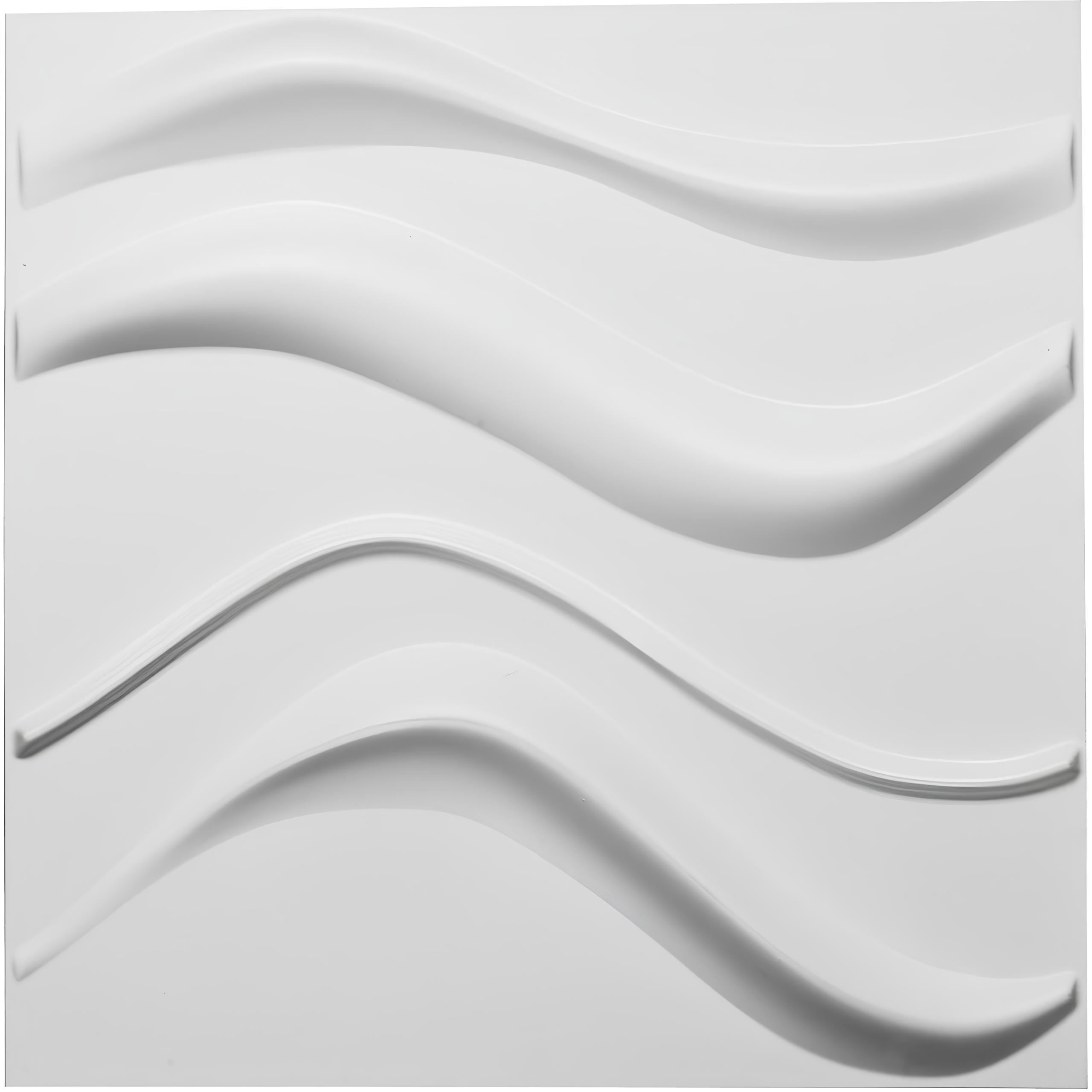
    The depth and movement of 3D paneling create a visual interest that is both contemporary and timeless. These panels can be the centerpiece of a minimalist kitchen or complement bolder design elements, offering versatility in design and installation.

    Wavy 3D PVC Wall Panel

    Wavy 3D PVC Wall Panel

    Elevate your kitchen’s aesthetic with the Wavy 3D PVC Wall Panel from The Panel Hub®. These panels, measuring 19.7″ x 19.7″, are not just wall coverings but a modern art statement, offering a blend of form and function that perfectly caters to contemporary design sensibilities. Crafted from high-quality PVC, they promise unrivaled durability and a distinctive texture that can transform any space. Ideal for moisture-prone areas like kitchens, these water-resistant panels are a versatile and appealing choice. Plus, their maintenance is a breeze—just a simple wipe-down to keep them looking pristine. Add a touch of modernity to your kitchen wall paneling ideas with these stylish, easy-to-install panels.

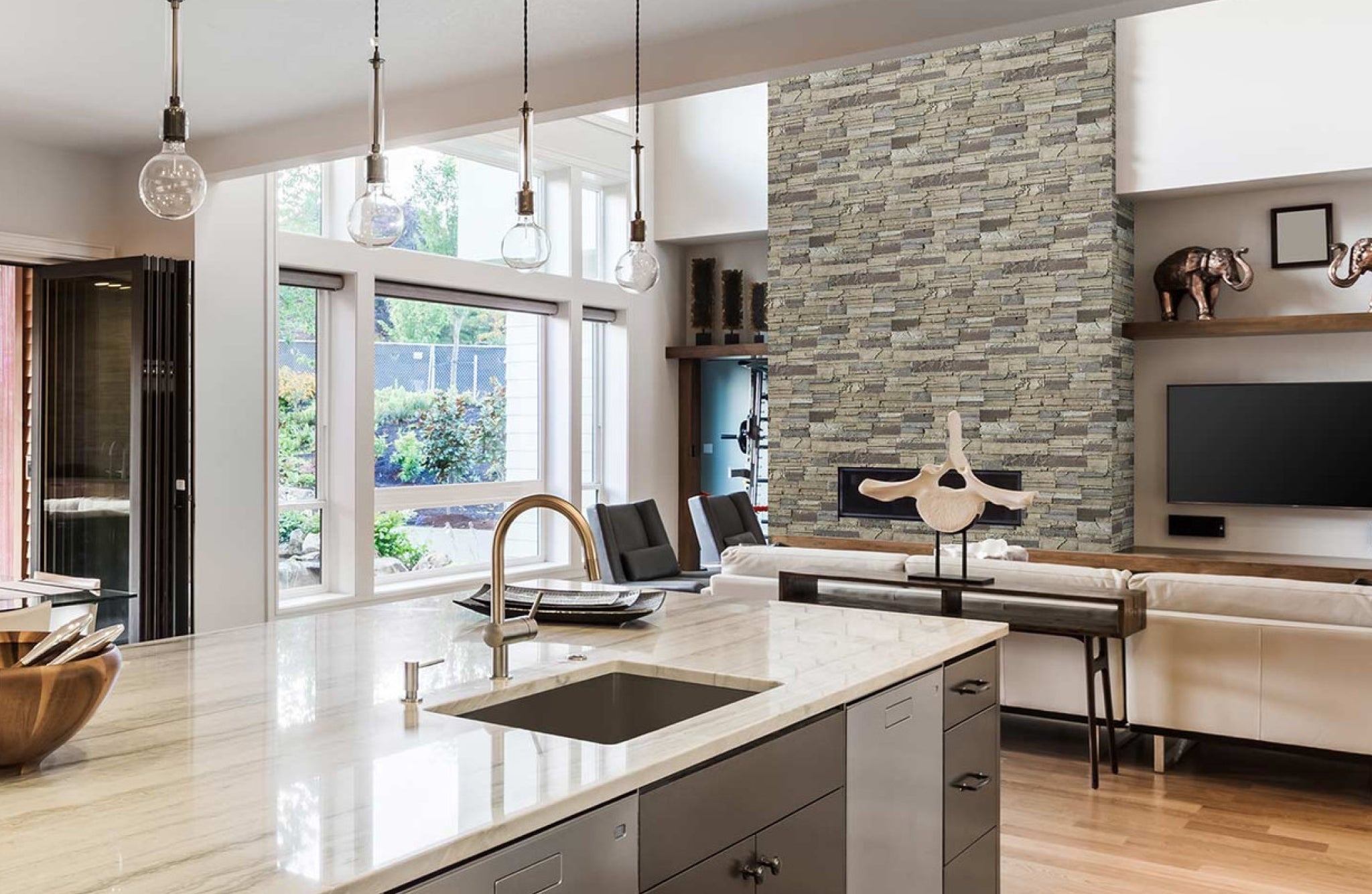
    Faux Stone Elegance

    half wall paneling ideas

    Faux stone paneling brings the grandeur of natural elements indoors without the weight and cost of real stone. It’s an ideal way to create a focal point or an accent wall that’s both sophisticated and durable, standing up to the kitchen’s high-traffic nature.


    Choosing the Right Paneling for Your Kitchen

    half wall paneling ideas

    When selecting kitchen wall paneling, consider the overall theme of your home, the color scheme of your kitchen, and the level of maintenance you’re willing to undertake. Whether you prefer the natural beauty of wood or the sleek finish of synthetic materials, ensure that your choice reflects your taste and stands up to the kitchen’s environment.

    Conclusion: A Panel for Every Palate

    Embracing kitchen wall paneling is not just about following a trend; it’s about crafting a space that tells your story, reflects your personality, and stands the test of time. It’s a celebration of both form and function, where practicality meets aesthetic pleasure, creating a kitchen that’s as inviting as it is impressive. So, as you consider giving your kitchen a facelift or designing a new one from scratch, let these paneling ideas inspire you to create a space where memories are made, and style lives on.