Tag: Property Development

  • Apartment and New Build Wall Paneling: Specifying Across Multiple Units

    Apartment and New Build Wall Paneling: Specifying Across Multiple Units

    Specifying wall panels for a new build residential development — whether 20 units or 200 — involves a different set of considerations to a single residential project. Consistency across units, volume pricing, installation sequencing, batch colour matching, and long-term stock availability for snagging and replacement all need to be addressed in the specification and procurement process.

    The Case for Panels in New Build Residential

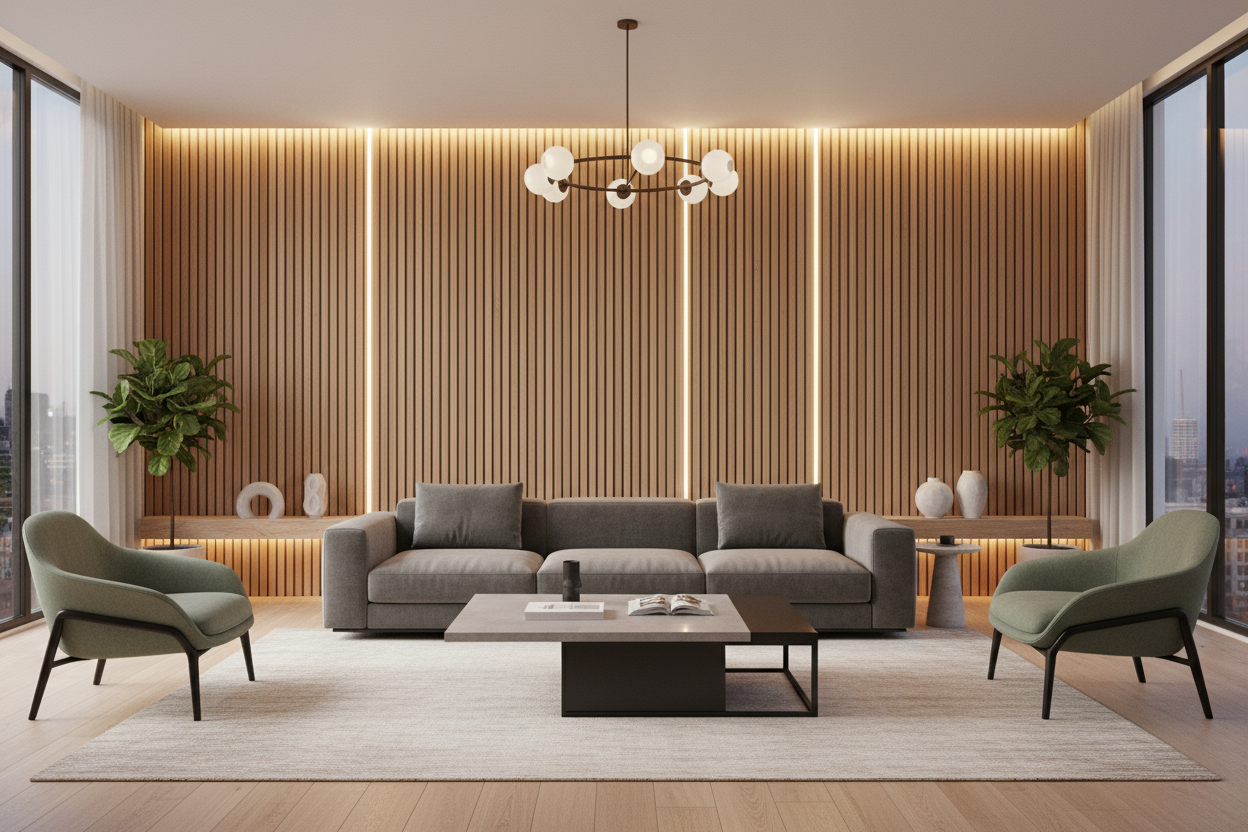
    New build residential buyers are increasingly comparing their units against developments that specify premium finishes. A feature wall panel in the master bedroom — specified as standard across a development — costs a modest amount per unit but communicates quality and justifies a higher sale price. For build-to-rent (BTR) operators, the same logic applies: a panel feature wall in the bedroom or living area is a differentiator that supports rental pricing and tenant retention.

    The GroovePanel® and SoundPanel™ ranges from The Panel Hub are used by residential developers across the UK precisely for this reason — they add perceived value at a cost that is well within the range of a sensible finish upgrade specification.

    Batch Consistency: The Critical Quality Issue for Multi-Unit Specifications

    Natural wood products vary between production batches. The colour, grain character, and finish tone of a timber panel can shift subtly between orders — sometimes meaningfully. For a development specifying the same panel across 50 or 100 units, this variation is a quality control risk: units completed with later orders may look different from the show home specification.

    When specifying panels for a multi-unit development, the key questions to resolve with your supplier are:

    • Can the entire development quantity be ordered and produced in a single batch?
    • What is the maximum batch size available for the specified product?
    • What is the lead time for a single large batch order?
    • What stock will be held for snagging and replacement after practical completion?

    Installation Sequencing in New Build

    Wall panels in new build residential are typically installed during the second fix stage — after plastering, painting, and floor finishes are complete but before furniture and final decoration. This sequencing requires panels to be on-site at the right point in the programme, which means orders need to be placed well in advance of the installation window.

    For large developments with rolling completion dates — different buildings or phases completing at different times — a phased delivery schedule with stock held at the warehouse and released to site in phases is often the most practical procurement approach.

    Unit Type Considerations: Studio to Family Home

    In a development with multiple unit types, the panel specification may vary by unit type — a simpler specification in studio and one-bedroom units, a more premium specification in two-bedroom and penthouse units. Agreeing this hierarchy early in the design process allows the specification and procurement to be managed efficiently.

    New Build Panel Specification from The Panel Hub

    The Panel Hub works with residential developers, build-to-rent operators, and main contractors on volume panel specifications. Contact the trade team to discuss batch quantities, lead times, phased delivery, and project pricing for your development.

  • Bulk Buy Wall Panels: What Developers and Contractors Need to Know

    Bulk Buy Wall Panels: What Developers and Contractors Need to Know

    Planning to bulk buy wall panels? Volume panel procurement — ordering panels for multiple rooms, multiple units, or multiple sites at once — is a different process to ordering for a single residential project. Lead times, batch consistency, delivery logistics, storage, and pricing all operate differently at scale, and getting the procurement process right saves money, prevents programme delays, and avoids the quality consistency problems that can arise from multiple small orders.

    Why Ordering in Volume Matters

    Batch Consistency

    The most important reason to place a single large order rather than multiple smaller ones is batch consistency. Natural wood products are manufactured in production batches, and colour, grain character, and finish tone can vary between batches — sometimes in ways that are visible when panels from different batches are installed in the same or adjacent spaces. A single large batch order eliminates this risk entirely.

    Volume Pricing

    Volume orders typically attract preferential pricing. The economics of manufacturing, packing, and delivering a large order in a single run are more efficient than multiple smaller orders, and suppliers pass a portion of this saving to the buyer. Contact The Panel Hub trade team to discuss pricing for orders above a specific volume threshold.

    Programme Certainty

    For construction projects with fixed programme dates, having panels confirmed and ordered well in advance of the installation window eliminates the risk of supply delays affecting the programme. Last-minute panel orders are the most common cause of installation delays on commercial projects.

    Lead Times for Volume Orders

    Large-volume orders typically require longer lead times than single-unit quantities. For the most popular products in the GroovePanel®, SoundPanel™, and RockSurface® ranges, stock is maintained for shorter lead times. For high-volume orders or less common finishes, confirm lead time with the supplier before the specification is locked into the construction programme.

    Delivery Logistics for Large Orders

    Large panel orders require careful delivery planning. Key considerations include:

    • Site access: Confirm that the delivery vehicle can access the site and unload safely — panel deliveries on pallets require forklift access or a pump truck, and construction sites vary significantly in their access constraints
    • Storage: Panels must be stored flat, dry, and away from direct sunlight before installation. Confirm that adequate storage space is available on-site before delivery
    • Phased delivery: For large developments, phased delivery — panels delivered to site in quantities aligned with the installation programme — is often more practical than a single large delivery

    Wastage Allowance for Volume Orders

    For volume orders of wood wall panels covering multiple units or rooms, a standard 10% wastage allowance is typically sufficient. For projects with complex geometries, many cuts around doors and windows, or non-standard room sizes, allow 15%. Order the full quantity in a single batch — ordering additional panels later risks colour and finish inconsistency if production batches have changed.

    Volume Procurement from The Panel Hub

    The Panel Hub works with developers, main contractors, and fit-out contractors on volume panel procurement. Contact the trade team to discuss your project’s quantity requirements, lead time, delivery logistics, and pricing.

  • Show Home Wall Paneling: How Developers Use Feature Walls to Drive Sales

    Show Home Wall Paneling: How Developers Use Feature Walls to Drive Sales

    A show home has one job: to make a prospective buyer fall in love with a property they haven’t yet seen completed. The interior specification of a show home is a sales tool, not a living environment — and every design decision should be evaluated on whether it helps buyers visualise themselves in the space and justify the asking price.

    Wall panels have become a standard specification in show homes across the market spectrum, from affordable developments where a single feature wall in the master bedroom adds perceived value, to premium developments where panels are used throughout to create the material richness that supports a high price per square foot.

    Why Feature Walls Work in Show Homes

    The feature wall is one of the most effective visual devices available to show home designers. It creates a focal point in a room, gives buyers something specific and emotive to respond to, and — when specified correctly — photographs extraordinarily well in marketing materials.

    A GroovePanel® fluted solid wood panel behind the bed in the master bedroom is the single most impactful specification in most show homes. It creates a warm, textured backdrop that makes the room feel considered and premium. It photographs beautifully. And it’s a specification that buyers aspire to replicate — which means they’re more likely to proceed with a purchase than leave to look at competitors.

    Which Rooms Benefit Most from Panel Feature Walls

    Master Bedroom

    The bed head wall is the natural home for a show home feature panel. Every marketing photograph of the master bedroom will include this wall. The texture, warmth, and quality of a solid wood panel in this position creates emotional impact that no painted wall can match.

    Living Room or Open-Plan Living Area

    A feature wall panel on the media wall or fireplace breast in the main living area anchors the room and gives buyers a clear sense of where the television goes and how the room is oriented. It also elevates the perceived quality of the entire living space.

    Entrance Hallway

    The hallway is the first space buyers experience when they walk through the front door. A panel feature wall in the hallway — even a modest one — creates an immediate impression of quality that sets the tone for the rest of the viewing.

    Cost-Effective Specification for Show Homes

    Show home budgets are allocated by sales and marketing teams who understand the return on investment calculation: every pound spent on show home specification needs to pay back in sales velocity and margin. Wall panels offer a high-impact visual result at a specification cost that’s modest relative to the increase in perceived value they create.

    For volume developers specifying the same panel across multiple show homes or across multiple units in a single development, volume pricing from The Panel Hub reduces the per-unit cost further. Contact the trade team to discuss project volumes and pricing.

    Show Home Panel Specification from The Panel Hub

    The Panel Hub works with residential developers, show home designers, and sales and marketing teams on panel specifications for show homes across the UK. The full range of wood wall panels and stone effect panels is available with samples on request.

  • Student and PBSA Accommodation Wall Panels: Durable Spec for High-Turnover Properties

    Student and PBSA Accommodation Wall Panels: Durable Spec for High-Turnover Properties

    Purpose-Built Student Accommodation (PBSA) is one of the most demanding commercial interior typologies for wall surface specification. The combination of high occupancy turnover (annual or termly), variable levels of care by occupants, and the requirement for a cost-effective finish that withstands years of use without significant maintenance makes material selection a critical decision.

    Wall panels offer a compelling specification for PBSA operators who want to provide an interior environment that attracts students at premium rental price points while keeping maintenance and replacement costs manageable over a multi-year asset life.

    The Durability Requirement in Student Accommodation

    Student accommodation walls are exposed to a level of incidental damage that most residential specifications are not designed to withstand. Furniture moved against walls leaves marks and abrasions. Posters and fixings leave holes and adhesive residue. Luggage arrives and departs twice a year. In communal areas and common rooms, the level of use is higher still.

    Panel products specified for PBSA environments should prioritise surface hardness, edge durability, and the ability to be spot-repaired or replaced at unit level without replacing the entire wall treatment. Solid core panels with lacquered or UV-cured surface finishes are significantly more resistant to everyday student use than painted plasterboard.

    Individual Bedroom Specifications

    A feature wall panel behind the desk or bed in individual student bedroom units creates a premium visual environment that supports marketing photography and justifies higher weekly rental rates. The specification investment per bedroom is modest — a single feature wall panel — but the perceived quality impact is disproportionate.

    GroovePanel® solid wood panels in neutral, timeless finishes are the most appropriate specification for student bedroom feature walls — visually appealing without being so specific that they date quickly or conflict with students’ own style preferences.

    Common Areas and Social Spaces

    Communal areas in PBSA properties — social lounges, study rooms, cinema rooms, café areas — benefit significantly from panel specification. These are the spaces that feature most prominently in marketing materials and that students experience most frequently. A well-specified communal area communicates the quality of the entire development.

    For social areas, SoundPanel™ acoustic panels provide acoustic management in spaces that are naturally loud — reducing reverberation and improving the experience for students trying to socialise and study simultaneously. RockSurface® stone effect panels on café counter walls and social space feature walls create a hospitality-standard visual quality.

    Maintenance and Replacement Planning

    For large PBSA developments, plan for panel maintenance and replacement in the asset management budget. Ensure that stock of the specified product — or an equivalent — is available for replacement in future years. Discuss long-term stock availability and batch consistency with The Panel Hub at the point of specification, not after completion.

    PBSA Panel Specification from The Panel Hub

    The Panel Hub works with PBSA developers, operators, and asset managers on panel specifications for student accommodation projects. Contact the trade team to discuss volume requirements, durability specifications, and project lead times.