Table of Contents
- Why 3D Wall Panels Work So Well in Living Rooms
- What Makes a Panel Truly “3D”
- Choosing a 3D Panel Pattern for a Living Room
- Where in the Living Room to Install 3D Panels
- Lighting for 3D Living Room Wall Panels
- Material Comparison: What to Look for When Buying
- Browse 3D Wood Wall Panels for Living Rooms
Why 3D Wall Panels Work So Well in Living Rooms
A living room wall has to carry a lot of visual weight. It is the backdrop against which furniture, lighting, and the activity of the room all play out. Flat paint or wallpaper provides colour and sometimes pattern, but they remain two-dimensional — the wall has no physical presence of its own.
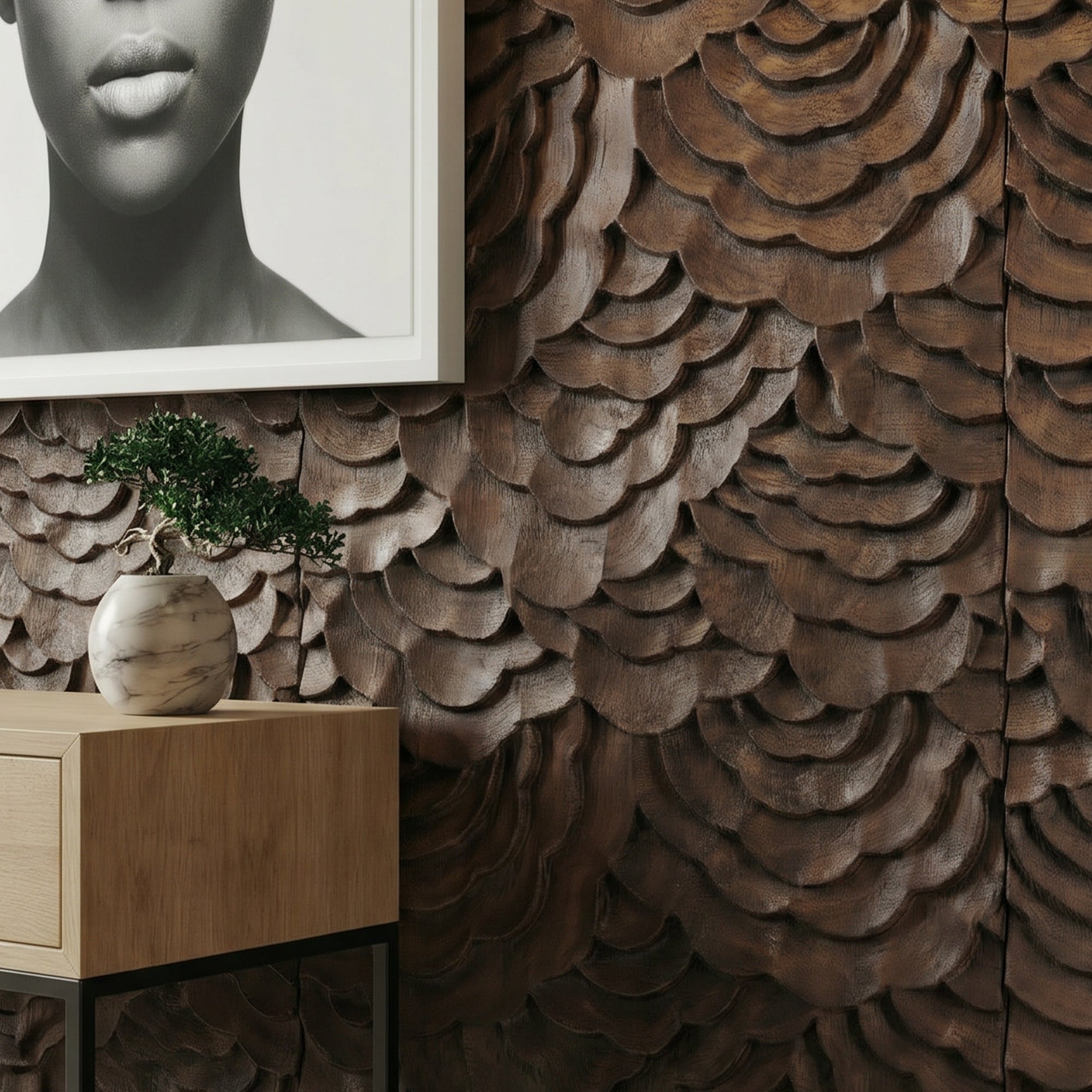
3D wall panels change this. By introducing physical depth — grooves, relief elements, stepped profiles — a panelled wall casts its own shadows, responds to changes in natural and artificial light throughout the day, and gives the room a tactile dimension that no flat surface can replicate. The result is a living room that feels designed at the architectural level, not just decorated at the surface level.
What Makes a Panel Truly “3D”
The term “3D wall panel” is used loosely in the market. In practice, it covers three distinct product types:
Relief-Cut Solid Wood Panels
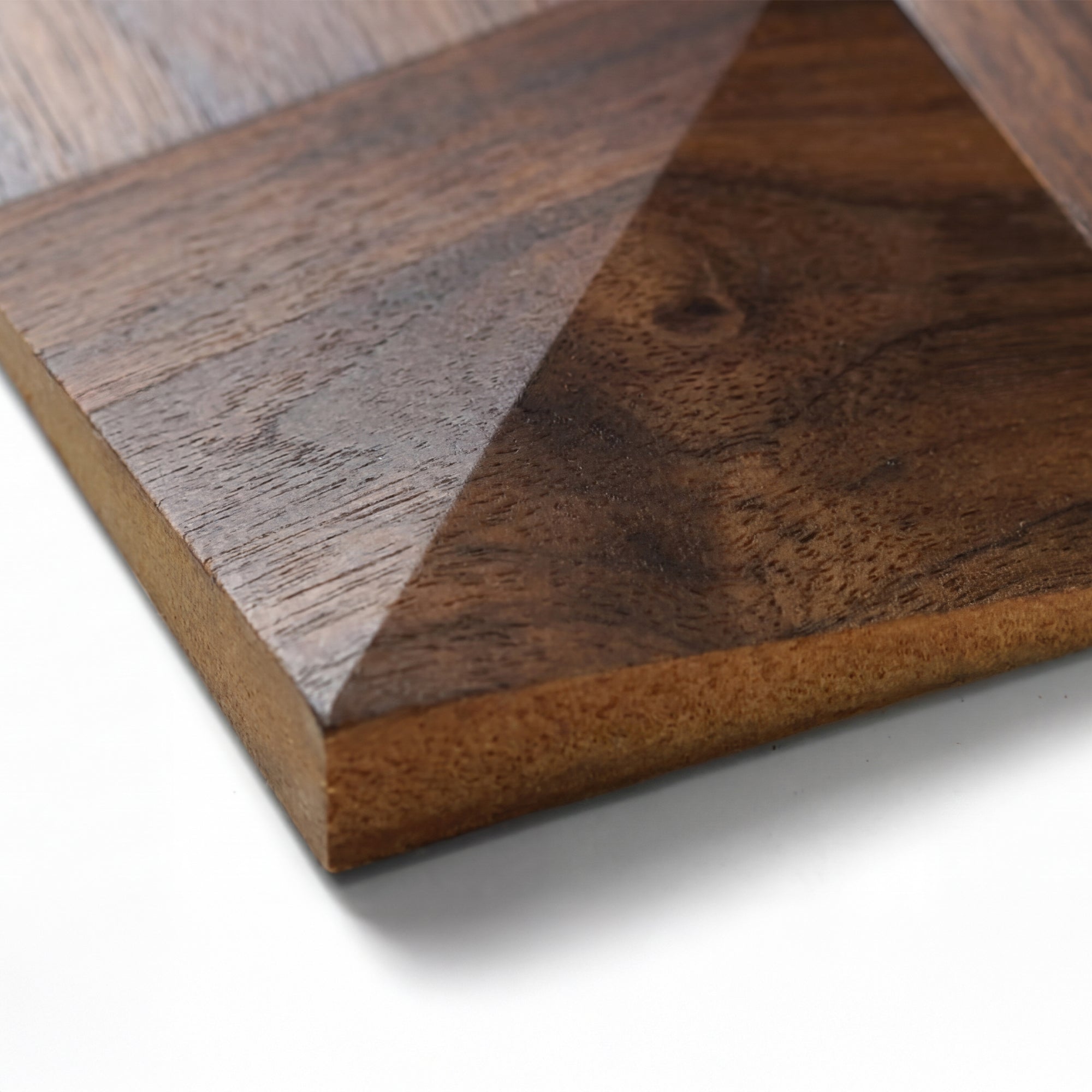
These are panels machined from solid timber where the panel face is routed, carved, or CNC-cut to create projecting or recessed geometric elements. The depth of the relief — typically 5mm to 20mm — creates genuine physical dimension. Under directional lighting, each relief element casts a hard shadow that becomes part of the visual pattern. Our GroovePanel® collection takes this approach: 100% solid wood throughout, with precision-cut grooves that hold crisp geometry permanently. The 3D Geometric Pattern Wooden Panel is the most versatile format in the range — delivering complex surface relief that reads dramatically under directional downlights or wall-grazing fixtures.
Deep-Groove Slat Panels
Slat panels with wide spacing between slats create depth through the shadow gap between each slat and the backing material. The “3D” effect here is the contrast between the lit slat face and the dark shadow behind. These wall panels are visually dimensional without requiring physical relief on the panel face itself. They suit rooms where a warm, linear texture is preferred over hard-edged geometric pattern.
Moulded Composite Panels
PU foam or polymer panels moulded into stone, brick, or abstract shapes. These are lightweight and inexpensive but lack the material warmth of real wood. They are a reasonable solution for temporary installations or rental spaces, but not comparable in quality or longevity to solid wood or engineered wood alternatives.
Choosing a 3D Panel Pattern for a Living Room
Concentric Squares and Circles
Radiating patterns — concentric squares, diamonds, or circles machined into the panel face — create a focal point that reads from across the room. They suit living rooms with a mid-century modern or contemporary aesthetic. The pattern provides visual complexity without overwhelming the room’s other design elements.
Crossing Lines and Grid Relief
A grid of intersecting grooves creates an even, repeating texture across the wall surface. This pattern reads as refined background texture rather than bold statement pattern — it suits rooms where the furniture and accessories are the main visual event, and the wall should provide texture and warmth without competing. Our geometric wood panel guide covers the full range of pattern options and their applications.
Stepped and Faceted Relief
Panels with angular, faceted faces that catch and redirect light from different directions are the most dramatic 3D option. They work best in living rooms with deliberate directional lighting — wall-wash spotlights or recessed downlights positioned to rake across the wall surface. Without appropriate lighting, faceted relief panels underperform; with it, they are extraordinary.
Where in the Living Room to Install 3D Panels
The Sofa Wall
The wall behind the sofa is the primary visual surface in most living rooms — the one you see when you sit in the main seating area and look across the room. A single panel wall here anchors the seating group and gives the room a clear focal point. Panel the full wall floor to ceiling for maximum impact, or use the panels as a dado treatment (lower half of the wall only) for a more restrained approach.
The TV Wall
Panelling the TV wall serves two purposes: it provides visual interest around the television (which is a black rectangle at rest) and it gives the room depth in the direction you are already looking during daily use. 3D panels on a TV wall benefit from the room’s ambient and task lighting, which typically concentrates on this surface.
The Chimney Breast or Fireplace Wall
Where a chimney breast or fireplace projects from the wall, panelling the recessed sections on either side creates a frame effect that emphasises the fireplace as a focal point. Use panels that complement rather than compete with the fireplace material — wood-toned panels alongside a stone or brick fireplace surround create a coherent material story. For stone-look panels specifically, see our RockSurface® faux stone collection.
Lighting for 3D Living Room Wall Panels
3D panels and lighting are inseparable. Without appropriate lighting, much of the panel’s depth and shadow-play is lost. For best results:
- Directional downlights positioned 300–400mm from the wall face rake light across the panel and maximise shadow depth in grooves and relief elements
- Wall-wash fixtures mounted at ceiling level flood the wall evenly — this approach reduces shadow contrast but creates an even, glowing texture effect
- Floor uplights positioned at the base of the panel wall create dramatic upward shadows that invert the usual lighting pattern, producing a cinematic effect suited to entertainment rooms
Material Comparison: What to Look for When Buying
Not all 3D panels are equal. Key questions to ask before purchasing:
- Is it solid wood or MDF with veneer? Solid wood holds precision cuts permanently and shows consistent grain through the groove edge. MDF veneer panels can delaminate at cut edges over time, particularly with movement from heating and humidity cycles. Our MDF vs solid wood comparison covers this in detail.
- What is the groove or relief depth? Deeper cuts (12mm+) create more dramatic shadow at the cost of requiring more wall area per panel. Shallower cuts (5–8mm) produce more subtle texture suitable for rooms with lower ceilings or more restrained aesthetics.
- Is the product certified? FSC® certification confirms responsible forest sourcing. EPD (Environmental Product Declaration) certification provides transparent life-cycle data. Both matter for residential installations where indoor air quality is a consideration.
Browse 3D Wood Wall Panels for Living Rooms
The GroovePanel® collection includes multiple 3D relief and deep-groove geometric panel options — all 100% solid wood, FSC® and EPD certified, with factory-direct pricing, free US delivery, and a 5-year warranty. Order a sample to see the depth, grain, and shadow-play in your own room before committing to a full installation.