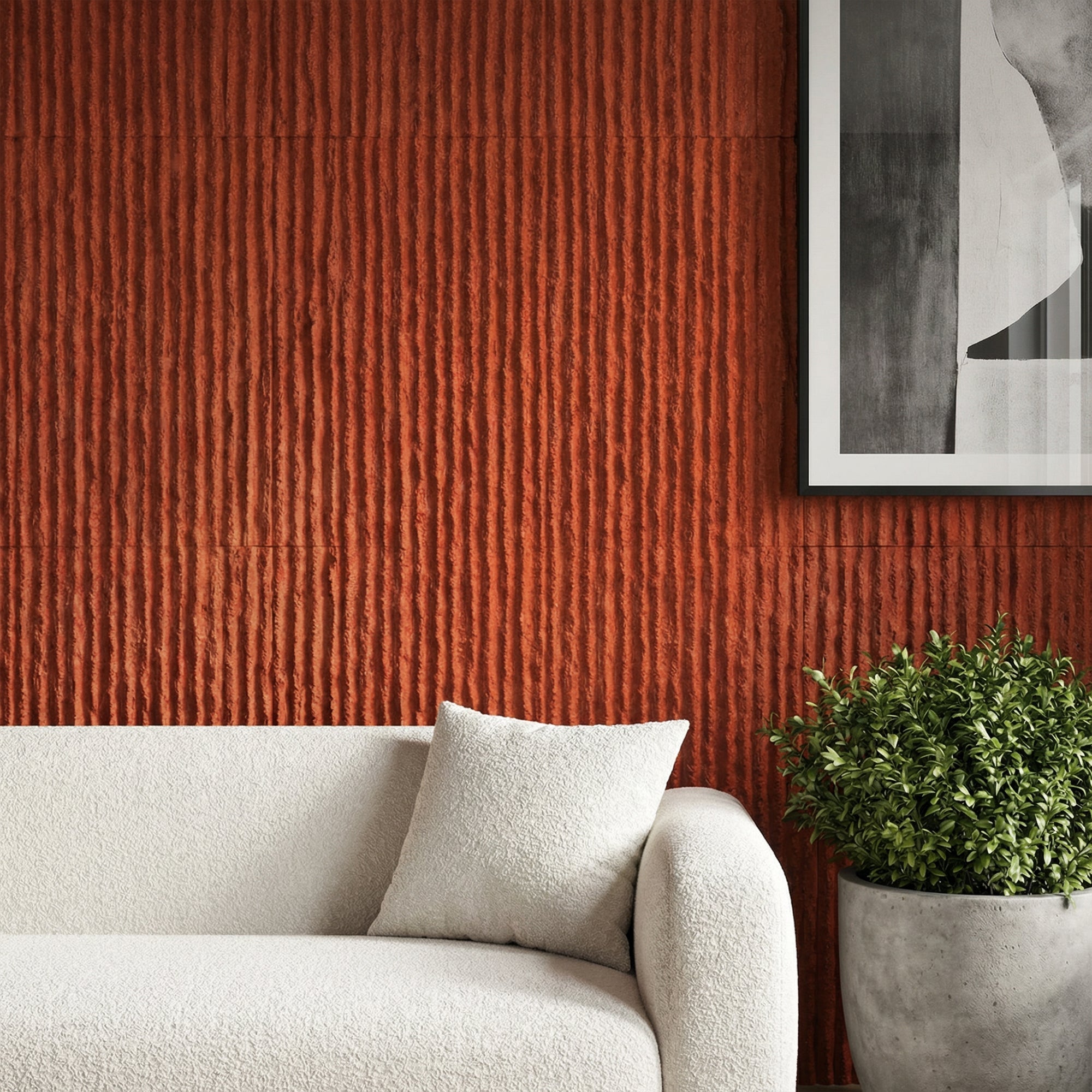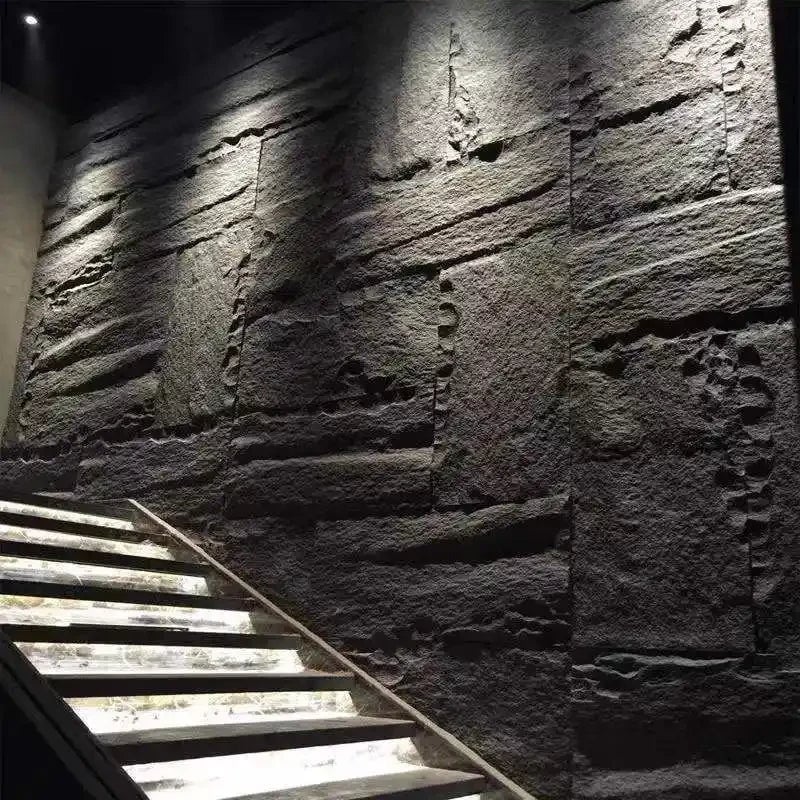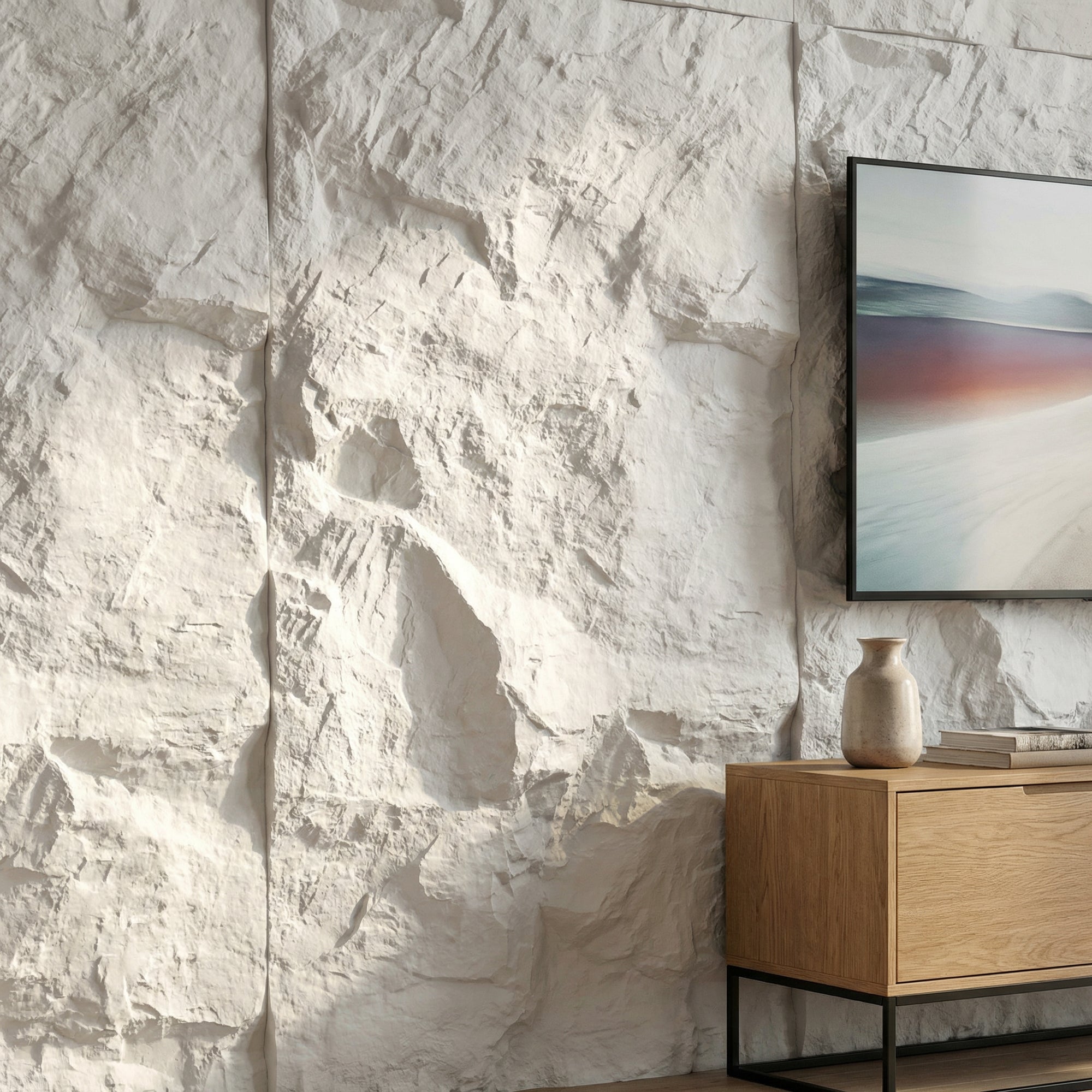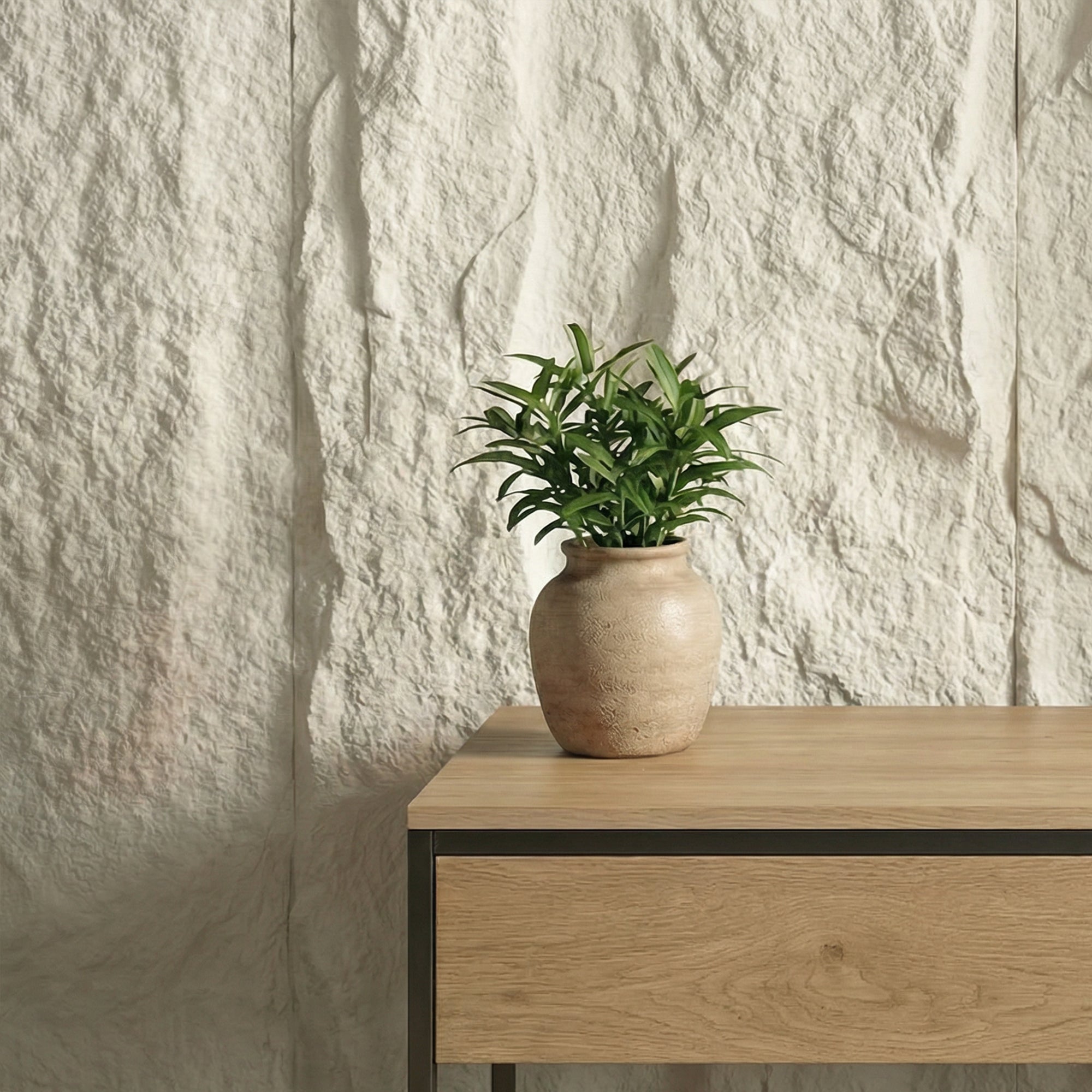
Tag: Faux Stone Wall Panels

  • 3D Stone Effect Wall Panels: How Depth and Shadow Transform a Surface

    3D Stone Effect Wall Panels: How Depth and Shadow Transform a Surface

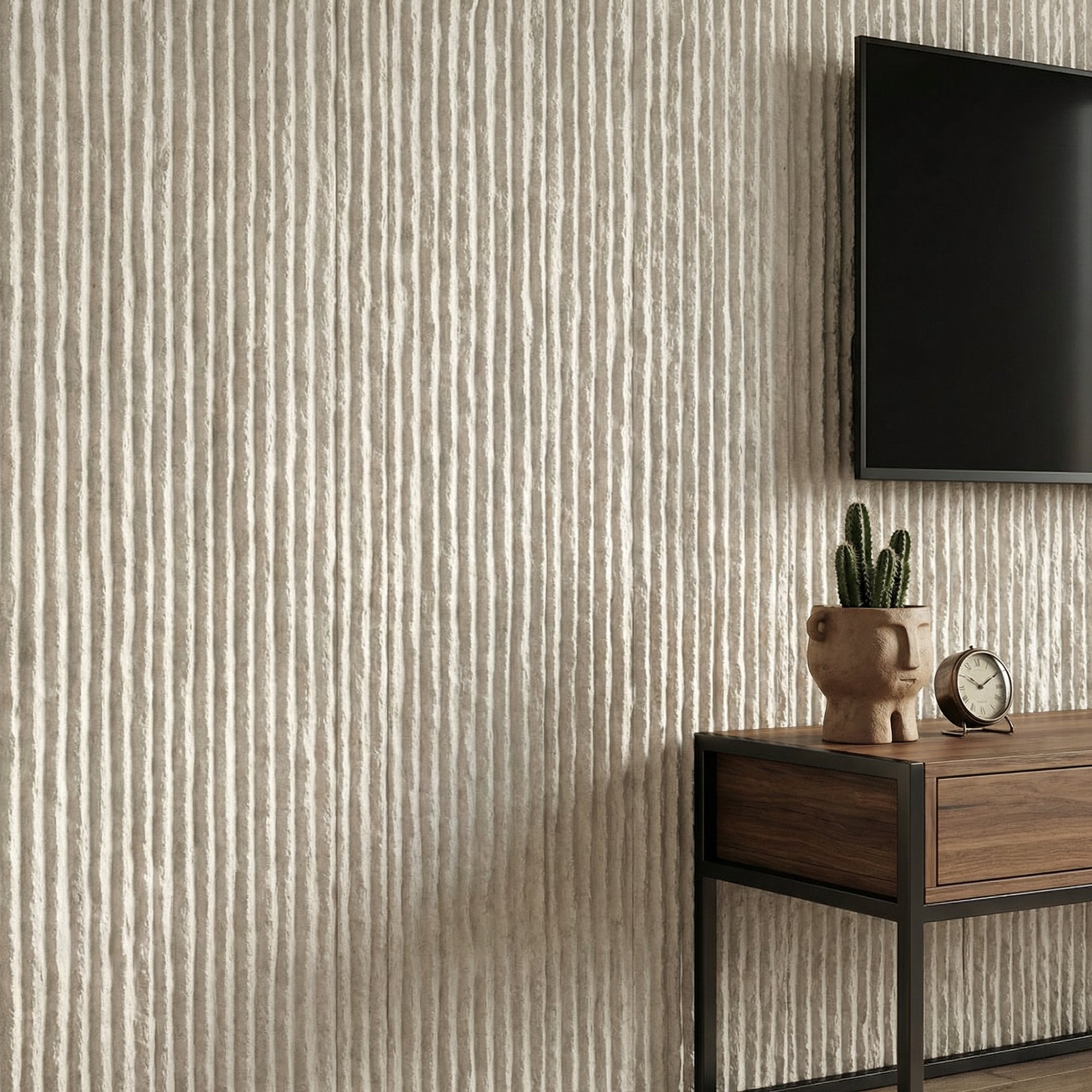
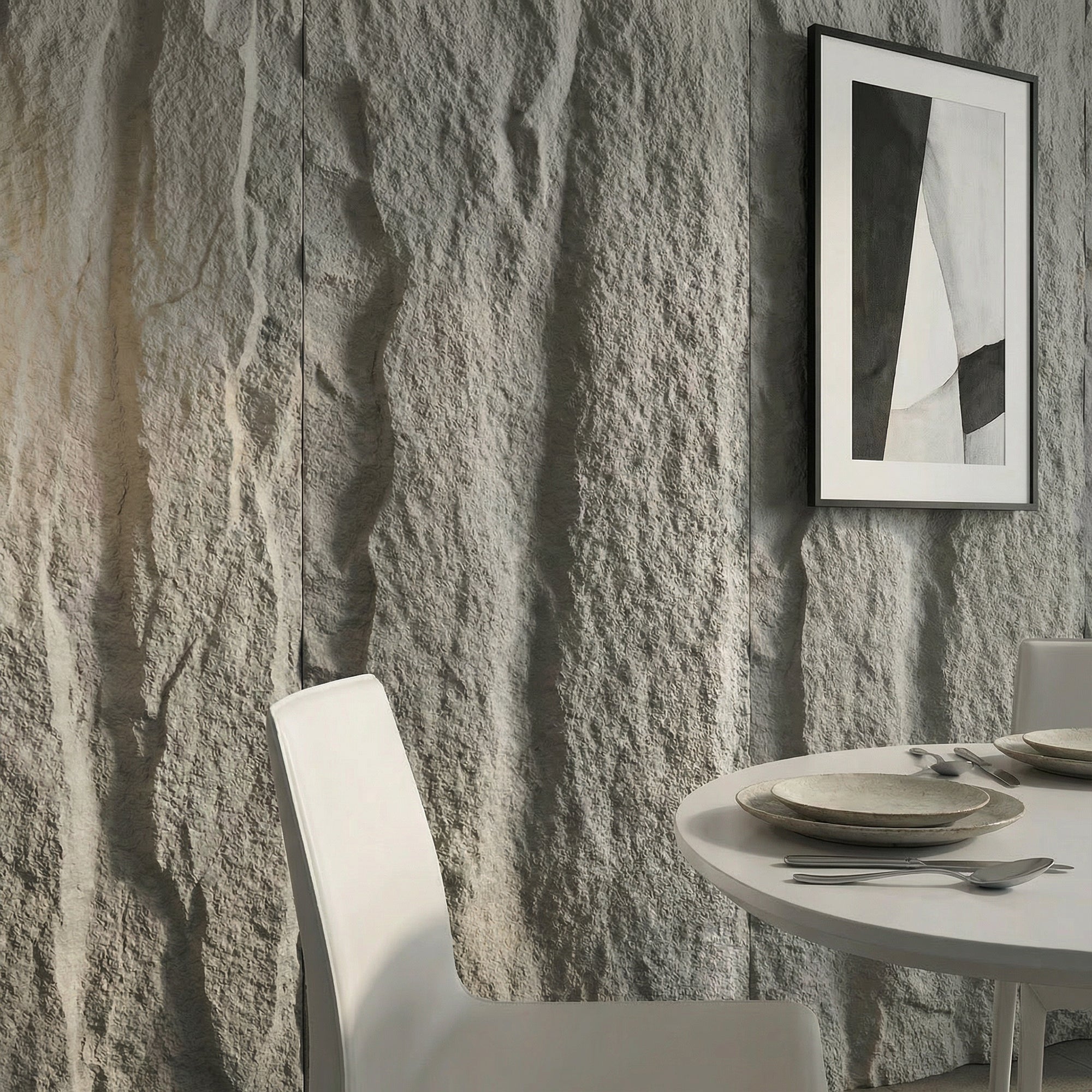
    A flat stone surface is attractive. A three-dimensional stone surface is arresting. The difference is what happens when light strikes the wall — on a flat panel, light reflects uniformly. On a 3D stone effect panel, light catches the raised surfaces, falls into the recesses, and creates an ever-shifting pattern of highlight and shadow that changes as the light source moves.

    This is why 3D stone effect wall panels have become a feature in high-end residential and commercial interiors. The surface actively engages with the room’s lighting conditions, producing a result that cannot be achieved by any flat material, however realistic its finish.

    The Science Behind the Effect

    3D stone panels use moulded relief — raised and recessed elements across the surface — to create depth. The depth of this relief varies: shallow relief creates a subtle undulation that reads as texture from a distance, while deep relief creates pronounced shadow lines and a sculptural quality visible from across the room.

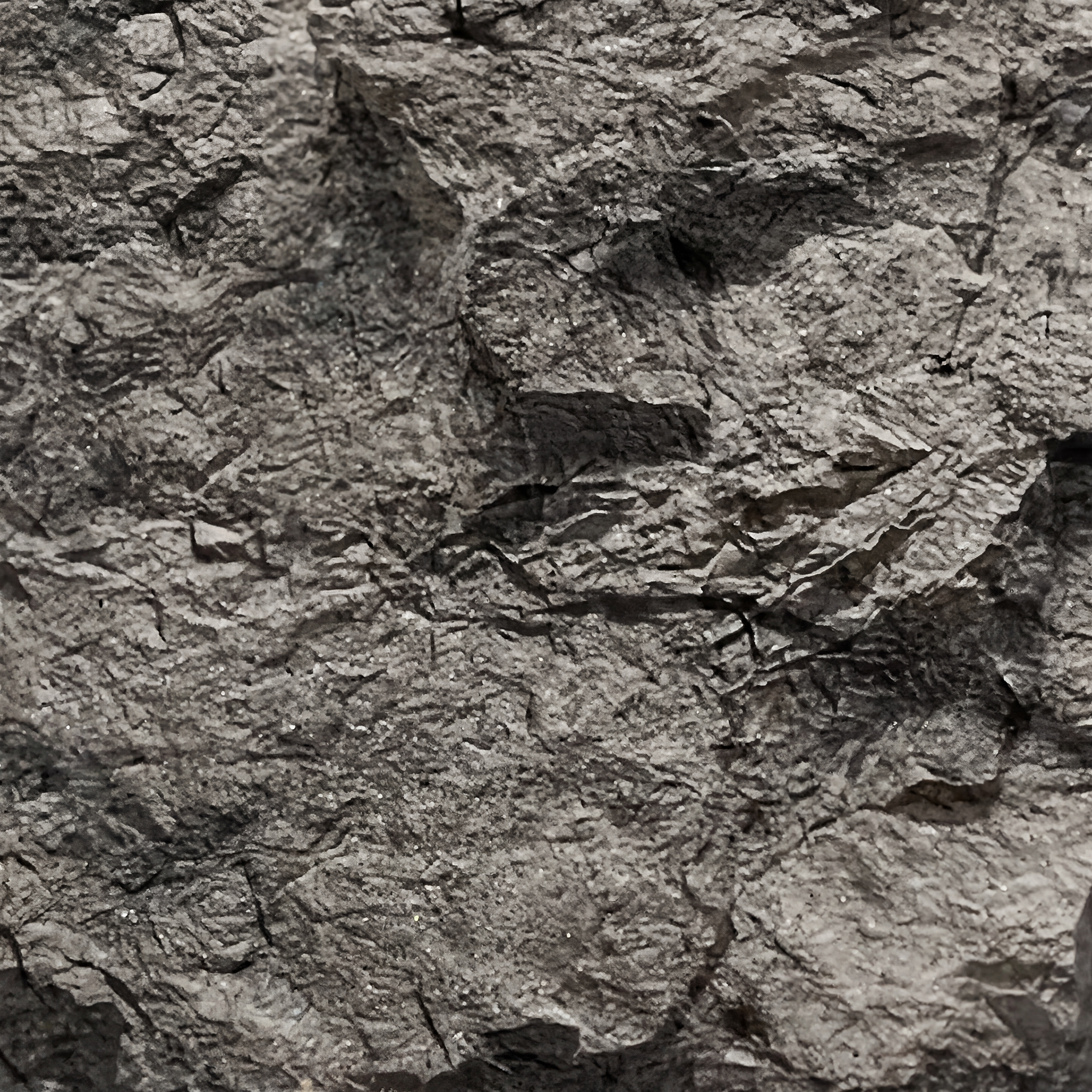
    The most effective 3D stone panels derive their surface geometry from casts of actual stone samples. The natural irregularity of real stone — no two faces exactly the same, no perfectly straight edges — translates into a finished panel that reads as genuinely organic rather than manufactured.

    Lighting 3D Stone Panels for Maximum Effect

    Grazing Light

    Light positioned to graze across the surface — wall-mounted luminaires, directional spots at a low angle — catches the leading edges of the relief and throws the recesses into deep shadow. This is the most dramatic lighting approach for 3D stone and works particularly well in dining rooms, bars, and bedrooms.

    Warm vs Cool Light

    Warm white light (2700–3000K) brings out warm undertones in natural stone finishes and creates an intimate effect. Cool white light (4000K+) emphasises the sculptural quality of the relief and creates a crisper, more contemporary result. Choose based on the atmosphere you’re creating.

    Avoiding Flat Overhead Lighting

    Ceiling-mounted downlights directly above a 3D stone panel are the least effective lighting choice — they illuminate from above without creating the lateral shadows that reveal the relief. Supplement downlights with wall-mounted fittings to bring out the texture.

    Where 3D Stone Effect Panels Work Best

    Living Rooms and Dining Rooms

    The changing light conditions across a day mean a 3D stone feature wall looks different at every time of day. The surface is engaging without being distracting — it rewards close attention without demanding it.

    Fireplace Surrounds

    The dancing light from an open fire is particularly effective against a 3D stone surface. The irregular reflection creates a warm, organic effect that flat surfaces cannot replicate.

    Commercial Spaces: Bars, Hotels, Restaurants

    3D stone panels are extensively used in hospitality design. The textured surface provides acoustic benefit — broken surfaces scatter sound rather than reflecting it flatly — and creates atmosphere that flat walls cannot match. The controlled, directional lighting typical of hospitality environments brings out 3D stone at its best.

    3D Stone Effect Panels from The Panel Hub

    The Panel Hub stocks the RockSurface® 3D stone effect panel collection in multiple tones and relief depths. Request a sample to assess how the relief performs in your specific lighting conditions before placing your order.
  • Dark Faux Stone Panels: Dramatic Finishes for Bold Interiors

    Dark Faux Stone Panels: Dramatic Finishes for Bold Interiors

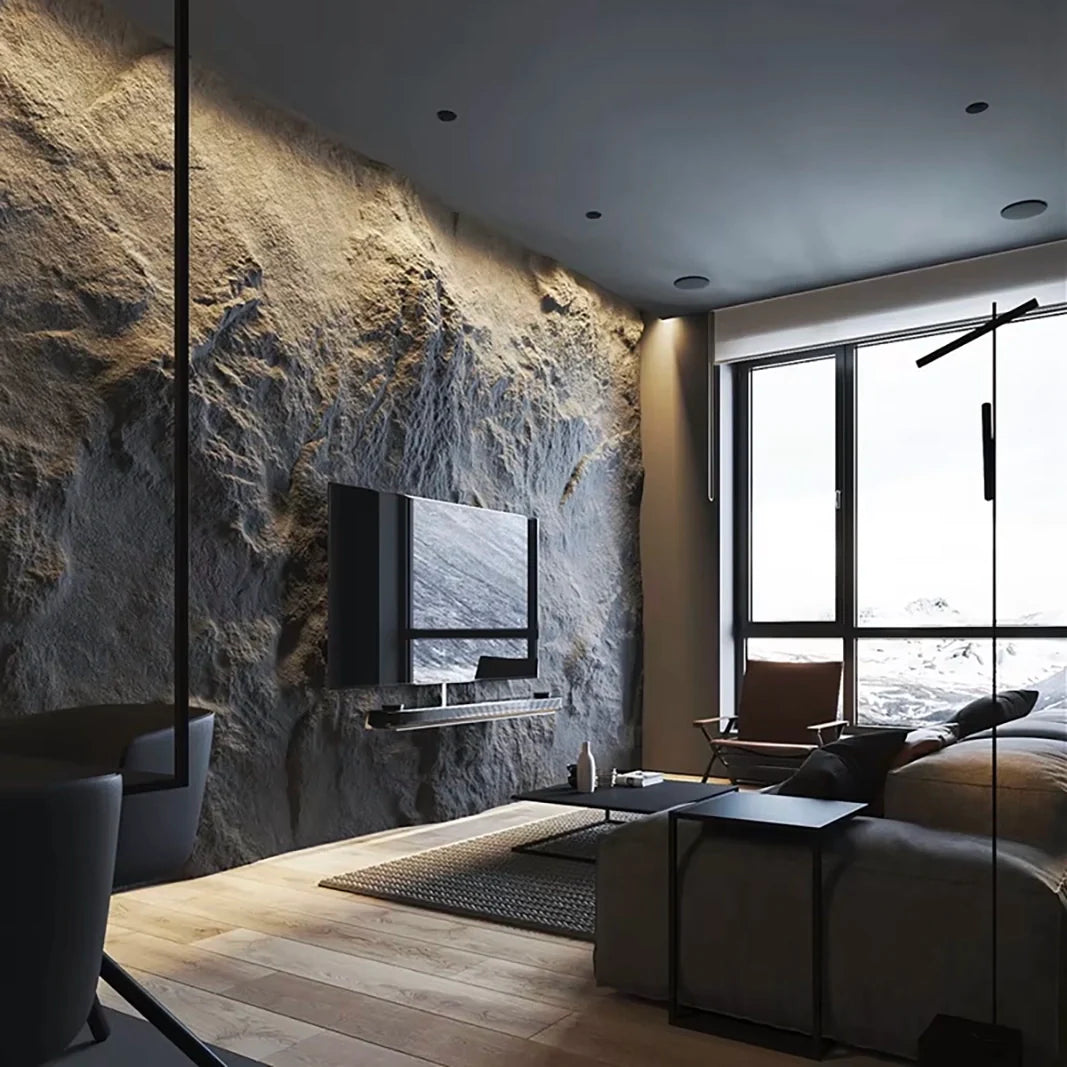
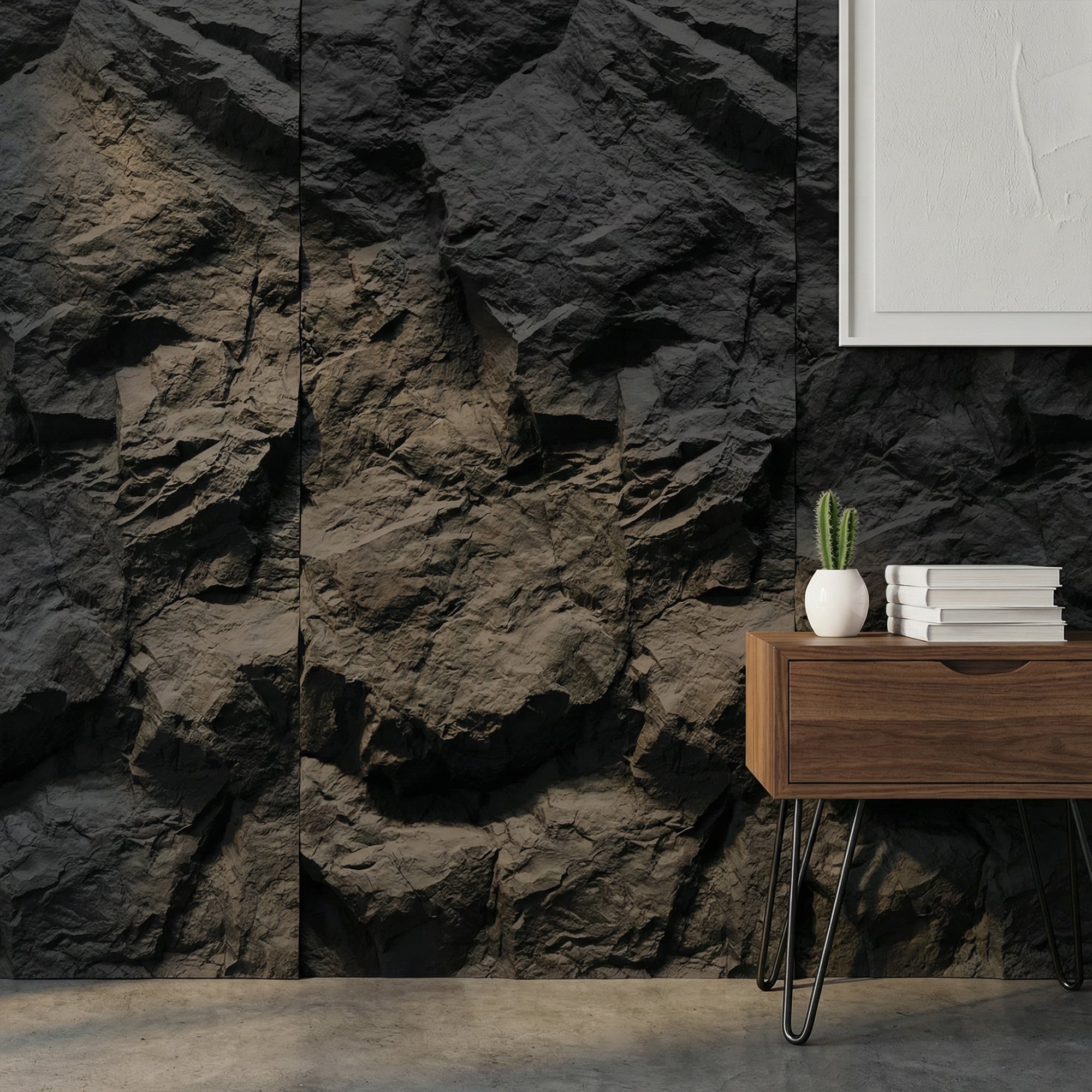
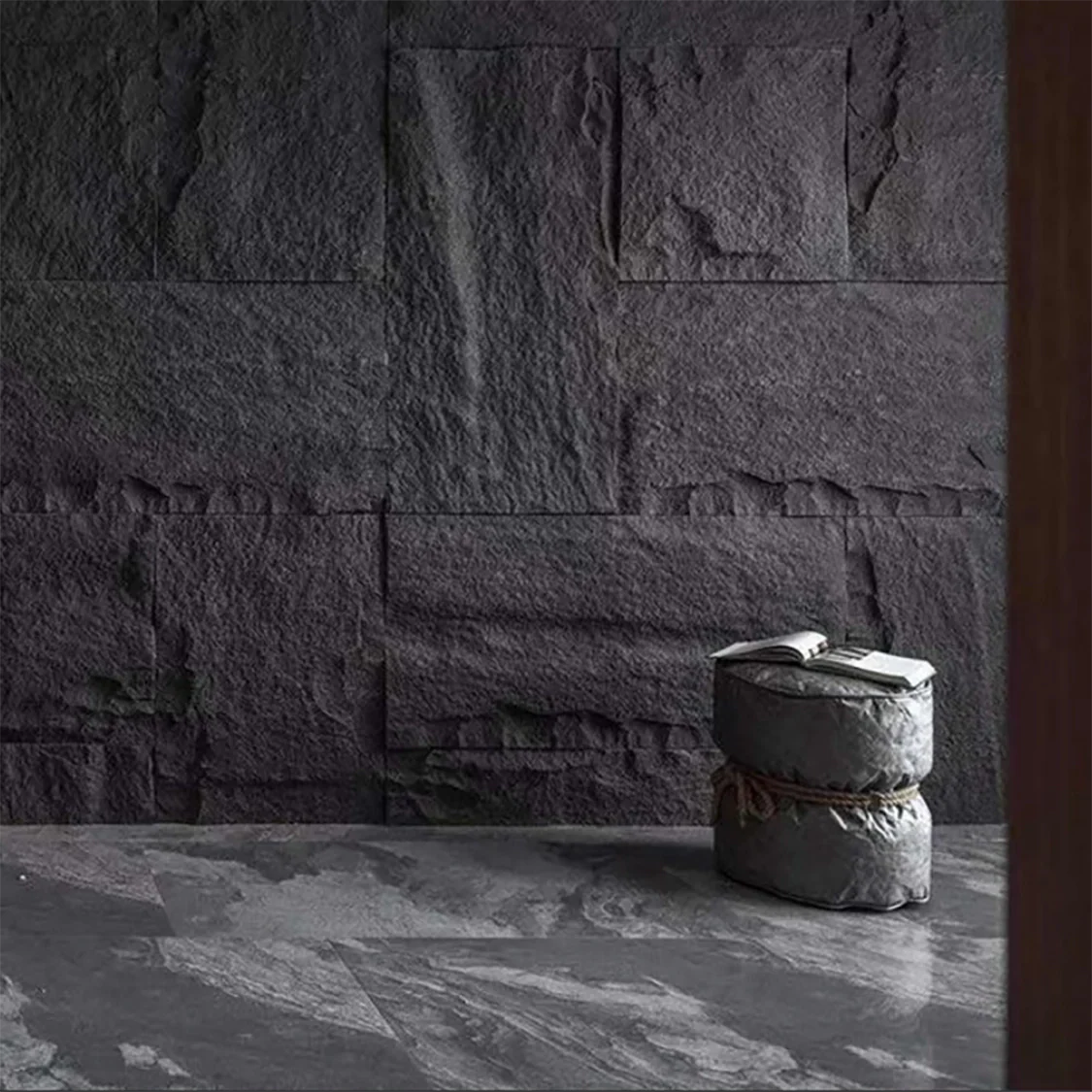
    Dark faux stone panels — charcoal, slate black, dark basalt — occupy the most dramatic end of the stone panel spectrum. Used well, they create surfaces that feel genuinely architectural: heavy with visual weight, rich in texture, and capable of transforming an ordinary wall into the defining feature of a space.

    Used badly, they make rooms feel cave-like. The difference is almost always about context, contrast, and lighting — three variables entirely within the control of anyone specifying dark stone effect wall panels.

    Why Dark Panels Work Better Than Expected

    Dark walls don’t necessarily make rooms feel smaller. Interior designers have known for decades that the perception of space is more affected by contrast, lighting, and the placement of reflective surfaces than by wall colour alone. A single dark stone feature wall in a room with high ceilings, good lighting, and pale flooring can make the space feel more substantial — not smaller.

    The key is using dark stone panels on a single feature wall rather than all four. A feature wall approach delivers the drama without the enclosure.

    Where Dark Faux Stone Panels Work

    Fireplace Breast

    The fireplace breast is the natural home for dark stone panels. The visual weight of charcoal or slate panels frames the hearth as the room’s focal point, and the warmth of the fire contrasts with the cool darkness of the stone surface.

    Bar and Restaurant Back Walls

    Dark stone panels on back bars, feature walls, and booth dividers in hospitality environments create atmosphere and occasion. The textured surface reflects candlelight and accent lighting, producing an effect that shifts throughout the evening as ambient light changes.

    Bedroom Feature Wall

    A dark stone wall behind the bed creates a dramatic backdrop that makes white bedding, warm lighting, and pale furniture stand out. In bedrooms, the visual weight of dark stone contributes to the sense of enclosure and rest.

    Home Office

    Dark stone panels behind a desk create a striking background for video calls and give a home office an authority that lighter finishes don’t provide.

    Lighting Dark Stone Panels Well

    Dark stone panels require adequate lighting to perform at their best. Without sufficient light, the texture is lost and the wall simply reads as dark. With well-placed lighting, the three-dimensional quality of the stone texture becomes the dominant visual feature.

    • Grazing light: Wall-mounted lights positioned close to the stone surface cast shadows across the relief and reveal maximum texture.
    • Warm white light: 2700–3000K colour temperature warms up cool dark stone without washing out the effect.
    • Avoid ceiling-only lighting: Downlights directly above a dark stone wall illuminate it from above and lose the shadow detail that makes the texture interesting.

    Dark Faux Stone Panels from The Panel Hub

    The Panel Hub stocks the RockSurface® stone effect wall panel collection in dark and charcoal finishes. RockSurface® panels deliver the visual weight of natural dark stone without the structural requirements and specialist installation that real stone demands. Browse the collection to find the dark finish that suits your project.

  • Faux Stone Panel Cost Guide 2026: What to Budget

    Faux Stone Panel Cost Guide 2026: What to Budget

    Cost is one of the most common reasons buyers choose faux stone panels over real stone cladding. But “how much do faux stone panels cost?” is a question with several layers — material cost, installation cost, and total cost of ownership over the life of the installation all tell different stories.

    This guide breaks down what to budget for faux stone wall panels in 2026, from materials through to installation, and compares the total cost against real stone alternatives.

    Panel Material Costs

    Faux stone panel prices vary based on quality, relief depth, material composition, and brand. As a general guide for the UK market in 2026:

    • Entry-level stone-effect panels: £15–£30 per m²
    • Mid-range quality stone-effect panels: £30–£60 per m²
    • Premium 3D relief panels: £60–£120 per m²

    The most significant quality differentiators are the depth and realism of the relief texture, the range of colour variation across the surface, and the substrate material. Higher-quality panels use more detailed moulds derived from actual stone samples.

    Installation Costs

    • DIY installation: Cost of adhesive and tools only — typically £50–£100 for a standard room feature wall
    • Professional installation: £20–£40 per m² for labour, depending on complexity and location

    The total installed cost for a typical 6m² feature wall using mid-range panels is in the range of £400–£600 for DIY, or £600–£900 professionally installed.

    Hidden Costs to Account For

    • Wastage: Order 10–15% more panels than your calculated area for cuts, breakages, and future repairs
    • Adhesive: Quality adhesive appropriate for the substrate — budget £20–£40 for a feature wall
    • Substrate preparation: Filling, priming, or levelling the wall surface before installation
    • Finishing materials: Corner pieces, sealant, caulk for perimeter joints

    Faux Stone vs Real Stone: Total Cost Comparison

    For a comparable 6m² interior feature wall:

    • Faux stone panels (mid-range, professionally installed): £600–£900
    • Natural stone cladding (basic, professionally installed): £1,500–£3,000+, depending on stone type and structural requirements

    The saving from faux stone panels is typically 50–80% of the equivalent real stone installation cost. For large-scale applications, the saving becomes very significant.

    Getting the Best Value

    • Order samples before committing — the finish must work in your specific lighting conditions
    • Order panels in a single batch where possible — matching additional panels from later production runs can be difficult
    • Don’t compromise on adhesive quality — long-term installation performance depends on the bond between panel and substrate

    Browse the RockSurface® panel collection at The Panel Hub and request samples to assess the finish before ordering.

  • Faux Stone Panels vs Wallpaper: Which Is the Better Alternative to Real Stone?

    Faux Stone Panels vs Wallpaper: Which Is the Better Alternative to Real Stone?

    When the goal is replicating the look of stone without using real stone, two options compete for the same customer: faux stone wall panels and stone-effect wallpaper. Both are widely available, both claim to deliver the aesthetic of natural stone, and both cost significantly less than a real stone installation. But they’re not interchangeable — they perform differently in almost every practical category.

    Appearance: Which Looks More Like Real Stone?

    High-quality faux stone panels, particularly textured 3D relief panels, have a significant realism advantage. The physical depth of the panel surface — raised edges, shadow lines, and irregular planes — creates a dimensional effect that printed wallpaper cannot replicate. At close range, stone wallpaper is clearly flat. At close range, a quality stone effect panel is genuinely convincing.

    Stone wallpaper has improved considerably and high-end options now incorporate embossing for some texture. But the depth of embossing in even the best wallpaper is measured in fractions of a millimetre. The relief in a quality stone panel is measured in centimetres — a fundamentally different visual proposition.

    Durability: Which Lasts Longer?

    Stone effect wall panels have a clear durability advantage. A quality panel is resistant to knocks, moisture, and everyday wear. It won’t peel, bubble, tear, or fade with UV exposure. In high-traffic areas — hallways, kitchens, commercial environments — panels will outlast wallpaper by years.

    Wallpaper is vulnerable to moisture, particularly at seams and edges. It tears, scuffs, and requires replacement if damaged. In rooms with high humidity, stone wallpaper is a short-term solution.

    Installation: Which Is Easier?

    Wallpaper installation is a well-understood skill — straightforward for experienced decorators. Large panels of stone wallpaper are more challenging to hang than standard wallpaper due to size and weight, but the basic technique is unchanged.

    Stone effect panels require substrate preparation — the surface must be flat, dry, and sound — but the installation is clean and permanent. Once fixed, panels don’t require finishing, painting, or sealing. Total time investment for similar areas is comparable.

    Cost: Which Is More Affordable?

    Stone effect wallpaper generally has a lower initial material cost. However, wallpaper needs to be replaced — sometimes within a few years in demanding environments — while panels are a once-and-done investment. Over a ten-year period in a typical residential application, the total cost of ownership often favours panels.

    For commercial environments where walls take heavy use, the durability advantage of panels makes them the more cost-effective choice from the outset.

    Maintenance: Which Is Lower Maintenance?

    Stone effect panels win on maintenance. They can be wiped clean, are resistant to most household cleaning products, and don’t require re-pasting or replacing when marked. Wallpaper marks, tears, and peels — and when a single section is damaged, the entire wall often needs replacement to maintain a consistent appearance.

    The Verdict: When to Choose Each

    • Choose faux stone panels if you want a finish that’s genuinely three-dimensional, durable, and low-maintenance — particularly in high-traffic areas, wet environments, or commercial spaces.
    • Choose stone wallpaper if budget is the primary constraint, the application is in a low-traffic area, or you want flexibility to change the look in a few years without structural commitment.

    Browse The Panel Hub’s full RockSurface® stone effect panel collection and request samples to compare the finish in person before making your decision.

  • Faux Stone vs Real Stone Cladding: Cost, Weight and Installation Compared

    Faux Stone vs Real Stone Cladding: Cost, Weight and Installation Compared

    The case for faux stone cladding has never been stronger. Advances in moulding technology, surface finishing, and composite materials mean that the gap between high-quality faux stone panels and natural stone cladding has narrowed considerably. In most residential and many commercial applications, the practical arguments now favour faux stone decisively. This guide covers how faux stone compares to real stone.

    Weight: The Most Consequential Difference

    Natural stone cladding is heavy. Depending on the stone type, it weighs 50–100kg per square metre. This has significant structural implications:

    • Most standard residential wall construction cannot support natural stone cladding without reinforcement
    • Structural assessment and often a structural engineer’s sign-off is required before installation
    • Installation requires specialist fixings, mechanical anchors, and in many cases a structural ledger at floor level to bear the load

    High-quality faux stone panels weigh 8–15kg per square metre. They can be fixed to standard plasterboard, masonry, or even existing tiled surfaces using adhesive alone — no structural assessment required for most applications.

    Cost: A Clear Advantage for Faux Stone

    The material cost difference between faux stone and real stone varies by stone type, but for comparable quality finishes, faux stone panels typically cost 30–50% of the material cost of real stone. Add the installation cost difference — faux stone requires no structural preparation, specialist fixings, or a stonemason — and the total installed cost of faux stone is typically 20–40% of equivalent natural stone.

    For a typical 10m² feature wall, the saving can be £2,000–£5,000 compared to a real stone installation.

    Installation: Accessible vs Specialist

    Real stone installation is a specialist trade requiring a stonemason, specialist tools, structural preparation, and typically several days of work for a room-scale installation.

    Faux stone panel installation is accessible to any competent DIYer or general contractor. The basic process — prepare the substrate, apply adhesive, fix panels, finish edges — can be completed in a day for most room-scale applications.

    Appearance: How Close Is Close Enough?

    At a distance of more than 1–2 metres, high-quality faux stone panels are visually indistinguishable from real stone to most observers. The colour variation, surface texture, and three-dimensional relief of premium panels replicate the natural variation of real stone convincingly.

    At very close range — an arm’s length — a careful observer can distinguish faux from real. For most interior applications this is irrelevant. Nobody inspects a feature wall at arm’s length.

    Durability and Maintenance

    Real stone has an exceptional lifespan — centuries in well-maintained buildings. However, many natural stones are porous and require regular sealing and careful maintenance to prevent staining and biological growth.

    Quality faux stone panels have a projected lifespan of 15–25 years in interior applications and are significantly less demanding in maintenance — wipeable with standard household cleaners, no specialist sealants required.

    When Real Stone Is Still the Right Choice

    There are applications where real stone remains the best specification: heritage properties where material authenticity is required, exterior applications demanding multi-decade lifespan, and prestige projects where the weight, feel, and genuine provenance of natural stone are part of the brief.

    For most residential and commercial applications, however, the weight, cost, and installation advantages of faux stone panels make them the practical choice. Browse the RockSurface® collection at The Panel Hub and request samples to assess the finish in your own space.

  • Grey Faux Stone Wall Panels: The Modern Neutral for Contemporary Spaces

    Grey Faux Stone Wall Panels: The Modern Neutral for Contemporary Spaces

    Grey is the dominant tone in contemporary stone panel design. It covers a spectrum from pale silver-grey to deep charcoal slate, and it works across a wider range of interior styles than any other stone colour. In 2026, grey faux stone wall panels are appearing in everything from minimalist residential feature walls to high-end hospitality environments.

    The reason is adaptability. Grey reads as industrial in loft-style conversions, as Scandinavian in pared-back Nordic interiors, and as genuinely luxurious in high-spec commercial spaces. It coordinates with almost every other material — timber, concrete, steel, glass — without competing for attention.

    The Spectrum of Grey: Which Shade Works Where

    Light Grey and Silver-Grey

    Pale grey faux stone works best in rooms where you want texture without visual weight. Bathrooms, hallways, and open-plan living areas benefit from light grey panels that add interest without darkening the space. Paired with white joinery and natural wood flooring, a light grey stone feature wall creates a layered finish that feels expensive without being heavy.

    Mid Grey

    Mid-tone grey panels are the most versatile in the spectrum. They sit comfortably between warm and cool interior palettes and work equally well with warm oak tones and cool concrete surfaces. For living room feature walls, mid grey stone panels provide a strong visual anchor without dominating the room.

    Charcoal and Slate Grey

    Dark grey faux stone panels are a statement choice. Used on a fireplace breast, a single feature wall in a dining room, or a hotel bar back, charcoal stone panels add dramatic depth. They work best in spaces with adequate lighting and enough other surfaces — flooring, furniture, soft furnishings — to balance the visual weight.

    Grey Faux Stone by Room

    Living Room

    A grey stone feature wall behind a sofa or on the fireplace breast is one of the most popular applications. The texture creates depth without introducing colour, which means it coordinates with any sofa, rug, or artwork without requiring redesign when you redecorate.

    Bathroom

    Grey stone-effect panels in bathrooms replicate the look of slate or natural stone tiles at a fraction of the weight and cost. They work particularly well on feature walls behind freestanding baths or in walk-in shower areas, provided the panels specified are rated for humid environments.

    Kitchen

    Grey faux stone panels used as a kitchen splashback alternative deliver the industrial aesthetic of exposed stone without grouting maintenance. They sit well behind stainless steel appliances and coordinate with both white and dark cabinetry.

    Commercial and Hospitality

    Grey stone panels are extensively used in restaurant, bar, and hotel design. The neutral tone allows lighting designers to play warm and cool light across the textured surface, creating atmosphere that changes throughout the day and evening.

    What to Pair with Grey Faux Stone Panels

    • Warm wood: Premium wood wall panels in natural oak, walnut, or pine flooring and furniture warm up cool grey stone panels and prevent the space from feeling cold.
    • Dark metal: Matte black or gunmetal fixtures, frames, and shelving complement grey stone’s industrial quality.
    • Concrete and plaster: Combining grey stone panels with polished concrete floors or bare plaster walls creates a layered raw material palette that feels architectural.
    • Greenery: Plants against grey stone panels create strong contrast — foliage pops sharply against the neutral background.

    Grey Faux Stone Panels from The Panel Hub

    The Panel Hub stocks the RockSurface® stone effect wall panel collection in a range of grey tones. RockSurface® panels replicate the depth and texture of real stone without the weight or installation complexity. Browse the full range to find the grey tone that works for your project.

  • How to Clean and Maintain Faux Stone Wall Panels

    How to Clean and Maintain Faux Stone Wall Panels

    One of the underappreciated advantages of faux stone wall panels over real stone is maintenance. Natural stone — particularly porous varieties like limestone and sandstone — requires regular sealing, careful cleaning product selection, and ongoing attention to prevent staining and biological growth. Faux stone panels are significantly more forgiving.

    That said, “low maintenance” doesn’t mean “no maintenance.” This guide covers what routine care looks like, how to handle staining, and what to avoid to keep faux stone panels looking their best over the long term.

    Routine Cleaning

    • Dust regularly: Use a soft brush, vacuum with a brush attachment, or a dry microfibre cloth. The textured surface of stone panels accumulates dust more readily than flat walls.
    • Wipe down periodically: A lightly damp cloth with warm water handles most marks and general cleaning. Wipe in the direction of the panel texture rather than against it.
    • Mild detergent for marks: A small amount of washing-up liquid in warm water handles most household marks. Apply with a soft cloth, work gently, and rinse with clean water.

    Dealing with Stains

    Grease and Kitchen Splatter

    In kitchen applications, a degreasing spray applied to a soft cloth — rather than directly to the panel — works effectively. Avoid spraying cleaning products directly into deep-relief textured surfaces as residue can accumulate in recesses.

    Mould and Mildew

    In bathrooms or humid environments, surface mould can develop in panel recesses if ventilation is poor. A solution of 1 part white vinegar to 3 parts water, applied with a soft brush and left for 10 minutes before rinsing, handles most surface mould. For persistent mould, a specialist bathroom cleaner suitable for the panel material may be required.

    Scuffs and Impact Marks

    The three-dimensional surface of stone-effect panels is naturally resistant to scuffing because impact is spread across the relief. Minor scuffs can often be concealed using a stone touch-up pen or paint matched to the panel colour.

    What to Avoid

    • Abrasive cleaners or pads: Scouring pads and abrasive cleaning powders scratch the panel surface and damage the finish permanently.
    • Solvent-based cleaners: Acetone, bleach at high concentrations, and solvent-based cleaners can strip the surface finish. Test any unfamiliar product on an inconspicuous area first.
    • High-pressure washing: For exterior panels, high-pressure washing can force water behind panels or damage adhesive bonds. Use a standard garden hose and soft brush instead.
    • Steam cleaning: High-temperature steam can affect adhesive bonds and panel finishes.

    Long-Term Care Schedule

    • Weekly: Dust or wipe with a dry cloth in high-use areas such as kitchens and bathrooms
    • Monthly: Damp wipe with mild detergent solution
    • Annually: Inspect for any loose panels; re-seal if recommended by the manufacturer

    For product-specific maintenance guidance, contact The Panel Hub directly. The team can advise on the best approach for your specific RockSurface® panels.

  • How to Install Faux Stone Wall Panels: Step-by-Step Guide

    How to Install Faux Stone Wall Panels: Step-by-Step Guide

    One of the primary reasons homeowners and contractors choose faux stone wall panels over real stone is installation. Where natural stone cladding requires structural preparation, specialist fixings, a skilled stonemason, and days of work, faux stone panels can be installed by any competent DIYer or general contractor in a single day for most room-scale applications.

    What You’ll Need

    • Faux stone wall panels (plus 10–15% for cuts and wastage)
    • Panel adhesive compatible with your substrate
    • Notched adhesive spreader or trowel
    • Spirit level and measuring tape
    • Pencil for marking
    • Angle grinder with diamond blade, or jigsaw, for cutting
    • Safety glasses and dust mask
    • Colour-matched decorator’s caulk for perimeter joints

    Step 1: Prepare the Substrate

    The most important step in any panel installation is substrate preparation. Faux stone panels require a flat, dry, and structurally sound surface. Plasterboard, concrete, masonry, and existing tiled surfaces can all work as substrates with the right adhesive.

    • Fill and sand any holes, cracks, or unevenness
    • Ensure the wall is completely dry — fresh plaster must be fully cured
    • Prime porous surfaces (bare plaster, concrete) to improve adhesive bond
    • Check for flatness with a long spirit level — any deviation greater than 3mm over 2 metres should be addressed before installation

    Step 2: Plan Your Layout

    Before fixing any panels, dry-lay them against the wall to plan the layout. Consider:

    • Where to start — typically the centre of the wall or the most visible corner, working outward
    • How to handle corners — some panel ranges include corner pieces; others require mitring or butting at 90°
    • Where cuts will fall — avoid very thin cut pieces at visible edges
    • Panel orientation — most stone panels look best with the main coursing running horizontally

    Step 3: Apply Adhesive and Fix Panels

    Apply adhesive to the back of the panel using a notched spreader. For large panels, also apply adhesive to the wall surface. Press each panel firmly into position, checking level as you work. Some panel systems use interlocking edges — ensure each panel engages correctly with its neighbour before the adhesive sets. Work from the bottom up.

    Step 4: Cut Panels for Edges and Openings

    Mark cut lines with a pencil and straight edge. Cut stone-effect panels using an angle grinder with a diamond blade or a tile saw. Always wear eye protection and a dust mask when cutting. Dry-fit each cut piece before applying adhesive to confirm it fits.

    Step 5: Finishing

    Once all panels are fixed and adhesive has cured (typically 24 hours), fill any perimeter gaps with colour-matched decorator’s caulk. Smooth with a wet finger or caulk tool. Some stone-effect panels benefit from a final coat of stone sealant — check the manufacturer’s recommendation for your specific product.

    Where to Buy Faux Stone Wall Panels

    The Panel Hub stocks the RockSurface® stone effect panel collection with full technical installation data available for each product. Request a sample first to confirm the finish in your space, then order with confidence.

  • Stacked Stone Wall Panels: The Look, the Reality, and How to Choose

    Stacked Stone Wall Panels: The Look, the Reality, and How to Choose

    Stacked stone is one of the most enduring looks in interior and exterior design — courses of thin stone laid in horizontal rows, creating a surface that reads as ancient, solid, and artisanal. The problem is that genuine stacked stone is heavy, expensive, and requires skilled installation on a structure capable of bearing the load.

    Stacked stone wall panels replicate the aesthetic using lightweight composite or stone-effect materials that can be fitted by any competent installer in a fraction of the time. The result, done well, is visually indistinguishable from the real thing at normal viewing distances.

    Real Stacked Stone vs Stacked Stone Panels: The Honest Comparison

    Weight

    Natural stacked stone cladding typically weighs 50–80kg per square metre. This requires structural assessment before installation, specialist fixings into masonry, and often a plinth or ledger to support the load. Stacked stone panels from The Panel Hub weigh a fraction of this and can be fixed to plasterboard, timber studwork, or existing wall finishes using standard adhesive or mechanical fixings.

    Cost

    The material cost of natural stacked stone, plus structural preparation, specialist installation, and ongoing maintenance, typically runs four to six times the cost of high-quality stone-effect panels. For large-format applications — entire accent walls, exterior cladding, commercial fit-outs — the saving is significant.

    Appearance

    High-quality faux stacked stone panels replicate the natural variation, colour shifts, and texture of real stone. The key quality indicators are the depth of the relief, the colour variation across the surface, and the finish on individual stone faces. Panels using mould-cast textures derived from real stone samples are the most convincing.

    Where to Use Stacked Stone Panels

    Fireplace and Feature Walls

    The fireplace breast is the classic application. Stacked stone panels on a chimney breast or media wall create a rural, artisanal aesthetic that feels grounded and permanent. They work in both traditional and contemporary interiors.

    Garden and Exterior Walls

    Stacked stone panels rated for exterior use give garden boundary walls and exterior house cladding the look of real stone at a fraction of the cost. Always verify UV and frost resistance ratings for any exterior application.

    Bar Fronts and Commercial Feature Walls

    In hospitality and retail environments, stacked stone panels create an artisanal, premium atmosphere on bar fronts, booth dividers, and reception desks — without requiring a specialist stonework contractor.

    Installation Considerations

    Most stacked stone panels are interlocking — each panel’s edge profile engages with its neighbour to create a seamless appearance. Key installation steps:

    • Ensure the substrate is flat, dry, and structurally sound
    • Dry-lay panels before fixing to plan the layout and minimise cuts
    • Use the correct adhesive for your substrate and panel material
    • Cut panels with an angle grinder or tile saw for clean edges around openings and corners

    Stacked Stone Panels from The Panel Hub

    RockSurface® panels from The Panel Hub deliver the stacked stone aesthetic in a lightweight, easy-to-install format. Available in multiple stone tones and textures for both residential and commercial applications. Request samples to assess the finish in your own space before ordering.

  • White Faux Stone Wall Panels: Clean Texture for Minimalist Interiors

    White Faux Stone Wall Panels: Clean Texture for Minimalist Interiors

    White faux stone wall panels do something that white paint cannot: they add texture without colour. The surface relief of a stone-effect panel — the irregular planes, raised edges, and shadow recesses — gives a white wall genuine visual depth. The result is a finish that reads as white from across the room but reveals layers of detail up close.

    This quality makes white stone effect wall panels one of the most versatile choices available. They work in minimalist spaces without adding visual noise, in traditional properties without feeling contemporary, and in commercial environments without dating quickly.

    Why Texture Matters More Than Colour in White Finishes

    A painted white wall reflects light uniformly. A white stone-effect panel reflects light differently across each face of the relief — catching it on raised surfaces, holding shadow in recesses. This creates a surface that changes appearance throughout the day as natural light shifts and as artificial lighting picks out different facets of the texture.

    The practical benefit is that a white stone panel feature wall is never boring. It can be the most visually engaging surface in a room without a single strong colour on the wall.

    Where White Faux Stone Panels Work Best

    Fireplace Breast

    A white stone panel on a fireplace breast creates a focal point in a living room without darkening the room or requiring strong colour coordination. The texture draws the eye and frames the fireplace as the architectural centrepiece.

    Bathroom Feature Wall

    White stone-effect panels in bathrooms replicate the look of white marble or limestone without the cost or maintenance. Behind a freestanding bath, white textured panels keep the room feeling light and spa-like.

    Hallway

    Narrow hallways benefit from white panels that reflect light and create the impression of more space. The textured surface adds visual interest to a corridor that would otherwise be a simple painted passage.

    Kitchen Splashback

    White stone-effect panels behind a hob replicate the look of white subway tiles or marble splashbacks with no grout lines to maintain. They work particularly well in kitchens with dark cabinetry, where the bright textured surface provides strong contrast.

    Commercial and Retail Environments

    White stone panels are used in retail interiors, hotel lobbies, and wellness environments where a premium, clean aesthetic is required. The textured surface elevates a white wall beyond the minimal without introducing colour that would conflict with branding or seasonal changes.

    Pairing White Stone Panels with Other Materials

    • Dark wood: Walnut or dark oak flooring against white stone panels creates maximum contrast — bold but balanced.
    • Brass or gold fixtures: Warm metal tones against white stone create a luxury finish well-suited to bathrooms and kitchens.
    • Greenery: White is one of the best backgrounds for plants — foliage stands out clearly against the pale textured surface.
    • Natural linen and cotton: Undyed soft furnishings coordinate with white stone panels without competing for attention.

    White Faux Stone Panels from The Panel Hub

    The Panel Hub offers the RockSurface® stone effect panel collection in white and light stone finishes. RockSurface® panels deliver the depth and irregularity of natural stone without the weight, cost, or specialist installation requirements of real stone. Browse the full range to find the right white finish for your project.