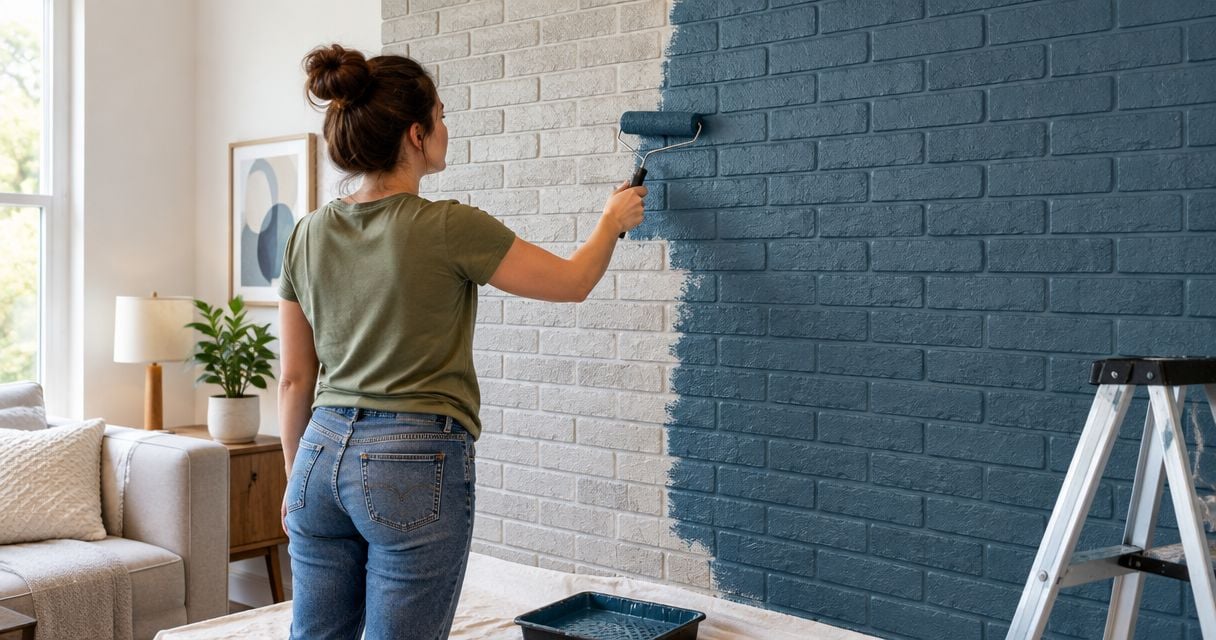
Yes, faux brick wall panels can be painted a different color when the panel manufacturer permits repainting and the coating system is compatible with the surface. The main caveat is adhesion: a paint that works on porous fiberboard can fail on a slick plastic or factory-sealed finish. For a 2026 room refresh, identify the panel material, follow its preparation instructions, and test the complete primer-and-paint system before coating the wall.
- Can faux brick wall panels be painted? Yes, when the manufacturer approves the coating system for the panel surface.
- Faux brick panels need material-specific preparation; brick texture does not identify the underlying material.
- Test primer and paint together before changing an entire accent wall.
- The Panel Hub sells decorative wall panels; confirm repainting instructions with the manufacturer of your existing panels.
Can faux brick wall panels be painted a different color?
Yes—but choose paint for the panel material, not for the brick pattern. Faux brick describes an appearance, so it does not establish whether a panel needs a bonding primer, a sealer, or another preparation method.
Start with the packaging, purchase record, or manufacturer’s installation instructions. If you are choosing a new accent wall rather than repainting one, compare faux brick wall panels for accent walls before committing to a finish you intend to change.
Use this material comparison to frame the questions you ask the panel and coating manufacturers. These are preparation considerations, not blanket approval to paint every product in a category.
| Panel surface | Best for | Main advantage when repainting | Main limitation |
|---|---|---|---|
| Paintable fiberboard or MDF | Dry interior accent walls | An approved coating can change the color while retaining the molded pattern | Excess moisture can damage exposed fibers and edges |
| Paintable rigid foam | Lightweight textured features | Repainting can preserve the existing raised surface | Incompatible solvents can damage some foams |
| Paintable PVC or other plastic | Panels with explicit coating guidance | A compatible system can change a smooth factory finish | Ordinary wall paint does not establish reliable adhesion by itself |
| Factory-coated panels | Existing walls with documented refinishing instructions | An approved repaint avoids removing sound panels | The existing coating can limit primer and paint choices |
Why this matters
Painting changes the surface you see and clean. It does not repair loose panels, remove moisture behind a wall, or turn a decorative panel into a waterproof wall system.
For your 2026 project, separate the color decision from the condition check. A sound, approved surface is a repainting candidate; a swollen, crumbling, damp, or detached panel needs investigation before decoration.
The brick relief also changes the work. Paint must reach recessed joints without collecting in puddles that soften the molded detail.
How do you paint faux brick wall panels?
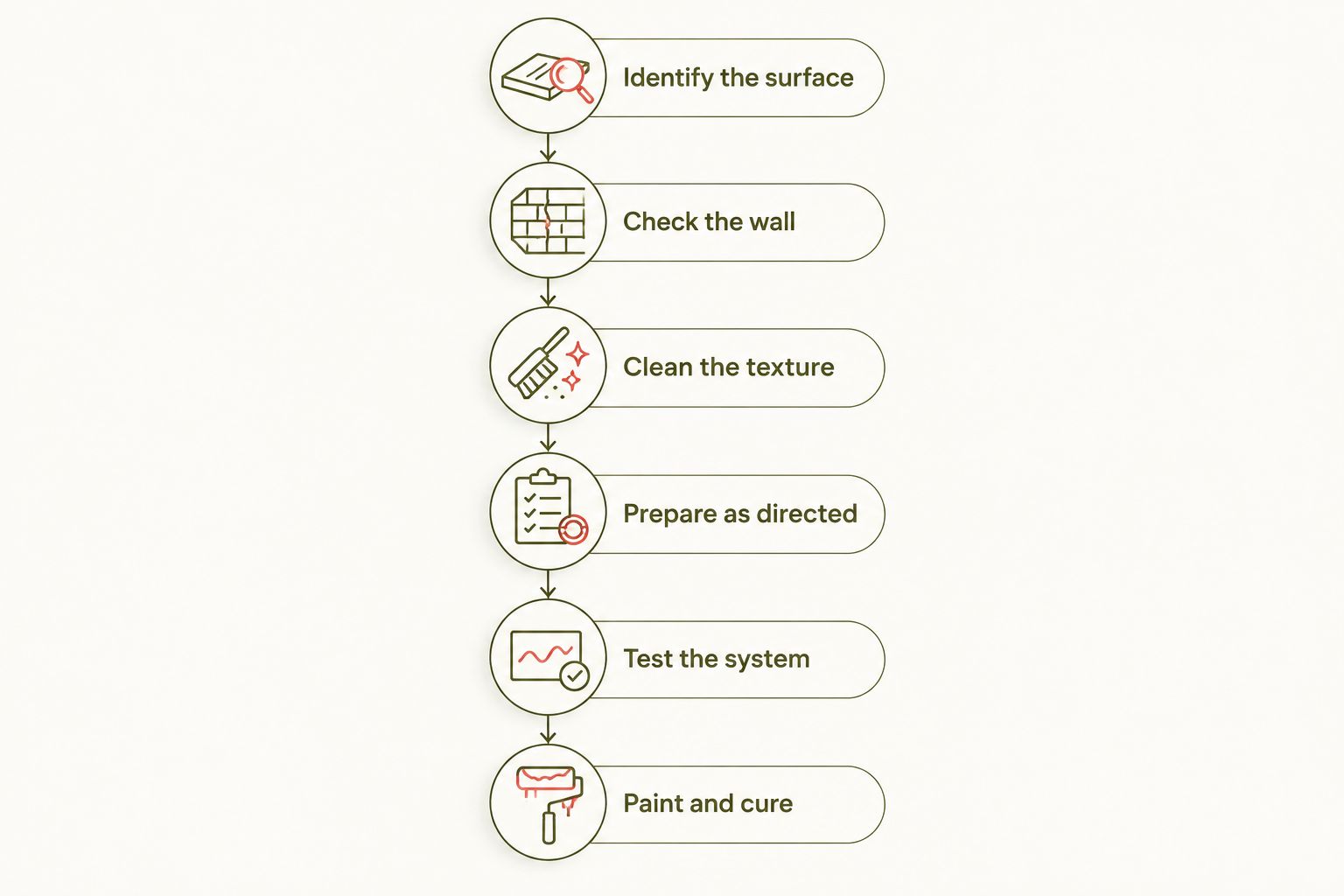
Use the following sequence only after confirming that the panel accepts paint. Follow the coating labels for ventilation, application conditions, recoating, and full curing; those instructions determine the schedule.
Identify the surface
Find the panel’s material and factory finish before buying supplies. Do not assume that a lightweight panel is foam or that a wood-colored backing means the face accepts ordinary wall paint.
If the product cannot be identified, contact the seller with clear photographs of an exposed edge and the front surface. Avoid aggressive sanding or solvent experiments while the material remains unknown.
Check the wall
Inspect raised corners, panel joints, damaged faces, and areas around plumbing or windows. Press gently on suspicious sections to locate movement without crushing the texture.
Fix the cause of a problem before hiding its appearance. If dampness is involved, the guidance on wall panels over water-damaged drywall addresses the underlying condition rather than treating paint as a repair.
Clean the texture
Remove loose dust from brick faces and recessed joints. Use a cleaner approved for the panel, then remove residue as directed and let the surface dry before coating.
Kitchen grease, bathroom residue, and cleaning-product films interfere with adhesion. On moisture-sensitive panels, avoid soaking seams or exposed edges while cleaning.
Prepare as directed
Repair approved surfaces with a compatible filler, keeping the repair consistent with the surrounding texture. Use paintable sealant only where the panel instructions permit it, and do not fill joints intended to accommodate movement.
Sand or degloss only when the panel manufacturer allows it. A thin decorative face can be damaged by preparation that would be routine on a solid wood board.
Test the system
Apply the proposed primer and paint to an inconspicuous area or spare offcut. Include a brick face, a recessed joint, and any representative repair so the test reflects the actual wall.
Let the test reach the coating manufacturer’s stated cure before assessing adhesion and appearance. If it wrinkles, stays tacky, damages the face, or releases from the surface, stop and resolve compatibility before continuing.
Paint and cure
Apply the approved primer where required, then paint according to the coating instructions. Work the coating into recesses without flooding them, and remove excess buildup while it is workable.
Keep tools lightly loaded around sharp relief and panel edges. Protect the finished wall from cleaning and abrasion until the coating reaches its stated cure.
Which painted finish works best on faux brick?
A solid color is best for simplifying an accent wall; contrasting joints are best for keeping the brick pattern visually prominent. Both treatments retain the physical relief, but they emphasize it differently.
Choose the effect before preparing your 2026 sample. A finish that looks appealing on a small paint chip can look very different across raised bricks and shadowed joints.
| Finish approach | Best for | Benefit | Trade-off |
|---|---|---|---|
| Single color across bricks and joints | A quieter bedroom or living-room feature | Unifies the surface while shadows reveal the texture | Removes the original color contrast between bricks and joints |
| Contrasting bricks and joints | A clearly defined brick pattern | Makes the joint layout more visible | Requires more controlled brushwork and touch-ups |
| Dry-brushed highlights | Selective color on raised texture | Leaves some of the base color visible | Results depend on tool pressure and consistent application |
| Opaque paint instead of a translucent treatment | Covering an unwanted existing color | Provides a more uniform color change with an appropriate system | Conceals the original printed or decorative color variation |
Keep sheen separate from color
Flat and matte finishes reduce reflected glare, while higher-sheen finishes make reflected light more noticeable. Cleaning performance depends on the particular coating, so compare the paint manufacturer’s stated uses rather than assuming sheen alone settles the choice.
View a painted sample in daylight and with your room lights on. Side lighting makes raised edges, joint shadows, and uneven paint buildup easier to see.
Why painting results vary
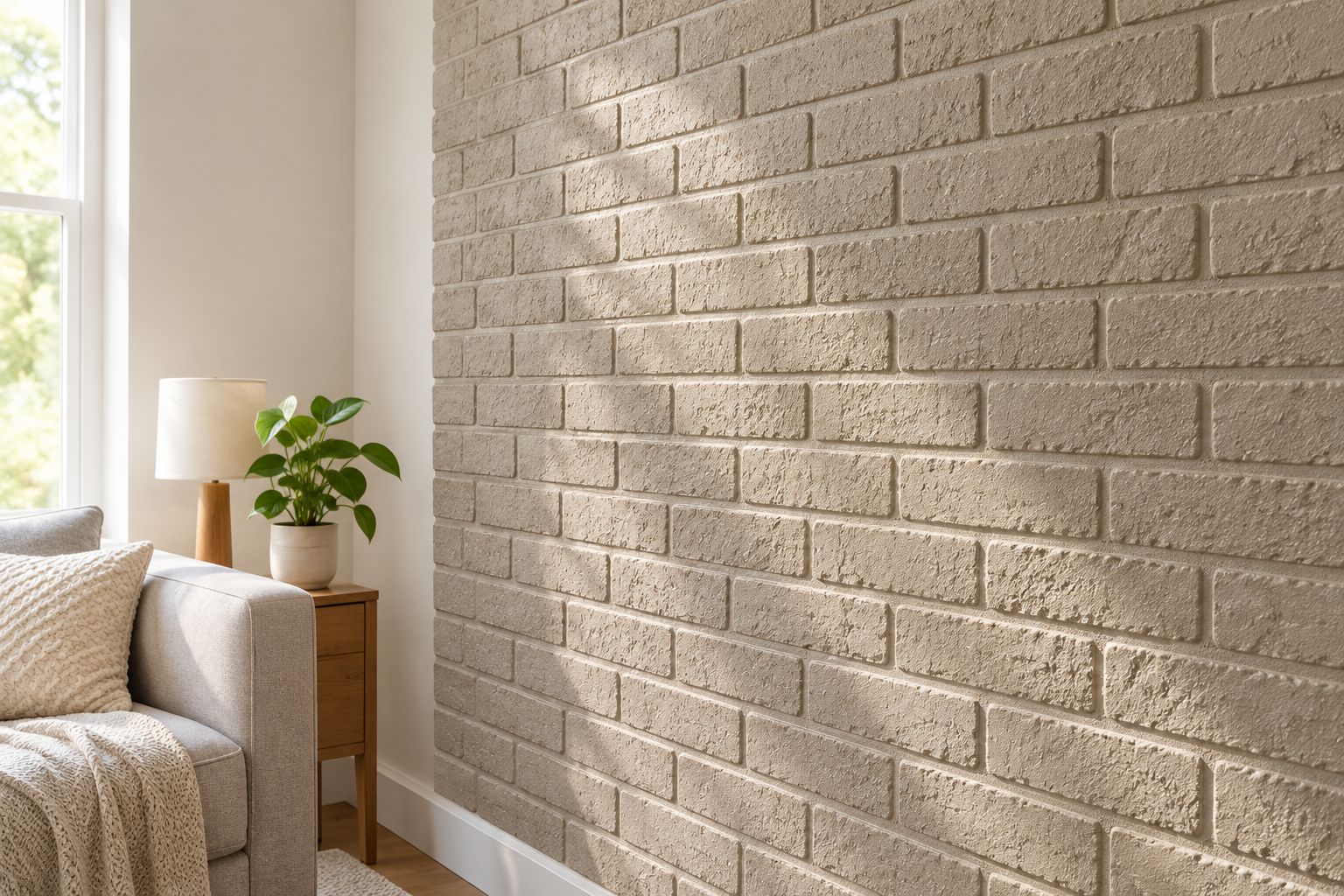
Two walls with the same brick pattern can need different coating systems. These factors determine how you prepare the surface and judge the result:
- Panel material: Fiberboard, plastic, and foam respond differently to moisture, abrasion, and solvents.
- Existing finish: A glossy coating or decorative film changes the surface to which the new paint must bond.
- Surface contamination: Grease, dust, and cleaner residue can separate the coating from the panel.
- Panel condition: Loose edges, swollen fibers, and damaged faces remain problems beneath fresh paint.
- Texture depth: Recessed joints need coverage without thick buildup on neighboring brick faces.
- Room conditions: Temperature, humidity, and ventilation must meet the coating label’s requirements during application and curing.
For a 2026 repaint, use these factors as a purchase checklist. Ask whether the primer and paint are compatible with the identified panel and its existing finish, rather than asking only whether the paint covers brick.
What should you do if the test paint peels?
Stop before coating the full wall. Peeling means the tested system has not produced an acceptable bond; another decorative coat does not fix the weak layer underneath.
Check where the failure occurred. Paint lifting from primer points to a different interface than primer lifting from the panel, while a decorative film pulling away with everything attached indicates a problem within the panel surface itself.
The same principle applies to interior painting preparation: cleaning residue and unstable existing finishes must be addressed before a new coating can form a dependable bond. On textured faux brick, pay particular attention to recessed joints, where dust and cleaner residue are harder to spot.
Remove failed test coatings only with a method approved for the panel. Do not escalate automatically to stronger solvents or heavier sanding; either approach can damage a surface that needs a different coating system.
If the substrate itself crumbles or separates, reconsider repainting. A new surface finish cannot strengthen a failing panel assembly.
Can you paint faux brick panels without primer?
Painting without primer is appropriate only when the panel and paint instructions approve direct application. A paint-and-primer label does not, by itself, confirm suitability for plastic, foam, or a factory-coated face.
Use the approved coating system, not the fewest steps. Primer serves different purposes on different surfaces, including promoting adhesion, sealing absorbent material, or addressing specific stains when the product is designed for that use.
Can you use limewash on faux brick panels?
Traditional limewash relies on a suitable mineral surface; a brick-shaped plastic, foam, or coated fiberboard panel is not automatically suitable. Do not treat the molded pattern as evidence that a masonry finish will work.
If you want a washed appearance, look for a decorative coating system explicitly approved for the actual panel material. Test both its adhesion and its visual effect before applying it across the wall.
Is repainting better than replacing faux brick panels?
Repaint when the panels are sound, painting is permitted, and color is the only thing you want to change. Replace or repair first when the panels are damaged, loose, or unsuitable for the coating you intend to use.
Repainting retains the existing pattern, panel joints, and relief. That is an advantage if you like the texture, but a limitation if your real goal is a smoother wall or a different material.
The Panel Hub is best for homeowners shopping for decorative wall panels; approval to repaint an existing panel must come from its manufacturer. If you are comparing replacement options for a 2026 room update, settle the material and maintenance requirements before choosing the color.
FAQ
Can faux brick wall panels be painted white?
Yes, faux brick wall panels can be painted white when the manufacturer permits painting and the coating system suits the surface. Test coverage and adhesion before painting the whole wall.
What paint should I use on faux brick wall panels?
Use paint approved for the panel’s actual material and existing finish. Follow the panel and coating manufacturers’ instructions for primer, preparation, application, and curing.
Do I need to sand faux brick panels before painting?
Sand faux brick panels only when the manufacturer allows it. Abrasion can damage thin decorative faces, so do not assume standard wood preparation applies.
Can I paint plastic faux brick panels with regular wall paint?
Regular wall paint is not automatically suitable for plastic faux brick panels. Confirm that the proposed primer-and-paint system is approved for the specific plastic and factory finish.
Will painting hide the brick texture?
Painting changes the color but does not remove the molded brick relief. Heavy buildup can soften fine details, so avoid flooding recessed joints.
Can I paint faux brick panels behind a stove or fireplace?
Paint does not establish that a faux brick panel is safe near a stove or fireplace. Confirm appliance clearances and the suitability of both the panel and coating before decorating.
Does The Panel Hub’s wall panel selection establish whether my existing panels are paintable?
No, The Panel Hub’s decorative wall panel selection does not establish the repainting requirements of your existing panels. Identify their manufacturer and follow the instructions for that exact material and finish.
One last thing
Approve the sample from across the room, not just at arm’s length. Close inspection reveals coverage, but normal viewing distance reveals whether the painted joints and repeated brick pattern suit the space.
Keep the sample beside your trim, flooring, and nearby furniture before committing. Painting can change the color successfully and still leave you with a pattern you no longer want.
Related guides
- How to fill nail holes in wood wall paneling
- Installing wall panels in a rental without damaging walls
- PVC wall panels for bathrooms
Leave a Reply