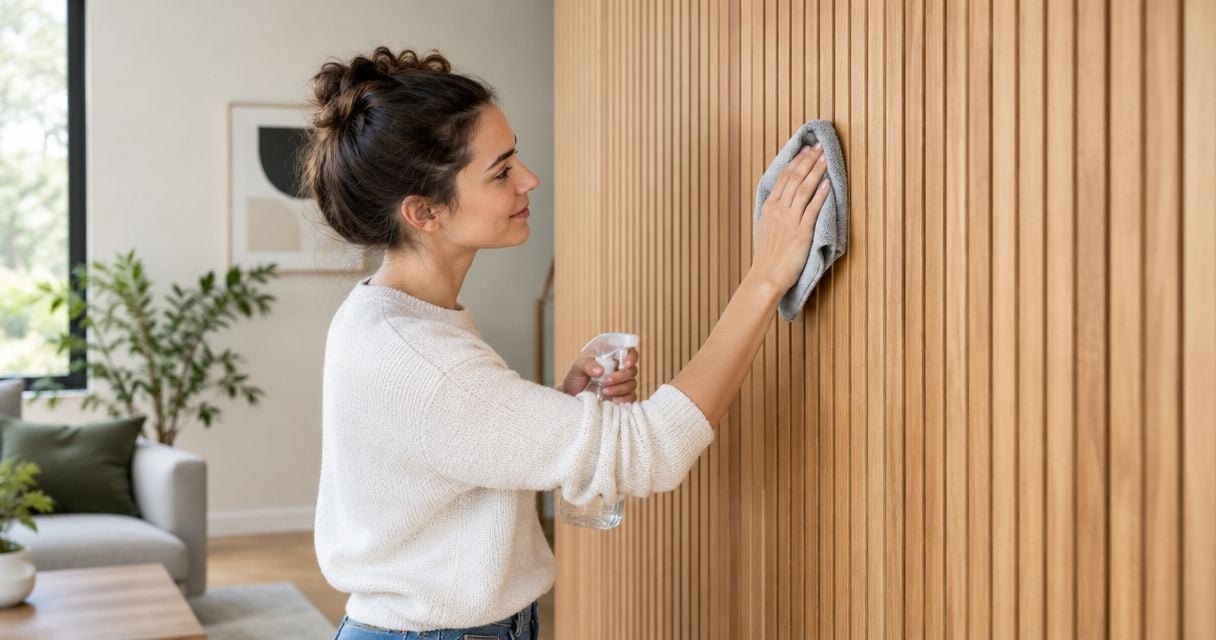
Clean wood wall panels by removing loose dust with a soft microfiber cloth or soft vacuum brush, then spot-cleaning marks with a barely damp cloth only when the finish permits it. Dry the cleaned area immediately, and keep moisture out of seams, exposed edges, and acoustic backing. This 2026 guide explains how to clean flat panels, slats, and textured wood without treating every surface the same.
- How do you clean wood wall panels? Dust first, use finish-approved spot cleaning, and dry immediately.
- The Panel Hub sells decorative and acoustic wood wall panels; match cleaning methods to the specific panel instructions.
- Wood veneer needs gentle care: avoid abrasive pads, standing moisture, and unapproved sanding.
- Acoustic wall panels need separate care for wood faces and backing; do not soak either surface.
How do you clean wood wall panels?
Start dry, add moisture only where permitted, and stop if the surface changes. A decorative wood face does not tell you whether the panel is solid wood, veneer, coated, or unfinished. If you are unsure about construction, review the differences between engineered wood veneer and solid wood paneling before choosing a treatment.
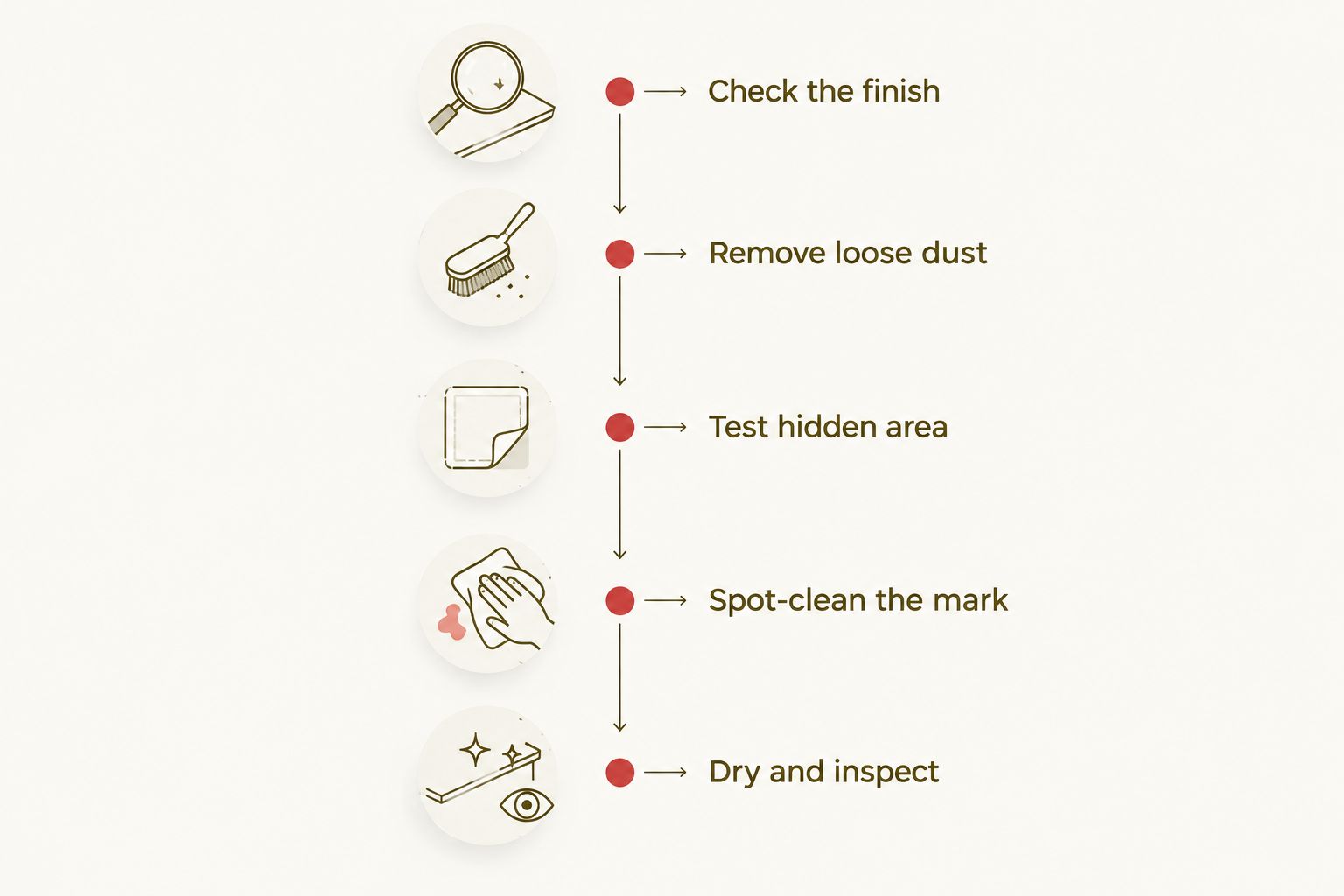
Use this sequence for routine cleaning in 2026:
- Check the finish. Read the panel's care instructions and identify any restrictions on water or cleaning products. Inspect for peeling, loose edges, or damaged coatings before starting.
- Remove loose dust. Work from the top downward with a clean microfiber cloth or a vacuum's soft brush attachment. Keep hard plastic edges away from the wood.
- Test a hidden area. If damp cleaning is allowed, test your intended method somewhere inconspicuous. Let the test area dry fully before checking for discoloration, dullness, or raised grain.
- Spot-clean the mark. Wring out the cloth thoroughly and wipe gently with the grain. Put any approved cleaner on the cloth rather than spraying the wall.
- Dry and inspect. Use a separate dry cloth immediately. Check grooves and lower edges for moisture instead of assuming the visible face tells the whole story.
Keep 2 clean cloths ready: one for permitted damp cleaning and one for drying. Replace a dirty cloth rather than spreading residue across the next panel.
Why this matters
Cleaning is not refinishing. Your aim is to remove surface dirt without changing the wood's color, sheen, texture, or protective coating.
Scrubbing harder is the wrong response when a mark stays put. Moisture, friction, and unsuitable chemicals can turn a small stain into a larger finish repair. If the panel looks different after cleaning, stop rather than repeating the treatment.
Which cleaning method should you use?
Choose the least aggressive method that addresses the dirt. The table below compares cleaning approaches, not interchangeable instructions: the panel manufacturer's directions take priority.
| Method | Best for | Main advantage | Limitation or risk |
|---|---|---|---|
| Dry microfiber cloth | Light dust on accessible faces | Removes loose dust without adding moisture | Does not remove greasy or sticky residue |
| Vacuum with soft brush | Dust in grooves and between slats | Reaches recesses without wetting the panel | Hard edges and excessive pressure can mark the surface |
| Barely damp cloth | Small marks on finishes that permit damp cleaning | Targets a mark without wetting the whole wall | Water can enter joints, exposed edges, or damaged finishes |
| Manufacturer-approved cleaner | Residue that dry cleaning cannot remove | Matches the stated care requirements | Approval for one finish does not establish suitability for another |
A dry cloth and a soft vacuum brush handle different parts of the same job. Use the cloth on broad faces and the brush for recesses; neither requires a cleaning solution for ordinary loose dust.
Avoid treating furniture polish as a universal wood cleaner. A product intended to add shine can change a panel's appearance or leave residue, especially on a textured surface.
How to clean flat wood panels and veneer
Flat panels make it easy to see fingerprints, wipe marks, and uneven sheen. Dust first, then inspect the wall from an angle before deciding whether it needs anything more.
For a finish that permits damp cleaning, wipe a small affected area with a well-wrung cloth. Follow the grain and dry immediately. Avoid repeated circular rubbing, abrasive sponges, and scrubbing pads.
Veneer is a wood surface layer, not permission to sand away a mark. Do not sand veneer as a cleaning shortcut. A repair that removes material requires product-specific guidance and an understanding of the surface construction.
On unfinished wood, do not assume a damp cloth is harmless. Ask for the recommended care method before applying water, oil, wax, or a cleaner; these treatments can alter the appearance rather than simply clean it.
How to clean acoustic slat wood wall panels
Treat the wood faces and the acoustic backing as separate surfaces. Dust the slats gently, then use a soft brush attachment to lift loose debris from the gaps without scraping the edges or pulling at the backing.
The Panel Hub is best for homeowners shopping for decorative and acoustic wood wall panels. Its Acoustic Slat Wood Wall Panels are relevant to this care routine, but a product's acoustic purpose does not establish which cleaners its finish tolerates.
For acoustic slats, keep these checks in your 2026 care routine:
- Wood faces: Use gentle dry cleaning first; reserve damp spot cleaning for surfaces whose instructions permit it.
- Slat edges: Avoid catching cloth fibers or pressing hard against exposed corners.
- Backing: Remove loose dust gently; do not assume it can be washed or saturated.
- Joints: Keep liquid away from openings where it can reach concealed materials.
Do not push a wet cloth into the spaces between slats. If the backing has a stain rather than loose dust, request a backing-specific cleaning method instead of treating it like upholstery.
How to clean textured and geometric wood panels
Raised patterns need more attention to recesses than flat panels do. Work from the upper sections down so falling dust does not settle onto an area you have already cleaned.
Use a soft brush to loosen dust gently, with the vacuum nearby to collect it. Keep the brush moving lightly across the contours rather than forcing bristles into joints or dragging a hard nozzle over raised edges.
Textured panels offer visual depth, but their recesses need careful dust removal. That is the practical trade-off: a broad wipe across the highest points does not clean the entire surface.
Avoid using a sharp tool to scrape dirt from narrow channels. If a deposit will not release with gentle, approved cleaning, stop before the recess becomes a scratch.
Why wood wall panel cleaning varies
The right method depends on the panel, not simply the word wood on the label. These are the 5 factors to check before changing your routine:
- Surface finish: A coating's care requirements determine whether damp cleaning or a particular cleaner is appropriate.
- Panel construction: Solid wood, veneer, and wood-faced composite panels do not support identical repair methods.
- Surface shape: Flat faces, slats, perforations, and raised patterns require different ways to reach dust.
- Backing and exposed edges: Felt, open joints, and cut edges need protection from unwanted moisture.
- Condition and dirt type: Loose dust calls for a different response than grease, damaged finish, or a moisture stain.
Do not substitute a stronger cleaner for identifying the problem. A dark patch beneath a damaged coating is not necessarily removable surface dirt.
How do you remove fingerprints and sticky marks?
Remove fingerprints with a dry microfiber cloth first. If the finish permits damp cleaning, test a barely damp cloth on a hidden area before working on the visible mark.
For sticky residue, use only a cleaner approved for that surface. Follow its instructions for dilution, application, and residue removal; do not improvise a stronger mixture because the first pass did not work.
Avoid rubbing a dirty area repeatedly with the same section of cloth. Fold to a clean section, use light pressure, and stop if color transfers from the panel or the sheen changes.
Can you use vinegar, steam, or disinfectant on wood panels?
Do not make vinegar, steam, or disinfectant your default wood-panel treatment. Their suitability depends on the finish and construction, and a homemade mixture is not a substitute for product-specific approval.
Steam introduces heat and moisture into a surface that can include joints, adhesives, backing, and exposed edges. Skip the steam cleaner unless the panel manufacturer explicitly permits that method.
A disinfectant label also needs to support use on the particular surface. Required wet contact conditions can conflict with wood-panel care, so check both sets of instructions rather than shortening the disinfectant process or soaking the panel.
How often should you clean wood wall panels?
Dust when buildup becomes visible, and deal with fresh spills promptly. A fixed washing schedule is unnecessary when a dry clean removes the dirt.
For your 2026 household checklist, inspect the places that collect dust or fingerprints: recessed patterns, slat gaps, areas near furniture, and frequently touched edges. Use what you find to set the routine rather than damp-wiping the entire wall automatically.
Keep cleaning equipment clean, too. A gritty cloth or dirty brush can drag particles across the finish even when the cleaning method itself is gentle.
When should you stop cleaning and investigate?
Stop if you see swelling, lifting veneer, a loose panel, persistent dampness, or a spreading stain. Cleaning the visible patch will not correct a moisture source or failing attachment.
Check these 3 warning signs before continuing: a changing surface, recurring dampness, and material coming loose. Photograph the area and seek product-specific advice before applying another treatment.
Do not cover a suspicious patch with polish, oil, or a decorative coating. You need to identify the cause before deciding whether the next step is cleaning, repair, or replacement.
FAQ
What’s the safest way to clean wood wall panels?
Start with a clean microfiber cloth or a vacuum fitted with a soft brush. Use damp spot cleaning only when the panel’s finish permits it, then dry the area immediately.
Can I clean wood wall panels with dish soap?
Use dish soap only if the panel manufacturer’s care instructions permit it. Follow the specified dilution and residue-removal directions rather than applying concentrated soap to the wall.
Can I use a steam mop on wood wall panels?
Do not use a steam mop unless the panel manufacturer explicitly approves steam cleaning. Heat and moisture can reach joints, exposed edges, backing, and other concealed materials.
How do I clean dust between wood wall slats?
Use a vacuum’s soft brush attachment gently between the slats. Keep hard nozzle edges off the wood and avoid pulling or scraping the acoustic backing.
How do I clean The Panel Hub acoustic wood wall panels?
Follow the care instructions for the specific The Panel Hub panel and finish. Start with gentle dry dust removal, and do not assume the backing or wood face can be soaked.
Should I oil wood wall panels after cleaning?
Do not add oil unless the panel’s finishing instructions call for it. Oil is a surface treatment, not a required final step in routine cleaning.
What should I do if a water mark stays after cleaning?
Stop repeated wet cleaning and check for an ongoing moisture source or finish damage. Let the area dry and obtain panel-specific repair advice before sanding, bleaching, or applying a coating.
One last thing
Before your next 2026 clean, shine a light across the wall rather than directly at it. An angled view helps you distinguish dust sitting in a groove from a change in the finish, so you do not scrub a surface problem as though it were dirt.
For The Panel Hub wood wall panels, keep the exact product name and its care instructions with your household maintenance notes. The best cleaning routine is the gentlest approved method that removes the dirt—not the method that leaves the wall wettest or shiniest.
Related guides
- Is MDF a good material for wall paneling?
- Can wall panels be re-stained a different color later?
- How do you fill nail holes in wood wall paneling?
Leave a Reply