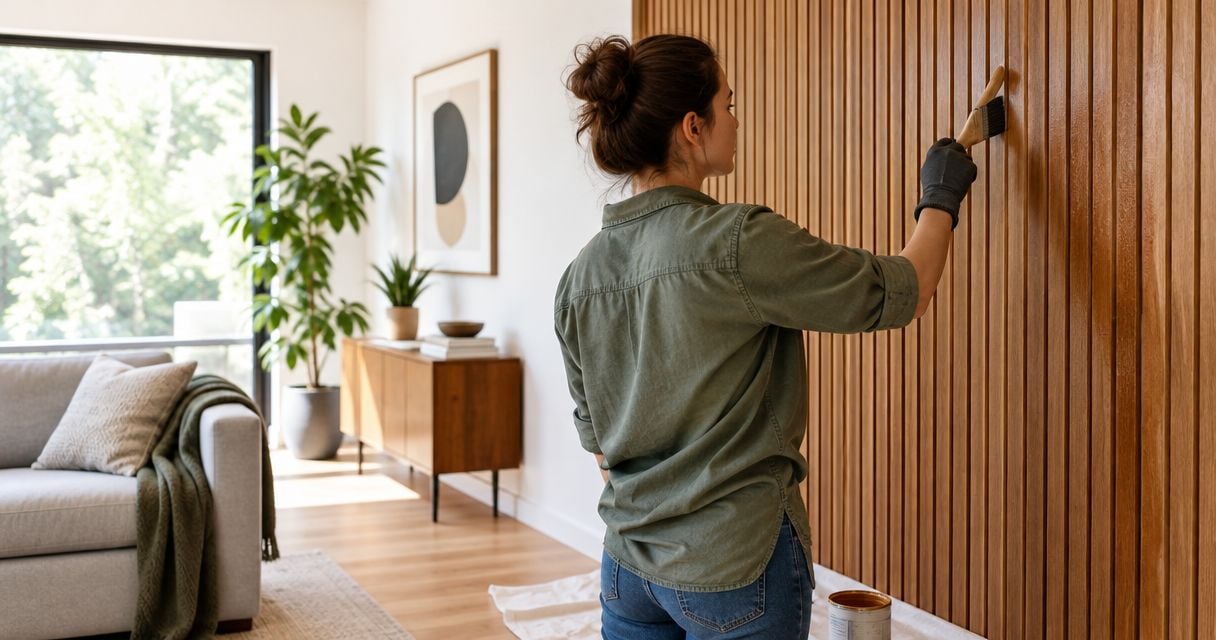
Wood wall panels need to be sealed if they are unfinished and their manufacturer specifies a protective finish; factory-finished panels generally do not need another coat after installation. For a 2026 project, check the finish instructions before coating either surface: extra sealer can change the appearance, and sealing decorative wood does not make it suitable for a shower.
- Do wood wall panels need to be sealed? Unfinished wood often does; factory-finished wood generally does not.
- The Panel Hub offers decorative wood wall panels and acoustic options; check each panel’s finishing instructions.
- Wood veneer and solid wood need compatible finishes, not an automatic extra coat after installation.
- Sealer protects a suitable wood surface; it does not turn interior paneling into waterproof shower cladding.
Do wood wall panels need to be sealed after installation?
Unfinished panels often need a protective finish, but installation alone does not create a need for sealing. The deciding factors are the existing finish, the panel construction, and the manufacturer’s instructions for the room where you install it.
A walnut-colored surface does not tell you whether the panel is bare, oiled, lacquered, or covered with another factory finish. Likewise, solid wood and wood veneer describe construction, not the coating already on the face. Understanding engineered wood veneer versus solid wood paneling helps you separate those decisions.
| Panel condition | Best for | Sealing decision | Benefit and limitation |
|---|---|---|---|
| Unfinished solid wood | Choosing your own finish | Apply the specified compatible finish | Adds surface protection, but changes the raw appearance |
| Factory-finished wood | Keeping the supplied appearance | Leave the finish intact unless instructed otherwise | Avoids unnecessary coating, but damage needs a compatible repair |
| Unfinished wood veneer | Finishing a real-wood surface | Follow veneer-specific instructions | Allows finish selection, but aggressive sanding can damage thin veneer |
| Acoustic wood panels | Decorative sound absorption | Coat only surfaces explicitly approved for finishing | Preserves the intended assembly; coating felt or openings can affect performance |
| Panels near splashes | Locations approved for that panel | Confirm room suitability before choosing sealer | A finish helps protect the face, but does not waterproof the wall assembly |
Do not use the same treatment across these categories simply because they all look like wood. A finish that works on bare timber can fail to bond to an existing coating.
Why this matters
An unnecessary coat creates another surface you must maintain. It can alter sheen, deepen color, collect in grooves, or leave visible brush marks across a finished feature wall.
The opposite mistake is leaving wood unfinished when its instructions require protection. Bare wood is absorbent, and everyday handling can leave marks that are harder to remove than dirt on a compatible finished surface.
For your 2026 renovation, make the finishing decision before installing the first panel. That gives you access to edges and lets you test the complete appearance without experimenting on the finished wall.
Unfinished wood panels: finish according to the instructions
Unfinished wood gives you control over the final appearance, but it also gives you responsibility for the finishing system. A stain primarily changes color; do not assume that a stain alone provides the protective coating your panel requires.
Choose a finish approved for the wood, the location, and the intended appearance. Some products combine coloring and protection, while others require separate stages. Follow the complete system rather than mixing products based only on their labels.
Best for homeowners who want control over color: unfinished wood with a documented finishing method. The trade-off is additional preparation, drying, and care during application.
Ask whether the manufacturer requires finishing the face, edges, ends, or back before mounting. Do not coat an adhesive-bonding surface unless the installation instructions permit it; the adhesive must be compatible with whatever surface it contacts.
Factory-finished panels: preserve the existing coating
Factory-finished wood generally arrives with its intended surface treatment already applied. An extra coat is not a routine final installation step unless the panel instructions specifically require one.
Start with the named finish, not a visual guess. A matte surface can still have protection, while a glossy surface does not establish whether another coating will adhere.
Best for a simpler finishing workload: factory-finished panels left as supplied. Their limitation is that scratches, exposed cuts, and repairs must match the existing finish rather than an arbitrary clear coat.
If a cut exposes raw material, ask about approved edge treatment. Treating a cut edge and recoating the entire face are separate jobs; one does not automatically justify the other.
Why sealing requirements vary
The right approach depends on the panel and its surroundings, not just the species name printed on the listing.
- Existing finish: Bare wood, oil-treated wood, and film-coated wood need different preparation and maintenance.
- Panel construction: Solid wood, veneer, and a composite core expose different materials when you cut or sand them.
- Room exposure: A dry bedroom wall and a surface receiving regular splashes need different suitability checks.
- Installation method: Adhesive compatibility matters wherever a finish touches the bonding area.
- Acoustic construction: Felt, perforations, and gaps are functional parts of an acoustic panel, not spare surfaces to paint over.
- Desired appearance: Clear coatings can change the tone and sheen; test the actual finish on the actual panel.
These factors explain why a blanket instruction to seal every wood wall after installation is wrong. Follow the panel’s finishing specification before following general woodworking advice.
How do you check before applying a sealer?
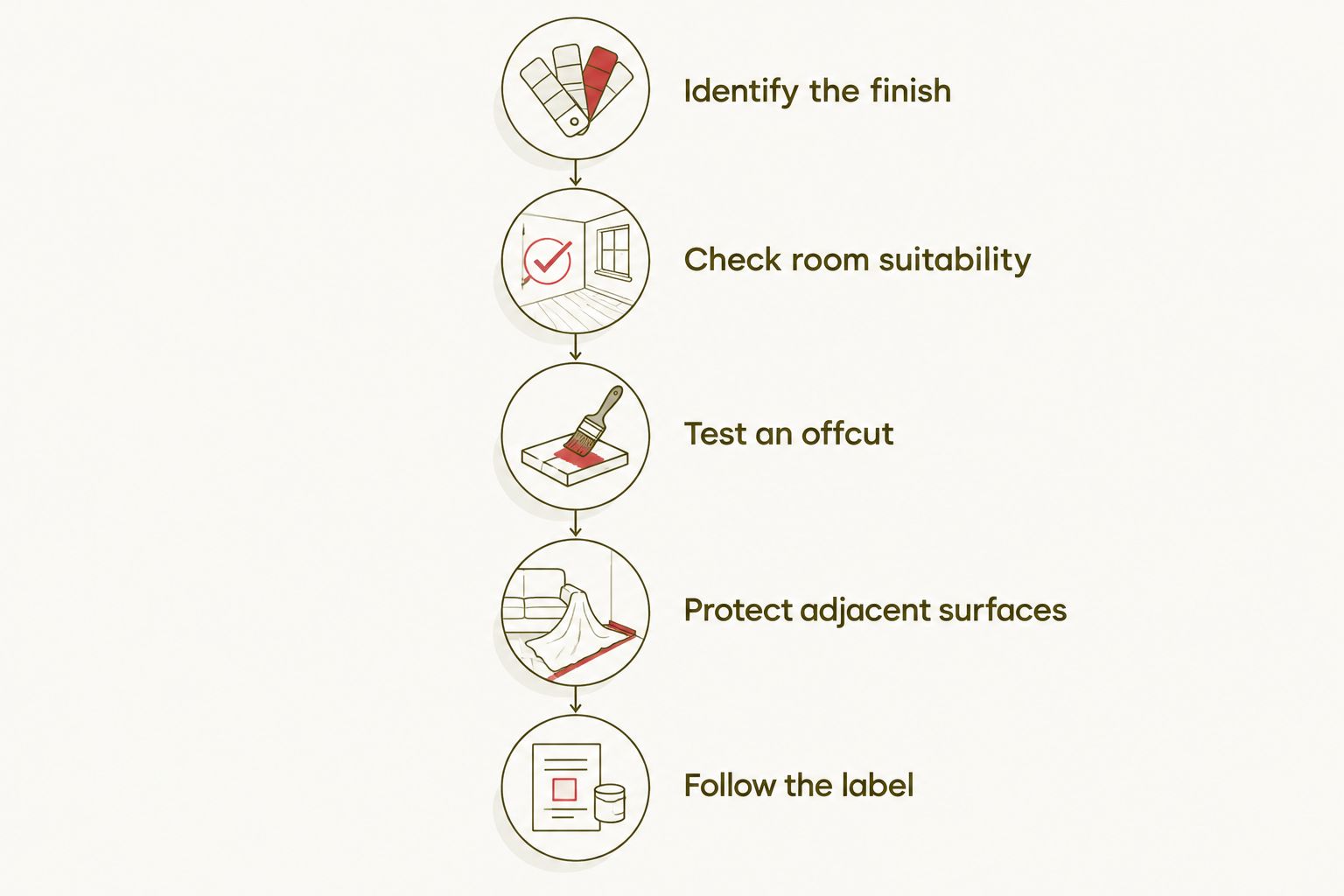
Use this sequence for a 2026 installation or an existing wall whose finish you cannot identify. Stop before application if you cannot establish compatibility.
- Identify the finish. Read the product information and care instructions. Confirm whether the panel is unfinished, factory-finished, or supplied with a maintenance treatment.
- Check room suitability. Establish whether the panel is approved for the intended location. Resolve leaks, condensation, or a damp substrate before covering the wall.
- Test an offcut. Apply the proposed treatment to a spare piece with the same surface. Check color, sheen, adhesion, and the result after the stated drying period.
- Protect adjacent surfaces. Keep the treatment away from felt, outlets, trim, and adhesive-bonding areas unless the instructions explicitly allow contact.
- Follow the label. Use the specified preparation, application method, ventilation, and drying conditions. Do not invent a universal coat count or curing time.
Testing is especially important beside windows or wall lighting, where a change in sheen becomes obvious. View the sample in the room’s daytime and evening light before treating the full wall.
A successful test is more than a pleasing wet color. Let the treatment reach the condition specified on its label before deciding whether it is suitable.
Do acoustic wood panels need a different approach?
Acoustic panels combine a decorative face with a sound-absorbing assembly. Do not brush, roll, or spray a coating across the complete panel unless the manufacturer approves that method.
For example, Acoustic Slat Wood Wall Panels | SoundPanel™ have a different purpose from a plain decorative timber board. Confirm the approved treatment for the wood face without assuming the felt or spaces between slats should receive the same finish.
The Panel Hub is best for homeowners choosing decorative wood wall panels with sound-dampening options. Its stated NRC 0.85 rating describes acoustic absorption, not moisture resistance or permission to apply another coating.
The Panel Hub also states a 5-year warranty and installation in under 2 hours. Neither figure establishes a sealer’s drying time or confirms that a finish alteration is covered; check the applicable product instructions and warranty terms before changing the surface.
For a 2026 acoustic-panel project, keep finishing approval separate from installation speed. A panel can be quick to mount while a proposed coating still requires its own preparation and curing process.
Can you seal wood panels for a humid bathroom?
A sealer does not turn decorative wood paneling into a waterproof bathroom system. Start by distinguishing a ventilated bathroom accent wall from a shower enclosure or another surface exposed to direct water.
Wood exchanges moisture with surrounding air. A coating can slow that exchange, but it does not remove the need for suitable materials, ventilation, and moisture control. The concern with wood panels in high humidity is therefore the whole installation environment, not simply whether the visible face has a clear coat.
Before installing beside a basin or bath, confirm the panel’s approved uses and the required treatment of joints, edges, and penetrations. Do not extend approval for occasional humidity into approval for repeated soaking.
If the location needs a shower wall system, choose a product specifically intended for that use. Decorative wood paneling plus an improvised topcoat is not an equivalent assembly.
What should you do about cut edges and nail holes?
Cut edges and fixing holes deserve their own inspection because they can expose material beneath the finished face. The correct repair depends on whether you see solid timber, a veneer layer, or a composite core.
Use the manufacturer’s approved filler, touch-up treatment, or edge finish where specified. A close color match does not prove chemical compatibility, and a repair that looks acceptable while wet can dry to a different sheen.
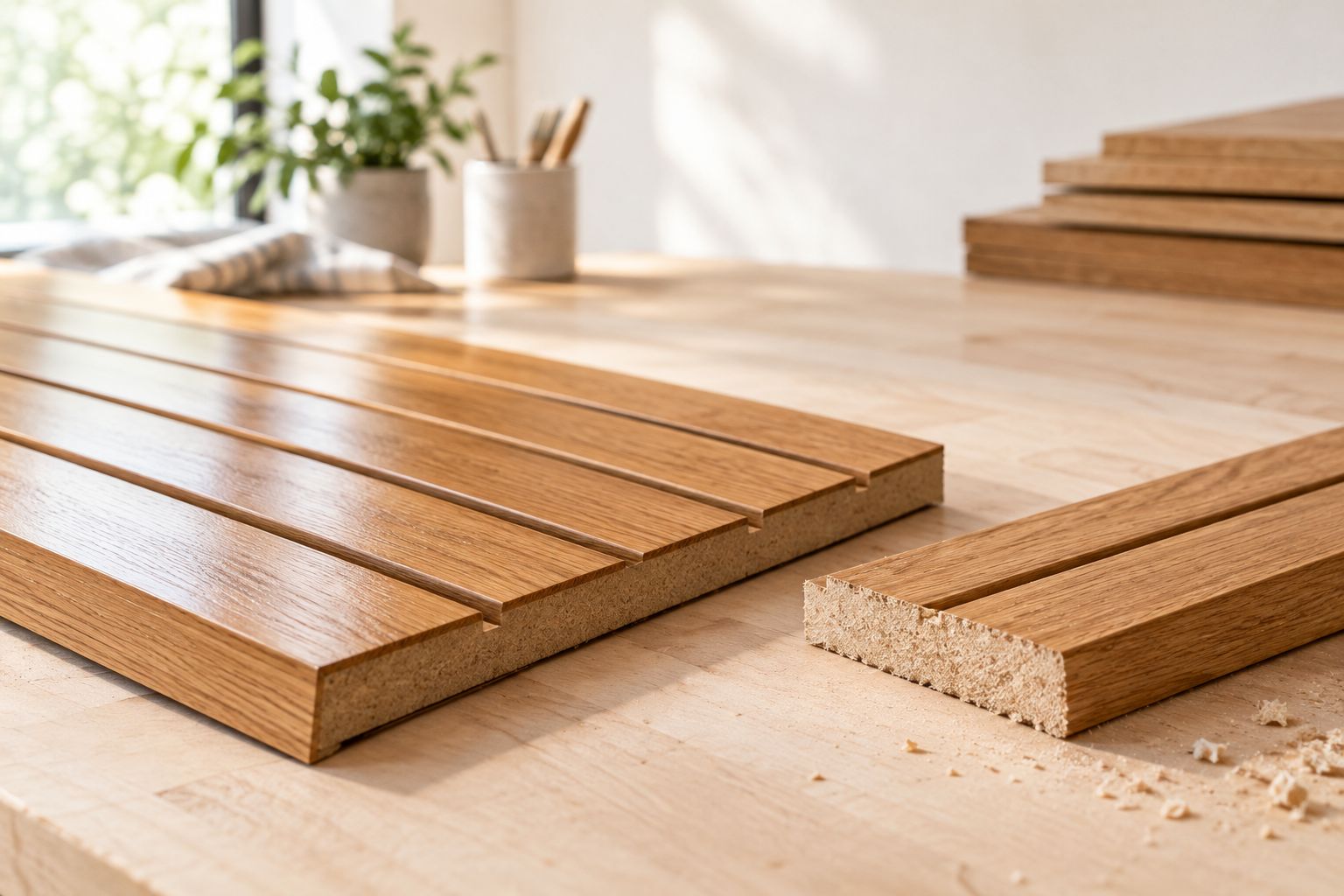
Do not sand a broad area around a small repair without identifying the construction first. Thin veneer leaves less room for corrective sanding than solid wood.
If the supplied finish is intact elsewhere, keep the repair local when the approved method allows it. This avoids introducing a different sheen across an otherwise consistent wall.
Can you apply clear sealer over an existing finish?
Clear sealer belongs over an existing finish only when the coating system permits it. Clear describes appearance, not universal compatibility.
Check preparation requirements, including cleaning and any specified abrasion. Do not use sanding as a default shortcut on veneer or a textured surface.
If you cannot identify the existing treatment, contact the panel supplier before applying a new one. An unknown finish is a reason to pause, not a reason to choose a stronger coating.
How do you know when wood panels need refinishing?
Wood panels need assessment when the finish wears, flakes, becomes damaged, or no longer performs as its care instructions describe. Dust alone is not evidence that the coating needs replacement.
Clean using the approved method before deciding to refinish. Avoid diagnosing finish failure from a surface covered in cleaning-product residue.
Keep the care instructions and the name of any applied finish with your 2026 project records. That makes a later repair a compatibility decision instead of another guessing exercise.
FAQ
Do all wood wall panels need sealing after installation?
No. Unfinished wood often needs a specified protective finish, while factory-finished panels generally do not need another coat after installation.
Can I leave unfinished wood wall panels untreated?
Leave unfinished wood untreated only when the manufacturer permits it and you accept the care requirements. Bare wood absorbs moisture and marks more readily than a suitably protected surface.
Does staining wood wall panels seal them too?
Staining does not automatically seal wood wall panels. Check whether the chosen product provides protection or requires a separate compatible finish.
Should I seal acoustic panel felt along with the wood?
Do not coat acoustic felt unless the manufacturer explicitly approves it. Felt and openings are functional parts of the sound-absorbing assembly.
Will a clear sealer make wood wall panels waterproof?
No. A clear sealer does not turn decorative wood wall panels into a waterproof shower wall system; the complete panel assembly must be approved for that location.
How long should I wait before using a room after sealing panels?
Follow the finish manufacturer’s drying, curing, and ventilation instructions. Panel installation time does not determine when an applied coating is ready for normal use.
Do freshly cut panel edges need sealing?
Freshly cut edges need the treatment specified for that panel and location. An exposed edge does not automatically mean the factory-finished face needs recoating.
One last thing
Keep a labeled offcut before you finish the wall. Write the panel name and any applied treatment on the back, then store it somewhere dry.
That small sample lets you test future cleaning and repair products without using your feature wall as the trial area. For The Panel Hub wood wall panels, keep the relevant product and care instructions alongside it.
Related guides
- How do you clean wood wall panels?
- How do you fill nail holes in wood wall paneling?
- Can wall panels be re-stained a different color later?
Leave a Reply