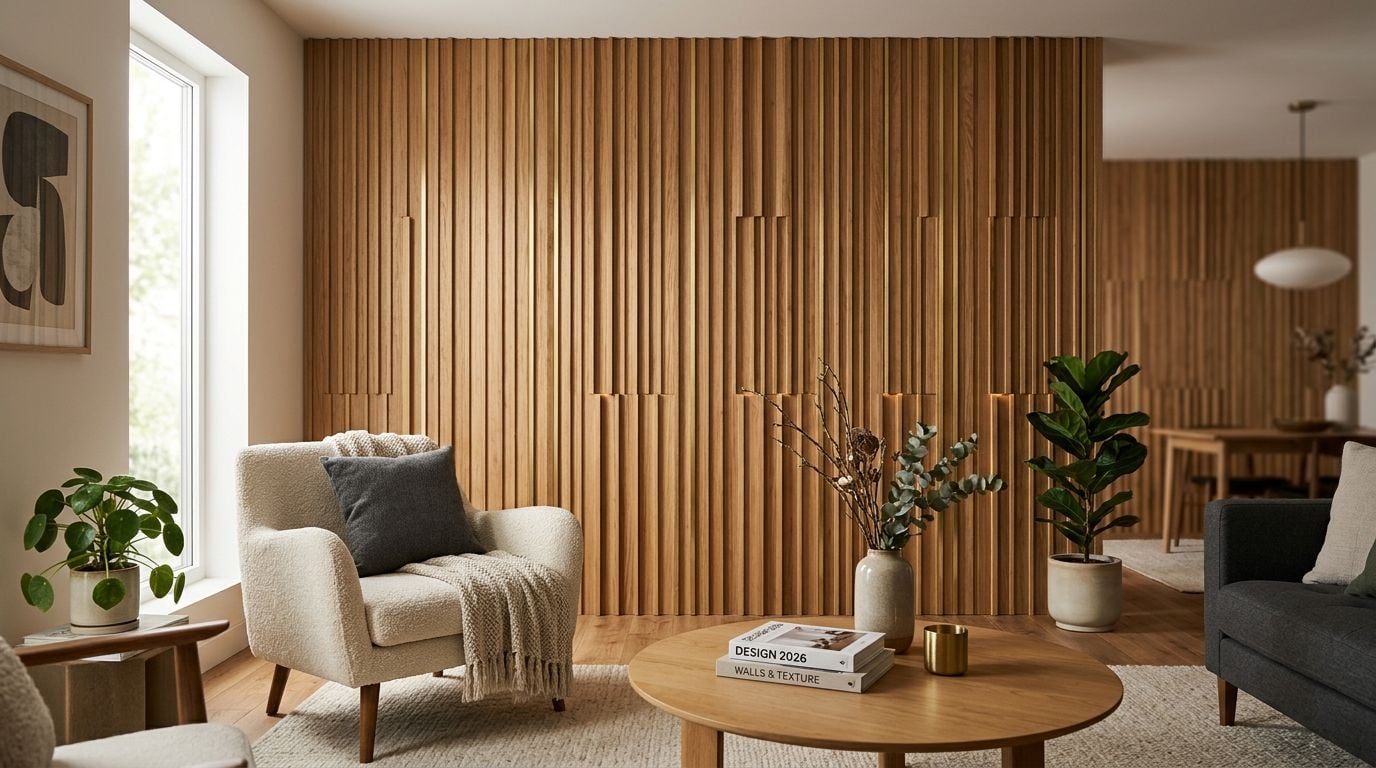
Solid wood panel walls give a room grain and warmth no laminate or print convincingly fakes, but real wood gets heavy, pricey per square foot, and miserable in a damp bathroom or basement — this guide names where to look instead in 2026, and where solid wood is still worth keeping.
- The best wood panel walls alternatives in 2026 are engineered acoustic and faux-material panels, not more solid wood.
- The Panel Hub SoundPanel acoustic slat wall panels win for bedrooms and living rooms that need sound dampening plus a wood look.
- RockSurface FauxSeries Highland Rock panels handle basements and fireplace surrounds where solid wood warps.
- PVC wall panels are the realistic swap for bathrooms and shower surrounds where wood eventually rots.
- Solid wood panel walls still win on long-term refinishing in dry, climate-controlled rooms.
Why this matters
Solid wood panel walls — tongue-and-groove planks, board-and-batten, full-thickness slats — are not a bad choice. They refinish for decades, they hold their look in a dry living room or study, and nothing else reads quite as authentic under raking light.
The ceiling shows up fast once you leave a dry, structural room. Solid wood is heavy enough to need real fastening into studs, it costs more per square foot than engineered options, and humidity in a bathroom, basement, or coastal climate will cup and gap it over a few seasons. It also does nothing for sound — a plain wood plank wall absorbs almost no noise, which matters if the room is a bedroom, home office, or media room.
The verdict: the best wood panel walls alternative in 2026 is SoundPanel acoustic slat wood wall panels if you want the real-wood look with sound dampening built in, RockSurface FauxSeries if the room is damp, and PVC wall panels if it is a bathroom. Solid wood panel walls stay the right call for a dry, climate-controlled living room where decades of refinishing matter more than install speed.
Wood panel walls alternatives at a glance
| Alternative | Best for | Standout feature | How it differs from wood panel walls |
|---|---|---|---|
| Solid wood panel walls (traditional) | Dry living rooms, studies, heritage renovations | Real tongue-and-groove wood, refinishable for decades | Baseline — heaviest, priciest per sq ft, humidity-sensitive |
| SoundPanel acoustic slat wood wall panels | Bedrooms and living rooms needing sound control | NRC 0.85 acoustic core under a real wood veneer face | Installs in under 2 hours; absorbs sound solid wood cannot |
| Crossing Lines solid wood wall panels | One accent wall, not full-room paneling | Interlocking geometric groove pattern in solid wood | Lower material footprint than full-wall plank paneling |
| Highland Rock wall panel | Fireplace surrounds, basements | Faux stone texture built for damp interiors | Handles moisture that warps real wood |
| PVC wall panels for bathrooms | Bathrooms and shower surrounds | Fully waterproof, wipeable surface | Does not rot, swell, or need resealing in wet rooms |
1. SoundPanel acoustic slat wood wall panels: best for sound-dampened bedrooms and living rooms
SoundPanel pairs a real wood veneer face with an acoustic core rated NRC 0.85, so the wall looks like slat paneling but actually absorbs noise instead of bouncing it. It is built for the room where a plain wood panel wall falls flat: a bedroom on a shared wall, a home office full of video calls, a living room with hard floors and too much echo.
Where SoundPanel shines
- NRC 0.85 acoustic rating — solid wood panel walls have no meaningful sound absorption
- Real wood veneer face, so the grain reads as authentic across the room
- Installs in under 2 hours per typical wall section instead of a multi-day plank-by-plank build
- Backed by a 5-year warranty
- FSC certified wood, which matters if the renovation has a sustainability brief
Where SoundPanel falls short
- Not rated for wet rooms — it belongs in bedrooms and living areas, never a shower surround
- A veneer face will not sand and refinish the way full-thickness solid wood does over 20 years
Best for: bedrooms, living rooms, and home offices where noise is the actual problem.
| Dimension | Solid wood panel walls | SoundPanel acoustic slat |
|---|---|---|
| Install time | Multi-day, stud by stud | Under 2 hours |
| Sound absorption | Minimal | NRC 0.85 |
| Wet-room rating | No | No |
| Refinishable long-term | Yes, decades | Veneer face, not sandable |
Verdict: Buy for any room where echo or noise transfer is the reason you are paneling in the first place.
2. Crossing Lines solid wood wall panels: best for a decorative accent wall
Crossing Lines is solid wood cut into an interlocking geometric groove pattern, made for one feature wall rather than full-room coverage. You get the texture and shadow depth people associate with plank paneling without running solid wood floor to ceiling on all four walls.
Where Crossing Lines shines
- Solid wood, so grain and groove shadows look genuinely dimensional under side lighting
- Accent-wall scope keeps the material footprint well below full-room paneling
- Pattern works in living rooms, entryways, and behind a headboard
Where Crossing Lines falls short
- Still solid wood, so it carries the same humidity sensitivity as traditional plank paneling
- No acoustic rating — this is a look, not a noise fix
Best for: one statement wall in a dry room where you want texture, not wall-to-wall wood.
| Dimension | Solid wood panel walls | Crossing Lines |
|---|---|---|
| Coverage intent | Full room | Single accent wall |
| Material footprint | Higher | Lower |
| Humidity tolerance | Low | Low, same as solid wood |
| Visual depth | Flat planks | Geometric groove pattern |
Verdict: Buy if the goal is one striking wall rather than a fully paneled room.
3. Highland Rock wall panel: best for basements and fireplace surrounds
RockSurface FauxSeries Highland Rock trades wood grain for a faux stone texture engineered to sit where real wood panel walls struggle — basements, fireplace surrounds, anywhere humidity swings through the year. It solves something solid wood physically cannot: staying flat in a damp room.
Where Highland Rock shines
- Built for the moisture that cups and gaps solid wood plank paneling
- Reads as natural stone, a different aesthetic lane from every wood option here
- Suits fireplace walls where wood paneling raises heat and clearance questions
Where Highland Rock falls short
- It is a stone look, so skip it if the brief is specifically wood grain
- No acoustic rating, so it will not help a noisy bedroom the way SoundPanel does
Best for: basements, fireplace surrounds, and rooms where moisture rules out real wood.
| Dimension | Solid wood panel walls | Highland Rock |
|---|---|---|
| Humidity tolerance | Low, warps over time | Built to resist damp interiors |
| Aesthetic | Wood grain | Faux stone texture |
| Fireplace suitability | Clearance concerns | Better fit |
| Acoustic performance | None | None |
Verdict: Buy for damp rooms. Skip if you specifically want a wood finish.
4. PVC wall panels: best for bathrooms and shower surrounds
PVC wall panels are the only realistic swap once the room is a bathroom or shower surround, because solid wood panel walls will swell, gap, or rot under repeated moisture no matter how carefully they are sealed. PVC is fully waterproof and wipes clean, trading real grain for a surface that survives daily steam.
Where PVC panels shine
- Genuinely waterproof — no resealing schedule, no rot risk
- Wipeable surface that handles daily bathroom use
- Lighter than solid wood, which makes DIY handling easier
Where PVC panels fall short
- No real wood texture — a wipeable finish, not a grain you will want in a formal living room
- No acoustic benefit
Best for: bathrooms, shower surrounds, and laundry rooms with constant moisture.
| Dimension | Solid wood panel walls | PVC wall panels |
|---|---|---|
| Wet-room suitability | Poor, rots | Fully waterproof |
| Weight | Heavy | Lighter, easier DIY |
| Wood-grain authenticity | High | Low |
| Maintenance | Periodic resealing | Wipe clean |
Verdict: Buy for any bathroom job. Skip for a living room where grain is the whole point.


Why people switch from wood panel walls
- Weight and labor. Solid wood needs stud-by-stud fastening; engineered slat panels go up in under 2 hours per section.
- Humidity. Basements, bathrooms, and coastal climates warp and gap real plank paneling within a few seasons.
- No sound control. A plain wood panel wall does almost nothing for echo or noise transfer between rooms.
- Cost per square foot. Solid wood runs higher than engineered veneer or faux-material panels covering the same wall.
- Scope creep. Full-room solid wood paneling is a project; a single engineered accent wall is an afternoon.
“The room decides the material: echo means acoustic, damp means faux stone, wet means PVC.”
When solid wood panel walls are still the right call
Keep real solid wood if the room is dry, climate-controlled, and you want a surface you can sand and refinish repeatedly over the next 20 years. A study, a formal living room, or a heritage-style renovation in 2026 are the cases where the extra cost and install time still earn their keep. If any part of the room gets steam, splash, or seasonal damp, switch materials rather than fighting the wood.
FAQ
What is the best wood panel walls alternative in 2026?
SoundPanel acoustic slat wood wall panels from The Panel Hub are the best overall alternative in 2026 for bedrooms and living rooms that need sound dampening plus a wood look. For bathrooms, PVC wall panels are the better swap.
Are engineered wall panels as durable as solid wood panel walls?
Engineered acoustic and PVC panels hold up well in the rooms they are designed for, and The Panel Hub covers its panels with a 5-year warranty. Solid wood still wins on decades of refinishing in dry, climate-controlled rooms.
Can you put wood panel walls in a bathroom?
Solid wood panel walls are a poor fit for bathrooms because repeated moisture causes swelling and rot over time. PVC or dedicated shower wall panels are the safer choice.
Do acoustic wood wall panels actually reduce noise?
Yes. SoundPanel is rated NRC 0.85, so it absorbs a meaningful share of the sound hitting the wall, unlike plain solid wood plank paneling that reflects most of it back into the room.
How long does it take to install wood wall panel alternatives?
Acoustic slat wall panels install in under 2 hours per typical wall section. Traditional solid wood paneling is usually a multi-day, stud-by-stud job.
Is faux stone a good alternative to wood panel walls in a basement?
Yes. RockSurface FauxSeries Highland Rock is engineered for damp interiors, which makes it a better basement and fireplace-surround choice than real wood panel walls.
Which wood panel wall alternative is best for a rented apartment?
Peel-and-stick panels are the usual renter answer because they avoid permanent fastening into studs. Acoustic slat panels are the better pick if you own the space and want real sound absorption.
One last thing
The room, not the material, decides the winner. A bedroom that echoes needs the NRC 0.85 acoustic core, a basement needs Highland Rock's moisture tolerance, and a bathroom only ever needs PVC — mixing those three up is the most expensive wood panel walls mistake homeowners make in 2026.
Related guides
Leave a Reply