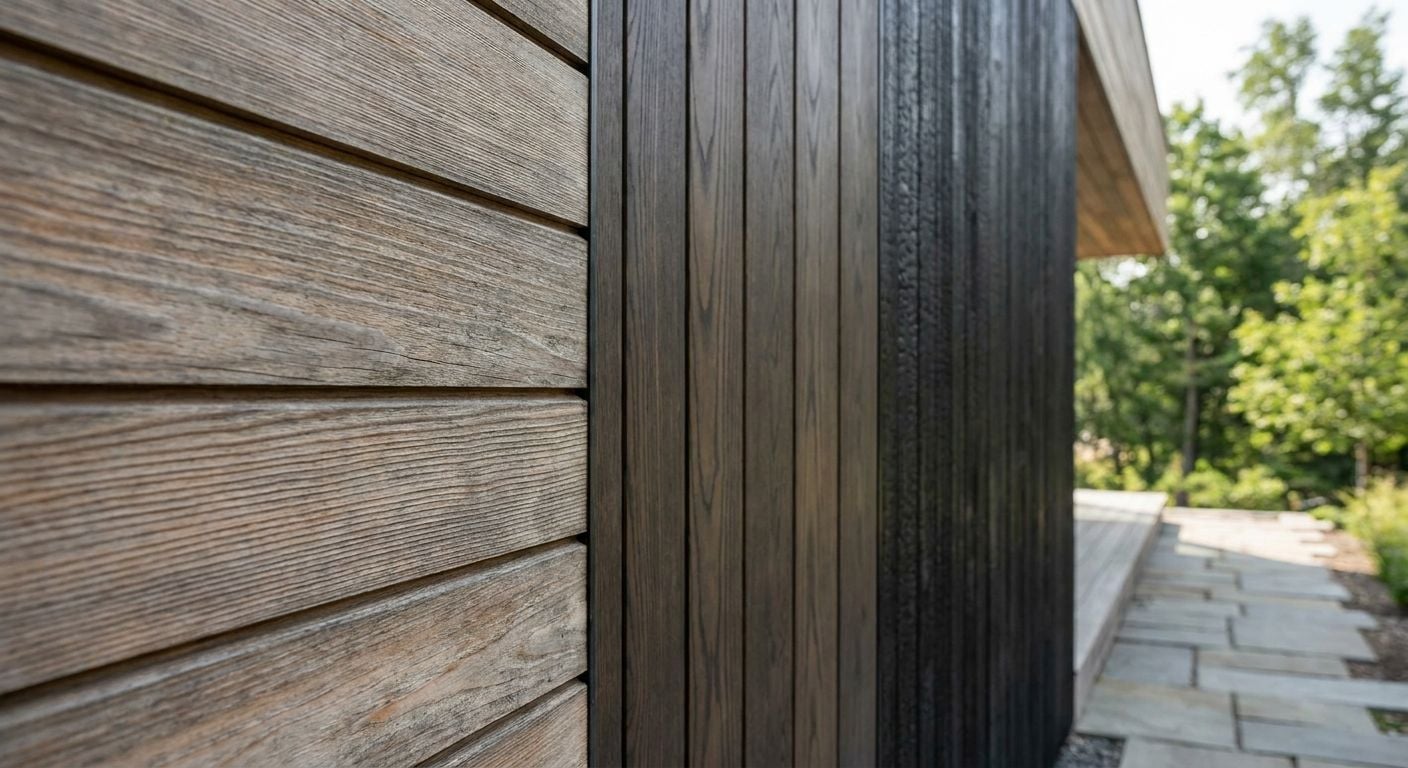
Cedar shiplap cladding is the best exterior wood cladding for most homes in 2026, thermally modified wood wins for humid or coastal climates, and engineered wood siding is the budget pick if you want the wood look without solid-lumber pricing. This guide ranks the five real wood-look cladding categories worth considering this year, then flags when interior wood paneling — not exterior cladding — is actually what you need.
- Cedar shiplap cladding is the best exterior wood cladding panels pick for classic curb appeal in 2026.
- Thermally modified wood cladding resists rot without chemicals, best for humid or coastal climates.
- Engineered wood siding is the budget option among exterior wood cladding panels for 2026 builds.
- Fiber cement wood-grain panels trade real wood texture for near-zero maintenance and fire resistance.
- Real wood interior panels, like the ones sold by The Panel Hub, are built for indoor rooms only, not outdoor exposure.
Why this matters
"Exterior wood cladding panels" and "wood wall panels" get lumped together in search results, but they're different products with different jobs. Cladding sits outside, fights rain, UV, and insects for decades. Interior wood panels, the kind sold by The Panel Hub, are built for bedrooms, living rooms, and home theaters, not weather exposure.
Getting this wrong is expensive. Real wood interior panels installed outside will cup, split, or rot within a season because they're never rated for direct weather contact. This guide ranks the actual exterior options for 2026, then tells you where to look if what you really want is an indoor accent wall.
What makes the best exterior wood cladding
- Weather and moisture resistance — how the material handles rain, humidity swings, and UV without cracking or cupping
- Insect and rot resistance — natural oils, heat treatment, or chemical preservation that keeps pests and fungus out
- Maintenance cycle — how often it needs resealing, restaining, or repainting
- Fire rating — matters most in wildfire-prone regions; some materials are non-combustible, others aren't
- Installation method — lap siding, board-and-batten, or panel systems each demand different framing and labor
- Sourcing and certification — FSC-certified lumber sourcing signals responsible forestry, worth checking on any wood product
At a glance
| Cladding type | Best for | Standout feature | Key limitation |
|---|---|---|---|
| Cedar Shiplap Cladding | Classic curb appeal | Natural oils resist decay | Needs refinishing every few years |
| Thermally Modified Wood Cladding | Humid or coastal climates | Heat-treated, no chemical preservatives | Higher cost than raw cedar |
| Engineered Wood Siding | Budget-conscious builds | Factory-primed, installs fast | End cuts must be sealed on-site |
| Board-and-Batten Wood Cladding | Modern farmhouse exteriors | Wide boards hide seams | Harder to retrofit over existing siding |
| Fiber Cement Wood-Grain Panels | Low-maintenance/fire zones | Non-combustible, holds paint for years | Heavier, needs professional install |
1. Cedar Shiplap Cladding: best exterior wood cladding for classic curb appeal
Cedar shiplap uses horizontal boards milled with a rabbet edge so each board overlaps the next, shedding water without gaps. It's the default choice for a reason: the wood's natural oils fight rot and insects on their own.
Cedar shiplap pros:
- Natural oils resist decay and insects without added chemical treatment
- Ages to a silvery patina if left unfinished, or holds stain color when maintained
- Available in tight or wide reveals for different architectural looks
Cedar shiplap cons:
- Needs restaining or sealing every 3-5 years in full sun or harsh climates
- Costs more upfront than engineered alternatives
- Soft grain dents more easily from hail or impact
Best for: homeowners who want a genuine, weathering wood look and don't mind a refinishing routine. Verdict: Buy.
2. Thermally Modified Wood Cladding: best for humid and coastal climates
Thermally modified wood is kiln-dried lumber heated above 350°F in a low-oxygen chamber, a process that changes the wood's cell structure and strips out most of the sugars insects and fungi feed on. No chemical preservatives involved.
Thermally modified wood pros:
- Resists rot and insect damage without chemical treatment
- More dimensionally stable than raw cedar in humid air
- Holds up in coastal salt exposure better than untreated softwoods
Thermally modified wood cons:
- Runs pricier per board foot than standard cedar
- Slightly more brittle; pre-drilling near edges is recommended
- Fewer stain color options since the heat treatment darkens the wood
Best for: coastal or high-humidity properties where rot is the main threat. Verdict: Buy.
3. Engineered Wood Siding: best budget exterior wood-look cladding
Engineered wood siding bonds wood strands with resin under heat and pressure, then finishes with a factory-primed, textured wood-grain face. It's the middle ground between real lumber and vinyl.
Engineered wood siding pros:
- Lower material cost than solid cedar or thermally modified wood
- Comes pre-primed, cutting paint labor at install
- Long, uniform boards mean fewer seams than natural lumber
Engineered wood siding cons:
- Cut ends must be sealed on-site or the core swells with moisture
- Grain reads more uniform, less like real wood up close
- Warranty coverage varies a lot by manufacturer — check the fine print before buying
Best for: new-construction budgets that still want a wood look without solid-lumber pricing. Verdict: Buy on a budget project.
4. Board-and-Batten Wood Cladding: best for modern farmhouse exteriors
Board-and-batten uses wide vertical boards, commonly 10-12 inches, with narrower battens covering the seams between them. It works with cedar, thermally modified wood, or engineered wood as the base material.
Board-and-batten pros:
- Strong vertical lines suit modern farmhouse and craftsman styles
- Fewer horizontal laps means fewer places for water to sit
- Flexible base material choice depending on budget and climate
Board-and-batten cons:
- Harder to retrofit over existing lap siding without extra furring strips
- Seasonal board movement can open small gaps at the battens
- Vertical grain shows dirt streaks more than horizontal siding
Best for: new builds or full re-sides aiming for a farmhouse or modern look. Verdict: Buy for new construction, Wait on a partial retrofit.
5. Fiber Cement Wood-Grain Panels: best low-maintenance wood-look alternative
Fiber cement blends cement, sand, and cellulose into panels pressed with a wood-grain lap or plank profile. It's not real wood, but it's built to mimic the look with none of the organic material.
Fiber cement pros:
- Non-combustible, which matters in wildfire-prone zones
- Holds factory paint finishes years longer than real wood
- No insect or rot risk since there's no organic wood fiber exposed
Fiber cement cons:
- Heavier than wood, usually needs a professional crew and specific saw blades
- Doesn't feel or texture like real wood up close
- Costs more than engineered wood siding, though less than premium cedar
Best for: homeowners who want the wood look with the least ongoing maintenance, especially in fire-rated zones. Verdict: Buy if low maintenance beats authentic texture; Skip if real wood grain matters to you.
How we ranked
Each cladding type was weighed against the criteria above: weather and moisture resistance, insect and rot resistance, maintenance cycle, fire rating, installation method, and sourcing. No single material wins on every axis in 2026 — cedar wins on look and cost of entry, fiber cement wins on maintenance, thermally modified wood wins where humidity is the enemy.
“If the end cuts aren’t sealed before install, the material underneath doesn’t matter.”
Exterior cladding vs. interior wood paneling
Everything above covers exterior siding. If the project is actually a bedroom, living room, or home theater wall, a different product category applies. Real wood interior panels, like The Panel Hub's real wood wall panels for accent walls, are built for indoor use with acoustic backing and FSC-certified sourcing — they are not rated for rain or direct sun exposure.
A panel like the Crossing Lines solid wood wall panel makes sense for an interior feature wall, not a house exterior. Mixing up the two categories is the single most common mistake homeowners make when they search "wood panels" without specifying indoor or outdoor.
Which exterior wood cladding panel should you choose?
Cedar shiplap cladding is the safest default for 2026 if you want real wood curb appeal and don't mind a refinishing routine every few years. Pick thermally modified wood near the coast or in humid climates, fiber cement if you want to stop maintaining altogether, engineered wood siding if the budget is tight, and board-and-batten if you're building new and want a farmhouse look.
FAQ
What’s the best exterior wood cladding for a coastal home?
Thermally modified wood cladding is the best exterior wood cladding panels option for coastal homes in 2026 because the heat treatment removes the sugars that fungus and insects feed on, without relying on chemical preservatives that salt air can break down faster.
Is cedar or fiber cement better for exterior wood cladding?
Cedar wins on authentic wood texture and lower upfront cost; fiber cement wins on maintenance since it holds paint for years and never rots. Choose cedar if the look matters most, fiber cement if you want to stop maintaining the exterior.
How often does wood cladding need to be resealed?
Cedar and other real wood claddings typically need restaining or resealing every 3-5 years in full sun or harsh climates. Thermally modified wood stretches that interval slightly longer since the heat treatment already reduces moisture uptake.
Can interior wood wall panels be used outside?
No. Interior wood wall panels, including acoustic and decorative panels, are built for indoor rooms and are not weatherproofed for rain, humidity swings, or direct sun. Use a dedicated exterior cladding material like cedar, thermally modified wood, or fiber cement outside instead.
Is engineered wood siding as durable as solid wood cladding?
Engineered wood siding holds up well as long as cut ends are sealed on-site, since the resin-bonded core can swell if moisture gets into an exposed edge. Solid cedar and thermally modified wood don’t have that specific failure point.
What’s the most fire-resistant wood-look cladding?
Fiber cement wood-grain panels are non-combustible, making them the strongest choice for wildfire-prone zones among the wood-look claddings covered here. Real wood options, including cedar and thermally modified wood, carry more fire risk than fiber cement.
Does board-and-batten cladding work on a retrofit?
Board-and-batten is easiest on new construction because it usually needs furring strips added to an existing wall. Retrofitting over old lap siding is possible but adds labor and cost compared to installing it on bare sheathing.
One last thing
The biggest failure point in exterior wood cladding isn't the material at all — it's unsealed field cuts. A board that's rated for decades of weather exposure will still rot from the inside out if the crew doesn't seal every cut end and butt joint before it goes on the wall. Ask your installer about this specifically, regardless of which cladding type from this 2026 list you pick.
Related guides
Leave a Reply