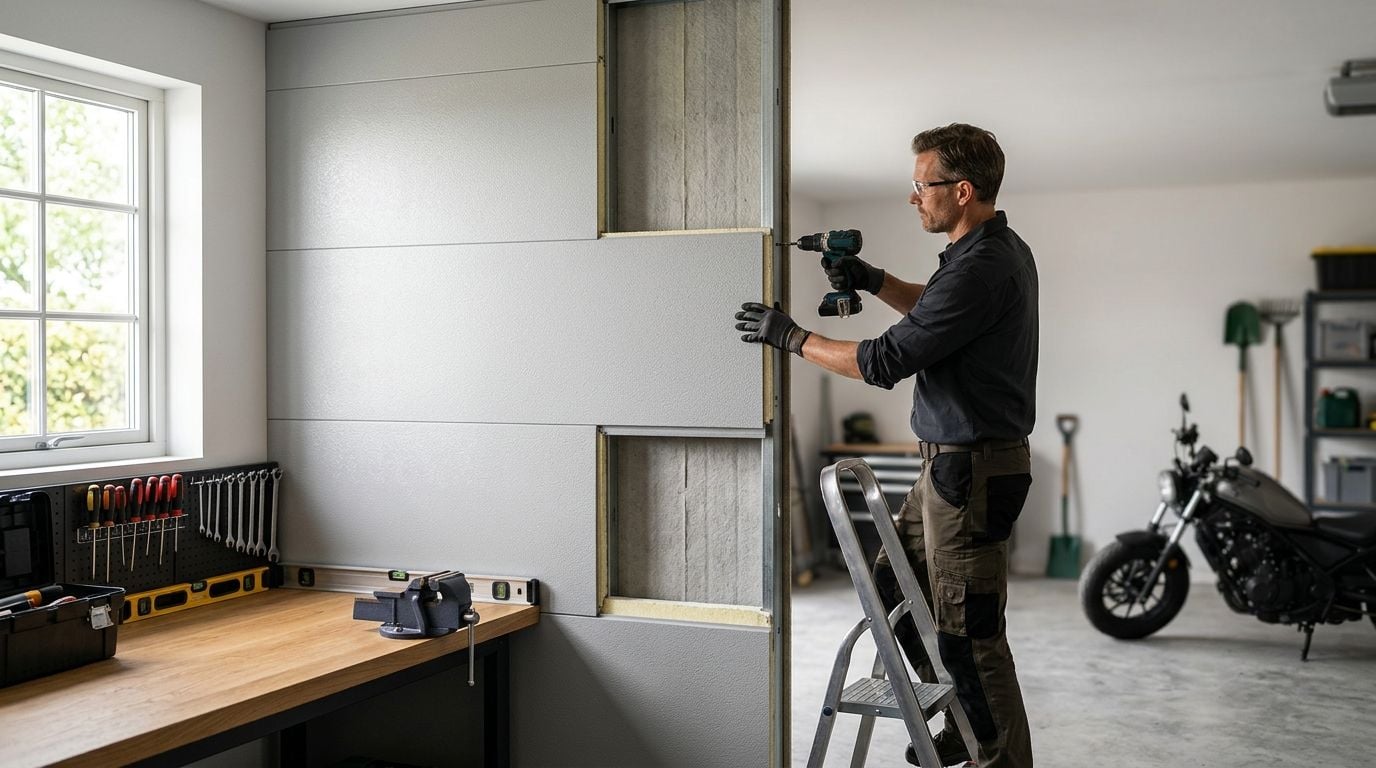
Rigid foam insulation board wins overall for a DIY garage upgrade in 2026, insulated metal panels win for large multi-car workshops, and real wood acoustic panels from The Panel Hub win for turning a garage into a finished studio or gym. None of these five options do everything — pick based on whether you're solving a heat problem, a noise problem, or both.
- Rigid foam board (R-5/inch) is the best budget pick for insulated wall panels for garages in 2026.
- Insulated metal panels (IMP) suit large detached garages and workshops needing structural strength plus insulation.
- Structural insulated panels (SIPs) only make sense for new-build sheds and garages, not retrofits.
- The Panel Hub’s real wood acoustic panels add zero R-value alone but finish a converted garage in under 2 hours.
- Fiberglass batt behind a PVC panel face handles moisture better than foam in a garage with a sink or plants.
Why this matters
Most searches for "insulated wall panels for garages" actually cover two different jobs: keeping heat in and making the space look and sound finished. A garage wall panel that looks great over drywall does nothing for your winter heating bill if there's no insulation behind it. Sheds have a third wrinkle — exterior weather exposure that garages usually don't deal with, which is why shed builders often start with exterior wood cladding before touching the interior at all.
This guide separates the insulating layer from the finishing layer so you buy the right product for the job you actually have in 2026, not the one the ad targeting guessed at.
What makes the best insulated wall panels for garages
- Thermal performance — R-value per inch, not just total thickness
- Moisture and mold resistance — critical in unheated garages and sheds that see condensation
- Insulates vs. finishes — some products add R-value, others just cover what's already there
- DIY install difficulty — tools, cut complexity, and whether one person can do it
- Fire rating and code compliance — foam left exposed usually fails local code
- Durability through temperature swings — garages and sheds see wider swings than living spaces
At a glance
| Option | Best for | Standout feature | Key limitation |
|---|---|---|---|
| Rigid Foam Insulation Board | Budget garage insulation upgrade | R-5 per inch in a thin panel | Needs a separate finish layer; foam is flammable if left exposed |
| Insulated Metal Panels (IMP) | Large workshops and multi-car garages | Structural skin and insulation in one panel | Heavy — usually a contractor install |
| Structural Insulated Panels (SIPs) | New-build sheds and garages | Whole-wall R-value with fewer thermal bridges | Only practical during new construction |
| Fiberglass Batt + PVC Panel Finish | Garages with a sink, wash station, or plants | PVC face resists moisture while batts add R-13 to R-15 | Batts lose R-value if compressed or wet |
| Real Wood Acoustic Panels (The Panel Hub) | Garage-to-studio or home gym conversion | NRC 0.85 sound dampening, install under 2 hours | Adds no thermal R-value on its own |
1. Rigid Foam Insulation Board: best insulated wall panel for a budget garage upgrade
Rigid foam board (XPS or polyiso) is the cheapest way to add real R-value to garage stud bays without hiring a crew. XPS runs around R-5 per inch, polyiso closer to R-6, and both cut with a utility knife and straightedge — no specialty tools required.
Rigid Foam Insulation Board pros:
- Fastest DIY install of any true insulation product on this list
- High R-value per inch of thickness, which matters in tight garage stud cavities
- Cuts with basic hand tools
Rigid Foam Insulation Board cons:
- Exposed foam usually fails fire code and needs a covering layer (drywall or panel)
- Doesn't address sound — a garage gym or shop will still echo
- Seams need taping or the R-value drops at every joint
Verdict: Buy if your only problem is heat loss and you're comfortable doing the finish layer yourself.
2. Insulated Metal Panels (IMP): best for large workshops and multi-car garages
IMPs sandwich a foam core between two metal skins, giving you structure and insulation in a single panel. Commercial garages and large detached workshops use these because one panel replaces both the stud wall and the insulation step.
Insulated Metal Panels pros:
- Structural strength plus insulation in one product
- Handles large spans without additional framing
- Long service life in unconditioned buildings
Insulated Metal Panels cons:
- Panels are heavy and usually need two installers or a lift
- Overkill and expensive for a single-car garage
- Not a weekend DIY project for most homeowners
Verdict: Hold unless you're building or re-skinning a workshop over 400 square feet.
3. Structural Insulated Panels (SIPs): best for new-build sheds and garages
SIPs are a foam core bonded between two structural facings, built off-site and craned or carried into place during framing. They give you whole-wall R-value with far fewer thermal bridges than stick framing plus batts.
SIPs pros:
- Fewer thermal bridges than traditional stud-and-batt construction
- Faster overall build time once panels arrive on site
- Consistent R-value across the whole wall, not just between studs
SIPs cons:
- Only realistic if you're building new, not retrofitting an existing garage
- Requires a contractor familiar with SIP assembly
- Custom panel orders take lead time you won't have on an existing structure
Verdict: Buy only if the garage or shed is still on paper. Skip for any retrofit.
4. Fiberglass Batt + PVC Panel Finish: best for a moisture-prone garage
Standard fiberglass batt (R-13 to R-15 in a 2×4 cavity) behind a PVC panel face handles the two things garages fight most: cold and damp. The PVC face sheds water from a wash station, potting bench, or the occasional flooded floor drain, while the batt behind it does the insulating work.
Fiberglass Batt + PVC Panel pros:
- PVC face resists water and won't mold like drywall
- Batt insulation is inexpensive and widely available
- Easy to patch a single damaged panel without redoing the wall
Fiberglass Batt + PVC Panel cons:
- Compressed or wet batts lose R-value fast
- Vapor barrier detailing matters more here than with foam or SIPs
- Less sound dampening than a dedicated acoustic panel
Verdict: Buy for garages with a sink, wash bay, or year-round moisture exposure.
5. Real Wood Acoustic Panels (The Panel Hub): best for a garage-to-studio conversion
Once the insulation question is settled — foam, batt, or SIP — a garage being converted into a home gym, band room, or studio needs a finish that also controls echo. The Panel Hub's real wood acoustic panels carry an NRC 0.85 rating and are FSC certified, and they mount with either click-lock or adhesive systems in under two hours per wall. They're a finish layer, not an insulator, and should go over whichever product from the first four you already chose.
Real Wood Acoustic Panels pros:
- NRC 0.85 sound absorption, which matters in a converted garage that used to just be storage
- Installs in under 2 hours with a 5-year warranty
- Real wood veneer looks finished, not like a garage anymore
Real Wood Acoustic Panels cons:
- Zero thermal R-value on its own — insulate first
- Higher upfront cost than plain drywall for the same square footage
- Not rated for direct outdoor or unfinished-shed exposure
Verdict: Buy as the finish layer once the wall behind it is already insulated. For pure exterior shed cladding, see the wood cladding panel guide instead.


How we ranked
Each option was weighed against the six criteria above, with thermal performance and moisture resistance carrying the most weight for garages and sheds specifically — spaces that swing further in temperature and humidity than any interior room. DIY difficulty broke the tie between rigid foam and IMP, since most garage owners in 2026 are doing this work themselves on a weekend, not hiring a crew.
Which insulated wall panel should you choose?
If you're insulating an existing single-car garage on a budget, buy rigid foam board and finish it with drywall or a panel product. If you're building new or re-skinning a large workshop, SIPs or insulated metal panels are worth the higher install complexity. If the insulation question is already solved and you're finishing a garage conversion into a gym or studio, The Panel Hub's real wood acoustic panels close out the project in an afternoon with a 5-year warranty behind them.
FAQ
What’s the best insulated wall panel for a garage in 2026?
Rigid foam board (XPS or polyiso) is the best overall choice for a single-car garage retrofit because it delivers R-5 to R-6 per inch and installs with basic tools. Large workshops do better with insulated metal panels, and new-build garages do better with SIPs.
Do decorative wall panels add insulation to a garage?
No, most decorative and acoustic wall panels, including real wood panels, add sound dampening but not thermal R-value. Insulate the wall first with foam board, batt, or a SIP system, then finish over it.
Is foam board or fiberglass batt better for a garage wall?
Foam board gives more R-value per inch and installs faster without framing, while fiberglass batt is cheaper per square foot and pairs well with a moisture-resistant PVC face. Choose batt if the garage sees regular water exposure.
Can insulated wall panels be installed in an unheated shed?
Yes, rigid foam board and SIPs both work in unheated sheds, though SIPs only make sense during new construction. Retrofitting an existing shed is easier with foam board cut to fit between studs.
How much R-value does a garage wall need?
Most US building codes call for R-13 to R-21 in garage stud walls depending on climate zone, matching typical fiberglass batt or foam board combinations. Check your local code before finalizing the insulation layer.
Are acoustic wood panels okay for a garage gym conversion?
Yes, real wood acoustic panels rated NRC 0.85 are built for exactly this use once the wall behind them is already insulated. They cut echo in a converted garage gym or band room and install in under 2 hours per wall.
What’s cheaper: SIPs or stick-built insulation for a new garage?
Stick framing with batt or foam board is typically cheaper upfront for a small garage, while SIPs save labor time on larger new builds. The right choice depends on square footage and whether you’re paying for a crew.
Do insulated metal panels work for a residential garage?
Insulated metal panels work best for large detached garages and workshops over roughly 400 square feet, not typical attached single-car garages. For a standard attached garage, rigid foam board is usually the more practical and affordable option.
One last thing
The most common mistake in a 2026 garage conversion isn't the insulation choice — it's skipping the finish layer entirely and living with exposed foam or batt, which fails fire code in most jurisdictions and looks unfinished. Insulate first, then finish; the two jobs use completely different products for a reason.
Related guides
Leave a Reply