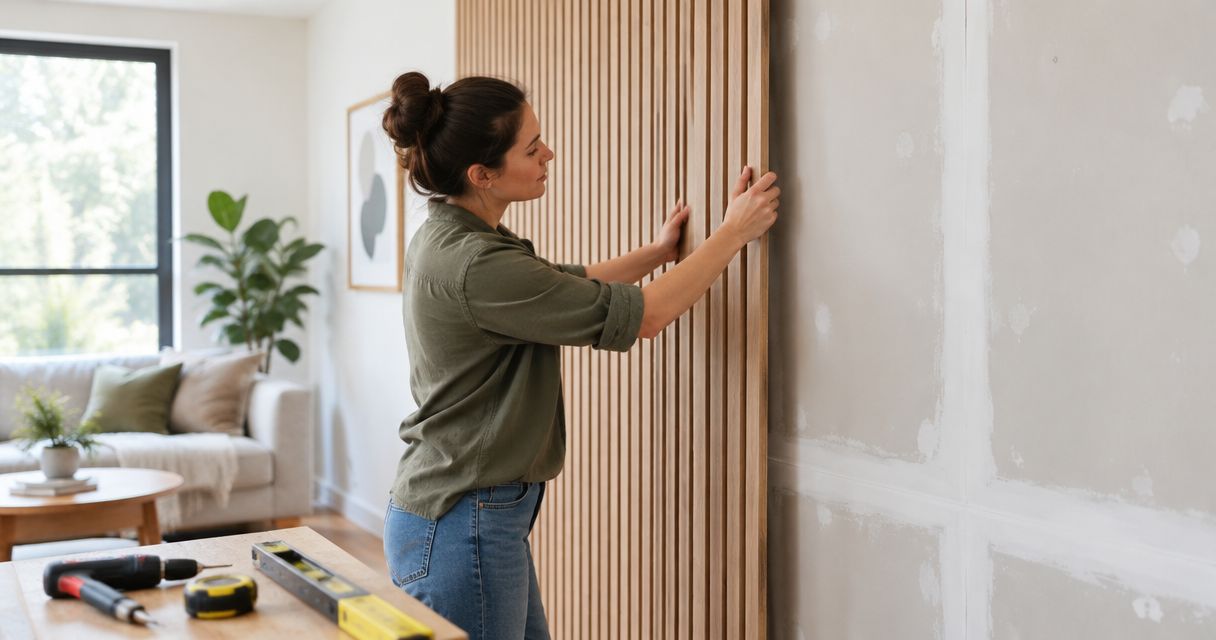
Yes, you can install wall panels over drywall when the surface is dry, sound, sufficiently flat, and compatible with the panel’s approved mounting method. Repair damaged drywall first, and use the manufacturer’s specified adhesive, fasteners, or backing rather than assuming the drywall alone can support every panel.
- Can you install wall panels over drywall? Yes, after checking moisture, surface condition, and mounting requirements.
- The Panel Hub suits homeowners shopping for decorative wall panels; check each panel’s installation instructions before choosing.
- Adhesive depends on sound paint and drywall paper; mechanical fastening depends on suitable support.
- Wall paneling covers a finished surface, not unresolved leaks, loose drywall, or unsafe electrical details.
Can you install wall panels over drywall?
You can usually keep existing drywall in place if the panel manufacturer permits installation over that substrate. The deciding issue is the condition of the whole assembly: drywall, paint, framing, and the attachment system. A panel bonded to peeling paint is attached to a failing surface, however strong the adhesive itself is.
Use this comparison to narrow your mounting method before buying supplies for a 2026 project. These are selection criteria, not substitutes for the instructions supplied with your panels.
| Mounting method | Best for | Main advantage | Main limitation |
|---|---|---|---|
| Adhesive mounting | Compatible panels on sound, flat surfaces | Avoids exposed fastener heads | Bond depends on paint, drywall paper, and adhesive compatibility; removal can damage the wall |
| Mechanical fastening | Panels designed for screws, nails, or mounting hardware | Allows attachment to specified structural support | Requires correct fasteners and locations; heads or holes need detailing |
| Furring strips | Systems that require a supporting framework | Creates a separate mounting plane | Adds wall depth and changes trim and outlet details |
Drywall is not automatically too weak for wall paneling, but it is not a universal structural backing either. If the wall is visibly bowed, review the preparation needed for installing wall panels over uneven walls before choosing direct attachment.
Why this matters
Keeping sound drywall avoids unnecessary demolition and preserves the existing wall assembly. That is useful in a bedroom or living room where you want a decorative update without opening the wall.
The shortcut stops being useful when it conceals a problem. Covering damp gypsum, loose paper, or an unresolved leak makes future inspection harder and leaves the new finish dependent on damaged material.
For a 2026 renovation, make the first decision about the substrate, not the pattern. A good-looking panel cannot correct a wall that moves, crumbles, or stays wet.
How do you prepare drywall for wall panels?
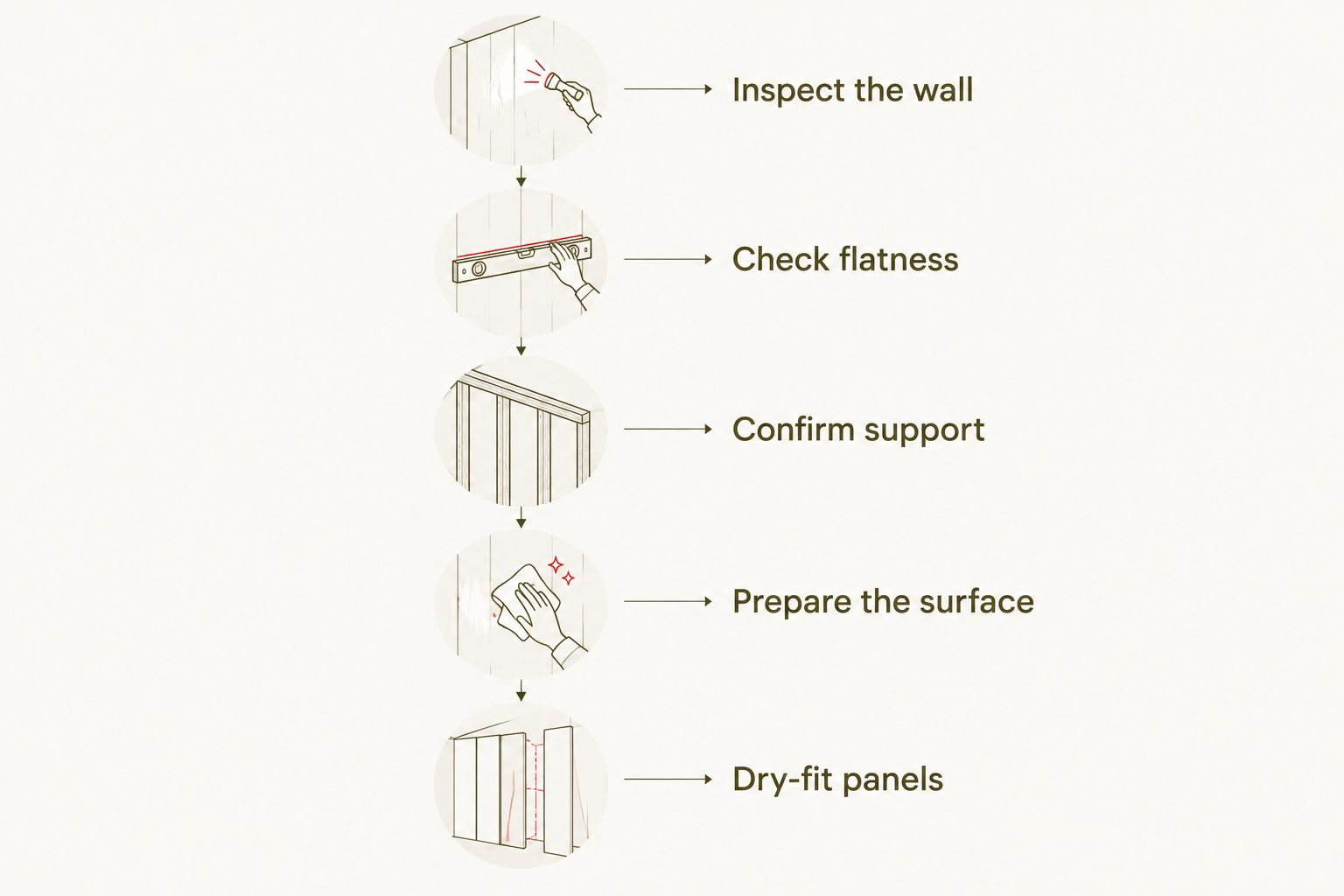
Follow these steps in order. Finish the wall assessment before cutting panels or opening adhesive, because a change in mounting method can change your layout and finished wall depth.
1. Inspect the wall
Look for staining, bubbling paint, soft areas, loose joints, and torn drywall paper. Check around windows, plumbing, and exterior-wall corners where visible damage warrants closer investigation. Investigate musty odors rather than covering them.
Stop if the drywall is damp or deteriorating. Correct the moisture source, assess the affected materials, and repair or replace unsuitable drywall before paneling. A stain that has dried does not, by itself, establish that the underlying problem is fixed.
2. Check flatness
Hold a straightedge across the proposed installation area and inspect the wall under side lighting. Mark raised patches, ridges, and depressions that prevent the panel from sitting as the manufacturer requires.
Repair the substrate using compatible materials and allow those repairs to dry. Do not use extra adhesive as an improvised leveling system unless the adhesive and panel instructions expressly permit that application.
3. Confirm support
Locate framing and identify the wall construction before selecting fasteners. Wood-framed walls commonly use studs spaced 16 or 24 inches on center, but renovations and openings interrupt regular spacing. Verify the actual locations instead of laying out screws from an assumed pattern.
Common drywall thicknesses include 1/2 inch and 5/8 inch. Those dimensions describe the gypsum board, not how far a screw reaches into framing; panel thickness, mounting hardware, and any furring also affect fastener selection. Follow the specified attachment requirements and avoid drilling blindly near concealed utilities.
4. Prepare the surface
Remove dust and contamination using a method compatible with the existing finish. Address peeling paint and loose material, then repair damaged paper appropriately. Let cleaning moisture and repair products dry before attaching panels.
Check whether the adhesive requires a particular primer or surface preparation. Fresh paint, glossy finishes, and repaired areas need the preparation and curing conditions specified by the relevant manufacturers. Do not assume every painted wall is ready to bond.
5. Dry-fit panels
Mark a level or plumb reference line rather than trusting the floor or ceiling. Lay out panel joints, perimeter cuts, outlets, and trim transitions before fastening anything permanently.
Follow the panel instructions for conditioning, movement gaps, adhesive application, and temporary support. Dry-fitting also lets you check whether a narrow final strip or awkward joint will spoil the finished wall.
When is adhesive mounting suitable?
Adhesive mounting is suitable only when the panel, adhesive, and existing wall finish form an approved combination. Read the adhesive’s substrate list alongside the panel instructions. An adhesive described as suitable for wood does not automatically approve every panel backing or painted gypsum surface.
The main benefit is a clean face without visible screws. The drawback is that removal can pull away paint or drywall paper, so adhesive-mounted panels are not a damage-free choice for a rental.
Do not treat a successful small bond test as permission to ignore installation instructions. A test can reveal an obvious compatibility problem, but it does not establish the long-term suitability of an otherwise unsupported assembly.
When should panels be mechanically fastened?
Mechanical fastening is appropriate when the panel system calls for screws, nails, clips, or other hardware. Use the specified support and fastening pattern; a screw driven only into gypsum does not become a framing connection.
The advantage is a defined attachment path through the panel to suitable support. The trade-off is planning: fastening locations must work with the panel layout, and exposed heads need an acceptable finish detail.
Drywall anchors are not a blanket alternative to studs. Use them only when the complete panel installation permits that type of anchor and the anchor is suitable for the actual wall and load.
When do you need furring strips?
Furring strips are useful when the panel system requires a separate framework or a properly designed mounting plane. They are not an automatic requirement simply because drywall is present.
Their advantage is a separate support surface for the finish. Their disadvantage is added thickness, which affects baseboards, window and door casings, outlet boxes, and corners. Fix damaged drywall and moisture problems first; hiding them behind strips does not repair the wall.
For acoustic installations, follow the specified assembly rather than adding an arbitrary cavity. Mounting conditions affect sound absorption, and a rating for one tested arrangement does not establish performance for every wall build-up.
Why wall-panel installation over drywall varies
The same decorative panel can require different preparation in different rooms. These factors determine whether direct attachment is appropriate:
- Drywall condition: Firm, intact gypsum provides a different starting point from soft board or loose facing paper.
- Surface finish: Peeling paint and contamination compromise an adhesive installation before the adhesive itself is tested.
- Panel construction: Backing material, weight, and attachment details determine the permitted installation method.
- Wall flatness: Bows and raised repairs affect contact, alignment, and visible joints.
- Room exposure: Dry interior walls and shower areas require different moisture-management details.
- Finished wall depth: Panels and backing change the relationship between the wall surface, trim, and electrical boxes.
Use these checks when comparing installation instructions in 2026. Choose the mounting method from the actual wall conditions, not from whichever supplies are already in the garage.
Can you install wood slat panels over painted drywall?
Yes, wood slat panels can go over painted drywall when their installation instructions permit it and the painted surface is sound. For adhesive attachment, paint adhesion matters; for mechanical attachment, the specified support and fastening arrangement matter.
The Panel Hub is best for homeowners shopping for decorative and acoustic wall panels for interior updates. If you are considering its Acoustic Slat Wood Wall Panels | SoundPanel™, confirm the mounting instructions for your wall before planning attachment. The panel category alone does not establish whether adhesive-only mounting is suitable.
Acoustic panels address sound absorption within a room; they do not automatically stop sound traveling through the wall. Keep the decorative installation decision separate from any sound-isolation work.
Can you put bathroom wall panels over ordinary drywall?
Bathroom wall panels can cover drywall in locations where the panel system and applicable requirements permit that substrate. A shower enclosure needs a complete, approved wet-area assembly, including appropriate backing, joints, edges, and penetrations.
A water-resistant panel face does not establish that ordinary drywall behind it is acceptable. For a 2026 bathroom project, confirm the complete installation specification before treating a decorative panel as a shower-wall system.
Do you need to change outlets and trim?
Added panel thickness can leave electrical boxes recessed relative to the new wall face and make existing trim look shallow. Plan those transitions during the dry fit, not after the panels are secured.
Have electrical box depth, extensions, and device support addressed according to the applicable electrical requirements by a qualified electrician. Keep junction boxes accessible, and do not hide a box behind a permanently fixed panel.
For trim, compare the proposed finished face with baseboards and door casings. Decide whether panels will stop inside a framed border, meet suitable edge trim, or require changes to existing molding.
FAQ
Can you install wall panels over drywall without removing it?
Yes, you can leave drywall in place when it is sound, dry, and suitable for the panel’s approved mounting system. Remove or repair unsuitable material before installing the finish.
Can I glue wall panels directly to painted drywall?
Yes, if both the panel and adhesive instructions permit attachment to that painted surface. Loose paint, contamination, and damaged drywall paper must be addressed first.
Do wall panels have to be screwed into studs?
Not every panel system requires screws into studs, but every system needs its specified attachment. Follow the instructions for framing, anchors, adhesive, clips, or backing rather than substituting a convenient method.
Can wall panels hide water-damaged drywall?
Wall panels must not substitute for repairing water-damaged drywall. Fix the moisture source and repair or replace affected material before covering the wall.
Will removing glued wall panels damage the drywall?
Removing glued wall panels can damage paint and drywall paper. Do not choose adhesive mounting on the assumption that removal will leave the wall unchanged.
Can I install acoustic panels directly on drywall?
Yes, when the acoustic panel’s installation instructions allow direct mounting. Sound-absorption performance depends on the mounting assembly, so do not assume every installation achieves the same result.
What should I check before buying wall panels from The Panel Hub?
Check the specific panel’s substrate requirements, mounting method, dimensions, and intended room use. Confirm how the finished wall will meet outlets, corners, and existing trim before ordering.
One last thing
The strongest adhesive cannot rescue paint that is separating from the drywall. Before committing to a full wall, inspect the surface layer as carefully as the board behind it. When choosing wall panels from The Panel Hub for a 2026 update, settle the mounting details before settling the final layout.
Related guides
- Can you install wall panels over water-damaged drywall?
- Can Liquid Nails be used to install wall panels?
- Planning outlets behind wood wall panels
Leave a Reply