Author: The Panel Hub

  • Wall Panels for Interior Designers: A Trade Specification Guide

    Wall Panels for Interior Designers: A Trade Specification Guide

    If you’re looking for wall panels for interior designers, you came to the right article. Interior designers working across residential, commercial, and hospitality sectors increasingly specify wall panels as a primary surface material. The shift reflects both client demand for tactile, high-quality wall finishes and the practical advantages of panel systems over painted plaster, traditional tiling, and applied wallcoverings.

    This guide is written for design professionals who need reliable technical information, a dependable sampling process, and a supplier capable of meeting the lead times and consistency requirements of a professional project.

    Why Wall Panels Are Increasingly Specified in Design Practices

    Wall panels have moved from an occasional feature element to a mainstream specification material across several reasons. Clients increasingly arrive at design consultations having seen panels on social media and in showrooms — the demand is there. More importantly, panels solve problems that other finishes don’t: they add acoustic performance, create three-dimensional surface interest without paint or wallpaper, and can be installed without wet trades.

    For interior designers, the practical benefit is a surface material that photographs well, holds up in client presentations, and delivers a premium result without requiring specialist contractors.

    The Three Panel Categories Designers Should Know

    Solid Wood Slat and Fluted Panels

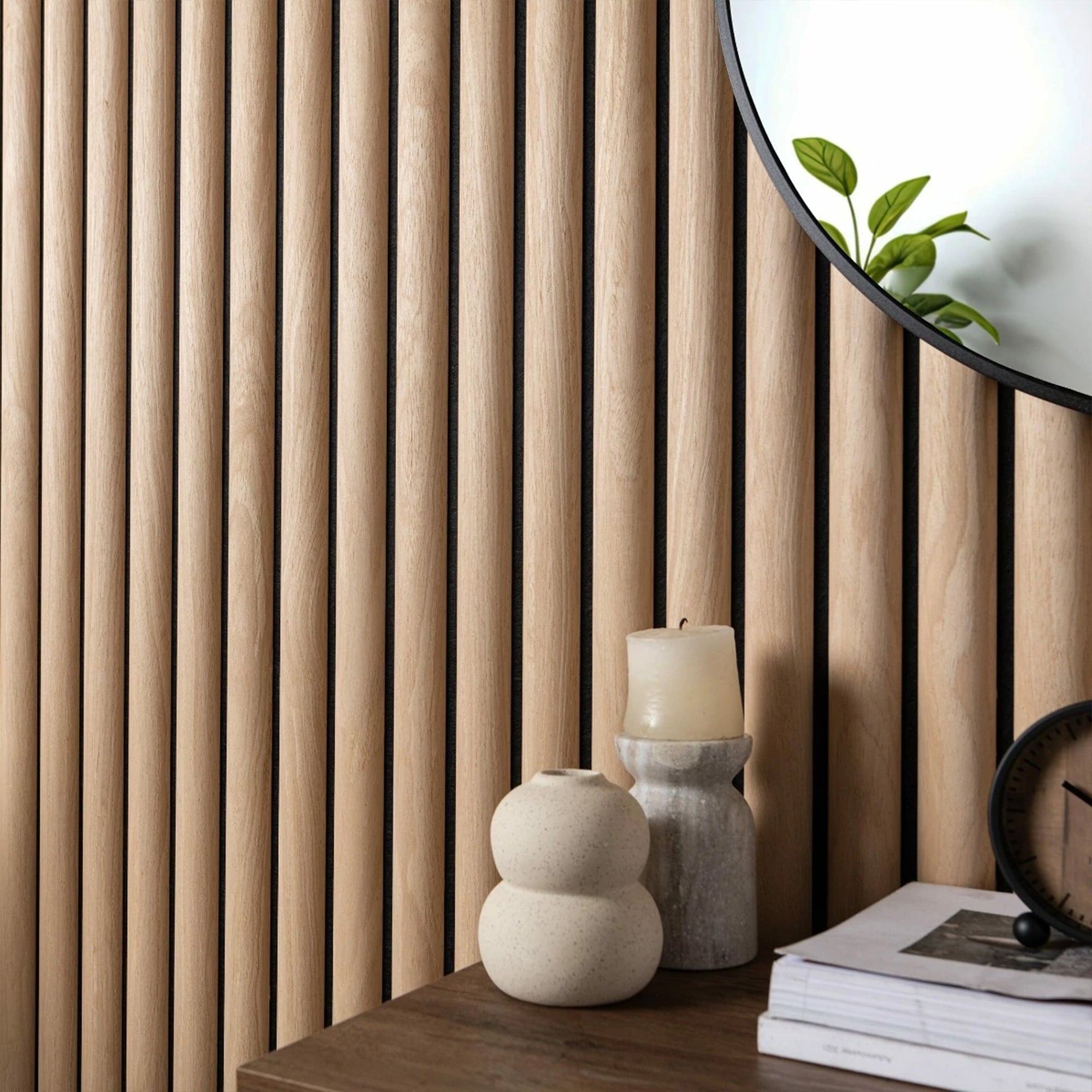
    The GroovePanel® solid wood range covers fluted, grooved, and ribbed profiles in real timber. These are the panels specified for premium residential feature walls, high-end hospitality environments, and any project where material authenticity — visible grain, natural colour variation, solid timber construction — is part of the design brief.

    Acoustic Slat Panels

    The SoundPanel™ range combines visual quality with measurable acoustic performance. Timber slats on acoustic felt backing reduce reverberation and manage echo in open-plan spaces, home offices, media rooms, and commercial environments. For designers specifying into projects with acoustic requirements — offices, hospitality, residential open-plan — this is the category to specify.

    Stone Effect Panels

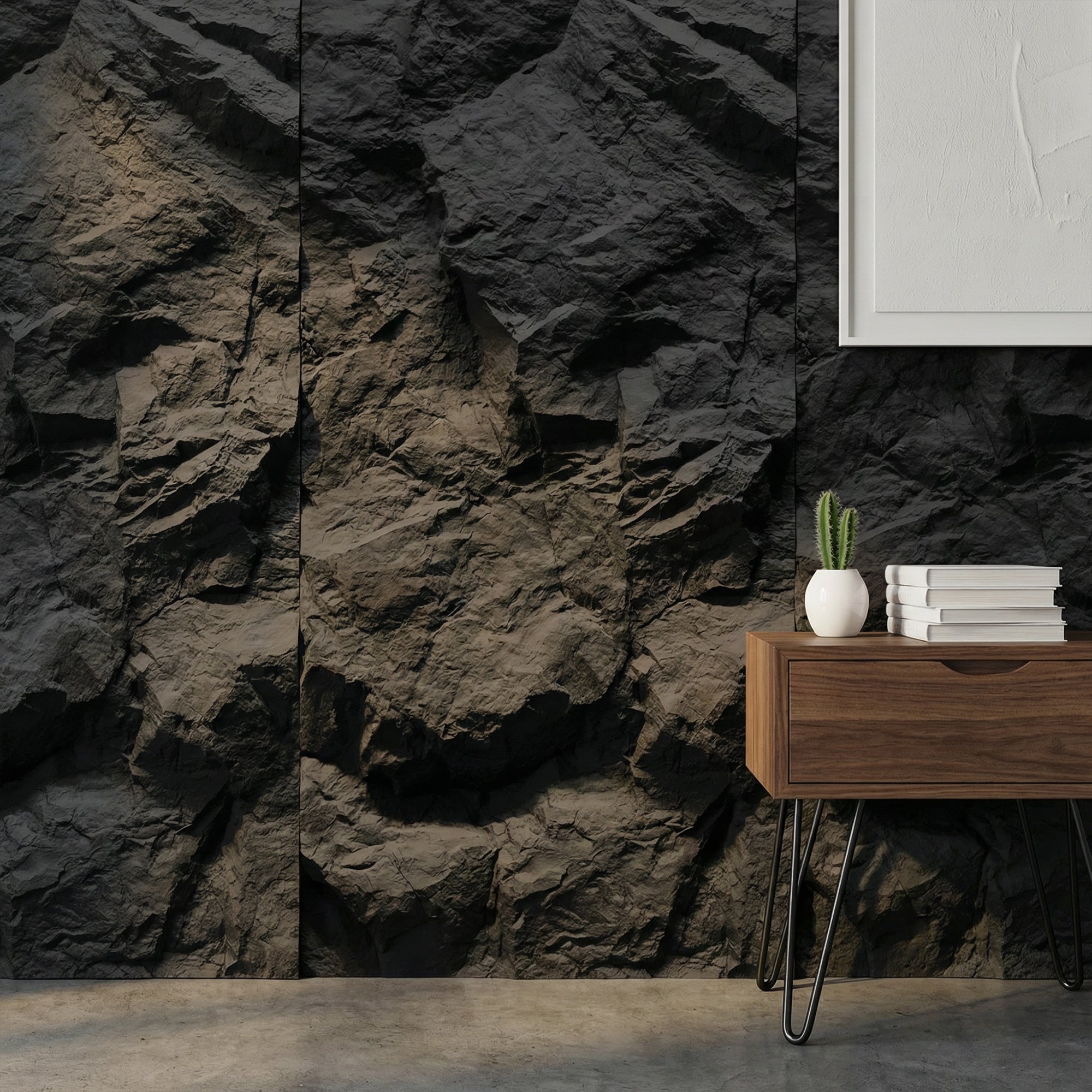
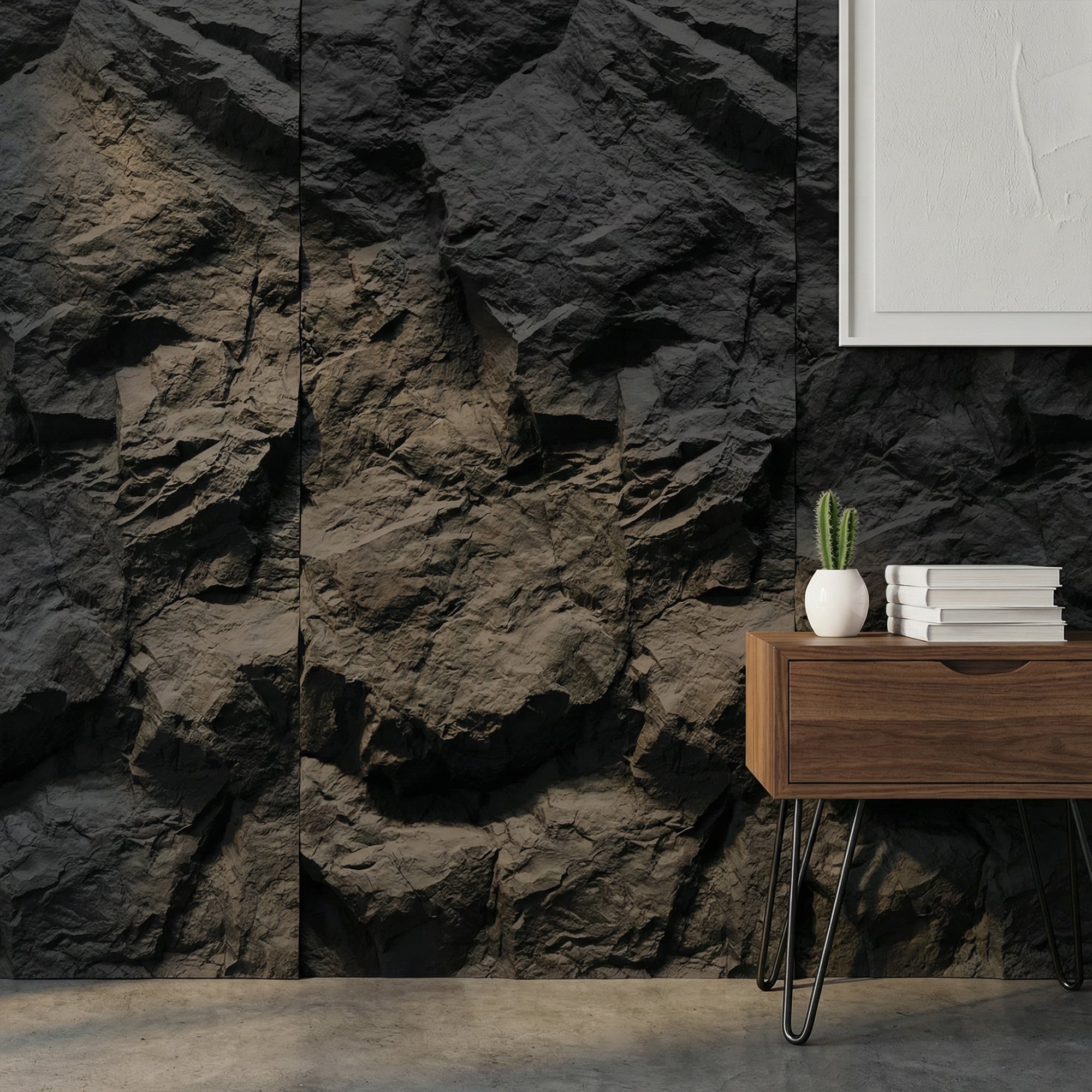
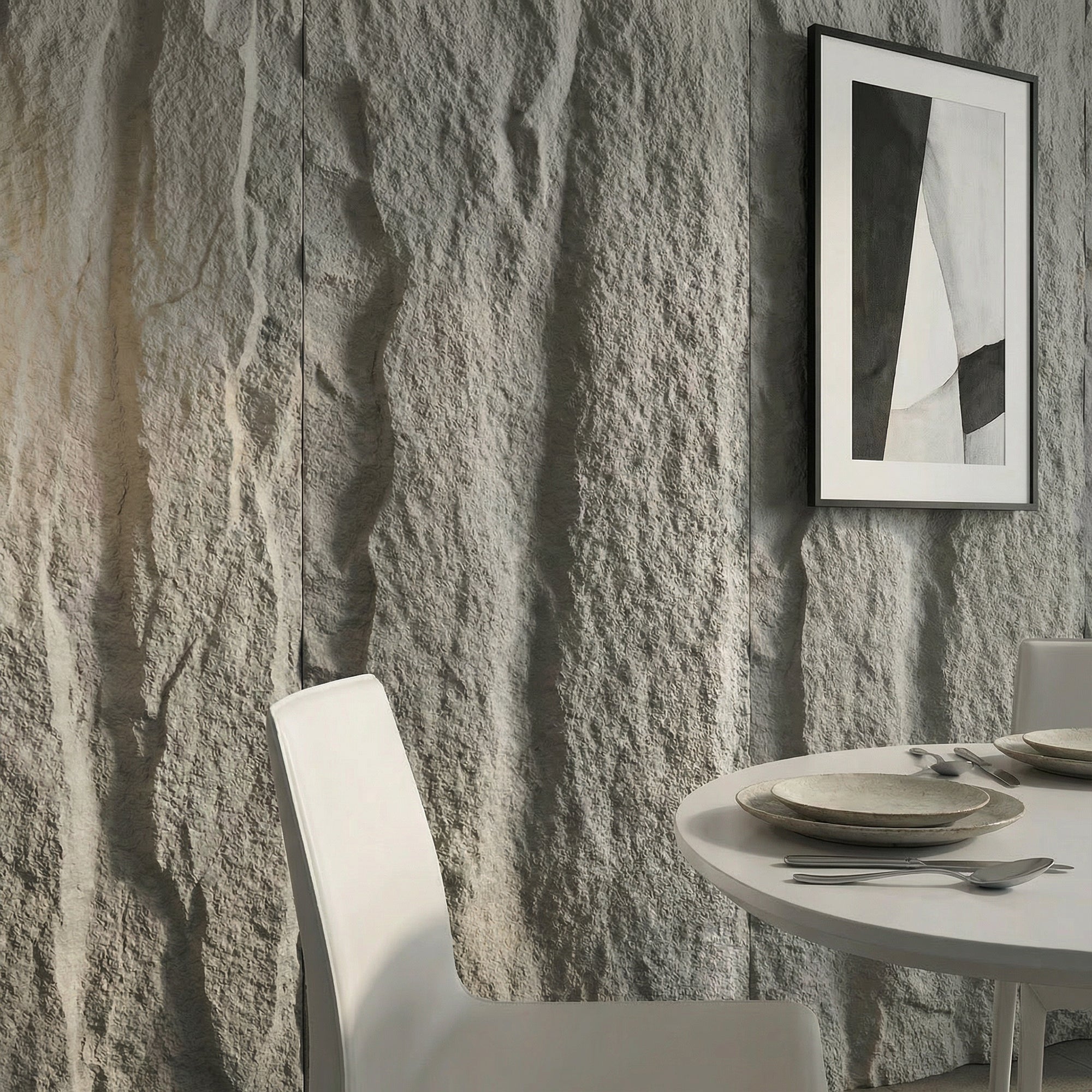
    The RockSurface® range delivers three-dimensional stone-effect surfaces in lightweight panel format. Where a client brief calls for a stone aesthetic on a wall that cannot bear real stone — or where the budget, timeline, or installation access makes real stone impractical — RockSurface® provides the visual result without the structural and logistical constraints.

    Sampling: The Essential First Step

    No professional specification should be made without physical samples assessed in the actual project space. Panels read very differently under different lighting conditions — what looks warm and rich under the showroom lighting at a trade event may appear flat and grey in a north-facing room, and vice versa.

    The Panel Hub provides samples across the full product range. For designers working on multiple projects, maintaining a sample library of the most-specified products is a practical investment that speeds up the specification process and reduces the risk of on-site surprises.

    Technical Data for Specifications

    Professional specifications require more than a product name and a finish description. When specifying wall panels, the information typically required includes:

    • Panel dimensions and weight per m²
    • Substrate material and core construction
    • Surface finish and treatment specification
    • Fire classification (Euroclass rating)
    • Acoustic performance data where relevant (NRC or sound absorption coefficient)
    • Installation method — adhesive, mechanical fixing, or clip system
    • Recommended substrate types

    Contact The Panel Hub directly for technical data sheets for any product in the range.

    Trade Account and Project Support

    Design professionals working on commercial, hospitality, or large-scale residential projects should register for a trade account with The Panel Hub. Trade account holders receive priority sampling, project pricing support, and access to the team for technical queries during the specification and installation phases of a project. Sign up today!
  • Wall Panels vs Tiles: Which Wins for Kitchens and Bathrooms?

    Wall Panels vs Tiles: Which Wins for Kitchens and Bathrooms?

    Tiles have been the default choice for kitchen and bathroom walls for over a century — and for good reason. They’re waterproof, durable, easy to clean, and available in an almost unlimited range of colours and patterns. But wall panels have made significant inroads in recent years, and in many applications they now offer a compelling alternative with less effort and often a better visual result.

    Appearance: Which Looks Better?

    This is subjective, but some observations hold:

    • Tiles offer enormous design variety — from classic subway tiles to large-format marble looks, the tile market covers every style and budget.
    • Wall panels offer a cleaner, more seamless finish. Without grout lines, the surface reads as continuous — a quality that makes rooms feel larger and finishes look more contemporary.
    • Stone-effect panels like RockSurface® provide three-dimensional texture that large-format flat tiles cannot replicate.
    • Wood slat and fluted panels bring a warmth to kitchens and bathrooms that tiles rarely achieve.

    Waterproofing: Where Tiles Still Win

    Properly installed tiles with fully waterproofed grout are the gold standard for wet environments — shower floors and surfaces in direct contact with water. Most standard wall panels are not suitable for areas of direct water contact.

    However, for kitchen splashbacks, bathroom feature walls behind sanitary ware, and any wall that sees splash rather than continuous water exposure, panels rated for humid environments perform adequately and look superior.

    Installation: Which Is Easier?

    Wall panels have a significant installation advantage. The process is straightforward: prepare the substrate, apply adhesive, fix panels, seal edges. No specialist skills, no grouting, and a much faster timeline — a kitchen splashback wall can be panelled in an afternoon.

    Tile installation requires planning, setting out, cutting tiles, laying in adhesive, grouting, sealing, and cleaning. In a bathroom, this process typically takes 2–3 days for a competent tiler.

    Cost: What’s the True Comparison?

    Tile costs vary enormously — from £5/m² for basic ceramic to £200+/m² for premium marble-look tiles. Installation adds £30–£60/m² for professional tiling.

    Quality wall panels typically cost £30–£80/m² for materials and £15–£30/m² for professional installation — often lower than equivalent quality tiles when installation is factored in.

    Maintenance: The Grout Problem

    Grout is the weakest link in any tiled installation. It stains, cracks, grows mould, and eventually needs re-grouting — a messy, time-consuming process. Wall panels have no grout. A wipe-down with a damp cloth is the extent of routine panel maintenance in most applications.

    The Verdict

    • Choose tiles for wet rooms, shower floors, and any surface in continuous water contact. Also choose tiles if you want large-format patterned or marble finishes.
    • Choose panels for kitchen splashbacks, bathroom feature walls, any application where grout maintenance is a concern, or where you want a textured 3D finish that tiles can’t provide.

    Browse the full range of wood wall panels and stone effect panels at The Panel Hub.

  • White Faux Stone Wall Panels: Clean Texture for Minimalist Interiors

    White Faux Stone Wall Panels: Clean Texture for Minimalist Interiors

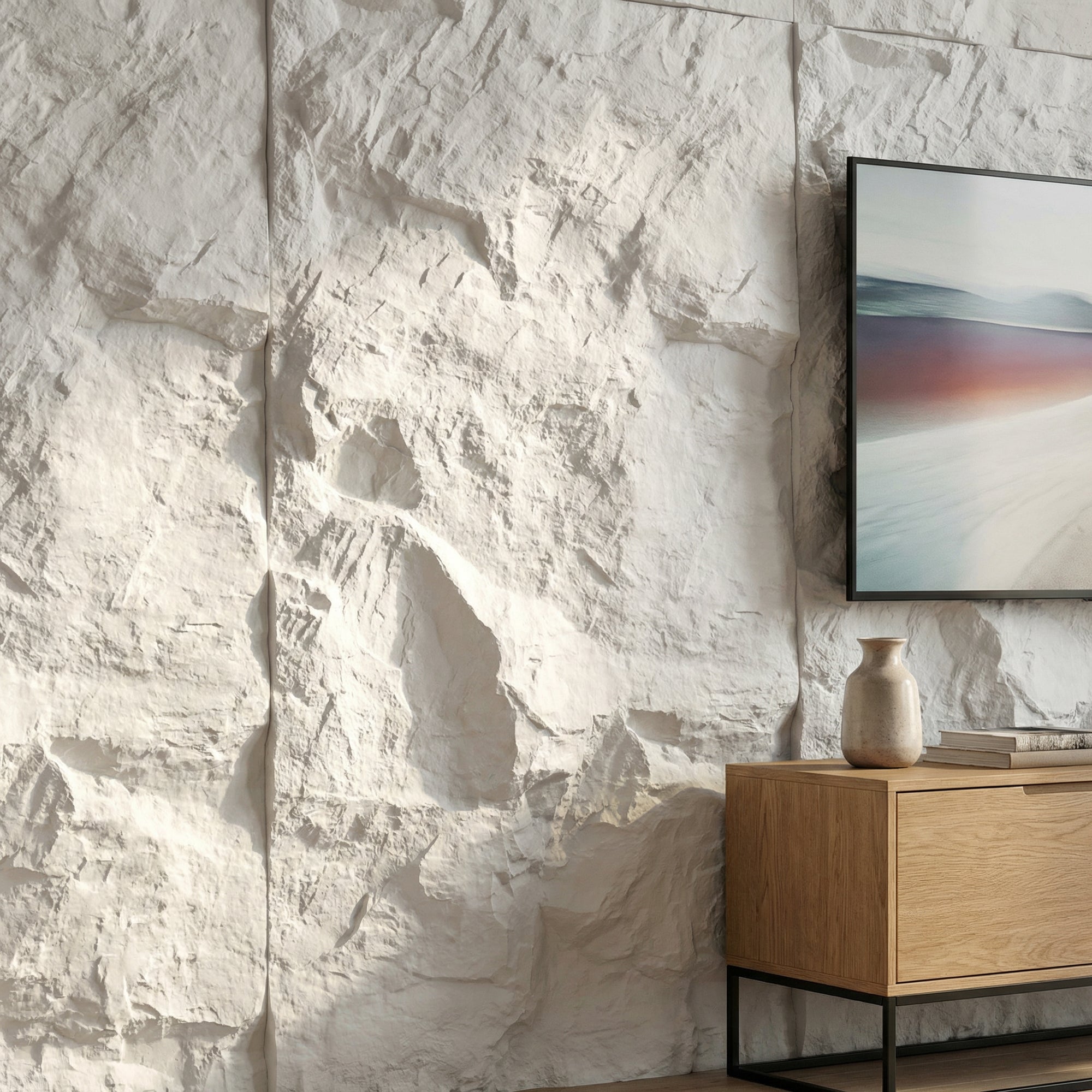
    White faux stone wall panels do something that white paint cannot: they add texture without colour. The surface relief of a stone-effect panel — the irregular planes, raised edges, and shadow recesses — gives a white wall genuine visual depth. The result is a finish that reads as white from across the room but reveals layers of detail up close.

    This quality makes white stone effect wall panels one of the most versatile choices available. They work in minimalist spaces without adding visual noise, in traditional properties without feeling contemporary, and in commercial environments without dating quickly.

    Why Texture Matters More Than Colour in White Finishes

    A painted white wall reflects light uniformly. A white stone-effect panel reflects light differently across each face of the relief — catching it on raised surfaces, holding shadow in recesses. This creates a surface that changes appearance throughout the day as natural light shifts and as artificial lighting picks out different facets of the texture.

    The practical benefit is that a white stone panel feature wall is never boring. It can be the most visually engaging surface in a room without a single strong colour on the wall.

    Where White Faux Stone Panels Work Best

    Fireplace Breast

    A white stone panel on a fireplace breast creates a focal point in a living room without darkening the room or requiring strong colour coordination. The texture draws the eye and frames the fireplace as the architectural centrepiece.

    Bathroom Feature Wall

    White stone-effect panels in bathrooms replicate the look of white marble or limestone without the cost or maintenance. Behind a freestanding bath, white textured panels keep the room feeling light and spa-like.

    Hallway

    Narrow hallways benefit from white panels that reflect light and create the impression of more space. The textured surface adds visual interest to a corridor that would otherwise be a simple painted passage.

    Kitchen Splashback

    White stone-effect panels behind a hob replicate the look of white subway tiles or marble splashbacks with no grout lines to maintain. They work particularly well in kitchens with dark cabinetry, where the bright textured surface provides strong contrast.

    Commercial and Retail Environments

    White stone panels are used in retail interiors, hotel lobbies, and wellness environments where a premium, clean aesthetic is required. The textured surface elevates a white wall beyond the minimal without introducing colour that would conflict with branding or seasonal changes.

    Pairing White Stone Panels with Other Materials

    • Dark wood: Walnut or dark oak flooring against white stone panels creates maximum contrast — bold but balanced.
    • Brass or gold fixtures: Warm metal tones against white stone create a luxury finish well-suited to bathrooms and kitchens.
    • Greenery: White is one of the best backgrounds for plants — foliage stands out clearly against the pale textured surface.
    • Natural linen and cotton: Undyed soft furnishings coordinate with white stone panels without competing for attention.

    White Faux Stone Panels from The Panel Hub

    The Panel Hub offers the RockSurface® stone effect panel collection in white and light stone finishes. RockSurface® panels deliver the depth and irregularity of natural stone without the weight, cost, or specialist installation requirements of real stone. Browse the full range to find the right white finish for your project.

  • Wood Wall Panel Maintenance: How to Clean and Care for Your Panels

    Wood Wall Panel Maintenance: How to Clean and Care for Your Panels

    Wood wall panel maintenance is actually very handy these day. These panels have a reputation for being high-maintenance — an impression inherited from hardwood flooring, outdoor decking, and traditional painted joinery that needs regular attention. The reality for contemporary engineered wood wall panels is quite different. A quality wood panel installation requires a fraction of the maintenance of hardwood flooring and far less than tiled surfaces with grout joints.

    Routine Cleaning

    Dusting

    Wood slat and fluted panels accumulate dust in their grooves and gaps more readily than flat walls. A soft brush attachment on a vacuum cleaner, or a microfibre duster, removes surface dust without scratching the finish. In bedrooms and living rooms, monthly dusting is typically sufficient. In kitchens where airborne grease deposits are a factor, more frequent cleaning is recommended.

    Wiping Down

    A lightly damp microfibre cloth handles most surface marks on finished wood wall panels. Wipe along the grain of the wood or in the direction of the slat profile. Use minimal moisture — wood panels should never be saturated, even those with moisture-resistant surface treatments.

    Stubborn Marks

    For marks that don’t respond to a damp cloth, a mild solution of washing-up liquid in warm water applied with a soft cloth handles most household marks. Rinse with a clean damp cloth immediately and dry with a soft towel. Avoid leaving soapy residue on the surface.

    Dealing with Specific Issues

    Moisture and Humidity

    Wood is hygroscopic — it absorbs and releases moisture from the surrounding air. In spaces with variable humidity (bathrooms, kitchens), this can cause minor expansion and contraction of individual slats or panels. Quality engineered wood panels like the GroovePanel® and SoundPanel™ are designed to manage this movement, but good ventilation in moisture-prone rooms is the best mitigation.

    Scratches and Surface Marks

    Fine surface scratches in oiled or brushed wood finishes can often be addressed using a small amount of matching wood touch-up oil applied with a soft cloth, worked along the grain direction. For deeper marks, a touch-up pen matched to the panel colour can conceal damage effectively.

    Loose Panels or Slats

    If an individual slat or panel section becomes loose, re-adhere it using the same type of adhesive used in the original installation. Clean both surfaces before re-gluing and allow adequate curing time before putting the surface back in use.

    What to Avoid

    • Harsh chemical cleaners: Bleach, ammonia, and solvent-based products can strip the surface finish and cause permanent discolouration.
    • Abrasive pads or brushes: Steel wool, scouring pads, and stiff brushes scratch wood surfaces.
    • Excess moisture: Wet cloths, steam cleaners, and standing water are all harmful to wood panels regardless of surface treatment.
    • Direct sunlight without UV protection: Prolonged direct sun causes wood finishes to fade. UV-filtering window film or window treatments help protect panels in south-facing rooms.

    Long-Term Care Schedule

    • Monthly: Light dust with microfibre cloth or soft brush
    • Quarterly: Wipe down with damp cloth; check for any loose slats or panels
    • Annually: Apply maintenance oil or wax if the surface finish requires it — check manufacturer guidance

    For specific care guidance for your panels, contact The Panel Hub directly or read our care & maintenance guide — maintenance requirements vary by panel type and surface finish.

  • Wood Wall Panels vs Stone Wall Panels: Which Is Right for Your Space?

    Wood Wall Panels vs Stone Wall Panels: Which Is Right for Your Space?

    Wood and stone are the two dominant materials in natural feature wall design. Both have been used in interior and exterior architecture for centuries. Both are now available in panel form — engineered, lightweight, and easy to install — which puts them in direct competition for the same wall space in homes, offices, and commercial environments.

    Choosing between wood wall panels and stone effect wall panels depends on the room, the aesthetic you’re creating, and the practical requirements of the installation.

    What Each Material Communicates

    Wood Panels

    Wood panels are warm. The grain, tone, and texture of timber communicate organic warmth, natural authenticity, and domesticity. Even in their most contemporary application — fine slat panels with precise engineering and clean finishes — wood panels read as approachable and tactile. They work in bedrooms, living rooms, and home offices where warmth and comfort are design priorities.

    Stone Panels

    Stone panels are cool. Even in warm stone tones, the material communicates solidity, permanence, and weight. Stone feature walls make a bolder statement than wood and sit more comfortably in rooms where drama or formality is the goal — dining rooms, bar areas, commercial environments, feature fireplaces.

    Practical Differences

    Moisture Resistance

    Stone-effect panels generally have better inherent moisture resistance than wood panels, making them more suitable for bathroom and kitchen applications. Wood panels in humid environments require appropriate surface treatment or moisture-resistant cores.

    Acoustic Performance

    Wood slat and acoustic panels from the SoundPanel™ acoustic wood wall panel range offer measurable sound absorption — a benefit stone panels don’t provide. If acoustic performance is a factor in your specification, wood acoustic panels have a clear advantage.

    Room-by-Room Guide

    • Living room: Both work — wood for warmth, stone for drama and formality
    • Bedroom: Wood panels are generally preferred for the warmth they contribute
    • Bathroom: Stone-effect panels have the moisture resistance advantage
    • Kitchen splashback: Stone-effect panels are the practical choice
    • Fireplace breast: Stone is the classic choice; wood works in contemporary settings with appropriate fire safety considerations
    • Commercial and hospitality: Both are extensively used — choice is driven by the atmosphere the space is designed to create

    Can You Use Both?

    Yes — and the combination is often more interesting than either material alone. A fireplace breast in stone panels with an adjacent media wall in wood slats creates material contrast that defines the living room as a thoughtfully designed space. In commercial environments, alternating stone and wood surfaces across different zones creates a layered, high-end finish.

    Explore Both at The Panel Hub

    The Panel Hub supplies both wood wall panels — including the GroovePanel® and SoundPanel™ collections — and the RockSurface® stone effect range. Request samples from both to compare the materials in your own space before deciding.

  • Acoustic Wall Panel Specification: What Architects and Designers Need to Know

    Acoustic Wall Panel Specification: What Architects and Designers Need to Know

    For some buyers, checking on acoustic wall panel specification is an important step before buying. Acoustic wall panels are increasingly specified across residential, commercial, and hospitality projects — not just in recording studios and auditoria. The growing awareness that open-plan living, hard flooring, and glass surfaces create acoustically uncomfortable spaces has driven demand for attractive acoustic treatment that integrates with interior design rather than compromising it.

    For architects and designers specifying acoustic wall panels, understanding the performance metrics, their limitations, and how to integrate them into a specification is essential for delivering projects that meet acoustic targets as well as aesthetic ones.

    Understanding Sound Absorption Metrics

    NRC (Noise Reduction Coefficient)

    NRC is the most commonly cited acoustic performance metric for wall panels. It expresses the average sound absorption of a material across the frequency range 250Hz–2000Hz on a scale of 0 (perfect reflection) to 1.0 (perfect absorption). An acoustic panel with an NRC of 0.65, for example, absorbs 65% of incident sound energy across that frequency range.

    αw (Weighted Sound Absorption Coefficient)

    The European equivalent metric, αw, is calculated differently and expressed as a single number (0 to 1.0) with an application class suffix (A, B, C, D, E, or F) that indicates the shape of the absorption curve. For most commercial acoustic specifications in UK projects, both NRC and αw values are relevant — verify which standard your project’s acoustic consultant is using.

    Where Acoustic Panels Make the Most Impact

    Open-Plan Offices and Co-Working Spaces

    Reverberation times in open-plan offices directly affect speech intelligibility and cognitive performance. Research consistently shows that reducing reverberation in open-plan workspaces improves concentration, reduces perceived noise levels, and lowers stress. Acoustic wall panels on the perimeter walls of open-plan floors contribute significantly to reducing reverberation time (RT60).

    Hospitality: Restaurants, Bars, and Hotel Lobbies

    The “restaurant noise problem” — an open-plan dining environment with hard surfaces creating a loud, fatiguing experience — is a well-documented design challenge. Acoustic treatment on wall surfaces reduces the background noise level and improves the dining experience. The SoundPanel™ range provides an acoustic solution that’s also a premium visual feature.

    Residential Open-Plan Living

    The open-plan kitchen-dining-living room is acoustically one of the worst domestic environments. Hard flooring, hard kitchen surfaces, and the absence of soft furnishings in circulation zones create reflective rooms where conversation is tiring and television is too loud. A single acoustic panel feature wall can measurably improve the acoustic comfort of an open-plan residential space.

    How Much Coverage Is Needed?

    Acoustic panels don’t need to cover every wall surface to be effective. As a rule of thumb, covering 20–30% of the total wall and ceiling surface area with acoustic-rated material (NRC 0.5 or above) typically achieves a meaningful reduction in reverberation time in a typical room. Your acoustic consultant can calculate the specific coverage required to meet a target RT60 for any given space.

    Integrating Acoustic Panels into the Specification

    Acoustic slat panels from the SoundPanel™ range are designed to be specified as primary wall surface materials, not as add-on acoustic treatment. They install the same way as standard wall panels — adhesive to a prepared substrate, no specialist acoustic contractor required — and provide acoustic performance alongside the visual quality expected of a premium wall finish.

    Request acoustic test data, including NRC or αw values and the test standard used, or bulk order wood wall panels from The Panel Hub!

  • Dark Faux Stone Panels: Dramatic Finishes for Bold Interiors

    Dark Faux Stone Panels: Dramatic Finishes for Bold Interiors

    Dark faux stone panels — charcoal, slate black, dark basalt — occupy the most dramatic end of the stone panel spectrum. Used well, they create surfaces that feel genuinely architectural: heavy with visual weight, rich in texture, and capable of transforming an ordinary wall into the defining feature of a space.

    Used badly, they make rooms feel cave-like. The difference is almost always about context, contrast, and lighting — three variables entirely within the control of anyone specifying dark stone effect wall panels.

    Why Dark Panels Work Better Than Expected

    Dark walls don’t necessarily make rooms feel smaller. Interior designers have known for decades that the perception of space is more affected by contrast, lighting, and the placement of reflective surfaces than by wall colour alone. A single dark stone feature wall in a room with high ceilings, good lighting, and pale flooring can make the space feel more substantial — not smaller.

    The key is using dark stone panels on a single feature wall rather than all four. A feature wall approach delivers the drama without the enclosure.

    Where Dark Faux Stone Panels Work

    Fireplace Breast

    The fireplace breast is the natural home for dark stone panels. The visual weight of charcoal or slate panels frames the hearth as the room’s focal point, and the warmth of the fire contrasts with the cool darkness of the stone surface.

    Bar and Restaurant Back Walls

    Dark stone panels on back bars, feature walls, and booth dividers in hospitality environments create atmosphere and occasion. The textured surface reflects candlelight and accent lighting, producing an effect that shifts throughout the evening as ambient light changes.

    Bedroom Feature Wall

    A dark stone wall behind the bed creates a dramatic backdrop that makes white bedding, warm lighting, and pale furniture stand out. In bedrooms, the visual weight of dark stone contributes to the sense of enclosure and rest.

    Home Office

    Dark stone panels behind a desk create a striking background for video calls and give a home office an authority that lighter finishes don’t provide.

    Lighting Dark Stone Panels Well

    Dark stone panels require adequate lighting to perform at their best. Without sufficient light, the texture is lost and the wall simply reads as dark. With well-placed lighting, the three-dimensional quality of the stone texture becomes the dominant visual feature.

    • Grazing light: Wall-mounted lights positioned close to the stone surface cast shadows across the relief and reveal maximum texture.
    • Warm white light: 2700–3000K colour temperature warms up cool dark stone without washing out the effect.
    • Avoid ceiling-only lighting: Downlights directly above a dark stone wall illuminate it from above and lose the shadow detail that makes the texture interesting.

    Dark Faux Stone Panels from The Panel Hub

    The Panel Hub stocks the RockSurface® stone effect wall panel collection in dark and charcoal finishes. RockSurface® panels deliver the visual weight of natural dark stone without the structural requirements and specialist installation that real stone demands. Browse the collection to find the dark finish that suits your project.

  • Grey Faux Stone Wall Panels: The Modern Neutral for Contemporary Spaces

    Grey Faux Stone Wall Panels: The Modern Neutral for Contemporary Spaces

    Grey is the dominant tone in contemporary stone panel design. It covers a spectrum from pale silver-grey to deep charcoal slate, and it works across a wider range of interior styles than any other stone colour. In 2026, grey faux stone wall panels are appearing in everything from minimalist residential feature walls to high-end hospitality environments.

    The reason is adaptability. Grey reads as industrial in loft-style conversions, as Scandinavian in pared-back Nordic interiors, and as genuinely luxurious in high-spec commercial spaces. It coordinates with almost every other material — timber, concrete, steel, glass — without competing for attention.

    The Spectrum of Grey: Which Shade Works Where

    Light Grey and Silver-Grey

    Pale grey faux stone works best in rooms where you want texture without visual weight. Bathrooms, hallways, and open-plan living areas benefit from light grey panels that add interest without darkening the space. Paired with white joinery and natural wood flooring, a light grey stone feature wall creates a layered finish that feels expensive without being heavy.

    Mid Grey

    Mid-tone grey panels are the most versatile in the spectrum. They sit comfortably between warm and cool interior palettes and work equally well with warm oak tones and cool concrete surfaces. For living room feature walls, mid grey stone panels provide a strong visual anchor without dominating the room.

    Charcoal and Slate Grey

    Dark grey faux stone panels are a statement choice. Used on a fireplace breast, a single feature wall in a dining room, or a hotel bar back, charcoal stone panels add dramatic depth. They work best in spaces with adequate lighting and enough other surfaces — flooring, furniture, soft furnishings — to balance the visual weight.

    Grey Faux Stone by Room

    Living Room

    A grey stone feature wall behind a sofa or on the fireplace breast is one of the most popular applications. The texture creates depth without introducing colour, which means it coordinates with any sofa, rug, or artwork without requiring redesign when you redecorate.

    Bathroom

    Grey stone-effect panels in bathrooms replicate the look of slate or natural stone tiles at a fraction of the weight and cost. They work particularly well on feature walls behind freestanding baths or in walk-in shower areas, provided the panels specified are rated for humid environments.

    Kitchen

    Grey faux stone panels used as a kitchen splashback alternative deliver the industrial aesthetic of exposed stone without grouting maintenance. They sit well behind stainless steel appliances and coordinate with both white and dark cabinetry.

    Commercial and Hospitality

    Grey stone panels are extensively used in restaurant, bar, and hotel design. The neutral tone allows lighting designers to play warm and cool light across the textured surface, creating atmosphere that changes throughout the day and evening.

    What to Pair with Grey Faux Stone Panels

    • Warm wood: Premium wood wall panels in natural oak, walnut, or pine flooring and furniture warm up cool grey stone panels and prevent the space from feeling cold.
    • Dark metal: Matte black or gunmetal fixtures, frames, and shelving complement grey stone’s industrial quality.
    • Concrete and plaster: Combining grey stone panels with polished concrete floors or bare plaster walls creates a layered raw material palette that feels architectural.
    • Greenery: Plants against grey stone panels create strong contrast — foliage pops sharply against the neutral background.

    Grey Faux Stone Panels from The Panel Hub

    The Panel Hub stocks the RockSurface® stone effect wall panel collection in a range of grey tones. RockSurface® panels replicate the depth and texture of real stone without the weight or installation complexity. Browse the full range to find the grey tone that works for your project.

  • FF&E Wall Panels: How to Specify Finishes for Project Schedules

    FF&E Wall Panels: How to Specify Finishes for Project Schedules

    In the language of commercial interior design and project management, FF&E — Furniture, Fixtures and Equipment — covers the moveable and semi-permanent elements specified separately from the base building. Wall panels occupy a grey area in many project specifications: they’re not furniture, they’re not structural, and depending on the project scope, they may be classified as either FF&E or a finishes item within the base build.

    Getting this classification right, and specifying wall panels correctly within a project schedule, affects procurement timelines, installation sequencing, and the allocation of responsibility between the main contractor and the FF&E contractor.

    FF&E vs Base Build: Where Do Wall Panels Sit?

    In most commercial and hospitality projects, the distinction is straightforward:

    • Base build wall finishes (plaster, paint, standard tiling) are specified in the architect’s package and installed by the main contractor during the construction phase.
    • FF&E wall panels (decorative wall panels, acoustic panels, feature wall panels) are typically specified in the interior designer’s package and installed during the fit-out phase, after the base build is complete.

    The practical implication is that FF&E wall panels are installed after the main construction trades have finished — into a completed space, without the structural access and wet trade flexibility of the construction phase. This makes the installation method, substrate condition, and lead time particularly important considerations.

    Lead Times: Planning Your Panel Specification

    For commercial projects with fixed programme dates, lead time is a critical factor in material selection. The Panel Hub maintains stock of the most popular products in the GroovePanel®, SoundPanel™, and RockSurface® ranges for shorter lead times. For large-volume orders or non-standard finishes, confirm availability and lead time before locking the specification into the programme.

    Writing the Panel Specification

    A complete wall panel specification for an FF&E schedule should include:

    • Product name, reference, and finish description
    • Panel dimensions and coverage per panel
    • Total area to be covered (m²) with wastage allowance
    • Substrate specification (what the panel is to be fixed to)
    • Installation method (adhesive type, mechanical fixing if required)
    • Fire classification required and confirmation of product certification
    • Acoustic performance requirement (if applicable)
    • Maintenance and cleaning requirements for handover documentation

    Batch Consistency for Multi-Room and Multi-Property Projects

    For hospitality projects specifying the same panel across multiple rooms or multiple properties, batch consistency is a critical quality control issue. Natural wood products vary between production batches — colour, grain character, and finish tone can shift subtly between orders. For projects requiring consistent appearance across multiple units, confirm with the supplier whether panels can be ordered in a single batch, and what the maximum batch size is for the specified product.

    Working with The Panel Hub on FF&E Projects

    The Panel Hub works with interior designers, FF&E consultants, and hospitality procurement teams on commercial projects. Contact the trade team to discuss project volumes, lead times, and technical requirements before your specification is finalised.

  • Contemporary Wall Panel Trends 2026: What’s Popular Right Now

    Contemporary Wall Panel Trends 2026: What’s Popular Right Now

    Wall panels have moved from niche to mainstream in the past five years. What began as a boutique interior design trend — acoustic slat panels on media walls, stone effect panels on fireplace breasts — has expanded into a design language used across residential, commercial, and hospitality environments at every price point.

    In 2026, the trends within wall panelling are maturing. Early adopters have moved on from the obvious applications; the mainstream has arrived and is doing more sophisticated things with the format. Here’s what’s defining the category right now.

    Fluted and Ribbed Profiles: Still Dominant, More Refined

    Fluted and ribbed panels were the defining aesthetic of 2022–2024. In 2026, they’re mainstream — which means the interesting design moves have become more sophisticated. Fine-pitch fluting (narrower ridges, tighter spacing) has overtaken the bold wide-flute profiles of the early trend. The result is more refined — a surface that reads as textured at a distance but resolves into precise detail up close.

    The GroovePanel® range includes multiple flute profiles from fine pitch to bold relief — the direction of travel in 2026 is toward the finer end of the spectrum.

    Stone Effect Surfaces: From Niche to Mainstream

    Three-dimensional stone effect panels have followed a similar trajectory to wood panels, but about three years behind. In 2026, stone effect panels are appearing in residential applications that would previously have used painted walls or tile. The combination of realistic texture, lightweight installation, and significantly lower cost than real stone is proving compelling.

    The standout trend within stone panels is the move toward larger-format relief — bigger individual stone faces, deeper shadow lines, and more dramatic three-dimensional geometry.

    Mixing Materials: Wood Plus Stone

    One of the most interesting developments in 2026 is designers combining wood slat panels and stone effect panels in the same space. A horizontal band of stone effect panel at lower wall height, transitioning to wood slat above, creates a layered material story that neither material could tell alone. In commercial environments, this mixing approach creates spaces that feel designed at a different level of ambition than monolithic single-material feature walls.

    Acoustic Panels as Visual Features

    Acoustic slat panels began as a functional specification in recording studios and broadcast environments. In 2026, they’re a mainstream residential feature, specified for their appearance as much as their acoustic performance. The SoundPanel™ range sits at this intersection of acoustic function and visual quality — a combination that’s proving increasingly relevant as open-plan living creates rooms with genuinely poor acoustic performance.

    What’s Fading Out

    • All-wall panel applications: Covering every wall in a room with the same panel product is becoming dated. Feature wall applications — one or two walls — remain strong.
    • Very dark wood tones: Deep espresso and near-black wood finishes that dominated hospitality design in 2021–2023 are giving way to warmer, lighter, more natural tones.
    • Peel-and-stick alternatives: The entry-level end of the market is separating from genuine panel products. Buyers who started with temporary solutions are upgrading to permanent installations.

    What’s Ahead

    The direction of travel for wall panels points toward more material experimentation — mixing profiles, tones, and surface textures within a single space. Browse the full range at The Panel Hub to explore both wood and stone effect options across the current collection.