Author: The Panel Hub Design Studio

  • Best Adhesive for Wall Panels: PVC, Wood, MDF & Slat

    Best Adhesive for Wall Panels: PVC, Wood, MDF & Slat

    Get the adhesive wrong and PVC wall panels peel, warp, or drop off the wall within months. Get it right and they stay flat, tight, and seamless for years. The catch is that PVC is smooth and non-porous, so it doesn’t grip the way drywall or timber does, and a few common construction glues actually attack the plastic and distort it.

    At The Panel Hub, we’ve manufactured and installed wall panels since 2012, so this guide is built on what actually holds in real rooms, not just what a label promises. Below you’ll find the best adhesives for PVC wall panels, when to use each one, what to avoid, and how to apply it for a bond that lasts.

    Quick answer: For most PVC wall panels, a solvent-free grab adhesive (such as Loctite Power Grab or a panel-specific adhesive) is the safest strong choice. It grabs instantly, resists moisture, and won’t melt or warp the panel the way solvent-based cements can. For bathrooms, kitchens, and other wet areas, step up to a hybrid-polymer adhesive like Soudal Fix All. Avoid standard solvent-based glue on thin or gloss-finish PVC.

    PVC wall panel adhesives compared

    Adhesive Type Grab Wet-area rating Solvent-free Best for
    Loctite Power Grab Acrylic grab Instant, high Good Yes Most interior panels, fast installs
    Soudal Fix All Hybrid polymer High Excellent Yes Bathrooms, kitchens, wet walls
    Gorilla Heavy Duty Construction Very high Good Check label Heavy panels, high-traffic, in/outdoor
    The Panel Hub Wood Panelling Adhesive Panel-specific High Good Yes Engineered for SoundPanel & GroovePanel systems

    Always confirm “solvent-free” on the current packaging before buying, as manufacturers occasionally reformulate.

    The best adhesives for PVC wall panels (by use case)

    Best all-rounder: Loctite Power Grab

    A solvent-free grab adhesive that gives an immediate, high-strength hold, so panels stay put the moment you press them on with little slipping or propping. It bonds well to clean, sound plaster, plasterboard, and masonry, which covers most interior installs. If you want one product that handles the majority of PVC panel jobs, start here.

    Best for wet areas: Soudal Fix All

    A hybrid-polymer adhesive (silicone plus polyurethane) built to stay flexible and waterproof, which makes it the safe pick for bathrooms, kitchens, and utility rooms where moisture and temperature swings would break down a weaker bond. It also grips smooth, non-porous surfaces like tile well, so it’s handy when you’re panelling over existing walls.

    Best heavy-duty: Gorilla Heavy Duty Construction Adhesive

    When panels are large, dense, or going into a high-traffic or semi-outdoor space, you want maximum bond strength and weather resistance. Gorilla’s heavy-duty construction adhesive delivers that across a wide range of surfaces and conditions. Check the label for PVC compatibility, as some construction adhesives in this class are solvent-based.

    Best panel-specific: The Panel Hub Wood Panelling Adhesive

    Our own Wood Panelling Adhesive is engineered for the density of our SoundPanel and GroovePanel systems and is our recommended choice for a permanent installation across our full range. Paired with a cartridge caulking gun, it lays down a clean, controllable bead with no guesswork about compatibility.

    (You’ll also see Liquid Nails and 3M products recommended in DIY forums. They can work, but always check the specific product is rated for PVC and, ideally, solvent-free.)

    The three types of PVC panel adhesive, explained

    Solvent-based adhesives create a very strong bond by slightly melting the surface they touch, which makes them extremely durable in moisture-prone areas. The trade-off is real: on thin or gloss-finish PVC, that same action can soften, cloud, or distort the panel. Use them only where the panel manufacturer confirms compatibility.

    Acrylic-based (grab) adhesives are versatile, quick-drying, and solvent-free, which makes them the everyday choice for lightweight-to-medium PVC panels on drywall and plaster in normal indoor conditions.

    Hybrid-polymer adhesives combine the flexibility of silicone with the strength of polyurethane. They stay put through temperature and humidity changes, bond to tricky surfaces like tile and concrete, and handle both light and heavier panels, which is why they’re the go-to for wet or demanding spaces.

    What to avoid

    Do not reach for standard solvent-based cement or “all-purpose” super-glue-type products on thin or high-gloss PVC. The solvents can eat into the surface and leave you with warping, hazing, or bubbling that only shows up days later. When in doubt, choose a product clearly marked solvent-free or one specifically sold for PVC panel installation, and test it on an offcut first.

    How to choose: the three factors that matter

    Surface type. Porous, slightly textured walls like plaster and plasterboard grip easily, so a standard grab adhesive is fine. Rough, absorbent surfaces (bare concrete, brick) need a more robust construction-grade or hybrid adhesive. Smooth, non-porous surfaces (tile, painted gloss) need a chemical-grip adhesive like a hybrid polymer to hold reliably.

    Panel weight. Lightweight panels bond fine with a quick-drying acrylic grab. Heavier panels, or anything in a high-traffic area, need a stronger, long-lasting adhesive so they don’t creep or lift over time.

    Environment. Bathrooms, kitchens, and outdoor-adjacent spaces demand a waterproof, flexible adhesive. Hot spots (near stoves, in garages) need heat resistance. Match the adhesive’s stated moisture and temperature tolerance to the room.

    Matching adhesive to your panel material

    Not all wall panels bond the same way, so match the adhesive to what your panel is made of:

    • PVC panels: use a solvent-free grab adhesive. Solvent-based products can soften or distort thin and glossy PVC.
    • Solid wood and MDF panels: these are heavier, so use a high-grab construction or hybrid adhesive. Our own Wood Panelling Adhesive is engineered for the density of solid-wood GroovePanel® and MDF-backed SoundPanel™ systems.
    • Acoustic slat panels: apply adhesive to the solid backing rail, press the felt-backed panel firmly, and support it until the initial grab sets.
    • 3D and decorative solid-wood panels: heavier relief panels need a strong grab plus temporary support (props or low-tack tape) while the adhesive cures.

    How to apply adhesive to PVC wall panels

    1. Prep the surface. It must be clean, dry, and sound. Remove dust, grease, and any flaking paint or plaster, because the adhesive can only be as strong as the layer it sticks to.
    2. Apply an even bead. Run adhesive in a zigzag pattern across the full back of the panel, with lines roughly 200–250mm apart, and add extra dabs near the edges and corners (the spots most likely to lift).
    3. Press firmly. Set the panel in place and press across the whole surface so the adhesive spreads evenly and makes full contact.
    4. Support while it grabs. Use props or low-tack tape on larger panels until the initial grab takes hold.
    5. Allow proper cure time. Follow the product’s stated cure window before loading or disturbing the panels.

    PVC wall panel adhesive FAQs

    Can I use standard grab adhesive for PVC wall panels?
    Many grab adhesives are compatible with PVC, but you should always verify before use. Some contain solvents that can soften or distort PVC, which is especially risky on thin-profile panels and on glossy or polished faces. Solvent-free grab adhesives (clearly marked on the packaging) are the safer choice, or use an adhesive specifically marketed for PVC panel installation.

    How much adhesive should I use per panel?
    For a standard 2400 x 600mm PVC panel, apply adhesive in a zigzag pattern across the full panel back, with lines about 200–250mm apart, plus extra dabs at edges and corners. A standard 310ml tube of grab adhesive covers roughly 3–4 panels of this size.

    Do PVC panels need mechanical fixings too, or is adhesive enough?
    For most interior walls that are clean, dry, and sound, a quality panel adhesive alone gives a permanent hold. Mechanical fixings (screws or pins into battens) are worth adding on uneven walls, very heavy panels, or ceilings, where you want extra security while the adhesive cures.

    Does PVC panel adhesive work on all wall surfaces?
    Most grab adhesives perform well on clean, dry, sound plaster, plasterboard, concrete, and masonry. Problem surfaces include dusty or flaking plaster, old multi-layer paint that isn’t firmly bonded, and anything previously treated with wax or oil. Always test adhesion on a small area first.

    How long does PVC panel adhesive take to cure fully?
    Most grab adhesives reach handling strength within 30–60 minutes. Full cure, at maximum bond strength, typically takes 24–72 hours depending on the product, temperature, and humidity. Below 10°C, curing slows significantly and some adhesives shouldn’t be used at all, so check the manufacturer’s minimum temperature.

    The bottom line

    The best adhesive for PVC wall panels comes down to three things: the surface, the panel weight, and the room. A solvent-free grab adhesive handles most interior installs, a hybrid polymer is your friend in wet areas, and heavy or demanding spots call for a heavy-duty construction adhesive. Whatever you choose, keep it solvent-free (or PVC-rated) and prep the wall properly.

    If you’re fitting our panels, The Panel Hub Wood Panelling Adhesive takes the compatibility guesswork out entirely. And if you’re still choosing panels, explore our wood wall panels, acoustic SoundPanel range, and GroovePanel mosaics.

  • Wood Wall Panels: Everything You Need to Know (2026)

    Wood Wall Panels: Everything You Need to Know (2026)

    You’ve seen it in every room you’ve walked into this year. A warm, textured wall that immediately makes a space feel finished — like someone actually thought about it. That’s a wood wall panel. And if you’re here, you’re probably trying to figure out whether it’s right for your space, what it costs, how it goes up, and which type won’t look dated in three years.

    This guide covers all of it. No padding, no vague suggestions — just what you actually need to know before you buy.

    What Are Wood Wall Panels

    Wood wall panels are decorative surfacing installed directly onto interior walls. They come in sheets, planks, or modular tiles, and they transform blank drywall into something that has texture, depth, and character.

    The term covers a wide range of products — from solid hardwood planks to engineered wood-core slat systems to MDF panels with a real wood veneer face. What they share is this: they’re a wall treatment designed to be permanent (or at least semi-permanent), and they change how a room sounds and feels, not just how it looks.

    Worth knowing: wood wall panels are not the same as wood-look PVC or vinyl panels. This guide focuses on panels with real wood content — solid wood, HDF, MDF, or wood veneer-faced cores. If you want waterproof panels for a shower or bathroom, we cover those separately in our bathroom wall panels guide.

    Why People Are Using Them in 2026

    Wood wall panels aren’t a trend that appeared suddenly. They’ve been building momentum for years, and in 2026 the direction is clear: people want walls that do something. Not just cover a surface, but define a room — acoustically, visually, spatially.

    A few things are driving this specifically:

    Biophilic design has gone mainstream. The idea that natural materials improve how spaces feel isn’t fringe anymore. Wood grain, texture, and warmth are showing up in living rooms, bedrooms, and home offices because they work — rooms with natural surfaces feel calmer and more considered than bare painted walls.

    Remote work made people actually look at their walls. If you’ve been on video calls for three years, you’ve had a long time to stare at the wall behind your desk. Acoustic slat panels solve two problems at once — they look good on camera and absorb sound.

    The 2024–2026 aesthetic has moved past farmhouse. Shiplap and whitewashed wood had their moment. What’s happening now is richer, more architectural: walnut tones, vertical slat profiles, fluted and reeded textures, darker finishes paired with brass or matte black. It’s a more permanent, intentional direction.

    Types of Wood Wall Panels

    This is where most guides get vague. Here’s a clear breakdown of what’s actually available and who each type is for.

    Acoustic Slat Panels
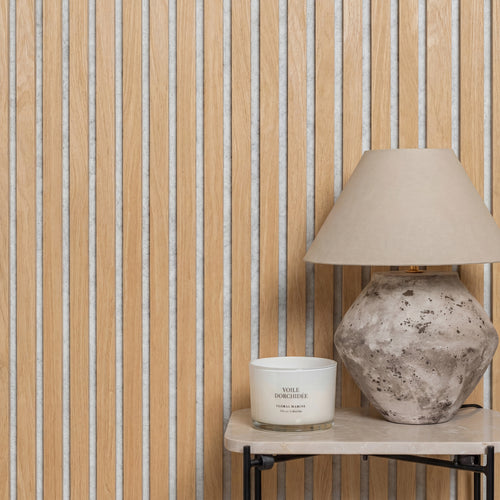
    American Acoustic Slat White Felt Wood Wall Panels - Oak - View 1

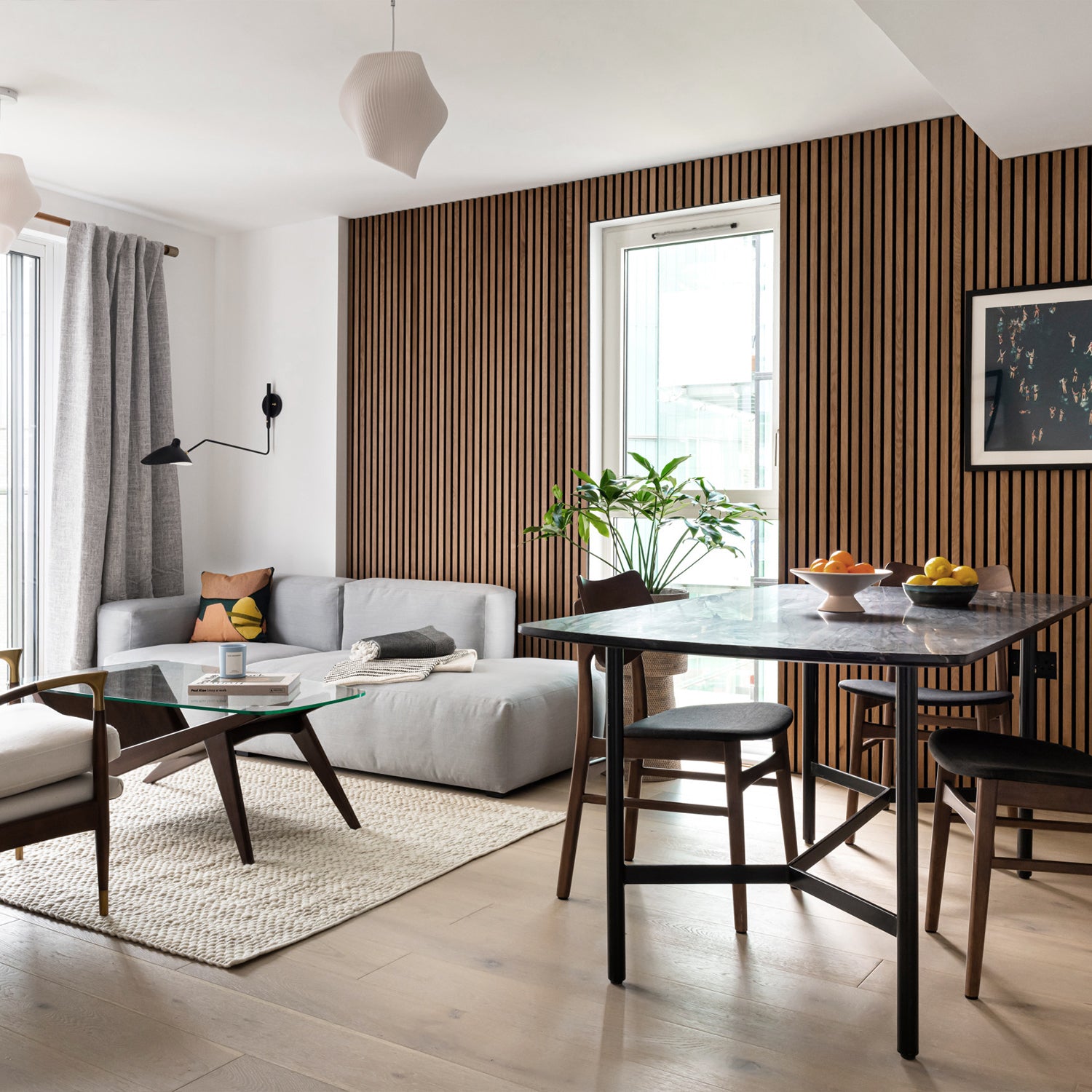
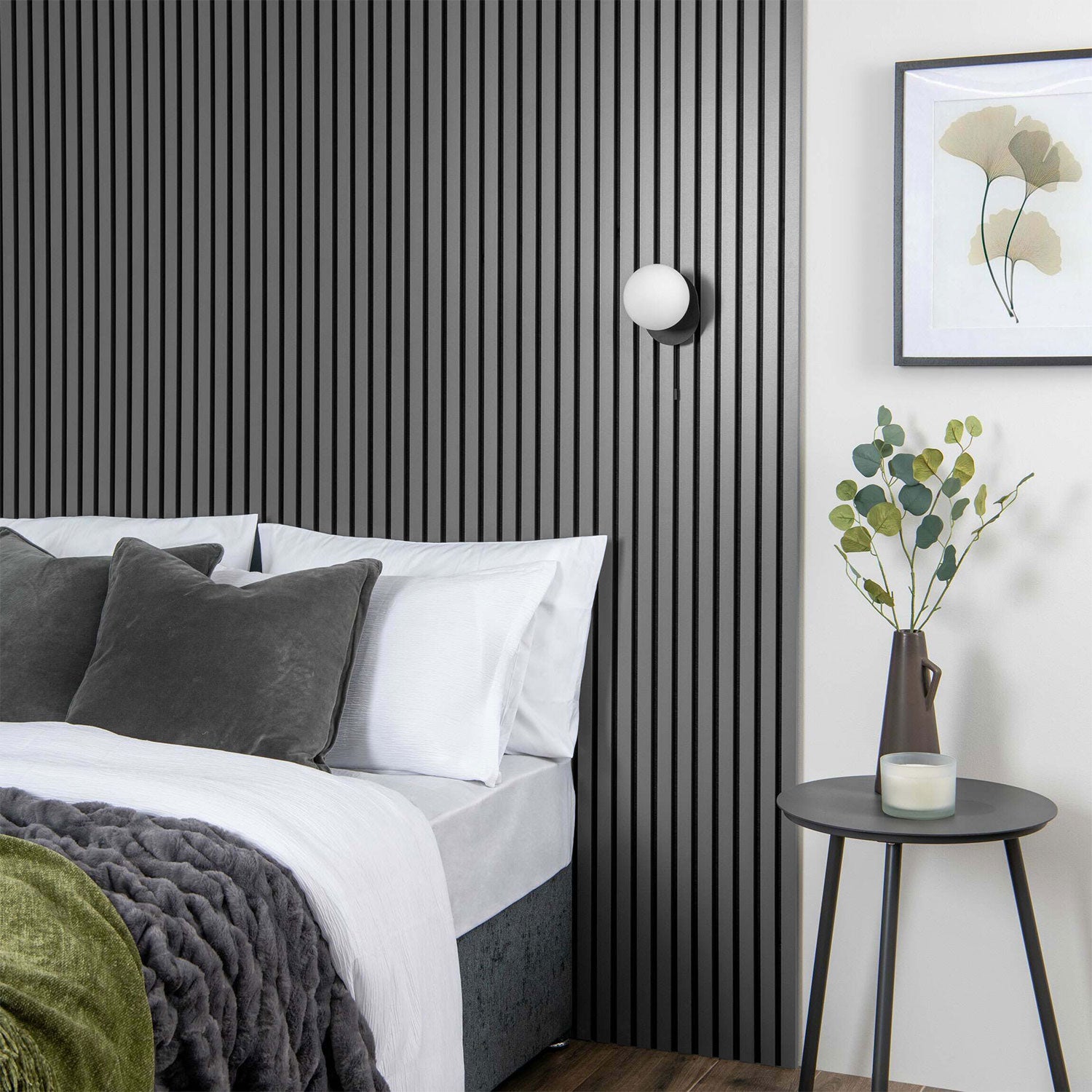
    The most popular wood wall panel in the residential market right now. These are vertical or horizontal wooden slats — typically 10–20mm wide — mounted over a felt or acoustic backing. The gaps between slats allow sound to pass through, where the felt layer absorbs it.

    TPH’s SoundPanel uses AcuFelt 1500 g/m² high-density backing and achieves an NRC (Noise Reduction Coefficient) of 0.85 — meaning it absorbs up to 85% of sound. That makes a measurable difference in home offices, home theaters, and open-plan living spaces where echo is a problem.

    Material: Real wood veneer over HDF core, with acoustic felt backing
    Best for: Living rooms, home offices, bedrooms, gaming rooms, home theaters
    NRC rating: 0.85 — Shop SoundPanel

    Decorative Slat Panels

    Same profile as acoustic, but without the felt backing. These are purely visual — the focus is on the texture and warmth of the wood rather than acoustic performance. Because they’re lighter and simpler, they’re often lower cost and easier to cut.

    Best for: Accent walls where aesthetics are the only goal
    NRC rating: None

    Solid Wood Panels
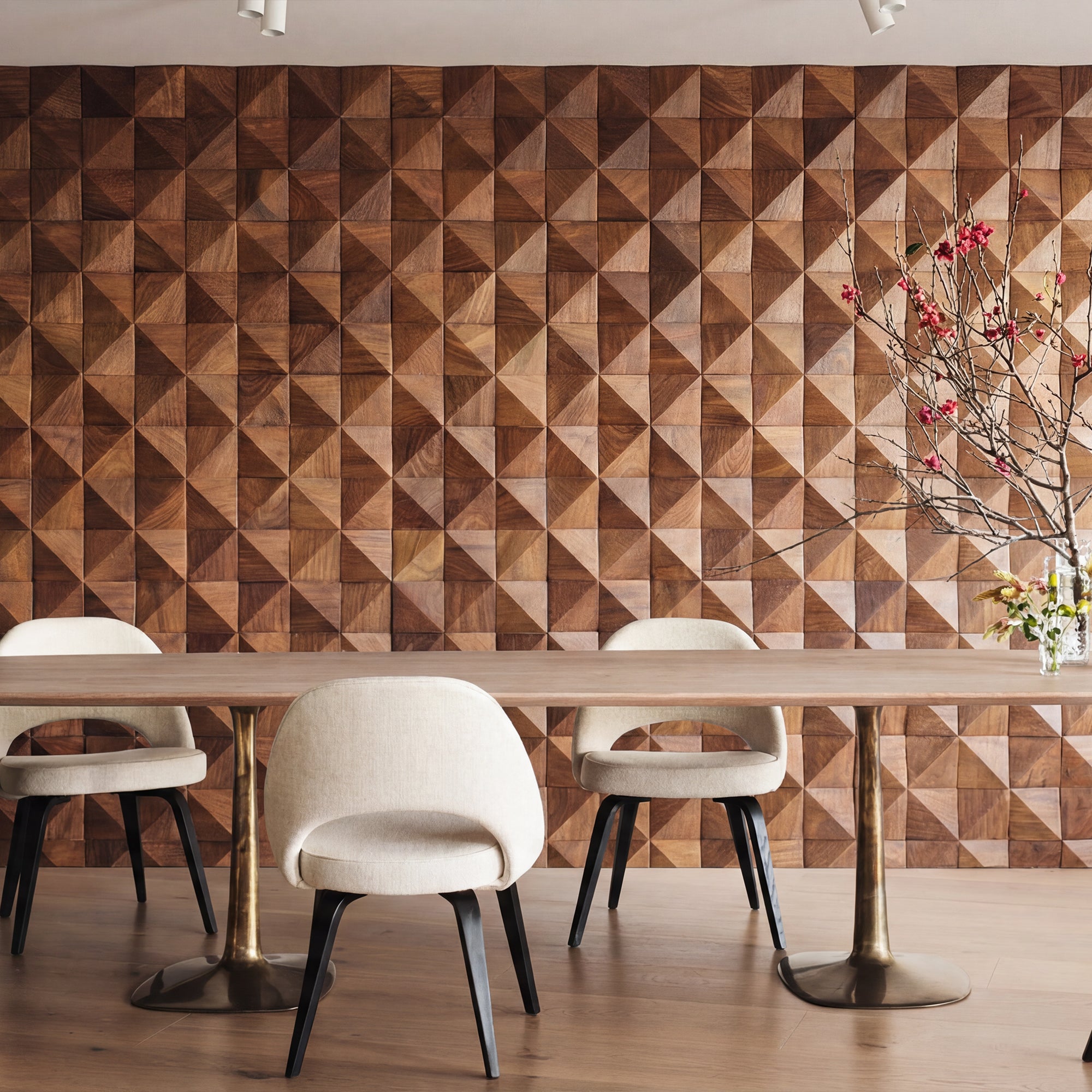
    Walnut Triangle Solid Wood Wall Panels - View 3

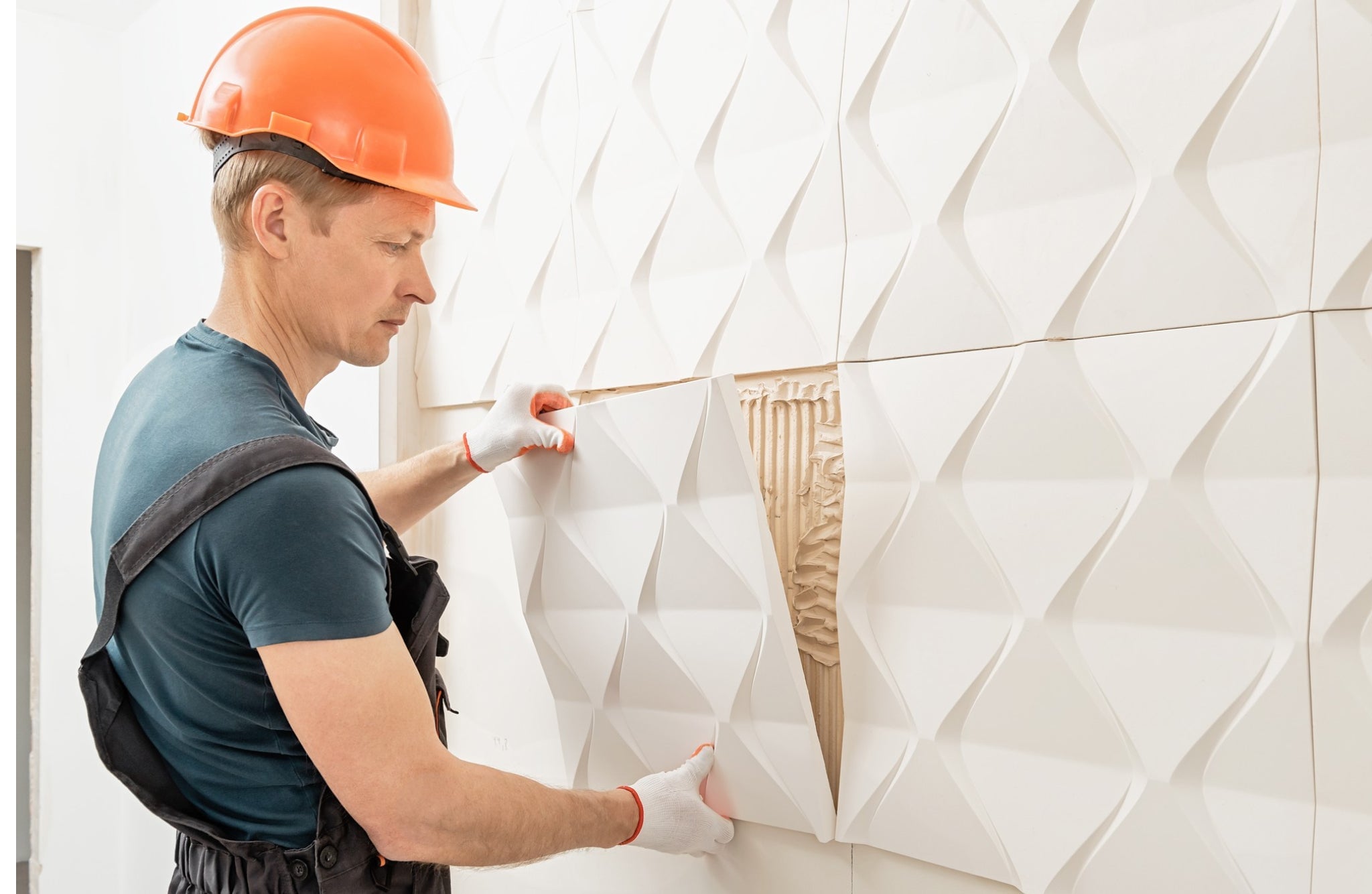
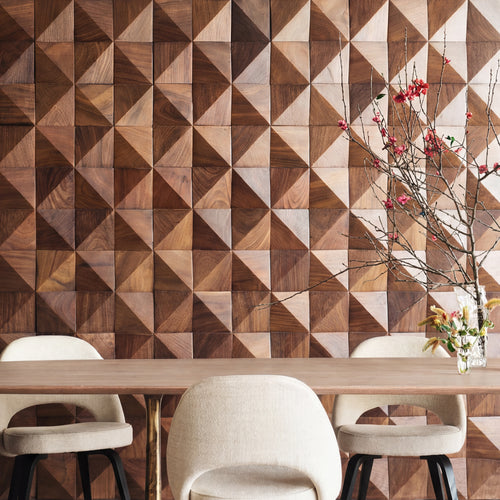
    Planks or sheets of real, through-and-through timber. Oak, walnut, pine, and ash are the most common species. These have genuine wood grain all the way through, take stain beautifully, and last for decades. The tradeoff: they’re heavier, more expensive, and more sensitive to humidity changes than engineered options.

    Best for: Dining rooms, hallways, statement feature walls
    Price range: Higher end — solid walnut panels can reach $15–$25/sqft in materials alone

    MDF Panels (Paintable)

    MDF panels are engineered wood — dense, stable, and smooth. They’re typically sold unfinished, ready to prime and paint. Fluted MDF and ribbed MDF are popular because they give you sculptural texture at a lower cost than real wood, and you can paint them any color you want.

    The limitation: they’re not real wood. If you want visible grain, warmth, or an honest material story, MDF isn’t it. But for a bold, painted feature wall — especially if you’re going dark — MDF is a practical and good-looking choice.

    Best for: Painted feature walls, contemporary interiors where grain isn’t the point
    Price range: $7–$11/sqft for materials — Solid wood vs MDF: full comparison

    Wood Veneer Panels
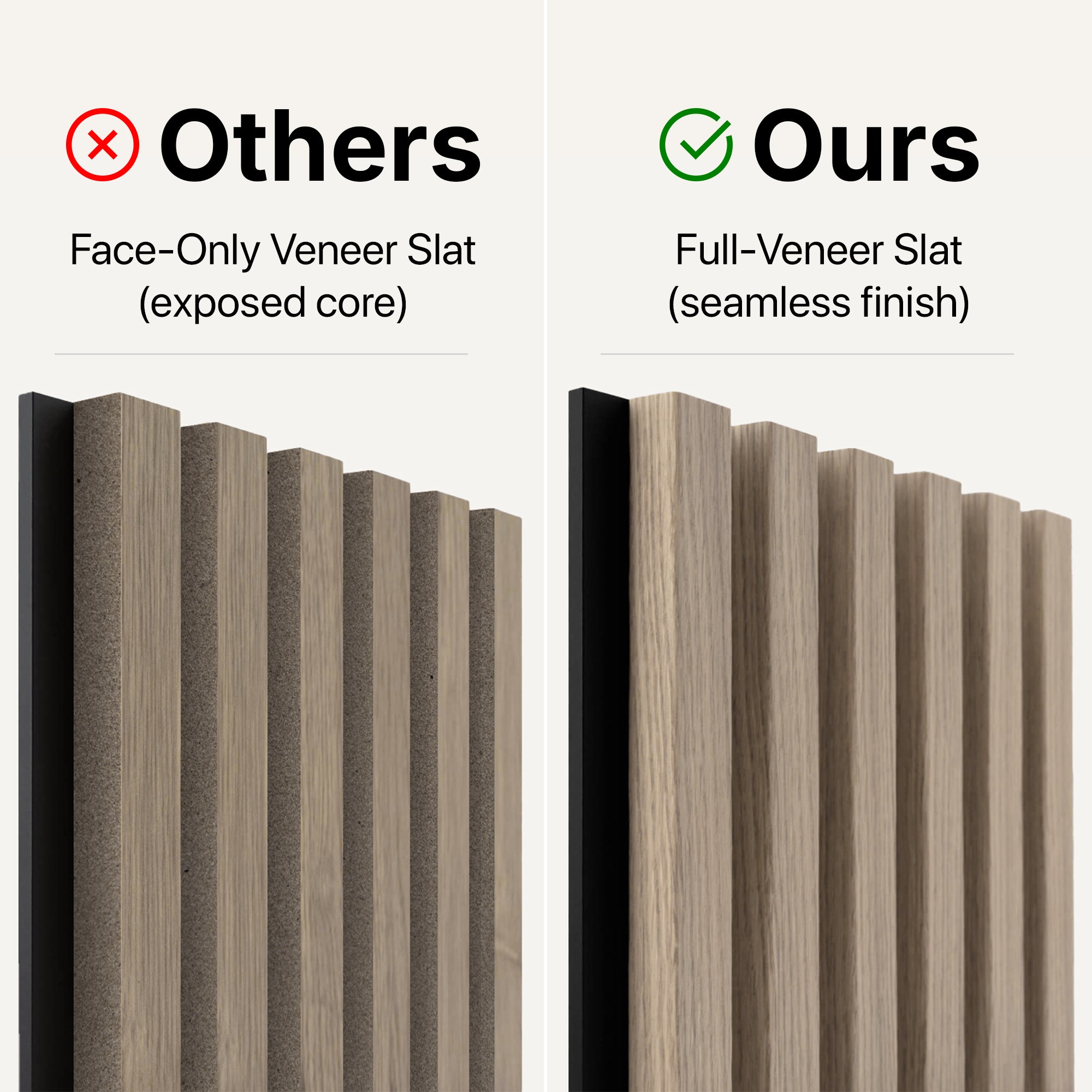
    A thin layer of real wood — typically 0.6–3mm — bonded to an engineered core (usually HDF or MDF). You get the look and feel of solid wood at a fraction of the weight and cost. The veneer is real; you can see and feel the grain. The core provides dimensional stability.

    Most of TPH’s slat panels use a wood veneer construction. It’s the sweet spot for 95% of residential applications.

    Best for: Anyone who wants real wood appearance without solid wood cost or weight
    Price range: $13–$22/sqft

    Mosaic and Geometric Panels
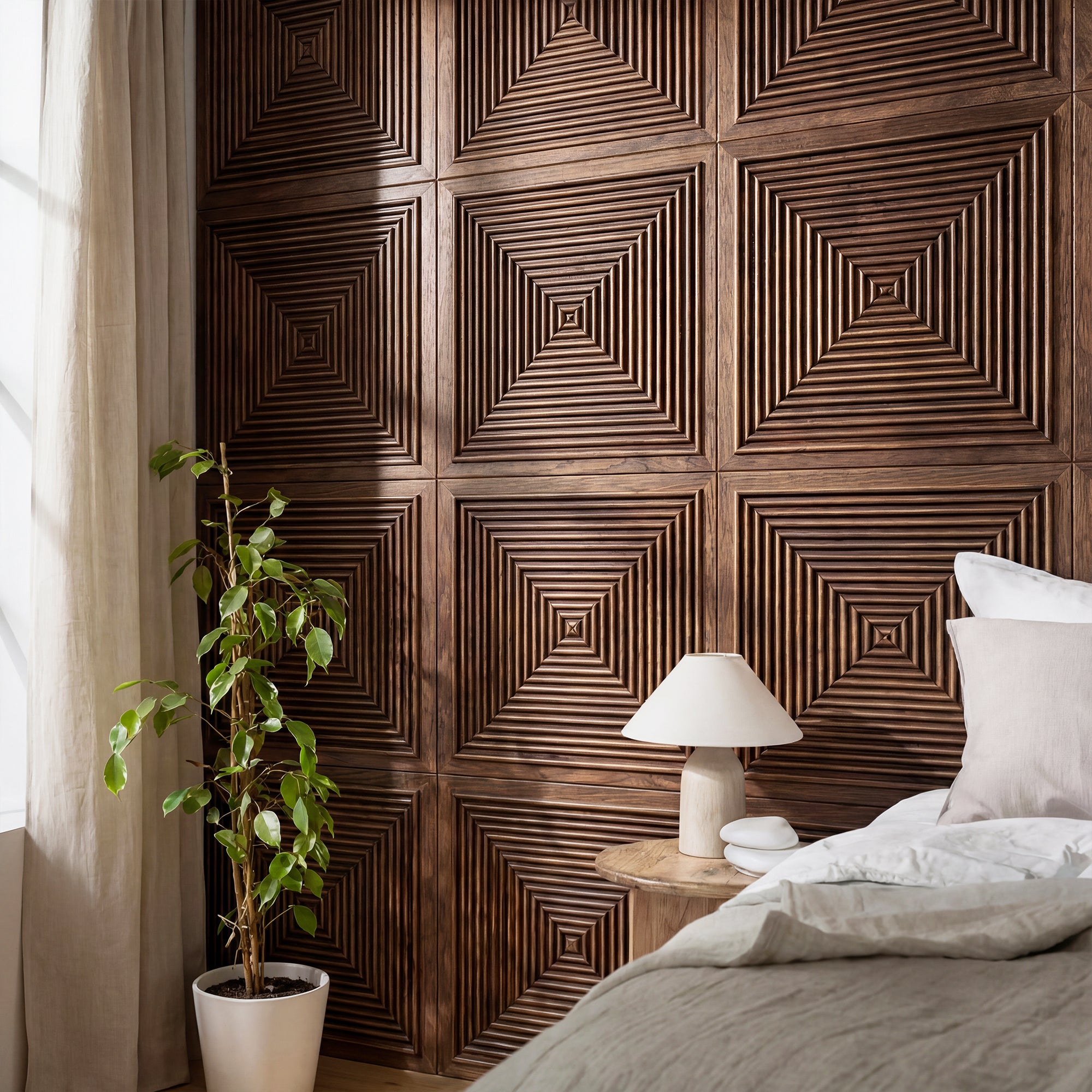
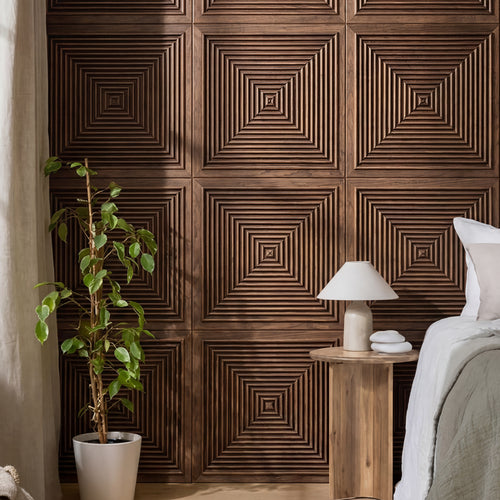
    3D Concentric Square Wood Wall Panel - Walnut - View 2

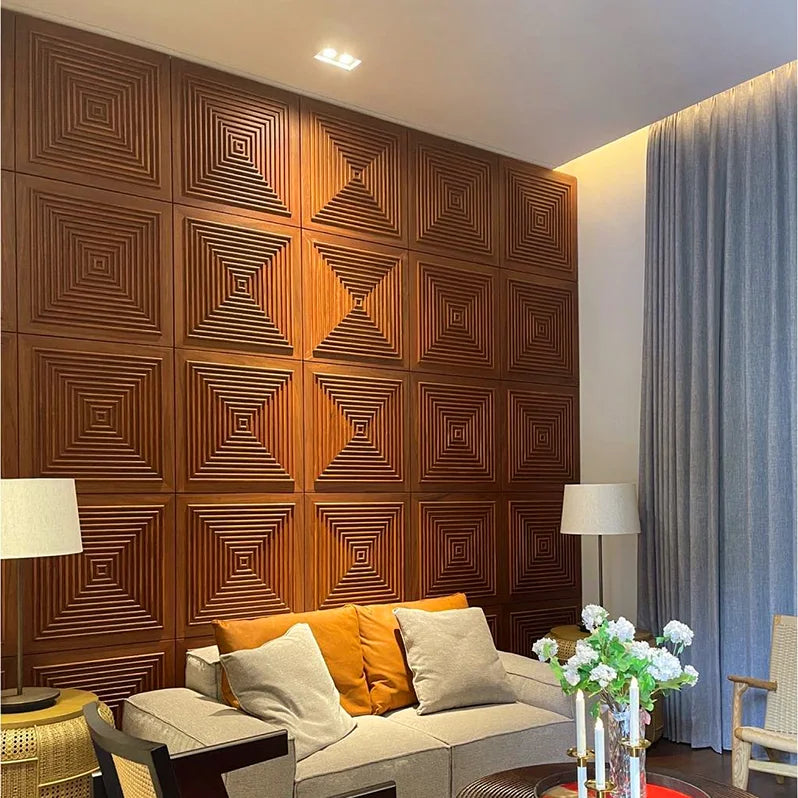
    Solid wood pieces cut into triangles, hexagons, or other geometric shapes and assembled into patterns. These create a more artistic, statement-wall effect. They take longer to install and require more planning, but the result is genuinely unique.

    Best for: Focal walls in dining rooms, entryways, or anywhere you want a conversation piece — Shop Mosaic Panels

    WPC Outdoor Panels

    Wood-plastic composite panels engineered for exterior use. Real wood fiber combined with polymer — stable, weather-resistant, and still warm-looking. If you’re cladding an exterior wall, covered patio, or garden room, WPC is the right material. Learn more about WPC outdoor panels.

    Wood Wall Panels Cost: What to Expect

    Wood panel walls typically cost between $7 and $22 per square foot for materials alone, depending on the type. Here’s how that breaks down in practice.

    Panel Type Materials (per sqft) DIY Install Time Contractor Labor (per sqft)
    Paintable MDF (fluted, ribbed) $7–$11 2–4 hrs per wall $3–$10
    Wood veneer slat (decorative) $12–$18 Under 2 hrs per wall $3–$10
    Acoustic slat (SoundPanel) $14–$22 Under 2 hrs per wall $3–$10
    Solid wood planks $15–$40+ 3–6 hrs per wall $5–$15
    Mosaic / geometric $18–$35 4–8 hrs per wall $8–$20

    Contractor labor runs $3–$10 per square foot for standard installations, with more complex layouts or solid wood work running higher.

    A realistic budget for a single accent wall (roughly 60–80 sqft):

    • Acoustic slat panels at $18/sqft = $1,080–$1,440 in materials
    • DIY install: your time + a few basic tools
    • Pro install: add $180–$800 depending on your area

    Full room coverage in a standard 12×14 bedroom (approx. 400 sqft of wall) runs $2,800–$8,800 in materials depending on the panel type. Most homeowners do one or two walls, not a full room.

    Which Wood Species Should You Choose?

    The wood species defines the color, grain character, and overall feel of your wall. Here’s what each one does:

    American Walnut — Dark chocolate brown with straight, sometimes wavy grain. The premium choice. Warm, rich, and pairs beautifully with brass hardware and natural linen. If your room has warm tones, walnut is hard to beat. See walnut wall panels.

    White Oak — Medium golden-brown, clean grain, highly versatile. Works in Scandinavian, mid-century, contemporary, and transitional rooms. The safest choice if you’re not sure — it doesn’t clash with much and ages well.

    Golden Oak — Warmer and more amber than white oak. Traditional feel. Pairs naturally with cream walls, dark floors, and warmer light sources.

    Pine — Light, pale, and knotty. Rustic and casual. Works in cottages, farmhouse interiors, and anywhere you want wood to feel natural and unpretentious rather than designed. Lower cost than hardwood species.

    Charcoal / Ebonized — Deeply stained or thermally treated wood with a near-black finish. Bold. Works in modern, industrial, and moody spaces. Increasingly popular in 2026 as darker tones replace the lighter Scandi palette of the previous decade.

    Room-by-Room: Where Wood Wall Panels Work Best

    Living Room

    The most popular application, and for good reason. A single accent wall behind a sofa or TV immediately anchors the room. Vertical slat panels draw the eye upward and make ceilings feel higher. Acoustic panels also reduce echo in open-plan spaces.

    Best types: Acoustic slat, wood veneer slat, mosaic for a statement wall
    Most popular wall: Behind the sofa, or as a TV feature wall — Living room panel ideas

    Bedroom

    The headboard wall is the natural target. A full-width panel behind the bed creates a built-in headboard effect without the cost or permanence of custom millwork. Walnut and dark oak work especially well here — they create a sense of enclosure and calm.

    Best types: Acoustic slat (for sound dampening), solid wood veneer
    Most popular wall: Behind the bed

    Home Office

    The acoustics argument is strongest here. Hard surfaces — painted drywall, glass, hard floors — create a flutter echo that makes every video call feel like you’re talking in a parking garage. One acoustic panel wall changes that completely. The NRC 0.85 rating means absorbing 85% of sound energy hitting the surface.

    Best types: Acoustic slat panels exclusively
    Most popular wall: Behind the desk, doubles as a camera backdrop — Gaming and office wall panel ideas

    Dining Room

    Panels make dining rooms feel more intimate and formal without being heavy. The trick is restraint — one wall behind a banquette or sideboard is enough. Walnut or darker tones create that restaurant-booth warmth that makes people want to stay at the table longer.

    Best types: Wood veneer slat, mosaic, solid wood
    Most popular wall: Behind a bench seat or sideboard — Dining room wall panels

    Hallway

    Hallways are narrow, high-traffic, and usually boring. A slat wall panel transforms them into something architectural. Horizontal panels make narrow hallways feel wider; vertical panels add height in low-ceiling corridors. This is also one of the easiest spaces to panel because the wall area is manageable.

    Home Theater and Gaming Room

    If you’re spending money on a projector or screen, spend proportionately on the room. Acoustic panels on the side walls and back wall reduce the flutter echo that plagues untreated rooms. Dark finishes absorb light scatter and improve perceived contrast. Home theater room ideas.

    How to Install Wood Wall Panels: The Real Timeline

    Most acoustic slat and wood veneer panels are designed for DIY installation. Here’s what’s actually involved.

    What you need:

    • Tape measure, pencil, level
    • Construction adhesive or panel-specific adhesive — adhesive guide
    • Oscillating tool or circular saw for cuts
    • Hammer and finishing nails (optional, for added security)

    The process:

    1. Prepare your wall. Clean surface, check for level. The panels won’t fix a badly out-of-plumb wall — fix large dips before you start.
    2. Mark your starting point. Find the center of the wall or use a corner. A level chalk line saves time.
    3. Cut to fit. Measure your wall height. Most panels need a top cut to fit ceiling height. Score-and-snap works for many panel types; a circular saw handles anything trickier. How to cut wall paneling.
    4. Apply adhesive. Run a zigzag bead on the back of the panel, or apply to the wall directly if the manufacturer recommends it.
    5. Press, check level, secure. Press the panel firmly to the wall. Check level. For acoustic panels, the felt backing grips the wall — the bond is strong immediately.
    6. Repeat and stagger joints. Adjacent panels should have staggered end joints for a cleaner look.

    Realistic time: A standard 8×10 ft accent wall takes most people 1.5–2.5 hours on their first installation. The second wall goes faster.

    Solid Wood vs MDF vs Wood Veneer: Which Is Right for You?

    The three materials serve different needs. Here’s how to think about the choice honestly.

    Choose solid wood if: You want panels that will last 30+ years and improve with age. You’re okay with a higher price and some sensitivity to humidity. You want a material that’s honest — it’s wood all the way through, and you can feel it.

    Choose wood veneer if: You want real wood appearance — visible grain, genuine warmth — without the weight, cost, or movement of solid wood. This is the right choice for 90% of residential walls. TPH’s veneer panels use real wood faces on stable HDF cores, so you get the look and the stability.

    Choose MDF if: You want a painted finish and don’t need grain. MDF paints beautifully and holds crisp profiles for fluted and ribbed designs. It’s also the most budget-friendly option at $7–$11/sqft. The honest limitation: it’s not wood, and it won’t look like wood.

    Full solid wood vs MDF comparison.

    Do Wood Wall Panels Actually Improve Acoustics?

    Yes — but the answer depends heavily on which panels you buy.

    Decorative wood panels with no acoustic backing do almost nothing for sound. The wood itself reflects rather than absorbs. You’ll get a small improvement from the added surface mass, but nothing measurable.

    Acoustic panels are different. The combination of slat gaps and high-density felt backing creates a mechanism for sound absorption. TPH’s SoundPanel achieves NRC 0.85 — that means 85% of sound energy hitting the panel is absorbed rather than reflected back into the room.

    For context: a fully treated recording studio typically targets NRC 0.9–1.0. A bare drywall room sits around NRC 0.05. A single acoustic panel wall takes you most of the way to a treated room without turning your house into a studio.

    Practical difference you’ll notice: fewer echoes on calls, voices that sound clearer and closer, less fatigue in rooms where you spend long periods talking or listening. More on acoustic wood panels.

    How to Choose the Right Panel for Your Space

    Five questions to narrow it down:

    1. Do you need acoustic performance? If yes, go straight to acoustic slat panels. If no, decorative options open up.

    2. What’s your wall’s moisture exposure? Bathrooms and kitchens need waterproof panels — WPC or PVC, not wood veneer. Bathroom panel options.

    3. What’s your budget? Under $10/sqft in materials: paintable MDF. $12–$18: decorative wood veneer slat. $18–$22+: acoustic slat or solid wood.

    4. What’s your room’s existing palette? Warm tones (cream, terracotta, warm grey): walnut or golden oak. Cool tones (white, charcoal, slate): white oak or charcoal finish. Industrial or modern dark rooms: ebonized wood.

    5. Are you DIYing or hiring? Both are completely viable. DIY acoustic slat panels go up in under 2 hours on a standard wall.

    Use the Room Visualizer to see how different finishes look on your actual walls before you commit. Open the Room Visualizer.

    How to Care for Wood Wall Panels

    Wood wall panels are low-maintenance. Here’s the short version:

    • Dust regularly with a dry microfiber cloth. Don’t use wet cloths on untreated or unfinished wood.
    • For marks: Damp cloth with mild soap, wiped quickly and dried immediately.
    • Avoid direct sunlight on dark-stained panels — UV fading is real, and it’s slow enough that you won’t notice until you move furniture.
    • Don’t steam clean. Heat and moisture are the enemies of any wood product.
    • Acoustic felt backing: Vacuuming the slat gaps once a year keeps the felt from accumulating dust that would reduce its performance over time.

    Full panel care guide.

    The Honest Comparison: Wood Panels vs Wallpaper vs Paint

    Each does something different. The right answer depends on what you’re trying to achieve.

    Paint is the cheapest and most reversible option. It changes color but not texture, and it does nothing for acoustics. If your walls are in good shape and you’re just after a new look, paint is fine.

    Wallpaper adds pattern and some texture, but remains a flat surface. Modern wallpapers look good, but they don’t change how a room feels spatially or acoustically. And removal is a project.

    Wood wall panels add genuine texture, warmth, and — if you choose acoustic panels — measurable sound improvement. They’re permanent in the best sense: they look better in 10 years than they do on day one, and they hold up to real use. The tradeoff is cost and installation time.

    Wall panels vs wallpaper: full comparison.

    Frequently Asked Questions

    How long do wood wall panels last?
    Wood veneer panels installed correctly last 15–25+ years under normal indoor conditions. Solid wood panels last the life of the building. MDF panels are slightly more vulnerable to moisture damage at edges — seal them properly on installation and they’ll last 10–15 years without issue.

    Can you install wood wall panels over existing wallpaper?
    Not recommended. Wallpaper creates an uneven, potentially unstable substrate. Strip the wallpaper first, skim-coat any damage, and install onto a clean flat wall.

    Do wood wall panels need to be sealed?
    Pre-finished wood veneer panels (like TPH’s SoundPanel) arrive ready to install — no sealing required. Unfinished solid wood or MDF panels need primer or sealant before or after installation.

    Are wood wall panels suitable for a bedroom?
    Yes, and the bedroom is one of the best applications. The acoustic benefit is real — people sleep better in quieter rooms — and the visual warmth of wood behind a bed transforms the space.

    Can I install wood wall panels myself?
    Yes. TPH panels are designed for DIY installation and take under 2 hours per wall for most homeowners. The main requirement is a level wall, accurate measurements, and the right adhesive.

    Where to Start

    If you know the room but not the panel, the Room Visualizer is the right first step — it lets you see any TPH panel on a wall before you order. Open the Room Visualizer.

    If you know you want acoustic performance, start with the SoundPanel collection. Shop SoundPanel.

    If you want to explore wood types and finishes across the full range, the wood wall panels collection is the place. Shop all wood wall panels.

    Sample boxes are available if you want to hold the finish in your hand before committing — which, honestly, you should. A photo on a screen tells half the story. Order a sample box.

    The Panel Hub makes real wood acoustic wall panels from FSC-certified materials, designed in the USA and shipped from North Carolina. 3-sided rounded edges. AcuFelt 1500 g/m² backing. NRC 0.85.

    Shop the Full Collection

    Everything covered in this guide is available to explore and order at The Panel Hub. Browse the complete wood wall panel collection — including the SoundPanel™ acoustic slat range, the GroovePanel® mosaic tiles, and the RockSurface® faux stone panels. For room-by-room design inspiration, our interior slat wall ideas guide covers 50+ applications across every style. For detailed guidance on acoustic panel performance and specifications, the complete acoustic panel buyer’s guide is the right next step.
  • Dining Room Wall Decor Ideas That Will Elevate Your Everyday Meals

    Dining Room Wall Decor Ideas That Will Elevate Your Everyday Meals

    Dining rooms are more than just a place to eat, they’re where conversations unfold, guests gather, and everyday moments feel intentional. Wall decor plays a major role in shaping that experience. This is why people take dining room wall decor seriously.

    Below, we’ll explore dining room wall decor ideas, common mistakes to avoid, key factors to consider, and how to choose decor that aligns with your dining room style. The right choices can make your dining area feel warm, cohesive, and thoughtfully designed, while the wrong ones can disrupt the entire space and mood.

    Dining Room Wall Decor Ideas

    When selecting wall decor for your dining room, make sure to balance visual interest with subtlety. The following lists are decoration types that are commonly used to enhance a dining room:

    1. Art Prints or Paintings

    A single large dining room wall art or a curated gallery wall can instantly anchor the dining space. Abstract art, landscape paintings, or minimalist line art will usually work well, but it may depend on your interior style.

    2. Mirrors for Depth and Light

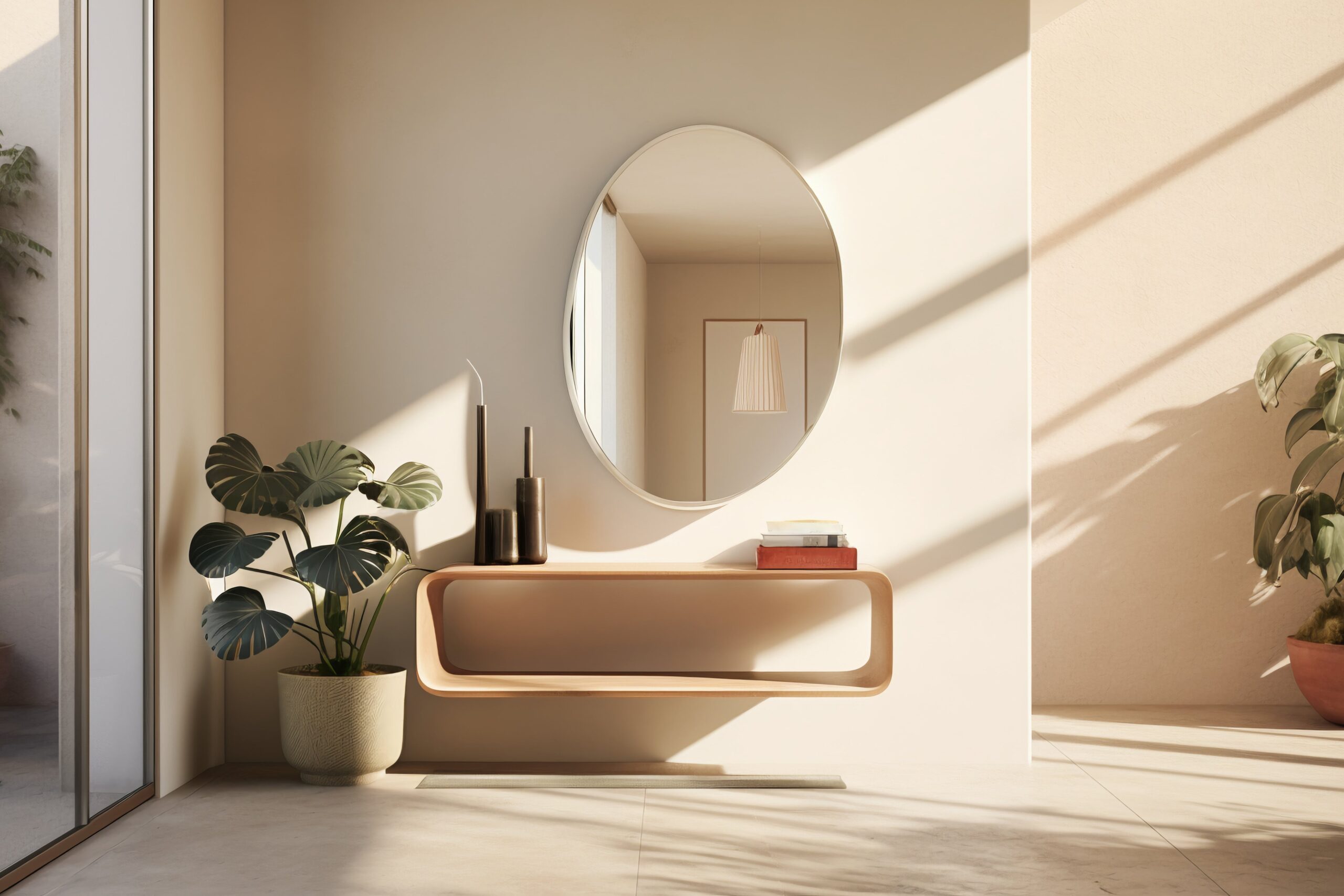
    Mirrors reflect light and make smaller dining rooms feel more spacious. Choose a framed mirror that complements your table and lighting fixtures for a cohesive look. Oftentimes, the mirror is completed with a console table or a floating shelf.

    3. Statement Shelving

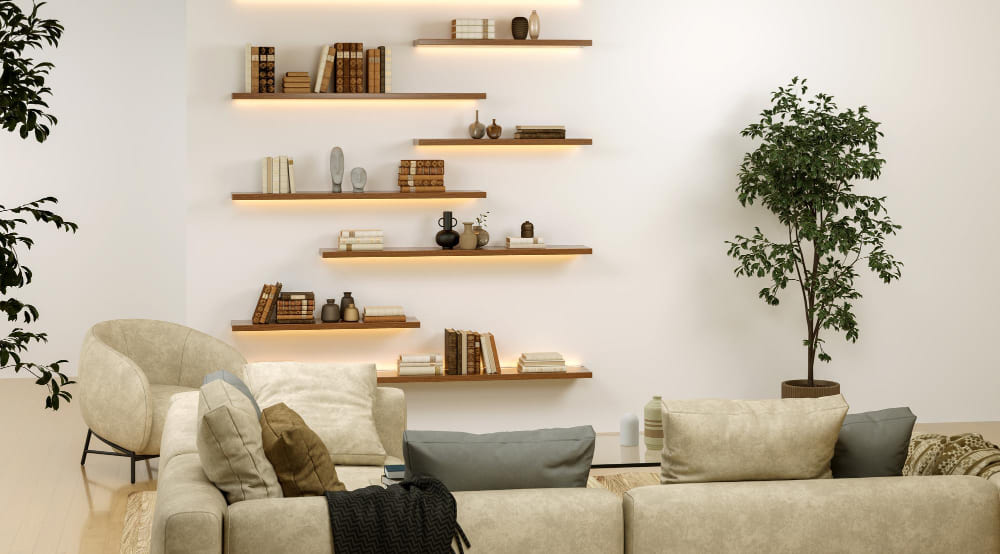
    Floating shelves allow you to display ceramics, small plants, or sculptural objects. Keep styling minimal to avoid visual clutter. When choosing the shelf, it’s crucial to pay attention to the size, so it won’t interfere with dining chairs, or disrupt movement around the table.

    4. Personal Touch

    Personal elements make the dining room feel lived-in rather than staged. Choose a few meaningful pieces, such as framed travel photography, family artwork, or handmade ceramics. Match color tones or materials to your existing dining furniture and lighting.

    5. Wood Panels or Wall Cladding

    Wood wall panels add texture, warmth, and architectural interest. Vertical slats, fluted panels, or subtle geometric patterns can elevate the room without relying on multiple decorative elements. It would be even better if you choose acoustic wood panels to enhance privacy, intimacy, and reduce reverbs.

    livingroom_panel_1-The Panel Hub

    If you are considering this option, explore The Panel Hub acoustic and decorative wood wall panels! Available in elegant color and pattern variants, each panel is designed to elevate any space, including dining areas.

    See TPH Wood Wall Panels

    Things to Avoid When Choosing Dining Room Wall Decor

    Even beautiful decor can fall flat if applied incorrectly. Here are common pitfalls to avoid:

    • Overcrowding the walls: Too many frames or accents can make the dining room feel busy and distracting.
    • Ignoring scale: Small artwork on a large wall can feel underwhelming, while oversized pieces may overpower the space (except if it is what you are intending to do).
    • Clashing styles: Mixing decor styles without intention often results in a room that feels disjointed.
    • Hanging decor too high: Wall decor should align visually with the dining table and eye level when seated.
    • Overly trendy choices: Trends fade quickly and may make your dining room feel dated sooner than expected.

    Read More: 5 Best Dining Room Wall Panels: Stylish Decor Ideas

    Things to Consider Before Choosing Dining Room Wall Decor

    Before committing to any decor, take a step back and assess the space as a whole. These are several things you should pay attention to:

    • Wall size and layout: Measure available wall space to ensure proper proportions.
    • Lighting conditions: Natural and artificial light affect how colors, textures, and materials appear.
    • Color palette: Your wall decor should complement existing tones in furniture, flooring, and textiles.
    • Maintenance: Some materials, like textured panels or fabric art, require more upkeep than others.
    • Dining room function: Formal dining rooms may benefit from refined decor, while casual spaces like living room allow for more playful elements.

    How to Choose Decor Based on Your Dining Room Style

    Matching wall decor to your interior style ensures a cohesive and intentional look. These are general guidelines for each interior style:

    1. Modern & Minimalist: Modern dining room ideas often center around clean lines, neutral tones, and simple artwork. Large-scale abstract art, monochrome prints, or subtle wall panels work best.
    2. Scandinavian: Focus on light colors, natural materials, and functional decor. Wood accents, soft-toned art, and minimal shelving fit perfectly.
    3. Industrial: Use raw materials like concrete textures, metal frames, or dark wood. Black-and-white photography or oversized statement art pairs well.
    4. Classic or Transitional: Wall molding, framed artwork, and symmetrical arrangements add timeless elegance without feeling outdated.
    5. Contemporary: Experiment with bold art, textured panels, or mixed materials while keeping the overall palette controlled.

    Final thought

    Choosing the right dining room wall decor is about creating harmony between function, style, and atmosphere. Rather than treating wall decor as an afterthought, view it as an integral part of your dining experience. With thoughtful selection and balanced placement, your dining room walls can enhance every meal, whether it’s a quiet dinner or a lively gathering.

    If you want to elevate your dining room with a touch of warmth and nature, see The Panel Hub best selling wood wall panels! Enjoy free shipping across US continental and 5-year warranty. Upgrade your walls today!

    FAQs: Dining Room Wall Decor Ideas

    What is the best wall decor for a dining room?

    The best dining room wall decor depends on your style and space, but popular options include artwork, mirrors, wood wall panels, gallery walls, and textured finishes. If you want a high-impact upgrade, wall panels—such as slat wood or stone-effect panels—add depth and a designer look without requiring a full renovation.

    How can I make my dining room wall look more expensive?

    Focus on texture, scale, and lighting. Large statement pieces, layered materials like wood or stone panels, and warm lighting can instantly elevate the space. Avoid clutter and instead opt for one or two bold design elements that create a cohesive, high-end feel.

    Are wall panels a good choice for dining rooms?

    Yes, wall panels are one of the easiest ways to upgrade a dining room. They add dimension, improve acoustics, and create a focal point. Options like acoustic slat panels or textured wall panels can transform plain walls into visually striking features while maintaining a clean, modern look.

    What colors work best for dining room walls?

    Neutral tones like beige, taupe, warm gray, and soft white are timeless and versatile. Darker shades like charcoal, deep green, or navy can create a more intimate and dramatic dining atmosphere. Pairing these colors with natural textures like wood panels enhances warmth and depth.

    How do I decorate a small dining room wall?

    In smaller spaces, keep it simple and intentional. Use mirrors to reflect light and make the room feel larger, or opt for vertical elements like slat panels to create the illusion of height. Avoid overcrowding the wall—one well-chosen feature is more effective than many small items.

    Should I hang art or use wall panels in a dining room?

    Both work well—it depends on the look you want. Art adds personality and can be easily changed, while wall panels provide a more permanent, architectural upgrade. Many homeowners combine both by installing panels as a backdrop and layering artwork on top.
  • Wall Decor for Living Room: Ideas and What Not to Do

    Wall Decor for Living Room: Ideas and What Not to Do

    Your living room is often the first space people see. Among all components inside it, the walls play a major role in setting the mood. The right wall decor for the living room can make it feel complete, cohesive, and intentionally designed, while poor choices can quickly make it feel cluttered or unfinished.
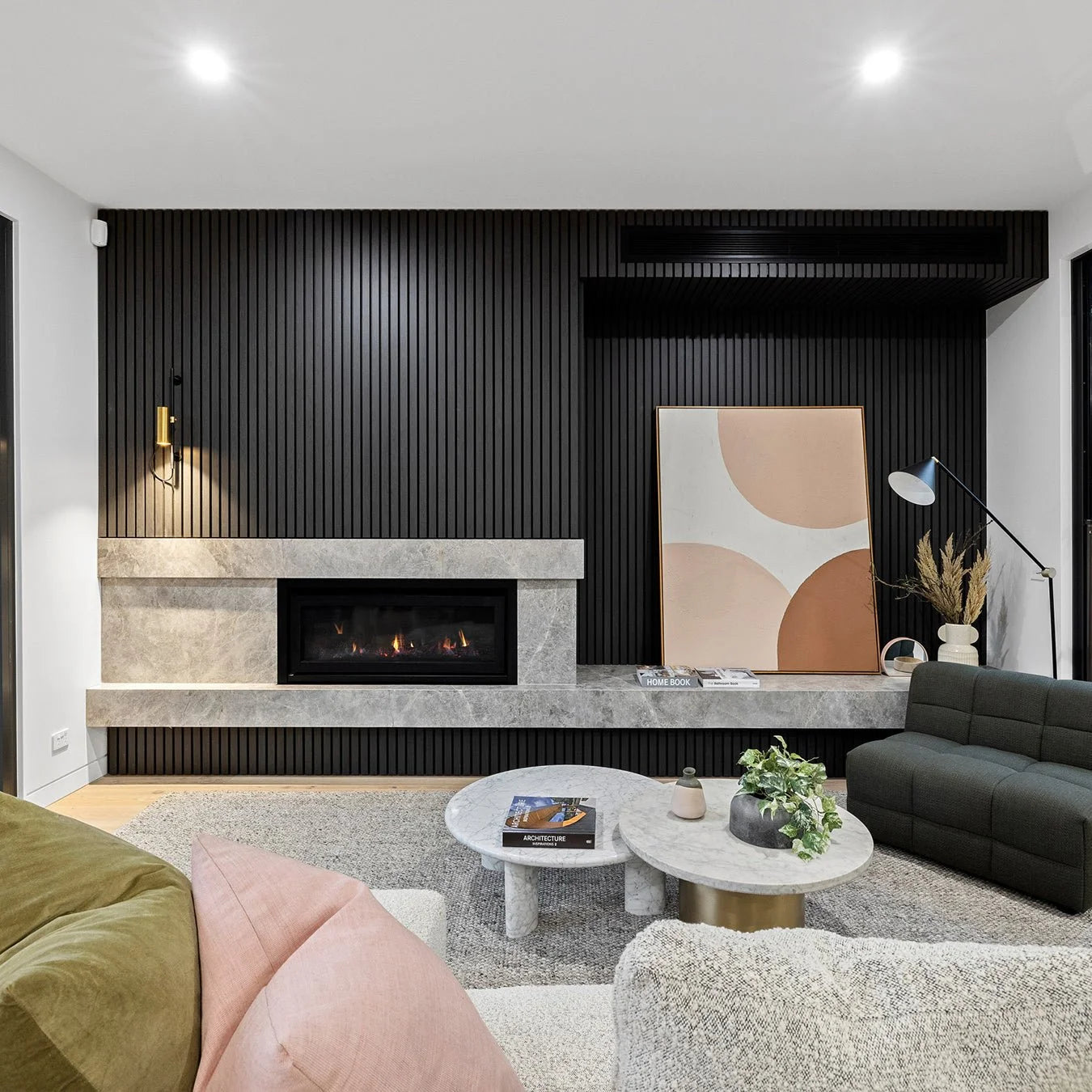
    This article provides a general guide that covers living room wall decor ideas, common mistakes to avoid, and key things to consider before making a decision. 

    Living Room Wall Decor Ideas

    Choosing wall decor isn’t just about filling empty space, it’s about enhancing the overall design of your living room. Here are some popular and effective living room wall decor ideas:

    1. Artwork & Wall Art

    Paintings, prints, and illustrations instantly add personality. This can be the best choice if you want to add a personal touch to your space. Large statement art works well above sofas, while gallery walls suit expansive or minimalist spaces when arranged with intention.

    2. Mirrors

    Add_Wall_Mirrors-The Panel Hub

    Mirrors help reflect light and make smaller living rooms feel more open. However, choosing the best size and shape might be a bit tricky. You also need to consider its proportion against furniture below the mirror. You can follow the following rules of thumb:

    • Mirror width should be 2/3 to 3/4 the width of the furniture.
    • Choose a mirror that covers 60–75% of the wall width to ensure it’s not too small or too big. 
    • Tall or vertically oriented mirrors work best for low ceilings, while oversized or horizontal mirrors are best for high ceilings.

    3. Wood Panels or Slat Panels

    Wood wall panels bring warmth, texture, and an organic feel to your space. They work especially well in contemporary or Scandinavian interiors and can also improve acoustics in open-plan living rooms. For a complete guide to styling wood panels throughout your living room, see how to decorate a living room with wood paneling.

    American Walnut Acoustic Slat Wood Wall Panels | 3-Sided Veneer | SoundPanel®-Indoor-The Panel Hub

    If you are considering adding wood panels, check out The Panel Hub’s 100% real wood panels! Available in acoustic and decorative variants, you can enjoy free shipping across continental US. Our panels are FSC certified, proven to help with sound dampening up to 82%.

    See TPH Wood Wall Panels

    4. Shelving & Floating Shelves

    Functional and decorative shelves allow you to display books, plants, or curated decor pieces while keeping the wall visually dynamic. While installation may take some work, this type of wall decor for the living room is a popular choice.

    5. Accent Walls

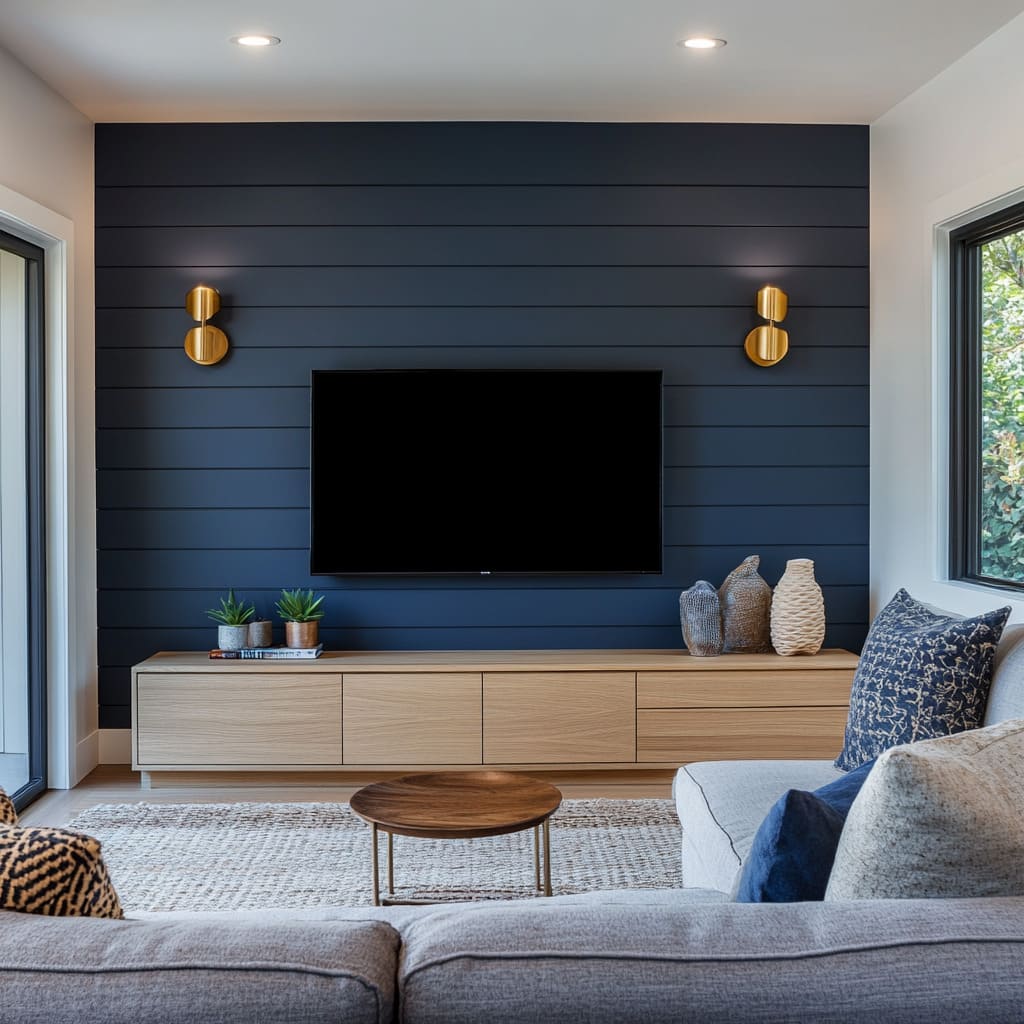
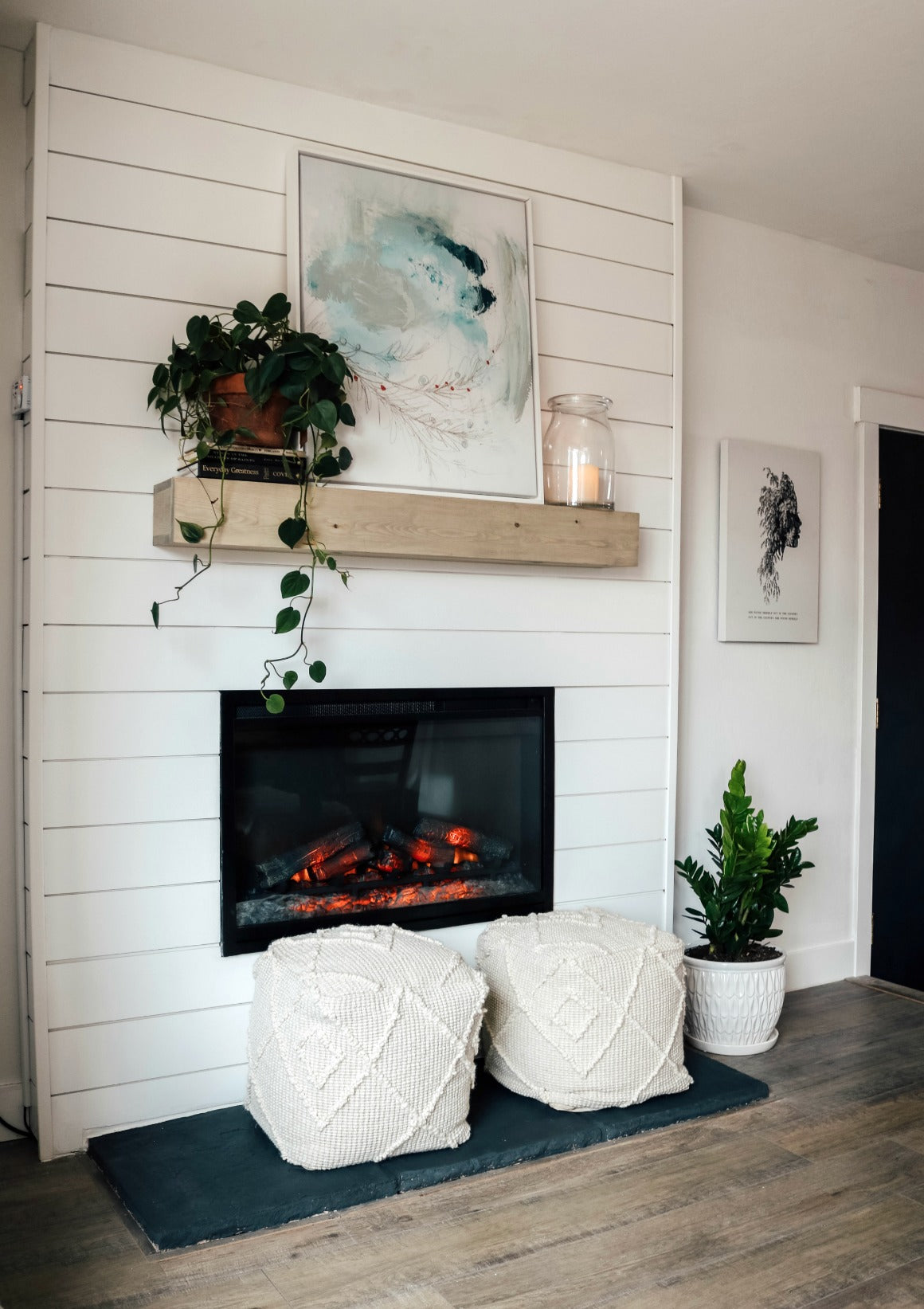
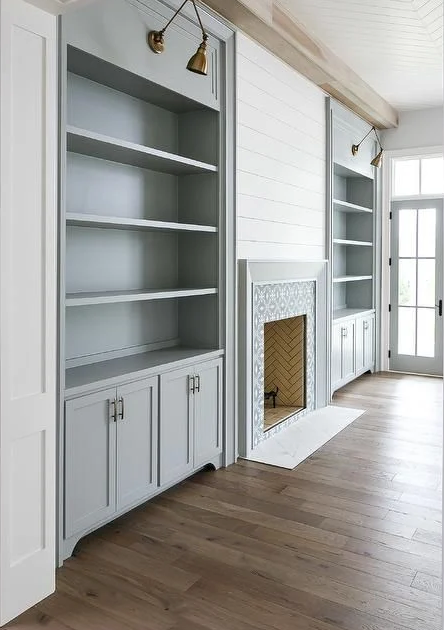
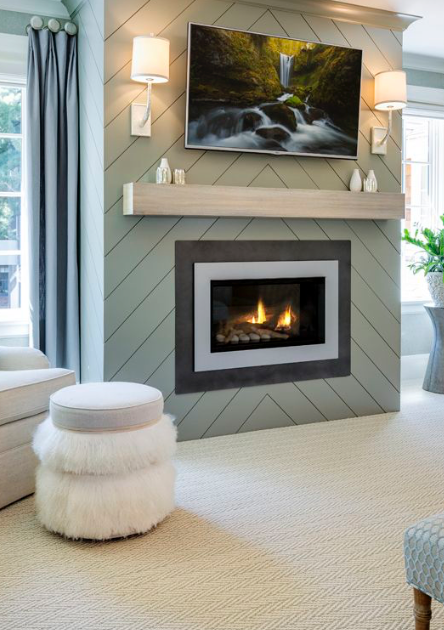
    Accent walls using textured materials such as faux stones or subtle patterns help anchor the room. One of the examples would be wainscoting and shiplap that are installed in one wall. A lot of the interior has these accent walls in a living room, such as near TV, sofa, or fireplace.

    Common Mistakes You Should Avoid

    Even stylish decor can fall flat if applied incorrectly. Avoid these common living room wall decor mistakes:

    • Overcrowding the wall with too many decor items, creating visual clutter
    • Choosing decor that’s too small for large wall spaces or vice versa
    • Ignoring scale and proportion, especially above furniture
    • Hanging artwork too high, making it feel disconnected from the room
    • Mixing too many styles or colors without a cohesive theme

    Wall decor should complement your furniture and layout, not compete with it.

    5 Things to Consider When Choosing Living Room Wall Decor

    Before committing to any wall decor for the living room, keep these five factors in mind:

    1. Room Size & Ceiling Height

    Larger rooms can handle bold or oversized decor, while smaller spaces benefit from simpler, lighter designs. Avoid adding oversized decor in small spaces because it’s going to overwhelm your space, unless the crowded wall is intended and part of your theme.

    2. Existing Furniture & Color Palette

    Wall decor should tie into your sofa, rugs, cabinets, and other parts of your living room for a cohesive look. Sometimes decor ties everything together, but also messes everything up. Therefore, always consider your decor plan with the rest of your furniture.

    3. Lighting Conditions

    Natural and artificial lighting can affect how textures, colors, and artwork appear on the wall. You need to decide whether cooler or warmer lighting suits your decor. Not only that, the style of your standing or table lamps can also often make a difference.

    4. Lifestyle & Maintenance

    If you have kids or pets, choose durable wall decor for the living room that is easy to clean and maintain. Our wood panels, for example, are designed with a water-resistant core, built from high-density MR-MDF that’s engineered to withstand moisture and humidity. Maintaining it won’t be as much of a headache compared to regular wood panels in the market.

    5. Long-Term Versatility

    Trendy decor may feel dated quickly. For example, sharp, high-contrast geometric patterns were very popular a few years ago. Large tropical leaves and oversized florals were also popular, but now not anymore. Opt for timeless pieces that can evolve with your space, or you can learn more about design trends that are predicted to still be popular in 2026 by Architectural Digest.

    Read More: 5 Best wood wall paneling ideas: From Rustic to Ultra-Modern!

    Tips for Styling Living Room Wall Decor

    The following are some additional details you should pay attention to when choosing wall decor for the living room:

    • Keep a consistent spacing between frames or panels for a polished look
    • Use painter’s tape to plan layouts before installation
    • Balance decor-heavy walls with clean, open areas
    • Combine textures (wood, metal, fabric) for visual depth
    • Let one wall be the focal point instead of decorating every surface

    Final Recommendation

    Even though it’s often labeled as a decoration, choosing wall decor for the living room is just as important as selecting any other interior element. Many people assume a room feels disjointed because of major features like paint color, cabinetry, tables, or sofas. In reality, smaller details, such as artwork or wood panels, can be the missing elements that bring the entire space together.

    If you are thinking about bringing natural elements and warmth to your living room, explore The Panel Hub wood wall panels! You will find the most elegant color and pattern variants that are ready to transform and elevate your home instantly.

    Explore Now

  • Wood Panel Ceiling Ideas, Pros and Cons, and Installation Tips

    Wood Panel Ceiling Ideas, Pros and Cons, and Installation Tips

    Wood adds warmth and elegance at the same time. This is why some people consider installing a wood panel ceiling at their home. You can also see it often in restaurants, offices, hotels, or other spaces where people seek for a peaceful, organic, and natural ambience.

    This article will walk you through its advantages and disadvantages and what you should pay attention to when choosing the product for your ceiling. Understanding it will help you compare the options better and know what to expect.

    What is a Wood Panel Ceiling?

    A wood panel ceiling is a ceiling design made by covering the surface with wood panels or wood-look panels. These panels can be made from solid wood, engineered wood, or wood veneer. It will be more cohesive when you also pair it with decorative wood wall panels.

    These types of ceilings work well in both modern and traditional spaces and can instantly make a room feel more inviting. Many people choose them to make a space look more custom, personal, and premium.

    Advantages and Disadvantages of a Wood Ceiling

    Drywall is one of the most common options for ceilings. Gypsum ceilings create a clean, smooth look and work well in modern interiors. They’re easy to shape for recessed lighting, tray ceilings, and hidden LED strips. Many people choose gypsum for its affordability and neat finish.

    By understanding wood ceiling panels advantages and disadvantages, you’ll grasp how this option compares with other popular ceiling types in the market.

    Advantages

    • Warm and natural look
      Wood adds a cozy and elegant feel that plain ceilings cannot offer.
    • Improves room style
      It works with many interior styles, from modern to rustic.
    • Can help with sound
      Wood panels can reduce echo and improve sound comfort, especially if you are using acoustic slat wood panels.
    • Wide design options
      Available in different colors, patterns, and finishes.

    Disadvantages

    • Higher cost
      Wood ceilings are usually more expensive than regular paint or drywall.
    • Needs maintenance
      Some wood types require regular care to keep them looking good.
    • Sensitive to moisture
      Wood may expand or warp in humid areas if not treated properly.

    Wood Panel Ceiling Ideas

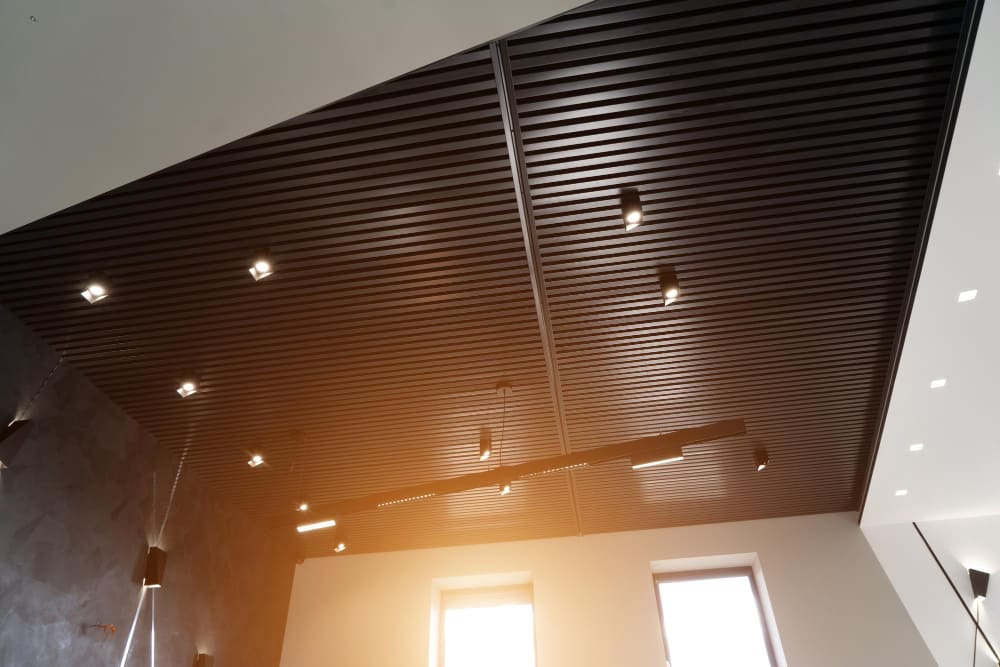
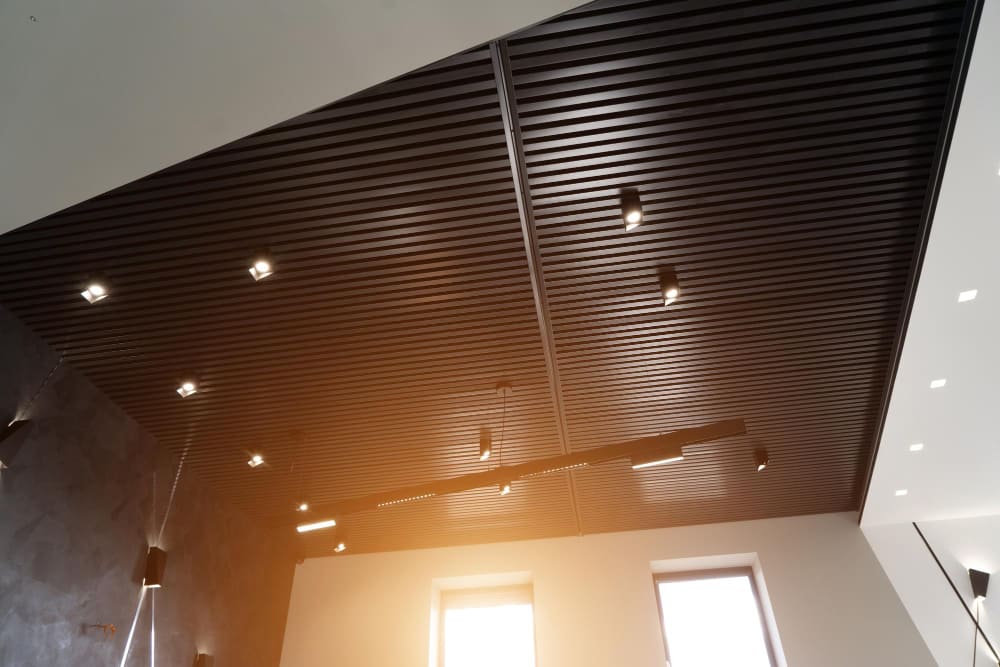
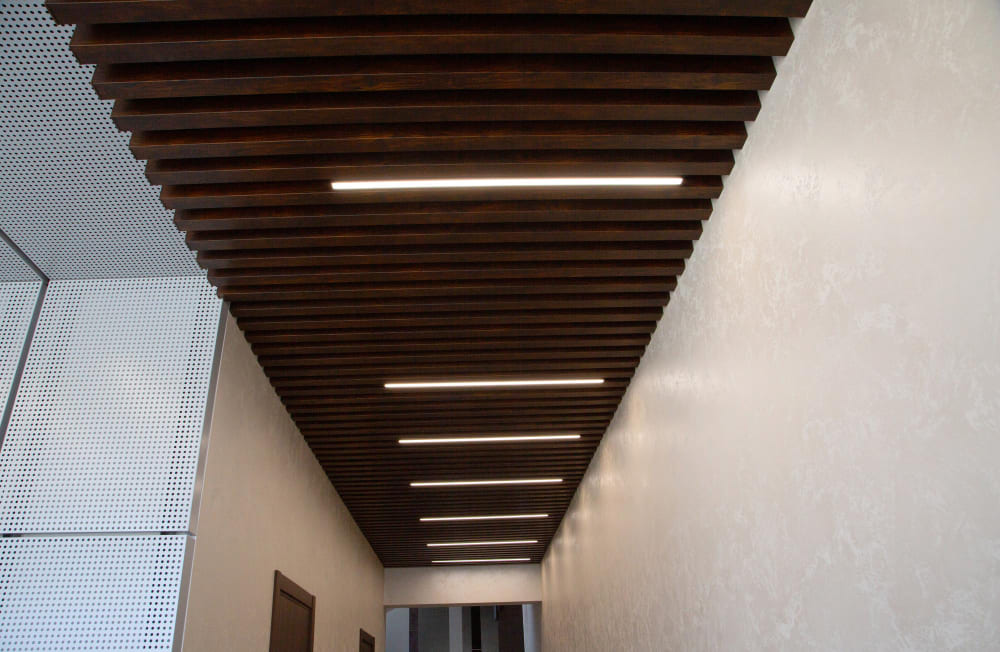
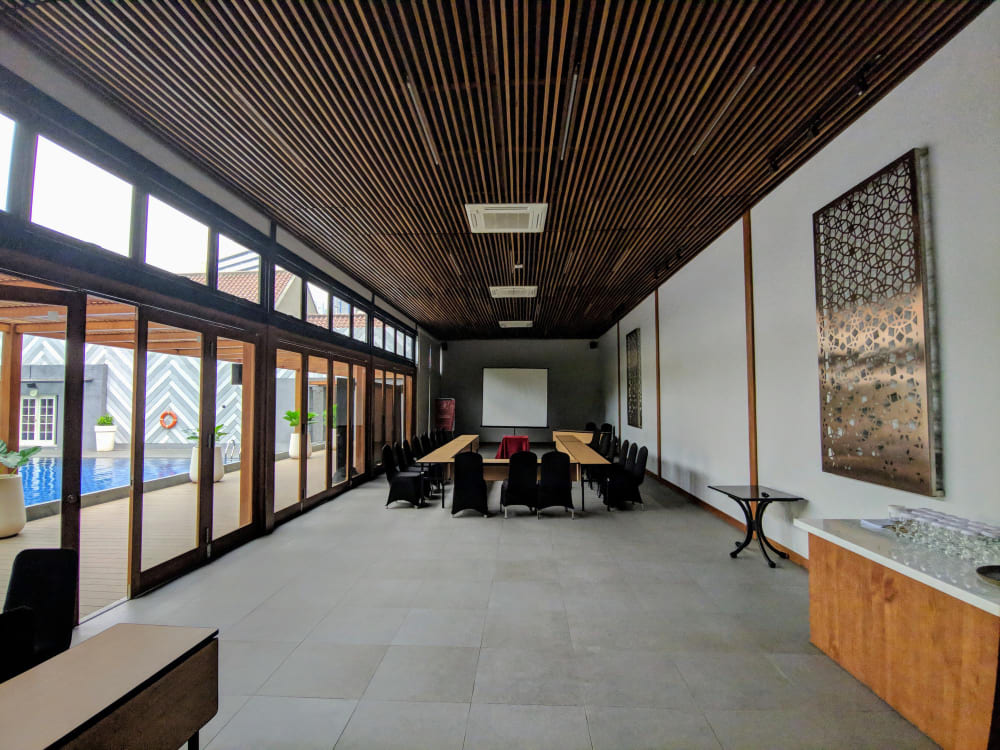
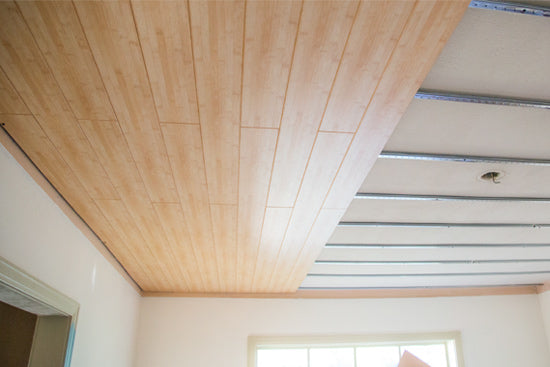
    Below are some examples of interiors with a wood panel ceiling. You can see that each interior style suits different types of ceiling paneling.

    If you are considering wood panels for your ceiling, see a wide range of options of 100% real wood panels from The Panel Hub. Explore acoustic or 3D decorative panels and find the most natural, elegant, and durable color and pattern variants!

    Explore Wall Panels

    How Long Does Wood Ceiling Last?

    A wood ceiling can last 20 to 50 years, depending on the type of wood, installation quality, and maintenance. Treated and sealed wood typically last longer and resist moisture, insects, and damage better than regular wood panels.

    Regular cleaning and proper indoor humidity levels help extend the lifespan of a wood panel ceiling. Using harsh chemicals or abrasive tools can strip the finish, leave stains, or cause discoloration. Excess water exposure or trapped moisture causes mold, swelling, or cracking.

    Last but not least, correct installation also plays a big role. It comes down to your choice of tools, equipment, and techniques. Smaller and lighter panels can sometimes work well with construction adhesives and screws, but more complex layout or bigger chunks of wood will definitely require more professional installation.

    Read More: How to Clean Wall Panels Fast: 3 Types, 30-Minute Fix

    Tips to Install Wood Panel Ceiling

    Installing a wood panel ceiling properly is important because it affects how it looks, how long it lasts, and how it performs over time. Poor installation can cause problems that are hard to fix later. These are several steps you must pay attention to:

    1. Check ceiling condition first. Make sure the ceiling surface is flat, dry, and clean. You don’t want the panels to loosen or fall over time. This conditioning before installation is crucial to ensure correct and firm fixing methods.
    2. Choose the right wood type. Use moisture-resistant panels for humid rooms, such as hallways near bathroom or outdoor settings. If necessary, you can add moisture-resistant finish just to be sure.
    3. Plan the layout. Decide the panel direction and pattern before installation. Fixing installation mistakes such as misaligned patterns or incorrect measurements often means removing and reinstalling panels. Doing it right from the start saves time, money, and material waste.
    4. Leave small gaps. Wood expands naturally due to temperature and humidity, so spacing helps prevent damage. Proper installation leaves the right spacing and support so panels don’t bend, crack, or pull apart over time.
    5. Hire a professional if needed. Installing wood paneling for the ceiling is much harder and trickier than when you do it for walls. Proper installation ensures better durability, security, and budgeting. If you are unsure about DIY installation, hiring a professional can be the right decision.

    Final Recommendation

    Wood on ceiling helps reduce echo and soften noise, making rooms feel quieter and more pleasant for conversation or relaxation. It also adds texture which often helps a room feel more finished and intentional. You don’t need extra décor or high-end furniture to make your space more elegant.

    If sound absorption is what you are looking for, shop The Panel Hub best selling acoustic panels or decorative wood panels. Enjoy free shipping across continental US plus a 5-year warranty!

  • Shiplap Wall Ideas for Every Room That’ll Look Cohesive & Elegant

    Shiplap Wall Ideas for Every Room That’ll Look Cohesive & Elegant

    Shiplap wall ideas are one of the easiest ways to turn a plain wall into a stylish feature, and shiplap is one of the most affordable wall paneling options to do it. This guide gives you design inspiration for every room, plus a complete walkthrough of how to install a shiplap wall and the common mistakes to avoid.

    What Is a Shiplap Wall?

    A shiplap wall is an interior wall made of long wooden boards that fit together with a small gap or groove between them. While it is most commonly installed horizontally, many homeowners also choose vertical or diagonal layouts. 

    Often associated with farmhouse style, shiplap has become a popular design feature in homes of all styles. Its clean lines, texture, and rustic charm make it a subtle yet effective way to enhance a wall without being overly flashy. 

    Shiplap Wall Ideas for Every Room

    If you are looking for shiplap wall ideas, explore these references based on space or room types you are going to transform!

    Living Room Shiplap Wall Ideas

    Are you considering other wall paneling options beyond shiplap? You may want to explore acoustic slat wall panels, which combine elegance with sound-absorbing functionality. Our panels are the only ones on the market with smooth edges and a three-sided finish. With a range of sophisticated color options, you can instantly transform your walls using our DIY-friendly panels!

    America Golden Acoustic Wall Panels | 3 - Sided Wood Veneer | SoundPanel® - The Panel Hub

    Explore Wood Wall Panels

    Benefits of Installing a Shiplap Wall

    Installing a shiplap wall offers several advantages, especially when you compare it to other options. First and foremost, shiplap accent walls create depth and character, unlike flat painted walls. Below are other main reasons why many people fall in love with shiplap wall panels:

    Versatility

    Shiplap complements various interior styles, from rustic to modern, even coastal to minimalist design. Compared to wallpapers, this option is more timeless. However, you still need to consider whether this choice will create a cohesive look, because sometimes it comes down to your furniture, wall height, and other factors.

    Durability

    Wooden shiplap is sturdy and can last for years with proper care. It can withstand wear better than drywall alone. With the right techniques of finishing, it resists scratches and dents more effectively than softer wall coverings.

    Easy Maintenance

    Shiplap walls can be repainted or stained, which allows you to change its look whenever you want a fresh, new look. When it comes to maintenance, regular dusting using a soft cloth should be enough. You may also use a microfiber duster or vacuum with brushes.

    How to Install a Shiplap Wall (Step-by-Step)

    Installing a shiplap accent wall is a manageable DIY project, as long as you have the right tools. Here’s a simple step-by-step guide to install it on your space:

    1. Prepare the wall properly: Ensure the wall is clean, dry, and level. If you are using adhesives, this preparation optimizes the stickiness of your shiplap wall installation.

    2. Measure and cut: Measure the wall height and cut the shiplap boards accordingly.

    3. Apply adhesive or nails: Use construction adhesive or finish nails to attach the boards, starting from the bottom.

    4. Install boards: Place each board snugly against the previous one, maintaining level alignment.

    5. Finish touches: Fill any nail holes with wood filler, sand smooth, and paint or stain as desired.

    Shiplap Wall Colors & Finishes Tips

    It does not end on the installing part. You may perfect your wall by adding colors or finishing paint. These are general guidelines when choosing color for your shiplap walls:

    • Light Colors: Whites and soft neutrals, such as beige, ivory, or soft brown brighten spaces and make them feel larger.

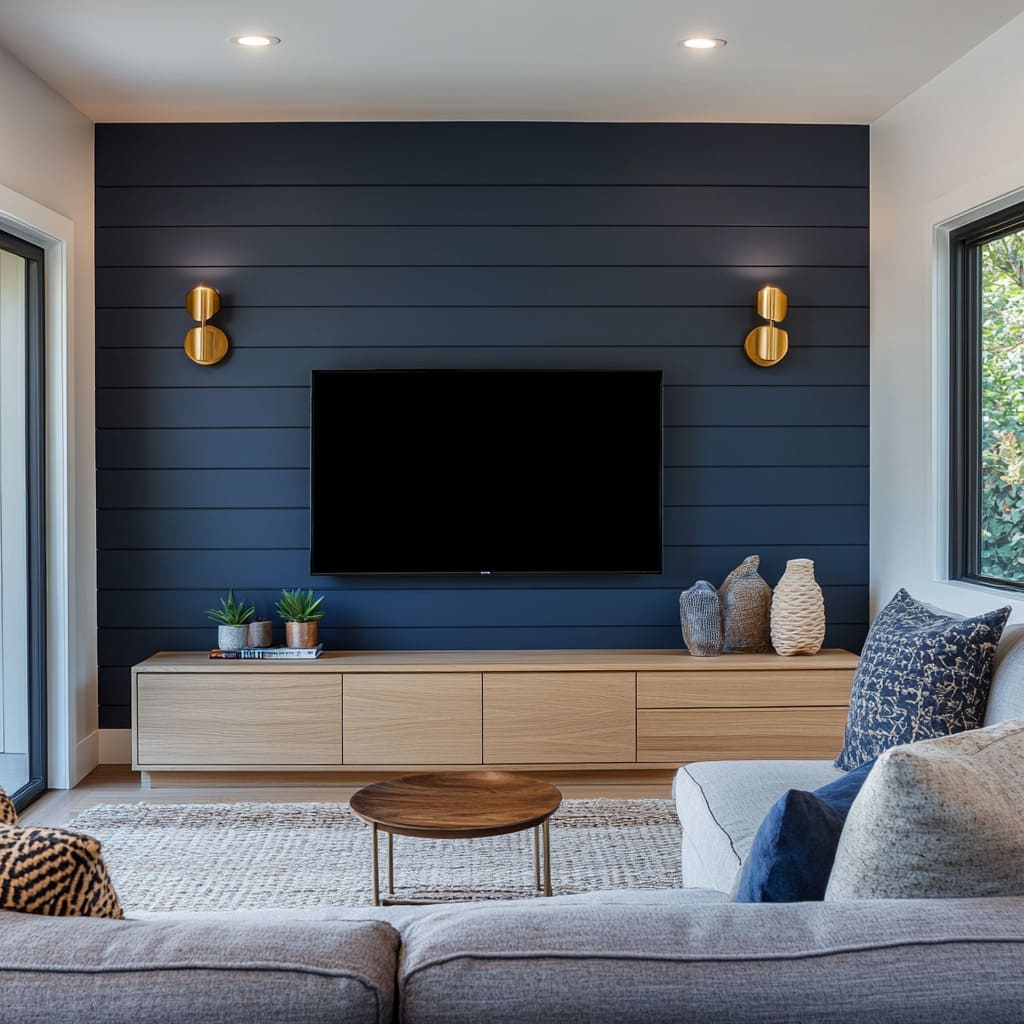
    • Dark Colors: Navy, maroon, smoke, or forest green add drama and sophistication. Perfect if you want to make your space feel bolder.

    • Stained Finishes: Wood stains highlight the natural grain and add warmth. No added color is sometimes necessary to preserve that natural wooden look and feel.

    • Matte vs. Glossy: Matte finishes offer a rustic look, while glossy finishes are more modern and easier to clean.

    Common Mistakes to Avoid When Installing Shiplap Wall

    To ensure a successful shiplap wall installation, you need to avoid these common mistakes that are often overlooked:

    Skipping Wall Preparation

    Make sure your wall is clean, dry, and even before installing any panels. Dust, bumps, or rough spots can stop the panels from sticking properly and may cause gaps later.

    Improper Alignment

    Use a level tool to keep each board straight as you install it. Even a slight tilt at the start can throw off the whole wall, making your overall wall look awkward.

    Over-tightening Nails

    Don’t hammer nails too hard. Pushing them in too deep can crack the wood or weaken the panel.

    Neglecting Expansion Gaps

    Leave a small space between each board. Wood naturally expands and contracts with temperature and humidity, and these gaps prevent warping or buckling.

    Final Thoughts

    Shiplap walls are a timeless design choice that can enhance the look and feel of any room. With thoughtful planning and execution, a shiplap wall can add character, warmth, and style to your home.

    If you are thinking about considering other types of wall paneling, explore The Panel Hub’s acoustic and decorative wall panels. Enjoy free shipping today!

    See Our Premium Wood Wall Panels

    Shiplap Wall Cost: What to Budget For

    Understanding the cost of a shiplap wall before you start helps you plan a project that looks great without straining your budget. Material costs vary significantly depending on the wood species or panel type you choose. Basic pine shiplap boards start at around £1–£3 per linear foot, making them the most accessible entry point. Solid oak or cedar runs considerably higher — up to £8–£15 per linear foot — but provides a richness in grain that painted MDF cannot replicate.

    Pre-primed MDF shiplap panels, sold in sheet form with machined rebate profiles, offer an excellent middle ground. They arrive ready to paint, require no extra priming step, and cost between £25–£50 per sheet depending on thickness and profile. For a standard feature wall of around 12 square metres, expect to use 8–12 sheets.

    Installation costs depend on whether you DIY or hire a joiner. A professional fitting for a single feature wall typically runs £200–£400 in labour, depending on complexity. DIY installation is very achievable with basic tools — a mitre saw, adhesive, and a pin nailer — and eliminates the labour cost entirely. Factor in finishing consumables: wood filler, caulk, primer, and paint usually add £40–£80 for a full feature wall. Overall, a well-planned shiplap feature wall can be delivered for £150–£300 as a DIY project, rising to £500–£700 fully installed by a professional.

    Shiplap Wall FAQs

    Can shiplap be installed directly onto a plasterboard wall?
    Yes — plasterboard (drywall) is the most common substrate for interior shiplap installations. Use a combination of construction adhesive and nails or screws to fix boards securely. Locate wall studs beforehand so that fixings go into solid timber rather than just plasterboard, which ensures the boards cannot be pulled away from the wall over time.

    Does a shiplap wall work in a bathroom?
    Shiplap works well in bathrooms when the right material is selected. Solid wood is susceptible to moisture swelling unless properly sealed on all edges. PVC or WPC (wood-plastic composite) shiplap boards are the best choices for wet areas — they are completely waterproof, maintain their profile indefinitely, and are available in realistic wood-grain finishes that are hard to distinguish from the real thing once painted or left in their natural finish.

    What is the best way to finish the top edge of a shiplap wall?
    A simple capping rail — a flat bar or ogee moulding fixed along the top row of boards — gives the installation a polished, deliberate look that distinguishes it from an unfinished project. For more decorative rooms, a shelf rail above the shiplap panel doubles as a display ledge and a clean termination line.

    How do I maintain a painted shiplap wall?
    Painted shiplap is low maintenance. Dust the boards periodically with a soft brush attachment on a vacuum, paying attention to the shadow gaps between boards where dust can collect. Wipe down with a damp cloth as needed. Re-paint every 5–7 years or when the finish starts to show wear, sanding lightly before applying a fresh topcoat for the best adhesion.

  • What is Shiplap? An Ultimate Guide to a Stunning Wall Transformation

    What is Shiplap? An Ultimate Guide to a Stunning Wall Transformation

    Shiplap is known as an easy to install, versatile choice if you want to add wood wall accents to your home. It also has become a favorite for homeowners and designers alike. If you’ve ever wondered what is shiplap or why it’s so popular, this article is for you.

    While shiplap offers a cozy, farmhouse-style look, other wall paneling options like tongue and groove, beadboard, and nickel gap provide different styles and finishes. Learn more about these options to make better choices for your next home project!

    What is Shiplap?

    example of white shiplap wall

    Shiplap is a type of wooden board used for walls, ceilings, and even exterior siding. Each board has a special groove (called a rabbet) cut into the top and bottom edges. This design allows the boards to overlap very lightly. Shiplap is now getting more popular, especially in rustic-styled houses. 

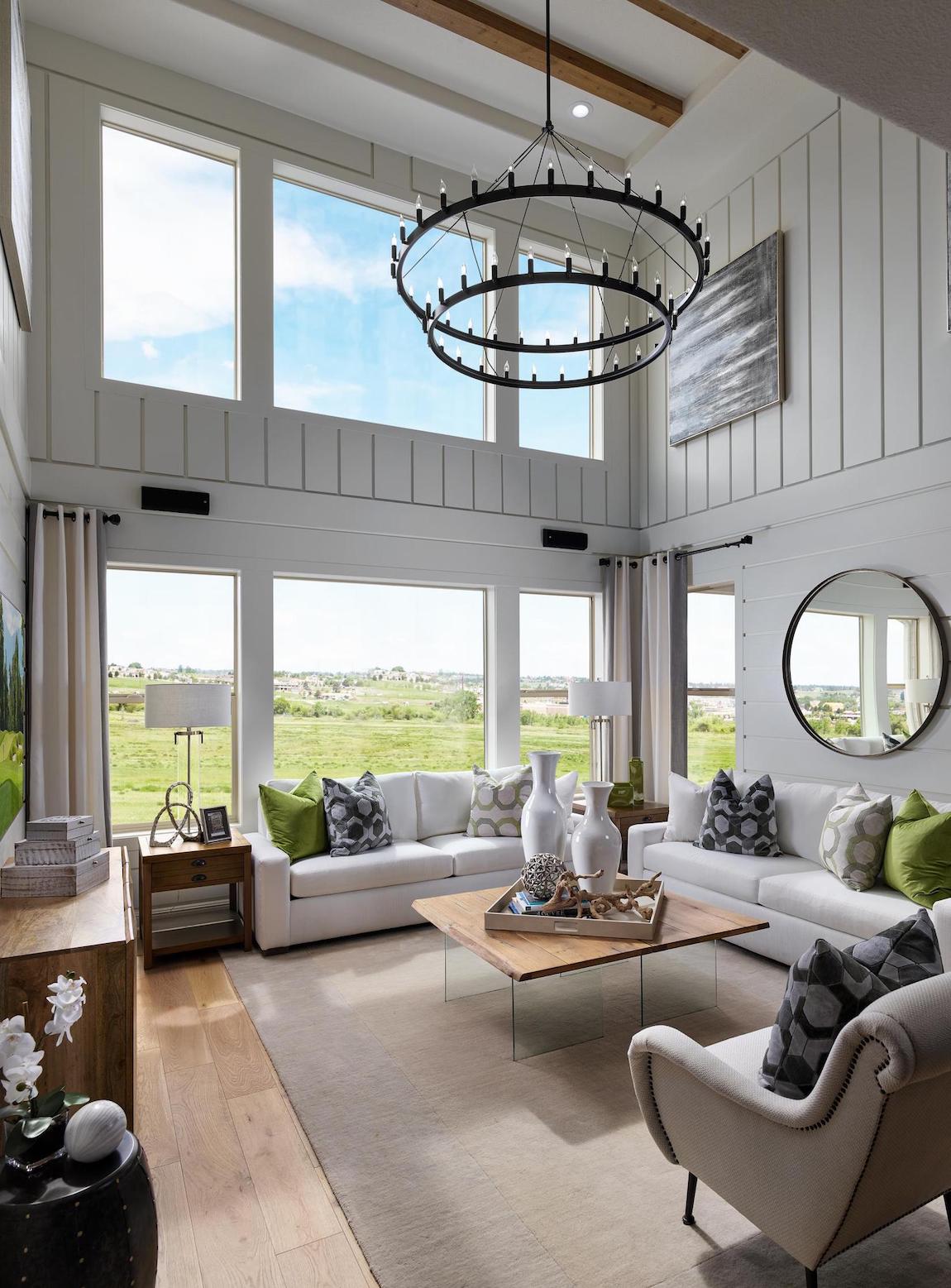
    Horizontal shiplap is the most common type, but you can actually install it vertically or even diagonally. Each direction or placement creates a different effect and look. For example, horizontal shiplap makes the room look wider, while the vertical creates an illusion or higher ceilings.

    Shiplap Vs Other Wall Paneling: Key Comparison

    When choosing wood wall paneling, you might wonder what is shiplap, but it isn’t your only option. Other popular choices include tongue and groove, beadboard, and nickel gap. Each has its own style and installation method. Here’s how they differ from shiplap:

    Shiplap vs Tongue and Groove

    Both shiplap and tongue and groove boards fit together to create smooth wall panels. The main difference lies in how they connect:

    • Shiplap: Boards overlap each other through a rabbet joint. This results in a visible gap between boards, giving a casual, coastal look.
    • Tongue and Groove: One board has a “tongue” that fits into the “groove” of another. The overall look tends to be more polished and traditional.

    Shiplap is easier to install since it doesn’t need to be perfectly tight. On the other hand, the tongue and groove require more precision.

    Beadboard vs Shiplap

    Shiplap vs beadboard comparison usually centers around how narrow the panel is. Beadboard generally has more narrow panels with smaller vertical grooves running along the boards. These are other differences between the two:

    • Beadboard gives a classic and more cottage-style look. Many people often use it in kitchens, bathrooms, or shiplap wainscoting.
    • Shiplap, in contrast, usually has wider boards and horizontal lines, giving a more modern or farmhouse style.

    In terms of installation, the beadboard requires more attention because you need to ensure the matching grooves.

    Nickel Gap vs Shiplap

    Nickel gap panels are similar to shiplap but have a narrower, consistent gap between boards, usually about the width of a nickel. Shiplap gaps are usually wider and more noticeable. Finally, it depends on your design taste and overall look you want to achieve.

    In most projects, nickel gap is chosen if they want a more sleek and modern look, while shiplap works better for rustic and casual style.

    Read More: Wood Maintenance Guide: Protecting and Preserving Your Wall Panels

    Shiplap Installation Cost: What to Expect

    Is shiplap expensive? The cost of installing shiplap depends on several things. First, it depends on the type of wood you choose. The size of your walls will also directly affect how intense the labor work is going to be.

    Generally, the professional installation cost around $5-$15 per square foot. If you decide to install it yourself, you’ll probably need around $2-$8 per square foot for the tools and equipment. 

    Shiplap is generally affordable compared to other wall paneling options, especially if you install it yourself. If you are wondering how much does shiplap cost, it varies based on the wood type. It can start from 2$ to $20 per square foot if you choose more premium material.

    DIY-friendly wood wall paneling option

    America Walnut Acoustic Wall Panels | 3-Sided Wood Veneer | SoundPanel®.

    If you’re seeking a DIY-friendly wood wall paneling option, consider The Panel Hub’s best-selling wall panels! Designed for easy installation, our panels allow for straightforward application without the need for professional tools. With a variety of designs and color variations, you can achieve a polished look that suits your style.

    Explore Our Wood Wall Panels

    How to Install Shiplap: A Step-by-Step Guide

    After knowing the shiplap installation cost, you might want to install it yourself. Here’s a step-by-step guide to install shiplap that you can try:

    • Prepare the wall: Remove any old trim, patch holes, and make sure the wall is clean.
    • Measure and plan: Decide if you want horizontal or vertical boards and measure your wall.
    • Cut boards to size: Use a saw to cut boards to the correct length.
    • Attach boards to the wall: Start at the bottom (for horizontal boards) and use nails or a nail gun to secure each board.
    • Leave small gaps: Don’t worry about perfect alignment; the gaps are part of the shiplap look.
    • Fill nail holes (optional): You can fill and paint over nail holes for a cleaner finish.
    • Paint or stain: Finish the wall with your preferred color or wood stain.

    Conclusion

    Shiplap is just one of many wood wall paneling options, and each style has its own charm. Shiplap is perfect if you want a casual, easy to install, or farmhouse style. Tongue and groove is more polished, while beadboard is more detailed. Nickel gap is similar to beadboard which is classic and detailed.

    If you are thinking about considering other types of wall paneling, explore The Panel Hub’s acoustic and decorative wall panels. Enjoy free shipping today!

    Buy Now

    FAQ About What is Shiplap

    What is so special about shiplap?

    Firstly, shiplap is a go-to choice due to its distinctive horizontal lines and texture. Unlike smooth wood panels, shiplap adds deeper visual character to a room. It is also versatile, as you can install it horizontally, vertically, or diagonally. When it comes to DIY-friendliness, shiplap is also the right choice to save cost from professional installation, as it only needs basic tools.

    What are the disadvantages of shiplap?

    Despite its superiority, shiplap has some downsides. One of its key disadvantages is visible gaps that can collect dust or dirt over time. If installed in bathrooms or humid areas without proper sealing, wood shiplap can warp or grow mold. Cost-wise, shiplap can get expensive, especially if you choose cedar or hardwood.

    Is shiplap cheaper than drywall?

    Drywall is generally cheaper than shiplap, both in terms of material and installation costs. Drywall can be the better budget-friendly option, but shiplap adds visual texture and style.

  • Wall Decor Black Friday Deals: Save Big on SoundPanel® from The Panel Hub and Elevate Your Space

    Wall Decor Black Friday Deals: Save Big on SoundPanel® from The Panel Hub and Elevate Your Space

    Black Friday is one of the most anticipated shopping events of the year for a good reason. If you are currently transforming your walls, it’s the perfect time to get your hands on the best wall decor Black Friday deals! Whether you’re redecorating your living room, upgrading your home office, or designing your dream studio, now is the best time to shop.

    Best Places to Shop for Wall Decor Black Friday Deals

    While SoundPanel® offers an exceptional Black Friday wall decor deal, there are plenty of other stores offering huge discounts on stylish wall decor items. Here are some of the best places to look for deals:

    1. The Panel Hub: Don’t miss out on SoundPanel® Black Friday deal, offering up to 70% off on premium acoustic slat wood wall panels. There are five color variants available that suit for any interior and color palette in your space. 

    2. Wayfair: Whether you’re into modern prints or classic wall mirrors, Wayfair has a range of wall decor options with great Black Friday deals. 

    3. Amazon: Shop Amazon for everything from framed art to wall decals at unbeatable Black Friday prices.

    Wood Wall Decor Recommendations

    When choosing a wood wall decor or panel, start by evaluating your overall room palette and lighting. These are some recommendations from The Panel Hub that fit for every interior style:

    1. Acoustic Slat Wood Wall Panel – Golden

    SoundPanel_-GoldenOak_19-The Panel Hub

    The finish golden color gives a rich and warm glow. This color is the most versatile, but mostly sought-after for interiors with warm color palette (cream, soft beige, terracotta, muted gold accents).

    However, if your room already has a lot of warm tones and limited natural light, it might feel overly “yellow/golden”. It would be a better idea to consider other cooler or darker accent colors.

    2. Acoustic Slat Wood Wall Panel – Walnut

    The walnut color can be your best Black Friday deals wall decor option to choose from.  This one has a deeper, medium to dark tone. Most people choose these colors for formal spaces, including home offices, dining rooms, or commercial spaces.

    3. Acoustic Slat Wood Wall Panel – Classic Oak

    SoundPanel_-ClassicOak_1-The Panel Hub

    If you are renovating your living room, this one might work for you. It’s fairly neutral without darkening the room too much. This color also blends well with light furniture, white walls, or soft grey.

    4. Acoustic Slat Wood Wall Panel – Grey Oak

    American-Grey-Slat-_6-The Panel Hub

    Interiors with industrial, urban, loft or minimalist aesthetic will be elevated with grey oak wood wall panels. This color is a bit tricky and might not work for everyone. Sometimes the grey tone makes the space feel too subdued, but if your space has the right lighting and cooler mood, it is worth considering.

    5. Acoustic Slat Wood Wall Panel – Smoke

    A dark, smokey-toned wood finish is rising to the trend nowadays, especially in high-end commercial interiors. This panel will be phenomenal in rooms where you want an intimate, “cinema-feel” or cocktail-lounge atmosphere.

    Why SoundPanel® Should Be on Your Black Friday Wishlist

    If you’ve been dreaming of a distraction-free workspace, a cinematic home theater, or a quieter living room, SoundPanel® from The Panel Hub is your go-to solution. Our panels are designed to reduce sound by up to 70% which competitors hardly rival. It allows you to enjoy an optimal acoustic wall experience while also enhancing the aesthetic appeal of your room.

    These are other reasons why our customers love SoundPanel®:

    • Top-tier Sound Reduction: Create a significant decrease in noise to achieve a more peaceful and quiet space.
    • Sustainable Materials: Our panels are made from FSC-certified HDF, which means that the wood combines eco-friendly materials with high-performance design.
    • 3-Sided Wood Veneer: While many panels leave edges exposed or sharp, TPH® delivers a clean, full 3-sided, smooth-edge finish. 

    This Black Friday, you can get up to 70% off SoundPanel®! However, the exclusive coupon is only available for the first 70 sign-ups, and once it’s gone, it’s gone. Don’t wait, sign up today to ensure you get your hands on this amazing deal before it sells out!

    Sign Up Black Friday Deals

    What You Get in the Black Friday SoundPanel® Deal

    • Free Shipping: TPH offers free shipping across contagious US. No hidden costs during checkout.
    • Up to 70% Off: Enjoy massive savings on SoundPanel® and transform your space at a fraction of the cost.
    • 5-Year Limited Warranty: For a specified duration from the date of purchase, if your product has a defect in materials or workmanship that existed when the product was purchased, The Panel Hub® will, in our sole discretion, either repair or replace the product.
    • 60-days Return Window: We have a 60-day return policy, which means you have 60 days after receiving your item to request a return as long as the terms and conditions are met.
    • Improved Acoustics: SoundPanel® delivers up to 70% sound reduction, perfect for home theaters, studios, and workspaces.
    • Sustainable, Premium Materials: Made from FSC-certified HDF, ensuring that your decor is both high-quality and eco-friendly

    Tips for Scoring the Best Wall Decor Black Friday Deals

    Black Friday shopping can be overwhelming with all the discounts available. To help you navigate the best Black Friday wall decor deals, here are a few tips:

    • Sign Up Early: For the SoundPanel® Black Friday deal, sign up now to secure your exclusive coupon before it’s gone.
    • Know What You Want: Have a wishlist ready to make sure you don’t miss out on your favorite items, whether it’s SoundPanel® or something else.
    • Plan Your Budget: With so many amazing deals, it’s easy to overspend. Stick to your budget to ensure you get the most value for your money.
    • Shop at Prime Hours: Black Friday deals tend to go fast, so be ready to shop early and grab your desired items before they sell out.

    Final Thoughts: Don’t Miss Out on These Exclusive Black Friday Wall Decor Deals

    This Black Friday, take advantage of incredible deals on SoundPanel® from The Panel Hub and other premium wall decor options. With up to 70% off, it’s the perfect opportunity to upgrade your space with high-quality, sustainable panels that offer both aesthetic appeal and superior sound reduction.

    Remember, stock is limited! Only the first 70 people who sign up will get access to the exclusive coupon. Don’t wait, sign up now and make your space more stylish and peaceful than ever before.

    Grab 70% Off Today!

  • Feature Wall Ideas: How to Turn Plain Walls into Designer Statements

    Feature Wall Ideas: How to Turn Plain Walls into Designer Statements

    Every home has one wall that naturally draws the eye. Maybe it’s behind the television, the bed, or the dining table. Turning that wall into a feature wall is one of the simplest and most rewarding ways to change how your space looks and feels.

    A feature wall adds character, focus, and balance without major renovation. It is the design world’s secret to making a room look professionally finished with minimal effort. From cozy apartments to large homes, it gives any interior a sense of structure and personality.

    Among all design materials, wood feature walls have become the modern favorite. They bring texture, warmth, and acoustic comfort while blending beautifully with a variety of design styles. Whether you prefer a natural, Scandinavian look or a dark, luxurious tone, wood is the perfect foundation for timeless design.

    What Is a Feature Wall

    A feature wall, also known as an accent wall, is a single wall that stands out from the rest of the room. It creates visual focus using a different material, color, or texture.

    Modern vertical wood slat feature wall with potted plant in a minimalist room.


    In modern interiors, the
    wood feature wall has become a favorite. Unlike paint or wallpaper, real wood brings dimension and tactile warmth. It also helps reduce echo and makes your space feel calm and inviting.

    Wood connects design and comfort. It adds visual softness, improves acoustics, and works in almost any interior style.

    1. Natural Warmth and Character

    Wood adds an organic beauty that synthetic materials cannot match. Every grain pattern is unique, bringing life to your space. Whether you choose oak, walnut, or ash, a wood feature wall creates a welcoming and timeless look.

    2. Better Sound Quality

    Panels with acoustic felt backing can absorb up to 85 percent of reflected sound. This helps control noise and creates a more peaceful atmosphere, especially in large or open rooms.

    3. Flexible Design Options

    A wood feature wall fits many design styles. It looks clean and structured in minimalist interiors, cozy in rustic homes, and elegant in modern spaces.

    Where a Feature Wall Makes the Biggest Impact

    Living Room

    Light oak wood feature wall behind a gray sofa in a bright living room with white accents.


    A feature wall behind the sofa or television becomes the center of attention. Real wood adds balance and a designer finish without overwhelming the space.

    Bedroom

    Scandinavian-style bedroom with light wood feature wall and ceiling panels with soft lighting.

    A wood feature wall behind the bed works as a natural headboard. It creates a cozy and stylish backdrop for rest and relaxation.

    Home Office

    Home office with natural wood panel feature wall and a woman working at a desk near window light.


    Adding a feature wall behind your desk improves acoustics and gives a professional background for online meetings.

    Hallway or Entryway

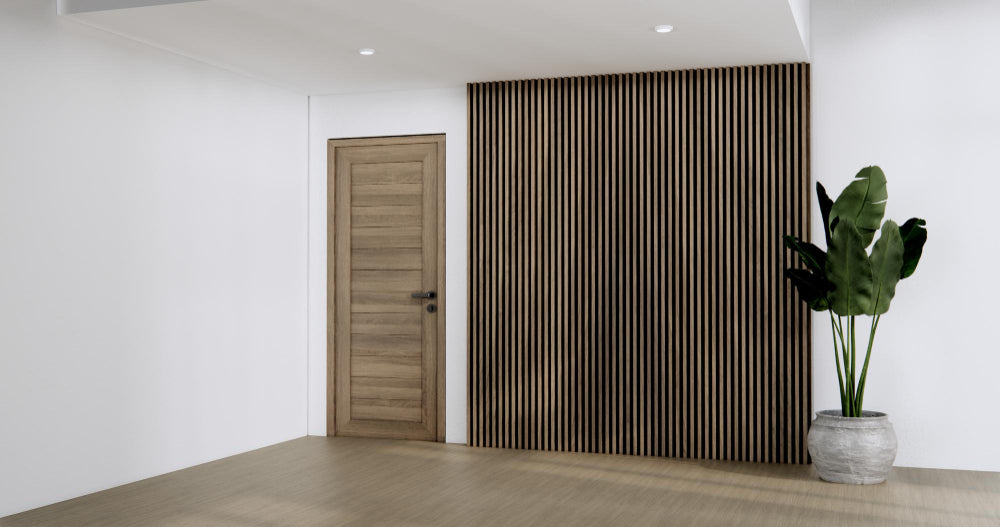
    Entryway design with dark wood slat feature wall beside a wooden door and indoor plant.


    A small section of wood paneling near the entrance adds texture and makes a strong first impression.

    Feature Wall Design Ideas

    1. Modern Slatted Panels – Vertical lines make rooms appear taller and more spacious.

    2. Full Veneer Finish – A continuous wood surface provides a clean and polished appearance.

    3. Mixed Panel Layout – Combine smooth and grooved panels to create visual depth.

    4. Integrated Lighting – Place soft LED strips between panels to highlight the wood grain.

    You can preview these styles with The Panel Hub Room Visualizer.

    Installation Made Simple

    Creating a feature wall no longer requires construction or long waiting times.

    DIY Installation

    Each panel from The Panel Hub comes pre-finished and ready to mount with adhesive or screws. Most homeowners complete installation within a few hours using simple tools.

    Professional Installation

    For larger projects, The Panel Hub offers free in-room installation for qualifying orders. The professional team ensures perfect alignment and a flawless finish.

    Real Wood vs. Imitation Panels

    Feature

    Real Wood Feature Wall

    Imitation Panels

    Material

    FSC-certified wood veneer

    Printed laminate or PVC

    Finish

    Three-sided smooth edges

    Flat or raw edges

    Durability

    Water-resistant and long-lasting

    Prone to peeling

    Acoustic Rating

    NRC 0.85

    NRC 0.3 average

    Feel

    Natural warmth and texture

    Artificial surface


    Choosing real wood wall panels gives you authenticity, long-term quality, and a richer visual experience.

    The Sensory Value of a Wood Feature Wall

    Good design is not only about how a space looks but also how it feels.

    A wood feature wall enhances your space in three ways:

    • It adds texture and contrast that draw the eye.

    • It softens the sound and atmosphere of the room.

    • It makes the space feel comfortable and complete.

    This is why architects, interior designers, and homeowners often turn to The Panel Hub when they want to combine aesthetics and functionality.

    Caring for Your Feature Wall

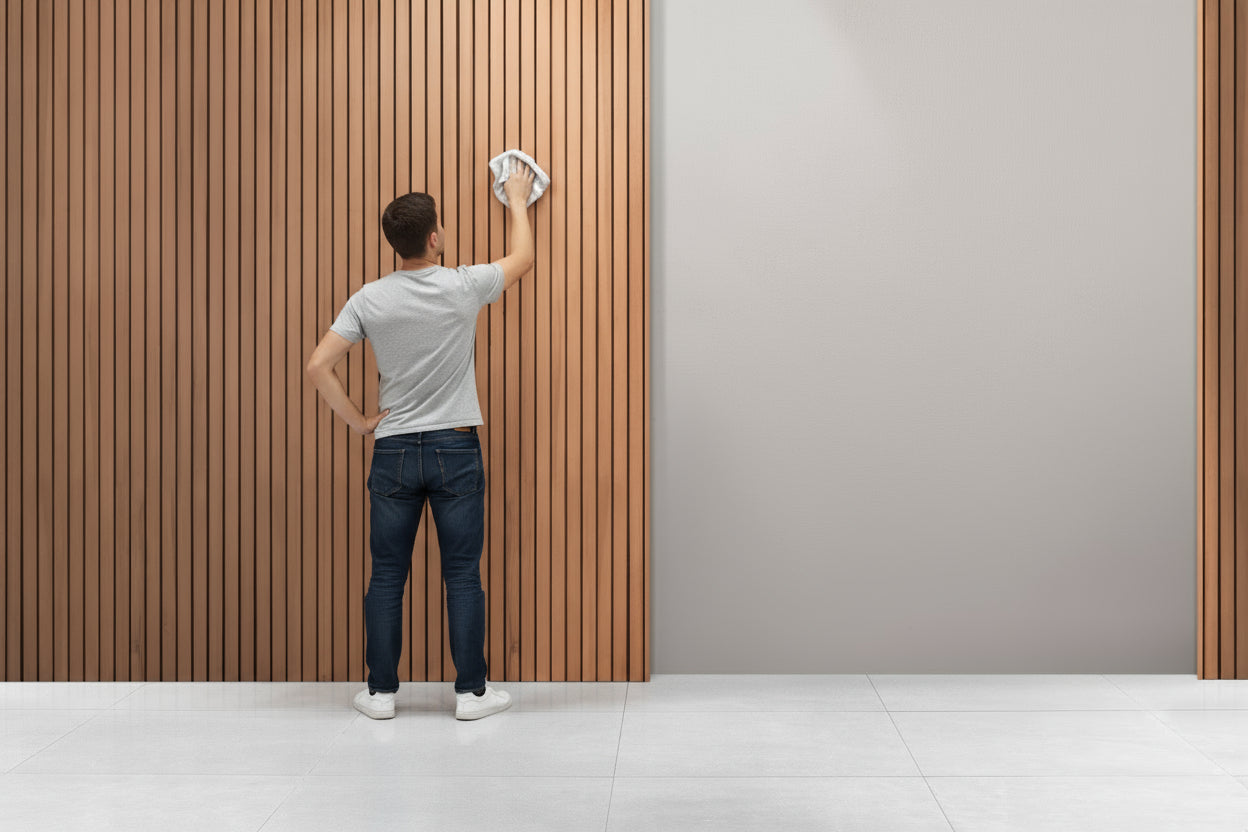
    Wood walls are easy to maintain.

    • Wipe with a soft, dry cloth.

    • Avoid harsh chemical cleaners.

    • Maintain moderate humidity levels to protect the wood.

    Man cleaning vertical wood slat feature wall in a modern white interior.

    Each panel is sealed with a durable finish that keeps the color and texture intact for years.

    Cost and Value

    The cost of a feature wall usually ranges from $1,000 to $4,000, depending on the size and wood type.

    When you choose The Panel Hub, you receive:

    • Factory-direct pricing

    • Free shipping within the continental U.S.

    • 60-day satisfaction guarantee

    • 5-year limited warranty

    It is a one-time investment that increases your home’s comfort and visual value

    How to Plan Your Feature Wall: A Step-by-Step Approach

    The most common mistake people make with feature walls is choosing materials before deciding which wall to treat. Start by standing in the room’s natural entry point — the doorway — and identifying the first wall that draws your eye. That wall, usually opposite the entrance or behind a dominant piece of furniture, is almost always your best candidate.

    Once you have your wall, measure the full surface including any alcoves, recesses, or architectural features. These irregularities are often an asset: panels installed around an existing recess can make it look intentional rather than awkward.

    Choose a material that supports the room’s scale. In smaller rooms, slimmer slat profiles (18–22 mm wide) with light gaps create depth without visual weight. In large rooms, wider planks or 3D geometric panels make a bolder statement that reads from across the space.

    Consider how the wall interacts with your lighting plan. Panel walls with tactile texture — grooves, ridges, three-dimensional geometry — look dramatically different under ambient lighting versus task lighting. If you plan to add LED strips or wall sconces, choose your panel profile before finalising your lighting layout, not after.

    Feature Wall FAQs

    Do feature walls make a room look smaller?
    Not if chosen carefully. A feature wall behind the sofa or bed in a narrow room actually draws the eye horizontally, making the space feel wider. Problems arise when a feature wall faces you as you enter a small room — that can make the room feel shorter. In tight spaces, choose the wall you look toward rather than the wall behind you.

    How long does a wood feature wall take to install?
    A standard 3 m × 2.4 m accent wall takes one to two days for a confident DIY installer — including surface preparation, panel acclimatisation, and trim work. Professional installation is typically faster. The majority of delays come from poor wall preparation rather than the installation itself.

    Can I put a feature wall in a rental?
    Yes, using adhesive-mounted panel systems that leave no surface damage, or peel-and-mount slat panels. Many suppliers now offer renter-friendly installation options specifically designed to be reversible.

    What is the best material for a feature wall in a damp room?
    For bathrooms, utility rooms, or areas prone to moisture, WPC (wood-plastic composite) or PVC-core panels perform significantly better than real wood. They share the same aesthetic but have a waterproof core that won’t warp or delaminate over time.

    Conclusion: A Simple Way to Redefine Your Space

    A feature wall is more than an accent. It defines your space and reflects your personality. Whether you want to create a peaceful bedroom, a stylish living area, or a professional home office, a wood feature wall is a timeless solution.

    With The Panel Hub, you can upgrade your home using real wood panels that are beautiful, durable, and simple to install. It is design made simple for modern living.

  • Solid Wood vs. MDF: Which One Is Better for Wall Panels?

    Solid Wood vs. MDF: Which One Is Better for Wall Panels?

    While wall panels are making a big comeback in modern interior design, solid wood and MDF (medium-density fiberboard) are two popular material choices that dominate the market. Although they look similar, their characteristics, cost, and performance are different.

    If solid wood can be used without mixing with other materials, an MDF enhances the aesthetics of your walls with the help of resin. Regardless of the difference, both options can elevate your space. This article will provide you with more information about the differences between solid wood and MDF, helping you make a more informed decision.

    What Is Solid Wood?

    Simply put, solid wood panels are made entirely from natural timber. Each piece of wood comes straight from a log. This is why the panels showcase the natural grain, color, and texture of its tree, such as oak, teak, walnut, or pine.

    Its natural composition makes solid wood a timeless choice that suits any interior style, from classic to contemporary. Solid wood adds variation and character to a room, which gives it a sense of life. 

    Solid Wood Benefits

    • Natural beauty: The organic grain patterns and color tones are always visually striking.
    • Durability: Solid wood panels can last long with proper care.
    • Flexibility: You can repaint them multiple times and your solid wood remains beautiful.
    • Eco-friendly: You can renew solid wood, It also stands out as an eco-friendly material.

    Solid Wood Drawbacks

    • Expensive: Due to sourcing and craftsmanship, it comes at a premium price.
    • Climate sensitivity: Solid wood is susceptible to humidity changes, which can cause minor warping or cracking.
    • Weight: Solid wood is heavy. Therefore, you need to make an extra effort to install it.

    What Is MDF?

    MDF is a wood product made from fine wood fibers mixed with resin and wax and pressed into solid sheets under high temperatures and pressure. This wood is ideal for painting, laminating, and creating decorative grooves, since its surface is dense and smooth.

    It’s a favorite among people who seek sleek and modern aesthetics.

    MDF Benefits

    • Budget-friendly: MDF is much more affordable than solid wood, which is ideal for large wall projects.
    • Smooth surface: This wood is perfect for uniform finishes.
    • Customizable: You can shape MDF into various shapes, like slats, fluted panels, or decorative 3D designs.
    • Easy to install: MDF is simple to cut and handle, which is why it’s perfect for DIY or quick renovations.

    MDF Drawbacks

    • Moisture absorption: You need to seal or laminate MDF properly first, since it’ll swell once exposed to water.
    • Less durable: Compared to solid wood, MDF is not that strong and too fragile when under pressure
    • Not repairable: MDF is difficult to repair. Therefore, you need to replace it once it’s damaged.

    American Smoke Acoustic Slat Wall Panels | 3-Sided Veneer | SoundPanel®-Indoor-The Panel Hub

    The Panel Hub’s wood wall panels use a higher density and moisture-resistant MDF core, perfected with CoreShield™. In other words, our panels are less likely to swell, crack, or warp even when exposed to various environments. Since we’re using real wood, our natural grain and color rivals solid wood. Explore our sound panels and decorative panels, enjoy free shipping today!

    Explore Wall Panels

    Comparing Solid Wood vs. MDF

    To understand the differences between solid wood and MDF, you can examine them from various aspects.

    Solid wood  gives an unique and timeless look through each panel, which is ideal for you who value aesthetics and ambience. MDF, on the other hand, offers a smooth and uniform surface that suits modern interiors while also prioritizing practicality.

    When the natural quality of solid wood meets proper maintenance, it can become extremely durable. MDF, however, offers moderate durability and tends to be more sensitive to moisture and humidity.

    Solid wood is everlasting, which is why you can refinish, polish, and repair over time. MDF is easier to clean, but you need to prepare yourself for the second purchase once it’s damaged.

    Solid wood is heavy and robust, so you’ll likely need help when installing it. MDF is much lighter, which you can install and handle all by yourself.

    Solid wood is worth the investment, so it can cost you more to have in your home. MDF is a 

    more affordable option that offers plenty of style.

    The more imperfections in a solid wood, the better it’ll look. Solid wood works beautifully with natural stains or paints to highlight its grain. Meanwhile, MDF pairs well with paints and veneers for a sleek appearance.

    Since solid wood is everlasting, you can renew it when sourced responsibly. MDF is typically made from recycled wood fibers, which offers an eco-friendly alternative.

    For the best results, you can choose solid wood to create luxurious interiors that value authenticity and craftsmanship. MDF is perfect for modern aesthetics and for you who want stylish panels without overspending, proving that versatility and cost-efficiency can go hand in hand.

    Blending Both Materials for Balance

    The diversity is what makes design beautiful. Now, many designers combine the strengths of both materials by using MDF core panels with a solid wood veneer. This hybrid design offers the rich appearance of wood and saves you more cost.

    Another approach is to use solid wood trims around MDF panels. You can try it to create the illusion of a fully wooden surface in a more affordable way.

    Explore our GroovePanel® collection to find the best solid wood panel. Then you can pair it perfectly with MDF.

    Pro Tip: Remember to always seal MDF edges first before installation.

    Solid Wood vs MDF FAQs

    Is solid wood always better than MDF for wall panels?
    Not in all situations. Solid wood is superior in terms of material authenticity, longevity, and refinishability. But MDF outperforms solid wood in dimensional stability (it does not expand and contract with humidity changes), consistency of surface quality (no knots, checks, or grain variation to complicate finishing), and ease of machining to precise profiles. For a painted panel installation in a contemporary interior where the material’s natural character is hidden by paint, MDF is a better practical choice than solid wood. For a natural-finish installation where grain and character are the point, solid wood is the only authentic option.

    Can I use solid wood panels in a bathroom?
    With care, yes. Solid wood panels in a well-ventilated bathroom with appropriate finishing on all six faces — including cut edges and back surfaces, not just the visible face — can perform for many years. The critical requirement is preventing moisture ingress at any cut edge or joint, as this is where wood most readily absorbs water and begins to move. For wet wall applications directly adjacent to showers or baths, PVC or WPC panels are significantly more practical than any wood product.

    Does solid wood add more value to a property than MDF?
    Yes. Estate agents and informed buyers can distinguish between a genuine solid wood panel installation and an MDF alternative, and solid wood installations command higher perceived value. The premium for solid wood over MDF in a feature wall installation is typically modest — the additional material cost is meaningful but not prohibitive — and the long-term value retention of solid wood is better than MDF, which is more prone to edge damage and moisture degradation over time.

    What is the weight difference between solid wood and MDF panels?
    Solid hardwood panels (oak, ash, walnut) are typically 20–30% lighter per unit volume than equivalent MDF, which has a density of 650–850 kg/m³ compared to 650–750 kg/m³ for hardwoods. In practice, for a standard 2400 x 600mm panel at 18mm thickness, MDF weighs approximately 15–20kg and solid wood of equivalent dimensions weighs 12–15kg. The difference matters for installation: heavier MDF panels require more robust fixing systems and may need additional adhesive support during the curing period.

    Conclusion

    Both solid wood and MDF offer its own advantages and disadvantages. Whether you choose solid wood or MDF, both materials can add beauty to your home. You can always give your walls the attention they deserve.