Category: Uncategorized

  • Wall Panels Ranked by Price Per Square Foot (2026)

    Wall Panels Ranked by Price Per Square Foot (2026)

    Wall panel prices swing wildly by material and pattern, and comparing sticker prices alone hides the real cost driver: how much wall each panel or box actually covers. This guide ranks wall panels by price per square foot in 2026 using material composition, coverage, and install complexity, not just the number on the price tag.

    TL;DR
    • SoundPanel Acoustic Slat Wood Wall Panels wins overall in this wall panels ranked by price per square foot breakdown for whole-room acoustic coverage.
    • RockSurface Highland Rock Wall Panel is the budget pick when the goal is a faux stone accent wall, not full-room treatment.
    • 3D Concentric Square Wood Wall Panel fits small apartments where you’re covering one accent wall, not a whole room.
    • Every panel line here backs a 5-year warranty and installs in under 2 hours, so labor cost per square foot stays flat across tiers.
    Numbers that hold across the lineup
    0.85 NRC
    Sound absorption rating
    Acoustic slat panels
    5 years
    Warranty coverage
    Under 2 hours
    Typical install time

    Why this matters

    Wall panels are sold by the panel or by the box, not by the square foot, and that's exactly why price comparisons go wrong. A box of narrow acoustic slats covers less wall than a box of flat solid-wood sheets at a similar price, so the per-square-foot math tilts even when the shelf price looks identical.

    Material is the second lever. Real wood veneer bonded to an acoustic core costs more to produce than a faux-stone composite panel, and that gap shows up directly in price tier, not just brand markup. Browse the full range at The Panel Hub to see how finish and material line up against price tier before you commit to a room.

    Install complexity matters less than people assume in 2026. Every panel line covered here installs in under 2 hours per standard spec, so labor cost per square foot barely shifts between a budget faux-stone panel and a premium acoustic slat panel — the price gap is almost entirely material and manufacturing, not fitting time.

    What makes the best wall panel value per square foot

    • Material composition — real wood veneer and solid wood cost more to source than PVC or faux-stone composite
    • Coverage per panel or box — narrow slats and mosaic tiles cover less wall per dollar than flat sheet panels
    • Acoustic performance bundled in — an NRC-rated core adds cost that a decorative-only panel skips
    • Finish complexity — deep 3D relief and geometric milling take longer to produce than straight slats
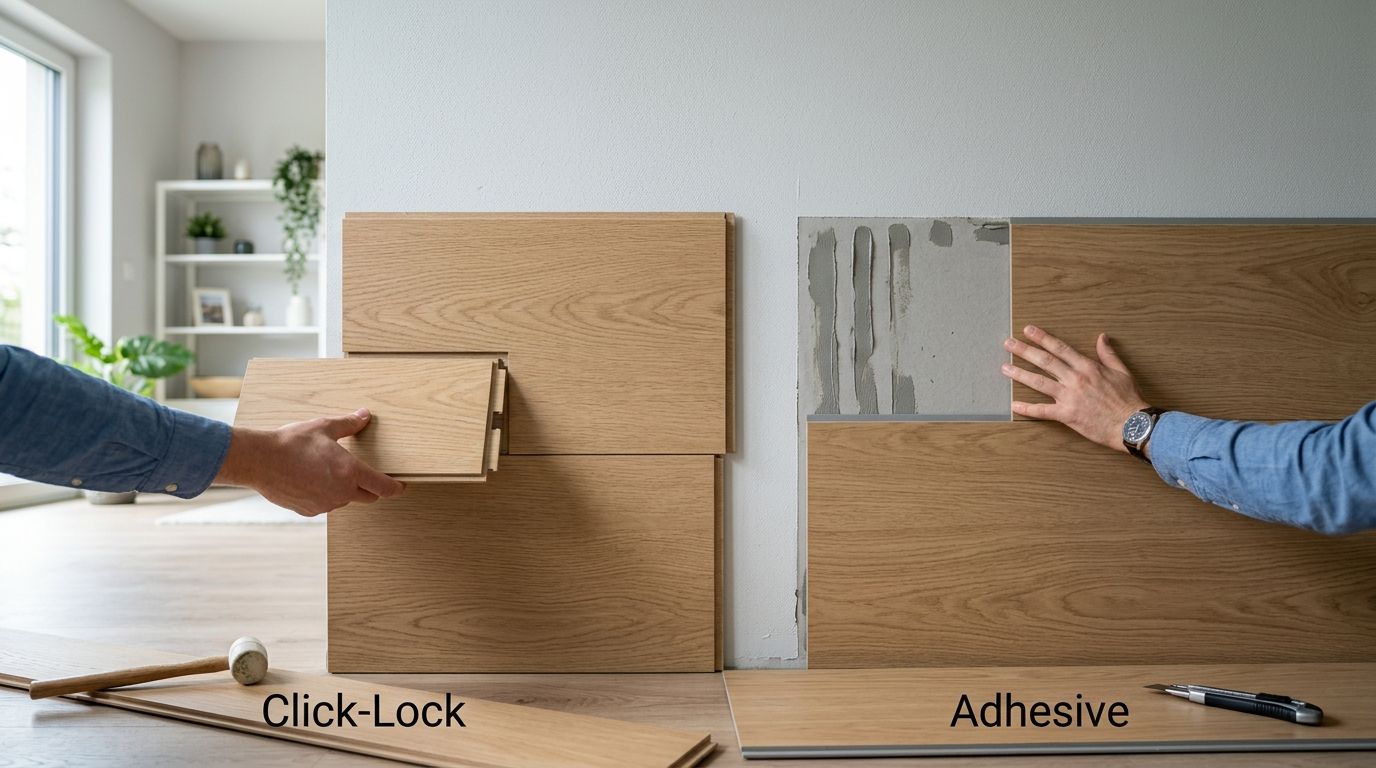
    • Install method — click-lock and adhesive systems both land under 2 hours, so labor rarely swings the per-square-foot number
    • Warranty coverage — a 5-year warranty on the material protects the per-square-foot investment over time

    Wall panels ranked by price per square foot: at a glance

    Panel Best For Standout Feature Price Tier Key Limitation
    SoundPanel Acoustic Slat Wood Wall Panels Home theaters and studios Real wood veneer bonded to acoustic core Premium Needs a full wall run to justify the cost
    Acoustic Slat White Felt Wood Wall Panels Bedroom noise reduction Felt-backed slats soften light and sound Premium Light finish shows scuffs faster than dark walnut
    Hexagon Acoustic Wall Panel Home office Hex geometry doubles as acoustic treatment Mid-range Pattern alignment adds install time
    Crossing Lines Solid Wood Wall Panels Living room statement wall Solid wood crossing pattern Mid-range No acoustic core, purely decorative
    3D Geometric Pattern Wooden Panels Bedroom accent wall Deep-relief 3D milling Mid-range Heavier than flat slat panels
    3D Concentric Square Wood Wall Panel Small apartments Compact repeating square motif Mid-range Reads busy on very large walls
    RockSurface Highland Rock Wall Panel Budget accent walls and fireplace surrounds Faux stone texture without stone weight Budget Not genuine stone
    RockSurface Canyon Rock Wall Panel Basements and garages Faux rock finish for lower-traffic rooms Budget Textured surface needs occasional dusting

    1. SoundPanel Acoustic Slat Wood Wall Panels: best wall panel for home theaters and studios

    SoundPanel Acoustic Slat Wood Wall Panels pair real wood veneer slats with an acoustic core rated at 0.85 NRC, which means the panel is doing double duty as decor and echo control. It sits in the premium price tier here because the acoustic core adds manufacturing cost that a decorative-only slat panel skips entirely.

    For a deeper look at acoustic treatment built for creative spaces, the guide on acoustic wood wall panels for home studios covers room-specific placement in more detail.

    SoundPanel Acoustic Slat Wood Wall Panels pros:

    • 0.85 NRC rating cuts noticeable echo in dedicated theater or studio rooms
    • Installs in under 2 hours following standard slat-panel install steps
    • Backed by a 5-year warranty on the wood veneer and core

    SoundPanel Acoustic Slat Wood Wall Panels cons:

    • Premium price tier costs more per square foot than a decorative-only slat wall
    • Slat spacing looks better across a full wall run than in a small nook

    Best for: home theaters, home studios, and media rooms needing real sound absorption.

    Verdict: Buy if the room needs acoustic performance, not just a wood look.

    2. Acoustic Slat White Felt Wood Wall Panels: best wall panel for bedroom noise reduction

    Acoustic Slat White Felt Wood Wall Panels use the same slat-and-acoustic-core structure as the walnut version, but with a felt backing and lighter finish that reads softer in a bedroom than a dark theater room. It lands in the same premium tier as its walnut sibling.

    Acoustic Slat White Felt Wood Wall Panels pros:

    • Softens both light and sound in a bedroom setting
    • Same acoustic core and 5-year warranty as the walnut slat version

    Acoustic Slat White Felt Wood Wall Panels cons:

    • Light felt finish shows scuffs and dust faster than a dark walnut panel
    • Premium tier pricing, same as the acoustic slat line

    Best for: bedrooms where a lighter finish matters more than a theater-dark look.

    Verdict: Buy for light-toned bedrooms that still want real sound dampening.

    3. Hexagon Acoustic Wall Panel: best wall panel for a home office

    The Hexagon Acoustic Wall Panel breaks from straight slats and uses a repeating hex shape that absorbs sound while reading as a geometric design feature. It sits in the mid-range tier, below the full slat acoustic panels but above the faux-stone budget line.

    Hexagon Acoustic Wall Panel pros:

    • Hex geometry works as acoustic treatment and wall art at once
    • Mid-range price tier without giving up acoustic performance entirely

    Hexagon Acoustic Wall Panel cons:

    • Pattern alignment across hexagons takes longer to install than straight slats
    • Less acoustic coverage per panel than the full slat lines

    Best for: home offices on video calls that want sound control without a theater-room look.

    Verdict: Buy for a home office that needs quieter calls, not full acoustic treatment.

    4. Crossing Lines Solid Wood Wall Panels: best wall panel for a living room statement wall

    Crossing Lines Solid Wood Wall Panels use a crossing-pattern solid wood design with no acoustic core, which keeps the price in the mid-range tier while delivering a heavier, more sculptural look than a flat slat panel.

    Crossing Lines Solid Wood Wall Panels pros:

    • Solid wood construction gives a heavier, more dimensional look than veneer
    • Mid-range price tier, below the acoustic slat lines

    Crossing Lines Solid Wood Wall Panels cons:

    • No acoustic core, so it's decorative only
    • Pattern reads best on a feature wall, not wall-to-wall coverage

    Best for: a living room accent wall where the goal is texture, not sound control.

    Verdict: Buy for a statement wall where acoustic performance isn't the point.

    5. 3D Geometric Pattern Wooden Panels: best wall panel for a bedroom accent wall

    3D Geometric Pattern Wooden Panels use deep-relief milling in solid wood to create shadow lines across the wall. They're mid-range in price but heavier than flat or slat designs, which affects mounting more than cost.

    3D Geometric Pattern Wooden Panels pros:

    • Deep-relief milling creates strong shadow contrast under normal room lighting
    • Mid-range price tier, comparable to the crossing-lines pattern

    3D Geometric Pattern Wooden Panels cons:

    • Heavier than flat slat panels, which matters for wall type and mounting
    • Bold pattern can compete with other statement furniture in a small bedroom

    Best for: a bedroom wall meant to be the focal point of the room.

    Verdict: Buy for bedrooms that want texture over sound absorption.

    6. 3D Concentric Square Wood Wall Panel: best wall panel for small apartments

    The 3D Concentric Square Wood Wall Panel repeats a compact square motif that reads as a feature wall without demanding a full room's worth of coverage, which is exactly why it fits small apartments and rental-adjacent spaces.

    3D Concentric Square Wood Wall Panel pros:

    • Compact repeating pattern works well on a single accent wall
    • Mid-range price tier keeps the entry cost lower than full acoustic lines

    3D Concentric Square Wood Wall Panel cons:

    • Busy pattern can feel overwhelming across a very large wall
    • No acoustic benefit, purely a design panel

    Best for: small apartments covering one wall rather than a whole room.

    Verdict: Buy for compact spaces that want one strong design wall.

    7. RockSurface Highland Rock Wall Panel: best wall panel for a budget accent wall

    RockSurface Highland Rock Wall Panel delivers a faux stone texture at the budget end of this lineup, which makes it the cheapest way to get a stone-look accent wall or fireplace surround without the weight or install complexity of real stone veneer.

    RockSurface Highland Rock Wall Panel pros:

    • Budget price tier, the lowest in this ranking
    • Faux stone texture without the weight of real stone
    • Same under-2-hour install standard as the wood panel lines

    RockSurface Highland Rock Wall Panel cons:

    • Not genuine stone, which matters to buyers who want the real material
    • Texture and color range are narrower than the wood panel lines

    Best for: fireplace surrounds and accent walls on a tighter budget.

    Verdict: Buy for the lowest price tier in this lineup.

    8. RockSurface Canyon Rock Wall Panel: best wall panel for basements and garages

    RockSurface Canyon Rock Wall Panel shares the same budget tier and faux-stone construction as the Highland Rock panel, with a finish suited to lower-traffic rooms like basements and garages rather than a primary living space.

    RockSurface Canyon Rock Wall Panel pros:

    • Budget price tier matches the Highland Rock panel
    • Durable enough for basement and garage walls

    RockSurface Canyon Rock Wall Panel cons:

    • Textured surface needs occasional dusting to stay looking clean
    • Same limitation as Highland Rock: not genuine stone

    Best for: basement and garage walls where budget matters more than premium finish.

    Verdict: Hold for basement projects specifically; skip it for a formal living space.

    How this ranking works

    Price tiers here reflect relative position across the catalog — budget, mid-range, and premium — based on material composition, acoustic core inclusion, and finish complexity, not a fixed per-square-foot dollar figure. Exact coverage per box varies by pattern (slat, mosaic, hex, or solid sheet), so the true per-square-foot cost depends on how much of that box actually reaches the wall. Check the specific product listing for coverage before ordering enough panels for a full room.

    Which wall panel should you choose in 2026?

    If the room needs real sound control, SoundPanel Acoustic Slat Wood Wall Panels justifies the premium tier with an 0.85 NRC rating and a 5-year warranty. If budget is the deciding factor, RockSurface Highland Rock Wall Panel gets a stone-look accent wall done at the lowest price tier in this lineup. For a single accent wall in a small apartment, 3D Concentric Square Wood Wall Panel covers the mid-range middle ground without paying for acoustic performance you won't use.

    Panels from this ranking
    Acoustic Slat Wood Wall Panels | SoundPanel™
    Real wood veneer slats bonded to an acoustic core for echo control.
    $799
    Highland Rock Wall Panel | RockSurface®
    Faux stone texture accent panel at the budget end of the lineup.
    $347
    Crossing Lines Solid Wood Wall Panels | GroovePanel®
    Solid wood crossing pattern for a living room statement wall.
    $459
    Acoustic Hexagon Wood Wall Panels | SoundPanel™
    Hexagon-shaped acoustic panel for a home office.
    $479

    FAQ

    What’s the best wall panel by price per square foot in 2026?

    RockSurface Highland Rock Wall Panel sits in the lowest price tier for a stone-look accent wall, while SoundPanel Acoustic Slat Wood Wall Panels wins overall once acoustic performance is factored in. The right pick depends on whether the wall needs sound control or just a design update.

    Is real wood wall paneling more expensive than PVC per square foot?

    Real wood veneer and solid wood panels generally sit in a higher price tier than PVC because of material sourcing and milling cost. PVC and faux-stone composite panels land in the budget tier of this lineup for that reason.

    How much wall coverage does one box of panels provide?

    Coverage varies by pattern — slat, mosaic, hex, and solid-sheet panels each cover a different amount of wall per box. Check the specific product listing before ordering enough panels for a full room.

    Are acoustic wall panels worth the extra cost per square foot?

    They’re worth it in rooms that need real echo control, like home theaters or studios, since the 0.85 NRC-rated core is doing functional work, not just decoration. In a purely decorative room, a solid wood or 3D pattern panel covers the same wall for less.

    Do faux stone wall panels cost less than wood wall panels?

    Yes, faux stone panels like RockSurface Highland Rock and Canyon Rock sit in the budget tier of this ranking, below every wood panel line covered here. They trade real stone material for a lighter, easier-to-install composite.

    How long does wall panel installation take?

    Every panel line in this ranking installs in under 2 hours following standard install steps, whether it’s a click-lock slat panel or an adhesive faux-stone panel. Labor time barely shifts between budget and premium tiers.

    Do wall panels come with a warranty?

    The panel lines covered here carry a 5-year warranty on the material. That protects the per-square-foot investment regardless of which price tier you choose.

    Which wall panel is best for a small apartment on a budget?

    3D Concentric Square Wood Wall Panel covers a single accent wall without the cost of full acoustic treatment, making it a practical mid-range pick for small apartments. For the lowest price tier outright, RockSurface Highland Rock Wall Panel is the budget option.

    One last thing

    The biggest per-square-foot mistake isn't picking the wrong tier, it's ordering by panel count instead of coverage. A box of hexagon or mosaic panels covers noticeably less wall than a box of flat slat panels at a similar price, so two people buying the "same price" panel for the same wall can end up needing very different order sizes in 2026.

    Related guides

  • Naturewall Alternatives in 2026: Best Picks Compared

    Naturewall Alternatives in 2026: Best Picks Compared

    Naturewall built its name on natural wood veneer panels for design-forward interiors, and it still does that job well. The moment you need a published acoustic rating, a wet-room-safe finish, or a panel a homeowner can install solo in an afternoon, Naturewall stops being the right tool. The best naturewall alternative in 2026 is The Panel Hub if you need NRC-rated acoustic panels with a real warranty; Slatpanel if you want a slat-only look without paying for acoustic backing you won't use.

    TL;DR
    • The Panel Hub is the strongest naturewall alternatives pick in 2026 for NRC 0.85-rated acoustic wood wall panels with a 5-year warranty.
    • Slatpanel and The Wood Veneer Hub compete closest to Naturewall on pure wood-veneer aesthetics.
    • Woody Walls and WoodUpp target budget decorative walls, not acoustic performance or wet rooms.
    • Naturewall still wins for buyers who want architect-grade veneer finishes and nothing else.
    The Panel Hub, by the numbers
    NRC 0.85
    Acoustic rating
    SoundPanel acoustic slat line
    5 years
    Warranty length
    Under 2 hours
    Typical DIY install time

    Why this matters

    Most people typing "naturewall alternatives" into Google in 2026 already own a wall they've decided to fix — a noisy bedroom, a bare living room, a bathroom that needs a waterproof upgrade. Naturewall answers the aesthetic question but leaves the acoustic and wet-room questions unanswered.

    That gap is where alternatives earn their place. The SoundPanel American acoustic slat wood wall panels carry an NRC 0.85 rating and FSC certification, two data points Naturewall's product pages don't lead with. If your search started with "what looks like Naturewall but actually dampens sound," that's the real question this guide answers.

    “If a wall panel can’t post an NRC rating, it’s decorative, not acoustic.”

    Naturewall alternatives at a glance

    Brand Best for Standout feature How it differs from Naturewall
    The Panel Hub Acoustic treatment + DIY installs NRC 0.85 rating, FSC certified Publishes acoustic specs and a 5-year warranty; also covers PVC and shower panels
    Naturewall Architect-grade veneer finishes Wood veneer variety Baseline — decorative-first, not acoustic-first
    The Wood Veneer Hub Cabinetry-matched veneer sheets Wide veneer species range Sells closer to raw material than a finished panel system
    Slatpanel Slat-only look on a budget Simple slat profile Skips acoustic backing, same as Naturewall
    Woody Walls Budget decorative accent walls Entry-level decorative lines Prioritizes price over premium finish
    Andor Willow Designer accent walls Curated pattern collections Style-led catalog, not spec-led
    WoodUpp Browsing multiple styles in one place Broad catalog breadth Marketplace variety over a single curated line

    1. The Panel Hub: best for acoustic performance and DIY installs

    The Panel Hub sells real wood acoustic wall panels alongside PVC and shower wall panels, so the same buyer can treat a noisy bedroom and a damp bathroom without shopping two brands. The flagship acoustic line carries an NRC 0.85 rating and is FSC certified, and the panels are built to go up in under 2 hours without hiring an installer. That combination — sound performance plus a real warranty plus a fast install — is the specific gap Naturewall leaves open.

    Where The Panel Hub shines:

    • NRC 0.85 acoustic rating on the SoundPanel line, published where Naturewall doesn't lead with acoustic specs
    • FSC-certified real wood construction
    • Installs in under 2 hours, DIY-friendly
    • 5-year warranty on the panel line
    • One catalog covers acoustic wood, PVC, and shower panels — bedrooms, living rooms, and bathrooms in one order

    Where The Panel Hub falls short:

    • The catalog is built around slat, geometric, and 3D panel styles, not continuous veneer sheet stock — if you need to match built-in cabinetry veneer, that's outside the range
    • Real wood lines like the Hexagon acoustic wall panel cost more up front than the PVC options in the same catalog

    Best for: bedrooms, living rooms, and home studios that need acoustic treatment plus a DIY-friendly install.

    Dimension The Panel Hub Naturewall
    Acoustic rating NRC 0.85 published Not published
    Install time Under 2 hours, DIY Typically installer-fitted
    Warranty 5 years Not published
    Wet-room options PVC and shower panels available Wood veneer focus only

    2. The Wood Veneer Hub: best for cabinetry-matched veneer sheets

    The Wood Veneer Hub reads closer to a materials supplier than a finished panel brand — it sells veneer sheet stock across a wide range of species, which is exactly what a buyer needs when a feature wall has to visually match built-in cabinetry.

    Where it shines: species range and sheet-stock flexibility for custom carpentry projects.
    Where it falls short: no acoustic product line, and sheet stock generally needs more finishing work than a click-ready panel.
    Best for: cabinetmakers and DIYers matching existing wood veneer, not acoustic treatment.

    3. Slatpanel: best for slat-only aesthetics on a budget

    Slatpanel keeps its catalog narrow — slat wood panels, a handful of finishes, no acoustic backing, no PVC or shower lines. That focus keeps the look simple and the buying decision fast for anyone who just wants the slat aesthetic on a wall.

    Where it shines: a clean, focused slat catalog with fewer decisions to make.
    Where it falls short: no published acoustic rating and no wet-room products, the same gap Naturewall has.
    Best for: buyers who want the slat look and don't care about sound dampening.

    4. Woody Walls: best for budget decorative accent walls

    Woody Walls leans toward entry-level decorative panels rather than premium veneer or acoustic performance, which makes it a reasonable stop for a single low-commitment accent wall.

    Where it shines: lower price point relative to premium veneer brands.
    Where it falls short: thinner finish quality and no acoustic or wet-room lines.
    Best for: renters or first-time DIYers testing a decorative wall before committing to a premium line.

    5. Andor Willow: best for designer accent walls

    Andor Willow positions itself around curated, style-led pattern collections rather than technical specs — a good fit for someone shopping by photo inspiration first.

    Where it shines: curated pattern collections built for a specific look.
    Where it falls short: style-led catalogs like this typically don't publish acoustic or certification data, so verify specs directly before buying.
    Best for: design-led buyers who prioritize a curated look over documented performance.

    6. WoodUpp: best for browsing a wide range of styles in one place

    WoodUpp functions more like a marketplace than a single curated line, giving buyers breadth across styles instead of one tightly edited catalog.

    Where it shines: catalog breadth if you're still deciding on a style.
    Where it falls short: breadth over depth means less consistency in specs and finish quality across listings.
    Best for: buyers still comparing styles before narrowing down.

    Why people switch from Naturewall

    The pattern across these alternatives is consistent: buyers move away from Naturewall when they need something Naturewall doesn't lead with — a documented acoustic rating, a wet-room-rated finish, or a warranty they can point to. Naturewall's strength is finish variety on wood veneer, not spec transparency.

    For living rooms specifically, that's also why guides like best wood slat wall panels for living rooms keep coming up in the same searches as "naturewall alternatives" — buyers comparing looks eventually start comparing specs, too. A panel that looks similar in a photo can behave very differently on the wall once install time, certification, and warranty enter the decision.

    Compare acoustic panel options

    See NRC-rated, FSC-certified wood panels built for a DIY install.

    When staying with Naturewall is the right call

    If the wall in question is purely decorative — no noise complaint, no moisture exposure, no DIY timeline pressure — and the priority is matching a specific veneer species or grain, Naturewall's catalog still does that job in 2026. Don't switch just because a comparison page told you to.

    The honest split: Naturewall for pure veneer aesthetics on dry walls, The Panel Hub for anything that needs to dampen sound, survive a bathroom, or go up without a contractor.

    FAQ

    What’s the best naturewall alternative in 2026?

    The Panel Hub is the best naturewall alternative in 2026 for anyone who needs a documented acoustic rating, with its NRC 0.85-rated panels and a 5-year warranty. Slatpanel is the closest match on pure slat aesthetics without acoustic backing.

    Is The Panel Hub better than Naturewall for acoustic wall panels?

    For acoustic performance, yes — The Panel Hub publishes an NRC 0.85 rating on its SoundPanel line, which Naturewall doesn’t lead with. Naturewall remains a strong option for decorative wood veneer finishes where sound dampening isn’t the goal.

    Do Naturewall panels have an NRC acoustic rating?

    Naturewall is positioned around decorative wood veneer finishes rather than published acoustic specs. Buyers who need a documented NRC rating typically compare it against The Panel Hub’s NRC 0.85-rated acoustic line instead.

    Can I install wood wall panels myself, or do I need a professional?

    The Panel Hub’s real wood acoustic panels are built to install in under 2 hours without a professional. Installation ease varies by brand, so check each product’s mounting method before buying.

    Are PVC wall panels a good naturewall alternative for bathrooms?

    Yes, PVC and shower wall panels handle moisture in ways real wood veneer panels generally aren’t built for. The Panel Hub carries both real wood acoustic panels and PVC and shower panels in the same catalog for that reason.

    How long does a wall panel installation take?

    The Panel Hub’s panels are built for an under-2-hour DIY install in 2026, though total time depends on wall prep and panel size. Larger accent walls or full-room jobs take longer than a single feature wall.

    What warranty should I expect on real wood wall panels?

    The Panel Hub backs its real wood acoustic panels with a 5-year warranty. Warranty terms vary by brand, so confirm coverage before ordering from any Naturewall alternative.

    Is Slatpanel a good alternative to Naturewall for slat walls?

    Slatpanel is a reasonable alternative if you want a slat-only aesthetic and don’t need acoustic performance or wet-room durability. Neither Slatpanel nor Naturewall publishes an acoustic rating, so acoustic buyers should look elsewhere.

    One last thing

    The detail buyers skip most often: an NRC rating and a warranty are two separate promises. A panel can look identical to a competitor's in every photo and still perform differently once it's on a wall for a few years — check both numbers before comparing finishes, not after.

    Related guides

  • Woodywalls Alternatives in 2026: Ranked & Compared

    Woodywalls Alternatives in 2026: Ranked & Compared

    Woodywalls built its reputation on solid-wood veneer feature walls that look expensive without a contractor bill, and for a straightforward accent wall, that's still true in 2026. The ceiling shows up the moment you need sound dampening, a documented acoustic rating, or a warranty you can point to when a panel warps. The best Woodywalls alternative in 2026 is The Panel Hub if you need real acoustic performance with FSC-certified wood; Naturewall if you want more finish variety; Slatpanel if slat-style is your only requirement.

    TL;DR
    • The Panel Hub is the top Woodywalls alternative in 2026 for NRC 0.85 acoustic panels backed by a 5-year warranty.
    • Woodywalls covers decorative veneer feature walls well but doesn’t publish an acoustic rating or a warranty term.
    • Naturewall and Slatpanel fit narrower use cases: finish variety and pure slat aesthetics respectively.
    • Install time under 2 hours matters if you’re doing this yourself on a weekend, not hiring a crew.
    Numbers that separate real options
    NRC 0.85
    Acoustic rating, Panel Hub slat panels
    5 years
    Warranty term
    under 2 hours
    Typical DIY install time

    Why this matters

    A wall panel search that starts with "Woodywalls alternatives" usually means one of two things: the panels you found don't solve a noise problem, or you want a second option before you commit to a checkout page. Both are fair reasons to compare.

    Most wood-look panel brands, Woodywalls included among the ones with public listings, are built for looks first. That's fine for a TV feature wall in a living room. It stops being fine the moment the room in question is a home office, a nursery, or an apartment where the upstairs neighbor's footsteps come through the ceiling.

    Woodywalls alternatives at a glance

    Tool Best for Standout feature How it differs from Woodywalls
    Woodywalls Decorative veneer feature walls Wide range of wood-tone finishes The baseline — strong on looks, no published acoustic rating
    The Panel Hub Acoustic real wood panels with a fast DIY install NRC 0.85 rated, FSC certified, 5-year warranty Adds documented sound dampening and a warranty term Woodywalls doesn't list
    Naturewall Buyers who want more natural finish variety than a single line Broader range of wood grain options Wider aesthetic catalog, similar decorative-first focus
    Slatpanel Shoppers set on a pure slat look Slat-specific product line Narrower catalog, no stated acoustic spec
    Aku Woodpanel Acoustic-leaning wood slat panels Slat design paired with sound-focused framing Closer acoustic positioning to The Panel Hub than to Woodywalls

    1. The Panel Hub: best for acoustic real wood panels

    The Panel Hub sells real wood acoustic wall panels rated NRC 0.85, FSC certified, and backed by a 5-year warranty. The panels install in under 2 hours without a contractor, which matters if this is a weekend project and not a renovation.

    Where The Panel Hub shines

    • Real wood construction with a documented acoustic rating (NRC 0.85), not just a wood-look finish
    • FSC certification for buyers who care where the wood comes from
    • 5-year warranty on a product category where most competitors don't publish a warranty term at all
    • Install window under 2 hours, no specialty tools required for most rooms

    Where The Panel Hub falls short

    • Real wood panels weigh more than PVC or MDF alternatives, so a second set of hands helps on larger walls
    • Fewer ultra-budget SKUs than brands that lean into laminate or vinyl finishes
    • Solid wood grain means less pattern-matching flexibility than a printed veneer sheet

    Best for: homeowners who want a feature wall that also cuts echo in a bedroom, living room, or home office.

    The Panel Hub vs Woodywalls

    Dimension The Panel Hub Woodywalls
    Acoustic rating NRC 0.85 Not published
    Certification FSC certified Not stated
    Warranty 5 years Not stated
    Install time Under 2 hours Not stated

    If a wall panel listing doesn't show an acoustic rating, assume it's decorative-only until proven otherwise.

    “If a wall panel doesn’t list an NRC rating, assume it’s decorative only.”

    For buyers specifically chasing the sound-dampening use case, the acoustic slat wood wall panels line is the one to start with — it's the SKU most people land on when "acoustic" is the actual requirement, not just "wood-look."

    2. Naturewall: best for finish variety

    Naturewall's catalog leans into a broader spread of wood grain finishes than a single-line brand can offer. That range makes it a reasonable stop for someone still deciding on tone and grain before locking in a room design.

    Where Naturewall shines

    • Wider selection of grain and tone options in one catalog
    • Decorative-first positioning similar to Woodywalls, so the switch feels familiar

    Where Naturewall falls short

    • Same decorative-first ceiling as Woodywalls — no published acoustic spec to point to
    • Broader catalog can mean more time spent comparing SKUs before checkout

    Best for: shoppers who haven't settled on a wood tone yet and want options before function.

    3. Slatpanel: best for a pure slat aesthetic

    Slatpanel's catalog is narrower and more specific — it's built around the slat look itself rather than a wide range of finishes or use cases.

    Where Slatpanel shines

    • Focused catalog, easier to shop when slat style is the only requirement
    • Consistent slat spacing across the line

    Where Slatpanel falls short

    • Narrower catalog means fewer options once you factor in room type or acoustic need
    • No stated acoustic spec, same gap as Woodywalls and Naturewall

    Best for: buyers who already know they want slat panels and nothing else.

    4. Aku Woodpanel: best for slat panels with an acoustic lean

    Aku Woodpanel pairs a slat design with framing built around sound control, putting it closer to The Panel Hub's positioning than to Woodywalls', Naturewall's, or Slatpanel's decorative-first catalogs.

    Where Aku Woodpanel shines

    • Slat aesthetic combined with an acoustic-focused build
    • A reasonable second opinion if you want to compare acoustic-leaning brands before buying

    Where Aku Woodpanel falls short

    • Smaller footprint in the market than decorative-first brands like Woodywalls
    • Less documented track record than a brand with a published warranty term and certification

    Best for: buyers comparing acoustic-leaning wood slat panels side by side before deciding.

    Why people switch from Woodywalls

    • No published acoustic rating. For a home office, nursery, or apartment wall, a decorative-only panel doesn't solve the actual noise problem.
    • No stated warranty term. A 5-year warranty on real wood panels gives buyers something concrete to reference if a panel warps or delaminates.
    • Install expectations. Panels advertised without a stated install time leave first-time DIYers guessing at project length; a sub-2-hour window sets a clear bar.

    When staying with Woodywalls is the right call

    If your only goal is a decorative feature wall with wood-tone variety and acoustic performance was never a requirement, Woodywalls does that job fine in 2026. Switching makes sense the moment sound dampening, certification, or a warranty term become part of the checklist.

    Compare acoustic wall panels now

    See NRC 0.85 rated, FSC-certified panels built for a sub-2-hour install.

    FAQ

    What is the best Woodywalls alternative in 2026?

    The Panel Hub is the best Woodywalls alternative in 2026 for buyers who need an NRC 0.85 acoustic rating, FSC certification, and a 5-year warranty rather than a purely decorative panel.

    Is Woodywalls good for soundproofing?

    Woodywalls doesn’t publish an acoustic rating, so treat its panels as decorative rather than acoustic unless the listing states otherwise.

    How long does it take to install acoustic wall panels?

    The Panel Hub’s acoustic panels install in under 2 hours for most rooms without a contractor. Timelines vary with wall size and panel type.

    Do wood wall panels need a warranty?

    A warranty matters because real wood can warp or shift with humidity changes. The Panel Hub backs its panels with a 5-year warranty; not every competitor publishes a term.

    Are FSC-certified wall panels worth paying attention to?

    FSC certification confirms the wood is sourced from managed forests, which matters if sourcing is part of your buying criteria in 2026.

    Can I install wall panels myself?

    Yes. Panels designed for DIY install, like The Panel Hub’s slat lines, typically go up in under 2 hours with basic tools and no contractor.

    What’s the difference between decorative and acoustic wall panels?

    Decorative panels focus on finish and pattern with no sound-dampening claim. Acoustic panels carry a rating like NRC 0.85 that measures how much sound the panel absorbs.

    One last thing

    The detail most buyers skip past: an NRC rating and a warranty term are the two data points that separate an acoustic panel from a decorative one wearing an acoustic-sounding name. Check both before checkout in 2026, not after the wall is already covered.

    Related guides

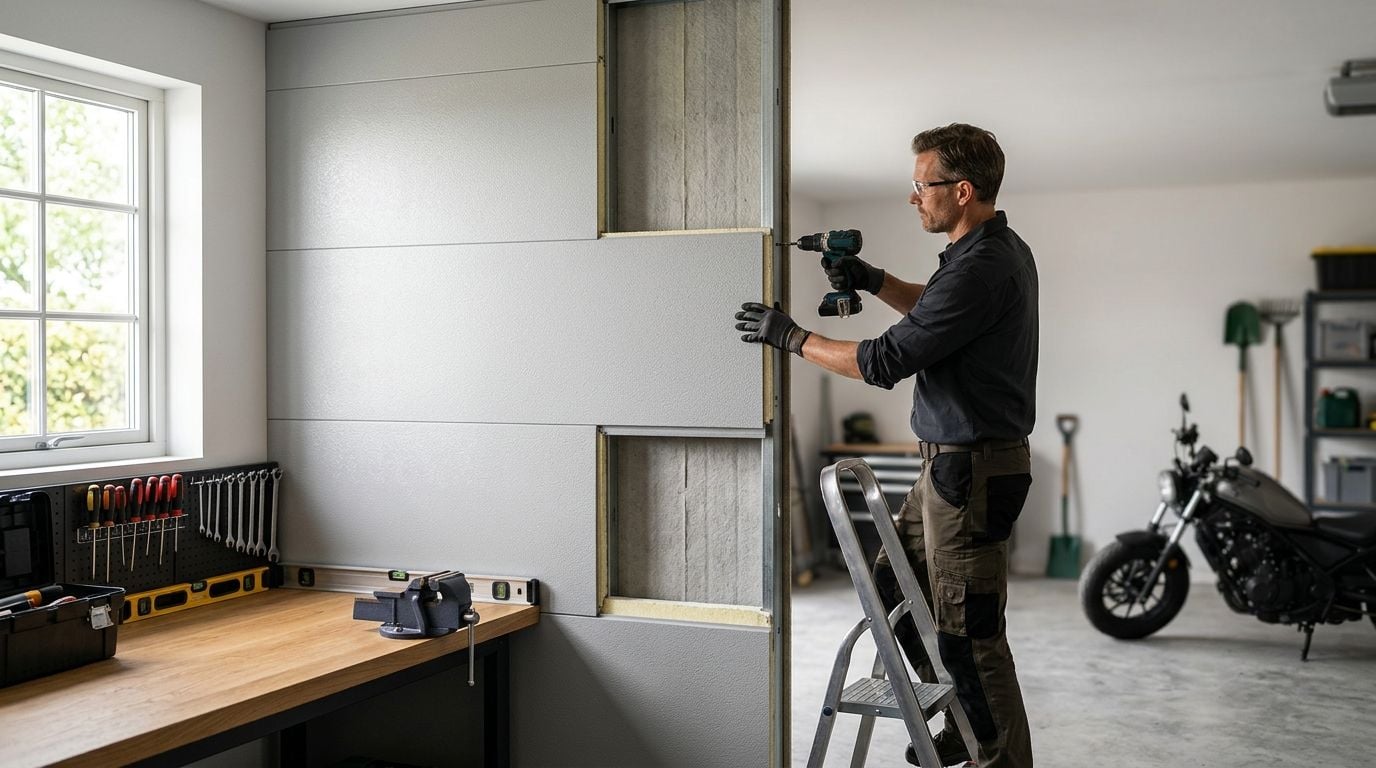
  • Best Insulated Wall Panels for Garages in 2026

    Best Insulated Wall Panels for Garages in 2026

    Rigid foam insulation board wins overall for a DIY garage upgrade in 2026, insulated metal panels win for large multi-car workshops, and real wood acoustic panels from The Panel Hub win for turning a garage into a finished studio or gym. None of these five options do everything — pick based on whether you're solving a heat problem, a noise problem, or both.

    TL;DR
    • Rigid foam board (R-5/inch) is the best budget pick for insulated wall panels for garages in 2026.
    • Insulated metal panels (IMP) suit large detached garages and workshops needing structural strength plus insulation.
    • Structural insulated panels (SIPs) only make sense for new-build sheds and garages, not retrofits.
    • The Panel Hub’s real wood acoustic panels add zero R-value alone but finish a converted garage in under 2 hours.
    • Fiberglass batt behind a PVC panel face handles moisture better than foam in a garage with a sink or plants.

    Why this matters

    Most searches for "insulated wall panels for garages" actually cover two different jobs: keeping heat in and making the space look and sound finished. A garage wall panel that looks great over drywall does nothing for your winter heating bill if there's no insulation behind it. Sheds have a third wrinkle — exterior weather exposure that garages usually don't deal with, which is why shed builders often start with exterior wood cladding before touching the interior at all.

    This guide separates the insulating layer from the finishing layer so you buy the right product for the job you actually have in 2026, not the one the ad targeting guessed at.

    R-values by insulation type
    R-5 per inch
    Typical XPS foam board
    R-13 to R-15
    Standard 2×4 fiberglass batt cavity
    Under 2 hours
    Panel Hub acoustic panel install time

    What makes the best insulated wall panels for garages

    • Thermal performance — R-value per inch, not just total thickness
    • Moisture and mold resistance — critical in unheated garages and sheds that see condensation
    • Insulates vs. finishes — some products add R-value, others just cover what's already there
    • DIY install difficulty — tools, cut complexity, and whether one person can do it
    • Fire rating and code compliance — foam left exposed usually fails local code
    • Durability through temperature swings — garages and sheds see wider swings than living spaces

    At a glance

    Option Best for Standout feature Key limitation
    Rigid Foam Insulation Board Budget garage insulation upgrade R-5 per inch in a thin panel Needs a separate finish layer; foam is flammable if left exposed
    Insulated Metal Panels (IMP) Large workshops and multi-car garages Structural skin and insulation in one panel Heavy — usually a contractor install
    Structural Insulated Panels (SIPs) New-build sheds and garages Whole-wall R-value with fewer thermal bridges Only practical during new construction
    Fiberglass Batt + PVC Panel Finish Garages with a sink, wash station, or plants PVC face resists moisture while batts add R-13 to R-15 Batts lose R-value if compressed or wet
    Real Wood Acoustic Panels (The Panel Hub) Garage-to-studio or home gym conversion NRC 0.85 sound dampening, install under 2 hours Adds no thermal R-value on its own

    1. Rigid Foam Insulation Board: best insulated wall panel for a budget garage upgrade

    Rigid foam board (XPS or polyiso) is the cheapest way to add real R-value to garage stud bays without hiring a crew. XPS runs around R-5 per inch, polyiso closer to R-6, and both cut with a utility knife and straightedge — no specialty tools required.

    Rigid Foam Insulation Board pros:

    • Fastest DIY install of any true insulation product on this list
    • High R-value per inch of thickness, which matters in tight garage stud cavities
    • Cuts with basic hand tools

    Rigid Foam Insulation Board cons:

    • Exposed foam usually fails fire code and needs a covering layer (drywall or panel)
    • Doesn't address sound — a garage gym or shop will still echo
    • Seams need taping or the R-value drops at every joint

    Verdict: Buy if your only problem is heat loss and you're comfortable doing the finish layer yourself.

    2. Insulated Metal Panels (IMP): best for large workshops and multi-car garages

    IMPs sandwich a foam core between two metal skins, giving you structure and insulation in a single panel. Commercial garages and large detached workshops use these because one panel replaces both the stud wall and the insulation step.

    Insulated Metal Panels pros:

    • Structural strength plus insulation in one product
    • Handles large spans without additional framing
    • Long service life in unconditioned buildings

    Insulated Metal Panels cons:

    • Panels are heavy and usually need two installers or a lift
    • Overkill and expensive for a single-car garage
    • Not a weekend DIY project for most homeowners

    Verdict: Hold unless you're building or re-skinning a workshop over 400 square feet.

    3. Structural Insulated Panels (SIPs): best for new-build sheds and garages

    SIPs are a foam core bonded between two structural facings, built off-site and craned or carried into place during framing. They give you whole-wall R-value with far fewer thermal bridges than stick framing plus batts.

    SIPs pros:

    • Fewer thermal bridges than traditional stud-and-batt construction
    • Faster overall build time once panels arrive on site
    • Consistent R-value across the whole wall, not just between studs

    SIPs cons:

    • Only realistic if you're building new, not retrofitting an existing garage
    • Requires a contractor familiar with SIP assembly
    • Custom panel orders take lead time you won't have on an existing structure

    Verdict: Buy only if the garage or shed is still on paper. Skip for any retrofit.

    4. Fiberglass Batt + PVC Panel Finish: best for a moisture-prone garage

    Standard fiberglass batt (R-13 to R-15 in a 2×4 cavity) behind a PVC panel face handles the two things garages fight most: cold and damp. The PVC face sheds water from a wash station, potting bench, or the occasional flooded floor drain, while the batt behind it does the insulating work.

    Fiberglass Batt + PVC Panel pros:

    • PVC face resists water and won't mold like drywall
    • Batt insulation is inexpensive and widely available
    • Easy to patch a single damaged panel without redoing the wall

    Fiberglass Batt + PVC Panel cons:

    • Compressed or wet batts lose R-value fast
    • Vapor barrier detailing matters more here than with foam or SIPs
    • Less sound dampening than a dedicated acoustic panel

    Verdict: Buy for garages with a sink, wash bay, or year-round moisture exposure.

    5. Real Wood Acoustic Panels (The Panel Hub): best for a garage-to-studio conversion

    Once the insulation question is settled — foam, batt, or SIP — a garage being converted into a home gym, band room, or studio needs a finish that also controls echo. The Panel Hub's real wood acoustic panels carry an NRC 0.85 rating and are FSC certified, and they mount with either click-lock or adhesive systems in under two hours per wall. They're a finish layer, not an insulator, and should go over whichever product from the first four you already chose.

    Real Wood Acoustic Panels pros:

    • NRC 0.85 sound absorption, which matters in a converted garage that used to just be storage
    • Installs in under 2 hours with a 5-year warranty
    • Real wood veneer looks finished, not like a garage anymore

    Real Wood Acoustic Panels cons:

    • Zero thermal R-value on its own — insulate first
    • Higher upfront cost than plain drywall for the same square footage
    • Not rated for direct outdoor or unfinished-shed exposure

    Verdict: Buy as the finish layer once the wall behind it is already insulated. For pure exterior shed cladding, see the wood cladding panel guide instead.

    Finish panels for a garage or shed conversion
    Acoustic Slat White Felt Wood Wall Panels | SoundPanel
    MDF-backed American oak slat panel built for acoustic finish over insulated walls.
    $799
    3D Geometric Pattern Wooden Panels | GroovePanel
    100% real solid wood 3D panel for a finished statement wall over insulated framing.
    $459
    Acoustic Hexagon Wood Wall Panels | SoundPanel
    Real-wood-veneer hexagon panel with sound absorption for garage gyms and studios.
    $479

    How we ranked

    Each option was weighed against the six criteria above, with thermal performance and moisture resistance carrying the most weight for garages and sheds specifically — spaces that swing further in temperature and humidity than any interior room. DIY difficulty broke the tie between rigid foam and IMP, since most garage owners in 2026 are doing this work themselves on a weekend, not hiring a crew.

    Which insulated wall panel should you choose?

    If you're insulating an existing single-car garage on a budget, buy rigid foam board and finish it with drywall or a panel product. If you're building new or re-skinning a large workshop, SIPs or insulated metal panels are worth the higher install complexity. If the insulation question is already solved and you're finishing a garage conversion into a gym or studio, The Panel Hub's real wood acoustic panels close out the project in an afternoon with a 5-year warranty behind them.

    FAQ

    What’s the best insulated wall panel for a garage in 2026?

    Rigid foam board (XPS or polyiso) is the best overall choice for a single-car garage retrofit because it delivers R-5 to R-6 per inch and installs with basic tools. Large workshops do better with insulated metal panels, and new-build garages do better with SIPs.

    Do decorative wall panels add insulation to a garage?

    No, most decorative and acoustic wall panels, including real wood panels, add sound dampening but not thermal R-value. Insulate the wall first with foam board, batt, or a SIP system, then finish over it.

    Is foam board or fiberglass batt better for a garage wall?

    Foam board gives more R-value per inch and installs faster without framing, while fiberglass batt is cheaper per square foot and pairs well with a moisture-resistant PVC face. Choose batt if the garage sees regular water exposure.

    Can insulated wall panels be installed in an unheated shed?

    Yes, rigid foam board and SIPs both work in unheated sheds, though SIPs only make sense during new construction. Retrofitting an existing shed is easier with foam board cut to fit between studs.

    How much R-value does a garage wall need?

    Most US building codes call for R-13 to R-21 in garage stud walls depending on climate zone, matching typical fiberglass batt or foam board combinations. Check your local code before finalizing the insulation layer.

    Are acoustic wood panels okay for a garage gym conversion?

    Yes, real wood acoustic panels rated NRC 0.85 are built for exactly this use once the wall behind them is already insulated. They cut echo in a converted garage gym or band room and install in under 2 hours per wall.

    What’s cheaper: SIPs or stick-built insulation for a new garage?

    Stick framing with batt or foam board is typically cheaper upfront for a small garage, while SIPs save labor time on larger new builds. The right choice depends on square footage and whether you’re paying for a crew.

    Do insulated metal panels work for a residential garage?

    Insulated metal panels work best for large detached garages and workshops over roughly 400 square feet, not typical attached single-car garages. For a standard attached garage, rigid foam board is usually the more practical and affordable option.

    One last thing

    The most common mistake in a 2026 garage conversion isn't the insulation choice — it's skipping the finish layer entirely and living with exposed foam or batt, which fails fire code in most jurisdictions and looks unfinished. Insulate first, then finish; the two jobs use completely different products for a reason.

    Related guides

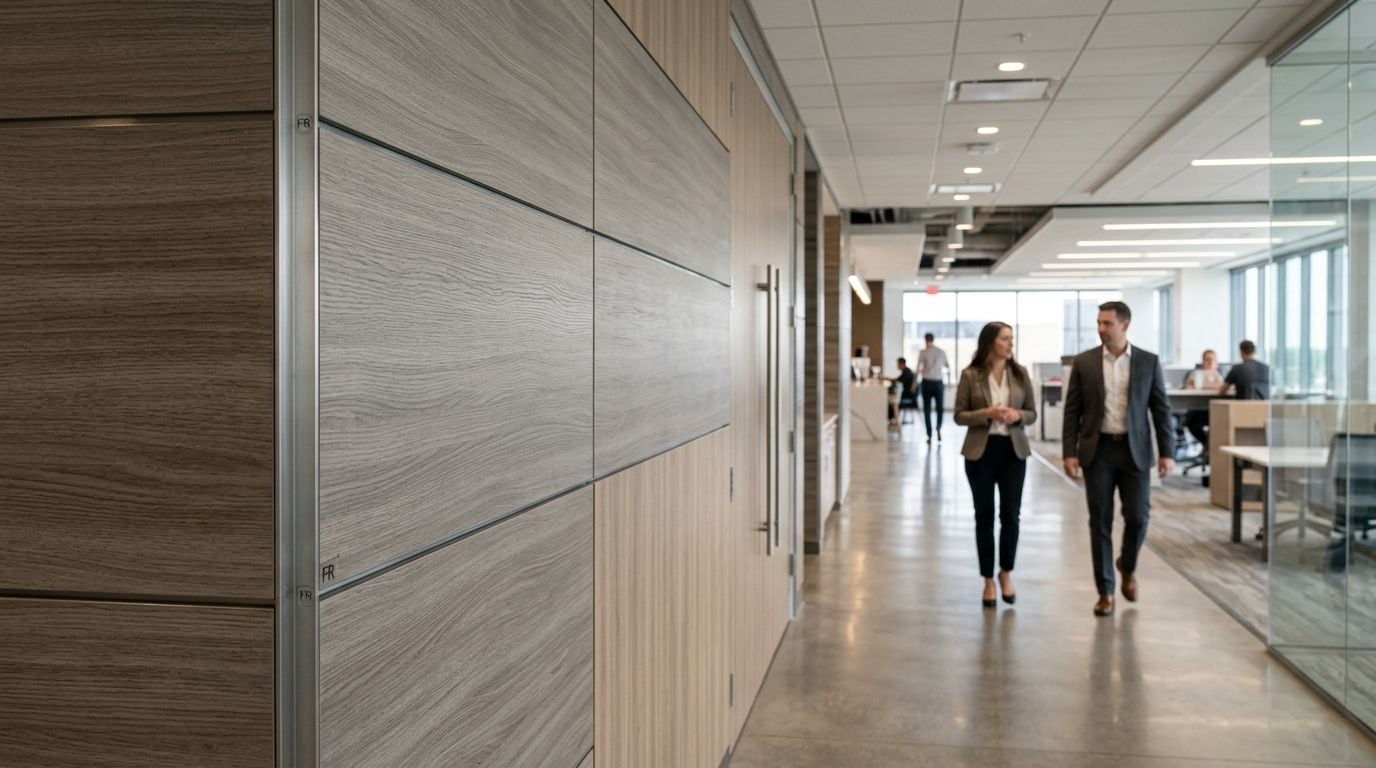
  • Best Fire-Rated Wall Panels for Commercial Spaces 2026

    Best Fire-Rated Wall Panels for Commercial Spaces 2026

    Fire-rated wall panels for commercial spaces span fiberglass composites, gypsum-faced boards, Class B PVC, and treated wood veneer — and specifying the wrong one for the wrong zone is the fastest way to fail an inspection in 2026.

    TL;DR
    • FRP panels rate best overall for fire-rated wall panels for commercial spaces in 2026, especially in restrooms and wet corridors.
    • Fire-rated PVC panels are the budget pick for retail and restaurant walls that only need Class C compliance.
    • Gypsum-faced decorative panels cover Class A egress corridors and stairwells where flame spread must stay at or below 25.
    • Fire-rated acoustic wood slat panels pair sound control with open-plan offices once the corridor substrate is handled separately.
    ASTM E84 flame spread classes
    ≤25
    Class A flame spread index
    26-75
    Class B flame spread index
    76-200
    Class C flame spread index

    Why this matters

    Building codes don't care how a wall panel looks in a showroom photo — they care about two numbers, flame spread index and smoke-developed index, both measured under ASTM E84. A panel that photographs well can still fail a fire marshal's walkthrough if it's installed in the wrong occupancy zone.

    Most commercial fit-outs in 2026 mix zones inside the same floor plan: a Class A stairwell next to a Class B open office next to a decorative reception wall that isn't part of the egress path at all. Treating every wall the same wastes budget on over-specified panels in low-risk zones, or worse, under-specifies a corridor and fails inspection.

    The breakdown below separates panels by the zone they're built for, not by brand marketing. For general interior finishing — including MDF wall panels for interior walls that contractors sometimes substitute in low-risk decorative zones — always confirm the specific product's current fire-rating documentation before ordering for a commercial job.

    What makes the best fire-rated wall panels for commercial spaces

    • Flame spread index (ASTM E84) — Class A tops out at 25, Class B runs 26-75, Class C runs 76-200; corridors and stairwells almost always require Class A.
    • Smoke-developed index — most model codes cap this at 450 regardless of flame spread class, and it's the number contractors forget to check.
    • NFPA 286 room corner test — required for certain occupancy types (assembly, healthcare) on top of the ASTM E84 tunnel test.
    • Substrate and core material — FRP composite, treated MDF veneer, fire-rated PVC, and gypsum-faced boards carry different impact resistance and moisture tolerance.
    • Occupancy and zone classification — identical square footage can require three different ratings depending on whether it's an egress corridor, an open office, or a non-egress decorative wall.
    • Maintenance profile — commercial foot traffic wears panels faster than residential use; cleanability and impact resistance matter as much as the rating itself.

    Fire-rated wall panels for commercial spaces at a glance

    Panel type Best for Standout feature Key limitation
    FRP (fiberglass reinforced panels) Restrooms and wet corridors Class A/B options with a washable, chemical-resistant surface Limited decorative texture range
    Gypsum-faced decorative panels Egress corridors and stairwells Meets Class A flame spread at ≤25 without a separate fire-retardant coat Heavier, needs stud-level framing
    Fire-rated PVC wall panels Retail and restaurant walls Lowest install cost among rated options, wipeable finish Class C only in most lines, not corridor-rated
    Fire-rated MDF wood veneer panels Reception areas and lobbies Real wood look over a treated Class B core Needs a certified fire-retardant treatment, not paint
    Fire-rated acoustic wood slat panels Open-plan offices Sound absorption plus a Class B rated core Rated cores cost more than standard slat panels

    1. FRP panels: best fire-rated wall panels for restrooms and wet corridors

    FRP is the default commercial spec for restrooms, kitchens, and wet corridors because the surface is washable and chemically resistant on top of carrying Class A or Class B ratings depending on the product line. It's the panel most fire marshals recognize on sight, which speeds up inspection.

    FRP pros:

    • Class A and Class B options widely available from commercial suppliers
    • Washable, chemical-resistant surface holds up to daily commercial cleaning
    • Recognized by most inspectors without extra documentation requests

    FRP cons:

    • Decorative texture range is thin compared to wood veneer or PVC
    • Seams need H-molding or trim to stay code-compliant, adding labor

    Best for: restrooms, back-of-house corridors, and wet commercial zones. Verdict: Buy for any wet or heavy-traffic corridor.

    2. Gypsum-faced decorative panels: best for egress corridors and stairwells

    Gypsum-faced panels carry a factory Class A flame spread rating without needing a separate fire-retardant coat, which is why they're the standard pick for stairwells and primary egress corridors in 2026 code cycles.

    Gypsum panel pros:

    • Class A rating built into the core, not a surface treatment
    • Handles the heaviest-trafficked commercial corridors
    • Broad supplier availability across most US markets

    Gypsum panel cons:

    • Heavier than composite or PVC alternatives, adds framing cost
    • Impact resistance lags behind FRP in high-traffic zones

    Best for: stairwells, egress corridors, and any zone requiring Class A by code. Verdict: Buy where code explicitly calls for Class A.

    3. Fire-rated PVC wall panels: best budget option for retail and restaurant walls

    Fire-rated PVC panels are the budget entry point among fire-rated wall panels for commercial spaces, running Class C in most product lines rather than the Class A or B required for egress paths — which fits retail sales floors and restaurant dining rooms, not corridors.

    PVC panel pros:

    • Lowest install labor among rated panel types
    • Wipeable surface suits food-service and retail environments
    • Wider color and texture range than FRP

    PVC panel cons:

    • Class C rating disqualifies most corridor and stairwell applications
    • Lower impact resistance than FRP in high-traffic zones

    Best for: retail sales floors and restaurant dining areas outside the egress path. Verdict: Buy for budget retail fit-outs; Skip for corridors.

    4. Fire-rated MDF wood veneer panels: best for reception areas and lobbies

    Treated MDF wood veneer panels bring a real-wood look to a Class B rated core, which is why they show up in reception areas and lobbies where the wall isn't part of the primary egress route but still needs to pass a fire marshal's review.

    MDF veneer pros:

    • Real wood veneer finish reads as premium in reception and lobby settings
    • Class B rated cores are widely available from commercial suppliers
    • Easier to source in warm tones that pair with wood-slat accent walls

    MDF veneer cons:

    • Requires certified fire-retardant treatment, not a surface coating alone
    • Not rated for full egress corridor use in most jurisdictions

    Best for: lobbies, reception desks, and non-egress decorative walls. Verdict: Buy for lobby-level finish work.

    5. Fire-rated acoustic wood slat panels: best for open-plan offices

    Open-plan offices need two things a plain gypsum wall doesn't deliver: sound absorption and a finish that doesn't look institutional. Fire-rated acoustic wood slat panels with a Class B core solve both, layering a slatted wood or veneer face over an acoustic backing.

    Acoustic slat pros:

    • Sound absorption cuts open-office noise complaints alongside a Class B rated core
    • Matches the wood-slat aesthetic already common in commercial interiors
    • Modular installation suits phased office build-outs

    Acoustic slat cons:

    • Rated acoustic cores cost more than standard, non-rated slat panels
    • Still needs Class A backing in any adjacent egress corridor

    Best for: open-plan offices and huddle rooms. Verdict: Buy for office interiors; pair with Class A corridor panels at the exits.

    Where The Panel Hub's decorative panels fit in a fire-rated project

    The Panel Hub's acoustic and decorative wood wall panels — including the line covered in acoustic wood wall panels for home studios — are built for interior accent and sound-dampening use, not as a substitute for a Class A or Class B rated substrate in a code-mandated corridor.

    In a commercial fit-out, that puts The Panel Hub's real wood and PVC panels in the same category as the MDF veneer and acoustic slat entries above: decorative overlays for reception walls, huddle rooms, and open-plan offices, installed alongside — not instead of — whatever fire-rated substrate the zone requires. The SoundPanel American Acoustic Slat Wood Wall Panels carry an NRC 0.85 sound-absorption rating and install in under two hours, per product spec, suited to the same open-office use case as the fire-rated acoustic slat category above.

    Before specifying any decorative wall panel — from The Panel Hub or any other wall panel supplier — on a commercial job, confirm current fire-rating documentation directly with the manufacturer and check it against the occupancy classification your local code official assigns to that wall.

    Acoustic wood wall panels for commercial interiors
    Acoustic Slat Wood Wall Panels | SoundPanel™
    MDF wood wall panel with a real wood veneer slat face, built for sound absorption in offices and living spaces.
    $799
    Acoustic Hexagon Wood Wall Panels | SoundPanel™
    Real-wood-veneer hexagon panels bonded to an acoustic core for geometric accent walls.
    $479
    Perforated Acoustic Wood Wall Panels | SoundPanel™
    Perforated wood veneer acoustic panel with an architectural finish for premium sound absorption.
    $549

    How this ranking works

    Each panel type above is scored against the same six criteria: flame spread class, smoke-developed index, room corner test requirements, substrate durability, occupancy fit, and maintenance load. No single panel wins across every zone — that's why the list splits by use case instead of stacking every option against one "best overall" pick alone.

    Which fire-rated wall panel should you choose in 2026?

    Match the panel to the zone, not the showroom sample. Specify FRP for restrooms and wet corridors, gypsum-faced panels for Class A egress corridors and stairwells, fire-rated PVC for budget retail and restaurant walls, and fire-rated MDF veneer or acoustic slat panels for lobbies and open-plan offices where the wall sits outside the egress path. Get the occupancy classification from your local code official before you order, not after the panels arrive.

    FAQ

    What is the best fire-rated wall panel for commercial spaces in 2026?

    FRP panels rate best overall for wet corridors and restrooms in 2026, but the right pick depends on the zone — gypsum-faced panels cover Class A egress corridors and fire-rated PVC covers budget retail walls.

    Is Class A or Class B required for commercial corridors?

    Most jurisdictions require Class A (flame spread ≤25) in enclosed exit corridors and stairwells. Class B (26-75) is often accepted in other interior finish zones, so confirm the requirement with your local code official.

    How much does a fire-rated wall panel cost?

    Cost varies by core material, rating class, and supplier, so get a quote from a commercial supplier specifying your occupancy classification rather than relying on a general estimate.

    Can PVC wall panels be fire-rated?

    Yes, Class C rated PVC panels are widely available, but most PVC lines don’t reach the Class A or B rating required for egress corridors.

    Do decorative wood wall panels need a fire rating in commercial buildings?

    It depends on whether the wall is part of the egress path. Decorative walls outside the egress path often don’t require the same Class A rating as corridors, but always confirm with your local code official.

    What’s the difference between ASTM E84 and NFPA 286?

    ASTM E84 is a tunnel test measuring flame spread and smoke development. NFPA 286 is a room corner test required for certain occupancy types, such as assembly and healthcare, on top of the E84 result.

    Are The Panel Hub’s wall panels rated for commercial fire code?

    The Panel Hub’s acoustic and decorative panels are built for interior accent and sound-dampening use in homes and light-commercial interiors. Confirm current fire-rating documentation directly before specifying any panel on a code-mandated commercial wall.

    What is the smoke-developed index limit for commercial wall finishes?

    Most model building codes cap the smoke-developed index at 450 regardless of flame spread class, and inspectors check this number as closely as the flame spread rating itself.

    One last thing

    A panel can pass ASTM E84 as Class A and still fail inspection if its smoke-developed index tops 450 — the flame spread number gets all the attention on spec sheets, and the smoke number gets ignored until the fire marshal's walkthrough in 2026 building cycles.

    Related guides

  • Best Wall Panels for Closets 2026: Top Picks Ranked

    Best Wall Panels for Closets 2026: Top Picks Ranked

    Closets and wardrobes are tight, boxed-in spaces where sound bounces off bare drywall and cheap surfaces show every scuff within a season. This guide ranks the best wall panels for closets in 2026 by acoustic performance, install time, and how well each pattern actually fits a small footprint.

    TL;DR
    • SoundPanel Acoustic Slat Wood Wall Panels wins overall for walk-in closets with dressing areas — real wood, NRC 0.85 rated.
    • Acoustic Slat White Felt Wood Wall Panels is the best wall panels for closets pick for small reach-in spaces that need brightening.
    • Crossing Lines Solid Wood Wall Panels turns a wardrobe wall into a full accent feature without acoustic treatment.
    • Every panel on this list installs in under 2 hours per wall and carries a 5-year warranty.
    Key numbers
    0.85 NRC
    Sound absorption rating
    SoundPanel acoustic line
    Under 2 hours
    Typical install time per wall
    5 years
    Warranty coverage

    Why this matters

    A closet is a hard box: four walls, no windows, and every word or zipper sound bounces straight back at you. That's a different problem than a living room accent wall, which is why picking wall panels for closets by looks alone backfires once the door closes and the echo starts.

    The SoundPanel Acoustic Slat Wood Wall Panels sits at the top of this list because it solves both problems at once: real wood veneer over an NRC 0.85 rated acoustic core, not a decorative laminate pretending to be one. Homeowners upgrading a walk-in closet in 2026 are treating it as a small room, not a storage afterthought, and the panel choice needs to match that.

    Not every closet needs acoustic treatment, though. A wardrobe door wall that's purely decorative calls for a different pick than a dressing room where you're on a call while getting ready. This list separates those use cases instead of stacking every panel against one generic "best" slot.

    What makes the best wall panels for closets

    • Sound absorption rating. NRC 0.85 rated panels cut echo in a boxed-in space; decorative panels without a rating don't, and that's fine if acoustics aren't the goal.
    • Material construction. Real wood veneer over MDF, solid wood, and faux-stone surfaces behave differently around humidity and weight.
    • Clearance and depth. Slat and 3D relief panels add protrusion that matters when rods, shelves, or drawers sit close to the wall.
    • Install time. Every panel in this guide is built to install in under 2 hours per wall — a closet renovation shouldn't eat a weekend.
    • Warranty coverage. A 5-year warranty is the baseline worth checking before committing to a full closet wall.
    • Fit for a small footprint. Pattern scale and finish tone change how a windowless closet reads once the panel goes up.

    Best wall panels for closets: at a glance

    Panel Best for Standout feature Key limitation
    SoundPanel Acoustic Slat Wood Wall Panels Walk-in closets with dressing areas NRC 0.85 rated acoustic core Slat depth reduces clearance near rods
    Acoustic Slat White Felt Wood Wall Panels Small reach-in closets Lighter felt-backed finish Shows scuffs faster than dark finishes
    Crossing Lines Solid Wood Wall Panels Wardrobe accent walls FSC certified solid wood pattern No acoustic rating
    3D Geometric Pattern Wooden Panels Boutique-style dressing nooks Real solid wood 3D relief Too deep for space behind rods or shelving
    Hexagon Acoustic Wood Wall Panels Open dressing rooms Acoustic core in hexagon modules More offcuts than a straight slat run
    RockSurface Highland Rock Wall Panel Rustic or farmhouse-style closets Faux stone texture, no structural load No acoustic benefit

    1. SoundPanel Acoustic Slat Wood Wall Panels: best wall panels for closets with a walk-in dressing area

    Real wood veneer bonded to an acoustic MDF core, built to cut echo in a room where you're getting dressed out loud, on speakerphone, or both.

    SoundPanel Acoustic Slat pros:

    • NRC 0.85 rated sound absorption in a genuine wood finish
    • Reads as furniture-grade, not adhesive wallpaper
    • Installs in under 2 hours per wall
    • 5-year warranty

    SoundPanel Acoustic Slat cons:

    • Slat depth adds a few inches of protrusion — measure clearance around hanging rods first
    • Real wood veneer needs the same humidity caution as any wood product near an adjoining bathroom

    Best for: walk-in closets doubling as a dressing room. Verdict: Buy.

    2. Acoustic Slat White Felt Wood Wall Panels: best wall panels for closets that run small

    Same acoustic slat construction as the panel above, but a golden oak veneer over white felt backing brightens a boxed-in reach-in closet instead of darkening it further.

    White Felt Acoustic Slat pros:

    • NRC-rated acoustic core in a lighter finish
    • Makes a windowless closet feel larger than a dark walnut tone would
    • Same sub-2-hour install and 5-year warranty as the rest of the SoundPanel line

    White Felt Acoustic Slat cons:

    • Lighter finish shows scuffs faster than darker tones
    • Needs full wall coverage to notice a real acoustic difference; a single accent strip won't do much in a tiny space

    Best for: reach-in closets and small wardrobes. Verdict: Buy.

    3. Crossing Lines Solid Wood Wall Panels: best wall panels for closets that want a full accent wall

    A solid wood panel cut in a crossing-line pattern, built to be a decorative statement rather than an acoustic solution, the kind of wall you'd see in a wood wall panel accent wall guide.

    Crossing Lines pros:

    • FSC certified solid wood construction
    • Directional pattern catches closet lighting where a flat surface would look flat
    • Installs in under 2 hours

    Crossing Lines cons:

    • No acoustic rating listed — skip it if echo control is the priority
    • Linear pattern is directional; plan orientation before cutting around shelving

    Best for: wardrobe accent walls where looks outrank acoustics. Verdict: Buy for style, Skip for acoustics.

    4. 3D Geometric Pattern Wooden Panels: best wall panels for closets styled as a boutique nook

    Solid wood cut into a repeating 3D geometric relief, meant to be the one wall in the closet that gets noticed.

    3D Geometric Pattern pros:

    • Solid wood, not veneer
    • Raised geometry catches light from multiple angles inside a closed room
    • FSC-sourced material

    3D Geometric Pattern cons:

    • Raised profile isn't acoustic-rated
    • Depth makes it a poor fit behind hanging rods or shelving — reserve it for one feature wall

    Best for: a single statement wall in an open dressing room. Verdict: Buy.

    5. Hexagon Acoustic Wood Wall Panels: best wall panels for closets with open, multi-use dressing rooms

    Hexagon-cut real wood veneer bonded to an acoustic core, combining geometric texture with genuine sound absorption instead of choosing one or the other.

    Hexagon Acoustic pros:

    • NRC-rated acoustic core in a shape that reads as design first
    • Hexagon modules scale coverage to just the wall behind a vanity or bench
    • 5-year warranty

    Hexagon Acoustic cons:

    • Hexagon cutting means more waste than a straight slat panel — budget extra panels for a full wall
    • Pattern alignment across a corner takes more planning than a flat run

    Best for: dressing rooms doubling as a vanity or seating area. Verdict: Buy.

    6. RockSurface Highland Rock Wall Panel: best wall panels for closets going rustic or farmhouse

    A faux stone-texture panel that brings a rock surface look to an interior wall without masonry work or structural load.

    RockSurface Highland Rock pros:

    • Stone look without the weight of real masonry
    • Works as a contrast wall against wood slat panels elsewhere in the same closet
    • Installs in under 2 hours

    RockSurface Highland Rock cons:

    • Reads heavier than wood — can make a small closet feel smaller if used on more than one wall
    • No acoustic benefit; purely decorative

    Best for: farmhouse-style walk-in closets or a single rustic accent wall. Verdict: Buy for style, Hold if the closet is already small.

    Featured closet panels
    Acoustic Slat Wood Wall Panels | SoundPanel™
    Real wood veneer over an acoustic MDF core, American Oak slat finish.
    $799
    Acoustic Slat White Felt Wood Wall Panels | SoundPanel™
    Golden oak veneer over white felt backing for a lighter, smaller-space finish.
    $799
    Crossing Lines Solid Wood Wall Panels | GroovePanel®
    Solid wood panel in a contemporary crossing-line pattern.
    $459
    Acoustic Hexagon Wood Wall Panels | SoundPanel™
    Hexagon-cut real wood veneer bonded to an acoustic core.
    $479

    How we ranked these

    Every pick got measured against the same six criteria: sound absorption rating, material construction, clearance depth, install time, warranty coverage, and how the pattern actually reads in a small, windowless room. Panels without an acoustic rating still made the list when the use case was purely decorative — a wardrobe door wall doesn't need an NRC number, a dressing room with a phone habit does.

    Which wall panels should you choose for your closet?

    If the closet doubles as a dressing area and echo is the complaint, SoundPanel Acoustic Slat Wood Wall Panels is the default pick for 2026 — it's the only option here pairing a real NRC 0.85 rating with a finish that doesn't look institutional.

    Going smaller or brighter, take the white felt version instead. Chasing a statement wall over acoustics, Crossing Lines or the 3D Geometric Pattern panel does more visual work per square foot. Rustic and farmhouse builds land on RockSurface Highland Rock, with the caveat that it stays a one-wall accent in a tight closet.

    FAQ

    What’s the best wall panel for closets in 2026?

    SoundPanel Acoustic Slat Wood Wall Panels is the best overall pick for 2026, combining an NRC 0.85 rated acoustic core with a real wood finish. Choose the white felt version instead for small reach-in closets.

    Do acoustic wall panels actually help inside a closet?

    Yes — a closet is a hard box with four bare walls, and an NRC-rated panel absorbs sound that would otherwise bounce straight back. Decorative panels without an acoustic rating don’t offer the same benefit.

    Can you install wall panels in a closet with hanging rods?

    You can, but measure clearance first since slat and 3D relief panels add a few inches of depth. Flatter panels like Crossing Lines Solid Wood Wall Panels fit tighter spaces behind rods.

    Is real wood better than PVC for a closet wall?

    Real wood panels give a furniture-grade finish and, in acoustic lines, an NRC rating that PVC panels don’t carry. PVC still makes sense in closets adjoining a bathroom where moisture exposure is higher.

    How long does it take to install wall panels in a closet?

    Panels in this guide install in under 2 hours per wall, which covers most reach-in and walk-in closet footprints. Larger walk-in dressing rooms with multiple walls take proportionally longer.

    Do wall panels work in a small reach-in closet?

    Yes, but finish tone matters more in a small space — a lighter finish like the white felt acoustic slat keeps a windowless closet from feeling boxed in.

    What’s the difference between acoustic and decorative wall panels for closets?

    Acoustic panels carry an NRC rating from a bonded absorptive core, like the SoundPanel line’s 0.85 rating. Decorative panels like Crossing Lines or RockSurface Highland Rock prioritize pattern and texture with no sound-dampening claim.

    What warranty comes with closet wall panels?

    The panels covered in this guide carry a 5-year warranty, standard across the line regardless of finish or pattern.

    One last thing

    The detail most people skip: hexagon and 3D relief panels waste more material at the cut line than a straight slat run, so a closet with a lot of corners and awkward angles needs extra panels ordered up front, not a mid-install run back to the cart. Measure the full wall, including behind any built-in shelving, before ordering.

    Related guides

  • Best Eco-Friendly Wall Panels 2026: Top FSC-Certified Picks

    Best Eco-Friendly Wall Panels 2026: Top FSC-Certified Picks

    Best overall eco-friendly wall panel: SoundPanel Acoustic Slat Wood Wall Panels. Best for bedrooms and nurseries: Acoustic Slat White Felt Wood Wall Panels. Best for accent walls: Crossing Lines Solid Wood Wall Panels.

    TL;DR
    • SoundPanel Acoustic Slat Wood Wall Panels is the best eco-friendly wall panel overall — FSC-certified real wood with an NRC 0.85 rating.
    • Acoustic Slat White Felt Wood Wall Panels wins for bedrooms that need a softer, quieter surface.
    • Crossing Lines Solid Wood Wall Panels suits accent walls that don’t need acoustic backing.
    • Hexagon Acoustic Wood Wall Panels fits home theaters and studios wanting sound control plus a bold shape.
    • All five real-wood picks install in under 2 hours and carry a 5-year warranty into 2026.
    Key numbers
    0.85 NRC
    Acoustic rating on real wood slat panels
    5 years
    Warranty coverage
    <2 hours
    Typical install time

    Why this matters

    "Eco-friendly wall panel" gets thrown around loosely in 2026 — plenty of PVC sheeting gets marketed as "green" because it's low-maintenance, which isn't the same as sustainably sourced. The panels worth buying are the ones where the wood itself is traceable and certified, not just the ones that avoid paint fumes.

    The Panel Hub's wood wall panel catalog carries real wood, FSC-certified acoustic panels alongside PVC and shower panels for wet areas — and the distinction matters more for a bedroom or living room than a bathroom, where waterproofing usually wins over material sourcing. This guide ranks the real wood picks that combine sourcing, acoustic performance, and durability, so you're not choosing blind.

    What makes the best eco-friendly wall panel

    • FSC-certified sourcing — the wood comes from forests managed under Forest Stewardship Council standards, not unverified supply chains.
    • Real wood over synthetic veneer — solid wood or wood-veneer construction beats printed laminate for both look and lifespan.
    • Acoustic performance where relevant — an NRC rating means the panel is doing double duty as sound treatment, not just decoration.
    • Install waste — panels that go up in under 2 hours with standard tools generate less offcut waste than trim-heavy systems.
    • Warranty length — a 5-year warranty means fewer replacement panels heading to landfill over a decade.
    • Room fit — a panel that's wrong for its room (moisture, dust, glare) gets torn out early regardless of how it was made.

    Best eco-friendly wall panels at a glance

    Panel Best for Standout feature Key limitation
    SoundPanel Acoustic Slat Wood Wall Panels Living rooms, overall pick FSC-certified real wood veneer, NRC 0.85 Heavier than PVC, interior use only
    Acoustic Slat White Felt Wood Wall Panels Bedrooms and nurseries Felt-backed acoustic core in a lighter finish Shows dust and marks more visibly
    Crossing Lines Solid Wood Wall Panels Accent walls Crossing-line relief pattern hides seams No acoustic backing, decorative only
    3D Geometric Pattern Wooden Panels Statement feature walls 100% real solid wood, deep relief pattern Grooves collect dust, more layout work
    Hexagon Acoustic Wood Wall Panels Home theaters and studios Hex-shaped acoustic panel, modular layout More angled cuts at wall edges
    Featured eco-friendly wall panels
    Acoustic Slat Wood Wall Panels | SoundPanel
    MDF core with American oak slat veneer, built for both style and acoustic performance.
    $799
    Acoustic Slat White Felt Wood Wall Panels | SoundPanel
    Golden oak slat with white felt backing for a softer, lighter acoustic finish.
    $799
    Crossing Lines Solid Wood Wall Panels | GroovePanel
    Walnut wood panel with a crossing-line relief pattern for rustic-modern accent walls.
    $459
    3D Geometric Pattern Wooden Panels | GroovePanel
    100% real solid wood panel with a deep-relief geometric pattern.
    $459

    1. SoundPanel Acoustic Slat Wood Wall Panels: best eco-friendly wall panel for living rooms

    SoundPanel Acoustic Slat Wood Wall Panels pair an FSC-certified real wood veneer face with an acoustic core rated NRC 0.85 — meaning the panel absorbs a meaningful share of the sound hitting it instead of bouncing it back into the room. It's the panel to reach for when a living room echoes or a TV wall needs to look finished, not treated.

    SoundPanel Acoustic Slat Wood Wall Panels pros:

    • FSC-certified wood sourcing, not a generic "sustainable" label
    • NRC 0.85 acoustic rating handles sound dampening and decoration in one panel
    • Installs in under 2 hours with a standard tool kit
    • 5-year warranty against warping and finish failure

    SoundPanel Acoustic Slat Wood Wall Panels cons:

    • Real wood veneer construction is heavier to mount than PVC sheeting
    • Built for interior use only — no exterior or wet-room application
    • Slat grooves need occasional dusting to keep the acoustic gaps clear

    Best for: living rooms and home offices that need sound control without looking like a recording studio. Verdict: Buy.

    2. Acoustic Slat White Felt Wood Wall Panels: best eco-friendly wall panel for bedrooms

    The Acoustic Slat White Felt Wood Wall Panels share the same acoustic slat core as the American oak version but swap in a white felt backing, which reads lighter and softer against bedroom walls. It's the same real-wood, FSC-sourced construction, just tuned for a room where you want quiet more than warmth.

    Acoustic Slat White Felt Wood Wall Panels pros:

    • Same FSC-certified real wood base as the flagship slat panel
    • Felt backing softens the look for bedrooms and nurseries
    • Acoustic core still handles echo and noise transfer
    • 5-year warranty matches the rest of the SoundPanel line

    Acoustic Slat White Felt Wood Wall Panels cons:

    • White felt shows dust and fingerprints more than darker finishes
    • Not rated for bathrooms or other high-moisture rooms
    • Fewer color options than the oak-finish slat panel

    Best for: bedrooms, nurseries, and reading rooms where a lighter, quieter wall matters more than a bold wood grain. Verdict: Buy.

    3. Crossing Lines Solid Wood Wall Panels: best eco-friendly wall panel for accent walls

    Crossing Lines Solid Wood Wall Panels use a crossing-line relief pattern cut into solid wood, which does two jobs at once: it hides panel seams and it throws shadow lines across the wall as light shifts through the day. There's no acoustic core here — this one is built for look, not sound.

    Crossing Lines Solid Wood Wall Panels pros:

    • Solid wood construction, not printed laminate
    • Relief pattern disguises seams between panels
    • Installs in under 2 hours like the rest of the lineup
    • 5-year warranty covers warping and finish issues

    Crossing Lines Solid Wood Wall Panels cons:

    • No acoustic backing, so it won't help with echo or noise
    • Heavier per panel than slat or felt-backed options
    • Pattern alignment across a wide wall takes more planning

    Best for: accent walls in dining rooms and hallways where the goal is texture, not sound treatment. Verdict: Buy.

    4. 3D Geometric Pattern Wooden Panels: best eco-friendly wall panel for statement walls

    The 3D Geometric Pattern Wooden Panels are built from 100% real solid wood with a deep-relief geometric cut, which makes them the boldest visual pick in this lineup. If the wall is meant to be the first thing someone notices when they walk into the room, this is the panel that does it.

    3D Geometric Pattern Wooden Panels pros:

    • 100% real solid wood, not a wood-look composite
    • Deep relief pattern creates strong shadow contrast without paint
    • Same under-2-hour install and 5-year warranty as the rest of the range
    • Works as a single feature wall or full-room treatment

    3D Geometric Pattern Wooden Panels cons:

    • Deep grooves collect more dust than flat slat designs
    • Uses more material per square foot than a flat panel
    • Pattern matching across corners takes extra layout time

    Best for: statement feature walls in entryways or living rooms. Verdict: Buy.

    5. Hexagon Acoustic Wood Wall Panels: best eco-friendly wall panel for home theaters and studios

    Hexagon Acoustic Wood Wall Panels bond a real wood veneer face to an acoustic core, then cut it into a hex shape so panels tile together in a modular grid. It's the pick for a home theater or a home studio where sound absorption and a distinct geometric look both matter.

    Hexagon Acoustic Wood Wall Panels pros:

    • Real wood veneer bonded to a proven acoustic core
    • Hex shape tiles into custom modular layouts
    • Doubles as sound treatment and design feature
    • 5-year warranty included

    Hexagon Acoustic Wood Wall Panels cons:

    • More angled cuts needed at wall edges and corners
    • Higher material use per square foot of coverage than rectangular slat panels
    • Bold geometric look isn't neutral enough for every room

    Best for: home theaters, podcast rooms, and home studios that need both acoustic control and a statement wall. Verdict: Buy.

    How we ranked these

    Each panel above was checked against the same criteria: FSC-certified sourcing, real wood over printed composite, acoustic performance where the room calls for it, install waste, and warranty length. No panel got a pass on one strength while ignoring a real limitation — that's why every pick above carries an honest con, including the overall winner.

    Which eco-friendly wall panel should you choose?

    If you only need one answer: SoundPanel Acoustic Slat Wood Wall Panels is the safest default for 2026 — FSC-certified, NRC 0.85 rated, and backed by a 5-year warranty. Go with the Acoustic Slat White Felt version for a bedroom, Crossing Lines for a seam-free accent wall, 3D Geometric Pattern for a bolder statement, and Hexagon Acoustic for a home theater or studio. For more room-specific picks, the best wood wall panels for accent walls guide breaks down layout options in more detail.

    FAQ

    What are the most eco-friendly wall panels in 2026?

    FSC-certified real wood panels, like the SoundPanel Acoustic Slat Wood Wall Panels, are the most eco-friendly option in 2026 because the wood is traceable to responsibly managed forests. Printed laminate or unverified composite panels don’t carry the same sourcing guarantee.

    Are wood wall panels more sustainable than PVC?

    Real, FSC-certified wood panels are generally the more sustainable choice over PVC because the raw material is renewable and traceable. PVC panels have their place in wet rooms where waterproofing matters more than material sourcing.

    Do FSC-certified panels cost more?

    FSC certification adds a sourcing verification step, but it isn’t the main price driver — construction (solid wood versus veneer) and acoustic core matter more. Check current pricing on the product page for exact figures.

    Can eco-friendly wall panels absorb sound too?

    Yes — panels like the SoundPanel Acoustic Slat and Hexagon Acoustic lines combine FSC-certified wood with an acoustic core rated NRC 0.85. That means they cut echo while still being a decorative real-wood surface.

    How long do real wood wall panels last?

    Real wood wall panels from this lineup carry a 5-year warranty against warping and finish failure. Actual lifespan often runs longer with normal interior use and basic dusting.

    Are PVC wall panels ever the better eco choice?

    In bathrooms and shower areas, a PVC or shower panel often outperforms real wood on moisture resistance, which matters more there than sourcing. For bedrooms and living rooms, FSC-certified wood is the stronger sustainability pick.

    How do I know a wall panel is genuinely eco-friendly?

    Look for an explicit FSC certification and confirmation the panel is real wood, not printed composite. A vague "eco" label without a certification behind it isn’t a reliable signal.

    Do eco-friendly wall panels work in bathrooms?

    Real wood acoustic panels are built for dry interior rooms, not bathrooms. For wet areas, a dedicated PVC or shower wall panel is the better fit.

    One last thing

    The detail most buyers skip: an acoustic panel only does its job if it's mounted with a small air gap behind it, not flush against drywall — that gap is what lets the NRC 0.85 rating actually perform, not just the panel material itself. Skip the gap and you're paying for acoustic construction you're not using.

    Related guides

  • Click-Lock vs Adhesive Wall Panels: 2026 Verdict

    Click-Lock vs Adhesive Wall Panels: 2026 Verdict

    Click-lock wall panels win for renters and fast DIY jobs; adhesive-mounted panels win for permanent acoustic treatments; screw-and-furring-strip mounting wins for heavy stone-look panels on uneven walls. The right answer depends on whether you own the wall, how heavy the panel is, and whether you ever plan to take it down.

    TL;DR
    • Click-lock wall panels install without adhesive or nail holes, making them the top pick for renters in 2026.
    • Adhesive-mounted wall panels bond permanently and suit acoustic slat panels rated NRC 0.85 for sound dampening.
    • Screw-mounted panels on furring strips handle heavier faux-stone panels that adhesive alone won’t hold long-term.
    • Most wall panel systems from The Panel Hub install in under 2 hours regardless of mounting method.
    • Adhesive needs 24 to 72 hours to reach full cure strength; click-lock is load-bearing the moment it clicks.
    Key numbers
    Under 2 hours
    Typical install time
    Most panel systems, either method
    0.85 NRC
    Acoustic panel sound rating
    5 years
    Standard panel warranty
    24-72 hours
    Adhesive full cure time

    Why this matters

    Picking the wrong mounting method costs you a wall. Adhesive that's meant to be permanent tears drywall paper off when you try to remove it, which is the single most common complaint with wall panel installs. Click-lock systems avoid that problem entirely but aren't built to carry the same weight as a faux-stone or solid-wood panel.

    The acoustic slat wood wall panels from The Panel Hub illustrate the tradeoff well: lightweight MDF-and-veneer construction works with either mounting method, but the method you choose changes whether the wall underneath survives a future renovation. Get this decision right before you buy panels, not after.

    What makes the best wall panel installation method

    • Reversibility — can the panel come off without damaging drywall or paint
    • Weight capacity — how many pounds per panel the method reliably holds long-term
    • Cure or set time — how long before the panel is load-bearing
    • Wall prep required — bare drywall vs. furring strips vs. cleaned/primed surface
    • Tool requirements — caulking gun and adhesive vs. click mechanism only vs. drill and screws
    • Suitability for moisture — bathrooms and basements punish the wrong adhesive choice

    At a glance

    Method Best for Standout feature Key limitation
    Click-lock panels Renters, quick DIY updates No adhesive, no wall damage on removal Not rated for heavy stone-look panels
    Adhesive-mounted panels Permanent acoustic treatments Full-surface bond, best for slat and felt-backed panels Removal usually damages drywall
    Screw + furring strip Heavy panels, uneven walls Highest weight capacity of the three Most tools and prep time required

    1. Click-lock wall panels: best for renters and no-damage installs

    Click-lock systems use interlocking tongue-and-groove edges, the same mechanical principle used in laminate flooring, so panels snap together and hold their own weight without glue or fasteners into the wall. You still need a starter strip or track along the base, but the panel field itself never touches the drywall with adhesive.

    Click-lock pros:

    • Comes off cleanly at move-out with zero wall repair
    • No cure time — the panel is load-bearing immediately after it clicks
    • No caulking gun, no mixing, no mess
    • Works over slightly imperfect walls better than full-contact adhesive

    Click-lock cons:

    • Weight limits mean heavier faux-stone or thick solid-wood panels aren't good candidates
    • A poorly seated track can leave a visible gap line

    Click-lock verdict: Buy if you rent, if you want the option to redesign later, or if the panel itself (like a lightweight 3D geometric pattern wood panel) is under the method's practical weight ceiling.

    2. Adhesive-mounted wall panels: best for permanent acoustic treatments

    Adhesive bonds the full back surface of the panel to the wall, which matters most for acoustic panels where an air gap between panel and wall changes sound absorption performance. A hybrid polymer adhesive is the standard choice for interior wall cladding because it grips both porous drywall and painted surfaces without the fumes of solvent-based contact cement.

    Adhesive pros:

    • Full-surface contact means no rattling or hollow spots on acoustic slat panels
    • Handles slightly heavier panels than click-lock alone
    • No visible track or hardware at the base

    Adhesive cons:

    • Full cure typically runs 24 to 72 hours before the bond reaches maximum strength
    • Removal is a one-way decision — expect drywall damage or skim-coat repair
    • Requires a clean, dust-free wall surface for a proper bond

    Adhesive verdict: Buy for a bedroom or living room acoustic wall you don't plan to change, especially with slat or felt-backed panels where full contact improves both look and sound dampening.

    3. Screw and furring strip mounting: best for heavy or uneven walls

    Furing strips — thin wood or metal strips screwed into studs — give you a level, secure base before the panel goes up, then the panel itself is screwed or clipped to the strips. This is the method contractors reach for on faux-stone panels or any wall that's out of plumb by more than a small margin, since adhesive alone can't compensate for an uneven surface.

    Screw-mount pros:

    • Highest weight capacity of the three methods
    • Corrects for bowed or uneven walls that would leave gaps with adhesive or click-lock
    • Panels stay serviceable — a damaged section can be unscrewed and swapped

    Screw-mount cons:

    • Most labor-intensive of the three, usually more than 2 hours for a full wall
    • Reduces usable room depth slightly since furring strips add thickness
    • Needs a drill, level, and stud finder at minimum

    Screw-mount verdict: Buy for a faux-stone accent wall or any wall you already know is uneven; Skip it for a simple bedroom refresh where click-lock or adhesive does the job faster.

    Panels and adhesive for this project
    Acoustic Slat Wood Wall Panels | SoundPanel
    MDF and real wood veneer slat panel built for full-contact adhesive mounting.
    $799
    Wood Paneling Adhesive
    Hybrid polymer adhesive for interior wall cladding and bathroom panels.
    $11.99
    Ridge Rock Wall Panel | RockSurface
    Faux-stone texture panel suited to screw-and-furring-strip mounting on uneven walls.
    $347

    How we ranked

    Each method was scored against the same six criteria: reversibility, weight capacity, cure/set time, wall prep, tool requirements, and moisture suitability. No single method wins on every criterion — that's why the verdict below splits by situation rather than naming one universal winner.

    Which installation method should you choose in 2026?

    If you're renting or you might rearrange the room in the next couple of years, click-lock wall panels are the default choice — no wall damage, no cure time, done in an afternoon. If you own the home and you're installing acoustic panels you intend to keep, adhesive is the better long-term bond, particularly for slat and felt-backed panels where full-surface contact affects sound performance. Reach for screw-and-furring-strip mounting only when the panel is heavy or the wall itself isn't flat — that combination breaks both click-lock and adhesive. For a bathroom or high-moisture room, check waterproof wall panels for bathrooms before locking in either method, since moisture changes which adhesives actually hold.

    First-time installers who want a lower-risk starting project should read wall panels for DIY beginners before picking a method — the easiest panel to install isn't always the one that looks best in photos.

    FAQ

    What’s the difference between click-lock and adhesive wall panels?

    Click-lock panels interlock mechanically and need no glue, while adhesive panels bond their full back surface to the wall with a hybrid polymer adhesive. Click-lock is reversible; adhesive is effectively permanent.

    Is click-lock or adhesive better for renters?

    Click-lock is better for renters because it comes off without damaging drywall or paint. Adhesive-mounted panels usually require drywall repair at removal.

    How long does adhesive take to cure on wall panels?

    Hybrid polymer wall panel adhesive typically reaches full cure strength in 24 to 72 hours. The panel can usually be handled gently much sooner, but full bond strength takes the full cure window.

    Can you use adhesive on drywall for wall panels?

    Yes, hybrid polymer adhesives are designed to bond to painted or bare drywall as long as the surface is clean and dust-free. A dirty or glossy wall reduces bond strength significantly.

    Do click-lock panels need furring strips?

    Most click-lock panels only need a starter track at the base, not full furring strips. Furring strips become necessary when the wall is uneven or the panel is heavier than the click mechanism is rated for.

    Which method is better for acoustic wall panels?

    Adhesive mounting is generally better for acoustic panels because full-surface contact avoids air gaps that change sound absorption. Acoustic slat panels rated NRC 0.85 perform best with a solid, gap-free bond.

    How much wall prep does adhesive installation require?

    Adhesive installation requires a clean, dust-free, and ideally flat wall surface for a reliable bond. Skipping prep is the most common reason adhesive-mounted panels fail early.

    Can you combine click-lock and adhesive on the same wall?

    Yes, some installers use adhesive as a secondary bond behind a click-lock system for extra hold on taller walls. This isn’t necessary for most standard-height rooms but adds security for ceiling-height installs.

    One last thing

    The detail most guides skip: adhesive cure time doesn't just affect bond strength, it affects how soon you can lean furniture or trim against the panel edge. Give a full 72 hours before pushing a dresser or bookshelf flush against a freshly adhesive-mounted panel — rushing that step is the most common reason an otherwise correct installation fails in the first month.

    Related guides

  • Best Outdoor Wall Panels for Patios 2026: Ranked Picks

    Best Outdoor Wall Panels for Patios 2026: Ranked Picks

    Most guides that promise the best outdoor wall panels for patios skip the one question that actually decides your outcome: is the patio open to weather, or is it covered and dry? The Panel Hub's real wood, PVC and faux-stone wall panels rank well for covered patios, screened porches and enclosed decks in 2026 — but none of them carry an exterior weather rating, and this guide marks exactly where that line sits.

    TL;DR
    • SoundPanel American Acoustic Slat Wood Wall Panels wins as the best outdoor wall panel for patios that need noise control in 2026.
    • RockSurface Ridge Rock Wall Panel delivers a faux-stone look for covered lanais without real stone weight.
    • None of these panels suit fully exposed decks — the exterior wood cladding lineup covers that use case instead.
    • 3D Geometric Pattern Wooden Panels works best on shaded, fully covered lounge walls, not open-air decks.
    • Hexagon Acoustic Wood Wall Panels is the pick for a fully enclosed patio theater or media wall.
    Panel specs that matter outdoors
    0.85 NRC
    Acoustic rating on the SoundPanel line
    Under 2 hours
    Typical install time per section
    5-year
    Warranty coverage across the lineup

    Why this matters

    A patio wall panel search in 2026 usually turns up two very different products wearing the same label: true exterior cladding rated for rain and UV, and interior-grade decorative panels photographed against a patio backdrop for the listing. Mixing the two up is the single most expensive mistake homeowners make on this kind of project — a panel that looks identical to an exterior board can have a completely different core underneath.

    The panels ranked below — SoundPanel acoustic slat wood, RockSurface faux stone, and GroovePanel solid wood — are built for interior spaces: bedrooms, living rooms, and covered sunrooms. On a covered patio, screened porch, or enclosed three-season deck, they perform close to how they perform indoors, because the wall never actually sees rain or direct sun. On an open deck that takes weather straight on, the same panel swells, fades, or delaminates faster than a product built for that job.

    If your wall gets rained on directly, the exterior wood cladding panels category is built for continuous weather exposure — everything below assumes a roof, an overhang, or four walls between your panel and the sky.

    What makes the best outdoor wall panels for patios

    • Moisture tolerance of the core — MDF and solid wood swell if they take on water; PVC and faux-stone composites tolerate occasional damp better.
    • UV and fade resistance — direct sun bleaches wood veneer and felt backing faster than a shaded, covered spot.
    • Acoustic performance — an NRC rating above 0.7 makes a real difference on hard-surfaced covered patios that bounce sound.
    • Install speed and hardware — a panel that mounts in under 2 hours limits the time exposed trim edges sit against weather.
    • Certification and warranty — FSC certification and a 5-year warranty confirm indoor durability, not automatically outdoor durability.
    • Style match to the space — faux stone reads more "outdoor," slatted wood reads more "indoor-outdoor transition."

    Best outdoor wall panels for patios in 2026: at a glance

    Panel Best for Standout feature Key limitation
    SoundPanel American Acoustic Slat Wood Wall Panels Covered patio noise control 0.85 NRC acoustic core Not rated for direct rain or sun
    RockSurface Ridge Rock Wall Panel Faux-stone accent on a budget Stone look without stone weight Composite surface, not true exterior masonry
    3D Geometric Pattern Wooden Panels Shaded lounge statement wall 100% real solid wood texture Solid wood swells with humidity swings
    Crossing Lines Solid Wood Wall Panels Rustic covered porch entry Rustic crossing-line grain pattern No stated exterior weather rating
    Hexagon Acoustic Wood Wall Panels Covered media or theater wall Hexagon shape doubles as acoustic treatment Felt backing can't get wet

    1. SoundPanel American Acoustic Slat Wood Wall Panels: best outdoor wall panel for covered patio sound control

    A covered patio with a tile or concrete floor bounces sound worse than most living rooms, and the SoundPanel American Acoustic Slat Wood Wall Panels is built for exactly that problem. It carries a 0.85 NRC acoustic rating on a real wood veneer surface, is FSC certified, and installs in under 2 hours per section — the same install window The Panel Hub quotes across its wall panel catalog.

    SoundPanel Acoustic Slat pros:

    • 0.85 NRC rating cuts echo on hard-floored covered patios
    • Real wood veneer finish, not a printed laminate
    • FSC certified material sourcing
    • Under-2-hour install per section

    SoundPanel Acoustic Slat cons:

    • MDF acoustic core is not rated for direct rain
    • Felt backing can trap moisture if it gets wet
    • Not suited to fully open, uncovered decks

    Best for: enclosed sunrooms, screened porches, and covered patios that stay dry year-round.

    Verdict: Buy — for covered, dry patio walls only.

    2. RockSurface Ridge Rock Wall Panel: best outdoor wall panel for a faux-stone look on a budget

    RockSurface Ridge Rock Wall Panel gives a covered lanai the visual weight of natural stone without the labor or load of real masonry. The FauxSeries composite surface mounts directly to framing and, like the rest of The Panel Hub's wall panel lineup, carries a 5-year warranty.

    RockSurface Ridge Rock pros:

    • Stone-look texture without structural stone weight
    • Composite surface handles occasional humidity better than solid wood
    • Standard 5-year warranty
    • Straightforward direct-to-framing install

    RockSurface Ridge Rock cons:

    • Not a substitute for true exterior stone veneer in fully exposed spots
    • Charcoal-toned finish shows dust build-up in bright, sunny corners
    • Best kept out of splash zones near grills or planters

    Best for: covered lanais, porch accent walls, and patio bar backsplashes under a roofline.

    Verdict: Buy — for protected, covered wall sections.

    3. 3D Geometric Pattern Wooden Panels: best outdoor wall panel for a shaded lounge statement wall

    3D Geometric Pattern Wooden Panels turn a blank covered-patio wall into the focal point of a seating area, especially under string lights or a pergola. The panel is cut from 100% real solid wood, which reads richer than composite alternatives in raking outdoor light.

    3D Geometric pros:

    • Real solid wood gives genuine depth and shadow lines
    • Strong visual anchor for lounge or dining zones
    • Same under-2-hour install and 5-year warranty as the rest of the line

    3D Geometric cons:

    • Solid wood swells and can warp with big humidity swings
    • Needs full shade cover, not a partial overhang
    • Higher-touch finish shows scuffs near foot traffic

    Best for: shaded, fully covered lounge walls away from splash zones.

    Verdict: Hold — order a sample panel and test it against your actual wall for a week before committing to a full run.

    4. Crossing Lines Solid Wood Wall Panels: best outdoor wall panel for a covered porch entry

    Crossing Lines Solid Wood Wall Panels bring a rustic, crossing-grain texture to the wall flanking a sliding door or covered porch entry, tying an interior room visually to the patio beyond it.

    Crossing Lines pros:

    • Rustic crossing-line grain pattern pairs well with stone or brick
    • Solid wood construction matches interior finishes for a continuous look
    • Standard 5-year warranty and under-2-hour install

    Crossing Lines cons:

    • No stated exterior weather rating
    • Same humidity caution as the geometric panel above
    • Darker finishes show water spotting fastest

    Best for: covered entry walls that see foot traffic but not direct weather.

    Verdict: Hold — fine for a fully covered entry, skip it for anything with weather exposure.

    5. Hexagon Acoustic Wood Wall Panels: best outdoor wall panel for a covered media or theater patio

    An open-sided patio theater or outdoor media wall has the same echo problem as an indoor home theater, and Hexagon Acoustic Wood Wall Panels solves it with a real-wood-veneer-over-acoustic-core build, arranged in a hexagon pattern instead of straight slats.

    Hexagon Acoustic pros:

    • Hexagon geometry doubles as a design feature and an acoustic treatment
    • Real-wood veneer face matches the rest of the SoundPanel lineup
    • Proven sound absorption on hard-surfaced covered patios

    Hexagon Acoustic cons:

    • Felt backing cannot get wet, ever
    • Hexagon layout takes more planning time than a straight slat run
    • Not for anything short of full weather protection

    Best for: fully enclosed patio theater rooms, screened sunrooms, and covered media walls.

    Verdict: Buy — for fully enclosed spaces; Skip for anything open-sided.

    Panels for covered patios and enclosed decks
    Acoustic Slat Wood Wall Panels | SoundPanel™
    0.85 NRC acoustic core with a real wood slat veneer surface.
    $799
    Ridge Rock Wall Panel | RockSurface®
    Faux stone composite surface for a covered accent wall.
    $347
    3D Geometric Pattern Wooden Panels | GroovePanel®
    100% real solid wood geometric panel for a shaded statement wall.
    $459
    Acoustic Hexagon Wood Wall Panels | SoundPanel™
    Hexagon-shaped real-wood-veneer acoustic panel for media walls.
    $479

    How we ranked

    Every panel above got scored on four things: moisture tolerance of the core, acoustic performance where relevant, install speed, and whether the standard 5-year warranty actually covers the intended use case. Panels built around a real wood or MDF core lost points for open-deck use and gained them back for covered-space performance, where they behave the same as they do indoors. None of the five earned an "exposed deck" recommendation in this ranking, because none of them carry an exterior weather rating.

    Which outdoor wall panel should you choose?

    For a covered patio that needs less echo, buy the SoundPanel American Acoustic Slat Wood Wall Panels — it's the only pick on this list built primarily around acoustic performance. For a faux-stone accent on a tighter budget, the RockSurface Ridge Rock Wall Panel is the better fit, and it handles occasional humidity more comfortably than solid wood.

    If your wall takes any direct rain or sun in 2026, none of these five are the right call — the exterior wood cladding lineup on The Panel Hub covers that need instead, without pretending an interior wall panel can survive a storm season.

    FAQ

    Can you use interior wood wall panels outdoors on a patio?

    Only if the patio is fully covered and protected from rain and direct sun. Solid wood and MDF-core panels like SoundPanel and GroovePanel swell or fade when exposed to weather, so they belong on screened porches and covered decks, not open ones.

    What’s the best wall panel for a covered patio in 2026?

    The SoundPanel American Acoustic Slat Wood Wall Panels is the top pick for covered patios in 2026 because its 0.85 NRC core cuts echo on hard, tiled surfaces. RockSurface Ridge Rock Wall Panel is the better choice if you want a faux-stone look instead.

    Are acoustic wall panels waterproof enough for a screened porch?

    No, acoustic wall panels with a felt backing are not waterproof and should stay away from splash zones even on a screened porch. They work well in fully enclosed sections that never take on moisture.

    Is faux stone wall paneling durable enough for outdoor use?

    Faux stone composite panels like RockSurface tolerate occasional humidity better than solid wood but are still not a substitute for true exterior stone veneer in fully exposed locations. Keep them under a roofline or overhang.

    How long does it take to install wall panels on a patio wall?

    Most panels in this lineup install in under 2 hours per section using standard direct-to-framing mounting. Actual time depends on wall prep and how much cutting the layout requires.

    Do wood wall panels come with a warranty for outdoor installs?

    The Panel Hub backs its panel lineup with a 5-year warranty, but that coverage assumes the panel is installed in the interior or covered condition it’s rated for. Direct weather exposure sits outside that intended use.

    What’s the difference between exterior cladding and interior wall panels?

    Exterior cladding is engineered to handle continuous rain, UV, and temperature swings without a roof over it. Interior wall panels, including the acoustic and faux-stone options here, are built for climate-controlled or fully covered spaces only.

    Which wall panel style works best for an outdoor media room?

    Hexagon Acoustic Wood Wall Panels works best for a covered outdoor media or theater wall because its shape doubles as an acoustic treatment for hard-surfaced patios. It still needs full weather protection since the felt backing can’t get wet.

    One last thing

    Order a single sample panel and prop it against the actual patio wall for one full humid week before buying a run for the whole space — MDF and solid wood cores react to local humidity swings faster than a climate-controlled showroom ever shows. A wall that looks bone-dry in October can pull moisture differently once summer humidity sets in, and that single week of testing costs far less than reinstalling a full covered patio wall in 2026.

    Related guides

  • Best Wall Panels for Home Offices 2026: Top Picks

    Best Wall Panels for Home Offices 2026: Top Picks

    A home office wall has three jobs no living room wall does: cut down video-call echo, look sharp on camera, and go up in an afternoon without turning your desk into a construction site. The best wall panels for home offices in 2026 balance real acoustic performance with a finish that reads well on Zoom, not just in person.

    TL;DR
    • SoundPanel American Acoustic Slat Wood Wall Panels are the best wall panels for home offices in 2026 for cutting video-call echo.
    • 3D Geometric Pattern Wooden Panels give the sharpest on-camera backdrop but carry no acoustic core.
    • RockSurface Highland Rock Wall Panel is the budget pick for a textured accent wall behind a desk.
    • Acoustic Hexagon Wood Wall Panel suits small or oddly shaped home offices with modular tile coverage.
    • NRC 0.85-rated acoustic panels install in under 2 hours and carry a 5-year warranty.
    Key numbers
    0.85 NRC
    Sound absorption rating on acoustic panels
    <2 hours
    Typical per-wall install time
    5-year
    Warranty on panels

    Why this matters

    A hard-surfaced home office bounces sound back into your microphone, and callers on the other end notice before you do. The Panel Hub stocks both acoustic-core panels built to absorb that bounce and purely decorative panels that only change how the wall looks — mixing the two up is the most common mistake homeowners make when they shop for this project in 2026.

    If the room also doubles as a media space or podcast corner, it's worth comparing notes with the guide to the acoustic panels for home theater rooms, since the same NRC math applies. For a straight home office, though, the calculus is simpler: how much of the wall needs to absorb sound, and how much just needs to look good behind you.

    What makes the best wall panels for home offices

    • Acoustic rating — panels with an NRC 0.85 core actually reduce echo; decorative panels don't
    • On-camera texture — deep-relief or slat patterns read better on video than flat paint
    • Install time — most home-office projects should wrap in under 2 hours per wall
    • Material — FSC-certified real wood versus PVC or faux-finish options
    • Coverage format — full sheets versus modular tiles for small or irregular walls
    • Warranty — 5-year coverage as the baseline for anything mounted behind a desk you'll bump into for years

    Best wall panels for home offices at a glance

    Panel Best for Standout feature Key limitation
    SoundPanel American Acoustic Slat Wood Wall Panel Best overall for home offices NRC 0.85 acoustic core under real wood slats Heavier panel needs a solid mounting surface
    3D Geometric Pattern Wooden Panels Best for video-call backdrops Deep-relief pattern reads clearly on camera No acoustic core, does nothing for echo
    RockSurface Highland Rock Wall Panel Best budget option Faux stone texture at a fraction of real stone's weight Decorative only, zero sound dampening
    Acoustic Hexagon Wood Wall Panel Best for small home offices Modular hexagon tiles cover partial walls Visible seams if tiling isn't planned carefully
    Crossing Lines Solid Wood Wall Panels Best for open-concept or shared offices Crossing-grain pattern blends into a busy room No acoustic layer, doesn't touch echo

    1. SoundPanel American Acoustic Slat Wood Wall Panels: best wall panel for home offices overall

    The American Acoustic Slat Wood Wall Panel pairs a real wood slat face with an NRC 0.85 acoustic core, the same rating spec across The Panel Hub's acoustic line. It absorbs the mid-to-high frequency reflections that make video calls sound hollow, and it's FSC certified, so the wood face isn't a printed laminate.

    SoundPanel Acoustic Slat pros:

    • Cuts echo behind your desk so calls sound cleaner on the other end
    • FSC-certified real wood face, not a photo print
    • Installs in under 2 hours per standard wall run

    SoundPanel Acoustic Slat cons:

    • Heavier than PVC or faux panels, needs a stud-anchored or solid substrate
    • Slat spacing reads more "studio" than "boardroom," which won't suit every office

    Best for: anyone recording calls, podcasts, or client meetings from a home office who's tired of hollow-sounding audio.
    Verdict: Buy.

    2. 3D Geometric Pattern Wooden Panels: best wall panel for home offices with video-call backdrops

    3D Geometric Pattern Wooden Panels are cut from 100% real solid wood into a repeating geometric relief, so shadow and light shift across the surface as your webcam's key light hits it. That texture reads far more dimensional on camera than flat paint or a plain print.

    3D Geometric pros:

    • Sharp, dimensional look on video calls
    • Real solid wood, not a laminate finish
    • Straightforward panel-to-panel alignment for a DIY install

    3D Geometric cons:

    • No acoustic backing, so it won't quiet an echo-prone room
    • Deep relief pattern collects dust and needs occasional wiping

    Best for: home office workers who care more about how the wall looks on screen than how the room sounds.
    Verdict: Buy — pair it with a rug or curtains if the room is unusually echoey.

    3. RockSurface Highland Rock Wall Panel: best budget wall panel for home offices

    The Highland Rock Wall Panel is part of the RockSurface FauxSeries line, built to mimic natural stone texture at a lighter weight and a simpler install than actual stone veneer. It's the lowest-cost entry point on this list for a textured accent wall.

    RockSurface Highland Rock pros:

    • Lowest entry point of any panel here
    • Lightweight faux construction, no special anchors required
    • Adds texture to a single accent wall without committing the whole room

    RockSurface Highland Rock cons:

    • Purely decorative, no acoustic rating, so it does nothing for call quality
    • The stone look isn't a fit for minimalist or all-wood office setups

    Best for: home offices where budget matters more than acoustic performance.
    Verdict: Buy if the room is already quiet; Skip if echo is the actual problem you're solving.

    4. Acoustic Hexagon Wood Wall Panel: best wall panel for small home offices

    The Acoustic Hexagon Wood Wall Panel bonds real-wood veneer to a sound-absorbing core and ships as modular hexagon tiles, so you can cover a single wall section — say, just behind your monitor — without buying full sheets.

    Acoustic Hexagon pros:

    • Modular format fits oddly shaped or small home office walls
    • Combines an acoustic core with a real-wood veneer finish
    • Partial coverage keeps cost and install time down in tight rooms

    Acoustic Hexagon cons:

    • Uneven tiling shows seams if the layout isn't planned in advance
    • Covering a large office wall takes more individual pieces than a single slat panel run

    Best for: a home office converted from a small bedroom or nook where a full slat wall doesn't fit.
    Verdict: Buy.

    5. Crossing Lines Solid Wood Wall Panels: best wall panel for open-concept or shared home offices

    Crossing Lines Solid Wood Wall Panels use a crossing-grain pattern designed as a rustic accent rather than a dedicated acoustic product, which makes them a natural fit for a desk tucked into a shared living space.

    Crossing Lines pros:

    • Grain pattern blends into a living room or open-concept space doubling as an office
    • Solid wood construction holds up to daily bumps near a desk
    • Neutral finish works with existing furniture

    Crossing Lines cons:

    • No acoustic layer, won't help with call echo
    • Busier pattern than a plain slat wall, which can compete visually with nearby monitors

    Best for: a desk in a living room or open-concept space where the wall doubles as decor.
    Verdict: Buy for looks, Skip if audio quality is the priority — go with the SoundPanel option instead.

    Panels for your home office setup
    Acoustic Slat Wood Wall Panels | SoundPanel™
    Real wood slat panel over an acoustic core, MDF construction.
    $799
    3D Geometric Pattern Wooden Panels | GroovePanel®
    100% real solid wood panels with a raised geometric relief pattern.
    $459
    Highland Rock Wall Panel | RockSurface®
    Faux stone texture panel for an accent wall, lighter than real stone.
    $347
    Acoustic Hexagon Wood Wall Panels | SoundPanel™
    Real-wood-veneer hexagon tiles bonded to a sound-absorbing core.
    $479

    How we ranked these

    Each panel above got measured against the six criteria listed earlier — acoustic rating, on-camera texture, install time, material, coverage format, and warranty. Panels with an NRC 0.85 acoustic core (SoundPanel American Acoustic Slat, Acoustic Hexagon) ranked ahead of purely decorative panels (3D Geometric, RockSurface Highland, Crossing Lines) whenever acoustic performance mattered more than looks, and behind them whenever the reader's priority is a camera-ready backdrop instead.

    Which wall panel should you choose for your home office?

    If you're not sure where to start, default to the SoundPanel American Acoustic Slat Wood Wall Panel — it's the only option on this list built to actually quiet a room, and it still looks intentional on camera. Choose the 3D Geometric Pattern panel instead if your office is already quiet and you just want a sharper video backdrop. Go with RockSurface Highland Rock if budget is the deciding factor and echo isn't a problem you've noticed yet. In 2026, with more calls happening from home offices than ever, acoustic performance is the variable most people underrate until they hear their own echo on a recording.

    FAQ

    What’s the best wall panel for a home office in 2026?

    The SoundPanel American Acoustic Slat Wood Wall Panel is the best overall choice for 2026 because it pairs an NRC 0.85 acoustic core with a real wood finish. It’s the only panel on this list built to reduce video-call echo rather than just decorate the wall.

    Do wall panels actually reduce echo on video calls?

    Only panels with an acoustic core, rated by NRC, meaningfully reduce echo. Decorative panels like faux stone or solid wood accents change how a wall looks but do nothing to absorb sound.

    Is real wood or PVC better for a home office wall?

    Real wood panels, like the FSC-certified options in The Panel Hub’s SoundPanel and GroovePanel lines, hold up better long-term and take paint or stain touch-ups more easily. PVC panels are lighter and simpler to install but don’t offer the same acoustic core options.

    How long does it take to install acoustic wall panels?

    Most acoustic wall panels install in under 2 hours per standard wall when the surface is prepped and studs are marked ahead of time. Modular formats like hexagon tiles can take longer if you’re covering an irregular wall shape.

    Can I install wall panels over drywall in a rental?

    Lighter panels, including faux stone and PVC options, mount with adhesive strips or lighter fasteners that leave less damage than a full acoustic slat panel. Heavier acoustic panels generally need a stud-anchored mount for long-term stability.

    What NRC rating do I need for a home office?

    An NRC of 0.85, the rating on The Panel Hub’s acoustic slat and hexagon lines, is enough to noticeably cut echo in a typical home office. Rooms with hard floors and large windows benefit most from panels at this rating or higher.

    Are faux stone panels good for home offices?

    Faux stone panels like the RockSurface Highland Rock Wall Panel add texture and cost less than acoustic options, but they carry no sound-dampening rating. They work well when the room is already quiet and the goal is purely visual.

    How much wall coverage do I need for a noticeable sound improvement?

    Covering the wall directly behind your desk and camera, rather than the entire room, is usually enough to cut noticeable echo on calls. Modular acoustic tiles make it easier to target just that section instead of paneling floor to ceiling.

    One last thing

    Most people panel the wall behind their monitor for looks and ignore the wall behind the camera — but the wall your microphone faces matters more for echo than the one you stare at all day. If you can only afford to panel one section, put the acoustic panel behind your desk chair, facing the camera, not on the wall you see on your own screen.

    Related guides