Category: Uncategorized

  • Best Wall Panels for DIY Beginners 2026: Ranked

    Best Wall Panels for DIY Beginners 2026: Ranked

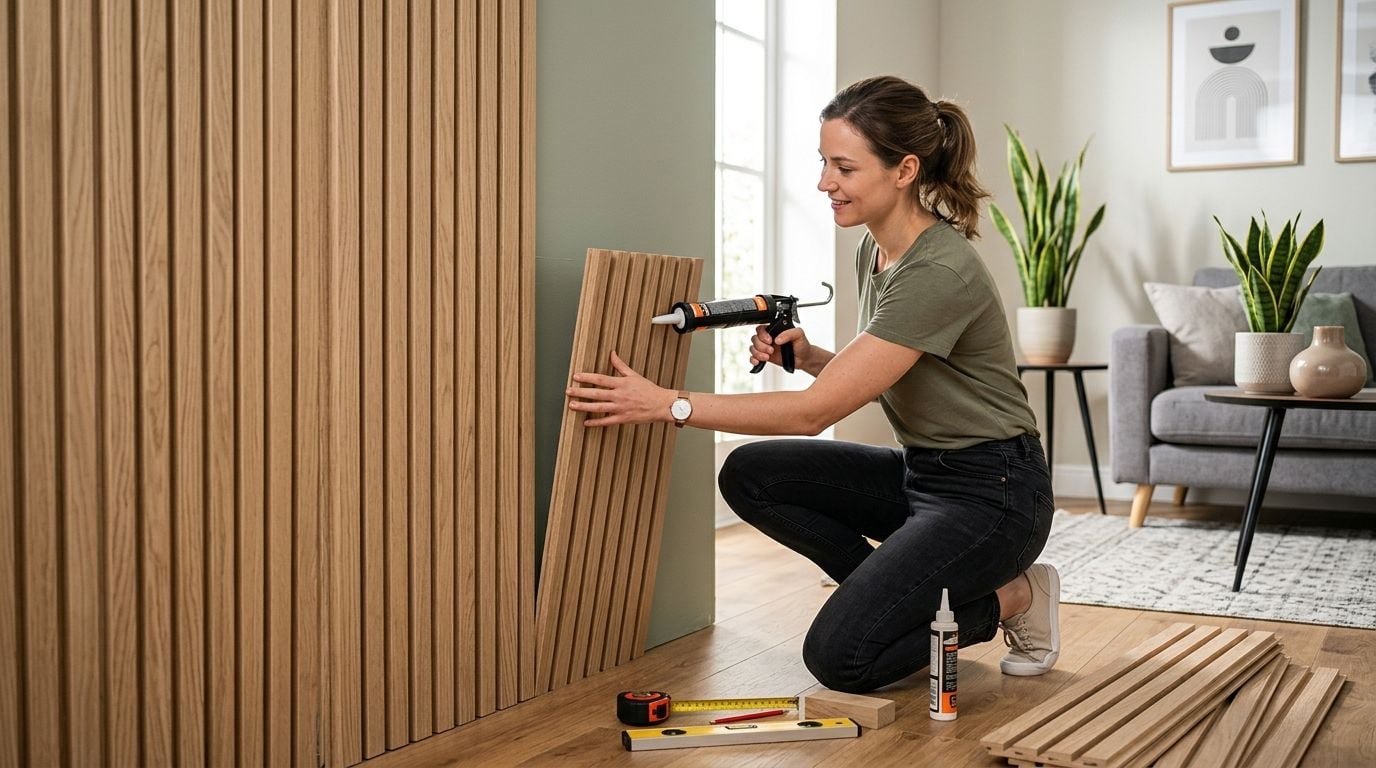
    The best wall panels for DIY beginners in 2026 install without a nail gun, forgive a slightly uneven stud, and don't punish you for one crooked cut. This guide ranks five real wood and acoustic wall panels by how forgiving they actually are to hang solo, in one afternoon, with a hand saw and a level.

    TL;DR
    • SoundPanel Acoustic Slat Wood Wall Panels wins for beginners — repeating slats hide small alignment errors.
    • Acoustic Slat White Felt brightens small or dark rooms while sound-dampening at NRC 0.85.
    • Crossing Lines Solid Wood Wall Panels installs fastest for a single-afternoon accent wall in 2026.
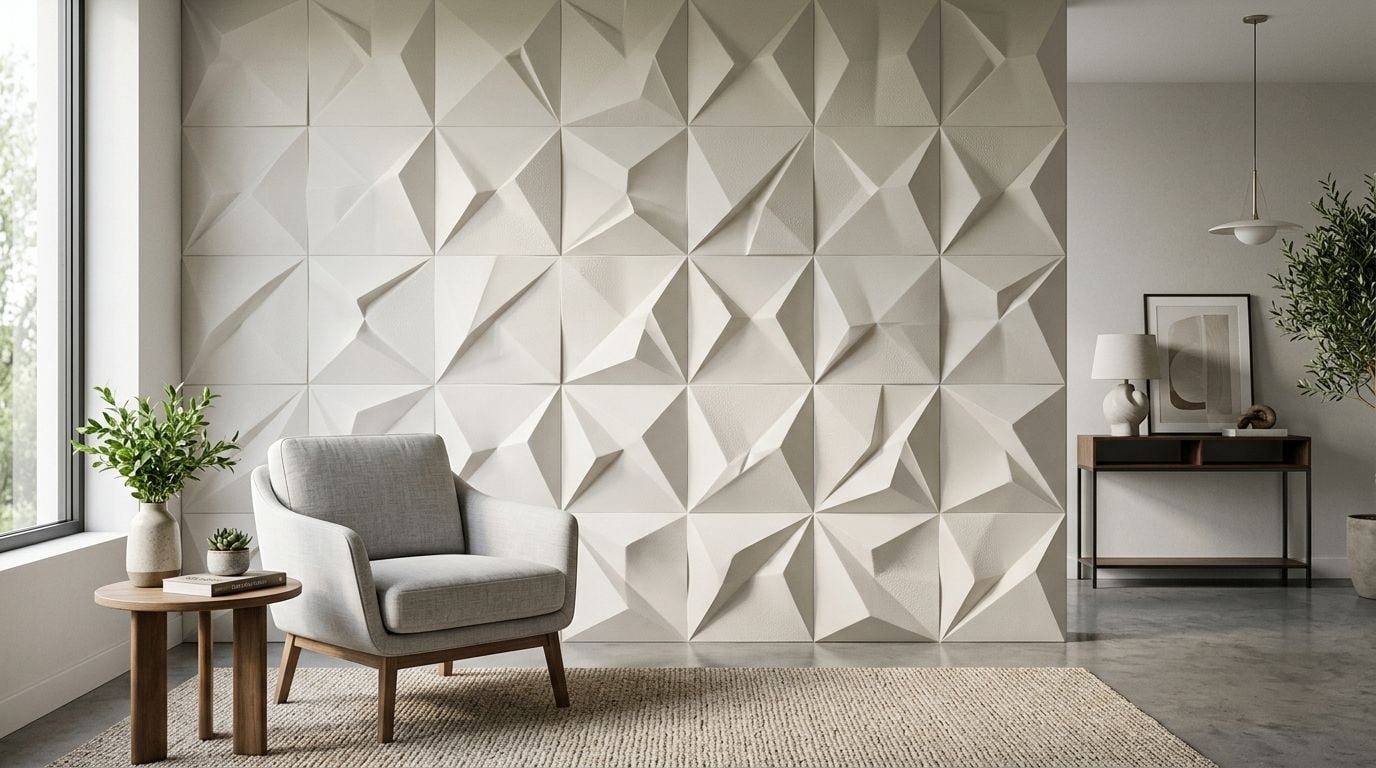
    • 3D Geometric Pattern Wooden Panels rewards beginners who want texture without covering a full wall.
    • Most panels on this list install in under 2 hours per wall and carry a 5-year warranty.
    Key numbers
    NRC 0.85
    Sound absorption rating
    Under 2 hours
    Typical install time per wall
    5 years
    Warranty coverage

    Why this matters

    DIY beginners waste more material on wall panels than on almost any other home upgrade, usually because they pick a pattern that demands perfect alignment before they've measured a stud in their life. Browse The Panel Hub's current lineup and you'll notice the panels that photograph best for social media are rarely the ones a first-timer should buy first.

    Real wood acoustic wall panels rated NRC 0.85 and FSC certified sound intimidating on a spec sheet, but the install difference between products matters more than the material difference. A panel with a repeating slat or hexagon pattern hides a half-inch misalignment. A large single-sheet panel with a printed grain pattern shows every mismatch at eye level. In 2026, that gap between forgiving and unforgiving patterns is the single biggest reason first-attempt accent walls get abandoned halfway through.

    What makes the best wall panels for DIY beginners

    • Alignment tolerance — repeating patterns (slats, hexagons, crossing lines) forgive uneven cuts better than one large printed sheet.
    • Weight and cutting difficulty — MDF-core acoustic panels cut with a basic hand saw; solid wood needs a sharper blade and steadier hand.
    • Tool requirements — click-lock or adhesive-backed systems beat panels that need both adhesive and mechanical fasteners.
    • Acoustic performance — an NRC rating matters if the wall backs a bedroom, home office, or media room.
    • Finish forgiveness — felt-backed or textured finishes hide minor seam gaps better than a glossy laminate.
    • Certification and warranty — FSC-certified real wood with a stated warranty period signals the manufacturer expects it to last, not just look good on day one.

    Wall panels for DIY beginners: at a glance

    Panel Best for Standout feature Key limitation
    SoundPanel Acoustic Slat Wood Wall Panels Best overall for DIY beginners Repeating slat pattern forgives minor cutting errors Needs a level chalk line before the first panel goes up
    Acoustic Slat White Felt Wood Wall Panels Best for small or dark rooms Light oak finish brightens low-light walls Lighter finish shows adhesive residue more readily
    Crossing Lines Solid Wood Wall Panels Best for a single-afternoon accent wall Simple crossing pattern needs no pattern-matching across panels Solid wood is heavier to handle solo than MDF-core panels
    3D Geometric Pattern Wooden Panels Best for a bold focal wall Modular blocks let you rotate orientation for a custom look Mixed block sizes increase measuring mistakes for first-timers
    Hexagon Acoustic Wall Panel Best for symmetric home-office walls Hexagon geometry hides fasteners inside seam lines Angled edge cuts need a miter box

    1. SoundPanel Acoustic Slat Wood Wall Panels: best wall panel for DIY beginners overall

    This is a real-wood veneer slat panel bonded to an acoustic core, and the slat spacing is exactly what makes it beginner-proof: each strip repeats at a fixed interval, so a slightly crooked first panel gets corrected by the third or fourth one instead of compounding. It rates NRC 0.85 for sound absorption, which matters if this wall backs a bedroom or a home office that also doubles as a call room. The living-room slat wall trend has stayed strong through 2026, and this is the panel most first-timers land on for that exact look.

    SoundPanel Acoustic Slat Wood Wall Panels pros:

    • Repeating slat pattern hides small alignment errors
    • NRC 0.85 rating dampens sound in bedrooms and offices
    • FSC-certified real wood veneer, not a printed laminate

    SoundPanel Acoustic Slat Wood Wall Panels cons:

    • Requires a level starting line — skip this step and the whole wall reads crooked
    • Real wood veneer needs a sharper blade than composite panels to avoid chipping

    Best for: first-time installers doing a bedroom or living room feature wall.
    Verdict: Buy.

    2. Acoustic Slat White Felt Wood Wall Panels: best wall panel for small or dark rooms

    Same acoustic slat construction as the panel above, but with a white felt-backed finish that reflects more light. A north-facing bedroom or a windowless home office gains visual depth instead of feeling boxed in, which is the opposite effect a dark walnut slat wall produces in the same space.

    Acoustic Slat White Felt Wood Wall Panels pros:

    • Light finish brightens small or low-light rooms
    • Same NRC 0.85 acoustic core as the slat original
    • Felt backing hides minor seam gaps between panels

    Acoustic Slat White Felt Wood Wall Panels cons:

    • Light finish shows adhesive smudges and fingerprints more than darker wood
    • Not the pick for a moody, dramatic accent wall

    Best for: small bedrooms, apartments, or rooms with limited natural light.
    Verdict: Buy.

    3. Crossing Lines Solid Wood Wall Panels: best wall panel for a single-afternoon accent wall

    The crossing-line pattern is deliberately simple — no directional grain to match, no repeating unit to keep track of across ten panels. That simplicity is what makes it the fastest install on this list for someone who has never hung a panel before and wants the job done before dinner.

    Crossing Lines Solid Wood Wall Panels pros:

    • Simple pattern needs no cross-panel alignment
    • Fastest realistic install time on this list for a full wall
    • Rustic finish hides minor gaps at panel seams

    Crossing Lines Solid Wood Wall Panels cons:

    • Solid wood construction is heavier to lift and hold solo than MDF-core panels
    • Pattern reads busier in small rooms than a plain slat wall

    Best for: anyone who wants one accent wall finished in a single weekend afternoon.
    Verdict: Buy.

    4. 3D Geometric Pattern Wooden Panels: best wall panel for a bold focal wall

    This panel uses modular geometric blocks in solid wood, and you can rotate individual blocks for a slightly different look across the same wall. It rewards a beginner who wants more visual drama than a slat wall but isn't ready for a full accent wall covering every stud bay.

    3D Geometric Pattern Wooden Panels pros:

    • Modular blocks allow orientation changes for a custom pattern
    • Works well as a partial-wall or feature-strip install, not just full coverage
    • Solid wood construction, FSC certified

    3D Geometric Pattern Wooden Panels cons:

    • More individual pieces to measure than a single slat panel, which raises the chance of a first-timer's mistake
    • Requires more planning of block orientation before adhesive goes on the wall

    Best for: confident beginners who want texture without committing to a full wall.
    Verdict: Hold — good second project after a slat wall.

    5. Hexagon Acoustic Wall Panel: best for symmetric home-office walls

    The hexagon geometry hides fasteners inside the seam lines, which gives a cleaner finished look than a panel with visible edge screws. It's an acoustic panel, so it carries the same sound-dampening logic as the slat options, just in a shape that suits a more geometric, modern room.

    Hexagon Acoustic Wall Panel pros:

    • Hexagon shape conceals fasteners for a cleaner finish
    • Acoustic core suits home offices and media rooms
    • Symmetric pattern reads intentional even with minor gaps

    Hexagon Acoustic Wall Panel cons:

    • Angled edge cuts at wall boundaries need a miter box, which not every beginner owns
    • Takes longer to plan hexagon layout than a straight slat run

    Best for: home offices or media rooms wanting a geometric, sound-dampening finish.
    Verdict: Hold — plan the edge cuts before you start.

    Beginner-friendly picks
    Acoustic Slat White Felt Wood Wall Panels | SoundPanel™
    MDF acoustic slat panel with a light felt-backed finish for small or dark rooms.
    $799
    Crossing Lines Solid Wood Wall Panels | GroovePanel®
    Simple crossing-line pattern in solid wood, no directional matching required.
    $459
    Acoustic Hexagon Wood Wall Panels | SoundPanel™
    Hexagon acoustic panel with fasteners hidden inside the seam lines.
    $479
    3D Concentric Square Wood Wall Panel | GroovePanel®
    Repeating concentric square pattern in solid wood for a modular install.
    $459

    How we ranked these wall panels

    Every panel on this list gets scored against the six criteria above: alignment tolerance, weight and cutting difficulty, tool requirements, acoustic performance, finish forgiveness, and warranty backing. A panel with a printed single-sheet pattern and no repeating unit dropped out of contention entirely — those are excellent for experienced installers with a laser level, not for a first project in 2026.

    Slat and hexagon patterns scored highest on alignment tolerance because a small human error at panel three doesn't show up the way it would on panel one of a large single-sheet design. That's the core reason SoundPanel Acoustic Slat Wood Wall Panels sits at the top of this list rather than a flashier geometric option.

    “A repeating slat pattern corrects a beginner’s mistake by the third panel; a single large sheet just shows it.”

    Which wall panel should you choose?

    If you've never installed a wall panel before, SoundPanel Acoustic Slat Wood Wall Panels is the default pick — the repeating pattern is the most forgiving on this list and the acoustic core earns its keep in a bedroom or office. If the room is small or short on natural light, move to the white felt version instead. If you just want a fast, one-afternoon accent wall with the least amount of planning, Crossing Lines Solid Wood Wall Panels is the faster route.

    Wall panels aren't the only texture option for a first accent wall — some beginners mix a panel section with a papered wall, and browsing custom wallpaper design ideas alongside a panel catalog is a reasonable way to decide how much of the wall actually needs wood versus print. Save the geometric and hexagon panels for a second project once you've hung one wall and know how your studs actually sit.

    FAQ

    What are the best wall panels for DIY beginners in 2026?

    SoundPanel Acoustic Slat Wood Wall Panels ranks best overall for DIY beginners in 2026 because its repeating slat pattern forgives small cutting and alignment errors. Crossing Lines Solid Wood Wall Panels is the faster pick for a single-afternoon install.

    Is it hard to install acoustic wall panels yourself?

    No — acoustic wall panels with a repeating slat or hexagon pattern install in under 2 hours per wall with a hand saw, level, and adhesive. Large single-sheet printed panels are harder because every misalignment shows immediately.

    Do wall panels need special tools to install?

    Most panels need only a level, tape measure, hand saw, and construction adhesive. Hexagon and angled-pattern panels also need a miter box for clean edge cuts at the wall boundary.

    Are PVC wall panels easier to install than real wood panels?

    PVC panels are lighter and easier to cut than solid wood, which helps a first-timer working alone. Real wood acoustic panels like the ones ranked here add sound dampening that PVC panels don’t match.

    Can DIY beginners install wall panels in a bathroom?

    Standard wood acoustic panels aren’t rated for wet bathroom walls; that job calls for waterproof shower wall panels instead. A bedroom, living room, or home office is the right first project for the panels ranked in this guide.

    How long does it take to install wall panels in a bedroom?

    Most of the panels on this list install in under 2 hours per wall once you’ve marked studs and outlet cutouts. Add extra time for your first attempt at cutting around switches or vents.

    What NRC rating should DIY sound panels have?

    An NRC of 0.85, like the SoundPanel Acoustic Slat Wood Wall Panels carry, is a strong absorption rating for a bedroom, office, or media room wall in 2026. Lower NRC ratings still add some sound dampening but less noticeably.

    One last thing

    Most first-timer wall panel jobs don't fail at the panel — they fail at the outlet cutout. Mark every switch, outlet, and vent location on the wall in painter's tape before the first panel goes up, not after you've already dry-fit three rows; cutting a clean notch around a live outlet on a panel you've already hung is where most beginners lose an afternoon in 2026.

    Whichever panel you pick from this list, start on the wall section with the fewest obstructions. It's the cheapest way to learn the rhythm before you tackle the corner with the light switch and the thermostat both fighting for the same panel.
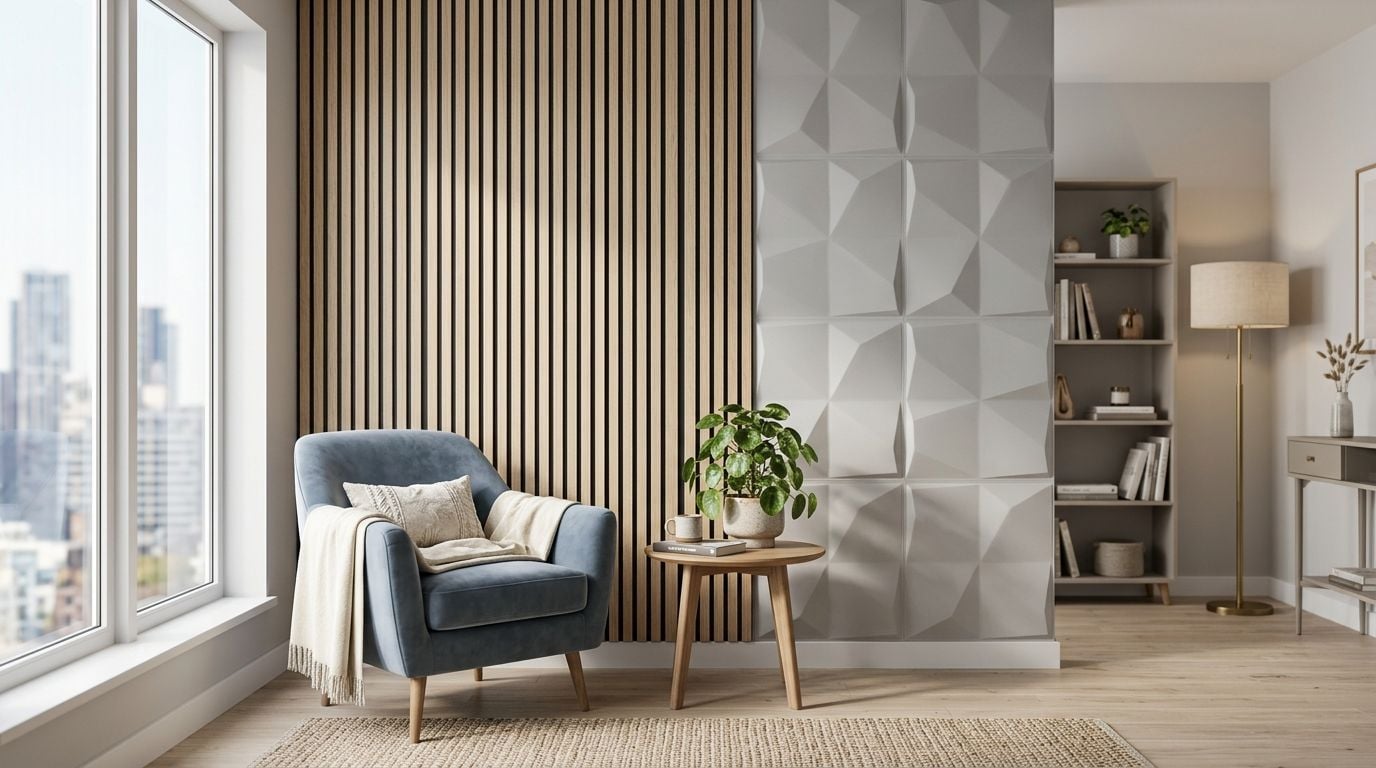
  • Best Wall Panels for Small Apartments in 2026: Ranked

    Best Wall Panels for Small Apartments in 2026: Ranked

    Small apartments turn every wall decision into a space trade-off — this guide ranks the best wall panels for small apartments in 2026 by footprint, install time, and how much noise they actually kill.

    TL;DR
    • SoundPanel Acoustic Slat Wood Wall Panels (White Felt) is the best overall pick among the best wall panels for small apartments in 2026.
    • Crossing Lines Solid Wood Wall Panels wins for renters who need a low-profile, damage-free install.
    • 3D Concentric Square Wood Wall Panel gives the biggest visual impact per square foot without acoustic bulk.
    • Hexagon Acoustic Wood Wall Panel is the pick for studio apartments where a desk corner doubles as a video-call background.
    • All six panels install in under 2 hours and carry a 5-year warranty.
    Key numbers for small-space panels
    0.85 NRC
    Sound absorption rating
    SoundPanel acoustic line
    Under 2 hours
    Typical install time
    5 years
    Warranty coverage

    Why this matters

    A small apartment doesn't have room for a wrong wall decision. Panels that add too much depth eat hallway clearance, panels with no acoustic core do nothing about the neighbor's TV through a shared wall, and a full-wall install in a 250-square-foot studio can make the room read smaller instead of better.

    The six options below solve six different apartment problems — a thin shared wall, a rental deposit you want back, a studio that needs one statement wall instead of four covered ones. If your main issue is noise specifically, the deeper breakdown on soundproofing wall panels for apartments covers NRC ratings in more depth than this guide has room for.

    What makes the best wall panels for small apartments

    • Depth and footprint — panels under an inch thick keep narrow hallways and bedroom walkways clear.
    • Install time and tools — a good apartment panel goes up in under 2 hours without specialty tools.
    • Acoustic performance — an NRC rating near 0.85 actually cuts echo and adjoining-wall noise; a plain decorative panel does not.
    • Visual impact per square foot — small rooms need one strong focal wall, not wall-to-wall coverage.
    • Material and certification — FSC-certified solid wood holds up better in a small, humid unit than laminate over time.

    Best wall panels for small apartments in 2026: at a glance

    Panel Best for Standout feature Key limitation
    SoundPanel Acoustic Slat Wood Wall Panels (White Felt) Noise reduction on thin apartment walls 0.85 NRC acoustic core Slightly deeper than plain slat panels
    Crossing Lines Solid Wood Wall Panels Renters and easy install Low-profile solid wood, FSC certified No acoustic backing
    3D Concentric Square Wood Wall Panel Statement accent wall in a studio Deep geometric relief Needs careful measuring on odd walls
    RockSurface Highland Rock Wall Panel Entryway and hallway durability Scuff-resistant faux-stone texture Can feel heavy if overused
    Hexagon Acoustic Wood Wall Panel Studio desk corner and video calls Acoustic core in a modular hexagon shape More cutting waste on odd walls
    3D Geometric Pattern Wooden Panels Bedroom headboard accent 100% real solid wood relief No acoustic backing
    Panels featured in this guide
    Acoustic Slat White Felt Wood Wall Panels | SoundPanel™
    MDF acoustic slat panel with felt backing for echo control.
    $799
    Crossing Lines Solid Wood Wall Panels | GroovePanel®
    Solid wood panel with crossing groove pattern, low-profile mount.
    $459
    3D Concentric Square Wood Wall Panel | GroovePanel®
    Geometric relief panel for a single statement wall.
    $459
    Acoustic Hexagon Wood Wall Panels | SoundPanel™
    Real-wood-veneer hexagons bonded over an acoustic core.
    $479

    1. SoundPanel Acoustic Slat Wood Wall Panels (White Felt): best wall panel for noise reduction in thin-walled apartments

    This is a real wood veneer slat panel bonded to a felt-backed acoustic core, rated at 0.85 NRC, designed to hang like decor while doing the work of an absorber.

    SoundPanel Acoustic Slat pros:

    • 0.85 NRC absorbs hallway echo and muffles noise coming through a shared apartment wall
    • Wood veneer face reads as decor, not office acoustic foam
    • Installs in under 2 hours with a 5-year warranty backing the panel

    SoundPanel Acoustic Slat cons:

    • The felt-backed core adds more depth than the plain slat or solid-wood lines on this list
    • Slat gaps collect dust faster than a flush solid panel

    Best for: apartment dwellers dealing with hallway echo or a noisy adjoining wall. Verdict: Buy.

    2. Crossing Lines Solid Wood Wall Panels: best wall panel for renters and easy install

    The Crossing Lines panel is FSC-certified solid wood with a linear crossing-groove pattern, built to mount as a lightweight accent rather than a full acoustic system.

    Crossing Lines pros:

    • Lower profile than the acoustic slat line, so it clears tight hallways and closet-adjacent walls
    • FSC-certified solid wood construction
    • Two to three panels read as a full accent wall, which matters when floor space is tight

    Crossing Lines cons:

    • No acoustic backing — it won't reduce noise
    • Grooves show dust and need occasional wiping

    Best for: renters who want a design upgrade without adding wall depth. Verdict: Buy.

    3. 3D Concentric Square Wood Wall Panel: best wall panel for a small-room statement accent

    This panel uses concentric squares cut into real solid wood to create depth on a single wall, meant to carry a room on its own rather than blend into a full coverage layout.

    3D Concentric Square pros:

    • Geometric depth makes one wall the focal point without covering the whole room
    • Real solid wood construction
    • Works behind a console, sofa, or headboard in an open-plan studio

    3D Concentric Square cons:

    • The repeating pattern needs careful measuring on apartment walls with odd angles or outlets
    • Heavier per panel than the slat designs on this list

    Best for: a single statement wall behind a sofa or bed in a studio. Verdict: Buy.

    4. RockSurface Highland Rock Wall Panel: best wall panel for entryway and hallway durability

    The Highland Rock panel is a faux-stone surface panel built to take daily contact from bags, bikes, and strollers moving through a narrow apartment entry.

    Highland Rock Wall Panel pros:

    • Scuff-resistant texture holds up to daily entryway wear that shows immediately on plain drywall
    • Mounts flush, so it doesn't eat hallway clearance
    • Textured finish hides small dings

    Highland Rock Wall Panel cons:

    • The darker rock texture can make an already-small hallway feel more enclosed if it's used on more than one wall
    • No acoustic absorption

    Best for: apartment entryways and narrow hallways taking daily wear. Verdict: Buy for hallways.

    5. Hexagon Acoustic Wood Wall Panel: best wall panel for a studio apartment desk corner

    The Hexagon Acoustic panel puts the same acoustic core used in SoundPanel's slat line into a modular hexagon shape, aimed at studios where one wall does double duty as home office and living space.

    Hexagon Acoustic pros:

    • Same acoustic core as the slat line, so a desk corner gets echo control and a design statement in one panel
    • Modular hexagons scale to the exact wall size, useful in irregular studio layouts
    • Real wood veneer surface, not laminate

    Hexagon Acoustic cons:

    • Hexagon cutting produces more waste panels on oddly shaped studio walls
    • Visually busier than a single slat wall — competes with existing decor in a full room

    Best for: studio apartments where a desk corner doubles as a video-call background. Verdict: Buy.

    6. 3D Geometric Pattern Wooden Panels: best wall panel for a small bedroom headboard wall

    This panel is 100% real solid wood cut into a geometric relief pattern, built to sit behind a bed as the room's one accent wall instead of covering the whole space.

    3D Geometric Pattern pros:

    • 100% real solid wood construction
    • The relief pattern makes a small bedroom's one accent wall feel intentional rather than half-finished
    • Sits flush enough to leave nightstand space untouched

    3D Geometric Pattern cons:

    • No acoustic backing
    • The deeper relief pattern catches shadows differently depending on window placement, so check the wall's light before ordering

    Best for: a bedroom headboard wall where the bed sits against the panel. Verdict: Buy.

    How we ranked these

    Each panel was checked against the five criteria above: footprint, install time, acoustic performance where relevant, visual impact per square foot, and certification. The acoustic panels (SoundPanel, Hexagon) only outrank the decorative lines when noise is the stated problem — for a pure accent wall with no noise complaint, the solid wood options win on lower depth and lower cost per visible square foot.

    Which wall panel should you choose?

    If you're not sure where to start, default to the SoundPanel Acoustic Slat Wood Wall Panels (White Felt) — it's the only option on this list solving both the design problem and the noise problem at once, and it carries the same under-2-hour install and 5-year warranty as the rest of The Panel Hub's catalog. Choose Crossing Lines instead if noise isn't the issue and you want the lowest-profile install for a rental. Choose Hexagon Acoustic if your studio's desk wall needs to do double duty on camera.

    FAQ

    What’s the best wall panel for a small apartment in 2026?

    SoundPanel Acoustic Slat Wood Wall Panels (White Felt) is the best overall choice in 2026 because it combines a 0.85 NRC acoustic core with a low install footprint. Renters who don’t need noise control often prefer Crossing Lines Solid Wood Wall Panels instead.

    Do wall panels make a small room look smaller?

    A single accent wall panel makes a small room look more finished, not smaller, as long as it’s limited to one wall instead of full coverage. Covering every wall in a small apartment is what shrinks the room visually.

    Can renters install wall panels without damaging walls?

    Solid wood panels like Crossing Lines mount with a low-profile system that avoids the deeper anchoring some acoustic panels need. Always check your lease’s wall-modification terms before installing.

    How much sound do acoustic wall panels actually block?

    An acoustic panel rated 0.85 NRC absorbs a meaningful share of reflected sound and reduces echo in the room, but it does not block sound transfer between apartments the way added mass or insulation does. It works best against airborne echo and light adjoining-wall noise.

    Are wood wall panels worth it in a studio apartment?

    Yes, when limited to one statement wall — a studio doesn’t have room for wall-to-wall coverage, but one panel like the 3D Concentric Square or Hexagon Acoustic gives the space a defined focal point.

    How long does it take to install wall panels?

    The panels in this guide install in under 2 hours using a standard mounting system, without specialty tools. Actual time depends on wall prep and how many panels you’re covering.

    What’s the difference between acoustic and solid wood panels?

    Acoustic panels like SoundPanel’s slat and hexagon lines have a bonded core rated for sound absorption (0.85 NRC), while solid wood panels like Crossing Lines or the 3D Geometric line are decorative only. Pick acoustic if noise is the problem you’re solving.

    Do wall panels need a warranty?

    A warranty matters more in small apartments where panels take daily contact in tight hallways and entryways. The panels covered here carry a 5-year warranty.

    One last thing

    Most apartment noise complaints trace back to a shared wall, not the ceiling — so if you're only installing one acoustic panel, put it on the wall you share with a neighbor, not the one facing outside. That single placement decision matters more than which panel you pick.

    Related guides

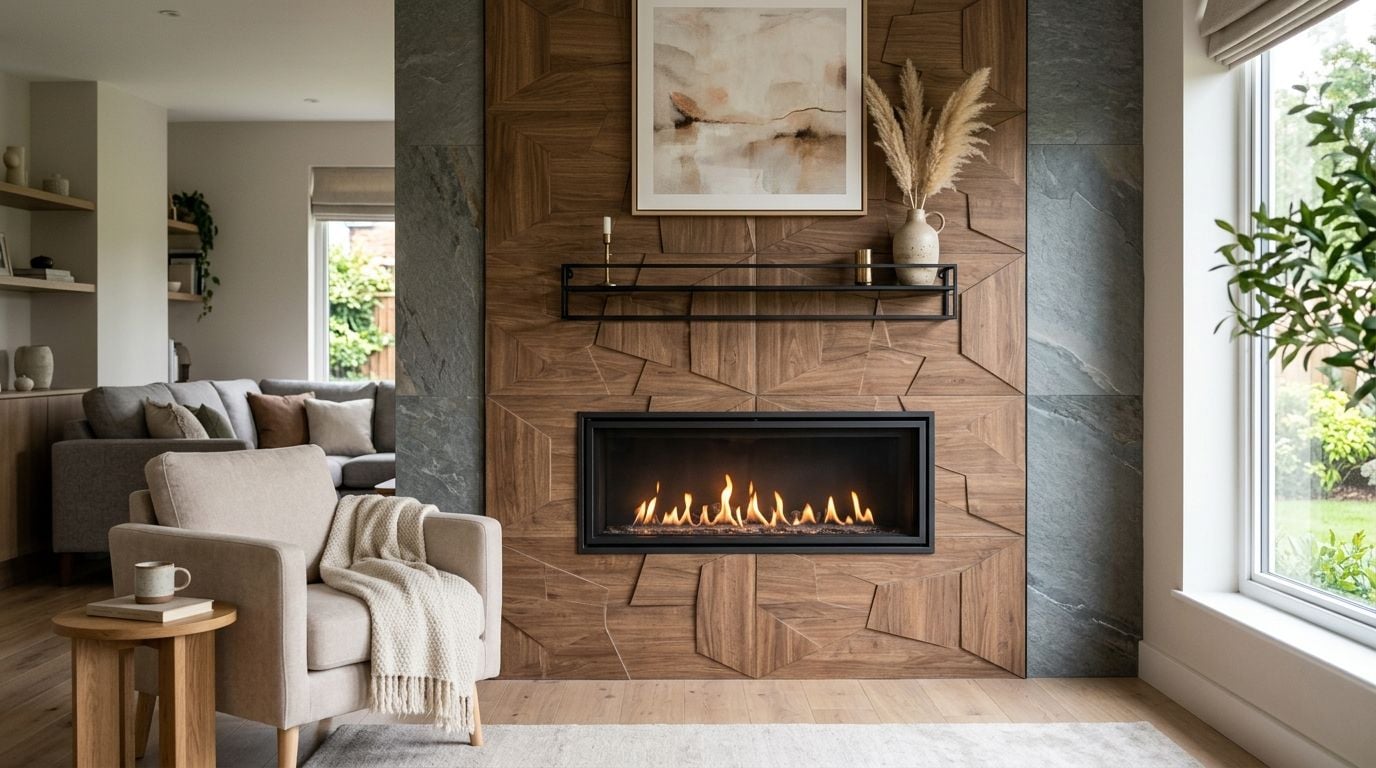
  • Best Fireplace Surround Wall Panels 2026: Ranked

    Best Fireplace Surround Wall Panels 2026: Ranked

    Fireplace surrounds take more heat, more scrutiny, and more foot traffic than almost any other wall in the house — which narrows the field fast. Best overall: Ridge Rock Wall Panel (RockSurface). Best for rustic and cabin-style fireplaces: Canyon Rock Wall Panel (RockSurface). Best for a dark, modern feature wall: Highland Rock Wall Panel (RockSurface).

    TL;DR
    • Ridge Rock Wall Panel (RockSurface) is the best fireplace surround wall panel overall for 2026 — faux stone texture, quick DIY mounting.
    • Canyon Rock Wall Panel wins for rustic and cabin-style fireplace walls with a warmer, tan-toned stone face.
    • Highland Rock Wall Panel is the pick for dark, moody modern fireplace feature walls.
    • 3D Geometric Pattern Wooden Panels give you a wood-look fireplace wall without any faux-stone texture at all.
    • Most panels here install in under 2 hours and carry a 5-year warranty, but clearance from an open firebox still governs which one you can use.
    Key numbers
    under 2 hours
    Typical DIY install time
    5 years
    Standard panel warranty
    6-12 in
    Common firebox clearance range
    per NFPA 211 guidance

    Why this matters

    A fireplace surround is a fixed, high-visibility wall — you don't get to hide a bad choice behind furniture. Pick the wrong texture and it reads cheap under mantel lighting; pick the wrong material and you risk a heat-clearance violation on a wood-burning insert.

    The Ridge Rock Wall Panel is the panel most homeowners land on for exactly this reason: a faux-stone face that photographs like real masonry, without the weight or the mortar work. That's the baseline the rest of this list gets measured against.

    2026 has pushed faux-stone and real-wood surrounds ahead of tile and stacked veneer for one practical reason: both mount with adhesive or clips in an afternoon, and neither needs a mason.

    What makes the best fireplace surround wall panel

    • Heat clearance safety — how far the panel needs to sit from an open firebox or insert before it's a code issue
    • Texture realism — whether the stone grain or wood grain reads as real from three feet away, not just in a product photo
    • Installation method — panel weight, mounting hardware, and how long it actually takes to hang
    • Material integrity — resistance to heat-driven drying, fading, and warping near a working fireplace
    • Certification and sourcing — FSC-certified wood content, where the panel is real wood rather than faux
    • Warranty coverage — how long the manufacturer stands behind the panel against cracking or delamination

    Fireplace surround wall panels at a glance

    Panel Best for Standout feature Key limitation
    Ridge Rock Wall Panel Overall fireplace surround Charcoal-black faux stone face Reads modern, not rustic
    Canyon Rock Wall Panel Rustic, cabin-style fireplaces Warm dark-charcoal stone tone Limited color range
    Highland Rock Wall Panel Dark, moody modern feature walls Deep charcoal stone texture Can read heavy in small rooms
    3D Geometric Pattern Wooden Panels Wood-look fireplace wall Solid-wood geometric relief No stone texture option
    Crossing Lines Solid Wood Wall Panels Textured statement wall beside the fireplace Diagonal crossing-line grain Best paired with a mantel, not full surround
    Fireplace surround panels featured in this guide
    Ridge Rock Wall Panel | RockSurface®
    Faux stone wall panel bringing the look of natural stone into any room.
    $347
    Stone Rock Wall Panel | RockSurface®
    Dark charcoal faux stone panel with a warmer, rustic-leaning finish.
    $347
    Highland Rock Wall Panel | RockSurface®
    Deep charcoal faux stone panel built for moody, modern feature walls.
    $347
    3D Geometric Pattern Wooden Panels | GroovePanel®
    Solid-wood geometric relief panel for a wood-look fireplace accent wall.
    $459

    1. Ridge Rock Wall Panel: best overall fireplace surround wall panel

    Ridge Rock Wall Panel is a faux-stone surface designed to read as natural stacked stone without the weight of real masonry. It's the panel most fireplace remodels in 2026 default to when the goal is a surround that works in almost any living room style, from farmhouse to transitional.

    Ridge Rock Wall Panel pros:

    • Charcoal-black faux stone texture that holds up under close inspection
    • Panel format designed for adhesive or clip mounting, no mortar bed required
    • Works as a full surround or a partial accent above the mantel

    Ridge Rock Wall Panel cons:

    • Reads more contemporary than a traditional stacked-stone hearth
    • Faux surface still needs the same firebox clearance checks as real stone veneer

    Best for: homeowners who want a stone-look surround that isn't tied to one design era. Verdict: Buy.

    2. Canyon Rock Wall Panel: best for rustic and cabin-style fireplace walls

    Canyon Rock Wall Panel carries a warmer, dark-charcoal stone tone than the Ridge panel, which is why it lands better in cabins, lodges, and farmhouse living rooms with exposed wood beams. It's still a faux-stone product built for the same clip-and-adhesive install as the rest of the RockSurface line.

    Canyon Rock Wall Panel pros:

    • Warmer stone tone pairs naturally with wood ceilings and beams
    • Same lightweight faux-stone construction as Ridge and Highland
    • Reads convincingly as natural stone from normal viewing distance

    Canyon Rock Wall Panel cons:

    • Color range is narrower than solid-wood panel lines
    • Not the right choice next to cool-toned modern finishes

    Best for: cabin, farmhouse, and lodge-style fireplace walls. Verdict: Buy.

    3. Highland Rock Wall Panel: best for dark, modern fireplace feature walls

    Highland Rock Wall Panel goes darker and flatter than Canyon, which makes it the pick when the fireplace wall needs to disappear into a moody, low-light living room rather than stand out as a rustic focal point. It's the same RockSurface faux-stone build, just a different finish direction.

    Highland Rock Wall Panel pros:

    • Deep charcoal tone works well with black steel fireplace inserts
    • Blends cleanly with matte black hardware and dark trim
    • Faux-stone texture reads as real from across the room

    Highland Rock Wall Panel cons:

    • Can feel heavy or cave-like in a small living room
    • Needs contrast furniture or lighting to avoid looking flat

    Best for: dark, contemporary living rooms built around a black fireplace insert. Verdict: Buy, with better lighting planned around it.

    4. 3D Geometric Pattern Wooden Panels: best for a wood-look fireplace wall

    3D Geometric Pattern Wooden Panels swap the faux-stone approach entirely for solid-wood relief panels with a repeating geometric pattern. Skip this one if the brief calls for a stone hearth look — it's built for buyers who want the fireplace wall to read as wood-clad, not stone-clad.

    3D Geometric Pattern Wooden Panels pros:

    • Solid-wood construction with real grain, not a printed faux finish
    • Geometric relief adds shadow and texture under mantel lighting
    • Works as a full fireplace wall or a framed section above the hearth

    3D Geometric Pattern Wooden Panels cons:

    • No stone-look option if the room calls for that texture instead
    • Heavier panel format than the faux-stone RockSurface line

    Best for: fireplace walls going for a warm, wood-clad look instead of stone. Verdict: Buy.

    5. Crossing Lines Solid Wood Wall Panels: best for a textured statement wall beside the fireplace

    Crossing Lines Solid Wood Wall Panels use a diagonal grain pattern that works better as a flanking accent wall next to the fireplace than as the surround itself — it's the shortest entry on this list because it's a narrower use case. Think of it as the panel for the wall the mantel sits against, not the firebox surround.

    Crossing Lines pros:

    • Distinctive diagonal grain that separates it from flat-panel walls
    • Solid-wood build matches the same install method as the rest of the GroovePanel line

    Crossing Lines cons:

    • Not designed as a direct-surround material around an open firebox
    • Pattern is bold enough that it competes with a busy mantel display

    Best for: the side wall of a fireplace nook, not the surround itself. Verdict: Hold, unless you're panelling the flanking wall.

    How we ranked these fireplace surround wall panels

    Each panel was measured against the same six criteria: heat clearance behavior, texture realism, install method, material integrity near heat, certification, and warranty length. The RockSurface faux-stone line ranks highest for surrounds specifically because its texture and format are built for that exact wall; the GroovePanel wood options rank for adjacent use cases where a stone look isn't the goal.

    Which fireplace surround wall panel should you choose?

    If you're undecided, default to the Ridge Rock Wall Panel — it's the widest-fit faux-stone option for 2026 fireplace remodels and it doesn't lock you into one design era. Go Canyon if the room already leans rustic, Highland if it leans dark and modern, and skip to the GroovePanel wood options only if stone texture was never the goal in the first place. Whatever you pick, confirm your local clearance code and your fireplace manufacturer's spec sheet before mounting anything against an active firebox.

    FAQ

    What’s the best fireplace surround wall panel for 2026?

    The Ridge Rock Wall Panel (RockSurface) is the best overall fireplace surround wall panel for 2026 because its faux-stone texture fits the widest range of living room styles. Canyon and Highland cover rustic and dark-modern rooms respectively.

    Can you put wood wall panels around a fireplace?

    Yes, solid-wood panels like 3D Geometric Pattern Wooden Panels can go around a fireplace as long as they meet the clearance distance required for your firebox or insert. Check the manufacturer spec sheet for your specific fireplace before mounting.

    How much clearance do fireplace surround panels need from the firebox?

    Most building codes require roughly 6 inches of side clearance and 12 inches of clearance above a wood-burning firebox opening, per NFPA 211 guidance. Local code and your fireplace manufacturer’s instructions always take priority over general figures.

    Are faux stone panels safe near a fireplace?

    Faux stone panels like the RockSurface line are designed for interior accent use, but the same clearance rules that apply to any combustible-adjacent material still apply to them. Confirm clearance distance with your local code office before installing directly around an open firebox.

    How long does it take to install fireplace surround panels?

    Most panels in this guide install in under 2 hours with adhesive or clip mounting, once the wall is prepped and measured. Larger full-surround jobs with multiple panel rows take longer than a single accent section.

    Is real wood or faux stone better for a fireplace accent wall?

    Faux stone reads closer to a traditional hearth look, while real wood panels like GroovePanel give a warmer, more contemporary wood-clad finish. Neither is objectively better — it depends on whether the room is going for a stone or wood aesthetic.

    Do fireplace surround panels need a special adhesive?

    Most panels mount with construction adhesive or panel clips rated for interior use, not a specialty heat-rated adhesive, since the panel itself sits outside the required clearance zone. Always confirm the mounting method listed for the specific panel you buy.

    What’s the difference between RockSurface and GroovePanel panels?

    RockSurface panels are faux-stone finishes built to mimic natural stacked stone, while GroovePanel panels are solid-wood panels with grooved, geometric, or textured relief. Pick RockSurface for a stone-look surround and GroovePanel for a wood-clad one.

    One last thing

    The detail most buyers skip in 2026: check whether your fireplace insert is wood-burning, gas, or electric before choosing a panel, because clearance rules differ meaningfully between the three, and an electric insert often gives you far more freedom to mount a panel closer to the frame than a wood-burning firebox ever will.

    Related guides

  • Best Faux Brick Wall Panels for Accent Walls 2026

    Best Faux Brick Wall Panels for Accent Walls 2026

    Faux brick accent walls send a lot of search traffic toward panels that aren't brick at all — they're rock-faced or stone-faced paneling built for the same industrial, textured look. In 2026, the closest thing on the market to a true faux brick wall panel is often a faux stone panel, and The Panel Hub's RockSurface FauxSeries line is a clear example of that category.

    TL;DR
    • Highland Rock Wall Panel is the best faux brick wall panels alternative for accent walls overall in 2026.
    • Stone Rock Wall Panel suits high-contrast statement walls and fireplace surrounds better than lighter finishes.
    • Ridge Rock Wall Panel fits narrower entryway and hallway runs where a tighter rock pattern reads cleaner.
    • None of the three panels replicate red clay brick color or mortar lines — all three ship in dark charcoal and black tones.
    Key numbers
    3
    RockSurface FauxSeries finishes
    under 2 hours
    Typical DIY install time
    5 years
    Warranty coverage

    Why this matters

    Anyone typing "best faux brick wall panels" into Google in 2026 usually wants one thing: a textured accent wall without the cost or mess of a real masonry veneer. Real brick or stone veneer means mortar, weight-bearing prep, and a multi-day install. Panel-based alternatives from The Panel Hub skip that entirely — most panels in the catalog install in under 2 hours and carry a 5-year warranty.

    The catch: if you search "faux brick," you'll mostly find faux stone. That's true across the category, not just at The Panel Hub. This guide ranks the three RockSurface FauxSeries panels that come closest to the brick-adjacent, exposed-masonry look for interior accent walls, and it's upfront about where they fall short of an actual brick finish.

    What makes the best faux stone accent wall panel

    • Texture depth — how convincing the shadow lines look from an angle, not just straight-on
    • Color consistency — does the finish look uniform panel to panel, or does it patch visibly
    • Seam count per wall — fewer, tighter seams read as one continuous surface
    • DIY installation compatibility — whether the panel is built for a straightforward drywall mount
    • Room-size fit — some rock textures are heavy enough to overwhelm a small room
    • Maintenance — deep relief patterns collect more dust than flat panels

    At a glance

    Panel Best for Standout feature Key limitation
    Highland Rock Wall Panel Accent walls overall Balanced dark charcoal rock texture that works in most rooms No red or brown brick tone available
    Stone Rock Wall Panel High-contrast statement and fireplace walls Deepest shadow relief of the three FauxSeries panels Heavy visual weight can crowd a small room
    Ridge Rock Wall Panel Entryways and hallways Narrower rock pattern suits tighter wall runs Same charcoal-black palette as the other two

    1. Highland Rock Wall Panel: best faux stone wall panel for accent walls overall

    The Highland Rock Wall Panel is the RockSurface FauxSeries panel built to work as a general-purpose accent wall — living room, bedroom, or a single feature wall in an open floor plan. It's a dark charcoal, rock-faced surface panel meant to mount directly to interior drywall.

    Highland Rock Wall Panel pros:

    • Reads as a cohesive stone surface rather than a repeating tile pattern
    • Dark charcoal finish pairs with most wood tones already used elsewhere in the room
    • Ships as part of a line built for DIY installation, not contractor-only projects

    Highland Rock Wall Panel cons:

    • Doesn't replicate a red or brown clay brick color
    • No mortar-line detail, so it won't fool anyone looking for an exposed-brick effect up close

    Best for: homeowners who want an industrial, textured accent wall and are open to a stone look instead of a strict brick look.

    Verdict: Buy — if the goal is texture and depth over an exact brick match, this is the safest pick in the FauxSeries line for 2026.

    2. Stone Rock Wall Panel: best faux stone wall panel for high-contrast statement walls

    The Stone Rock Wall Panel carries the deepest shadow relief of the three RockSurface FauxSeries options, which is what makes it work on a fireplace surround or a single dramatic wall rather than a full room.

    Stone Rock Wall Panel pros:

    • Strongest three-dimensional shadow effect in the FauxSeries line
    • Works well as a focal point behind a fireplace, media wall, or headboard
    • Same install-friendly panel format as the rest of the FauxSeries range

    Stone Rock Wall Panel cons:

    • The heavier texture can overwhelm a small or narrow room
    • Dark charcoal tone limits how much lighter furniture and trim you can pair against it without the wall reading too heavy

    Best for: a single statement wall — fireplace, media console, or accent nook — not a full-room application.

    Verdict: Buy — but confirm room size before committing; this is a focal-point panel, not a background one.

    3. Ridge Rock Wall Panel: best faux stone wall panel for entryways and hallways

    The Ridge Rock Wall Panel uses a narrower rock pattern than the other two FauxSeries panels, which makes it a better fit for tighter runs — entryways, stair walls, and hallways where a bulkier texture would feel cramped.

    Ridge Rock Wall Panel pros:

    • Narrower pattern scale suits smaller wall segments
    • Charcoal-black finish matches the rest of the RockSurface FauxSeries line for whole-home consistency
    • Same under-2-hour DIY install expectation as the rest of the catalog

    Ridge Rock Wall Panel cons:

    • Limited to the same dark palette as Highland and Stone Rock, so color variety across a home is minimal
    • Narrower pattern reads less dramatic than Stone Rock Wall Panel if you actually want a bold focal wall

    Best for: entryways, hallways, and stairwell walls where the space is narrower than a typical living room accent wall.

    Verdict: Buy — the right pick when the wall run is tight and a bold heavy texture would crowd the space.

    RockSurface FauxSeries panels
    Highland Rock Wall Panel | RockSurface®
    Rock-faced panel bringing the look of natural stone to interior accent walls.
    $347
    Stone Rock Wall Panel | RockSurface®
    Deep shadow-relief stone texture for statement and fireplace walls.
    $347
    Ridge Rock Wall Panel | RockSurface®
    Narrower rock pattern built for entryway and hallway wall runs.
    $347

    How we ranked these

    Each panel was judged against the six criteria above: texture depth, color consistency, seam count, DIY fit, room-size fit, and maintenance. Highland Rock Wall Panel scored best on room-size fit and color pairing, which is why it takes the overall spot for 2026. Stone Rock Wall Panel wins on texture depth alone, and Ridge Rock Wall Panel wins on scale-to-space fit for narrower walls. None of the three scored well on brick-color accuracy, because none of them are trying to be brick — they're stone. For a deeper comparison against other rock and stone finishes, the stone and rock wall panel guide covers additional textures outside the FauxSeries line.

    Which faux brick wall panel should you choose?

    If you searched for faux brick wall panels expecting a red clay look, adjust the expectation first: in 2026, the practical alternative is faux stone, and Highland Rock Wall Panel is the best all-around pick for a single accent wall in a living room or bedroom. Go with Stone Rock Wall Panel if you want one dramatic focal wall behind a fireplace or media unit. Pick Ridge Rock Wall Panel if the space is a hallway, entryway, or stairwell where a bulkier texture won't fit.

    FAQ

    What’s the best faux brick wall panel for an accent wall in 2026?

    Most panels marketed toward the exposed-brick look are actually faux stone. Highland Rock Wall Panel is the best all-around pick for a general accent wall in 2026, since its dark charcoal texture works across most room sizes.

    Is faux stone paneling better than faux brick paneling?

    Neither is objectively better; they create different looks. Faux stone panels like the RockSurface FauxSeries line give heavier shadow texture, while true brick-look panels use flatter color blocking with mortar lines.

    How long does it take to install a faux stone accent wall panel?

    Panels in this line are built for DIY installation in under 2 hours per wall section. Actual time depends on wall prep and how many panels the run requires.

    Do faux stone wall panels work in a bathroom?

    The RockSurface FauxSeries panels covered here are built for general interior accent walls, not wet areas. For bathroom-rated paneling, look at PVC or waterproof panel options instead.

    Can I paint a faux stone or faux brick wall panel a different color?

    These panels ship in fixed dark charcoal and black finishes and aren’t designed as a paint base. If you need a specific brick-red tone, pairing wall paint around the panel is a more reliable route than painting over it.

    What’s the warranty on faux stone accent wall panels?

    Panels from this line carry a 5-year warranty, consistent with the rest of the catalog’s decorative wall panel products.

    Do faux stone panels need special wall prep?

    Standard interior drywall is the typical mounting surface; uneven or damaged walls should be patched first for the panel seams to sit flush.

    One last thing

    The biggest surprise across the RockSurface FauxSeries lineup: all three panels ship in the same dark charcoal-to-black color range, not a spread of brick reds or lighter stone tones. If your project depends on a specific warm brick color, the panel surface won't supply it — plan on pairing wall paint or trim color around the panel rather than expecting the texture itself to carry the palette. That's the single detail most buyers miss before ordering in 2026.

  • Best Peel-and-Stick Wall Panels for Renters (2026)

    Best Peel-and-Stick Wall Panels for Renters (2026)

    Renters can't drill into drywall without risking the deposit, so the peel and stick wall panels that actually work for a rental get graded on removability first and looks second. This guide ranks the five options worth using in 2026, including the one non-adhesive upgrade worth a landlord conversation.

    TL;DR
    • Peel-and-stick PVC panels are the best peel and stick wall panels for renters in 2026 — no tools, no drywall damage.
    • Foam brick and stone panels win on budget; waterproof PVC wins for bathrooms and kitchens.
    • Real wood acoustic slat panels from The Panel Hub suit long-term renters who get landlord sign-off, not a true peel-and-stick option.
    • Apartment dwellers chasing quiet get more from dedicated soundproofing panels than from any adhesive-backed product.
    Key numbers
    0.85 NRC
    Sound absorption rating
    Real wood acoustic slat panels
    5 years
    Warranty on Panel Hub panels
    Under 2 hours
    Typical install time

    Why this matters

    A "peel and stick" wall panel is really a bet on two things: will the adhesive hold, and will it come off clean when the lease ends. Get either wrong and you're repainting a wall or eating a chunk of the security deposit at move-out. Renters searching for peel and stick wall panels usually care less about the brand name on the box and more about one number: how much wall damage happens on the day the keys go back.

    Apartment dwellers layering in noise control should start with soundproofing wall panels for apartments rather than assuming any adhesive-backed panel absorbs sound — most don't. Thin, hollow peel-and-stick tiles look fine on a wall and do nothing for an echoey studio apartment. That distinction matters more in 2026 than it did a few years back, as more renters try to solve two problems — decor and noise — with one purchase.

    What makes the best peel and stick wall panels for renters

    • No-damage removal — grip-strip or repositionable adhesive that releases without pulling paint
    • Low weight — a single person can hang a panel without a stud finder or a level
    • Water resistance — matters most in bathrooms and kitchens where steam loosens weak adhesive
    • A finished look, not a workaround — texture and pattern that reads as design, not a rental fix
    • Deposit safety — zero screw holes and zero adhesive residue after 12+ months on the wall

    Prepping a rental wall before anything goes up

    Adhesive-backed panels bond best to a smooth, clean, primed drywall surface — dust, grease, and old wallpaper paste all weaken the grip. Wipe the wall down with a mild cleaner, let it dry fully, and skip any wall with visible texture, popcorn finish, or peeling paint underneath. A quick test patch in a closet or behind a door for a couple of weeks tells you more about how a specific adhesive behaves on your walls than any manufacturer claim.

    Renters in older buildings should also check for lead paint before sanding or scraping anything, since that changes the prep steps entirely. Once the wall is clean and dry, panel installation on any of the five options below moves fast.

    Peel and stick wall panels for renters: at a glance

    Panel type Best for Standout feature Key limitation
    Peel-and-stick PVC panels Overall pick for renters Grip-strip backing peels off clean Limited texture depth versus real wood
    Peel-and-stick faux wood slat panels A wood-look accent wall Slat profile mimics real grain Thin veneer can look flat under bright light
    Foam brick and stone panels Budget-conscious renters Lightweight, cuts with scissors Foam edges dent in high-traffic spots
    Waterproof PVC panels Bathrooms and kitchens Sealed seams resist steam and splashes Adhesive weakens faster in constant humidity
    Real wood acoustic slat panels Long-term renters with landlord sign-off NRC 0.85 sound absorption, FSC-certified Not removable — needs mounting hardware

    1. Peel-and-stick PVC wall panels: best peel and stick wall panels for renters overall

    Peel-and-stick PVC panels use a repositionable grip-strip or pressure-sensitive backing that sticks to primed drywall without a drill, screw, or stud finder. They come pre-cut into tiles or planks, so a full accent wall goes up in an afternoon and comes down in minutes at move-out. Most rental-friendly product lines in this category are built specifically to satisfy security deposit rules, which is why they lead this list.

    Peel-and-stick PVC panels pros:

    • Removes without stripping paint or leaving adhesive residue
    • No tools required beyond a utility knife for trimming
    • Lightweight enough to install solo in an afternoon
    • Wipeable surface handles everyday scuffs

    Peel-and-stick PVC panels cons:

    • Texture reads flatter than real wood or stone
    • Bond weakens on unprimed or heavily textured walls
    • Seams can show under raking light

    Best for: renters who want the lowest-risk option on this list.
    Verdict: Buy.

    2. Peel-and-stick faux wood slat panels: best for a wood-look accent wall

    These panels print or laminate a wood-grain finish onto a PVC or foam-composite base, then add the same repositionable backing as standard peel-and-stick tiles. They're the closest a renter gets to a slat-wall look without committing to real wood or a permanent mount, and they trim down easily around outlets and light switches.

    Faux wood slat panels pros:

    • Wood-look texture without the weight of solid wood
    • Slat lines create real depth on flat rental walls
    • Peels off clean like standard PVC tiles

    Faux wood slat panels cons:

    • Grain pattern repeats visibly across multiple panels
    • Color fades faster than real wood under direct sun
    • Feels noticeably lighter than wood wall panels for accent walls built from solid material

    Best for: renters chasing a wood accent wall on a lease-safe budget.
    Verdict: Buy.

    3. Foam brick and stone peel-and-stick panels: best budget option

    Foam brick and stone panels mold expanded polystyrene into a 3D brick or stone face, then finish it with adhesive backing. They're the cheapest way to add texture to a rental wall and the easiest to cut down for odd corners, stairwells, or a single accent nook rather than a full wall.

    Foam brick and stone panels pros:

    • Lowest cost of any option on this list
    • Cuts easily with scissors or a utility knife
    • Adds real dimension, not just a printed pattern

    Foam brick and stone panels cons:

    • Foam edges dent and crush in high-traffic hallways
    • Color looks more plastic than stone up close
    • Doesn't hold up as well behind furniture that gets bumped often

    Best for: first apartments and short-term leases where budget matters more than longevity.
    Verdict: Hold — fine for a temporary space, skip it if you're staying more than a year or two.

    4. Peel-and-stick waterproof PVC panels: best for bathrooms and kitchens

    Waterproof PVC panels use sealed seams and a moisture-resistant adhesive built to survive steam, splashes, and the daily humidity swings a bathroom or kitchen backsplash sees. They're the only category on this list actually rated for wet-room use, and corners need extra sealing to stay watertight over time.

    Waterproof PVC panels pros:

    • Sealed seams keep water from reaching the wall behind them
    • Wipes clean of soap scum and steam residue
    • Holds up better than paint in a rental bathroom

    Waterproof PVC panels cons:

    • Adhesive bond loosens faster in constant humidity than in a dry living room
    • Fewer color and texture options than dry-space panels
    • Edges and corners need extra sealing to stay watertight

    Best for: renters upgrading a bathroom or kitchen backsplash without retiling.
    Verdict: Buy — reseal edges every few months in a high-humidity bathroom.

    5. Real wood acoustic slat wall panels: best upgrade for renters staying long-term

    Real wood acoustic slat panels aren't peel-and-stick, and they shouldn't be marketed as one. Panels like the ones in The Panel Hub's SoundPanel line use a real wood veneer bonded to an acoustic core rated at 0.85 NRC for sound absorption, are FSC certified, and install in under 2 hours — but that install involves mounting hardware, not adhesive strips. This is the category for renters who plan to stay a while and can get sign-off from a landlord for a non-permanent screw-mount or a removable track system rather than a full renovation.

    Real wood acoustic slat panels pros:

    • Genuine wood grain, not a printed pattern
    • Cuts noticeable echo in a way PVC and foam panels don't
    • FSC-certified material backed by a 5-year warranty
    • Install finishes in under 2 hours per the product spec

    Real wood acoustic slat panels cons:

    • Not removable without a landlord conversation first
    • Heavier than any adhesive-backed option on this list
    • Costs more upfront than PVC or foam alternatives

    Best for: long-term renters who want a real upgrade and can clear it with their landlord.
    Verdict: Hold — confirm your lease terms before mounting anything permanent, then treat acoustic slat wood wall panels as an upgrade rather than a rental workaround.

    Real wood acoustic panels worth the landlord conversation
    Acoustic Slat Wood Wall Panels | SoundPanel™
    MDF acoustic core with American oak slat veneer for sound-dampening accent walls.
    $799
    Acoustic Hexagon Wood Wall Panels | SoundPanel™
    Real-wood-veneer hexagon tiles bonded to an acoustic core for proven sound absorption.
    $479
    Acoustic Slat White Felt Wood Wall Panels | SoundPanel™
    MDF and American oak slat panel finished with white felt backing for extra sound control.
    $799

    “If a panel needs a drill to come down, it’s not peel-and-stick — it’s a renovation.”

    How we ranked

    Every panel type on this list gets judged against the same five criteria above: removability, weight, water resistance, finished look, and deposit safety. Peel-and-stick PVC scores highest across the board, which is why it takes the overall pick for 2026. Real wood acoustic panels score lowest on removability by design — they're not built to come off — which is why the verdict is Hold, not Buy, unless the lease explicitly allows it. Foam brick trades longevity for price, and waterproof PVC trades color variety for wet-room durability.

    Which peel and stick wall panels should you choose?

    Default to peel-and-stick PVC panels if you want zero risk and a fast install — they're the safest bet across almost any rental in 2026. Pick faux wood slat panels if the accent wall needs to look like real wood, foam brick if the budget is the deciding factor, and waterproof PVC if the wall in question sits in a bathroom or kitchen. Real wood acoustic slat panels only make sense once the landlord has said yes in writing, and even then, budget for mounting hardware rather than adhesive strips.

    FAQ

    What are the best peel and stick wall panels for renters in 2026?

    Peel-and-stick PVC panels are the best peel and stick wall panels for renters in 2026 because they use a repositionable grip-strip backing that removes without stripping paint. Foam brick panels beat them on price, and waterproof PVC beats them in bathrooms.

    Will peel-and-stick wall panels damage rental walls?

    Properly rated peel-and-stick panels shouldn’t damage a primed, painted drywall wall when removed correctly. The risk goes up on unprimed drywall, wallpaper, or textured plaster, where the adhesive can pull the surface off with it.

    Are peel-and-stick wall panels waterproof for bathrooms?

    Only panels specifically labeled waterproof PVC are rated for bathroom use, with sealed seams built to resist steam and splashes. Standard peel-and-stick PVC or foam panels aren’t built for constant humidity and will loosen faster.

    How long do peel-and-stick wall panels last?

    Peel-and-stick panels last as long as the adhesive backing holds up, which depends on wall prep, humidity, and how often the panel gets bumped. Resecuring loose edges with extra adhesive strips extends the life without a full reinstall.

    Can peel-and-stick panels reduce noise in an apartment?

    Most peel-and-stick PVC and foam panels are too thin and hollow to meaningfully absorb sound. Renters chasing actual noise reduction get more from dedicated soundproofing wall panels or a real wood acoustic panel with an NRC rating.

    Is real wood wall paneling an option for renters?

    Real wood acoustic slat panels work for renters staying long-term, but they mount with hardware, not adhesive, so they need landlord sign-off first. Treat this as a semi-permanent upgrade rather than a peel-and-stick option.

    What’s the cheapest peel-and-stick wall panel option?

    Foam brick and stone panels are the cheapest category on this list, and they cut easily with scissors for tight corners. The tradeoff is foam edges that dent in high-traffic hallways over time.

    Do peel-and-stick panels work over textured walls?

    Peel-and-stick adhesive bonds best to smooth, primed drywall, and grip weakens noticeably on heavily textured or popcorn-style walls. Sanding down high spots or adding a smooth backer board improves adhesion before installing panels.

    One last thing

    Most leases restrict permanent alterations, not decor changes — the distinction that gets missed is drywall paper. A peel-and-stick panel left on a wall for a year or more can pull the top layer of drywall paper off on removal, even from panels marketed as damage-free. Test one panel in a closet or behind a door for a few weeks before committing a full accent wall to it in 2026.

    Related guides

  • Best Wall Panels for Kitchen Backsplash 2026: Ranked

    Best Wall Panels for Kitchen Backsplash 2026: Ranked

    Picking wall panels for a kitchen backsplash is different from picking them for a bedroom or living room wall: the surface sits inches from a sink, a cooktop, and daily grease splatter, so material choice matters more than pattern choice.

    TL;DR
    • RockSurface Highland Rock Wall Panel is the best wall panels for kitchen backsplash pick overall for 2026, with a wipeable faux-stone face.
    • Waterproof PVC panels win the zone directly behind the sink where water hits the wall daily.
    • 3D Geometric Pattern Wooden Panels suit a dry statement wall behind open shelving, not a splash zone.
    • Hexagon Acoustic Wood Wall Panels fit a small coffee-bar nook away from grease and steam.

    Why this matters

    A backsplash panel gets tested every day: steam from a kettle, oil from a skillet, a wet sponge wiped across it a dozen times a week. Panels that look identical in a showroom photo behave very differently once they're mounted six inches from a gas burner. The RockSurface Highland Rock Wall Panel is built for exactly this kind of high-contact wall, which is why it opens this 2026 ranking.

    The five picks below are sorted by where they actually belong in a kitchen, not by which one looks best on a shelf. A wood panel that's rated for a living room accent wall isn't automatically rated for the splash zone behind a faucet, and treating them the same is how backsplash installs go wrong.

    What makes the best wall panels for kitchen backsplash

    • Water and grease tolerance — how the surface handles repeated wiping, steam, and splashes
    • Heat clearance — safe distance from a cooktop or range hood without material warping
    • Cleanability — textured surfaces that hide grime versus ones that trap it in grooves
    • Install time — how fast a panel goes up around outlets, a sink cutout, and countertop edges
    • Look-to-durability ratio — whether the pattern still reads well after a year of kitchen use
    • Warranty coverage — how long the manufacturer stands behind the panel in a wet-adjacent room

    Best overall: RockSurface Highland Rock Wall Panel. Best for the wet zone behind the sink: waterproof PVC panels. Best for a statement wall behind open shelving: 3D Geometric Pattern Wooden Panels.

    At a glance

    Panel Best For Standout Feature Key Limitation
    RockSurface Highland Rock Wall Panel Full backsplash wall Textured faux-stone surface that wipes clean Not built for direct spray from a faucet
    Waterproof PVC wall panels Wet zone behind the sink Sealed, water-resistant surface for splash zones Fewer decorative textures than the wood lines
    3D Geometric Pattern Wooden Panels Statement wall behind open shelving Real solid wood with a raised geometric relief Needs a dry, grease-free zone to stay looking new
    RockSurface Canyon Rock Wall Panel Above the range hood Deep stone grain that hides grease film between cleanings Keep clearance from direct flame or high heat
    Hexagon Acoustic Wood Wall Panels Compact accent nook Real-wood-veneer hexagons with mild sound damping Small format means more seams on a wide wall

    1. RockSurface Highland Rock Wall Panel: best wall panel for a full kitchen backsplash

    This faux-stone panel replicates a natural rock face without the weight or the masonry work, and it mounts like a large-format tile section rather than individual stones. It's the panel that carries this list because it holds up to daily wiping without the texture trapping grease the way some deep-groove wood panels do.

    RockSurface Highland Rock Wall Panel pros:

    • Textured faux-stone face wipes down easily after cooking
    • Covers a large wall section fast, cutting install time versus small-format tile
    • Reads as a full design statement rather than a small accent strip
    • Holds color and texture without needing a sealant reapplication routine

    RockSurface Highland Rock Wall Panel cons:

    • Not rated for direct water spray, so keep it clear of the faucet arc
    • Deeper stone texture needs more attention in tight grout-line corners
    • Heavier feel than the wood panel lines, so wall prep matters more

    Best for: homeowners doing a full stone-look backsplash wall in 2026, not just a strip behind the stove.

    Verdict: Buy if you want one material covering the whole backsplash run.

    2. Waterproof PVC wall panels: best wall panel for the wet zone behind your sink

    The area directly behind a kitchen faucet takes more standing water than anywhere else on a backsplash, and that's where a sealed PVC panel earns its spot. The same waterproofing logic covered in The Panel Hub's guide to waterproof wall panels for bathrooms carries over directly to a kitchen sink wall: a fully sealed surface with no exposed seams where water can sit.

    Waterproof PVC panel pros:

    • Sealed surface resists standing water and daily splashes
    • No grout lines to scrub or reseal over time
    • Handles steam from a kettle or dishwasher door without swelling

    Waterproof PVC panel cons:

    • Fewer decorative textures than the wood and faux-stone lines
    • Reads more utilitarian than a stone or wood-grain finish

    Best for: the 12 to 18 inches of wall directly behind a kitchen sink.

    Verdict: Buy for the wet strip; pair it with a different panel for the rest of the wall if you want more texture.

    3. 3D Geometric Pattern Wooden Panels: best wall panel for a statement wall behind open shelving

    This panel is 100% real solid wood with a raised geometric relief, and it's built for a wall that gets seen more than it gets splashed. Open shelving above a counter, a coffee station, or a dry run of cabinetry are the right spots for it, since real wood grain doesn't hold up the same way a sealed PVC panel does against direct grease.

    3D Geometric Pattern Wooden Panels pros:

    • Real solid wood grain with a raised, dimensional pattern
    • Installs in under 2 hours on a prepped wall section
    • Backed by a 5-year warranty on the wood panel line

    3D Geometric Pattern Wooden Panels cons:

    • Needs a dry, grease-free zone to keep the finish looking new
    • Raised relief pattern collects dust in the recesses if left unwiped

    Best for: a dry accent wall behind open shelves or a coffee bar, not the direct splash zone.

    Verdict: Buy for a dry statement wall. Skip it for the strip directly behind a stovetop.

    4. RockSurface Canyon Rock Wall Panel: best wall panel for above the range hood

    The area above a range hood takes grease film more than standing water, and a deep-textured faux-stone surface hides that film better than a smooth panel does between cleanings. This panel shares the same faux-stone construction as the Highland Rock pick, in a different stone grain and color depth.

    RockSurface Canyon Rock Wall Panel pros:

    • Deep stone grain masks grease film between wipe-downs
    • Same wipeable faux-stone surface as the Highland Rock panel
    • Reads as a natural extension of a stone backsplash theme

    RockSurface Canyon Rock Wall Panel cons:

    • Keep several inches of clearance from direct flame or a high-heat burner
    • Not a substitute for a certified range-hood liner

    Best for: the wall section above a range hood, kept clear of direct flame contact.

    Verdict: Buy as an accent above the hood; confirm clearance with your range manufacturer first.

    5. Hexagon Acoustic Wood Wall Panels: best wall panel for a compact accent nook

    This SoundPanel line uses real-wood-veneer hexagons bonded to an acoustic core rated NRC 0.85, which is overkill for sound in most kitchens but adds a genuine texture upgrade to a small nook. It's sized for a tight run, not a full wall, so it's the right call for a coffee station or a narrow strip between cabinets.

    Hexagon Acoustic Wood Wall Panels pros:

    • Real-wood-veneer surface with visible hexagon geometry
    • Mild sound-dampening benefit from the acoustic core
    • Small format fits tight, awkward wall sections cleanly

    Hexagon Acoustic Wood Wall Panels cons:

    • More seams to align on a wide wall than a large-format panel
    • Same dry-zone limitation as other real-wood panels in this list

    Best for: a small coffee-bar nook or a narrow strip between upper cabinets.

    Verdict: Hold for a full backsplash wall; Buy for a compact accent section.

    Panels featured in this ranking
    Highland Rock Wall Panel | RockSurface
    Faux-stone wall panel with a wipeable textured surface.
    $347
    Stone Rock Wall Panel | RockSurface (Canyon)
    Deep-grain faux-stone panel suited to grease-prone zones.
    $347
    3D Geometric Pattern Wooden Panels | GroovePanel
    Real solid wood panel with a raised geometric relief.
    $459
    Acoustic Hexagon Wood Wall Panels | SoundPanel
    Real-wood-veneer hexagon panels with an acoustic core.
    $479

    How we ranked these

    Each panel was weighed against the six criteria above, with water and heat tolerance carrying the most weight since that's where kitchen backsplash panels actually fail. Cleanability came next, since a panel that traps grease in deep grooves ages badly no matter how good it looks in year one.

    Install precision mattered too. Getting seams flush against square corners is where amateur backsplash jobs fall apart, and a wall that's even slightly out of plumb shows every hairline gap once the panel is up. Checking each course with a digital spirit level for wall panels before the adhesive sets is the difference between a crisp grid and a backsplash that reads crooked from across the kitchen.

    Which wall panel should you choose for a kitchen backsplash?

    For most kitchens in 2026, the RockSurface Highland Rock Wall Panel is the default answer: it covers a full wall section, wipes clean daily, and doesn't need a wet-zone exception like a real-wood panel does. If the wall directly behind the sink is the priority, pair it with a waterproof PVC panel for that strip specifically. Save the wood-grain picks, the 3D Geometric Pattern Wooden Panels and the Hexagon Acoustic Wood Wall Panels, for dry accent zones like open shelving or a coffee nook where grease and standing water aren't a daily concern.

    FAQ

    What is the best wall panel for a kitchen backsplash in 2026?

    The RockSurface Highland Rock Wall Panel is the best overall pick for 2026 because its textured faux-stone surface wipes clean and covers a full backsplash wall. For the wet zone directly behind the sink, a waterproof PVC panel is the better fit.

    Can real wood wall panels go behind a kitchen sink?

    Real wood panels like the 3D Geometric Pattern Wooden Panels are better suited to dry zones such as open shelving or a coffee nook, not the wet strip directly behind a faucet. Standing water and steam are harder on real wood grain than on a sealed PVC surface.

    Are faux-stone wall panels safe above a range hood?

    Faux-stone panels like RockSurface Canyon Rock can work above a range hood, but keep clearance from direct flame or high heat. Confirm clearance distances against your range manufacturer’s guidance before mounting anything close to a burner.

    How long does it take to install a backsplash wall panel?

    Wood panel lines from The Panel Hub install in under 2 hours per accent wall on a prepped surface. Full-wall installs with outlet and sink cutouts take longer than a simple flat run.

    Do acoustic wood wall panels help with kitchen noise?

    SoundPanel acoustic panels are rated NRC 0.85, which provides real sound dampening, though kitchens rarely need that level of acoustic control. The bigger draw for a kitchen nook is the real-wood-veneer texture, not the noise reduction.

    Is PVC or wood better for a kitchen backsplash?

    PVC wins for the wet zone directly behind the sink because it’s fully sealed against water and steam. Wood wins for dry accent zones like open shelving, where the grain and texture matter more than waterproofing.

    What warranty comes with wood backsplash panels?

    The Panel Hub’s wood panel lines, including the 3D Geometric Pattern Wooden Panels, carry a 5-year warranty. Confirm coverage details on the specific product page before installing.

    One last thing

    Most backsplash install mistakes in 2026 aren't about the panel material at all, they're about the gap left where the panel meets the countertop. Wood and composite panels expand slightly with heat and humidity, so leaving a small gap at the countertop line instead of butting the panel tight against it prevents the buckling that shows up months later, not on install day.

    Related guides

  • Wall Panels Ranked by Durability 2026: The Winner

    Wall Panels Ranked by Durability 2026: The Winner

    Wall panels ranked by durability in 2026 come down to three things: what the core is made of, how it handles moisture and impact, and how long the manufacturer backs it. This guide ranks five wall panel types from The Panel Hub by how they hold up over years of daily use, not just how they look on install day.

    TL;DR
    • Wall panels ranked by durability in 2026: SoundPanel Acoustic Slat Wood Wall Panels wins overall with an NRC 0.85 core and a 5-year warranty.
    • RockSurface Ridge Rock Wall Panel is the toughest pick for garages and basements exposed to moisture and impact.
    • Hexagon Acoustic Wood Wall Panels hold up best in home studios that need durability and sound control together.
    • Crossing Lines Solid Wood Wall Panels bring FSC-certified hardwood durability to living room accent walls.
    • Every panel on this list installs in under 2 hours and carries a 5-year warranty from The Panel Hub.
    Key numbers
    NRC 0.85
    Acoustic rating, SoundPanel line
    5 years
    Manufacturer warranty
    <2 hours
    Typical install time

    Why this matters

    Most wall panel searches in 2026 are about looks first. Durability questions come later, usually after a panel warps, chips, or fades within a year of install. That's the wrong order.

    The material under the surface decides whether a wall panel survives a decade of daily use or needs replacing in two years. A panel like the SoundPanel Acoustic Slat Wood Wall Panels holds up differently than a faux stone panel built for a garage, and neither should be judged by the same standard as a decorative accent panel in a low-traffic hallway. Ranking by durability means matching the panel's build to the room it's actually going in.

    What makes the best wall panel for durability

    • Core material density — solid wood, MDF-backed veneer, and faux stone each age differently under daily wear
    • Moisture and impact resistance — matched to the room, not just the design
    • FSC certification — traceable, quality-controlled wood sourcing signals a stronger material over the long run
    • Warranty length — a 5-year warranty is the manufacturer betting on its own core, not just the finish
    • NRC acoustic rating — a dense, well-built acoustic core (NRC 0.85 on the SoundPanel line) tends to hold its shape better than a thin decorative veneer
    • Install method — panels that click or lock into place stay flatter over years than adhesive-only systems

    Wall panels ranked by durability: at a glance

    Wall panel Best for Standout feature Key limitation
    SoundPanel Acoustic Slat Wood Wall Panels Bedrooms and home theaters NRC 0.85 acoustic core under real wood veneer Slat gaps collect dust and need periodic cleaning
    RockSurface Ridge Rock Wall Panel Garages and basements Faux stone surface resists moisture and impact Heavier, needs sturdier wall anchors
    Hexagon Acoustic Wood Wall Panels Home recording studios Interlocking hexagon shape resists shifting over time Alignment takes more planning during install
    Crossing Lines Solid Wood Wall Panels Living room accent walls FSC-certified solid wood construction Expands and contracts with humidity swings
    3D Geometric Pattern Wooden Panels Entryways and hallway accent walls Raised 3D pattern hides dings better than flat veneer Not built for high-traffic or moisture-heavy rooms

    1. SoundPanel Acoustic Slat Wood Wall Panels: best wall panel for bedrooms and home theaters

    Real wood veneer slats bonded over a dense acoustic core, rated NRC 0.85 and installed in under 2 hours with standard clips. This is the panel that does double duty: it looks like a feature wall and it actually dampens echo.

    SoundPanel Acoustic Slat Wood Wall Panels pros:

    • NRC 0.85 rating cuts echo in bedrooms and home theaters
    • Real wood veneer surface holds up better over years than painted drywall
    • 5-year warranty backs the acoustic core, not just the finish
    • Installs in under 2 hours

    SoundPanel Acoustic Slat Wood Wall Panels cons:

    • Slat spacing traps dust and needs a vacuum brush pass now and then
    • Dense acoustic core adds shipping weight compared to flat MDF panels

    Best for: bedrooms, home theaters, media rooms.
    Verdict: Buy.

    2. RockSurface Ridge Rock Wall Panel: best wall panel for garages and basements

    A faux stone surface panel engineered for rooms that take a beating: garages, basements, and utility spaces where moisture and impact are constant. It mimics natural stone texture without the weight or installation complexity of real stone.

    RockSurface Ridge Rock Wall Panel pros:

    • Faux stone surface resists scuffs from stored equipment, tools, or bikes
    • Handles basement humidity better than untreated wood veneer
    • Carries the same 5-year warranty as the rest of The Panel Hub's catalog

    RockSurface Ridge Rock Wall Panel cons:

    • Heavier than wood panels, needs secure anchors rather than adhesive strips alone
    • Faux stone texture reads utilitarian, not warm, in a living room

    Best for: garages, basements, utility rooms.
    Verdict: Buy.

    3. Hexagon Acoustic Wood Wall Panels: best wall panel for home recording studios

    Hexagon-shaped acoustic wood panels that combine geometric structure with a sound-absorbing core. The interlocking shape stays flatter over time than square slats mounted edge to edge.

    Hexagon Acoustic Wood Wall Panels pros:

    • Hexagon shape locks tighter than straight slats, reducing shifting over years
    • Real wood veneer surface holds its finish longer than laminate
    • Same 5-year warranty as the SoundPanel line

    Hexagon Acoustic Wood Wall Panels cons:

    • Alignment takes more planning during install than straight-slat panels
    • Busy pattern can overwhelm a small wall

    Best for: home recording studios, media rooms.
    Verdict: Buy.

    4. Crossing Lines Solid Wood Wall Panels: best wall panel for living room accent walls

    A solid wood panel with a crossing-line groove pattern, built from FSC-certified material. No acoustic core here — this is a durability-first decorative panel for a room where sound dampening isn't the priority.

    Crossing Lines Solid Wood Wall Panels pros:

    • FSC-certified solid wood backs long-term material quality
    • Groove pattern hides minor wall imperfections better than a flat panel
    • Installs in under 2 hours like the rest of The Panel Hub's range

    Crossing Lines Solid Wood Wall Panels cons:

    • Solid wood expands and contracts with seasonal humidity, unlike faux stone or PVC
    • No acoustic core, so it won't dampen sound

    Best for: living rooms, dining rooms.
    Verdict: Buy.

    5. 3D Geometric Pattern Wooden Panels: best wall panel for entryways and hallway accent walls

    Real solid wood carved into a raised geometric pattern for a dimensional feature wall. This is the shortest section on the list for a reason: it's a strong decorative panel, not a heavy-duty one.

    3D Geometric Pattern Wooden Panels pros:

    • Raised pattern hides small dings better than flat veneer
    • 100% real solid wood, not laminate wrapped MDF
    • Same 5-year warranty and under-2-hour install as the rest of the range

    3D Geometric Pattern Wooden Panels cons:

    • Raised edges can chip if bumped hard in a high-traffic zone
    • Not built for moisture-heavy rooms like bathrooms

    Best for: entryways, hallways, low-traffic accent walls.
    Verdict: Hold — fine for a decorative low-traffic wall, skip it for a busy hallway with kids or pets running through.

    Panels featured in this ranking
    Acoustic Slat White Felt Wood Wall Panels | SoundPanel™
    MDF-backed American oak acoustic slat panel with a felt-lined core.
    $799
    Ridge Rock Wall Panel | RockSurface®
    Faux stone surface panel built for high-traffic, moisture-prone rooms.
    $347
    Acoustic Hexagon Wood Wall Panels | SoundPanel™
    Real-wood-veneer hexagon panels bonded to an acoustic core.
    $479
    Crossing Lines Solid Wood Wall Panels | GroovePanel®
    Solid wood groove-pattern panel with a rustic finish.
    $459

    How we ranked

    Each panel was measured against the six criteria above: core material, moisture and impact resistance, FSC certification, warranty length, NRC rating where applicable, and install method. Panels built for a specific room (garage, studio, bathroom-adjacent hallway) were ranked against that room's real conditions, not against a generic "best overall" bar.

    Which wall panel should you choose for durability in 2026?

    If you're not sure, start with the room. A bedroom or home theater calls for SoundPanel Acoustic Slat Wood Wall Panels — the NRC 0.85 core and 5-year warranty make it the safest pick for a space you'll spend years in. A garage or basement calls for RockSurface Ridge Rock Wall Panel, built for moisture and impact a wood veneer wasn't designed to handle. Everything else on this list fits a narrower use case, and picking based on the room beats picking based on looks alone.

    FAQ

    What’s the most durable wall panel for a garage?

    RockSurface Ridge Rock Wall Panel is built for garages because its faux stone surface resists moisture and impact better than a wood veneer panel. It also carries a 5-year warranty from The Panel Hub.

    Is solid wood more durable than acoustic wood panels?

    Neither is more durable outright, they’re built for different jobs. Solid wood panels like Crossing Lines resist dents well but expand and contract with humidity, while acoustic panels like SoundPanel add a dense core that holds shape and dampens sound.

    How long do wall panels from The Panel Hub last?

    The Panel Hub backs its wall panels with a 5-year warranty, covering both the acoustic wood line and the faux stone RockSurface line. Actual lifespan depends on the room and how the panel is maintained.

    Do acoustic wall panels hold up as well as regular wood panels?

    Yes. The SoundPanel line is rated NRC 0.85 and uses the same real wood veneer surface as The Panel Hub’s non-acoustic wood panels, with an added dense core for sound absorption.

    What wall panel is best for a bathroom?

    None of the panels ranked here are built for direct water exposure; check The Panel Hub’s waterproof panel line for bathrooms specifically, since wood veneer and faux stone panels aren’t rated for constant moisture.

    How long does it take to install a durable wall panel?

    Every panel in this ranking installs in under 2 hours using standard clips or adhesive, according to The Panel Hub’s install specs. Room prep and panel acclimation can add time on top of that.

    Is FSC certification a durability signal?

    FSC certification tracks where the wood came from and how it was sourced, which correlates with more consistent material quality. It’s not a direct durability test, but it does rule out low-grade wood sourcing.

    Are hexagon wall panels sturdier than square slat panels?

    Hexagon panels like the Hexagon Acoustic Wood Wall Panels interlock more tightly than straight slats, which reduces shifting over time. Both use the same acoustic core and wood veneer surface.

    One last thing

    Solid wood panels need time to acclimate to a room's humidity before installation; skip that step and gaps open up between boards months later. RockSurface's faux stone panels skip acclimation entirely, because the material doesn't move with humidity the way solid wood does — part of why it holds up better in a finished basement with fluctuating moisture year to year.

    Related guides

  • Best 3D Wall Panels for Statement Walls 2026

    Best 3D Wall Panels for Statement Walls 2026

    Real wood 3D wall panels turn one flat wall into the focal point of a room, but the sculpted-relief category is crowded with lookalikes that vary wildly in material, depth, and install difficulty. Best overall: 3D Geometric Pattern Wooden Panels. Best for acoustic-plus-texture drama: Hexagon Acoustic Wall Panel. Best budget option: Ridge Rock Wall Panel. This guide ranks the six 3D wall panels worth buying in 2026 for a genuine statement wall, judged on pattern depth, material, and how long installation actually takes.

    TL;DR
    • 3D Geometric Pattern Wooden Panels is the best 3D wall panel for statement walls in 2026 for real-wood relief depth.
    • Hexagon Acoustic Wall Panel adds NRC 0.85 sound absorption to a 3D hexagon pattern, best for living rooms and theaters.
    • Ridge Rock Wall Panel gives dramatic faux-stone texture without masonry work or real stone weight.
    • Most panels in this list install in under 2 hours per section and carry a 5-year warranty.
    Key numbers
    Under 2 hours
    Typical install time per accent wall
    NRC 0.85
    Sound absorption rating on acoustic panels
    5 years
    Standard warranty coverage

    Why this matters

    A 3D wall panel only works as a statement wall if the relief is deep enough to catch light and cast real shadow lines, not the shallow embossing you get on printed vinyl sheets. Flat paint can't do that job, and most "3D panel" listings on Google are actually flat MDF with a photo-printed texture.

    The Panel Hub sells real solid wood and FSC-certified panel lines built specifically for sculpted relief, which is why this ranking leans on wood and acoustic-core panels over vinyl composites. The six picks below cover geometric, symmetrical, rustic, acoustic, and faux-stone use cases so you can match the pattern to the room instead of picking the first one that shows up in search.

    What makes the best 3D wall panel for a statement wall

    • Relief depth — shadow lines need at least a few millimeters of sculpted profile, not a printed texture
    • Material — solid wood or FSC-certified engineered wood outlasts vinyl composite in both look and durability
    • Pattern repeat — the module has to tile cleanly across a full wall without an obvious seam
    • Acoustic value — a bonus for open-plan rooms, home theaters, or apartments with noise complaints
    • Install time — panels that click or glue into place in under 2 hours beat anything needing a contractor
    • Warranty — a 5-year warranty signals the finish won't fade or peel in year two

    3D wall panels for statement walls: at a glance

    Panel Best for Standout feature Key limitation
    3D Geometric Pattern Wooden Panels Modern geometric statement walls Solid wood construction with sculpted geometric relief Heavier than MDF slat panels, needs sturdy studs
    3D Concentric Square Wood Wall Panel Symmetrical, gallery-style accent walls Repeating concentric-square relief reads as one continuous pattern Pattern demands a flat, well-prepped wall
    Crossing Lines Solid Wood Wall Panels Rustic, textured statement walls Crossing-grain relief cut into solid wood Natural grain variation means panels differ slightly batch to batch
    Hexagon Acoustic Wall Panel Living rooms and home theaters needing sound control Hexagon 3D relief paired with an NRC 0.85 acoustic core Acoustic core adds thickness versus flat panels
    Ridge Rock Wall Panel (RockSurface) Budget-friendly dramatic faux-stone wall Faux-stone texture without real stone weight or masonry work Not actual stone, some buyers want authentic material
    Acoustic Slat White Felt Wood Wall Panel Bedroom slat statement wall with noise control Slat profile bonded to an acoustic felt backing Felt backing limits finish to the felt color options

    1. 3D Geometric Pattern Wooden Panels: best 3D wall panel for modern geometric statement walls

    3D Geometric Pattern Wooden Panels are cut from solid wood into a repeating geometric relief, the kind of pattern that reads as sculpture from across the room and as fine woodwork up close. The module tiles cleanly across a full wall, so a single accent wall or an entire hallway both work without visible seams.

    3D Geometric Pattern Wooden Panels pros:

    • Real solid wood, not a printed vinyl texture
    • Deep enough relief to cast visible shadow lines under side lighting
    • FSC-sourced material, relevant if the household cares about certified wood

    3D Geometric Pattern Wooden Panels cons:

    • Solid wood adds weight, so wall prep and stud location matter more than with foam-backed panels
    • Pattern is bold, which makes it a poor fit for small, low-ceiling rooms

    3D Geometric Pattern Wooden Panels pricing: check current pricing on the product page before ordering enough panels to cover the full wall.

    Verdict: Buy if you want the deepest, most photographable relief in this list for a living room or entryway feature wall.

    2. 3D Concentric Square Wood Wall Panel: best 3D wall panel for symmetrical accent walls

    The 3D Concentric Square Wood Wall Panel builds a nested-square relief that repeats in a tight grid, giving a more formal, gallery-like look than the free-flowing geometric pattern above. It suits dining rooms and office feature walls where a symmetrical, almost architectural pattern reads better than an organic one.

    3D Concentric Square Wood Wall Panel pros:

    • Highly symmetrical pattern that photographs well for design portfolios
    • Solid wood build matches the durability of the rest of the GroovePanel line
    • Works well lit from either side since the pattern has no directional grain

    3D Concentric Square Wood Wall Panel cons:

    • Needs a genuinely flat wall; any waviness shows immediately in a repeating grid pattern
    • Formal look reads less "cozy" than rustic or slat alternatives

    Verdict: Buy for dining rooms, offices, and any space that wants order over texture.

    3. Crossing Lines Solid Wood Wall Panels: best 3D wall panel for rustic textured statement walls

    Crossing Lines Solid Wood Wall Panels cut intersecting grooves into solid wood, producing a woven, basket-like relief that leans rustic instead of formal. It's the pick for cabins, farmhouse-style living rooms, or anywhere the brief is "warm and textured," not "sharp and modern."

    Crossing Lines Solid Wood Wall Panels pros:

    • Rustic crossing-grain texture that hides minor wall imperfections better than smooth geometric panels
    • Solid wood construction ages well compared to laminated composites

    Crossing Lines Solid Wood Wall Panels cons:

    • Natural grain means no two panels look identical, which can bother buyers who want uniformity
    • Less suited to strictly modern or minimalist interiors

    Verdict: Buy for rustic and farmhouse rooms; Skip if the room's aesthetic is sleek and minimal.

    4. Hexagon Acoustic Wall Panel: best 3D wall panel for acoustic statement walls

    The Hexagon Acoustic Wall Panel is where this ranking gets practical: a real hexagon 3D relief bonded to an acoustic core rated at NRC 0.85. That means the statement wall also cuts echo in open-plan living rooms, home theaters, and apartments with hard-surface flooring.

    Hexagon Acoustic Wall Panel pros:

    • NRC 0.85 rating measurably reduces room echo, unlike purely decorative 3D panels
    • Hexagon relief still delivers the shadow-line drama of a statement wall
    • Installs in under 2 hours per section, same as the brand's flat acoustic slat panels

    Hexagon Acoustic Wall Panel cons:

    • Acoustic core adds thickness, so it protrudes further from the wall than solid wood panels
    • Hexagon geometry is more visually busy than a simple slat pattern

    Verdict: Buy for any room where noise is a real complaint, not just an aesthetic one.

    5. Ridge Rock Wall Panel (RockSurface): best 3D wall panel for a budget faux-stone statement wall

    The Ridge Rock Wall Panel replicates natural stone texture in a lightweight panel format, giving a fireplace surround or accent wall real stone drama without hiring a mason or reinforcing the wall for actual stone weight.

    Ridge Rock Wall Panel pros:

    • Faux-stone relief looks convincing from normal viewing distance
    • Far lighter than real stone veneer, so standard drywall anchors handle it
    • Sibling options (Canyon Rock, Highland Rock) let you match a slightly different stone tone

    Ridge Rock Wall Panel cons:

    • It is a faux material, not quarried stone, and close inspection reveals the difference
    • Stone-look panels suit fewer rooms than wood-tone 3D panels

    Verdict: Buy as the budget-friendly stone-look pick; Hold if the room needs a wood-tone finish instead.

    6. Acoustic Slat White Felt Wood Wall Panel: best 3D wall panel for a bedroom statement wall

    The Acoustic Slat White Felt Wood Wall Panel pairs a slat wood profile with a felt acoustic backing, giving a bedroom a warm, textured focal wall that also softens sound for better sleep.

    Acoustic Slat White Felt Wood Wall Panel pros:

    • Slat profile reads as a subtler statement wall than hexagon or geometric relief
    • Felt backing adds real acoustic value on top of the visual upgrade
    • Fits the 5-year warranty and under-2-hour install standard across the SoundPanel line

    Acoustic Slat White Felt Wood Wall Panel cons:

    • Felt backing locks you into its included color/finish combination
    • Slat pattern is a quieter statement than hexagon or geometric options

    Verdict: Buy for bedrooms where you want texture plus noise control, not maximum visual drama.

    3D wall panels worth a closer look
    3D Geometric Pattern Wooden Panels | GroovePanel®
    Solid wood 3D geometric relief panel for statement walls.
    $459
    3D Concentric Square Wood Wall Panel | GroovePanel®
    Nested concentric-square relief in solid wood for symmetrical accent walls.
    $459
    Acoustic Hexagon Wood Wall Panels | SoundPanel™
    Hexagon 3D relief with an NRC 0.85 acoustic core.
    $479
    Ridge Rock Wall Panel | RockSurface®
    Faux-stone texture panel for a budget-friendly statement wall.
    $347

    How we ranked these 3D wall panels

    Each panel was judged against the six criteria above: relief depth, material, pattern repeat, acoustic value, install time, and warranty. Panels with printed-texture relief or vinyl-only construction didn't make this list; every entry here uses solid wood or an acoustic-core build, and the ranking order reflects how distinct each panel's use case is, not a single "best" leaderboard.

    Which 3D wall panel should you choose in 2026?

    If you want the single deepest, most dramatic relief for a living room or entryway, 3D Geometric Pattern Wooden Panels is the default pick. If the room has an echo problem alongside a blank wall, the Hexagon Acoustic Wall Panel solves both at once. Budget-conscious buyers who want stone-look drama without stone weight should default to the Ridge Rock Wall Panel. For anything in between, the Hexagon Acoustic Wall Panel and 3D Geometric Pattern Wooden Panels cover the two most common statement-wall briefs going into 2026.

    FAQ

    What are the best 3D wall panels for statement walls in 2026?

    3D Geometric Pattern Wooden Panels rank best overall for solid wood relief depth in 2026, with the Hexagon Acoustic Wall Panel as the top pick when the room also needs sound control.

    Are 3D wood wall panels better than vinyl 3D panels?

    Solid wood 3D panels hold sculpted relief and finish longer than vinyl composite panels, which tend to flatten or fade faster under normal room light.

    Do 3D wall panels help with sound absorption?

    Only panels built with an acoustic core do; the Hexagon Acoustic Wall Panel and Acoustic Slat White Felt Wood Wall Panel carry an NRC 0.85 rating, while purely decorative 3D panels don’t.

    How long does it take to install a 3D accent wall panel?

    Most 3D wall panels from this list install in under 2 hours per wall section, assuming the wall surface is flat and prepped beforehand.

    Which 3D wall panel works best in a bedroom?

    The Acoustic Slat White Felt Wood Wall Panel suits bedrooms best because its slat profile is subtler than hexagon or geometric relief while still adding noise control.

    Is faux-stone paneling a good alternative to real stone?

    The Ridge Rock Wall Panel gives convincing stone texture at a fraction of the weight of real stone veneer, though close inspection reveals it isn’t quarried material.

    Do 3D wall panels need a perfectly flat wall?

    Symmetrical repeating patterns like the 3D Concentric Square Wood Wall Panel need a flat, well-prepped wall, while textured panels like Crossing Lines forgive minor surface imperfections.

    One last thing

    The panels that actually get reordered for a second room in 2026 aren't the boldest geometric ones, they're the acoustic hybrids: buyers who install a Hexagon Acoustic Wall Panel for looks come back once they notice the echo drop, and that's the detail most "3D wall panel" roundups skip entirely.

    Related guides

  • Best Wall Panels for Garage Walls in 2026: Ranked

    Best Wall Panels for Garage Walls in 2026: Ranked

    Garage walls take more punishment than any other wall in the house: car doors, dropped tools, bike pedals, grease, and temperature swings that run from freezing to 90°F in the same week. The best wall panels for garage walls in 2026 aren't the prettiest option on a mood board — they're the ones built to survive a space that isn't climate-controlled and gets treated like a workshop, not a living room.

    TL;DR
    • Ridge Rock Wall Panel from RockSurface is the best wall panels for garage walls pick overall for impact resistance and easy cleanup.
    • SoundPanel American Acoustic Slat Wood Wall Panels wins for garage gyms and home studios that need real noise dampening.
    • Canyon Rock Wall Panel is the best budget option, matching Ridge Rock’s durability at a lower entry point.
    • Hexagon Acoustic Wood Wall Panel suits garage offices and podcast setups that need acoustic control without a workshop look.
    • Every panel on this list installs in under 2 hours per wall and ships with a 5-year warranty.
    Garage panel numbers
    0.85 NRC
    Sound absorption rating on acoustic panels
    Under 2 hours
    Typical install time per wall
    5 years
    Warranty coverage on panels

    Why this matters

    Garage conversions are one of the busier home-improvement categories in 2026, as homeowners turn unused bays into gyms, workshops, and remote-work offices instead of building an addition. A wall panel that works fine in a bedroom often fails in a garage inside a year — bare drywall dents under tool impacts, and decorative wood swells in a space with no climate control.

    The Panel Hub stocks panel lines built around exactly that abuse. The Ridge Rock Wall Panel line, for example, is engineered for impact resistance rather than looks alone. Picking the wrong panel means repainting or re-panelling within a year; picking the right one gets you a garage upgrade that holds up well past 2026.

    What makes the best wall panels for garage walls

    • Impact and scratch resistance — garages absorb car doors, bike pedals, and dropped tools daily
    • Moisture and temperature tolerance — unheated garages swing from freezing to 90°F and often run damp
    • Sound absorption (NRC rating) — matters if the garage doubles as a gym, band room, or podcast booth
    • Install method — panels need to mount cleanly over studs, furring strips, or existing drywall
    • Cleanability — grease, dust, and oil overspray need to wipe off without staining
    • Material honesty — real wood panels should carry FSC certification; faux-finish panels should say so upfront

    Moisture is the criterion homeowners underestimate most. A garage without insulation gets condensation the same way a bathroom does, and the wood-versus-waterproof tradeoff covered in the best waterproof wall panels for bathrooms guide applies just as directly here: faux-finish panels shrug off condensation that solid wood eventually swells under.

    Garage wall panels at a glance

    Panel Best for Standout feature Key limitation
    Ridge Rock Wall Panel (RockSurface) High-impact garage workshops Faux stone surface shrugs off dings and scuffs Not real wood, carries no acoustic rating
    SoundPanel American Acoustic Slat Wood Wall Panels Garage gyms and band practice rooms 0.85 NRC slat core absorbs impact noise Heavier panel, longer install per wall
    Hexagon Acoustic Wood Wall Panel Garage offices and podcast booths Real wood veneer hexagons over an acoustic core Geometric shape won't suit every garage layout
    3D Geometric Pattern Wooden Panels Garage man-cave feature walls Solid wood 3D relief pattern Decorative only, no sound dampening
    Canyon Rock Wall Panel (RockSurface) Budget-conscious accent walls Same faux stone durability, entry-level line Fewer colorways than the Ridge or Highland finish

    1. Ridge Rock Wall Panel: best wall panels for garage walls for high-impact durability

    Ridge Rock Wall Panel replaces drywall's soft, dent-prone surface with a faux stone finish molded to take repeated impact. It mounts directly over studs or furring strips and wipes clean with a damp cloth, which matters in a space where grease and dust settle fast.

    Ridge Rock Wall Panel pros:

    • Resists dents from tools, bike handlebars, and car doors
    • Wipes clean of grease and dust without staining
    • Installs in under 2 hours per wall section
    • Backed by a 5-year warranty

    Ridge Rock Wall Panel cons:

    • Not real wood — skip it if you want a natural grain look
    • Carries no acoustic rating, so it won't quiet a loud garage gym

    Best for: garages used as workshops, storage, or car bays where the wall takes daily abuse.
    Verdict: Buy if durability matters more than warmth — this is the panel built for the abuse a garage actually deals out.

    2. SoundPanel American Acoustic Slat Wood Wall Panels: best wall panels for garage walls for gyms and home studios

    SoundPanel American Acoustic Slat Wood Wall Panels pair a real wood slat face with an acoustic core rated 0.85 NRC, built to absorb sound rather than just look good doing it. In a garage converted to a gym, home studio, or workshop with power tools, that rating is the difference between a room that echoes and one that doesn't.

    SoundPanel Acoustic Slat pros:

    • 0.85 NRC rating measurably cuts echo and impact noise
    • Real wood veneer, FSC certified
    • Installs in under 2 hours per wall
    • 5-year warranty

    SoundPanel Acoustic Slat cons:

    • Heavier than faux-stone panels, so mounting takes an extra set of hands
    • Costs more than the purely decorative options on this list

    Best for: garage gyms, band practice spaces, and home studios where noise control is the actual problem.
    Verdict: Buy if the garage is doubling as a workout or recording space — this is the only panel here actually engineered to absorb sound.

    The same acoustic principle applies whether the routine is weights or footwork. Home boxing workouts in your garage gym generate sharp, repetitive impact noise that a bare stud wall bounces straight back into the room — exactly the frequency range a slat panel with a 0.85 NRC rating is built to absorb, which is why the wall behind a heavy bag deserves acoustic treatment as much as the wall behind a drum kit does.

    3. Hexagon Acoustic Wood Wall Panel: best wall panels for garage walls for offices and podcast booths

    Hexagon Acoustic Wood Wall Panel uses the same acoustic core as the slat line but in a hexagon format, giving a garage office or podcast booth a distinct look instead of straight slat lines. Real wood veneer bonds to the acoustic backing, so it absorbs sound while still reading as a design choice.

    Hexagon Acoustic pros:

    • Acoustic core with the same 0.85 NRC rating as SoundPanel's slat line
    • Geometric shape reads as a design feature, not visible soundproofing
    • Real wood veneer finish
    • Installs under 2 hours, 5-year warranty

    Hexagon Acoustic cons:

    • The hexagon pattern is a stronger visual statement than a plain slat wall — not every garage wants that
    • Cutting around outlets and garage door tracks takes more layout planning than a straight panel

    Best for: garages converted into a home office, streaming setup, or podcast corner.
    Verdict: Buy for a garage office that needs to look finished on a video call, not just sound quiet.

    4. 3D Geometric Pattern Wooden Panels: best wall panels for garage walls for man-cave feature walls

    3D Geometric Pattern Wooden Panels are solid wood with a raised relief pattern, built for a single feature wall rather than full-room coverage. They read as a design statement — think a TV wall or bar backdrop — not as a durability or noise solution.

    3D Geometric pros:

    • Solid wood construction with genuine depth and shadow lines
    • Strong visual impact on a single feature wall
    • Installs in under 2 hours

    3D Geometric cons:

    • No acoustic rating — skip it for a garage gym or studio
    • Raised pattern collects dust in the grooves, so it needs more frequent cleaning than a flat panel

    Best for: the one wall behind a TV, bar, or seating area in a finished garage man-cave.
    Verdict: Hold — great for looks, wrong pick if durability or noise control is the actual goal.

    5. Canyon Rock Wall Panel: best wall panels for garage walls on a budget

    Canyon Rock Wall Panel is RockSurface's entry point into the faux stone line, sharing the same impact-resistant surface as Ridge Rock in a different colorway. It's built for homeowners who want the durability of a stone-look panel without paying for the premium finish.

    Canyon Rock pros:

    • Same impact and moisture resistance as the Ridge Rock line
    • Lower cost of entry into the RockSurface faux stone series
    • Installs under 2 hours, 5-year warranty

    Canyon Rock cons:

    • Fewer colorway options than Ridge Rock or Highland Rock
    • Not real wood, no acoustic properties

    Best for: garage accent walls where budget matters more than finish variety.
    Verdict: Buy if the goal is stone-look durability at the lowest cost in this lineup.

    How we ranked

    Each panel above was scored against the six criteria above — impact resistance, moisture tolerance, sound absorption, install method, cleanability, material honesty — with garage-specific use cases (workshop, gym, office, feature wall, budget) mapped to whichever panel actually performs there, not just the one with the best photos.

    Which wall panel should you choose for your garage?

    Match the panel to what the garage actually does, not what looks best in a listing photo. If it's a workshop or car bay, Ridge Rock Wall Panel is the buy — it's built to take impact, not just decorate around it. If it's a gym, band room, or recording space, SoundPanel American Acoustic Slat Wood Wall Panels is the only pick here engineered to absorb sound. Working with a tighter budget and still want the stone look, Canyon Rock Wall Panel delivers the same durability for less.

    For everything in between — a garage office or a single feature wall — Hexagon Acoustic Wood Wall Panel and 3D Geometric Pattern Wooden Panels cover those cases, in that order of priority.

    Garage-ready panels
    Ridge Rock Wall Panel | RockSurface®
    Faux stone finish built for impact resistance and easy cleanup.
    $347
    Acoustic Slat Wood Wall Panels | SoundPanel™
    Real wood slat panel with an acoustic core for gyms and studios.
    $799
    Canyon Rock Wall Panel | RockSurface®
    Entry-level faux stone finish with the same durability as Ridge Rock.
    $347

    FAQ

    What are the best wall panels for garage walls in 2026?

    Ridge Rock Wall Panel wins for high-impact durability, SoundPanel American Acoustic Slat Wood Wall Panels wins for garage gyms and studios, and Canyon Rock Wall Panel is the best budget option in 2026.

    Can wood wall panels handle a garage’s temperature swings?

    Real wood panels tolerate normal indoor swings but do better in insulated garages; unheated bays with heavy condensation favor faux stone finishes like Ridge Rock or Canyon Rock.

    Do acoustic wall panels actually reduce noise in a garage gym?

    Yes, panels rated 0.85 NRC, like SoundPanel American Acoustic Slat Wood Wall Panels and Hexagon Acoustic Wood Wall Panel, measurably absorb impact noise from weights, bags, and power tools.

    How long does it take to install wall panels in a garage?

    Most panels on this list install in under 2 hours per wall section when mounted over studs or furring strips.

    Are faux stone or real wood panels better for a garage?

    Faux stone panels like Ridge Rock and Canyon Rock handle moisture and impact better; real wood panels like SoundPanel or Hexagon Acoustic add sound absorption but need a drier, more climate-stable garage.

    Can you install wall panels over exposed studs in a garage?

    Yes, the panels covered here mount directly over studs or furring strips, which is common in unfinished garages that never got drywall.

    Do garage wall panels need a warranty?

    Look for a 5-year warranty at minimum, since garage panels take more physical abuse than panels installed in living spaces.

    What’s the cheapest way to panel a garage wall?

    Canyon Rock Wall Panel offers the lowest entry point in this lineup while keeping the same impact resistance as the pricier Ridge Rock finish.

    One last thing

    Most homeowners panel one wall first — behind the workbench, the TV, or the heavy bag — and never finish the other three, and that's the right call, not a compromise. Ridge Rock Wall Panel and 3D Geometric Pattern Wooden Panels are both built to work as a single feature wall, so a garage upgrade doesn't require committing to four walls of paneling in 2026 to get the durability or the look you actually want. Start with the wall that takes the most abuse or gets the most eyes, then expand later if the budget allows.

    Related guides

  • Best Exterior Wood Cladding Panels 2026: Cedar Wins

    Best Exterior Wood Cladding Panels 2026: Cedar Wins

    Cedar shiplap cladding is the best exterior wood cladding for most homes in 2026, thermally modified wood wins for humid or coastal climates, and engineered wood siding is the budget pick if you want the wood look without solid-lumber pricing. This guide ranks the five real wood-look cladding categories worth considering this year, then flags when interior wood paneling — not exterior cladding — is actually what you need.

    TL;DR
    • Cedar shiplap cladding is the best exterior wood cladding panels pick for classic curb appeal in 2026.
    • Thermally modified wood cladding resists rot without chemicals, best for humid or coastal climates.
    • Engineered wood siding is the budget option among exterior wood cladding panels for 2026 builds.
    • Fiber cement wood-grain panels trade real wood texture for near-zero maintenance and fire resistance.
    • Real wood interior panels, like the ones sold by The Panel Hub, are built for indoor rooms only, not outdoor exposure.
    Key numbers
    3-5 years
    Cedar refinish interval
    350°F+
    Thermal modification temperature
    10-12 in
    Typical board-and-batten width

    Why this matters

    "Exterior wood cladding panels" and "wood wall panels" get lumped together in search results, but they're different products with different jobs. Cladding sits outside, fights rain, UV, and insects for decades. Interior wood panels, the kind sold by The Panel Hub, are built for bedrooms, living rooms, and home theaters, not weather exposure.

    Getting this wrong is expensive. Real wood interior panels installed outside will cup, split, or rot within a season because they're never rated for direct weather contact. This guide ranks the actual exterior options for 2026, then tells you where to look if what you really want is an indoor accent wall.

    What makes the best exterior wood cladding

    • Weather and moisture resistance — how the material handles rain, humidity swings, and UV without cracking or cupping
    • Insect and rot resistance — natural oils, heat treatment, or chemical preservation that keeps pests and fungus out
    • Maintenance cycle — how often it needs resealing, restaining, or repainting
    • Fire rating — matters most in wildfire-prone regions; some materials are non-combustible, others aren't
    • Installation method — lap siding, board-and-batten, or panel systems each demand different framing and labor
    • Sourcing and certification — FSC-certified lumber sourcing signals responsible forestry, worth checking on any wood product

    At a glance

    Cladding type Best for Standout feature Key limitation
    Cedar Shiplap Cladding Classic curb appeal Natural oils resist decay Needs refinishing every few years
    Thermally Modified Wood Cladding Humid or coastal climates Heat-treated, no chemical preservatives Higher cost than raw cedar
    Engineered Wood Siding Budget-conscious builds Factory-primed, installs fast End cuts must be sealed on-site
    Board-and-Batten Wood Cladding Modern farmhouse exteriors Wide boards hide seams Harder to retrofit over existing siding
    Fiber Cement Wood-Grain Panels Low-maintenance/fire zones Non-combustible, holds paint for years Heavier, needs professional install

    1. Cedar Shiplap Cladding: best exterior wood cladding for classic curb appeal

    Cedar shiplap uses horizontal boards milled with a rabbet edge so each board overlaps the next, shedding water without gaps. It's the default choice for a reason: the wood's natural oils fight rot and insects on their own.

    Cedar shiplap pros:

    • Natural oils resist decay and insects without added chemical treatment
    • Ages to a silvery patina if left unfinished, or holds stain color when maintained
    • Available in tight or wide reveals for different architectural looks

    Cedar shiplap cons:

    • Needs restaining or sealing every 3-5 years in full sun or harsh climates
    • Costs more upfront than engineered alternatives
    • Soft grain dents more easily from hail or impact

    Best for: homeowners who want a genuine, weathering wood look and don't mind a refinishing routine. Verdict: Buy.

    2. Thermally Modified Wood Cladding: best for humid and coastal climates

    Thermally modified wood is kiln-dried lumber heated above 350°F in a low-oxygen chamber, a process that changes the wood's cell structure and strips out most of the sugars insects and fungi feed on. No chemical preservatives involved.

    Thermally modified wood pros:

    • Resists rot and insect damage without chemical treatment
    • More dimensionally stable than raw cedar in humid air
    • Holds up in coastal salt exposure better than untreated softwoods

    Thermally modified wood cons:

    • Runs pricier per board foot than standard cedar
    • Slightly more brittle; pre-drilling near edges is recommended
    • Fewer stain color options since the heat treatment darkens the wood

    Best for: coastal or high-humidity properties where rot is the main threat. Verdict: Buy.

    3. Engineered Wood Siding: best budget exterior wood-look cladding

    Engineered wood siding bonds wood strands with resin under heat and pressure, then finishes with a factory-primed, textured wood-grain face. It's the middle ground between real lumber and vinyl.

    Engineered wood siding pros:

    • Lower material cost than solid cedar or thermally modified wood
    • Comes pre-primed, cutting paint labor at install
    • Long, uniform boards mean fewer seams than natural lumber

    Engineered wood siding cons:

    • Cut ends must be sealed on-site or the core swells with moisture
    • Grain reads more uniform, less like real wood up close
    • Warranty coverage varies a lot by manufacturer — check the fine print before buying

    Best for: new-construction budgets that still want a wood look without solid-lumber pricing. Verdict: Buy on a budget project.

    4. Board-and-Batten Wood Cladding: best for modern farmhouse exteriors

    Board-and-batten uses wide vertical boards, commonly 10-12 inches, with narrower battens covering the seams between them. It works with cedar, thermally modified wood, or engineered wood as the base material.

    Board-and-batten pros:

    • Strong vertical lines suit modern farmhouse and craftsman styles
    • Fewer horizontal laps means fewer places for water to sit
    • Flexible base material choice depending on budget and climate

    Board-and-batten cons:

    • Harder to retrofit over existing lap siding without extra furring strips
    • Seasonal board movement can open small gaps at the battens
    • Vertical grain shows dirt streaks more than horizontal siding

    Best for: new builds or full re-sides aiming for a farmhouse or modern look. Verdict: Buy for new construction, Wait on a partial retrofit.

    5. Fiber Cement Wood-Grain Panels: best low-maintenance wood-look alternative

    Fiber cement blends cement, sand, and cellulose into panels pressed with a wood-grain lap or plank profile. It's not real wood, but it's built to mimic the look with none of the organic material.

    Fiber cement pros:

    • Non-combustible, which matters in wildfire-prone zones
    • Holds factory paint finishes years longer than real wood
    • No insect or rot risk since there's no organic wood fiber exposed

    Fiber cement cons:

    • Heavier than wood, usually needs a professional crew and specific saw blades
    • Doesn't feel or texture like real wood up close
    • Costs more than engineered wood siding, though less than premium cedar

    Best for: homeowners who want the wood look with the least ongoing maintenance, especially in fire-rated zones. Verdict: Buy if low maintenance beats authentic texture; Skip if real wood grain matters to you.

    How we ranked

    Each cladding type was weighed against the criteria above: weather and moisture resistance, insect and rot resistance, maintenance cycle, fire rating, installation method, and sourcing. No single material wins on every axis in 2026 — cedar wins on look and cost of entry, fiber cement wins on maintenance, thermally modified wood wins where humidity is the enemy.

    “If the end cuts aren’t sealed before install, the material underneath doesn’t matter.”

    Exterior cladding vs. interior wood paneling

    Everything above covers exterior siding. If the project is actually a bedroom, living room, or home theater wall, a different product category applies. Real wood interior panels, like The Panel Hub's real wood wall panels for accent walls, are built for indoor use with acoustic backing and FSC-certified sourcing — they are not rated for rain or direct sun exposure.

    A panel like the Crossing Lines solid wood wall panel makes sense for an interior feature wall, not a house exterior. Mixing up the two categories is the single most common mistake homeowners make when they search "wood panels" without specifying indoor or outdoor.

    Which exterior wood cladding panel should you choose?

    Cedar shiplap cladding is the safest default for 2026 if you want real wood curb appeal and don't mind a refinishing routine every few years. Pick thermally modified wood near the coast or in humid climates, fiber cement if you want to stop maintaining altogether, engineered wood siding if the budget is tight, and board-and-batten if you're building new and want a farmhouse look.

    FAQ

    What’s the best exterior wood cladding for a coastal home?

    Thermally modified wood cladding is the best exterior wood cladding panels option for coastal homes in 2026 because the heat treatment removes the sugars that fungus and insects feed on, without relying on chemical preservatives that salt air can break down faster.

    Is cedar or fiber cement better for exterior wood cladding?

    Cedar wins on authentic wood texture and lower upfront cost; fiber cement wins on maintenance since it holds paint for years and never rots. Choose cedar if the look matters most, fiber cement if you want to stop maintaining the exterior.

    How often does wood cladding need to be resealed?

    Cedar and other real wood claddings typically need restaining or resealing every 3-5 years in full sun or harsh climates. Thermally modified wood stretches that interval slightly longer since the heat treatment already reduces moisture uptake.

    Can interior wood wall panels be used outside?

    No. Interior wood wall panels, including acoustic and decorative panels, are built for indoor rooms and are not weatherproofed for rain, humidity swings, or direct sun. Use a dedicated exterior cladding material like cedar, thermally modified wood, or fiber cement outside instead.

    Is engineered wood siding as durable as solid wood cladding?

    Engineered wood siding holds up well as long as cut ends are sealed on-site, since the resin-bonded core can swell if moisture gets into an exposed edge. Solid cedar and thermally modified wood don’t have that specific failure point.

    What’s the most fire-resistant wood-look cladding?

    Fiber cement wood-grain panels are non-combustible, making them the strongest choice for wildfire-prone zones among the wood-look claddings covered here. Real wood options, including cedar and thermally modified wood, carry more fire risk than fiber cement.

    Does board-and-batten cladding work on a retrofit?

    Board-and-batten is easiest on new construction because it usually needs furring strips added to an existing wall. Retrofitting over old lap siding is possible but adds labor and cost compared to installing it on bare sheathing.

    One last thing

    The biggest failure point in exterior wood cladding isn't the material at all — it's unsealed field cuts. A board that's rated for decades of weather exposure will still rot from the inside out if the crew doesn't seal every cut end and butt joint before it goes on the wall. Ask your installer about this specifically, regardless of which cladding type from this 2026 list you pick.

    Related guides