Category: Uncategorized

  • Acoustic wall panels for recording studio owners: complete 2026 guide

    Acoustic wall panels for recording studio owners: complete 2026 guide

    Recording studio owners’ acoustic wall treatment is the use of sound-absorbing surfaces to control room reflections with the aim of capturing cleaner recordings and making more reliable mix decisions. Choosing acoustic wall panels for recording studios means matching treatment to microphones, monitors, and room behavior—not simply covering the most visible wall.

    TL;DR
    • Choose acoustic wall panels for recording studios by absorption data, placement, and mounting—not appearance alone.
    • The Panel Hub suits studio owners seeking wood-finish acoustic treatment, not a substitute for sound isolation.
    • Treat early reflections and evaluate bass separately before extending wood slat panels across a room.
    • Compare recordings before and after installation with microphone position, playback level, and room layout unchanged.

    Why acoustic wall treatment matters for recording studio owners

    A recording studio has two different acoustic jobs: keeping room reflections out of recordings and helping you hear playback accurately. A wall finish that looks good behind a vocalist does not automatically serve the listening position. Your treatment plan must account for both.

    For your 2026 studio upgrade, separate those goals from sound isolation. Absorption controls sound within a room; isolation limits sound passing between spaces. Neither a decorative wood surface nor an absorption rating establishes that a panel will keep drums from reaching the next room.

    The Panel Hub sells acoustic and decorative wall panels, so distinguish the two categories before choosing a finish. The Panel Hub acoustic wall panels are best for studio owners who want wood finishes alongside sound absorption. Dedicated bass treatment and building-level isolation remain separate decisions.

    The practical constraint is usable space. Treatment must coexist with microphone stands, instrument storage, doors, cables, and performers. Plan around your recording and listening positions first, then make the room look finished.

    Choose and install acoustic wall panels in six steps

    1. Define the room’s main acoustic problem

    Start with recordings you can make using your existing equipment. Record spoken voice or your usual instrument in its normal position, then listen for a lingering room sound, sharp repeated echoes, or a hollow coloration. These observations help you choose what to investigate; they do not replace acoustic measurements.

    Write down whether your priority is tracking, mixing, or both. A vocal recording area and a monitor listening position expose different reflection paths. If your studio serves several purposes, mark each position on a simple room sketch rather than assuming one panel arrangement solves everything.

    For a 2026 treatment plan, give each proposed purchase a specific job. “Improve the room” is too vague to evaluate. “Reduce the sidewall reflection at the listening position” gives you a placement decision and a result to check.

    Do not buy an entire feature wall before identifying the problem it must solve. Keep visual preferences on the sketch, but separate them from acoustic priorities.

    • Room purpose: Identify tracking, mixing, rehearsal, or shared use.
    • Recording position: Mark the microphone and performer locations.
    • Listening position: Mark the chair and both monitors.
    • Noise path: Note doors, windows, ventilation, and adjoining spaces.
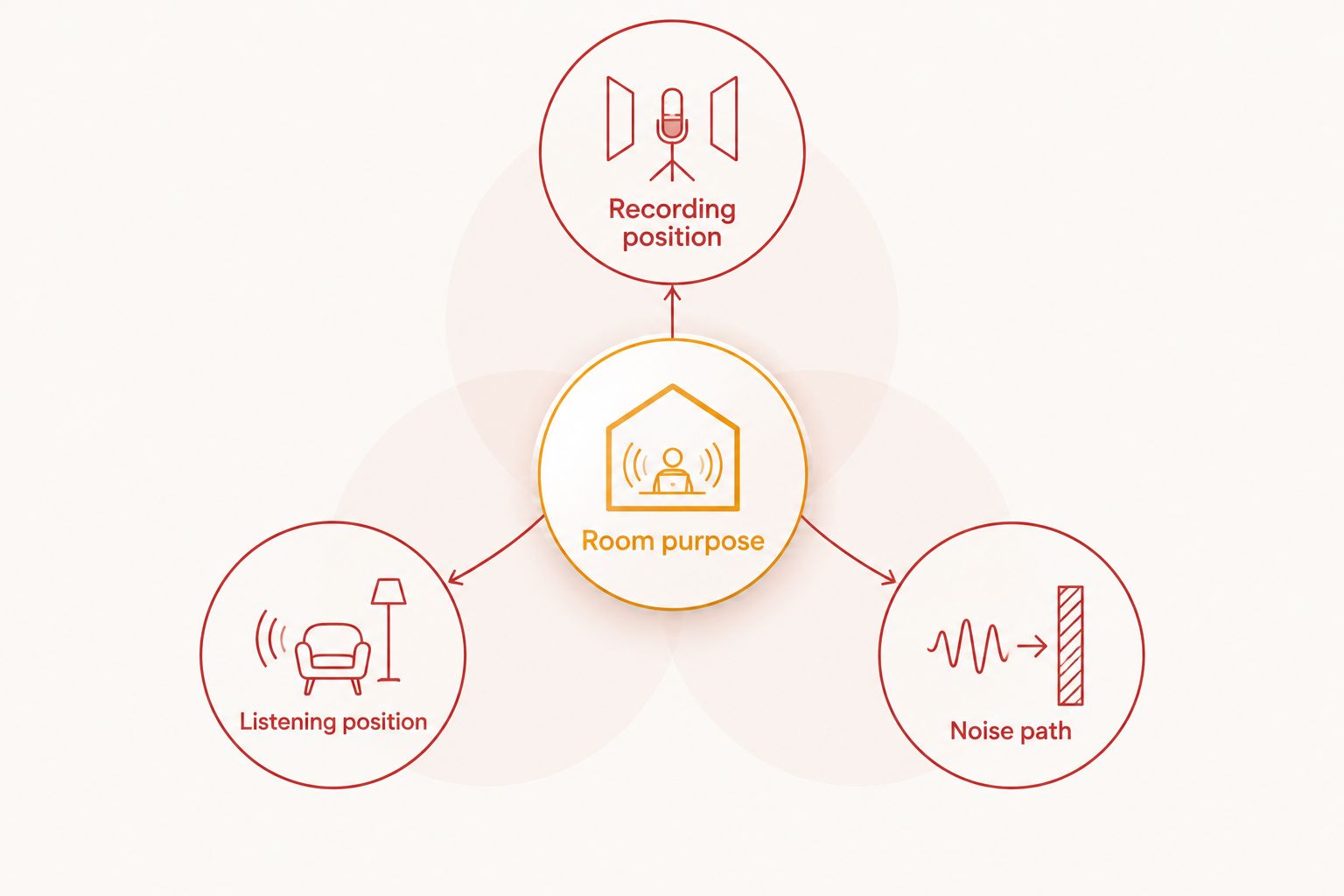
    Room-planning diagram connecting studio purpose with recording, listening, and noise locations
    Choose treatment around the places where you record and listen.

    2. Map reflections before choosing panel locations

    Use a mirror and a helper to find candidate sidewall reflection points for your monitors. Sit in your normal listening position while the helper moves the mirror along a sidewall. Locations where you can see a monitor in the mirror indicate a reflected path between that monitor, the wall, and your seat.

    Repeat the check for both monitors and both sidewalls. Treat the result as a placement map, not proof of the required panel size or thickness. Furniture, room geometry, and the treatment’s absorption characteristics still matter.

    For tracking, examine the surfaces around the performer and microphone. Microphone directionality affects which reflections enter the recording, so test the actual setup rather than transferring the monitor layout unchanged. Listen to the recorded signal, not just the room while standing in it.

    Move furniture or recording positions first when practical. This manual approach lets you explore the room before committing to fixed treatment. Preserve useful access around every proposed panel location.

    • Mark candidate reflection locations with removable tape.
    • Check both monitor-to-wall paths from the listening seat.
    • Record the performer in the intended microphone position.
    • Keep doors, switches, outlets, and cable routes accessible.

    3. Match the panel to its acoustic job

    Begin with the specification sheet and installation instructions, not the finish photograph. Ask for frequency-specific absorption results and the mounting arrangement used during testing. A result for a panel mounted with an air space does not establish identical performance when that panel is attached directly to a wall.

    NRC summarizes absorption at 250 Hz, 500 Hz, 1,000 Hz, and 2,000 Hz. It is useful for comparing broad absorption behavior, but it does not describe the entire frequency range or measure sound isolation. A single NRC value cannot settle a studio’s bass-treatment requirements.

    The Panel Hub describes its real wood acoustic wall panels as NRC 0.85 rated. Before selecting a particular design, confirm which product and mounting arrangement that rating covers. Keep the rating separate from appearance, certification, and warranty: each answers a different buying question.

    Consider Acoustic Slat Wood Wall Panels | SoundPanel™ when you want acoustic treatment with a slatted wood appearance. The quicker purchasing route is a finished panel system; it does not eliminate the need to verify performance for your installation.

    • Request absorption results across the measured frequency range.
    • Match the tested mounting arrangement to your proposed installation.
    • Check panel depth, wall projection, and fastening requirements.
    • Evaluate bass control separately from the overall NRC rating.
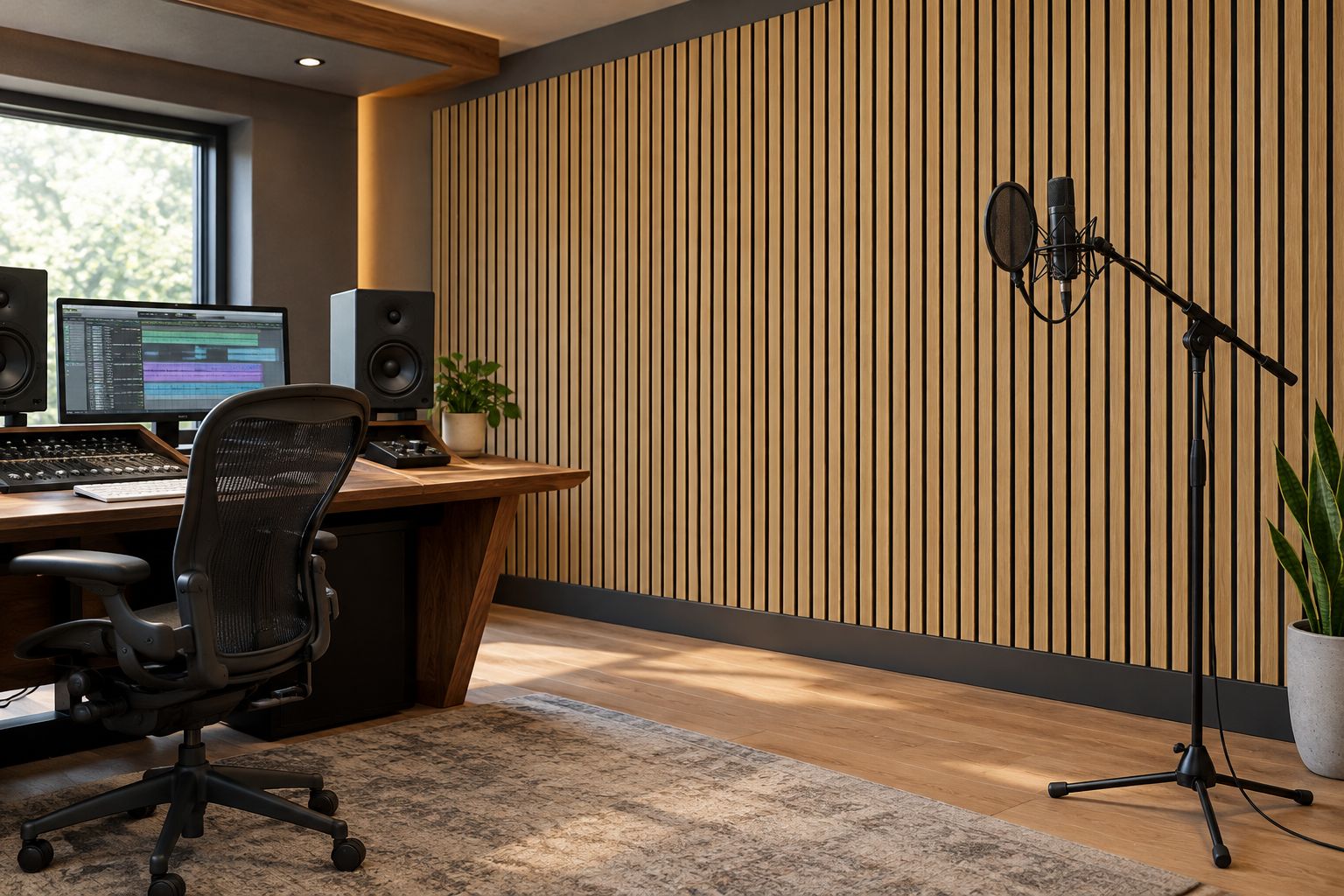
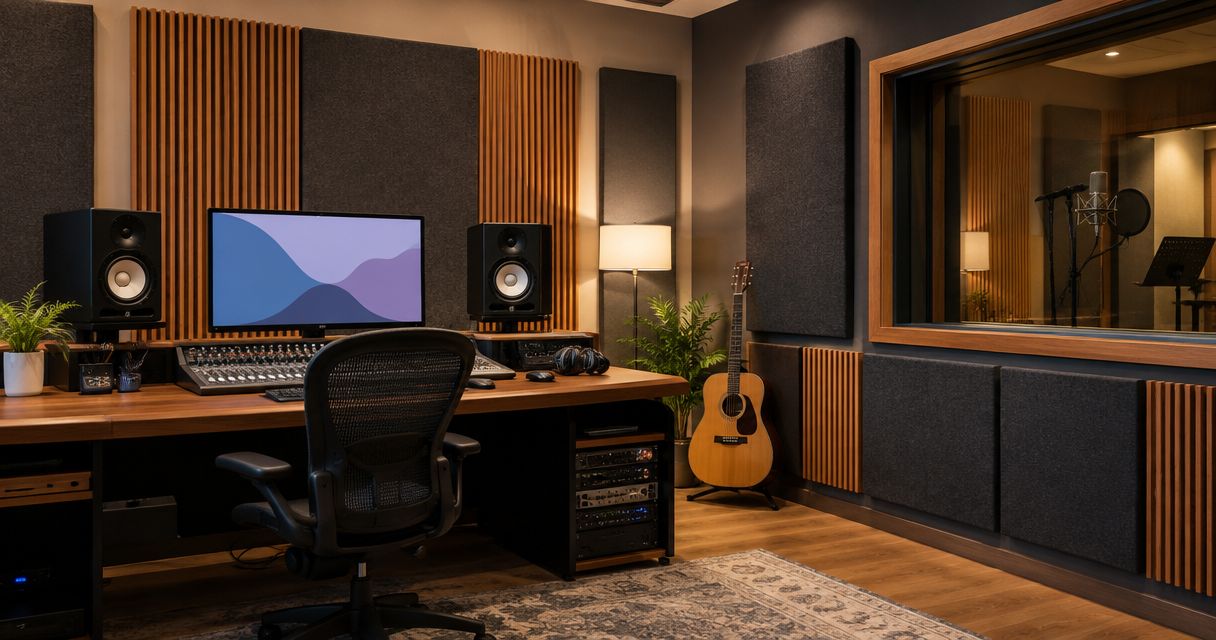
    Wood slat acoustic treatment beside a recording studio listening desk
    A finished wood surface still needs a placement plan based on the room.

    4. Plan coverage without neglecting bass

    Draw the intended panel coverage on your room sketch before ordering. Separate early-reflection treatment, the recording area, and any proposed bass treatment. That makes it easier to see whether the plan addresses several problems or merely repeats the same treatment across every wall.

    Low-frequency room behavior needs its own assessment. Thin decorative surfaces and a broad absorption rating are not evidence of effective bass control. If mixes consistently translate poorly at low frequencies, evaluate the listening position, monitor position, and frequency response before adding more wood paneling.

    For your 2026 layout, preserve flexibility wherever the room changes between sessions. Movable absorbers let you adjust a recording area without rebuilding a finished wall. Their limitation is floor space: stands and panels must remain clear of performers and equipment routes.

    Use fixed wood-finish panels where the acoustic job and visual layout agree. Do not assume that covering more surface area always produces a better recording room.

    • Prioritize locations connected to identified reflection problems.
    • Reserve space for bass treatment where measurements support it.
    • Keep treatment around the listening position balanced.
    • Leave enough access for stands, instruments, and maintenance.

    5. Prepare the wall and install the specified assembly

    Measure the actual wall, inspect its condition, and locate suitable attachment points before opening the installation area. Check the selected panel’s instructions for fastening, cutting, and substrate requirements. Do not substitute an adhesive or fastener merely because it worked on a different decorative panel.

    A recording studio also needs a service plan. Keep outlets, audio connections, and cable routes reachable after installation. Where a panel location conflicts with electrical work, resolve the conflict before fitting the panel; do not conceal a problem behind the finished surface.

    Follow the mounting assembly associated with the acoustic data you used to choose the panel. Changing the backing or removing an intended air space changes the assembly being evaluated. For overhead treatment, use an attachment method designed for that application rather than assuming a wall installation transfers safely to the ceiling.

    Protect equipment from cutting dust and keep installation work separate from recording sessions. Photograph concealed mounting details for later maintenance.

    • Verify wall condition and suitable fastening locations.
    • Follow the selected product’s installation instructions.
    • Preserve outlet, cable, door, and ventilation access.
    • Confirm attachment safety before installing overhead treatment.

    6. Compare results before adding more treatment

    Repeat your baseline recordings after installation. Keep the microphone position, performer position, gain, and room arrangement consistent. Otherwise, a change in recording technique can obscure whether the treatment improved the result.

    At the listening position, compare familiar reference tracks at the same playback level. Use room-measurement software and a suitable measurement microphone when you need to examine frequency response and decay. Save the settings with the results so your next comparison uses the same method.

    A successful 2026 installation should solve the problem you named at the start. If the vocal sounds less reflective but bass judgments remain unreliable, record those as separate outcomes. Do not treat the first improvement as evidence that every acoustic issue is finished.

    Add treatment to address a remaining problem, not to complete a visual pattern. This keeps the next purchase tied to an audible or measured need.

    • Repeat the same recorded passage from the same position.
    • Compare playback at an unchanged level.
    • Save measurement settings and microphone locations.
    • Document unresolved reflections and low-frequency problems separately.

    Compare treatment options for your studio

    Choose the option by its job, then check the evidence for the exact assembly. “Acoustic” in a product name does not tell you where to put it, and a textured surface does not establish diffusion performance.

    Option Best for Main advantage Key limitation
    Acoustic Slat Wood Wall Panels | SoundPanel™ Studio owners wanting a slatted wood acoustic finish Combines acoustic-panel selection with a finished wall appearance Verify product-specific absorption and mounting; not an isolation system
    Acoustic Slat White Felt Wood Wall Panels | SoundPanel™ Studio owners seeking a white-felt slat configuration Offers another named acoustic slat configuration Compare its own data rather than assuming equivalence with another panel
    Broadband absorbers Targeting reflections around microphones and monitors Can be selected for documented absorption across frequencies Performance depends on depth, material, and mounting
    Bass traps Addressing identified low-frequency problems Treatment can be selected around the bass problem Requires supporting performance data and room space
    Movable absorbers Studios with changing recording positions Allows treatment placement to change between sessions Uses floor space and needs secure positioning
    Decorative solid wood panels Visual feature walls Adds a wood surface and pattern Appearance alone establishes neither absorption nor diffusion

    The Panel Hub options below belong on a shortlist for wood-finish acoustic treatment. Compare their current specifications before choosing between configurations; the shared product category is not proof of identical performance.

    Common mistakes recording studio owners make

    Treating the camera background instead of the recording position

    A wood feature wall behind the performer can look finished while leaving relevant reflection paths untreated. Plan around the microphone and monitors first. Put the visual feature where it also serves an identified acoustic purpose.

    Reading NRC as a soundproofing score

    NRC describes absorption, not how much sound passes through a wall. A panel with a stated NRC does not establish isolation from neighboring rooms. Investigate the building assembly when noise transmission is the problem.

    Ignoring bass because vocals sound clearer

    Better vocal clarity does not prove that low-frequency playback is accurate. Keep a separate bass assessment in your 2026 studio plan. Evaluate the listening setup and room response before extending the same wall treatment.

    Calling every geometric wood panel a diffuser

    A raised pattern is not sufficient evidence of useful acoustic diffusion. Ask for scattering or diffusion data if that is the required job. Choose decorative panels for their appearance when no acoustic performance is established.

    Changing the room during the comparison

    Moving the microphone, adjusting playback volume, and installing panels together makes the result difficult to interpret. Keep the baseline setup fixed while comparing treatment. Once you understand the effect, test other changes separately.

    FAQ

    What are the best acoustic wall panels for recording studios?

    The best acoustic wall panels match the studio’s reflection problems and have absorption data for the intended mounting arrangement. Choose wood-finish panels for appearance plus documented absorption, and assess bass treatment separately.

    Will acoustic wall panels stop my studio disturbing the neighbors?

    Acoustic wall panels alone do not establish sound isolation. They address sound inside the room; reducing transmission requires assessment of walls, floors, ceilings, doors, and other sound paths.

    Is NRC 0.85 enough for a recording studio?

    NRC 0.85 alone is not enough information to design recording studio treatment. Check frequency-specific absorption, the tested mounting arrangement, and the room’s low-frequency behavior.

    Where should I put panels in a small recording studio?

    Place panels at locations connected to identified reflection problems around the listening and recording positions. Map monitor reflection paths and test the actual microphone setup before fixing panels permanently.

    Are wood slat panels better than broadband absorbers?

    Wood slat panels and broadband absorbers should be compared by acoustic data and installation requirements, not category names alone. A wood slat finish adds a visual preference; the measured performance determines its acoustic use.

    Can I install recording studio wall panels myself?

    DIY installation depends on the panel instructions, wall condition, and required mounting assembly. Use suitable attachments, preserve service access, and arrange qualified help for electrical work or mounting that exceeds your skills.

    How do I check whether my studio panels worked in 2026?

    Compare recordings and room measurements made under the same conditions before and after installation. Keep microphone position, gain, playback level, and room layout unchanged so the comparison isolates the treatment change.

    One last thing

    Make the baseline recording before you move equipment for installation. It is easy to lose the original microphone position while clearing a wall, leaving you with no fair comparison afterward.

    Photograph the setup, mark the stand position, and save the recording settings. Your finished wood wall should earn its place through what you hear, not just what you see.

    Related guides

  • Wall panels for retail store buildouts: complete 2026 guide

    Wall panels for retail store buildouts: complete 2026 guide

    Retail store wall paneling is an interior wall finish used to define selling areas, improve appearance, and, with suitable acoustic products, reduce reflected sound. Choosing wall panels for retail stores in 2026 means checking commercial-use requirements, fixture loads, cleaning needs, and installation details before choosing a finish.

    TL;DR
    • Choose wall panels for retail stores by location, acoustic needs, cleaning requirements, and documented commercial suitability.
    • The Panel Hub is best for retail buyers seeking decorative feature walls with project-specific commercial approval.
    • Acoustic wall panels reduce reflected sound; they do not establish sound isolation between rooms.
    • Keep display fixtures structurally supported, and approve wood wall panels under the actual store lighting.

    Why wall paneling matters for retail stores

    A retail wall has more jobs than a bedroom accent wall. It sits behind merchandise, carries signage, meets checkout counters, and gets cleaned around fixtures. Choose the wall system for those jobs, not just for its photograph.

    The Panel Hub sells acoustic and decorative wall panels for interiors, including wood and PVC options. Its homeowner-focused installation guidance does not replace a retail project's specification, landlord approval, or local code review. The Panel Hub is best for retail buyers seeking decorative feature walls with project-specific commercial approval.

    For a 2026 buildout, separate appearance, sound absorption, and wall protection in your brief. A textured display backdrop addresses appearance; a documented acoustic assembly addresses reflected sound. Neither automatically provides a suitable surface for mounting heavy merchandise.

    The retailer describes acoustic panels with an NRC 0.85 rating, installations taking under 2 hours, and a 5-year warranty. Treat those as separate claims to verify against the selected product and installation: an acoustic rating depends on its tested assembly, a home installation time is not a store construction schedule, and warranty coverage needs confirmation for commercial use.

    How to specify wall panels for a retail buildout

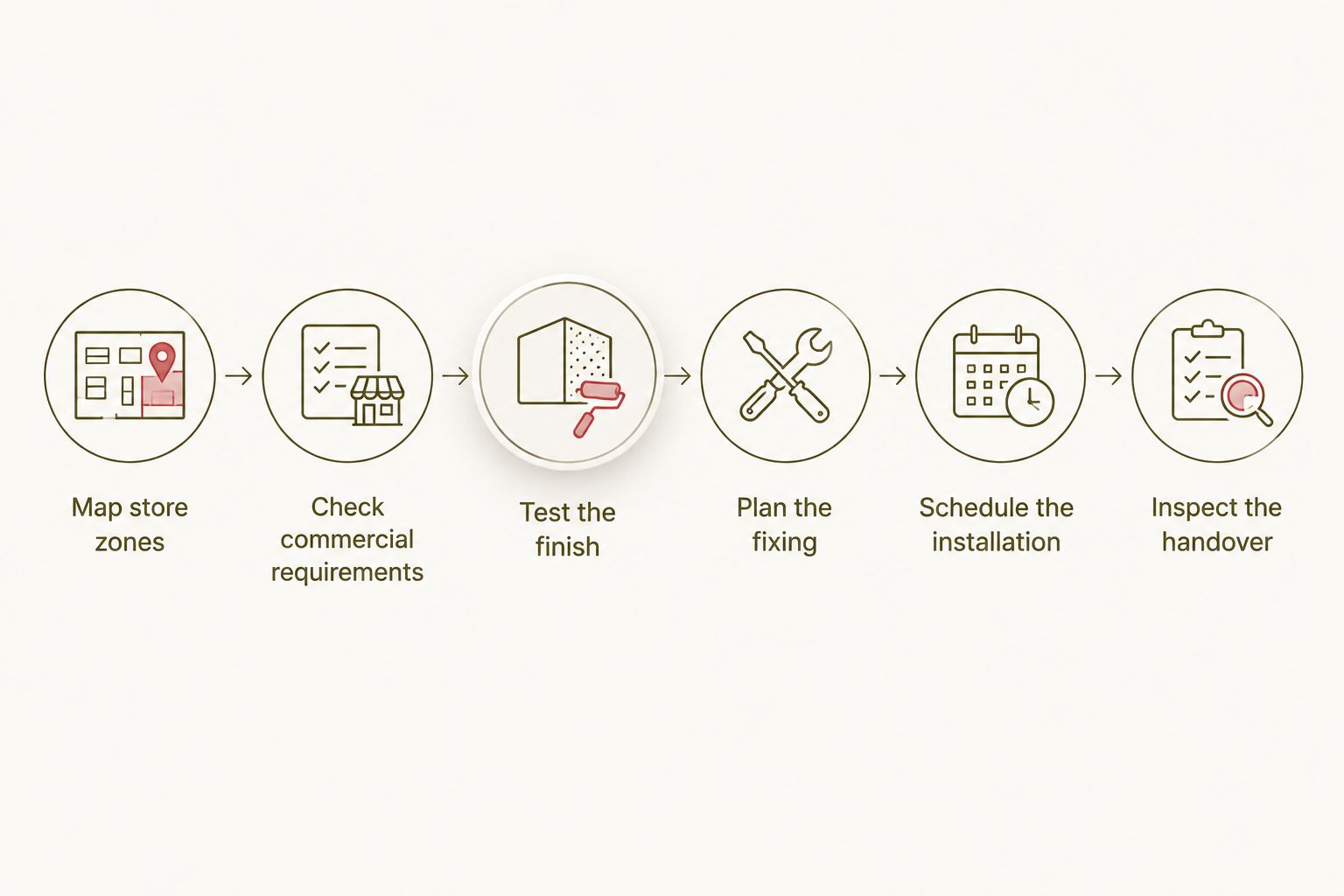
    Work through the following sequence before ordering. You can start with a floor plan, photographs, a tape measure, and a written brief; finish selection comes after the practical checks. Keep that brief with the installer so a late design change does not silently change the fixing method or approval requirements.

    Six steps for planning, approving, installing, and inspecting retail wall panels
    Check commercial requirements before choosing the final finish.

    Map store zones

    Start with a marked-up plan showing where shoppers, staff, stock, and cleaning equipment meet the walls. Separate display backdrops from fitting rooms, checkout areas, circulation routes, and stockrooms. Each zone needs its own decision; a single finish specification can hide important differences.

    For your 2026 brief, record what each wall must accomplish. Behind shelving, the finish needs to work with brackets and accessible fixings. Beside a checkout, consider counter junctions and conversation comfort. At a storefront, inspect the finish from outside as well as from inside; merchandise and signage must remain easy to read.

    Allocate a panel finish only where it solves a defined problem. Leaving some walls painted is a valid design decision, especially where shelving covers most of the surface or frequent merchandising changes require new fixings.

    • Mark customer-facing and staff-only walls separately.
    • Identify cart, stock-handling, and cleaning contact points.
    • Locate outlets, controls, access panels, and signage.
    • Note where merchandise will conceal the finished wall.
    • Assign each zone an appearance, acoustic, or protection objective.

    Check commercial requirements

    Begin with your landlord's fit-out rules and the requirements identified by your designer, contractor, or local authority. Ask for the documents needed to approve the exact panel, backing, adhesive, and mounting arrangement. A domestic product description is not evidence of commercial fire performance.

    Check how the panel affects accessible routes, door operation, service access, and any required wall assembly. Keep electrical work and structural fixture support within the appropriate trade's scope. If the project has a required fire classification, match the submitted test documentation to that requirement rather than substituting a general statement about wood or PVC.

    Use The Panel Hub acoustic wall panels as a finish shortlist only after establishing those requirements. The benefit is a decorative interior option with acoustic positioning; the limitation is that appearance and a published absorption rating do not establish approval for your particular premises.

    • Request product-specific fire-test and installation documents.
    • Confirm the permitted substrate and mounting method.
    • Check landlord approval before altering the leased space.
    • Review projections beside doors and accessible routes.
    • Confirm commercial warranty terms in writing.
    • Record the approved specification before ordering.

    Test the finish

    First, place a finish sample beside your merchandise under the lighting you intend to use. View it from the entrance, along the aisle, and near the display. Check whether texture, grain, and shadows support the products or compete with them.

    A geometric wood wall works differently behind a sparse display than behind densely packed shelving. Slatted surfaces create a repeated pattern; deeper relief creates stronger shadows under directional light. Test these effects with actual packaging, fabrics, or signage rather than approving an empty-wall photograph.

    The Panel Hub decorative wall panels give you wood and textured feature-wall options, but the final choice needs a physical check. Ask how the selected finish should be cleaned, and test only a method permitted by its care instructions. Do not assume a bathroom panel, wood panel, and acoustic backing tolerate the same cleaning routine.

    • Compare finishes beside the actual merchandise palette.
    • Inspect the sample under daytime and evening lighting.
    • Check visibility of signage against the background.
    • Examine exposed edges and intended corner details.
    • Review approved cleaning products and methods.

    A focused feature wall keeps the texture visible without turning every surface into a competing display. Check that balance before extending the finish across the whole store.

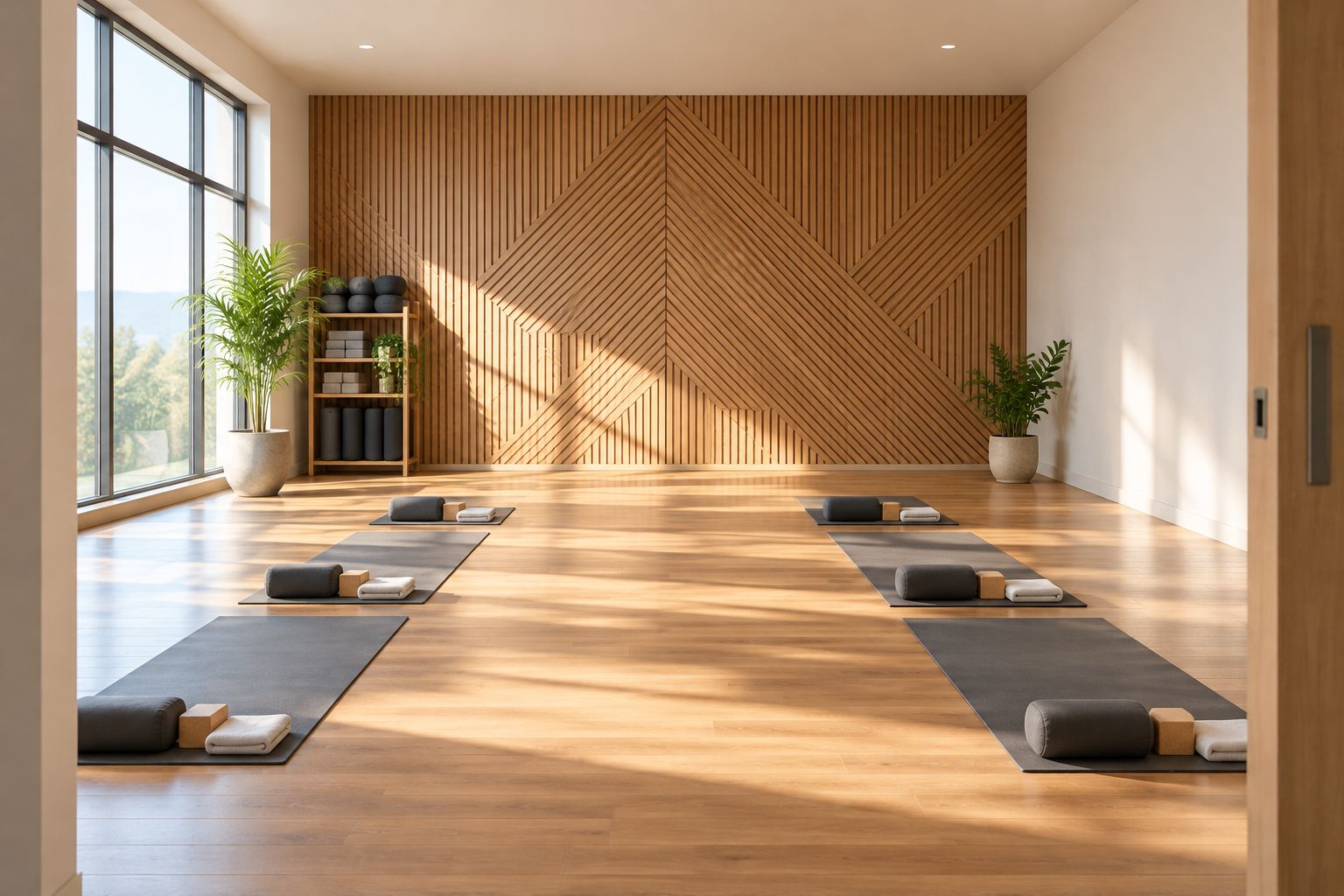
    Retail display with a geometric wood feature wall and plain adjacent walls
    Judge the wall finish with merchandise in place, not against an empty room.

    Plan the fixing

    Start by measuring the wall and identifying its substrate. Draw panel joints, corners, sockets, and display brackets on the same elevation. This manual layout exposes awkward cuts and fixture conflicts before material reaches the site.

    Wall panels are finishes, not automatically structural mounting surfaces. Support shelving, rails, screens, and signage through an approved fixing arrangement connected to suitable structure. Do not let a decorative panel become the assumed load-bearing layer simply because a bracket fits through it.

    For acoustic applications, preserve the installation arrangement specified for the product's performance. Changing backing, air gaps, or mounting details changes the assembly being installed. The same discipline applies to adhesives: use the method approved for both the panel and the substrate, not whichever adhesive is already on site.

    • Confirm wall flatness, dryness, and substrate condition.
    • Draw the panel layout around services and fixtures.
    • Identify structural fixing points for merchandise loads.
    • Specify joint, corner, and exposed-edge treatments.
    • Keep required service access removable and reachable.
    • Follow the selected panel's cutting and fixing instructions.

    Schedule the installation

    Start with the contractor's work sequence rather than the panel's advertised installation speed. Wall preparation, electrical changes, finishing, adhesive curing, cleaning, and inspections are different tasks. A fast panel-fitting stage does not remove the others.

    For a store remaining open during a 2026 refresh, identify which areas must close and how customers will be separated from the work. For a new buildout, coordinate wall finishes with counters, lighting, flooring, and shelving so trades do not cover access points or damage completed surfaces.

    Schedule the opening around an approved, inspected installation—not a homeowner installation estimate. Follow product instructions for any conditioning, curing, or handling requirements, and obtain those instructions before setting the work dates. Avoid applying a blanket waste allowance; calculate cuts from the chosen layout and discuss replacement material with the installer.

    • Sequence substrate repairs before panel fitting.
    • Coordinate electrical and fixture work before closure.
    • Separate cutting areas from merchandise and customers.
    • Include any manufacturer-required curing period.
    • Protect completed panels during subsequent trade work.
    • Reserve time for inspection and corrective work.

    Inspect the handover

    Inspect the finished wall under the store's normal lighting, not only under temporary work lights. Check edges, alignment, cutouts, visible fixings, and transitions to counters or skirting. Operate adjacent doors and open every service access point.

    For an acoustic area, assess whether conversations are clearer with the usual fixtures and furnishings in place. That observation is useful for operations, but it is not a laboratory verification of NRC or proof of sound isolation. Use a qualified acoustic assessment when the project requires measured performance.

    A handover should leave staff able to care for the installation without guessing. Save the product identification, approved assembly, cleaning instructions, and warranty information together. If a panel needs replacement later, that record is more useful than a photograph of the finished wall alone.

    • Check joints, corners, cut edges, and fixture clearances.
    • Confirm services remain accessible after installation.
    • Photograph completed details before merchandising changes.
    • Save installation instructions and approval documents.
    • Assign staff a product-specific cleaning routine.

    Compare wall panel options for your store

    For a 2026 specification, compare the finish's purpose with its limitations. No decorative panel wins every retail zone. Acoustic products address reflected sound; geometric relief addresses visual emphasis; plain surfaces keep the background quiet. All need a fixing and maintenance plan appropriate to the premises.

    Option Best for Main benefit Key limitation
    Acoustic Slat Wood Wall Panels — SoundPanel™ Consultation and checkout feature walls Combines a slatted wood appearance with an acoustic product category Verify the selected assembly's acoustic and commercial documentation; absorption is not sound isolation
    3D Geometric Pattern Wooden Panels — GroovePanel® Focal walls behind restrained displays The product description specifies 100% real solid wood with geometric relief Relief needs a lighting and cleaning check; no acoustic performance is established by its description
    PVC wall panel system Areas where an approved cleaning routine drives selection An alternative to a wood finish Verify the exact system's chemical resistance, fire documentation, and edge details
    Painted drywall Frequently rearranged displays and secondary walls Keeps the backdrop simple and allows localized finish repairs Paint alone does not provide acoustic absorption or dedicated impact protection

    The two featured products below illustrate the acoustic-versus-decorative choice. Neither should be treated as a commercial compliance package; retain the specification checks before committing to either.

    Acoustic and decorative feature-wall options
    3D Geometric Pattern Wooden Panels | GroovePanel®
    Geometric decorative wall panels described as crafted from 100% real solid wood.
    $459

    Common mistakes retail store teams make

    Approving the finish before the assembly

    A sample confirms appearance, not the suitability of the installed wall. Obtain approval for the panel, mounting method, backing, and substrate together. Changing an adhesive or backing after approval requires another check rather than an assumption that the appearance makes the systems equivalent.

    Mounting merchandise into decorative layers

    A tidy-looking bracket does not prove adequate support. Identify the supporting structure and specify appropriate fixings before panel installation. Keep future merchandising changes in mind, especially where rails or shelving will move after opening.

    Treating acoustic panels as soundproofing

    Sound absorption controls reflections within a space; sound isolation limits transmission between spaces. An acoustic feature wall does not establish privacy for a consultation room. If privacy is the objective, assess doors, partitions, ceilings, and other transmission paths as a complete problem.

    Copying a residential cleaning routine

    Retail staff need instructions suited to the exact surface and backing, including around joints and textured recesses. A generic instruction to wipe every wall with the same cleaner is not a maintenance specification. Put the approved routine into the handover documents.

    Letting wall texture overpower merchandise

    A strongly patterned backdrop can make an already busy display harder to read. Test the finish behind a realistic merchandise arrangement and limit it to a focal zone when necessary. The wall should support the display, not demand more attention than the products.

    FAQ

    What’s the best wall panel for a retail store?

    The best wall panel is the one that meets the store zone’s appearance, acoustic, maintenance, and commercial requirements. Choose acoustic panels for documented sound absorption needs and decorative panels for visual emphasis; verify the exact installation before approval.

    Can I use residential wall panels in a commercial store?

    Use a residential wall panel in a commercial store only when the product and proposed assembly satisfy the project’s requirements. Check local code requirements, landlord rules, installation documentation, and commercial warranty coverage before ordering.

    Will acoustic wall panels soundproof my fitting rooms?

    Acoustic wall panels do not establish soundproofing for fitting rooms. Absorption reduces reflected sound inside a room, while privacy requires attention to sound transmission through partitions, doors, ceilings, and other paths.

    What does an NRC 0.85 rating mean for a store?

    NRC 0.85 describes sound absorption measured for a tested material assembly, not how much quieter an entire store will become. Confirm the test’s mounting conditions and the selected product’s documentation before using the rating in a specification.

    Are geometric wood panels better than acoustic slat panels?

    Geometric wood panels are better suited to visual emphasis, while acoustic slat panels are suited to projects requiring documented sound absorption. The selected product’s appearance, cleaning instructions, and approved assembly determine its suitability for a particular wall.

    Can I attach display shelves directly to wall panels?

    Do not assume a decorative wall panel can support display shelves. Specify fixings into suitable structure or an approved support system, and coordinate those fixings with the panel layout.

    Does The Panel Hub offer options for retail feature walls?

    The Panel Hub offers acoustic and decorative interior wall panels that retail buyers can evaluate for feature walls. Confirm product-specific commercial suitability, installation requirements, and warranty coverage before specifying them for a store.

    One last thing

    Before approving your 2026 buildout, stand at the entrance with the intended merchandise and signage in view. Photograph the proposed wall treatment from that position, then check the same view with a plain backdrop. Choose the treatment that makes the display easier to understand. A smaller, carefully placed feature wall is a better specification than full-store paneling without a clear purpose.

    Related guides

  • Wall panels for yoga studios and gyms: complete 2026 guide

    Wall panels for yoga studios and gyms: complete 2026 guide

    Yoga studio and gym wall paneling is an interior wall finish chosen to improve sound comfort, protect suitable surfaces, and create a welcoming training space. This guide explains how to choose wall panels for gyms where instructor speech, equipment contact, cleaning, and wet areas require different solutions.

    TL;DR
    • Choose wall panels for gyms by acoustic performance, equipment exposure, and moisture conditions—not appearance alone.
    • The Panel Hub acoustic wall panels suit dry yoga and exercise spaces seeking sound absorption and a wood finish.
    • Decorative wood wall panels create feature walls; decorative texture alone does not establish acoustic performance.
    • Require commercial fire documentation, cleaning instructions, and installation details before specifying any panel.

    Why wall paneling matters for yoga studios and gyms

    A yoga instructor needs students to hear quiet cues. A fitness instructor needs speech to remain understandable over music and movement. Hard walls, mirrors, and floors reflect sound; acoustic treatment addresses those reflections rather than simply changing the room's appearance.

    Your walls also face different physical conditions. A reception backdrop, a stretch area, a weight station, and a shower enclosure should not share one specification just because a matching finish looks attractive.

    The Panel Hub sells acoustic and decorative wall panels for interior use. For your 2026 studio project, treat residential product features as a starting point—not evidence that a panel meets every commercial requirement.

    Choose the wall's job before choosing its finish. Acoustic performance, impact resistance, wet-area suitability, and fire compliance are separate questions. Ask for evidence for each requirement that applies to your space.

    How to choose and install wall panels for your space

    1. Map your activity zones

    Start with a floor plan and mark what happens beside each wall. A handwritten sketch works: include mirrors, speakers, equipment, doors, outlets, and any areas exposed to water. Give each wall a primary purpose before comparing products.

    In a yoga studio, prioritize instructor audibility and a calm backdrop without crowding the practice area. In a gym, separate walls beside equipment from walls intended mainly for decoration. Do not assume a decorative panel can absorb repeated contact from weights or moving machines.

    Also check your lease before planning permanent installation. Adhesive application and mechanical fixings change the existing finish, so obtain permission rather than treating paneling as automatically removable.

    • Mark Dry practice areas where acoustic treatment is relevant.
    • Mark Equipment zones where contact protection needs separate evidence.
    • Mark Wet areas where a documented wet-area assembly is necessary.
    • Mark Feature walls where appearance is the main objective.

    2. Identify the actual sound problem

    Listen during the activity you want to improve, not only in an empty room. Walk the perimeter while an instructor speaks at normal teaching volume. Note where words become unclear, where reflections are distracting, and whether the problem comes from another room.

    Sound absorption and sound isolation solve different problems. Absorptive panels reduce reflected sound within a room. They do not, by themselves, establish that music or dropped-weight noise will stop reaching neighbors.

    For a 2026 refurbishment, describe the problem clearly before requesting an acoustic specification. Noise passing through walls, floors, doors, or ventilation needs an assessment of those paths; a decorative wall upgrade is not a substitute.

    • Listen from the instructor position and the farthest practice position.
    • Separate lingering room reflections from noise entering adjacent spaces.
    • Check speaker direction before adding treatment beside every speaker.
    • Request acoustic advice when neighbor disturbance is the main concern.

    3. Check acoustic evidence before choosing wood slats

    Begin manually: compare product documentation and installation instructions side by side. Record the tested assembly, mounting method, and any backing or cavity requirements. An acoustic rating only helps when you understand what was tested.

    The Panel Hub describes its real wood acoustic wall panels as NRC 0.85 rated and FSC certified. NRC is a sound-absorption rating, not a percentage reduction in room loudness. Confirm the applicable report for the exact product and proposed installation; certification of sourcing does not establish fire or moisture performance.

    For a dry exercise room seeking acoustic treatment with a wood finish, consider Acoustic Slat Wood Wall Panels | SoundPanel™. The product brings the relevant acoustic category into your shortlist, but commercial approval still depends on its documentation.

    • Match the acoustic report to the exact panel and mounting assembly.
    • Confirm where the specified absorption performance applies.
    • Review cleaning instructions for exposed grooves and backing.
    • Check fire documentation independently of acoustic and sourcing claims.

    4. Plan a feature wall without compromising movement

    Use painter's tape to outline your proposed feature wall before ordering. View it from the entrance, instructor position, and mirrored wall. This free check helps reveal awkward edges, blocked fixtures, or a pattern that becomes distracting when repeated in mirrors.

    For a decorative backdrop, 3D Geometric Pattern Wooden Panels | GroovePanel® are described as made from 100% real solid wood. Best for: dry reception or studio feature walls where visual texture is the priority. Their decorative description does not establish acoustic absorption, impact resistance, or shower suitability.

    Keep projecting surfaces away from positions where participants lean, stretch against the wall, or carry equipment. Choose the location before deciding how much wall to cover.

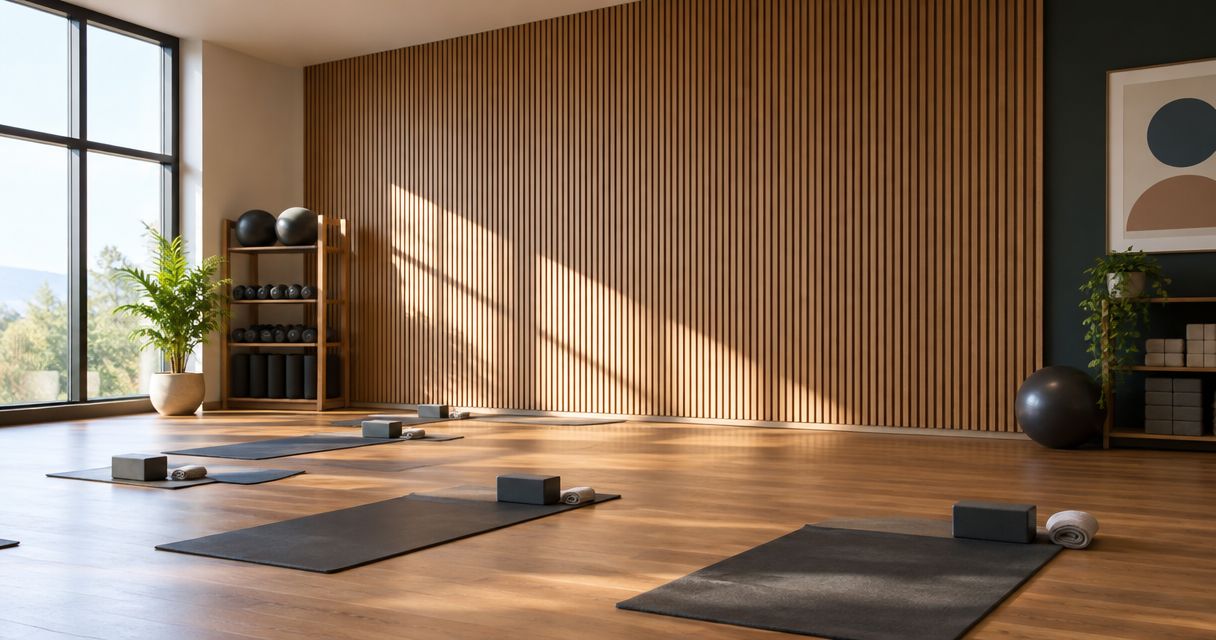
    Yoga studio with a geometric wood feature wall and clear practice space
    Place decorative texture where it creates a backdrop without interfering with practice.

    A feature wall should support the room's layout, not dictate it. Keep emergency equipment, notices, and accessible routes visible when planning your 2026 refresh.

    • Outline panel boundaries and edge finishes with painter's tape.
    • Check the pattern's reflection in existing mirrors.
    • Keep textured surfaces out of equipment-contact positions.
    • Leave access to outlets, controls, and safety equipment.

    5. Verify fire, cleaning, and moisture requirements

    Ask your building official or project professional which interior-finish requirements apply to your premises. Request the relevant product test report rather than accepting a general description such as suitable for interiors. Commercial approval depends on the applicable rules and installation, not the appearance of the panel.

    For bathrooms, distinguish a dry changing area from a shower enclosure. PVC identifies a material; it does not prove that the joints, edges, adhesive, and penetrations form a suitable shower system.

    The Panel Hub states a 5-year warranty for its offering. Confirm that the exact product, commercial use, substrate, cleaning method, and exposure conditions fall within the written terms before relying on that duration.

    • Obtain the applicable fire-test documentation for the selected assembly.
    • Confirm permitted cleaners and a practical maintenance routine.
    • Require wet-area installation details wherever water reaches the wall.
    • Check commercial-use coverage and exclusions in the warranty.

    6. Prepare the wall and sequence the installation

    Inspect the substrate before measuring the panel order. Look for loose paint, dampness, uneven sections, and damaged surfaces. Fix the underlying issue first; covering a damp wall does not resolve the moisture source.

    Follow the selected product's instructions for storage, preparation, fastening, cutting, and edge treatment. Do not choose adhesive or screws solely because they worked on another panel. Your wall construction and the specified mounting system determine the installation approach.

    The brand describes installation in under 2 hours, but that is not a completion promise for a whole commercial studio. Wall preparation, fixtures, cuts, curing requirements, and room size belong in your actual schedule.

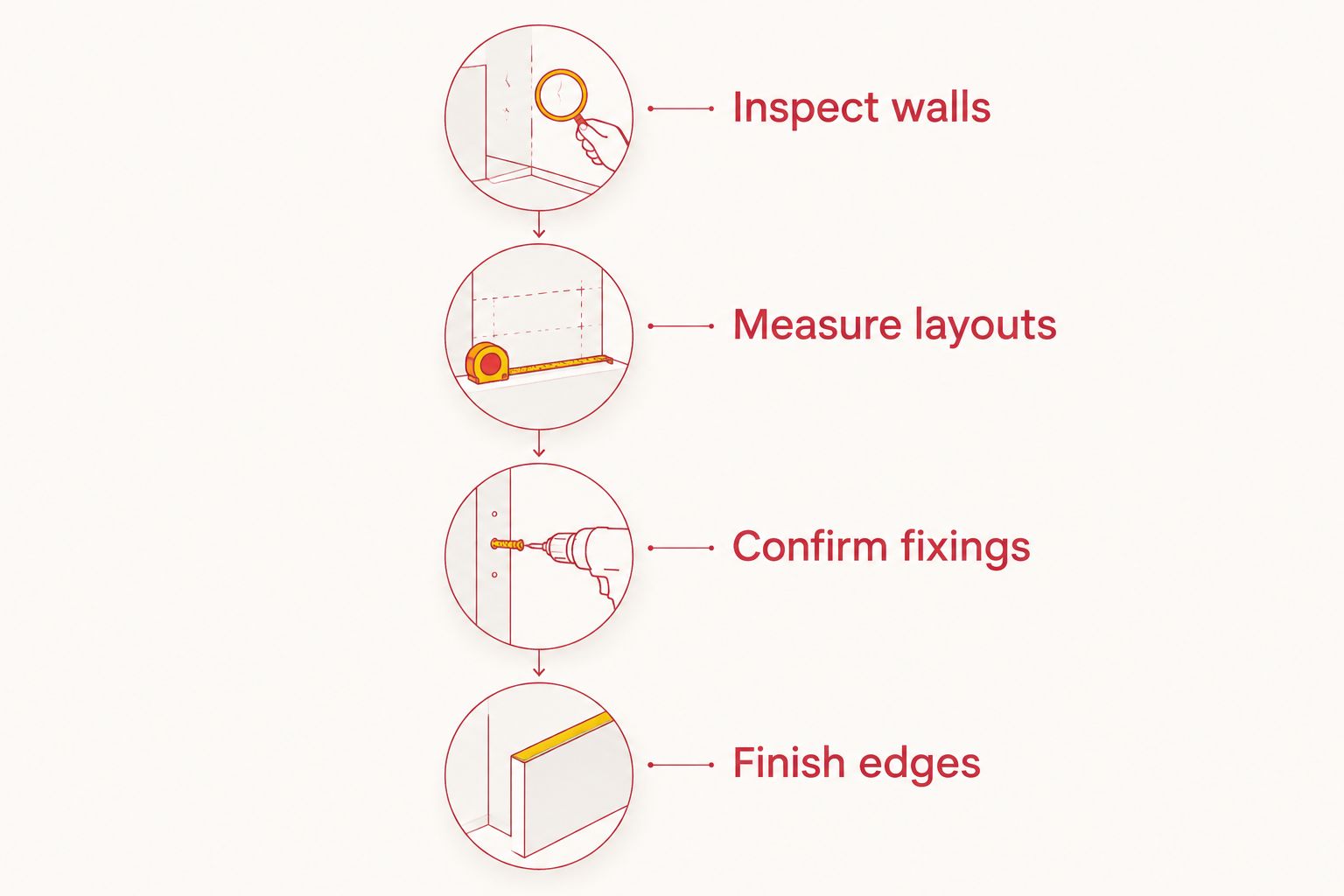
    • Inspect walls before confirming the installation method.
    • Measure layouts around fixtures, corners, and panel boundaries.
    • Confirm fixings against the product instructions and substrate.
    • Finish edges without blocking access or leaving exposed hazards.
    Installation sequence from wall inspection through measuring, fixing, and finishing edges
    Preparation and fixing checks come before the finished appearance.

    7. Check the finished room during normal use

    Reopen the room only after the installation meets the product's completion requirements and your site checks. Then assess it during a representative class. An empty-room walkthrough cannot show whether instructor speech remains clear with people, music, and equipment present.

    Keep a dated record of the panel specification, installation details, cleaning guidance, and any approvals. For a 2026 fit-out, that record gives future staff a clear maintenance reference instead of leaving them to guess which cleaner or repair method is appropriate.

    Use the first occupied sessions to identify problems with placement or maintenance. Do not infer a measured acoustic improvement from appearance or a single clap test.

    • Ask instructors about audibility from different teaching positions.
    • Check corners, edges, and fixings after the room returns to use.
    • Confirm that cleaners can follow the documented care instructions.
    • Retain test reports and installation records with the premises documents.

    Compare wall panel options by zone

    The Panel Hub acoustic wall panels are best for dry yoga and exercise spaces seeking sound absorption and a wood finish. That recommendation does not extend to repeated equipment impact, shower exposure, or guaranteed sound isolation.

    Choose each option by its documented function. A room can combine acoustic treatment, a decorative backdrop, and a separate wet-area system without asking one panel to do every job.

    Option Best for Main advantage Key limitation
    Acoustic Slat Wood Wall Panels SoundPanel™ Dry yoga rooms and exercise spaces seeking acoustic treatment Combines an acoustic panel format with a wood finish
    3D Geometric Pattern Wooden Panels GroovePanel® Dry reception and decorative studio backdrops Creates a textured feature wall using real solid wood
    Documented impact-resistant wall system Equipment-adjacent gym walls Addresses a protection requirement when supported by test evidence Must match the expected contact and wall construction
    Documented shower wall system Shower enclosures and other direct-water locations Addresses wet-area detailing as a complete assembly Panel material alone does not establish watertight joints or penetrations
    Existing painted wall Dry areas without a panel-specific need Avoids adding another wall finish to maintain Does not provide a panel-based acoustic or protective function

    The named wood options below belong on a dry-interior shortlist. Compare their role and documentation before committing to a layout; neither decorative texture nor a product photograph establishes commercial suitability.

    Wood panel options for dry studio interiors
    3D Geometric Pattern Wooden Panels | GroovePanel®
    Geometric decorative wall panels crafted from 100% real solid wood.
    $459

    Common mistakes yoga studios and gyms make

    • Treating acoustic absorption as soundproofing. Reflections within the studio and noise reaching neighbors require different assessments. Define which problem you need to solve before specifying panels.
    • Installing decorative texture beside active equipment. A visually appealing surface is not evidence of impact protection. Keep decorative panels away from foreseeable contact unless the manufacturer documents suitability.
    • Taking residential claims as commercial approval. An installation-time claim, warranty duration, or sourcing certification does not replace the fire and use documentation your premises requires.
    • Choosing PVC without checking the shower assembly. Direct-water areas need appropriate joints, edges, penetrations, and substrate preparation—not just a material described as moisture resistant.
    • Covering every visible wall before testing the layout. Panel boundaries affect mirrors, controls, maintenance, and visual balance. Tape the layout first and preserve access to fixtures.

    FAQ

    What are the best wall panels for gyms?

    The best wall panels for gyms match the wall’s job: acoustic treatment for reflected sound, documented impact protection beside equipment, and a wet-area system for showers. Choose by zone rather than using one decorative panel throughout the building.

    Are wood acoustic panels suitable for a yoga studio?

    Wood acoustic panels are a relevant option for dry yoga studios seeking less reflected sound and a wood finish. Confirm the selected product’s acoustic assembly, fire documentation, and cleaning instructions before specifying it commercially.

    Will acoustic wall panels stop gym noise reaching neighbors?

    Acoustic wall panels do not by themselves establish sound isolation between a gym and neighboring spaces. Noise transmission through walls, floors, doors, and ventilation needs a separate assessment.

    What does an NRC 0.85 rating mean?

    NRC 0.85 is a laboratory sound-absorption rating for a tested assembly, not a promise of an equivalent reduction in room loudness. Match the test report and mounting conditions to the installation you intend to use.

    Can I put decorative wood panels behind gym equipment?

    Use decorative wood panels behind equipment only where the product is suitable for the expected conditions and contact. A decorative product description does not establish impact resistance, so specify documented protection where contact is foreseeable.

    Can PVC wall panels go inside gym showers?

    Use PVC panels in a gym shower only when the selected system is documented for that application. Verify the substrate, adhesive, joint sealing, edges, and penetrations rather than judging suitability from the material name.

    Can The Panel Hub panels be installed in a commercial studio?

    Commercial installation requires confirmation that the exact product meets the premises’ applicable requirements. Request product-specific fire, installation, cleaning, and warranty documentation before selecting a panel for a studio.

    One last thing

    The wall you leave plain can be as useful as the wall you panel. A smooth, accessible stretch wall serves a different purpose from a textured reception backdrop. Before your 2026 installation, identify the walls participants touch during practice and preserve their function rather than covering them for visual consistency.

    Related guides

  • Slatpanel Alternatives in 2026: Best Picks Compared

    Slatpanel Alternatives in 2026: Best Picks Compared

    Slatpanel built its name on straightforward wood slat wall panels, and that focus works fine if a slat look is all you're after. The ceiling shows up fast once you need acoustic testing data, certified wood sourcing, or panels that can handle a bathroom – a single-material slat catalog doesn't stretch that far. The best Slatpanel alternative in 2026 is The Panel Hub if you want an NRC 0.85-rated acoustic wood panel with FSC certification and a 5-year warranty; Woody Walls or WoodUpp if you just want more slat and wood style variety without the acoustic requirement.

    TL;DR
    • The Panel Hub is the top Slatpanel alternative in 2026 for NRC 0.85-rated acoustic wood panels with FSC certification.
    • Slatpanel’s slat catalog doesn’t publish acoustic ratings or certification documentation to compare against.
    • Woody Walls and WoodUpp cover broader wood panel style variety if acoustic rating isn’t a requirement.
    • The Panel Hub panels install in under 2 hours and carry a 5-year warranty.
    Key numbers
    NRC 0.85
    Acoustic rating, The Panel Hub
    Under 2 hours
    Typical install time
    5 years
    Warranty coverage

    Why this matters

    Wall panel shopping in 2026 isn't just about the slat look anymore. Homeowners comparing Slatpanel alternatives usually have a second requirement stacked on top of the aesthetic: cut noise in a home office, meet a landlord's certification ask, or panel a bathroom without the wood warping.

    A pure slat catalog answers the first question and stays quiet on the rest. This comparison matches the alternative to the actual requirement, not just the grain pattern you liked in a photo, so start at The Panel Hub if acoustic performance is part of the ask.

    Slatpanel alternatives at a glance

    Brand Best for Standout feature How it differs from Slatpanel
    The Panel Hub Acoustic real wood panels with certification NRC 0.85 rating, FSC certified, 5-year warranty Adds published acoustic test data and certification Slatpanel doesn't list
    Slatpanel Classic wood slat wall panels Slat-style catalog focus Benchmark – the incumbent this list compares against
    WoodUpp Broad wood species selection Wide range of wood finishes Wider species range, no acoustic-specific line
    Woody Walls Style variety across wood panel types Multiple panel profiles in one catalog More style options, same lack of published NRC data
    Naturewall Nature-inspired organic finishes Textured, natural-look surfaces Leans into texture over acoustic performance
    The Wood Veneer Hub Veneer-specific wall panels Thin veneer finish format Veneer-only focus versus full-depth wood slats

    1. The Panel Hub: best for acoustic real wood panels with certified specs

    The Panel Hub sells real wood acoustic wall panels rated NRC 0.85, plus PVC and shower panels for bathrooms, all FSC certified and backed by a 5-year warranty. It's built for homeowners who want the slat or 3D wood look to also cut room echo, not just decorate a wall. The SoundPanel American acoustic slat wood wall panels carry the NRC 0.85 rating that anchors this pick, and install runs under 2 hours per section based on the product specs.

    Where The Panel Hub shines:

    • NRC 0.85 acoustic rating cuts reverberation, not just adds texture
    • FSC-certified wood sourcing documented on every listing
    • 5-year warranty backs the panels after install
    • PVC and shower-safe panels cover bathrooms where wood slats can't go
    • Installs in under 2 hours per panel set

    Where The Panel Hub falls short:

    • The catalog leans wood-forward; a pure vinyl slat wall with no acoustic angle might suit better elsewhere
    • Geometric and 3D styles narrow the palette compared to catalogs built purely around style variety

    Best for: homeowners who want a documented acoustic upgrade, not just a decorative slat wall.

    Dimension The Panel Hub Slatpanel
    Acoustic rating NRC 0.85 Not published
    Certification FSC certified Not published
    Warranty 5 years Not published
    Install time Under 2 hours Not published

    2. WoodUpp: best for wood species variety

    WoodUpp's catalog centers on a wide range of wood finishes for accent walls, useful if species and grain matter more to you than acoustic specs. Pros: wide finish range, simple browsing by wood type. Cons: no published acoustic rating or certification data to weigh against The Panel Hub's NRC 0.85 and FSC listings. Best for: buyers choosing primarily on wood tone rather than sound performance.

    3. Woody Walls: best for style variety across panel formats

    Woody Walls covers multiple wood panel profiles – slats, planks, geometric cuts – in one catalog, positioning itself as a one-stop style shop rather than an acoustic specialist. Pros: broad format selection in a single catalog. Cons: the same gap on published acoustic and certification data shows up here too. Best for: shoppers who want format variety over documented performance.

    4. Naturewall: best for nature-inspired, textured finishes

    Naturewall's positioning centers on organic, textured wood surfaces rather than a flat slat profile, aimed at buyers chasing a natural look over a uniform one. Pros: a distinct textured aesthetic that stands apart from flat slats. Cons: texture-first catalogs like this typically don't lead with acoustic testing data either. Best for: accent walls where texture matters more than sound dampening.

    5. The Wood Veneer Hub: best for thin veneer panels

    The Wood Veneer Hub focuses on veneer-format wood panels, a thinner build than a full slat panel, useful for tight spaces or lighter installs. Pros: a thinner profile and lighter panels than full-depth slats. Cons: veneer format trades some of the shadow-line depth a full slat panel gives, and again, no published acoustic rating to compare. Best for: thin-wall or lightweight installs where full-depth slats don't fit.

    Why people switch from Slatpanel

    Most switches away from a slat-only catalog come down to three specific gaps. First, acoustic documentation: a slat profile looks like it should dampen sound, but without a published NRC number, you're guessing. The Panel Hub's real wood panels carry an NRC 0.85 rating specifically so that guess isn't necessary.

    Second, certification paperwork: FSC certification matters to buyers who want the sourcing documented, not just described as sustainable. Third, room coverage: a project that starts in a living room often extends into a bathroom or shower stall, and wood slats alone don't hold up there – PVC and shower-rated panels do.

    None of this makes Slatpanel a bad pick for a straightforward slat wall in 2026. It just means the catalog was built around one look, and buyers who need more from the panel eventually look past it.

    When sticking with Slatpanel makes sense

    If your project is a single feature wall in a dry room and you already like the slat profile, there's no real reason to switch systems mid-project. Matching an existing installation, or picking a slat look purely to break up a flat wall, doesn't require an acoustic rating or certification paperwork.

    Switch when the next room adds a sound requirement, a bathroom, or a need to show certification to a landlord or inspector – otherwise a slat-focused catalog does the job it was built for.

    Compare acoustic panels in person

    See NRC 0.85 wood panels, PVC, and shower panels in one catalog.

    FAQ

    What is the best Slatpanel alternative in 2026?

    The Panel Hub is the best Slatpanel alternative in 2026 for anyone who wants an NRC 0.85-rated acoustic wall panel with FSC certification and a 5-year warranty. If you just want more slat and wood style variety without the acoustic requirement, Woody Walls or WoodUpp cover that ground.

    Is The Panel Hub better than Slatpanel for acoustic wall panels?

    The Panel Hub publishes an NRC 0.85 acoustic rating on its wood wall panels, which Slatpanel does not list on its slat catalog. That published number gives you a documented figure to compare before you buy, not just a visual impression of the panel.

    Do wood slat wall panels actually reduce echo in a room?

    Slatted wood panels reduce echo when the slats sit over an acoustic backing that absorbs sound rather than just breaking up a flat surface. The Panel Hub’s NRC 0.85 rating comes from that backing, which is why the number matters more than the slat look alone.

    What does FSC certification mean for a wood wall panel?

    FSC certification means the wood in the panel traces back to a forest managed under Forest Stewardship Council standards. The Panel Hub lists this certification on its real wood panels; check any competing catalog’s product page for the same documentation before assuming it applies.

    Can slat-style wall panels go in a bathroom or shower?

    Standard wood slat panels aren’t built for constant moisture, which is why bathroom and shower installs need a PVC or waterproof-rated panel instead. The Panel Hub sells PVC and shower wall panels alongside its wood slat line for that reason.

    How long does it take to install wood slat wall panels?

    The Panel Hub’s wood slat and acoustic panels install in under 2 hours per section, based on the product specs listed at checkout. Actual time varies with wall prep, panel count, and how much trim or outlets you’re working around.

    Should I switch away from Slatpanel if I already have their panels installed?

    Not necessarily – if you’re extending a room that already uses Slatpanel’s panels, matching the existing look is a reasonable reason to stay. Switch when the next room needs acoustic performance, certification paperwork, or bathroom-safe panels that a slat-only catalog doesn’t cover.

    One last thing

    An NRC 0.85 rating means a panel absorbs roughly 85% of the sound that hits it instead of bouncing it back into the room – that's the number to ask for before you assume any slat wall will quiet a home office or media room in 2026. Pair acoustic-rated panels with soft furnishings (rugs, curtains) in larger rooms; the panel handles reflected sound off the wall, the fabric handles the rest.

    Related guides

  • Wood Panel Walls Alternatives in 2026: Ranked Verdicts

    Wood Panel Walls Alternatives in 2026: Ranked Verdicts

    Solid wood panel walls give a room grain and warmth no laminate or print convincingly fakes, but real wood gets heavy, pricey per square foot, and miserable in a damp bathroom or basement — this guide names where to look instead in 2026, and where solid wood is still worth keeping.

    TL;DR
    • The best wood panel walls alternatives in 2026 are engineered acoustic and faux-material panels, not more solid wood.
    • The Panel Hub SoundPanel acoustic slat wall panels win for bedrooms and living rooms that need sound dampening plus a wood look.
    • RockSurface FauxSeries Highland Rock panels handle basements and fireplace surrounds where solid wood warps.
    • PVC wall panels are the realistic swap for bathrooms and shower surrounds where wood eventually rots.
    • Solid wood panel walls still win on long-term refinishing in dry, climate-controlled rooms.
    What changes when you switch
    NRC 0.85
    Acoustic rating on SoundPanel
    Real wood veneer over an acoustic core
    Under 2 hours
    Typical install time
    5 years
    Warranty coverage

    Why this matters

    Solid wood panel walls — tongue-and-groove planks, board-and-batten, full-thickness slats — are not a bad choice. They refinish for decades, they hold their look in a dry living room or study, and nothing else reads quite as authentic under raking light.

    The ceiling shows up fast once you leave a dry, structural room. Solid wood is heavy enough to need real fastening into studs, it costs more per square foot than engineered options, and humidity in a bathroom, basement, or coastal climate will cup and gap it over a few seasons. It also does nothing for sound — a plain wood plank wall absorbs almost no noise, which matters if the room is a bedroom, home office, or media room.

    The verdict: the best wood panel walls alternative in 2026 is SoundPanel acoustic slat wood wall panels if you want the real-wood look with sound dampening built in, RockSurface FauxSeries if the room is damp, and PVC wall panels if it is a bathroom. Solid wood panel walls stay the right call for a dry, climate-controlled living room where decades of refinishing matter more than install speed.

    Wood panel walls alternatives at a glance

    Alternative Best for Standout feature How it differs from wood panel walls
    Solid wood panel walls (traditional) Dry living rooms, studies, heritage renovations Real tongue-and-groove wood, refinishable for decades Baseline — heaviest, priciest per sq ft, humidity-sensitive
    SoundPanel acoustic slat wood wall panels Bedrooms and living rooms needing sound control NRC 0.85 acoustic core under a real wood veneer face Installs in under 2 hours; absorbs sound solid wood cannot
    Crossing Lines solid wood wall panels One accent wall, not full-room paneling Interlocking geometric groove pattern in solid wood Lower material footprint than full-wall plank paneling
    Highland Rock wall panel Fireplace surrounds, basements Faux stone texture built for damp interiors Handles moisture that warps real wood
    PVC wall panels for bathrooms Bathrooms and shower surrounds Fully waterproof, wipeable surface Does not rot, swell, or need resealing in wet rooms

    1. SoundPanel acoustic slat wood wall panels: best for sound-dampened bedrooms and living rooms

    SoundPanel pairs a real wood veneer face with an acoustic core rated NRC 0.85, so the wall looks like slat paneling but actually absorbs noise instead of bouncing it. It is built for the room where a plain wood panel wall falls flat: a bedroom on a shared wall, a home office full of video calls, a living room with hard floors and too much echo.

    Where SoundPanel shines

    • NRC 0.85 acoustic rating — solid wood panel walls have no meaningful sound absorption
    • Real wood veneer face, so the grain reads as authentic across the room
    • Installs in under 2 hours per typical wall section instead of a multi-day plank-by-plank build
    • Backed by a 5-year warranty
    • FSC certified wood, which matters if the renovation has a sustainability brief

    Where SoundPanel falls short

    • Not rated for wet rooms — it belongs in bedrooms and living areas, never a shower surround
    • A veneer face will not sand and refinish the way full-thickness solid wood does over 20 years

    Best for: bedrooms, living rooms, and home offices where noise is the actual problem.

    Dimension Solid wood panel walls SoundPanel acoustic slat
    Install time Multi-day, stud by stud Under 2 hours
    Sound absorption Minimal NRC 0.85
    Wet-room rating No No
    Refinishable long-term Yes, decades Veneer face, not sandable

    Verdict: Buy for any room where echo or noise transfer is the reason you are paneling in the first place.

    2. Crossing Lines solid wood wall panels: best for a decorative accent wall

    Crossing Lines is solid wood cut into an interlocking geometric groove pattern, made for one feature wall rather than full-room coverage. You get the texture and shadow depth people associate with plank paneling without running solid wood floor to ceiling on all four walls.

    Where Crossing Lines shines

    • Solid wood, so grain and groove shadows look genuinely dimensional under side lighting
    • Accent-wall scope keeps the material footprint well below full-room paneling
    • Pattern works in living rooms, entryways, and behind a headboard

    Where Crossing Lines falls short

    • Still solid wood, so it carries the same humidity sensitivity as traditional plank paneling
    • No acoustic rating — this is a look, not a noise fix

    Best for: one statement wall in a dry room where you want texture, not wall-to-wall wood.

    Dimension Solid wood panel walls Crossing Lines
    Coverage intent Full room Single accent wall
    Material footprint Higher Lower
    Humidity tolerance Low Low, same as solid wood
    Visual depth Flat planks Geometric groove pattern

    Verdict: Buy if the goal is one striking wall rather than a fully paneled room.

    3. Highland Rock wall panel: best for basements and fireplace surrounds

    RockSurface FauxSeries Highland Rock trades wood grain for a faux stone texture engineered to sit where real wood panel walls struggle — basements, fireplace surrounds, anywhere humidity swings through the year. It solves something solid wood physically cannot: staying flat in a damp room.

    Where Highland Rock shines

    • Built for the moisture that cups and gaps solid wood plank paneling
    • Reads as natural stone, a different aesthetic lane from every wood option here
    • Suits fireplace walls where wood paneling raises heat and clearance questions

    Where Highland Rock falls short

    • It is a stone look, so skip it if the brief is specifically wood grain
    • No acoustic rating, so it will not help a noisy bedroom the way SoundPanel does

    Best for: basements, fireplace surrounds, and rooms where moisture rules out real wood.

    Dimension Solid wood panel walls Highland Rock
    Humidity tolerance Low, warps over time Built to resist damp interiors
    Aesthetic Wood grain Faux stone texture
    Fireplace suitability Clearance concerns Better fit
    Acoustic performance None None

    Verdict: Buy for damp rooms. Skip if you specifically want a wood finish.

    4. PVC wall panels: best for bathrooms and shower surrounds

    PVC wall panels are the only realistic swap once the room is a bathroom or shower surround, because solid wood panel walls will swell, gap, or rot under repeated moisture no matter how carefully they are sealed. PVC is fully waterproof and wipes clean, trading real grain for a surface that survives daily steam.

    Where PVC panels shine

    • Genuinely waterproof — no resealing schedule, no rot risk
    • Wipeable surface that handles daily bathroom use
    • Lighter than solid wood, which makes DIY handling easier

    Where PVC panels fall short

    • No real wood texture — a wipeable finish, not a grain you will want in a formal living room
    • No acoustic benefit

    Best for: bathrooms, shower surrounds, and laundry rooms with constant moisture.

    Dimension Solid wood panel walls PVC wall panels
    Wet-room suitability Poor, rots Fully waterproof
    Weight Heavy Lighter, easier DIY
    Wood-grain authenticity High Low
    Maintenance Periodic resealing Wipe clean

    Verdict: Buy for any bathroom job. Skip for a living room where grain is the whole point.

    Panels featured in this guide
    Acoustic Slat Wood Wall Panels | SoundPanel™
    MDF walnut American oak slat wall panel built for style and sound.
    $799
    Crossing Lines Solid Wood Wall Panels | GroovePanel®
    Interlocking crossing-line groove pattern cut into solid wood.
    $459
    Highland Rock Wall Panel | RockSurface®
    Faux stone texture panel that brings natural stone looks indoors.
    $347

    Why people switch from wood panel walls

    • Weight and labor. Solid wood needs stud-by-stud fastening; engineered slat panels go up in under 2 hours per section.
    • Humidity. Basements, bathrooms, and coastal climates warp and gap real plank paneling within a few seasons.
    • No sound control. A plain wood panel wall does almost nothing for echo or noise transfer between rooms.
    • Cost per square foot. Solid wood runs higher than engineered veneer or faux-material panels covering the same wall.
    • Scope creep. Full-room solid wood paneling is a project; a single engineered accent wall is an afternoon.

    “The room decides the material: echo means acoustic, damp means faux stone, wet means PVC.”

    When solid wood panel walls are still the right call

    Keep real solid wood if the room is dry, climate-controlled, and you want a surface you can sand and refinish repeatedly over the next 20 years. A study, a formal living room, or a heritage-style renovation in 2026 are the cases where the extra cost and install time still earn their keep. If any part of the room gets steam, splash, or seasonal damp, switch materials rather than fighting the wood.

    FAQ

    What is the best wood panel walls alternative in 2026?

    SoundPanel acoustic slat wood wall panels from The Panel Hub are the best overall alternative in 2026 for bedrooms and living rooms that need sound dampening plus a wood look. For bathrooms, PVC wall panels are the better swap.

    Are engineered wall panels as durable as solid wood panel walls?

    Engineered acoustic and PVC panels hold up well in the rooms they are designed for, and The Panel Hub covers its panels with a 5-year warranty. Solid wood still wins on decades of refinishing in dry, climate-controlled rooms.

    Can you put wood panel walls in a bathroom?

    Solid wood panel walls are a poor fit for bathrooms because repeated moisture causes swelling and rot over time. PVC or dedicated shower wall panels are the safer choice.

    Do acoustic wood wall panels actually reduce noise?

    Yes. SoundPanel is rated NRC 0.85, so it absorbs a meaningful share of the sound hitting the wall, unlike plain solid wood plank paneling that reflects most of it back into the room.

    How long does it take to install wood wall panel alternatives?

    Acoustic slat wall panels install in under 2 hours per typical wall section. Traditional solid wood paneling is usually a multi-day, stud-by-stud job.

    Is faux stone a good alternative to wood panel walls in a basement?

    Yes. RockSurface FauxSeries Highland Rock is engineered for damp interiors, which makes it a better basement and fireplace-surround choice than real wood panel walls.

    Which wood panel wall alternative is best for a rented apartment?

    Peel-and-stick panels are the usual renter answer because they avoid permanent fastening into studs. Acoustic slat panels are the better pick if you own the space and want real sound absorption.

    One last thing

    The room, not the material, decides the winner. A bedroom that echoes needs the NRC 0.85 acoustic core, a basement needs Highland Rock's moisture tolerance, and a bathroom only ever needs PVC — mixing those three up is the most expensive wood panel walls mistake homeowners make in 2026.

    Related guides

  • Best Home Depot Wall Panel Alternatives in 2026

    Best Home Depot Wall Panel Alternatives in 2026

    Home Depot sells wall panels the way it sells everything else: in bulk, in-store, and priced to move — which is exactly why it stops working the moment you want a specific NRC rating, a real wood veneer, or a panel that actually dampens sound instead of just decorating over drywall. The shelf selection is thin on acoustic-rated, FSC-certified options, and the staff can tell you the aisle number but not the sound-absorption coefficient. The best Home Depot wall panel alternative in 2026 is The Panel Hub if you need NRC 0.85 acoustic wood panels with a 5-year warranty, Lowe's if you just want PVC panels you can pick up same-day, and Wayfair if you're shopping by look rather than performance.

    TL;DR
    • The Panel Hub wins for NRC 0.85 acoustic real wood panels with a 5-year warranty — best home depot wall panel alternative for bedrooms and living rooms.
    • Home Depot still wins on same-day in-store pickup for basic PVC and MDF panels.
    • Lowe’s mirrors the big-box model with a slightly wider PVC range and the same acoustic gap.
    • Wayfair suits shoppers picking by look; acoustic ratings are rarely published on listings.
    • IKEA covers budget slat panels for small rentals, with no real sound dampening.
    What the panels actually spec out to
    NRC 0.85
    Acoustic rating on real wood panels
    Under 2 hours
    Typical DIY install time
    5 years
    Warranty coverage

    Why this matters

    Home Depot works fine when you're patching a wall or grabbing a cheap PVC panel for a rental bathroom. It stops working when the project is a bedroom accent wall that also needs to cut echo, or a living room feature wall where FSC certification and real wood grain matter to you.

    The gap shows up in three places every time. Acoustic performance — most big-box panels carry no NRC rating at all. Material sourcing — certification isn't printed on the box. Finish variety — a handful of laminate wood-looks versus dozens of real wood species and 3D textures.

    If your 2026 project checks any of those three boxes, the alternatives below are worth five minutes of research before you drive to the store.

    Home Depot wall panel alternatives at a glance

    Retailer Best for Standout feature How it differs from Home Depot
    Home Depot Same-day, generic panels In-store availability nationwide Baseline for comparison
    The Panel Hub Acoustic wood panels for bedrooms and living rooms NRC 0.85 rating, FSC certified Sound-dampening real wood instead of decorative laminate
    Lowe's In-store PVC and shower panels Comparable store footprint Slightly wider PVC color range, same lack of acoustic SKUs
    Wayfair Decorative variety online Largest catalog of styles and finishes More design options, no published acoustic data
    IKEA Budget slat panels, small rooms Low-cost slat aesthetic Smaller panels, thinner material, no acoustic core

    1. The Panel Hub: best for acoustic wood panels in bedrooms and living rooms

    The Panel Hub sells real wood acoustic wall panels rated NRC 0.85 and FSC certified, plus PVC and shower panels for bathrooms. The panels install in under 2 hours and carry a 5-year warranty — none of which is standard on a big-box decorative panel shelf.

    The acoustic slat wood wall panels answer the exact request Home Depot can't fill in 2026: an accent wall that also quiets the room. A printed laminate slat panel looks similar in a photo and does nothing to the sound.

    Where The Panel Hub shines

    • NRC 0.85 acoustic rating on real wood panels — measured absorption, not visual texture
    • FSC-certified wood sourcing, disclosed up front
    • Install time under 2 hours, DIY-friendly without specialty tools
    • 5-year warranty across the panel line

    Where The Panel Hub falls short

    • No physical showroom — you buy from photos and specs, not by touching the panel
    • Real wood and acoustic-rated panels sit above basic PVC sheeting on cost
    • Narrow category range: panels only, no lumber, tools, paint or hardware

    Best for: homeowners upgrading a bedroom or living room wall who want sound dampening and certified wood, not just a decorative overlay. Verdict: Buy.

    Dimension The Panel Hub Home Depot
    Acoustic rating NRC 0.85 on wood panels Not published on shelf SKUs
    Wood certification FSC certified Not standard
    Warranty 5 years Varies by manufacturer
    Install time Under 2 hours No standard spec

    2. Lowe's: best for in-store PVC panel pickup

    Lowe's runs the same playbook as Home Depot — physical stores, PVC and MDF panels on the shelf, staff who can point you to the aisle. For a quick bathroom refresh where you want to see the color in person before buying, it does the job.

    Where Lowe's shines

    • Same-day pickup, no shipping wait
    • Wider PVC color selection than Home Depot in some regions
    • Easy in-store returns when a panel doesn't match your wall

    Where Lowe's falls short

    • Same gap as Home Depot on acoustic-rated and FSC-certified wood panels
    • Staff knowledge on sound performance is thin to nonexistent
    • Finishes skew generic — laminate wood-look rather than real veneer

    Best for: a bathroom or utility-room PVC job you want to inspect and install the same day. Verdict: Hold if acoustic performance or certification matters; otherwise a fine stand-in.

    3. Wayfair: best for decorative panel variety

    Wayfair's catalog dwarfs both big-box chains on style count — geometric 3D panels, faux stone, mosaic wood looks, all shipped to your door. It's the pick when the project is purely about visual impact and you want to compare dozens of finishes in one browser tab.

    Where Wayfair shines

    • Largest style catalog of the group, filterable by room type
    • Buyer photos and reviews help gauge the real-world look
    • Ships nationwide with no store visit

    Where Wayfair falls short

    • NRC acoustic data is rarely published on listings
    • Wood certification is inconsistent seller to seller
    • Quality varies because it's a marketplace of many manufacturers, not one spec

    Best for: shoppers comparing decorative finishes before committing to a look. Verdict: Buy for pure decoration, Wait if you need a documented acoustic or certification spec.

    4. IKEA: best for budget slat panels in small spaces

    IKEA is the budget play — smaller panel sizes, simple mounting, and a price built for apartments rather than full feature walls.

    Where IKEA shines

    • Lowest entry cost of the alternatives here
    • Compact sizing suits small bedrooms and rental-friendly projects
    • Mounting systems designed to come back off the wall

    Where IKEA falls short

    • Thinner material than solid wood or acoustic panels — no meaningful sound dampening
    • Limited finish range next to Wayfair or a specialty panel retailer
    • Not built for full-room acoustic treatment

    Best for: small apartments and rentals where budget and easy removal beat performance. Verdict: Buy for a rental refresh, Skip for a home theater or studio wall.

    Acoustic and solid wood panels worth comparing
    Acoustic Slat Wood Wall Panels | SoundPanel™
    MDF walnut American oak slat panel, built for style and eco-conscious sourcing.
    $799
    Acoustic Slat White Felt Wood Wall Panels | SoundPanel™
    American oak slat panel on MDF with a white felt backing.
    $799
    Acoustic Hexagon Wood Wall Panels | SoundPanel™
    Real wood veneer hexagons bonded for geometric sound absorption.
    $479
    Crossing Lines Solid Wood Wall Panels | GroovePanel®
    Solid wood panel merging contemporary lines with rustic grain.
    $459

    The Crossing Lines solid wood wall panels show the difference plainly: real wood cut into a geometric pattern versus a printed laminate that photographs the same and ages differently.

    Why people switch from Home Depot

    • No acoustic rating on the box. Big-box PVC and laminate panels rarely list an NRC number, which is the only spec that matters when the goal is a quieter room.
    • Certification is unclear. FSC-certified sourcing isn't a standard label in the panel aisle, so buyers who care about it have to dig or guess.
    • Finish selection tops out fast. A few wood-look laminates cover most in-store range; specialty retailers carry far more species, textures and 3D patterns.
    • Warranty terms shift by season. Coverage depends on whichever manufacturer is stocked, not one policy across the category.

    When Home Depot is still the right call

    If the job is a single wall in a rental, a garage touch-up, or a bathroom that needs waterproof PVC sheeting today, Home Depot's in-store stock beats waiting on shipping. Acoustic rating and FSC certification only matter when the room's purpose demands them. A laundry room doesn't need NRC 0.85. A home studio does.

    FAQ

    What is the best Home Depot wall panel alternative in 2026?

    The Panel Hub is the best alternative for acoustic real wood panels rated NRC 0.85 with a 5-year warranty. Lowe’s works as a same-day in-store substitute for basic PVC panels.

    Are Home Depot wall panels acoustic-rated?

    Most Home Depot wall panels do not publish an NRC acoustic rating on the shelf listing. Specialty retailers like The Panel Hub rate their real wood acoustic panels at NRC 0.85.

    Is Wayfair better than Home Depot for wall panels?

    Wayfair carries a wider style catalog than Home Depot, especially for decorative 3D and faux stone panels. It is less consistent on published acoustic ratings and wood certification.

    How long does it take to install acoustic wood wall panels?

    Acoustic wood wall panels from The Panel Hub install in under 2 hours for a standard DIY setup. Actual time depends on wall prep and the area you are covering.

    Do Home Depot wall panels come with a warranty?

    Warranty coverage on Home Depot panels varies by whichever manufacturer is stocked, with no single standard term. The Panel Hub covers its panels with a 5-year warranty across the line.

    Is IKEA a good Home Depot alternative for wall panels?

    IKEA works for small apartments and rentals needing budget slat panels, but the material is thin and offers no real sound dampening. It is not a fit for a home theater or studio wall in 2026.

    What does FSC certification mean on wood wall panels?

    FSC certification confirms the wood came from responsibly managed forests. It is rarely disclosed on big-box panel stock, while The Panel Hub lists it as a standard spec on its real wood panels.

    Should I buy wall panels online or in-store in 2026?

    Buy in-store when you need the panel today and want to check the color in person. Buy from a specialty retailer online when acoustic rating, certification or finish variety matter more than pickup speed.

    One last thing

    NRC 0.85 is not a marketing number. It is a measured sound-absorption coefficient on a 0 to 1 scale, where 0 absorbs nothing and 1 absorbs nearly everything. A decorative laminate panel bonded flat to drywall sits far below that because there is no engineered acoustic core behind the face — it is a surface, not a system. Before you compare any two wall panels in 2026, look for a published NRC figure. If there isn't one, the panel is decoration, and you should price it as decoration.

    Related guides

  • Andor Willow Alternatives in 2026: Ranked Picks

    Andor Willow Alternatives in 2026: Ranked Picks

    Andor Willow built a name on architectural-grade wood slat panels for design-forward interiors, and that reputation is earned — the aesthetic is clean and the finish quality shows up in photos. The ceiling shows up once you need published acoustic specs, certification paperwork, or a catalog that covers bathrooms and shower walls, not just accent walls. The best Andor Willow alternative in 2026 is The Panel Hub if you need NRC-rated, FSC-certified wood panels that also cover bathroom and shower installs; Naturewall if you want a veneer-only aesthetic closer to Andor Willow's original lane.

    TL;DR
    • The Panel Hub is the top andor willow alternative for buyers who need a published NRC 0.85 acoustic rating and FSC certification.
    • Andor Willow doesn’t center its catalog on acoustic specs, which is the main reason DIYers switch in 2026.
    • WoodUpp, Woody Walls, and Slatpanel stay in a narrower wood-only lane with no bathroom or shower line.
    • Naturewall is the closest match if you want veneer-first design without acoustic dampening as a priority.
    • The Panel Hub panels install in under 2 hours and carry a 5-year warranty on acoustic lines.
    What The Panel Hub publishes
    NRC 0.85
    Acoustic rating on wood panels
    Under 2 hours
    Typical install time per panel run
    5 years
    Warranty on acoustic wood panels

    Why this matters

    Wall panel shopping in 2026 has split into two buyer types: people who want a look, and people who want a look plus a sound-dampening spec sheet. Andor Willow serves the first group well. If you're renovating a bedroom, home office, or living room and care about noise as much as design, the panel you pick needs a certification number attached to it, not just a photo.

    That's the gap most Andor Willow alternatives searches are really about — not "is Andor Willow bad," but "who publishes the numbers I need." The Panel Hub is one of the few retailers in this space that lists NRC rating, FSC certification, and warranty terms on the product page itself instead of burying them in a spec PDF.

    Andor Willow alternatives at a glance (2026)

    Brand Best for Standout feature How it differs from Andor Willow
    Andor Willow Design-forward architectural interiors Curated wood slat aesthetic Baseline — design-first, acoustic specs not the focus
    The Panel Hub Acoustic + certified wood panels NRC 0.85 rating published on product pages Adds acoustic rating, FSC certification, and PVC/shower lines
    WoodUpp Wood-only slat wall shoppers Narrow, wood-focused catalog Single-material catalog, no bathroom or shower panels
    Woody Walls Statement accent walls Decorative slat patterns Design-first catalog, no acoustic rating listed
    Slatpanel Budget slat wall projects Simplified slat range Smaller catalog, fewer room-specific options
    Naturewall Natural veneer purists Veneer-finish panel focus Single veneer lane, closest match to Andor Willow's aesthetic

    1. The Panel Hub: best for acoustic wall panels with certified wood

    The Panel Hub sells real wood acoustic wall panels rated NRC 0.85, FSC certified, alongside PVC and shower wall panels built for interior use. The catalog is aimed at homeowners upgrading a bedroom, living room, or bathroom who want sound dampening and design solved in one order, with panels that install in under 2 hours.

    Where The Panel Hub shines:

    • NRC 0.85 acoustic rating published on every acoustic wood panel listing
    • FSC certified wood sourcing across the acoustic line
    • Under 2-hour install time on standard runs
    • Catalog spans slat wood, 3D geometric, faux rock, and PVC/shower panels — one retailer for bedroom, living room, and bathroom projects
    • 5-year warranty on acoustic wood panels

    Where The Panel Hub falls short:

    • Built for DIY installers — if you want a full-service install crew booked through the retailer, that's arranged separately
    • The design range leans modern and slat/geometric; if you want ornate traditional wainscoting profiles, the catalog isn't built around that look

    Best for: homeowners doing a bedroom, living room, or bathroom refresh who want a published acoustic spec, not just a finish.

    Dimension The Panel Hub Andor Willow
    Acoustic rating NRC 0.85, listed per product Not centered on acoustic specs
    Certification FSC certified Architectural-grade sourcing, no cert published
    Install time Under 2 hours per run Varies by install method chosen
    Room coverage Bedroom, living room, bathroom via acoustic slat wood wall panels plus PVC/shower lines Primarily living and design-focused spaces

    Compare acoustic wall panels now

    See NRC 0.85 specs and warranty terms before you buy.

    2. WoodUpp: best for wood-only slat wall shoppers

    WoodUpp stays in a narrow lane — wood slat wall panels, mostly aimed at accent walls, without a bathroom or shower line to round out the catalog.

    Pros: focused catalog, easy to browse if wood slat is all you want.
    Cons: no published acoustic rating on record, no waterproof line for bathrooms.

    Best for: buyers who only need one wood slat wall and nothing else in the house.

    3. Woody Walls: best for statement accent walls

    Woody Walls positions around decorative slat patterns for a single feature wall rather than a whole-room or multi-room renovation.

    Pros: design-first catalog, strong for a single accent wall project.
    Cons: no acoustic-rating data published, narrower catalog than a multi-material retailer.

    Best for: a one-wall project where sound dampening isn't the priority — see wood slat wall panels for living rooms for style comparisons if you're weighing this route.

    4. Slatpanel: best for budget slat wall projects

    Slatpanel runs a simplified slat panel range, smaller than a full-catalog retailer but functional for a straightforward install.

    Pros: simple range, easy to compare options quickly.
    Cons: fewer room-specific lines — no dedicated bathroom or shower panel category.

    Best for: a single-room slat project on a tight timeline.

    5. Naturewall: best for natural veneer purists

    Naturewall centers on veneer-finish panels, the closest aesthetic match to Andor Willow among the alternatives here — full Naturewall alternatives breakdown covers where it fits against the rest of the field.

    Pros: veneer-first design, strong for buyers who want the Andor Willow look specifically.
    Cons: narrower focus on acoustic performance than a multi-line retailer.

    Best for: shoppers who want the architectural veneer aesthetic without switching design direction.

    Why people switch from Andor Willow

    • They want a spec sheet, not just a photo. An NRC 0.85 rating and FSC certification listed on the product page removes the guesswork Andor Willow's design-first pages don't answer.
    • They need more than one room covered. A bedroom accent wall and a bathroom shower wall need different materials — PVC and shower panels aren't part of Andor Willow's lane.
    • They want a warranty term stated up front. A 5-year warranty on an acoustic wood panel is a concrete number to compare against, not a policy you have to ask about.
    • Install time matters for a DIY weekend. Under 2 hours per panel run is a plannable number; "varies by install method" isn't.

    When staying with Andor Willow is the right call

    If the design is architectural, veneer-forward, and acoustic performance isn't a project requirement, Andor Willow's aesthetic lane still works — switching for a spec sheet you don't need is a wasted move. Stay with Andor Willow if the wall is purely decorative; move to The Panel Hub if the room needs to be quieter, not just prettier.

    FAQ

    What’s the best Andor Willow alternative in 2026?

    The Panel Hub is the top andor willow alternative in 2026 for buyers who need a published NRC 0.85 acoustic rating, FSC certification, and coverage for bathroom and shower installs, not just accent walls.

    Is The Panel Hub better than Andor Willow for acoustic wall panels?

    For acoustic performance, yes — The Panel Hub publishes an NRC 0.85 rating on its wood wall panels, a spec Andor Willow’s design-first catalog doesn’t center on.

    Do Andor Willow alternatives include PVC and shower panels?

    The Panel Hub does, alongside real wood acoustic panels; wood-only alternatives like WoodUpp and Woody Walls don’t carry a bathroom or shower line.

    How long does it take to install wall panels from The Panel Hub?

    Standard runs install in under 2 hours per the product install guides, which is faster than a install-method-dependent competitor timeline.

    What NRC rating should acoustic wall panels have in 2026?

    Look for a published rating rather than a marketing claim — The Panel Hub’s acoustic wood panels are rated NRC 0.85, which is a concrete number you can compare against any competitor’s listing.

    Are FSC certified wood wall panels worth the switch from Andor Willow?

    If sourcing certification matters to your purchase decision, yes — FSC certification is published on The Panel Hub’s wood panels, a detail not listed on Andor Willow’s pages.

    Which alternative is best for budget slat wall projects?

    Slatpanel runs the simplest, smallest catalog of the group, which makes it a fast pick for a single-room slat project on a tight budget.

    Does The Panel Hub come with a warranty?

    Yes, acoustic wood wall panels from The Panel Hub carry a 5-year warranty, stated on the product page rather than requiring a separate policy lookup.

    One last thing

    The detail most shoppers skip in 2026: an NRC 0.85 rating only means something if the panel coverage actually matches your wall's square footage — measure the room before comparing brands, not after the panels arrive. A quieter room isn't the panel alone; it's the panel plus full wall coverage.

    Related guides

  • Lowe’s Wall Panel Alternatives 2026: Ranked & Compared

    Lowe’s Wall Panel Alternatives 2026: Ranked & Compared

    Lowe's sells wall panels by the pallet: MDF, PVC, and peel-and-stick sheets stocked in every store, priced for volume, built for a weekend refresh. That works fine until you need a panel that actually kills echo in a bedroom or comes with paperwork proving the wood is sustainably sourced. This guide ranks the best lowes wall panel alternatives for 2026, and the short version is: The Panel Hub wins if you want NRC 0.85-rated acoustic wood panels with FSC certification and a 5-year warranty; Lowe's still wins if you just need a cheap PVC sheet for a weekend patch job.

    TL;DR
    • The Panel Hub is the top lowes wall panel alternatives pick for NRC 0.85 acoustic wood panels with FSC certification.
    • Lowe’s stock panels cover basic MDF and PVC but carry no published acoustic rating.
    • Install time under 2 hours and a 5-year warranty separate The Panel Hub from big-box panel racks.
    • Woody Walls and Naturewall suit shoppers focused on slat-style or fully natural finishes.
    • Compare acoustic rating, certification, and warranty terms before picking a lowes wall panel alternative in 2026.
    The Panel Hub, by the numbers
    NRC 0.85
    Acoustic rating on SoundPanel line
    5 years
    Warranty on real wood panels
    Under 2 hours
    Typical DIY install time

    Why this matters

    A wall panel from Lowe's and a wall panel from a specialty retailer can look nearly identical in a photo and behave completely differently on the wall. Big-box MDF and PVC sheets are made for surface decoration; they don't carry acoustic ratings because sound dampening isn't the job they're built for.

    If you're trying to quiet a home office or take the echo out of a bedroom, you need panels engineered for it, like the acoustic slat wood wall panels built with a rated acoustic core rather than a decorative shell. Certification matters too: FSC-certified real wood tells you the material was sourced under a documented chain of custody, something most stock big-box panels don't advertise. The alternatives below get ranked on exactly those three things: acoustic performance, certification, and how long the warranty actually lasts.

    Lowe's wall panels at a glance

    Retailer Best for Standout feature How it differs from Lowe's
    The Panel Hub Acoustic real wood panels NRC 0.85 rating, FSC certification, 5-year warranty Rated for sound control, not just looks
    Lowe's Fast, budget refreshes Wide in-store availability No published acoustic rating on stock MDF/PVC
    Woody Walls Slat-style feature walls Narrow-profile slat catalog Slat-only focus vs Lowe's general aisle
    Naturewall Fully natural finishes Unfinished and raw-wood options Material-first vs Lowe's mixed synthetic stock
    Wood Veneer Hub Veneer-finish loyalists Veneer-specific product range Veneer specialization vs Lowe's broad catalog
    Slatpanel Slat-pattern budgets Slat-pattern panel range Pattern specialist vs Lowe's general stock

    1. The Panel Hub: best for acoustic real wood panels

    The Panel Hub sells real wood acoustic wall panels alongside PVC and shower wall panels, built for homeowners upgrading a bedroom, living room, or bathroom rather than contractors buying pallets. The acoustic line carries an NRC 0.85 rating, meaning it's engineered to absorb sound, not just decorate a surface, and every real wood panel is FSC certified.

    Where The Panel Hub shines:

    • NRC 0.85 acoustic rating on the SoundPanel line — actual sound dampening, not just a decorative slat look
    • FSC certification on real wood panels, useful if sourcing matters to you
    • Installs in under 2 hours per typical DIY project
    • 5-year warranty, longer than most big-box panel coverage

    Where The Panel Hub falls short:

    • No brick-and-mortar showroom network like Lowe's physical stores
    • Real wood panels cost more upfront than Lowe's basic MDF sheets
    • Smaller total SKU count than a general home improvement retailer

    Best for: homeowners who want acoustic performance and certification, not just a decorative panel.

    Dimension The Panel Hub Lowe's
    Material Real wood veneer, PVC, shower panels MDF, PVC, laminate stock
    Acoustic rating NRC 0.85 on SoundPanel line Not published on stock panels
    Certification FSC certified (real wood) Varies by brand carried
    Warranty 5 years Manufacturer-dependent, varies by SKU

    For living rooms specifically, the wood slat wall panels for living rooms breakdown covers which slat patterns hold up best in high-traffic spaces.

    Acoustic panels worth comparing to Lowe’s stock
    Acoustic Slat White Felt Wood Wall Panels | SoundPanel
    MDF core, American oak slat, felt-backed acoustic panel.
    $799
    Acoustic Slat Wood Wall Panels | SoundPanel
    Walnut American oak slat panel with an acoustic core.
    $799
    Acoustic Hexagon Wood Wall Panels | SoundPanel
    Real wood veneer hexagon panels bonded for sound absorption.
    $479

    2. Woody Walls: best for slat-style feature walls

    Woody Walls concentrates on narrow-profile slat panels, a narrower catalog than a general retailer but a deep one if slat walls are the specific look you're after.

    Where Woody Walls shines:

    • Focused slat-pattern range, easier to browse than a general panel aisle
    • Slat-style panels suit accent walls and headboard walls

    Where Woody Walls falls short:

    • Narrower catalog outside slat patterns compared to a general retailer like Lowe's
    • No published acoustic rating comparable to NRC 0.85 in the inputs reviewed

    Best for: shoppers who've already decided on a slat look and want a specialist catalog.

    3. Naturewall: best for fully natural, unfinished finishes

    Naturewall leans into raw and minimally-processed wood finishes, appealing to buyers who want the material to look closer to unfinished timber than a lacquered veneer.

    Where Naturewall shines:

    • Natural, less-processed finish options
    • Appeals to a rustic or Scandinavian-leaning aesthetic

    Where Naturewall falls short:

    • Raw finishes generally need more upkeep than sealed or laminated panels
    • Narrower style range than a general retailer's full panel aisle

    Best for: buyers prioritizing an unfinished, natural look over acoustic performance.

    4. Wood Veneer Hub: best for veneer-finish loyalists

    Wood Veneer Hub specializes in veneer-finish panels, a narrower niche than Lowe's mixed MDF-PVC-laminate stock.

    Where Wood Veneer Hub shines:

    • Veneer-specific catalog for buyers who want that exact finish
    • Consistent finish quality within its niche

    Where Wood Veneer Hub falls short:

    • Narrower material range than a general retailer or an acoustic-focused catalog

    Best for: shoppers who've already settled on veneer over solid wood or MDF.

    5. Slatpanel: best for slat-pattern budgets

    Slatpanel offers a slat-pattern-focused range, similar in positioning to Woody Walls but worth a look if you're comparing multiple slat specialists before buying.

    Where Slatpanel shines:

    • Slat-pattern focus makes browsing faster than a general panel aisle

    Where Slatpanel falls short:

    • Narrower catalog than a general retailer or an acoustic-rated specialist

    Best for: buyers doing a final side-by-side of slat-pattern specialists.

    Why people switch from Lowe's

    Most switches away from Lowe's wall panels come down to the same gap: stock MDF and PVC panels aren't built or rated for sound control, and certification isn't always front-and-center on the packaging. Homeowners doing a bedroom or home office in 2026 increasingly want the acoustic spec spelled out, not implied by a slat pattern that just looks like it should absorb sound.

    Bathroom and shower projects push people the other direction: Lowe's carries generic PVC panels for wet areas, but shoppers who want panels purpose-built and warrantied for shower use often check PVC wall panels for bathrooms instead of guessing which stock SKU is actually rated for constant moisture.

    Install speed is the third reason. A panel that installs in under 2 hours matters more to a DIYer doing one wall on a Saturday than a big-box retailer's total SKU count. First-timers comparing options should check the DIY beginners guide before picking a system, since click-lock and adhesive panels install very differently.

    When Lowe's is still the right call

    If you need a panel today, in person, for a small patch job with no acoustic or certification requirement, Lowe's in-store availability beats waiting on any specialty retailer's shipping window. Buy from Lowe's when the job is a quick cosmetic fix and you don't care about NRC rating or FSC certification. Buy from The Panel Hub when the wall needs to actually dampen sound, carry a real warranty, and hold up past 2026.

    FAQ

    What’s the best Lowe’s wall panel alternative for acoustic control?

    The Panel Hub is the best pick for acoustic control in 2026, with an NRC 0.85 rating on its SoundPanel line versus no published rating on Lowe’s stock panels.

    Is The Panel Hub better than Lowe’s for wall panels?

    For acoustic performance, certification, and warranty length, yes — The Panel Hub carries an NRC 0.85 rating, FSC certification, and a 5-year warranty that Lowe’s stock panels don’t publish. For quick in-store pickup, Lowe’s still wins.

    How long does it take to install wall panels from The Panel Hub?

    Most DIY installs take under 2 hours per wall using The Panel Hub’s click-lock or adhesive systems, similar in speed to a typical Lowe’s panel install.

    Are FSC-certified wood panels worth paying more for?

    FSC certification confirms the wood came from a documented, sustainably managed source, something most Lowe’s stock MDF and PVC panels don’t carry. Worth it if sourcing matters to your purchase decision.

    Does Lowe’s sell acoustic wall panels?

    Lowe’s stocks decorative slat-style panels that resemble acoustic panels, but the inputs reviewed show no published NRC rating comparable to The Panel Hub’s 0.85-rated SoundPanel line.

    What warranty do wall panel alternatives to Lowe’s typically offer?

    Warranty terms vary widely by retailer. The Panel Hub backs its real wood panels with a 5-year warranty, longer than typical big-box coverage on stock MDF or PVC panels.

    Which alternative is best for a bathroom or shower wall?

    For wet-area installs, panels built specifically for shower and bathroom use, like The Panel Hub’s PVC and shower wall panel range, are a safer bet than a generic big-box PVC sheet.

    One last thing

    The detail most buyers skip: an NRC rating only means something if the panel's core is engineered for absorption, not just texture. A slat pattern alone doesn't dampen sound; the felt or acoustic backing behind it does the work, and that's the spec worth checking before you compare any lowes wall panel alternatives on looks alone in 2026.

    Related guides

  • Best Wall Panels for Stairwells and Hallways 2026

    Best Wall Panels for Stairwells and Hallways 2026

    Stairwells and hallways take more foot traffic than any other wall in the house, and they bounce sound between floors worse than almost any other space. Best overall for stairwells and hallways: SoundPanel Acoustic Slat Wood Wall Panels. Best for narrow stairwell landings: Crossing Lines Solid Wood Wall Panels. Best budget option: Hexagon Acoustic Wood Wall Panels.

    TL;DR
    • SoundPanel Acoustic Slat Wood Wall Panels wins overall for stairwells and hallways with an NRC 0.85 acoustic core under real wood veneer.
    • Crossing Lines Solid Wood Wall Panels is the pick for narrow stairwell landings where a bulky 3D profile won’t fit.
    • Hexagon Acoustic Wood Wall Panels is the budget acoustic option, with smaller modules that cut waste on angled stair walls.
    • All Panel Hub wood panels install in under 2 hours and carry a 5-year warranty, which matters on a high-traffic wall.
    Key numbers for stairwell panels
    0.85 NRC
    Acoustic rating on SoundPanel slats
    Under 2 hours
    Typical install time per section
    5 years
    Warranty on real wood panels

    Why this matters

    A hallway is a flat, straight run. A stairwell is an open shaft that carries footsteps, voices, and slammed doors between floors — the void acts like a chimney for noise. Both spaces also take more scuffs than a living room wall because people, bags, and furniture squeeze past them constantly in 2026 homes with tighter floor plans.

    Picking the wrong panel means either an ugly acoustic slab in a space that needed decoration, or a decorative panel that does nothing for the noise problem you actually have. The ranking below separates the two jobs.

    What makes the best wall panels for stairwells and hallways

    • Acoustic performance — an NRC rating around 0.85 measurably cuts echo between floors; a purely decorative panel does not.
    • Panel width and module size — narrow stairwell landings and turns need smaller repeating modules, not one giant slab.
    • Impact and scuff resistance — high-traffic walls need a surface that hides marks, not a soft finish that dents.
    • Installation method — angled stair walls and short hallway runs favor click-fit or adhesive systems that install in under 2 hours per section.
    • Finish behavior under lighting — stairwell sconces and hallway downlights cast shadows that some slat finishes hide better than others.
    • Material — real wood, FSC certified where relevant, versus faux stone or PVC changes weight, maintenance, and cost.

    Wall panels for stairwells and hallways at a glance

    Panel Best for Standout feature Key limitation
    SoundPanel Acoustic Slat Wood Wall Panels Hallway echo control NRC 0.85 acoustic core under real wood veneer slats Slat width limits pattern variety
    Crossing Lines Solid Wood Wall Panels Narrow stairwell landings Diagonal groove pattern reads well in tight sightlines No acoustic core, decorative only
    Hexagon Acoustic Wood Wall Panels Budget acoustic pick Smaller hexagon modules cut waste on angled walls Seams need careful alignment on stair pitch
    3D Geometric Pattern Wooden Panels Statement entry hallway Deep-relief profile catches light from multiple angles Bulky profile struggles in single-file hallways
    RockSurface Highland Rock Wall Panel Rustic, textured stairwell wall Faux stone surface hides scuffs and dents Heavier panel, no acoustic benefit
    Acoustic Slat White Felt Wood Wall Panels High-traffic multi-story stairwells Felt-backed slats plus light finish resist shadowing Light finish shows dust and marks faster
    Panels built for stairwells and hallways
    Acoustic Slat Wood Wall Panels | SoundPanel
    MDF acoustic slat panel with real wood veneer, built for sound-dampening feature walls.
    $799
    Crossing Lines Solid Wood Wall Panels | GroovePanel
    Solid wood panel with a diagonal crossing groove pattern for a rustic-modern accent wall.
    $459
    Acoustic Hexagon Wood Wall Panels | SoundPanel
    Hexagon real-wood-veneer acoustic panel combining sound absorption with geometric precision.
    $479
    3D Geometric Pattern Wooden Panels | GroovePanel
    100% real solid wood panel with a deep-relief geometric pattern for a statement wall.
    $459

    1. SoundPanel Acoustic Slat Wood Wall Panels: best overall for hallway echo control

    This is a real wood veneer slat panel bonded over an acoustic core rated NRC 0.85, sold under The Panel Hub's SoundPanel line. It's built for exactly the problem stairwells and long hallways create: sound bouncing off hard, flat surfaces between floors. Installation runs under 2 hours per section and the panel carries a 5-year warranty.

    SoundPanel Acoustic Slat pros:

    • NRC 0.85 rating actually reduces reflected footstep and voice noise, not just visual texture
    • Real wood veneer finish reads as a decor upgrade, not an acoustic patch
    • FSC certified sourcing for buyers who care about the wood

    SoundPanel Acoustic Slat cons:

    • Slat pattern is fixed, so you don't get the pattern variety a 3D geometric panel offers
    • Acoustic core adds thickness that some tight stairwell clearances can't accommodate

    Best for: hallways and stairwells where noise between floors is the actual complaint. Verdict: Buy.

    2. Crossing Lines Solid Wood Wall Panels: best for narrow stairwell landings

    Crossing Lines is a solid wood panel with a diagonal groove pattern, part of The Panel Hub's GroovePanel range. On a narrow landing where a deep 3D profile would eat into walking clearance, the shallow crossing-line relief adds texture without adding bulk.

    Crossing Lines pros:

    • Shallow profile fits tight stairwell landings where deeper panels can't
    • Diagonal pattern reads well from the angled sightlines a staircase creates
    • Installs in under 2 hours, same as The Panel Hub's other wood panel lines

    Crossing Lines cons:

    • No acoustic core, so it does nothing for floor-to-floor noise
    • Solid wood construction is heavier than PVC alternatives on the same wall

    Best for: narrow stairwell landings where clearance matters more than sound. Verdict: Buy.

    3. Hexagon Acoustic Wood Wall Panels: best budget acoustic pick

    Hexagon Acoustic Wood Wall Panels pair a real-wood-veneer surface with the same SoundPanel acoustic bonding used across the line, but in smaller hexagon modules. Smaller modules cut waste when you're tiling around a stair pitch or a hallway doorway, which matters more here than on a flat wall.

    Hexagon Acoustic pros:

    • Smaller module size wastes less material cutting around stair angles and door trim
    • Real wood veneer with acoustic bonding at the lowest entry point in the SoundPanel line
    • Geometric hexagon shape works as a feature wall on its own

    Hexagon Acoustic cons:

    • Hexagon seams need careful alignment on a sloped stair wall or the pattern reads crooked
    • Smaller modules mean more individual pieces to install than a single slat panel

    Best for: buyers who want acoustic benefit without the largest-format SoundPanel option. Verdict: Buy.

    4. 3D Geometric Pattern Wooden Panels: best for a statement entry hallway

    This GroovePanel option is 100% real solid wood with a deep-relief geometric pattern designed to catch light from multiple angles. It works best in a wide entry hallway where the wall is a design feature, not a noise problem.

    3D Geometric pros:

    • Deep relief creates visible shadow lines under hallway downlights
    • Solid wood construction ages better than a printed laminate
    • Works as a single feature wall without needing a matching acoustic panel elsewhere

    3D Geometric cons:

    • Bulky profile is a poor fit for a hallway under about 3 feet wide
    • No acoustic core, so it's decoration only

    Best for: a wide entry hallway that needs visual impact, not sound control. Verdict: Buy for wide entries, Skip for narrow ones.

    5. RockSurface Highland Rock Wall Panel: best for a rustic, textured stairwell wall

    Highland Rock Wall Panel is a faux stone surface panel from The Panel Hub's RockSurface line, built to bring a natural stone look into an interior wall. On a stairwell that takes constant bag and furniture contact, the textured stone surface hides scuffs better than a smooth wood finish.

    Highland Rock pros:

    • Textured stone surface disguises scuffs and dents from daily traffic
    • Rustic look pairs well with wood stair treads and railings
    • No acoustic core to add unnecessary thickness where you don't need sound control

    Highland Rock cons:

    • Heavier than the wood panel options, which matters on a long stair run
    • No sound-dampening benefit if floor-to-floor noise is the actual issue

    Best for: stairwells that need durability and texture more than acoustics. Verdict: Buy.

    6. Acoustic Slat White Felt Wood Wall Panels: best for high-traffic multi-story stairwells

    This SoundPanel variant pairs the same acoustic slat construction with a white felt backing and lighter finish. On a multi-story stairwell that channels noise between three or more floors, the lighter finish also makes a narrow stairwell feel less closed-in than a dark walnut slat would.

    White Felt Acoustic Slat pros:

    • Same acoustic slat construction as the top pick, in a lighter finish
    • White felt backing adds a second layer of sound absorption behind the slats
    • Lighter tone opens up a narrow, low-light stairwell visually

    White Felt Acoustic Slat cons:

    • Light finish shows dust, scuffs, and shadowing faster than a darker stain
    • Not the pick if you want a rich, dark wood look

    Best for: tall, multi-story stairwells where noise travels between three or more floors. Verdict: Buy.

    How we ranked these wall panels

    Each panel was measured against the same six criteria: acoustic performance, module size for tight turns, scuff resistance, install method, finish behavior under stair lighting, and material. No panel wins on every dimension — that's the point of ranking by use case instead of by a single best badge, and it's why the six picks above cover six different jobs instead of competing for the same one.

    “A stairwell isn’t a flat wall with stairs attached to it, so the acoustic panel and the decorative panel are solving two different problems.”

    Which wall panels should you choose for your stairwell or hallway?

    If floor-to-floor noise is the complaint, SoundPanel Acoustic Slat Wood Wall Panels is the default choice for 2026 — NRC 0.85, real wood finish, 5-year warranty, installed in under 2 hours. If the stairwell is narrow and clearance is the constraint, take Crossing Lines Solid Wood Wall Panels instead. If budget decides it and you still want acoustic benefit, Hexagon Acoustic Wood Wall Panels gets you there without the largest-format option.

    Don't buy a deep 3D relief panel for a hallway under 3 feet wide, and don't buy a purely decorative panel if the real complaint is noise between floors — match the panel to the problem, not the photo.

    FAQ

    What’s the best wall panel for a narrow stairwell?

    Crossing Lines Solid Wood Wall Panels is the best fit for narrow stairwell landings in 2026 because its shallow groove profile adds texture without eating into walking clearance the way a deep 3D panel does.

    Do acoustic wall panels actually reduce noise in stairwells and hallways?

    Yes. A panel rated NRC 0.85, like The Panel Hub’s SoundPanel Acoustic Slat line, absorbs sound reflecting off hard walls. A purely decorative panel with no acoustic core does not reduce noise at all.

    Is real wood or faux stone better for a stairwell wall?

    Real wood panels look warmer and pair better with wood stair treads, while faux stone panels like RockSurface hide scuffs and dents better on a high-traffic stairwell. Pick based on whether looks or durability matters more.

    How long does it take to install wall panels on a staircase?

    The Panel Hub’s wood wall panels install in under 2 hours per section using click-fit or adhesive systems. Angled stairwell walls take longer to measure and cut than a flat hallway run.

    Can wall panels handle high foot traffic in a hallway?

    Yes, but the finish matters. Textured or darker finishes like RockSurface Highland Rock Wall Panel hide scuffs better than a light felt-backed slat panel in a heavily used hallway.

    What NRC rating do I need for a noisy stairwell?

    An NRC rating around 0.85, like SoundPanel Acoustic Slat Wood Wall Panels, provides meaningful sound absorption for a stairwell. NRC is measured on a 0 to 1 scale, where 1 means full absorption.

    Are 3D geometric wall panels hard to install on angled stairwell walls?

    3D Geometric Pattern Wooden Panels install the same way as flat wood panels, but the deep-relief profile takes more careful cutting on angled stair walls than a shallow groove panel does.

    Do wall panels come with a warranty?

    The Panel Hub’s real wood wall panels carry a 5-year warranty. That matters more on a stairwell or hallway wall taking daily contact than on a low-traffic accent wall.

    One last thing

    A stairwell amplifies noise more than a flat hallway wall of the same size, because the open stair void funnels sound between floors — which is why an acoustic panel on the stairwell wall does more work per square foot than the same panel on a dead-end hallway. If you're only paneling one wall in the house for sound in 2026, put it on the stairwell, not the hallway.

    Related guides

  • Best Natural Wood Veneer Wall Panels 2026: Top 6 Picks

    Best Natural Wood Veneer Wall Panels 2026: Top 6 Picks

    Six panels rise above the rest for real wood veneer bonded to a stable core, and the differences come down to acoustic performance, grain pattern, and which room you're dressing up. Best overall: SoundPanel Acoustic Slat Wood Wall Panels. Best for bedrooms: Acoustic Slat White Felt Wood Wall Panels. Best for rustic accent walls: Crossing Lines Solid Wood Wall Panels.

    TL;DR
    • SoundPanel Acoustic Slat wins as the best natural wood veneer wall panel overall for living rooms and home theaters in 2026.
    • Crossing Lines Solid Wood Wall Panels suit rustic accent walls; Acoustic Slat White Felt calms down bedrooms.
    • All six panels bond real wood veneer to an MDF core instead of a printed laminate skin.
    • Check for an NRC 0.85 acoustic rating and FSC-certified sourcing before you buy a wood veneer wall panel in 2026.
    Key numbers
    NRC 0.85
    Acoustic rating on SoundPanel lines
    Under 2 hours
    Typical wall install time
    5-year
    Standard warranty coverage

    Why this matters

    Wood veneer gets stretched to cover everything from a thin printed foil to an actual sliced hardwood face glued to MDF. Only the second one behaves like real wood: it takes light differently across the grain, it dents instead of chipping, and it holds an acoustic slat wood wall panel rating that a vinyl print never will.

    That distinction matters more in 2026 than it did five years ago, because more panels on the market now blend real veneer fronts with acoustic cores rated NRC 0.85 — enough to noticeably calm a hard-surfaced living room or home office. The six panels below are ranked on veneer authenticity, acoustic performance where it applies, install difficulty, and which room they're actually built for.

    What makes the best natural wood veneer wall panel

    • Real veneer, not printed laminate — a sliced wood face bonded to an MDF core, with visible grain variation panel to panel.
    • Acoustic performance — an NRC rating (0.85 on The Panel Hub's SoundPanel line) for panels sold as sound-dampening, not just decorative.
    • FSC-certified sourcing — veneer with a traceable chain of custody rather than an unverified mill.
    • Install method and time — systems one person can finish in under two hours per wall.
    • Finish consistency — grain and tone that read as intentional, not randomly mismatched between panels.
    • Warranty length — a 5-year warranty is the baseline worth expecting on a real wood veneer product.

    Wood veneer wall panels at a glance

    Panel Best for Standout feature Key limitation
    SoundPanel Acoustic Slat Living rooms & home theaters NRC 0.85 acoustic core under real oak veneer slats Heavier than purely decorative panels
    Crossing Lines Solid Wood Rustic accent walls Overlapping diagonal lines cut from solid wood Not acoustic-rated
    Acoustic Slat White Felt Bedrooms Felt backing plus wood veneer for a softer visual tone Light felt shows dust over time
    3D Geometric Pattern Wooden Entryways & statement walls Raised 3D geometric relief in solid wood Pattern reads busy in small rooms
    Hexagon Acoustic Wood Home offices Tessellated hexagon veneer bonded to an acoustic layer Cutting around outlets is fiddlier than square panels
    3D Concentric Square Wood Dining rooms & formal spaces Symmetrical concentric relief pattern Needs precise alignment across multiple panels

    1. SoundPanel Acoustic Slat Wood Wall Panels: best natural wood veneer wall panel for living rooms and home theaters

    The SoundPanel Acoustic Slat panels pair an American oak or walnut veneer slat face with an acoustic core rated NRC 0.85. That rating is why this panel leads the 2026 list: it is built to cut echo in a room with hard floors and a TV wall, not just look good on camera.

    SoundPanel Acoustic Slat pros:

    • NRC 0.85 rating measurably reduces echo in open-plan living rooms
    • Real oak or walnut veneer face, not a printed skin
    • Slat spacing hides wiring runs behind the panel

    SoundPanel Acoustic Slat cons:

    • Heavier per panel than non-acoustic options, so mounting hardware matters more
    • Slat gaps collect dust faster than a flat veneer surface

    Best for: living rooms, home theaters, and open-plan spaces with hard flooring.

    Verdict: Buy when acoustic performance sits alongside real wood veneer on your list.

    2. Crossing Lines Solid Wood Wall Panels: best for rustic accent walls

    Crossing Lines Solid Wood Wall Panels cut overlapping diagonal lines into a solid wood face, giving a single accent wall texture that reads handmade rather than mass-produced. There is no acoustic core, which keeps the panel lighter and easier for a first-time installer to handle.

    Crossing Lines pros:

    • Distinct diagonal texture that photographs well on a feature wall
    • Lighter than acoustic-core panels, so one-person installs go faster
    • Works in both light oak and dark walnut finishes

    Crossing Lines cons:

    • No acoustic rating, so it will not dampen sound like SoundPanel
    • The diagonal pattern needs careful alignment across multiple panels

    Best for: a single statement wall in a rustic or farmhouse-leaning living room.

    Verdict: Buy for texture and looks. Skip if sound dampening is the goal.

    3. Acoustic Slat White Felt Wood Wall Panels: best for bedrooms

    The Acoustic Slat White Felt Wood Wall Panels swap the standard dark felt backing for white, softening the tone against a golden oak veneer slat. That lighter backing makes it a better bedroom pick than the standard SoundPanel Acoustic Slat, which reads more commercial.

    Acoustic Slat White Felt pros:

    • Brighter tone suits bedrooms better than a dark felt backing
    • Same acoustic slat construction as the flagship SoundPanel line
    • Golden oak veneer face pairs with light and neutral bedding palettes

    Acoustic Slat White Felt cons:

    • White felt shows dust and lint more visibly than dark felt
    • Same weight and mounting considerations as any acoustic-core panel

    Best for: bedrooms and reading nooks that need warmth without a dark, formal look.

    Verdict: Buy for bedroom installs specifically.

    4. 3D Geometric Pattern Wooden Panels: best for entryway statement walls

    The 3D geometric pattern wooden panels raise a geometric relief out of 100% real solid wood, built for a wall meant to be the first thing a visitor notices. No acoustic core here — the point is visual depth, not sound control.

    3D Geometric Pattern pros:

    • Genuine 3D relief, not a flat print made to look dimensional
    • Reads as a strong focal point in entryways and stairwells
    • Solid wood construction throughout the face

    3D Geometric Pattern cons:

    • The raised pattern reads busy in a small room
    • No acoustic benefit, so it stays a decorative-only choice

    Best for: entryways, stairwells, and any wall meant to be a conversation piece.

    Verdict: Buy for a bold entryway. Hold if the room is small or already visually busy.

    5. Hexagon Acoustic Wood Wall Panels: best for home offices

    Hexagon Acoustic Wood Wall Panels tessellate real-wood-veneer hexagons over an acoustic backing. That combination makes them one of the few panels here built for both a video-call background and an echo-prone home office.

    Hexagon Acoustic pros:

    • Acoustic backing cuts echo behind video calls
    • Tessellated hexagon layout looks intentional rather than repetitive
    • Real wood veneer surface bonded to the same acoustic standard as SoundPanel

    Hexagon Acoustic cons:

    • Cutting hexagons around outlets and switches takes more planning than square panels
    • Pattern commitment is harder to reverse than a straight slat wall

    Best for: home offices and video-call backdrops that also need sound control.

    Verdict: Buy for a home office, and plan the layout around outlets before the first panel goes up.

    6. 3D Concentric Square Wood Wall Panel: best for dining rooms and formal spaces

    The 3D Concentric Square Wood Wall Panel builds a symmetrical nested-square relief that suits a formal dining room or a wall behind a console table better than a busier geometric or slat pattern.

    3D Concentric Square pros:

    • Symmetrical relief reads formal rather than rustic
    • Solid wood construction consistent with the rest of the GroovePanel line
    • Looks strongest lit from an angle, which emphasizes the relief

    3D Concentric Square cons:

    • Alignment has to be precise across panels or the symmetry breaks
    • No acoustic core, so it is decorative only

    Best for: dining rooms, formal living rooms, and console-table feature walls.

    Verdict: Buy for formal spaces. Skip if you want acoustic benefit from the same wall.

    Featured wood veneer panels
    Acoustic Slat Wood Wall Panels | SoundPanel
    Real American oak veneer slat face over an acoustic core, built for living rooms and home theaters.
    $799
    Crossing Lines Solid Wood Wall Panels | GroovePanel
    Overlapping diagonal wood lines for a rustic accent wall.
    $459
    Acoustic Slat White Felt Wood Wall Panels | SoundPanel
    Golden oak veneer slat panel with a lighter white felt backing, suited to bedrooms.
    $799
    3D Geometric Pattern Wooden Panels | GroovePanel
    Raised 3D geometric relief cut from 100% real solid wood.
    $459

    How this ranking works

    Every panel was weighed against the same six criteria: veneer authenticity, acoustic rating where relevant, FSC-traceable sourcing, install time, finish consistency, and warranty length. SoundPanel Acoustic Slat leads because it is the only panel here combining an NRC 0.85 rating with a real oak or walnut veneer face. The other five win their slot on room fit, not acoustics.

    Which natural wood veneer wall panel should you choose?

    If you buy one panel in 2026, SoundPanel Acoustic Slat Wood Wall Panels is the safe default — it covers acoustic performance and a genuine wood veneer face in one product. Choose Crossing Lines Solid Wood Wall Panels when the wall is purely decorative and rustic in tone, or the Acoustic Slat White Felt when the room is a bedroom rather than a living room. The 3D Geometric and 3D Concentric Square panels earn their place only when the wall is a visual statement with no acoustic requirement.

    FAQ

    What is a natural wood veneer wall panel?

    A natural wood veneer wall panel is a thin real-wood face sliced from a log and bonded to a stable core such as MDF, unlike printed laminate that only mimics grain. Tone and figure vary slightly panel to panel because it is actual wood, not a repeating print.

    Are wood veneer wall panels waterproof?

    No. Real wood veneer panels are not built for wet areas like showers, and PVC or waterproof panel lines exist for bathrooms instead. Keep wood veneer panels in living rooms, bedrooms, and offices where humidity stays low.

    How long does it take to install wood veneer wall panels?

    A single wall typically installs in under two hours with basic tools and an adhesive or click-lock system. Patterned walls such as 3D geometric panels take longer because alignment matters more.

    What is the difference between wood veneer and solid wood wall panels?

    Veneer panels bond a thin real-wood face to an engineered core, while solid wood panels are cut from wood throughout. Veneer panels are generally lighter and more dimensionally stable than solid equivalents.

    Do wood veneer wall panels improve room acoustics?

    Only panels built with an acoustic core do, such as those rated NRC 0.85. A plain decorative veneer panel with no acoustic backing will not reduce echo, so check for an explicit rating before assuming it dampens sound.

    Are wood veneer wall panels eco-friendly?

    Panels sourced under FSC certification trace the wood through a verified chain of custody, which is the clearest eco-credential to look for in 2026. Certification alone does not cover adhesives, so check that separately if it matters to you.

    How much does a natural wood veneer accent wall cost?

    Cost depends on panel size, whether there is an acoustic core, and how many panels the wall needs, so check current pricing on the product page. Acoustic-core panels generally sit above purely decorative veneer panels.

    Which room works best for a wood veneer accent wall?

    Living rooms and bedrooms are the strongest fit because they stay dry and benefit most from acoustic dampening where it is included. Entryways suit purely decorative 3D veneer patterns since sound control matters less there.

    One last thing

    The felt color behind an acoustic slat panel is not just cosmetic. White felt on the Acoustic Slat White Felt line bounces more light back into the room than the dark felt behind the standard SoundPanel Acoustic Slat, so the same oak veneer reads noticeably brighter on an identical wall. In two rooms with equal daylight, the felt is doing more visual work in 2026 than the grain choice.

    Related guides