Category: Uncategorized

  • Best Mosaic Wood Wall Panels for Accent Walls (2026)

    Best Mosaic Wood Wall Panels for Accent Walls (2026)

    Mosaic wood wall panels turn one flat wall into the focal point of a room, mixing real wood tone and shadow-play without a coat of paint. This guide ranks the best mosaic wood wall panels for accent walls in 2026, matched to budget, acoustic need, and room type.

    TL;DR
    • Honey Mosaic Wood Wall Panels rank best overall among the best mosaic wood wall panels for 2026 accent walls.
    • Walnut Triangle Solid Wood Wall Panels are the lowest-cost solid-wood mosaic panel in this roundup.
    • Hexagon Acoustic Wood Wall Panels carry a 0.85 NRC rating, the only mosaic-style panel here built for sound control.
    • 3D Geometric Pattern Wooden Panels give the deepest shadow-play for a bold accent wall.
    • All six wood panels install in under 2 hours and carry a 5-year warranty.
    Key numbers
    0.85 NRC
    Acoustic rating
    Hexagon Acoustic panel only
    Under 2 hours
    Typical install time
    5-year
    Warranty coverage
    7 panels
    Mosaic styles compared

    Why this matters

    A flat drywall accent wall reads generic in listing photos and in person. Mosaic wood wall panels fix that with pattern, tone, and texture in a single install, and the category now covers real solid-wood tile mosaics, 3D geometric relief panels, and acoustic hexagon panels that double as sound treatment.

    Picking the wrong one means a pattern that looks busy in a small room, a finish that clashes with existing trim, or a decorative-only panel in a room that actually needed sound control. The seven panels ranked below cover distinct use cases — budget, bold texture, symmetry, sound control, and a faux-stone alternative for anyone who wants the mosaic effect without wood.

    Every panel compared here ships from The Panel Hub, and the criteria below apply the same way whether you're covering one wall or a full room in 2026.

    What makes the best mosaic wood wall panel

    • Real wood versus veneer-over-core — solid wood shows grain through the full thickness; veneer panels only show grain on the surface.
    • Pattern depth — 3D relief patterns cast shadow and shift through the day; flat mosaic tiles rely on tone contrast instead.
    • Acoustic performance — only panels built with an acoustic core carry an NRC rating; decorative-only panels don't dampen sound.
    • Certification — FSC-certified sourcing matters if you care where the wood comes from.
    • Install time — clip-together panel systems go up faster than panels needing full-surface adhesive.
    • Warranty coverage — a 5-year warranty is the baseline to expect from a wood wall panel in 2026.

    Mosaic wood wall panels at a glance

    Panel Best for Standout feature Key limitation
    Honey Mosaic Wood Wall Panels Best overall mosaic accent wall Solid walnut honey-tone mosaic tile Single warm tone, no cool-finish option
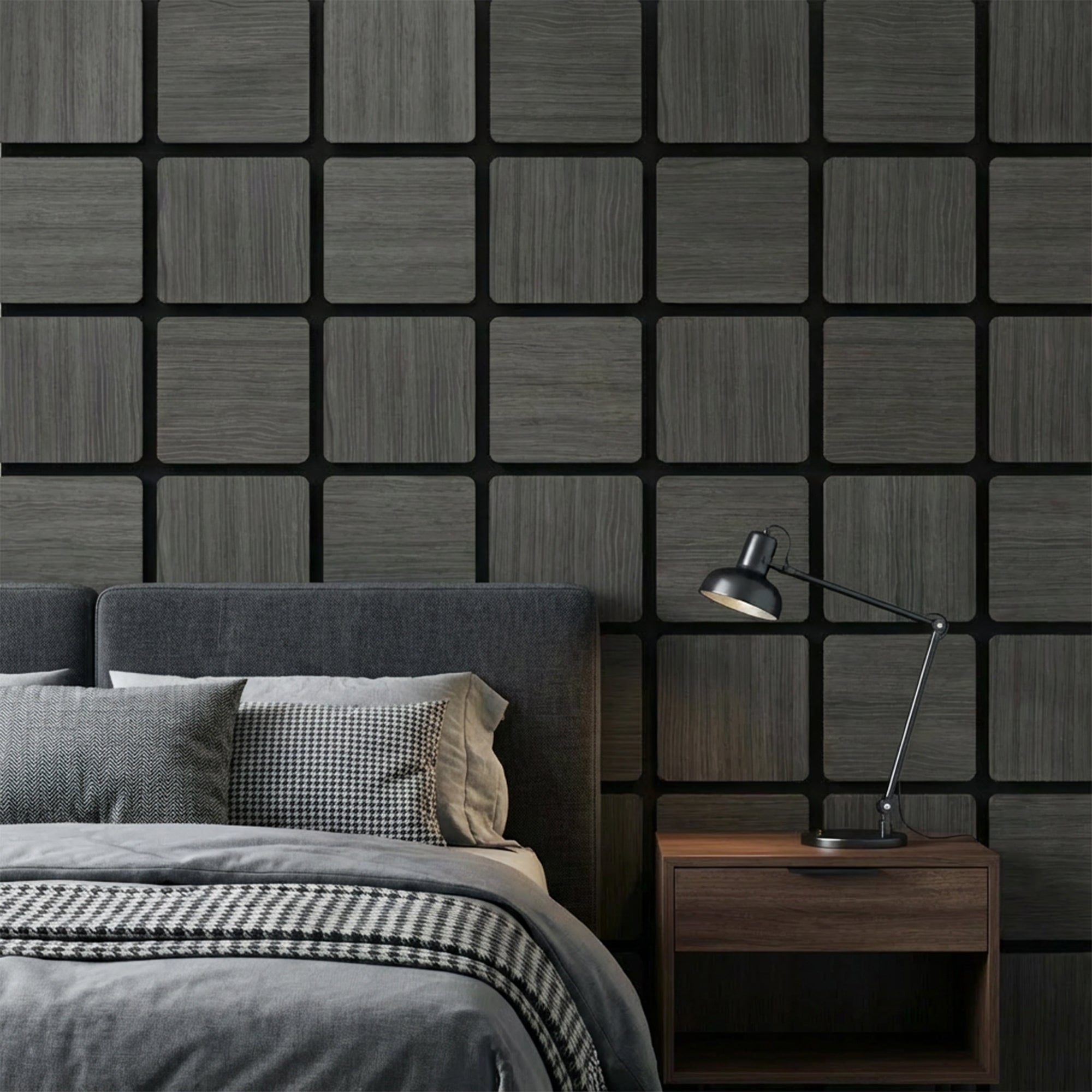
    Walnut Triangle Solid Wood Wall Panels Best budget mosaic pick Lowest-cost solid wood panel in this list Flatter relief, subtler shadow-play
    3D Geometric Pattern Wooden Panels Best for bold 3D texture Deep geometric relief in 100% solid wood Can look busy on a small wall
    Crossing Lines Solid Wood Wall Panels Best for a modern linear look Woven crossing-line geometry Reads more contemporary than mosaic-traditional
    3D Concentric Square Wood Wall Panel Best for a symmetrical grid Repeating concentric-square pattern Needs a wide, flat wall to read well
    Hexagon Acoustic Wood Wall Panels Best for sound control 0.85 NRC acoustic core Thicker profile than flat mosaic panels
    Ridge Rock Wall Panel Best mosaic-style texture without wood Stone-look texture, no real wood weight Not wood, so it departs from an all-wood mosaic look

    1. Honey Mosaic Wood Wall Panels: best mosaic wood wall panel overall

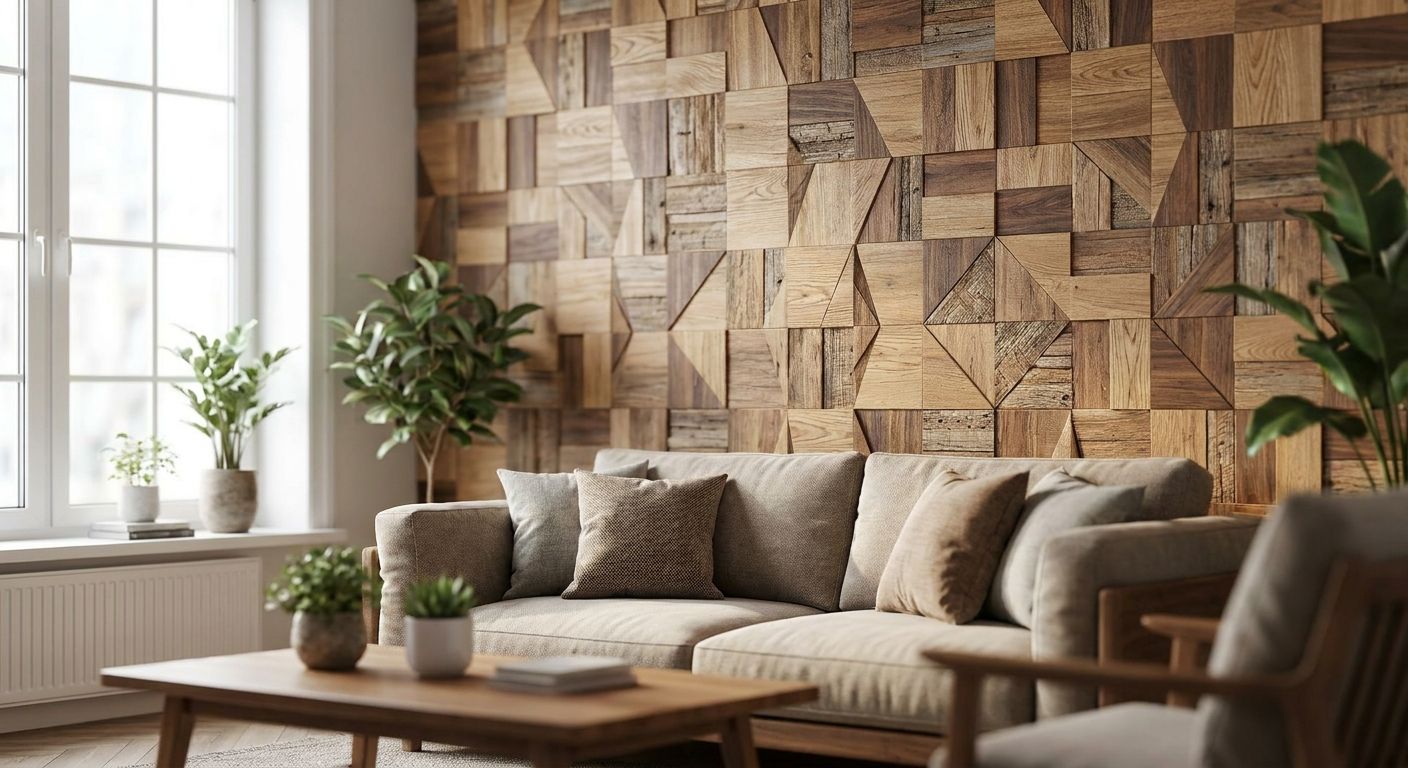
    Honey Mosaic Wood Wall Panels use solid walnut cut into a repeating mosaic-tile pattern, finished in a warm honey tone that reads differently depending on the light hitting it. It's the most straightforwardly mosaic panel of the seven compared here — no geometric relief tricks, just real wood grain arranged in a tile grid.

    Honey Mosaic Wood Wall Panels pros:

    • Solid walnut construction, not a veneer over MDF
    • Honey tone works as a warm accent in bedrooms and living rooms
    • FSC-certified sourcing
    • Installs in under 2 hours per wall run

    Honey Mosaic Wood Wall Panels cons:

    • Locked into one warm finish tone, no cool-toned version in this line
    • Seams between tiles show more in direct, bright light than on the 3D relief panels
    • Heavier than MDF-core panels, so wall prep matters more

    Verdict: Buy — the default pick for a real-wood mosaic accent wall in 2026.

    2. Walnut Triangle Solid Wood Wall Panels: best budget mosaic wood wall panel

    Walnut Triangle Solid Wood Wall Panels arrange solid wood into a triangle mosaic pattern, a simpler geometry than the hexagon or concentric-square panels further down this list. It's the lowest-cost real-wood panel in this roundup, which makes it the practical entry point into mosaic wood wall panels.

    Walnut Triangle pros:

    • Lowest-cost solid wood mosaic panel in this comparison
    • Triangle geometry reads modern without heavy 3D relief
    • FSC-certified, installs in under 2 hours

    Walnut Triangle cons:

    • Flatter profile means less shadow-play than the 3D geometric or concentric-square options
    • One finish tone only
    • No acoustic core, so it won't dampen sound like the Hexagon Acoustic panel

    Verdict: Buy — best entry point if budget is the deciding factor.

    3. 3D Geometric Pattern Wooden Panels: best mosaic wood wall panel for bold 3D texture

    3D Geometric Pattern Wooden Panels cut 100% solid wood into a deep geometric relief, the most dramatic shadow-play of any panel in this list. Where the Honey Mosaic and Walnut Triangle panels stay close to flat, this panel projects real depth off the wall.

    3D Geometric Pattern pros:

    • 100% real solid wood, not an engineered core
    • Deepest 3D relief in this comparison, strong light and shadow contrast
    • FSC-certified, installs in under 2 hours

    3D Geometric Pattern cons:

    • The relief can look busy on a narrow or small wall
    • Heavier panel weight than the flat mosaic styles
    • Not acoustic-rated like the Hexagon Acoustic panel

    Verdict: Buy — for anyone who wants the boldest texture on the list.

    4. Crossing Lines Solid Wood Wall Panels: best mosaic-adjacent wood wall panel for a modern linear look

    Crossing Lines Solid Wood Wall Panels swap mosaic tiles for a woven, crossing-line pattern cut into solid wood, closer to a linear mosaic than a tile grid. It's the pick for a room that wants texture without a strict geometric repeat.

    Crossing Lines pros:

    • Woven linear pattern reads different from tile-grid mosaics
    • Solid wood, FSC-certified
    • Installs in under 2 hours

    Crossing Lines cons:

    • Less traditionally mosaic than the Honey Mosaic or Walnut Triangle panels
    • Single walnut finish
    • No acoustic core

    Verdict: Buy — if you want a linear alternative to a strict mosaic grid.

    5. 3D Concentric Square Wood Wall Panel: best mosaic wood wall panel for a symmetrical grid accent wall

    3D Concentric Square Wood Wall Panel repeats a concentric-square relief across the wall, giving the most symmetrical, tile-mosaic-like grid of the 3D panels in this list. It reads more architectural than the triangle or crossing-line patterns.

    3D Concentric Square pros:

    • Repeating grid gives the cleanest mosaic-tile symmetry among the 3D panels
    • Solid wood, FSC-certified
    • Installs in under 2 hours

    3D Concentric Square cons:

    • Needs a wide, flat wall to read as a full grid rather than a partial pattern
    • Walnut-only finish
    • Heavier than the flat mosaic panels

    Verdict: Buy — best for a wide wall that can show the full repeating grid.

    6. Hexagon Acoustic Wood Wall Panels: best mosaic wood wall panel for sound control

    Hexagon Acoustic Wood Wall Panels from SoundPanel bond a real-wood veneer hexagon surface to an acoustic core rated 0.85 NRC, the only panel in this list built to dampen sound as well as decorate a wall. The hexagon shape is the closest thing to a true mosaic tile among the acoustic line.

    Hexagon Acoustic pros:

    • 0.85 NRC acoustic rating, unmatched by any other panel in this comparison
    • Hexagon mosaic pattern doubles as sound treatment
    • Installs in under 2 hours, 5-year warranty

    Hexagon Acoustic cons:

    • Veneer-over-core construction, not solid wood through the whole panel
    • Thicker profile than the flat mosaic panels because of the acoustic core
    • Hexagon-only shape limits pattern variety compared to the triangle or square options

    Verdict: Buy — the only choice on this list if the room needs sound control alongside a mosaic look.

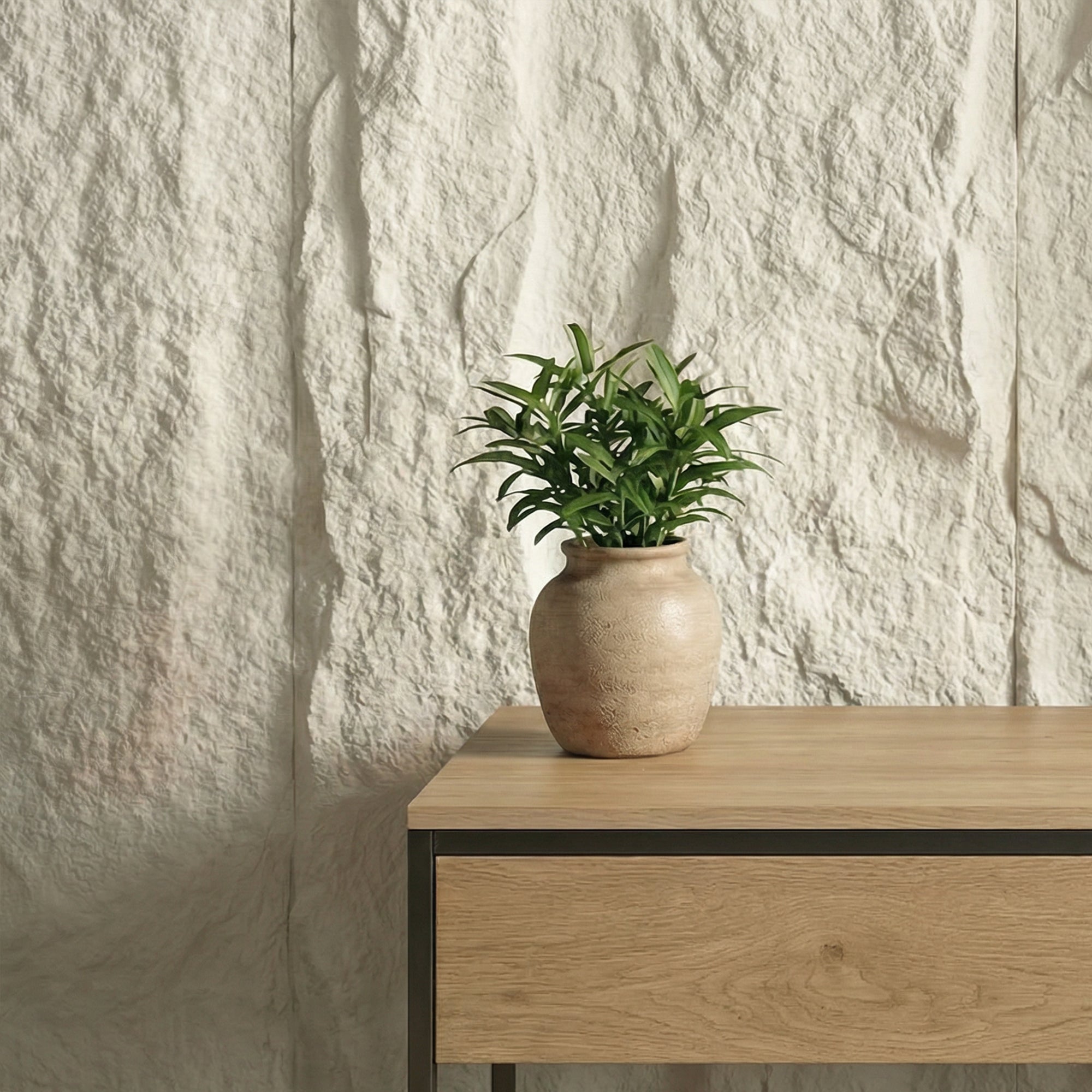
    7. Ridge Rock Wall Panel: best mosaic-style accent wall if you want stone texture instead of wood

    Ridge Rock Wall Panel from RockSurface FauxSeries swaps wood for a faux-stone texture, which puts it outside the wood mosaic brief but earns a spot as the alternative for readers who want the same tiled-texture effect in stone. It's listed here because it answers a real question: what if you want the mosaic accent-wall effect without wood at all.

    Ridge Rock pros:

    • Stone-look texture without the weight of real stone
    • Works as a contrast wall next to a wood mosaic panel in an adjoining room
    • Installs in under 2 hours

    Ridge Rock cons:

    • Not wood, so it departs from an all-wood mosaic aesthetic
    • Shown in a dark charcoal tone only in the current lineup
    • Doesn't carry the FSC wood certification the other six panels do

    Verdict: Hold — pick this only if you've already decided you want stone texture over wood.

    Mosaic and geometric wood panels
    Honey Mosaic Wood Wall Panels | GroovePanel®
    Solid walnut honey-tone mosaic tile panel with a natural, artisan finish.
    $249
    Walnut Triangle Solid Wood Wall Panels | GroovePanel®
    Solid wood triangle mosaic panel for a modern, low-cost accent wall.
    $249
    3D Geometric Pattern Wooden Panels | GroovePanel®
    100% real solid wood 3D geometric relief panel for a bold accent wall.
    $459
    Crossing Lines Solid Wood Wall Panels | GroovePanel®
    Solid wood crossing-line panel blending rustic texture with a modern look.
    $459

    How we ranked

    The ranking starts with material: solid wood outranks veneer-over-core when the goal is a true mosaic-wood look, which is why Honey Mosaic Wood Wall Panels lead. Pattern depth and acoustic performance split the middle of the list — 3D Geometric Pattern Wooden Panels and the 3D Concentric Square Wood Wall Panel earn their spots on shadow-play alone, while Hexagon Acoustic Wood Wall Panels earns its spot on the 0.85 NRC rating no other panel here carries. Ridge Rock Wall Panel sits last because it isn't wood at all — it's included for completeness, not because it competes on the same criteria as the other six.

    Which mosaic wood wall panel should you choose?

    Buy Honey Mosaic Wood Wall Panels if you want the most straightforward real-wood mosaic accent wall in 2026 — solid walnut, FSC-certified, installed in under 2 hours. Step down to Walnut Triangle Solid Wood Wall Panels if budget is the deciding factor; it's the lowest-cost solid wood panel in this list. Step up to Hexagon Acoustic Wood Wall Panels if the room doubles as a home office or media wall and needs the 0.85 NRC acoustic core along with the mosaic look. Skip Ridge Rock Wall Panel unless you've already decided you want stone texture over wood.

    FAQ

    What are mosaic wood wall panels for accent walls?

    Mosaic wood wall panels arrange solid wood or wood-veneer surfaces into a repeating tile, triangle, hexagon, or geometric relief pattern on a single wall. In 2026 the category spans flat mosaic tiles like Honey Mosaic Wood Wall Panels and 3D relief panels like the 3D Geometric Pattern Wooden Panels.

    What’s the best mosaic wood wall panel overall?

    Honey Mosaic Wood Wall Panels rank best overall for a straightforward real-wood mosaic accent wall in 2026, built from solid walnut with FSC-certified sourcing. It installs in under 2 hours and carries the standard 5-year warranty.

    What’s the best budget mosaic wood wall panel?

    Walnut Triangle Solid Wood Wall Panels are the lowest-cost solid wood mosaic panel compared here. It trades some shadow-play depth for a lower price point than the 3D geometric and acoustic panels.

    Do mosaic wood wall panels help with soundproofing?

    Only panels built with an acoustic core dampen sound — Hexagon Acoustic Wood Wall Panels carry a 0.85 NRC rating for that reason. The flat and 3D-relief mosaic panels in this list are decorative only and don’t meaningfully change room acoustics.

    How much does a mosaic wood accent wall cost?

    Cost varies by panel style, wall size, and coverage, so check current pricing on thepanelhub.com before budgeting a project. Solid wood mosaic panels generally cost less than acoustic panels with a built-in sound-dampening core.

    How long does it take to install a mosaic wood accent wall?

    Each panel style in this list installs in under 2 hours per wall run, based on The Panel Hub’s standard install time. Total project time depends on wall size and how much cutting the pattern needs around outlets or trim.

    Are mosaic wood wall panels FSC certified?

    The six solid-wood panels in this list — Honey Mosaic, Walnut Triangle, 3D Geometric Pattern, Crossing Lines, 3D Concentric Square, and Hexagon Acoustic — are FSC-certified. Ridge Rock Wall Panel is a faux-stone texture panel, not wood, so FSC certification doesn’t apply to it.

    Can you use mosaic wood wall panels in a bathroom?

    Solid wood mosaic panels aren’t built for wet-area use — bathrooms need a waterproof panel line instead. Check a dedicated bathroom panel guide before installing any of the seven panels in this list in a wet room.

    One last thing

    Hexagon Acoustic Wood Wall Panels are the only panel in this entire comparison carrying an acoustic rating — every other mosaic-style panel here, including the boldest 3D relief options, is decorative only. If a mosaic accent wall is going into a home office, media room, or studio in 2026, that's the panel doing double duty as decor and sound control, not an afterthought.

    Related guides
  • Best Grooved Wall Panels for Modern Interiors 2026

    Best Grooved Wall Panels for Modern Interiors 2026

    Grooved wall panels turn a flat wall into a textured, dimensional surface, and in 2026 the trend is shifting toward deeper, more architectural grooves instead of the shallow shiplap look that dominated the last few years. This guide ranks six real wood grooved panels by room and use case so you pick a pattern that still looks right in five years, not five months.

    TL;DR
    • SoundPanel Acoustic Slat Wood Wall Panels is the best grooved wall panel for modern interiors overall in 2026.
    • Crossing Lines Solid Wood Wall Panels wins for geometric accent walls with deep, dramatic grooves.
    • Real wood grooved panels rated NRC 0.85 cut room echo; PVC and thin veneer options do not.
    • All six picks install in under 2 hours per section and carry a 5-year warranty.
    • Hexagon Acoustic Wall Panel is the pick for home studios that need shape plus sound dampening.
    Key numbers
    0.85 NRC
    Acoustic rating on slat panels
    Under 2 hours
    Typical install time per section
    5 years
    Warranty coverage on real wood panels

    Why this matters

    Grooved paneling is the fastest way to add depth to a wall without a full remodel, and the groove width, spacing, and material decide whether it reads as a design statement or a maintenance headache six months later. A shallow, printed groove pattern flattens out under normal room lighting; a deep-cut groove in solid wood holds its shadow line at every hour of the day.

    Real wood grooved panels, like the SoundPanel Acoustic Slat Wood Wall Panels, do double duty: the same slats that create the shadow-line pattern also absorb sound, which matters in open-plan living rooms and home offices where hard walls bounce every conversation. PVC-based grooved panels can look similar from six feet away but skip the acoustic benefit entirely, so material is the first decision here, not an afterthought.

    What makes the best grooved wall panels for modern interiors

    • Groove depth and spacing — grooves cut deeper than roughly a quarter inch read as architectural; shallow grooves fade at a distance.
    • Material — FSC-certified solid wood holds pattern crispness longer than PVC or thin veneer over MDF.
    • Acoustic performance — an NRC rating around 0.85 signals real sound absorption, not just surface texture.
    • Install time — clip-together panel systems finish a wall section in under 2 hours.
    • Finish consistency — grain and tone should match across panels cut from the same production run.
    • Warranty — a 5-year warranty on real wood panels signals the manufacturer expects the finish to hold up.

    Grooved wall panels at a glance

    Panel Best for Standout feature Key limitation
    SoundPanel Acoustic Slat Wood Wall Panels Living rooms needing sound control NRC 0.85 acoustic core under a real wood slat face Pattern is fixed, no groove-width customization
    Crossing Lines Solid Wood Wall Panels Entryway or geometric feature walls Diagonal crossing grooves cut from solid wood Directional pattern doesn't suit small alcoves
    Acoustic Slat Wood Wall Panels White Felt Small or dark bedrooms Light golden-oak tone brightens low-light rooms Lighter finish shows scuffs faster than walnut
    3D Geometric Pattern Wooden Panels Single bold accent wall Deep-cut geometric relief creates strong shadow lines Busy pattern, most rooms only need one wall
    3D Concentric Square Wood Wall Panel Minimalist, symmetrical layouts Repeating square grooves read clean from any angle Needs precise measuring to keep the grid aligned
    Hexagon Acoustic Wall Panel Home studios and offices Hexagon shape plus acoustic core for shape and sound Hexagon cuts leave more offcut waste on install

    1. SoundPanel Acoustic Slat Wood Wall Panels: best grooved wall panel for modern living rooms

    The SoundPanel Acoustic Slat Wood Wall Panels line pairs a real wood slat face with an acoustic core rated NRC 0.85, so the same grooves that create the shadow-line look also pull sound out of the room. It's built for open living rooms and media walls where a bare wall would otherwise bounce dialogue and bass around the space. Installation clips into place in under 2 hours per section and the panel carries a 5-year warranty.

    SoundPanel Acoustic Slat pros:

    • Real FSC-certified wood face, not veneer glued over MDF
    • NRC 0.85 rating measurably reduces room echo
    • Clip-together install finishes a feature wall in under 2 hours

    SoundPanel Acoustic Slat cons:

    • The slat pattern is fixed, with no groove-width customization
    • Deep grain shows more than a smooth PVC panel if the wall behind isn't flat

    Best for: living rooms and media walls that need both texture and quieter sound. Verdict: Buy.

    2. Crossing Lines Solid Wood Wall Panels: best grooved wall panel for geometric feature walls

    The Crossing Lines Solid Wood Wall Panels cut diagonal grooves that cross into a lattice pattern across solid wood, built for a single wall meant to be the room's focal point. It suits entryways, stairwells, and TV walls where the pattern needs to read from across the room, not just up close.

    Crossing Lines pros:

    • Solid wood construction, no veneer layer to chip
    • Diagonal grooves read as architectural detail rather than printed texture
    • Works as a standalone feature wall without needing acoustic backing

    Crossing Lines cons:

    • The diagonal pattern is directional and doesn't tile cleanly around corners
    • No acoustic core, so it won't cut echo like the SoundPanel line

    Best for: entryway or feature walls where the pattern itself is the design statement. Verdict: Buy.

    3. Acoustic Slat Wood Wall Panels White Felt: best grooved wall panel for bright bedrooms

    The Acoustic Slat Wood Wall Panels White Felt uses the same slat-and-felt acoustic construction as the flagship SoundPanel line, built in a lighter golden-oak finish instead of walnut. That lighter tone brightens bedrooms that don't get much natural light without giving up the acoustic core.

    White Felt Acoustic Slat pros:

    • Lighter tone opens up small or north-facing bedrooms
    • Same acoustic core as the darker SoundPanel finish

    White Felt Acoustic Slat cons:

    • Light finishes show scuffs and dust faster than walnut
    • Fewer color-matching options if the panel extends into an adjoining room

    Best for: bedrooms with limited natural light. Verdict: Buy.

    4. 3D Geometric Pattern Wooden Panels: best grooved wall panel for a bold single accent wall

    The 3D Geometric Pattern Wooden Panels cut deep relief grooves into solid wood, producing the strongest shadow-line effect of any panel in this list. That depth makes it a poor choice for full-room coverage but a strong one for a single statement wall.

    3D Geometric Pattern pros:

    • Deep relief creates strong shadow lines that read from across the room
    • Solid wood construction holds its edges over time

    3D Geometric Pattern cons:

    • Intense enough that most rooms only need one wall of it
    • Pairs poorly with heavily patterned rugs or textiles

    Best for: one statement wall in an otherwise simple room. Verdict: Buy for a single wall, Skip for full-room coverage.

    5. 3D Concentric Square Wood Wall Panel: best grooved wall panel for minimalist, symmetrical rooms

    The 3D Concentric Square Wood Wall Panel repeats a grid of square grooves that reads clean and modern from any angle, without leaning on an acoustic core. It fits Scandinavian-leaning or minimalist interiors where symmetry matters more than sound absorption.

    3D Concentric Square pros:

    • Symmetrical grid pattern suits minimalist interiors
    • Reads consistently clean without needing a felt backing

    3D Concentric Square cons:

    • Grid alignment needs precise measuring; a crooked first panel throws off the whole wall
    • No acoustic benefit for rooms that need sound control

    Best for: minimalist rooms where symmetry matters more than sound control. Verdict: Buy.

    6. Hexagon Acoustic Wall Panel: best grooved wall panel for home studios and offices

    The Hexagon Acoustic Wall Panel bonds a real wood veneer surface to an acoustic core, cut into a hexagon shape instead of straight slats. That breaks up a wall visually more than a plain slat pattern while still handling sound in rooms full of hard surfaces like desks and monitors.

    A hexagon acoustic panel only solves half the noise problem. It absorbs reflections bouncing around inside a home studio, but exterior noise sources still leak through the same wall, and the same logic used to reduce noise from outdoor HVAC units — treating the source, not just the reflections in the room, as the target — applies indoors too.

    Hexagon Acoustic pros:

    • Hexagon shape breaks up a wall more than straight slats
    • Acoustic core suited to rooms with hard surfaces like desks and monitors

    Hexagon Acoustic cons:

    • Hexagon cuts leave more offcut waste than square-cut panels on full-wall jobs
    • Pattern is busier than a plain slat wall

    Best for: home studios, podcast rooms, and offices where sound control and shape both matter. Verdict: Buy.

    How we ranked

    Each panel was weighed against the same six criteria: groove depth, material authenticity, acoustic rating, finish consistency, install time, and warranty coverage. SoundPanel Acoustic Slat and the Hexagon Acoustic Wall Panel score highest on acoustic performance because both carry the NRC 0.85 rated core; Crossing Lines and the 3D Concentric Square win on pattern precision instead.

    If you're specifically outfitting a living room, the best wood slat wall panels for living rooms roundup narrows the slat options further by furniture layout and wall size.

    Which grooved wall panel should you choose in 2026?

    For most homeowners upgrading a living room or media wall in 2026, SoundPanel Acoustic Slat Wood Wall Panels is the default pick — it's the only option here doing both jobs, pattern and acoustic control, at once. If the goal is a single dramatic feature wall in an entryway or stairwell, Crossing Lines Solid Wood Wall Panels wins on visual impact.

    Budget-minded minimalists chasing a clean, symmetrical look without an acoustic requirement should default to the 3D Concentric Square Wood Wall Panel. Anyone building a home studio or a shared office should treat the Hexagon Acoustic Wall Panel as the shortlist of one.

    FAQ

    What’s the best grooved wall panel for modern interiors in 2026?

    SoundPanel Acoustic Slat Wood Wall Panels is the best overall pick for 2026 living rooms and media walls, since it combines a deep-groove wood face with an NRC 0.85 acoustic core. Crossing Lines Solid Wood Wall Panels is the better call for a single geometric feature wall.

    Are grooved wall panels the same as slat wall panels?

    Slat panels are one style of grooved panel, cut in straight parallel lines, while grooved panels also include diagonal, geometric, and hexagon patterns. All of them create a shadow-line effect by cutting channels into solid wood.

    Do grooved wall panels help with soundproofing?

    Only grooved panels with a rated acoustic core, like the NRC 0.85 rated SoundPanel and Hexagon Acoustic lines, meaningfully reduce room echo. Purely decorative grooved panels in solid wood or PVC add texture but not measurable sound absorption.

    How long does it take to install grooved wall panels?

    The panels in this ranking install in under 2 hours per wall section using a clip-together system, which most DIYers can manage without a professional installer. Wall prep and trim work can add time on uneven or textured walls.

    Is real wood better than PVC for grooved panels?

    Real, FSC-certified wood holds its groove pattern and finish longer than PVC or thin veneer over MDF, especially in rooms with temperature swings. PVC costs less to produce but doesn’t carry the same acoustic or tactile qualities as solid wood.

    Can grooved wall panels go in a bathroom?

    Standard real wood grooved panels aren’t built for constant moisture exposure; bathrooms need a waterproof-rated panel line instead. Shower and bathroom walls should use panels specifically designed and sealed for wet-area use.

    What’s the warranty on grooved wood wall panels?

    Real wood grooved panels in this ranking carry a 5-year warranty covering the finish and material. That warranty is one reason to favor solid wood over unbranded PVC alternatives that rarely publish coverage terms.

    One last thing

    Even panels without a rated acoustic core do some passive work on sound. The raised ridges in a groove scatter sound waves instead of reflecting them flat off a wall the way bare drywall does, which is a different mechanism than the felt-backed absorption inside the NRC 0.85 rated panels. That's why a Crossing Lines or 3D Concentric Square wall still feels slightly quieter than a flat accent wall, just not as quiet as the SoundPanel line built specifically for it. If sound control is the actual priority in 2026, don't let the pattern decide the purchase before the acoustic rating does.

    Related guides

  • Best Oak Wood Wall Panels for Living Rooms in 2026

    Best Oak Wood Wall Panels for Living Rooms in 2026

    Oak wood wall panels are having a real moment in 2026 living rooms, and the good ones do two jobs at once: they warm up a flat wall and they quiet the room down. Best overall: SoundPanel American Acoustic Slat Wood Wall Panels in Golden Oak. Best for extra sound dampening in an open-plan living room: Acoustic Slat White Felt Wood Wall Panels. Best budget pick for a smaller accent section: Acoustic Rectangle Wood Wall Panels. Best for a sculptural feature wall: Acoustic Curve Wood Wall Panels. Best for a geometric statement wall: Acoustic Hexagon Wood Wall Panels.

    TL;DR
    • SoundPanel American Acoustic Slat in Golden Oak is the best overall oak wood wall panel for living rooms in 2026.
    • Look for an NRC 0.85 rating if echo control matters as much as the oak look.
    • Acoustic Rectangle panels give you the same Golden Oak tone for a smaller budget and a smaller wall.
    • Curved and hexagon options trade some acoustic depth for a bigger visual statement.
    • Most of these panels install in under 2 hours without a contractor.
    Oak wall panel specs worth checking
    0.85 NRC
    Sound absorption rating on acoustic slat lines
    Under 2 hours
    Typical DIY install time per wall
    5 years
    Warranty coverage on real wood panels

    Why this matters

    Oak grain reads warmer and busier than walnut or ash, which is exactly why it shows up so often in 2026 living room renovation photos — it hides scuffs, plays well with both cool and warm color schemes, and doesn't scream "accent wall" the way a bold dark stain does. The catch is that "oak wood wall panel" gets used loosely online to describe everything from solid wood slats to printed vinyl foil over MDF.

    The oak wood wall panels on this list are real-wood-finished products with a stated NRC rating, not laminate lookalikes, and that distinction changes how they perform once they're on your wall for a few years.

    What makes the best oak wood wall panels for a living room

    • Sound absorption rating (NRC) — an NRC of 0.85 means the panel absorbs roughly 85% of sound hitting it, which matters in rooms with hard floors and high ceilings
    • Solid wood vs. veneer core — solid wood slats hold up to sanding and touch-ups; veneer over MDF looks similar but can't be refinished the same way
    • FSC certification — confirms the timber is sourced from managed forests, a detail that matters if sustainability is part of your buying decision
    • Coverage per panel — determines how many units you need and how visible the seams will be on a full wall
    • Install time — most oak slat panels click or adhere into place in under 2 hours per wall, no contractor required
    • Warranty length — a 5-year warranty on real wood panels signals the manufacturer expects the finish to hold up, not fade or warp

    Oak wood wall panels at a glance

    Panel Best for Standout feature Key limitation
    SoundPanel American Acoustic Slat (Golden Oak) Overall living room pick 0.85 NRC sound absorption in a wood slat design Slat gaps show the wall color behind unless it's matched
    Acoustic Slat White Felt (American Oak Slat) Open-plan sound dampening White felt backing adds absorption behind the oak slats Felt backing is only visible if slats are spaced wide
    Acoustic Rectangle Smaller walls, tighter budget Modular square tiles for partial-wall coverage Less continuous run than full slat panels
    Acoustic Curve Sculptural feature wall Curved profile adds dimension beyond flat slats Curved layouts need more precise measuring before install
    Acoustic Hexagon Geometric statement wall Real wood veneer hexagons in a tessellated pattern Veneer surface, not the solid wood core of the slat lines

    1. SoundPanel American Acoustic Slat Wood Wall Panels: best overall oak wall panel for living rooms

    This is the panel most living room buyers land on, and for a straightforward reason: it's a wood slat design in a Golden Oak finish with a 0.85 NRC rating, so it handles both the look and the echo problem at once. The slats run in one direction, which reads as intentional rather than busy, and the panel installs in under 2 hours per wall.

    SoundPanel American Acoustic Slat pros:

    • 0.85 NRC rating cuts noticeable echo in rooms with hard flooring
    • Golden Oak finish works with both warm and neutral color palettes
    • Backed by a 5-year warranty on the finish

    SoundPanel American Acoustic Slat cons:

    • Slat spacing shows the substrate color behind it, so wall prep matters
    • Full-wall coverage on a large living room adds up in panel count

    Best for: anyone treating a living room's echo and its style in a single purchase. Verdict: Buy if you want one panel that does both jobs well.

    2. Acoustic Slat White Felt Wood Wall Panels: best oak wall panel for open-plan sound dampening

    Same American Oak Slat family, but the white felt backing behind the slats adds a second absorption layer, which matters more in open-plan living rooms where sound travels between the kitchen, dining, and seating areas. It's the panel to reach for when a single acoustic layer isn't cutting the room's noise down enough.

    Acoustic Slat White Felt pros:

    • Felt backing adds absorption beyond the wood slat surface alone
    • Golden Oak tone matches the standard SoundPanel Slat line for mixed installs
    • Real wood surface, not a printed finish

    Acoustic Slat White Felt cons:

    • Felt backing is a visual detail only when slat spacing is wider
    • Priced above the standard rectangle and mosaic options in the lineup

    Best for: open-concept living rooms where sound bounces between zones. Verdict: Buy if echo is a bigger complaint than budget.

    3. Acoustic Rectangle Wood Wall Panels: best budget oak wall panel for smaller accent walls

    The rectangle panel takes the same Golden Oak tone and applies it in modular square tiles instead of full slat runs, which makes it the practical choice for a reading nook, a media wall section, or any spot where you don't want to panel floor to ceiling. It's the entry point into the oak line without committing to a full room.

    Acoustic Rectangle pros:

    • Modular tiles let you cover a partial wall without waste
    • Same Golden Oak finish family as the slat panels for a matched look
    • Lower per-project cost than covering a full wall with slat panels

    Acoustic Rectangle cons:

    • Less visual continuity than a full slat run on a large wall
    • Not the first choice if acoustic performance is the main goal

    Best for: a single accent section rather than a full living room wall. Verdict: Buy if you're testing the oak look before committing to more square footage.

    4. Acoustic Curve Wood Wall Panels: best oak wall panel for a sculptural feature wall

    Acoustic Curve takes the SoundPanel acoustic core and shapes it into a flowing, curved profile instead of straight slats, which turns a flat living room wall into something with real depth. It reads as a design statement first and an acoustic upgrade second, though it still carries the same sound-absorbing core as the rest of the line.

    Acoustic Curve pros:

    • Curved profile creates shadow and depth that flat slats can't
    • Keeps the acoustic core from the standard SoundPanel line
    • Distinct enough to work as a single feature wall rather than whole-room coverage

    Acoustic Curve cons:

    • Curved layouts take longer to plan around outlets, switches, and corners
    • A bolder look that won't suit a minimal or transitional living room

    Best for: one statement wall behind a sofa or media console. Verdict: Buy if you want the room's focal point; Skip if you'd rather the panel blend in.

    5. Acoustic Hexagon Wood Wall Panels: best oak-tone wall panel for a geometric statement wall

    Hexagon panels swap the straight-grain oak look for a tessellated, geometric pattern using a real wood veneer surface bonded for acoustic performance. It's the pick for a living room that wants a pattern-forward wall rather than a straight slat run, and it still functions as an acoustic panel, not just decoration.

    Acoustic Hexagon pros:

    • Geometric pattern reads as intentional design, not just paneling
    • Real wood veneer surface keeps a natural wood look
    • Works as a standalone feature wall in a smaller living room

    Acoustic Hexagon cons:

    • Veneer surface rather than the solid wood core of the slat panels
    • Pattern-heavy look competes with other bold wall features in the same room

    Best for: a living room that wants pattern over straight-grain simplicity. Verdict: Buy if geometric texture is the goal; Skip if you want the classic straight-oak-grain look.

    Oak wood wall panels for living rooms
    Acoustic Slat Wood Wall Panels | SoundPanel™
    Golden Oak slat panel with a 0.85 NRC acoustic core.
    $799
    Acoustic Slat White Felt Wood Wall Panels | SoundPanel™
    American Oak slat panel with a white felt acoustic backing.
    $799
    Acoustic Rectangle Wood Wall Panels | SoundPanel™
    Golden Oak modular square tiles for partial-wall coverage.
    $479
    Acoustic Curve Wood Wall Panels | SoundPanel™
    Curved Oak-finish panel built on the SoundPanel acoustic core.
    $799

    How we ranked these oak wood wall panels

    Each panel above is scored against the same criteria: NRC rating where it applies, solid wood versus veneer construction, FSC sourcing, coverage per panel, install time, and warranty length. The SoundPanel Acoustic Slat wins overall because it's the only panel on this list that scores well on every criterion at once rather than trading acoustic performance for pattern or trading coverage for budget.

    Which oak wood wall panel should you choose?

    If you're not sure where to start, buy the SoundPanel American Acoustic Slat in Golden Oak — it's the safest pick for a living room that needs both the look and the sound control, and it carries the 5-year warranty that applies across The Panel Hub's real wood panels. Choose the White Felt version if your living room is open to the kitchen or dining area and echo is the bigger complaint. Go with the Rectangle panel if you're covering a single accent wall rather than a full room, and reach for the Curve or Hexagon panel only if a design statement matters more to you than matching the classic straight-oak-grain look.

    Oak isn't the only real wood tone The Panel Hub carries — walnut and mixed-tone slat panels show up across the wood slat wall panel lineup if oak's lighter grain doesn't match your room.

    FAQ

    What’s the best oak wood wall panel for a living room in 2026?

    The SoundPanel American Acoustic Slat Wood Wall Panel in Golden Oak is the best overall pick for 2026 living rooms because it pairs a 0.85 NRC acoustic rating with a real wood slat finish. It works as both a design upgrade and a noise fix in one panel.

    Are oak wood wall panels real wood or veneer?

    It depends on the product line. Slat-style acoustic panels from The Panel Hub use a real wood surface bonded to an acoustic core, while hexagon and geometric styles use a real wood veneer rather than a solid wood core.

    How much sound do oak acoustic wall panels absorb?

    Panels rated at 0.85 NRC absorb roughly 85% of the sound that hits them, which noticeably cuts echo in rooms with hard floors and high ceilings. Not every oak-finish panel carries an NRC rating, so check the spec before buying for acoustics.

    Can you install oak wood wall panels yourself?

    Yes, most oak slat and acoustic panels install in under 2 hours per wall without a contractor. The exact method (click-fit, adhesive, or both) varies by panel, so check the install instructions for the specific product.

    Do oak wood wall panels come with a warranty?

    Real wood panels from The Panel Hub carry a 5-year warranty. That covers the finish holding up over time rather than fading, warping, or delaminating.

    Is oak wood wall paneling still popular for living rooms in 2026?

    Oak-tone paneling remains one of the most common choices for living room accent and full-coverage walls in 2026 because its lighter grain works with both warm and cool color schemes. It reads less trend-driven than dark stains or high-gloss finishes.

    Can you paint over oak wood wall panels?

    You can, but painting hides the natural oak grain that’s usually the reason someone chooses oak over a PVC or laminate panel in the first place. If you want a painted look, a PVC panel designed for painting is a better starting point than a real wood oak panel.

    What’s the difference between oak wall panels and PVC wall panels?

    Oak wall panels use real wood or wood veneer and typically carry FSC certification and a warranty tied to the wood finish. PVC panels are a synthetic alternative built for moisture resistance rather than natural grain, which makes them a better fit for bathrooms than living rooms.

    One last thing

    The detail most buyers skip past is FSC certification, and it's the one that actually tells you whether an "oak" panel is real wood sourced responsibly or a printed lookalike wearing an oak name. If a listing doesn't mention it, ask before you buy — the difference matters more once the panel's been on your wall for a few years than it does on install day.

    Related guides

  • 3D Stone Effect Wall Panels: How Depth and Shadow Transform a Surface

    3D Stone Effect Wall Panels: How Depth and Shadow Transform a Surface

    A flat stone surface is attractive. A three-dimensional stone surface is arresting. The difference is what happens when light strikes the wall — on a flat panel, light reflects uniformly. On a 3D stone effect panel, light catches the raised surfaces, falls into the recesses, and creates an ever-shifting pattern of highlight and shadow that changes as the light source moves.

    This is why 3D stone effect wall panels have become a feature in high-end residential and commercial interiors. The surface actively engages with the room’s lighting conditions, producing a result that cannot be achieved by any flat material, however realistic its finish.

    The Science Behind the Effect

    3D stone panels use moulded relief — raised and recessed elements across the surface — to create depth. The depth of this relief varies: shallow relief creates a subtle undulation that reads as texture from a distance, while deep relief creates pronounced shadow lines and a sculptural quality visible from across the room.

    The most effective 3D stone panels derive their surface geometry from casts of actual stone samples. The natural irregularity of real stone — no two faces exactly the same, no perfectly straight edges — translates into a finished panel that reads as genuinely organic rather than manufactured.

    Lighting 3D Stone Panels for Maximum Effect

    Grazing Light

    Light positioned to graze across the surface — wall-mounted luminaires, directional spots at a low angle — catches the leading edges of the relief and throws the recesses into deep shadow. This is the most dramatic lighting approach for 3D stone and works particularly well in dining rooms, bars, and bedrooms.

    Warm vs Cool Light

    Warm white light (2700–3000K) brings out warm undertones in natural stone finishes and creates an intimate effect. Cool white light (4000K+) emphasises the sculptural quality of the relief and creates a crisper, more contemporary result. Choose based on the atmosphere you’re creating.

    Avoiding Flat Overhead Lighting

    Ceiling-mounted downlights directly above a 3D stone panel are the least effective lighting choice — they illuminate from above without creating the lateral shadows that reveal the relief. Supplement downlights with wall-mounted fittings to bring out the texture.

    Where 3D Stone Effect Panels Work Best

    Living Rooms and Dining Rooms

    The changing light conditions across a day mean a 3D stone feature wall looks different at every time of day. The surface is engaging without being distracting — it rewards close attention without demanding it.

    Fireplace Surrounds

    The dancing light from an open fire is particularly effective against a 3D stone surface. The irregular reflection creates a warm, organic effect that flat surfaces cannot replicate.

    Commercial Spaces: Bars, Hotels, Restaurants

    3D stone panels are extensively used in hospitality design. The textured surface provides acoustic benefit — broken surfaces scatter sound rather than reflecting it flatly — and creates atmosphere that flat walls cannot match. The controlled, directional lighting typical of hospitality environments brings out 3D stone at its best.

    3D Stone Effect Panels from The Panel Hub

    The Panel Hub stocks the RockSurface® 3D stone effect panel collection in multiple tones and relief depths. Request a sample to assess how the relief performs in your specific lighting conditions before placing your order.

  • Acoustic Wall Panel Specification: What Architects and Designers Need to Know

    Acoustic Wall Panel Specification: What Architects and Designers Need to Know

    For some buyers, checking on acoustic wall panel specification is an important step before buying. Acoustic wall panels are increasingly specified across residential, commercial, and hospitality projects — not just in recording studios and auditoria. The growing awareness that open-plan living, hard flooring, and glass surfaces create acoustically uncomfortable spaces has driven demand for attractive acoustic treatment that integrates with interior design rather than compromising it.

    For architects and designers specifying acoustic wall panels, understanding the performance metrics, their limitations, and how to integrate them into a specification is essential for delivering projects that meet acoustic targets as well as aesthetic ones.

    Understanding Sound Absorption Metrics

    NRC (Noise Reduction Coefficient)

    NRC is the most commonly cited acoustic performance metric for wall panels. It expresses the average sound absorption of a material across the frequency range 250Hz–2000Hz on a scale of 0 (perfect reflection) to 1.0 (perfect absorption). An acoustic panel with an NRC of 0.65, for example, absorbs 65% of incident sound energy across that frequency range.

    αw (Weighted Sound Absorption Coefficient)

    The European equivalent metric, αw, is calculated differently and expressed as a single number (0 to 1.0) with an application class suffix (A, B, C, D, E, or F) that indicates the shape of the absorption curve. For most commercial acoustic specifications in UK projects, both NRC and αw values are relevant — verify which standard your project’s acoustic consultant is using.

    Where Acoustic Panels Make the Most Impact

    Open-Plan Offices and Co-Working Spaces

    Reverberation times in open-plan offices directly affect speech intelligibility and cognitive performance. Research consistently shows that reducing reverberation in open-plan workspaces improves concentration, reduces perceived noise levels, and lowers stress. Acoustic wall panels on the perimeter walls of open-plan floors contribute significantly to reducing reverberation time (RT60).

    Hospitality: Restaurants, Bars, and Hotel Lobbies

    The “restaurant noise problem” — an open-plan dining environment with hard surfaces creating a loud, fatiguing experience — is a well-documented design challenge. Acoustic treatment on wall surfaces reduces the background noise level and improves the dining experience. The SoundPanel™ range provides an acoustic solution that’s also a premium visual feature.

    Residential Open-Plan Living

    The open-plan kitchen-dining-living room is acoustically one of the worst domestic environments. Hard flooring, hard kitchen surfaces, and the absence of soft furnishings in circulation zones create reflective rooms where conversation is tiring and television is too loud. A single acoustic panel feature wall can measurably improve the acoustic comfort of an open-plan residential space.

    How Much Coverage Is Needed?

    Acoustic panels don’t need to cover every wall surface to be effective. As a rule of thumb, covering 20–30% of the total wall and ceiling surface area with acoustic-rated material (NRC 0.5 or above) typically achieves a meaningful reduction in reverberation time in a typical room. Your acoustic consultant can calculate the specific coverage required to meet a target RT60 for any given space.

    Integrating Acoustic Panels into the Specification

    Acoustic slat panels from the SoundPanel™ range are designed to be specified as primary wall surface materials, not as add-on acoustic treatment. They install the same way as standard wall panels — adhesive to a prepared substrate, no specialist acoustic contractor required — and provide acoustic performance alongside the visual quality expected of a premium wall finish.

    Request acoustic test data, including NRC or αw values and the test standard used, or bulk order wood wall panels from The Panel Hub!

  • Apartment and New Build Wall Paneling: Specifying Across Multiple Units

    Apartment and New Build Wall Paneling: Specifying Across Multiple Units

    Specifying wall panels for a new build residential development — whether 20 units or 200 — involves a different set of considerations to a single residential project. Consistency across units, volume pricing, installation sequencing, batch colour matching, and long-term stock availability for snagging and replacement all need to be addressed in the specification and procurement process.

    The Case for Panels in New Build Residential

    New build residential buyers are increasingly comparing their units against developments that specify premium finishes. A feature wall panel in the master bedroom — specified as standard across a development — costs a modest amount per unit but communicates quality and justifies a higher sale price. For build-to-rent (BTR) operators, the same logic applies: a panel feature wall in the bedroom or living area is a differentiator that supports rental pricing and tenant retention.

    The GroovePanel® and SoundPanel™ ranges from The Panel Hub are used by residential developers across the UK precisely for this reason — they add perceived value at a cost that is well within the range of a sensible finish upgrade specification.

    Batch Consistency: The Critical Quality Issue for Multi-Unit Specifications

    Natural wood products vary between production batches. The colour, grain character, and finish tone of a timber panel can shift subtly between orders — sometimes meaningfully. For a development specifying the same panel across 50 or 100 units, this variation is a quality control risk: units completed with later orders may look different from the show home specification.

    When specifying panels for a multi-unit development, the key questions to resolve with your supplier are:

    • Can the entire development quantity be ordered and produced in a single batch?
    • What is the maximum batch size available for the specified product?
    • What is the lead time for a single large batch order?
    • What stock will be held for snagging and replacement after practical completion?

    Installation Sequencing in New Build

    Wall panels in new build residential are typically installed during the second fix stage — after plastering, painting, and floor finishes are complete but before furniture and final decoration. This sequencing requires panels to be on-site at the right point in the programme, which means orders need to be placed well in advance of the installation window.

    For large developments with rolling completion dates — different buildings or phases completing at different times — a phased delivery schedule with stock held at the warehouse and released to site in phases is often the most practical procurement approach.

    Unit Type Considerations: Studio to Family Home

    In a development with multiple unit types, the panel specification may vary by unit type — a simpler specification in studio and one-bedroom units, a more premium specification in two-bedroom and penthouse units. Agreeing this hierarchy early in the design process allows the specification and procurement to be managed efficiently.

    New Build Panel Specification from The Panel Hub

    The Panel Hub works with residential developers, build-to-rent operators, and main contractors on volume panel specifications. Contact the trade team to discuss batch quantities, lead times, phased delivery, and project pricing for your development.

  • Bulk Buy Wall Panels: What Developers and Contractors Need to Know

    Bulk Buy Wall Panels: What Developers and Contractors Need to Know

    Planning to bulk buy wall panels? Volume panel procurement — ordering panels for multiple rooms, multiple units, or multiple sites at once — is a different process to ordering for a single residential project. Lead times, batch consistency, delivery logistics, storage, and pricing all operate differently at scale, and getting the procurement process right saves money, prevents programme delays, and avoids the quality consistency problems that can arise from multiple small orders.

    Why Ordering in Volume Matters

    Batch Consistency

    The most important reason to place a single large order rather than multiple smaller ones is batch consistency. Natural wood products are manufactured in production batches, and colour, grain character, and finish tone can vary between batches — sometimes in ways that are visible when panels from different batches are installed in the same or adjacent spaces. A single large batch order eliminates this risk entirely.

    Volume Pricing

    Volume orders typically attract preferential pricing. The economics of manufacturing, packing, and delivering a large order in a single run are more efficient than multiple smaller orders, and suppliers pass a portion of this saving to the buyer. Contact The Panel Hub trade team to discuss pricing for orders above a specific volume threshold.

    Programme Certainty

    For construction projects with fixed programme dates, having panels confirmed and ordered well in advance of the installation window eliminates the risk of supply delays affecting the programme. Last-minute panel orders are the most common cause of installation delays on commercial projects.

    Lead Times for Volume Orders

    Large-volume orders typically require longer lead times than single-unit quantities. For the most popular products in the GroovePanel®, SoundPanel™, and RockSurface® ranges, stock is maintained for shorter lead times. For high-volume orders or less common finishes, confirm lead time with the supplier before the specification is locked into the construction programme.

    Delivery Logistics for Large Orders

    Large panel orders require careful delivery planning. Key considerations include:

    • Site access: Confirm that the delivery vehicle can access the site and unload safely — panel deliveries on pallets require forklift access or a pump truck, and construction sites vary significantly in their access constraints
    • Storage: Panels must be stored flat, dry, and away from direct sunlight before installation. Confirm that adequate storage space is available on-site before delivery
    • Phased delivery: For large developments, phased delivery — panels delivered to site in quantities aligned with the installation programme — is often more practical than a single large delivery

    Wastage Allowance for Volume Orders

    For volume orders of wood wall panels covering multiple units or rooms, a standard 10% wastage allowance is typically sufficient. For projects with complex geometries, many cuts around doors and windows, or non-standard room sizes, allow 15%. Order the full quantity in a single batch — ordering additional panels later risks colour and finish inconsistency if production batches have changed.

    Volume Procurement from The Panel Hub

    The Panel Hub works with developers, main contractors, and fit-out contractors on volume panel procurement. Contact the trade team to discuss your project’s quantity requirements, lead time, delivery logistics, and pricing.

  • Co-Working Space Wall Panels: Acoustic and Aesthetic Specification

    Co-Working Space Wall Panels: Acoustic and Aesthetic Specification

    Co-working spaces face a specification challenge that conventional offices don’t: the need to create multiple distinct environmental zones — focused work, collaboration, social, phone call, events — within a single open-plan floor plate, often without the benefit of permanent partitioning.

    Wall panels are one of the most effective tools for defining zones, managing acoustics, and creating visual interest in co-working environments. The combination of acoustic performance and strong visual character makes panel specification particularly well suited to the design brief of most co-working operators.

    Zone Definition Through Materials

    In an open-plan co-working space, different zones serve different purposes and benefit from different material treatments. A consistent approach to panel specification across zones — same product, different tones — creates visual coherence while distinguishing areas from each other.

    • Focus zones: SoundPanel™ acoustic panels in warm natural tones — the acoustic absorption directly benefits the quiet work environment, and the material quality signals that this is a serious work zone
    • Collaboration zones: GroovePanel® fluted panels in bolder tones create an energetic backdrop for group work and informal meeting spaces
    • Social and café areas: RockSurface® stone effect panels on the café counter or social area walls add an F&B quality that signals a hospitality-standard environment

    Acoustic Management in Open-Plan Co-Working

    The acoustic environment in a busy co-working space can be genuinely uncomfortable. The mix of phone calls, informal conversations, keyboard noise, and background music creates an ambient noise level that makes focused work difficult. Acoustic slat panels on perimeter walls and partition surfaces absorb sound and reduce reverberation time across the floor plate.

    For phone booths and focus pods within co-working spaces, acoustic panels on all four internal surfaces deliver a self-contained acoustic environment that provides meaningful speech privacy without structural partitioning.

    Durability for High-Turnover Environments

    Co-working spaces see a diverse range of users with varying levels of care for the space. Wall surfaces need to withstand daily use without showing wear, and need to be maintainable by the co-working operator’s cleaning and maintenance team using standard commercial cleaning products. Panels with lacquered or UV-cured surface finishes are more cleanable and more resistant to marks than oiled or waxed alternatives in this context.

    Brand Environment and Membership Value

    The quality of a co-working environment directly affects membership pricing and member retention. A space that feels designed — where materials are considered, surfaces are interesting, and the acoustic environment is comfortable — commands higher membership fees and retains members longer than a functional but uninspiring alternative. Panel specification is one of the most cost-effective investments a co-working operator can make in the perceived quality of their space.

    Specifying Co-Working Wall Panels from The Panel Hub

    The Panel Hub works with co-working operators, workplace designers, and commercial fit-out contractors on panel specifications for flexible office environments. Contact the team to discuss your project’s zone requirements, acoustic targets, and volume needs.

  • Commercial Wall Panels: How to Specify for High-Traffic Environments

    Commercial Wall Panels: How to Specify for High-Traffic Environments

    Commercial environments place demands on wall surfaces that residential applications don’t. High footfall, regular cleaning with commercial-grade products, impact from trolleys and equipment, and the requirement for fire-compliant finishes all determine whether a panel product is a viable commercial specification or a residential product being used in the wrong context.

    This guide outlines the key performance criteria for commercial wall panel specifications and the questions specifiers need to answer before selecting a product.

    Fire Performance: The Non-Negotiable Starting Point

    All commercial building projects in the UK are subject to Building Regulations Part B (Fire Safety). Wall and ceiling linings are classified under the European Reaction to Fire classification system (Euroclass), which rates materials from A1 (non-combustible) to F (no performance determined).

    For commercial wall applications, the minimum acceptable Euroclass rating varies by building type and use. Most commercial interiors require Class B or better for wall linings in escape routes and Class C or better in other areas. Always verify the required fire classification for your specific project and building type before specifying any panel product, and obtain the manufacturer’s test certification.

    Surface Durability: Impact, Abrasion, and Cleanability

    Impact Resistance

    In corridors, reception areas, retail environments, and any space where people and equipment move regularly, wall panels are subject to impact. Solid timber panels and composite stone-effect panels offer better impact resistance than MDF-cored products. For very high-impact environments — healthcare corridors, logistics facilities — consider mechanical fixings rather than adhesive-only installation to ensure panels remain secure if impacted.

    Cleanability

    Commercial environments require surfaces that can be cleaned regularly using commercial cleaning products. Before specifying any panel for a commercial application, confirm the surface finish is compatible with the cleaning regime likely to be used in that environment — particularly relevant in healthcare, food service, and education settings.

    Acoustic Performance in Open-Plan Commercial Spaces

    Open-plan offices, co-working spaces, and large commercial interiors often have poor acoustic performance. Hard flooring, glass partitions, and flat plaster ceilings create reflective environments where speech intelligibility drops and background noise levels rise. Acoustic slat wall panels from the SoundPanel™ range provide measurable sound absorption that contributes to the acoustic comfort of the space.

    For commercial acoustic specifications, request the sound absorption coefficient data (expressed as NRC or αw) for any panel being considered, and confirm it meets the acoustic performance target for the project.

    Installation in Live Commercial Environments

    Many commercial refurbishment projects require installation while the building is partially or fully occupied. Panel systems have a significant advantage in this context: no wet trades, minimal dust compared to plastering, and rapid installation that minimises disruption. Confirm installation timelines and site access requirements with your contractor before specifying, and ensure the adhesive and substrate preparation methods are appropriate for the site conditions.

    Specifying Commercial Wall Panels from The Panel Hub

    The Panel Hub supplies the GroovePanel®, SoundPanel™, and RockSurface® ranges for commercial applications. Technical data sheets, fire test certificates, and acoustic performance data are available on request. Contact the team or visit our Trade Program page to discuss your project requirements and lead time needs before placing your specification.

  • Contemporary Wall Panel Trends 2026: What’s Popular Right Now

    Contemporary Wall Panel Trends 2026: What’s Popular Right Now

    Wall panels have moved from niche to mainstream in the past five years. What began as a boutique interior design trend — acoustic slat panels on media walls, stone effect panels on fireplace breasts — has expanded into a design language used across residential, commercial, and hospitality environments at every price point.

    In 2026, the trends within wall panelling are maturing. Early adopters have moved on from the obvious applications; the mainstream has arrived and is doing more sophisticated things with the format. Here’s what’s defining the category right now.

    Fluted and Ribbed Profiles: Still Dominant, More Refined

    Fluted and ribbed panels were the defining aesthetic of 2022–2024. In 2026, they’re mainstream — which means the interesting design moves have become more sophisticated. Fine-pitch fluting (narrower ridges, tighter spacing) has overtaken the bold wide-flute profiles of the early trend. The result is more refined — a surface that reads as textured at a distance but resolves into precise detail up close.

    The GroovePanel® range includes multiple flute profiles from fine pitch to bold relief — the direction of travel in 2026 is toward the finer end of the spectrum.

    Stone Effect Surfaces: From Niche to Mainstream

    Three-dimensional stone effect panels have followed a similar trajectory to wood panels, but about three years behind. In 2026, stone effect panels are appearing in residential applications that would previously have used painted walls or tile. The combination of realistic texture, lightweight installation, and significantly lower cost than real stone is proving compelling.

    The standout trend within stone panels is the move toward larger-format relief — bigger individual stone faces, deeper shadow lines, and more dramatic three-dimensional geometry.

    Mixing Materials: Wood Plus Stone

    One of the most interesting developments in 2026 is designers combining wood slat panels and stone effect panels in the same space. A horizontal band of stone effect panel at lower wall height, transitioning to wood slat above, creates a layered material story that neither material could tell alone. In commercial environments, this mixing approach creates spaces that feel designed at a different level of ambition than monolithic single-material feature walls.

    Acoustic Panels as Visual Features

    Acoustic slat panels began as a functional specification in recording studios and broadcast environments. In 2026, they’re a mainstream residential feature, specified for their appearance as much as their acoustic performance. The SoundPanel™ range sits at this intersection of acoustic function and visual quality — a combination that’s proving increasingly relevant as open-plan living creates rooms with genuinely poor acoustic performance.

    What’s Fading Out

    • All-wall panel applications: Covering every wall in a room with the same panel product is becoming dated. Feature wall applications — one or two walls — remain strong.
    • Very dark wood tones: Deep espresso and near-black wood finishes that dominated hospitality design in 2021–2023 are giving way to warmer, lighter, more natural tones.
    • Peel-and-stick alternatives: The entry-level end of the market is separating from genuine panel products. Buyers who started with temporary solutions are upgrading to permanent installations.

    What’s Ahead

    The direction of travel for wall panels points toward more material experimentation — mixing profiles, tones, and surface textures within a single space. Browse the full range at The Panel Hub to explore both wood and stone effect options across the current collection.